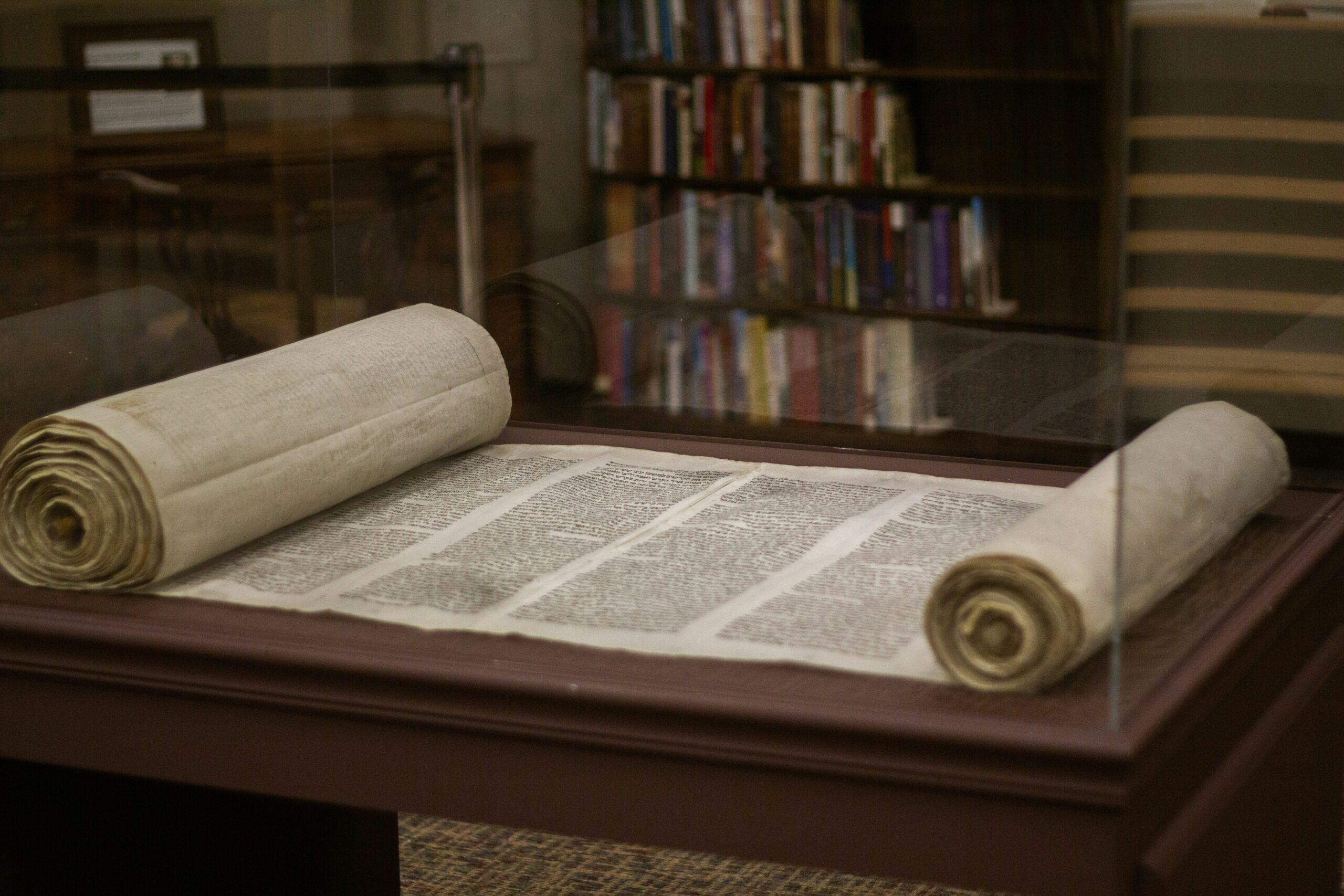
Old Testament Survey
Exodus
OLD TESTAMENT SURVEY LESSON 3: Exodus
The Way Out (Gk.), And these are the Names (Heb.).
INTRO: Intentionality of Scripture – how we use language, specifically the word “and.” AUTHOR: Moses, see MacArthur’s notes for OT and NT witness.
DATE: Between 1446 and 1406 B.C. (wilderness wanderings before conquest of Canaan). STRUCTURE: There are (roughly) three central divisions in Exodus, based on location.
- Israel in Egypt (Ex 1–12)
- Israel on the road to Sinai (Ex 13–18)
- Israel at Sinai (Ex 19–40)
THEME: The God Who Has No Comparison
OBJECTIVE FOR STUDENTS: The objective for students is to understand and articulate how the Exodus narrative teaches us that God is incomparable, through both Who He is (as revealed in the book of Exodus) and what He has done (as shown in the events in the book of Exodus).
- Israel in Egypt (Exodus 1–12)
- Exodus 1 teaches that God is sovereign in the affliction of His people.[1]
- Exodus 2 highlights God’s sovereign power over circumstances in Moses’ upbringing,2 as well as God’s faithfulness to His people at the end of the chapter.3
- Exodus 3 demonstrates God’s self-revelation to Moses, showing the weakness of Moses and strength of the LORD.4
 Exodus 4 further highlights Moses’ weakness as a powerless, doubting (Ex 4:1) scaredy- cat (Ex 4:3), not desiring to do God’s will (Ex 4:13) that the LORD will use to do great things for His glory.5
2 The chain of events point to God’s involvement: Moses was hidden for three months as a baby (2:2), he survived in the Nile in a basket (ark – 2:3), Pharaoh’s daughter happened to be bathing in the Nile (2:5), Pharaoh’s daughter happened to see the basket (2:5), Pharaoh’s daughter had compassion on Moses (2:6), Moses’ mother is paid to nurse her own son (2:9), Moses was raised in Egyptian royalty (2:10), right under the nose of the one who wanted to kill the baby Hebrew boys. He also received a world class Egyptian education (Acts 7:22).
There is nothing in the text that indicates Moses sought to kill the Egyptian, for the word for “beating” in 2:11 is the same as “struck” in 2:12. Instead, he was merely standing up for the Hebrew and somehow it led to the death of the Egyptian. Pharaoh seeking to kill Moses is strange, likely influenced by political factors (2:15). God providentially sends Moses to the Midianite wilderness, where He just so *happens* to run into Jethro’s family and do them a favor, leading to him settling down with him and marrying his daughter, Zipporah.
3 God heard their groaning (2:24), meaning that He was about to act. God remembered His covenant (2:24), highlighting His faithfulness. God was not surprised by their suffering for He had pre-planned it to bring about His greater purposes (Gen 15:13–16). These observations of the end of Exodus 2 are not original to Mr. Phillips and have been drawn from Paul House’s Old Testament Theology, page 91.
There also is a gap of 40 years between Exodus 2:25 and 3:1 (following the 40-year gap between Exodus 2:10 and 2:11 – see Acts 7:23). At the end of chapter, the powerlessness and lack of influence of Moses is highlighted – setting the stage for God’s grand plan of redemption of the Hebrews from their Egyptian bondage.
4 God reveals His name to Moses as “I AM WHO I AM” (Ex 3:14). Demonstrates God’s Eternality – He always was, is and will be. Demonstrates God’s Immutability – God never changes. Demonstrates God’s Aseity – complete independence, self-existence. In other words, “He be.”
Matthew Henry, biblical commentator, states “the greatest and best man in the world must say, By the grace of God I am what I am, but God says absolutely––and it is more than any creature, man or angel, can say ––I am that I am.” Matthew Henry’s Commentary on the Whole Bible, page 79.
Because Moses and Aaron will be refused by Pharaoh, and it will take compulsion for Pharaoh to let the Hebrews go (Ex 3:19–20), God alone will receive the glory for the Exodus.
5 God’s complete control and independence as Creator of man’s mouth (4:11) not only demonstrates His sovereignty but also His goodness. God, unlike Pharaoh, does not command His people to make bricks out of straw – instead providing them with everything they need to accomplish His purposes. The chapter also begins the revelation of the hardening of Pharaoh’s heart (4:21). God hardens = God’s sovereignty. Pharaoh hardens = Pharaoh’s responsibility.
PRINCIPLE OF BIBLICAL INTERPRETATION: Whenever a doctrine is in question, go to the passage in which it is most clearly stated, and then use that text to inform your understanding of other, less-clear texts on that
- Exodus 5 demonstrates Pharaoh’s defiance of God (“Who is the LORD” – Ex 5:2),
leading to Israel’s (5:21), and subsequently Moses’ (4:22–23) doubts and impatience.
- Exodus 6 records God’s promised action on account of Pharaoh’s defiance of Him.[3]
- Exodus 7–12 showcases the ten plagues God brought on Egypt.[4]
- Israel on the Road to Sinai (Exodus 13–18):
- Exodus 13 demonstrates the importance of the remembrance of the Exodus event.[5]
- Exodus 14 demonstrates God’s power and glory over the Egyptian army in the Red Sea account.[6]
- Exodus 15:1–18 (the Song of Moses) is a condensed version of the message of the whole book![7]
“Who is like You among the gods, O LORD? Who is like You, majestic in holiness, awesome in praises, working wonders?” (Ex 15:11).
Notice God’s promise for the implied blessings for obedience and curses for disobedience (Ex 15:26).[8]
- Exodus 16–18 shows that God is the Provider for His people, worthy to be believed.[9]
- Israel at Sinai (Exodus 19–40)
- Exodus 19 reveals Israel’s role as Nation among the nations in God’s plan.[10]
Possible Quiz Question: What to roles did God establish for Israel in Exodus 19 as the Nation among the nations? Answer: (1) A Kingdom of Priests and (2) A Holy nation.
As priests, Israel’s role was to bring the nations to God through their holy living.[11]
- God’s holiness is experienced visibly and audibly when He visits Sinai (Ex 19:18–25.
- Exodus 20 reveals God’s zeal for holiness through the institution of the Ten Commandments as the foundation for the Old Testament Law.[12]
Commandments 1–4 focus on the Israelite’s relationship with God.
1 – God alone must be worshipped (Ex 20:3)
2 – Idols must never be made (Ex 20:4–6)
3 – God’s Name must never be taken (carried) in vain (Ex 20:7) 4 – The Sabbath is to be kept holy (Ex 20:8–11)
Commandments 1–5 focus on the Israelite’s relationship with others.
5 – Parents must be obeyed (Ex 20:12)
6 – Murder is forbidden (Ex 20:13)
7 – Adultery is forbidden (Ex 20:14)
8 – Stealing is forbidden (Ex 20:15)
9 – Lying is forbidden (Ex 20:16)
10 – Coveting is forbidden (Ex 20:17–18)
- Exodus 21–23 contain further explanation of the Law in specific contexts.
- QUESTION: Why would God call on the Israelites to purge the promised land of the peoples of other nations (Ex 23:23; 34:12–16)?
Unlike the view of our culture today, culture and religion were seen intertwined in ancient contexts. One could not have a specific culture without idolatrous religious practices. This reality is not xenophobic (racist) but idolphobic (if you will).
“They shall not live in your land, because they will make you sin against Me; for if you serve their gods, it will surely be a snare to you.” (Ex 23:23).
- Exodus 24 highlights the Hebrews’ affirmation of the covenant agreement to be a kingdom of priests and holy nation (Ex 24:3).
- Exodus 25–31 contains God’s instruction to Moses of how the people are to worship Him (Ex 25–31).[13]
Important Distinction:
- Priest’s role – Represent the people before God.
- Prophet’s role – Represent God before the people.
- Exodus 32 records the Golden Calf incident. After only 40 days of being up on the mountain, Israel broke the covenant they swore to keep (Ex 24:3) by resorting to idolatry![14]
- Exodus 33–34 demonstrates God’s attributes – that He is both a just and merciful God.[15]
When God passes by Moses, He declares: “The LORD, the LORD God, compassionate and gracious, slow to anger, and abounding in lovingkindess and truth; who keeps lovingkindness for thousands, who forgives iniquity, transgression and sin; yet He will by no means leave the guilty unpunished, visiting the iniquity of fathers on the children and on the grandchildren to the third and fourth generations” (Ex 34:6–7).
APPLICATION: The question we all should be asking is how a holy God can forgive sinners without leaving sin unpunished?
The answer is in the Seed of the woman Who came to crush the head of the serpent (Gen 3:15), the Lord Jesus Christ.[16]
- Exodus 35–40 entail the construction of the Tabernacle and instructions on priestly garments.[17]
Moses pleads with God and God does not annihilate the people (Ex 32:11–14). Though the text says God “changed His mind” (Ex 32:14), this is not the same “changing of the mind” that we experience. This describes the way we experience and understand God’s answer to prayer, which is not a 1-for-1. There are things God cannot do. God cannot change (Mal 3:6), lie or change His mind (1 Sam 15:29).
The mass-execution of treasonous idolaters (Ex 32:27–28) was not only because idolatry dishonors God but also destroys civilization and was a major threat to the Abrahamic Covenant. There is a theme throughout the Old Testament that humans become (begin to act like) what they worship (Ps 115:8). For a further in-depth study, see We Become What We Worship: A Biblical Theology of Idolatry by G. K. Beale.
Moses further pleads and goes so far as to request to be punished on Israel’s behalf, which God refuses because he must justly punish sin (Ex 32:32–34). Moses could not atone for the sins of Israel because He too was a sinner.
POSSIBLE PAPER TOPIC: Though I would argue that the main theme in Exodus is that God has no comparison (“Who is Like the Lord?”), others have advocated for the following themes: (1) The God Who Redeems/Instructs;[18] (1) The God Who Delivers;[19] (3) The God Who Saves.[20] In a 2-3 page argue the case for one of the four listed themes (mine or one of the other three) by listing at least three occasions in Exodus that demonstrate that theme.
QUESTIONS FOR FURTHER STUDY (Not going to be on quizzes or exams):
What is significant about God using Aaron’s staff-turned serpent to swallow the magicians’ serpents?
To demonstrate His sovereignty over all things, including His enemies. The last time serpents were mentioned in earlier revelation was in the garden of Eden. Therefore, one could draw out the implication from this information that God is sovereign over Satan as well.
Are there things God cannot do?
Yes. God cannot do anything contrary to His nature. God cannot change (Mal 3:6), lie or change His mind (1 Sam 15:29).
Bibliography
MacArthur, John. MacArthur Study Bible.
House, Paul. Old Testament Theology.
Schreiner, Thomas. The King in His Beauty.
Twiss, Paul, Old Testament I lectures.
Bidebach, Brian, Ordination Preparation lectures.
Henry, Matthew. Matthew Henry’s Commentary on the Whole Bible.
[1] “Now” or “and” connects to context of Genesis 50:20, making Exodus a case study in God’s sovereignty
over affliction.
Hebrew population growth (Ex 1:7, 12, 20) is both supernatural and fulfillment of the descendants promise aspect of the Abrahamic Covenant (Gen 12, 15). This growth, as stated above, is a non-natural growth. Natural population growth results from the removal of affliction (think of the Baby Boomers, mass-population spike after WWII ended). But here, instead of affliction being removed, it is added and yet the population is still multiplying despite Pharaoh’s best efforts. The supernatural growth of the Hebrews can be paralleled to the growth of the Church in Acts. Though persecution arose against the early Church, God worked in spite of the persecution to grow the Church astronomically.
Application: God is sovereign even over the difficult times in your life! It can be tempting to think that since God is not mentioned until Exodus 1:17 that somehow He has been absent and that the chain of events is merely by chance, the product of a natural chain of events. Yet, upon further analysis, God is intimately involved with everything that is taking place in the text. In a similar way, we often can look at our circumstances as if they are just the product of chance. The Bible teaches God’s sovereignty (Ps 115:3; Eph 1:11), and that He is in control of all things – this gives us hope that even our trials in life have purpose (2 Cor 4:17–18).
[2]same subject. The application of this principle to the text is that this would not be the key o-to text for discussions of the role of God’s sovereignty and man’s responsibility and will in salvation.
[3] Some random notes on Chapter 6: Moses is promised to see God’s power (Ex 6:1). God did not make His Name known, or experientially understood, to the patriarchs (Ex 6:4–5). God will take Israel as His special, chosen people (Ex 6:7), and reaffirms the land promise (Ex 6:8). Though Exodus 6:14–27 and other name lists can be tedious, they also would have carried much significance to the original context – of known relatives, etc. Moses makes more excuses about his speech (6:12, 30), not recognizing it is the very weakness that God wants to use to demonstrate that Pharaoh was not convinced by the verbose genius of Moses, Aaron, or any man.
[4] The Ten Plagues are as follows: 1 – Nile turned into blood (7:14–25); 2 – Frogs (8:1–15); 3 – Gnats (8:16–19); 4 – Flies (8:20–32); 5 – Cattle Death (9:1–7); 6 – Boils (9:8–17); 7 – Hail (9:18–35); 8 – Locusts (10:1– 20); 9 – Darkness (10:21–29); 10 – Death of the Firstborn (11–12).
It is important to note that God promises the Egyptians will know experientially that He is the LORD (Ex 7:5), meaning that the Hebrews will not be delivered until this comes to pass – preparing the way for the Red Sea. The plagues demonstrate that God is incomparable (Ex 8:10; 9:14; 12:12), even God’s judgements were irreproducible (8:18; 9:11) without historical precedent (Ex 9:18; 11:6). The Feast of Unleavened Bread (Ex 12:14–
22) and Passover (12:24–27) were instituted, to remember and teach future generations of these events.
[5] This is mentioned again in the consecration of the firstborn (Ex 13:3), especially the personal component (Ex 13:8). The firstborns of Israel were redeemed (paid for) by a substitute sacrifice, whereas the firstborns of Egypt were killed.
A good application for this is just as the Hebrews were constantly reminded of their need to remember God’s deliverance of them from their slavery in Egypt, so too should Christians remember their deliverance by God from slavery to sin. We, as humans, have a tendency towards forgetting what God has done for us, which leads to trouble.
God is shown as kind and faithful in chapter 13, knowing the weakness of the people (13:17), fulfilling His promises made in Genesis (13:19), leading the people by a pillar of cloud by day and a pillar of fire by night (13:21).
[6] God was not satisfied until he was honored through Pharaoh’s army and then the Egyptians knew that He is the LORD (14:17–18). It was not until the Egyptian army admitted “the LORD is fighting for them” (14:25) that God delivered His people from under the hand of the Egyptians (14:26). A common motif in the book of Exodus is knowledge of the LORD – His glorification (receiving honor) through the experience of His power. When God says that “the Egyptians will know that I am the LORD” (14:18), He is saying it in a similar way to Psalm 46, where God says to His enemies “Cease striving and know that I am God” (Ps 46:10a). God’s purpose of bringing experiential knowledge of Himself not only was to glorify Himself through judgement (Ex 14:17–18), but also to produce belief, reverence, and respect (fear) in the hearts of His people (Ex 14:30–31).
[7] The Song of Moses, like the book of Exodus, is theocentric – God is the main character and described as a victorious warrior (15:3). Pharaoh, king of Egypt, lost to I Am, King of the universe. The song culminates in the proclamation of the absolute power and rule of the LORD: “The LORD shall reign forever and ever.” Compare with Revelation 11:5: “The kingdom of the world has become the kingdom of our Lord and of His Christ; and He will reign forever and ever.”
[8] Note that God is speaking within the context of Israel as a nation through physical blessings and curses, not for salvation. This will be re-articulated in much more detail in Leviticus 26 and Deuteronomy 28. As we assess the history of Israel in the Old Testament, this foundational understanding of blessings for the obedience of the nation and curses for disobedience must be understood within the context of the Mosaic (Israel) Covenant.
[9] God’s provision of Manna and Quail was given in such a way as to magnify Israel’s dependence on God and to test their faith. Israel’s dependence on the provision showed God’s glory (Ex 16:7) and grew their experiential knowledge of Him (16:12), and their grumbling demonstrated their unbelief (Ex 16:8). There is a complete contrast between Pharoah’s forcing of Israel to make bricks without straw and the LORD’s provision in the observance of the Sabbath (16:22–35). Israel’s unbelief is highlighted again in their quarreling over water (Ex 17:2, 7). Israel’s dependence upon the LORD is demonstrated again in the war against the Amalekites (17:8–16). Jethro’s declaration is another demonstration of Exodus’ theme that God is incomparable: “Now I know that the LORD is greater than all the gods” (Ex 18:11).
[10] “You yourselves have seen what I did to the Egyptians, and how I bore you on eagles’ wings, and brought you to Myself. Now then, if you will indeed obey My voice and keep My covenant, then you shall be My own possession among all the peoples. For all the earth is Mine; and you shall be to Me a kingdom of priests and a holy nation…” (Ex 19:4–6).
[11] It has been said that Israel’s role for evangelism (if you will) was to “stay and obey,” whereas after the Great Commission, Christians are called to “go and proclaim.” Israel’s role was to look different by being holy and attract the nations, which was exemplified when the Queen of Sheba came to see Solomon (1 Kings 10:1–13) and was not exemplified when they practiced idolatry and went into exile.
[12] Notice how God begins the Ten Commandments by reminding Israel how He redeemed them (Ex 20:1–
2). Their obedience was not for their redemption but was in light of it.
[13] The instructions involve: The Sanctuary of the Tabernacle, Ark of the Covenant, Table of Showbread, Golden Lampstand, Curtains of Linen, Curtains of Goat Hair, Boards and Sockets, Veil and Screen of the Tabernacle, Bronze Altar, Court of the Tabernacle, Priestly Garments, Consecration of Priests, Sacrifices, Priestly Food, Altar of Incense, Anointing Oil, the men God endowed with His Spirit of wisdom to accomplish these tasks, and the importance of the Sabbath as a sign.
These instructions are key because the people are to be holy as God is holy if God is to dwell with them: “I will meet there [doorway of the tent of meeting] with the sons of Israel, and it shall be consecrated by My glory. … I will dwell among the sons of Israel and will be their God. They shall know that I am the LORD their God who brought them out of the land of Egypt, that I might dwell among them; I am the LORD their God.” (Ex 29:43, 45– 46).
[14] God is angry with the people’s sin and threatens to destroy the people and make a nation out of Moses alone. God, not only having every right to punish the people on account of their sin, also would have still been faithful to the Abrahamic covenant if He built a new people from Moses’ descendants since he too was a descendant of Abraham.
[15] Though God promises not to wipe out the people, He says the He will not go with them. Moses intercedes again, recognizing that God is the source of their blessing and the people would not recognize them as a holy nation (33:15–16). Moses prays and asks God to show him His glory. God responds by saying “I will be gracious to whom I will be gracious and will show compassion on whom I will show compassion” (Ex 33:19). In other words, since no one deserves God’s mercy because all are sinners deserving punishment, God ultimately has the prerogative to show or withhold mercy and grace on whomever He pleases. Whenever seeing God’s judgement in Scripture, the wrong question to ask is how is God’s judgement fair? That question carries with it the wrong assumptions. Each time God executes judgement on sin, instead, we should ask how bad is sin?
[16] What was proclaimed in words here (Ex 34:6–7) was proclaimed in action at the cross!
[17] Israel’s corporate repentance can be seen in their contributions to the Tabernacle (Ex 36:3–6). After its construction, God’s glory fills the tabernacle (Ex 40:35–38). Compare Exodus 40:35 and John 1:14. The word for “dwelled” in John 1:14 really could also be translated “tabernacled.” Just as God dwelled with Israel in the
Tabernacle in the Old Testament, Christ dwelled as God the Son when He came to earth in His incarnation (when He assumed humanity).
[18] House, Paul, Old Testament Theology.
[19] Bidebach, Brian, Ordination Prep Notes.
[20] Twiss, Paul, Old Testament Survey I Class Notes.
- The word document: Exodus