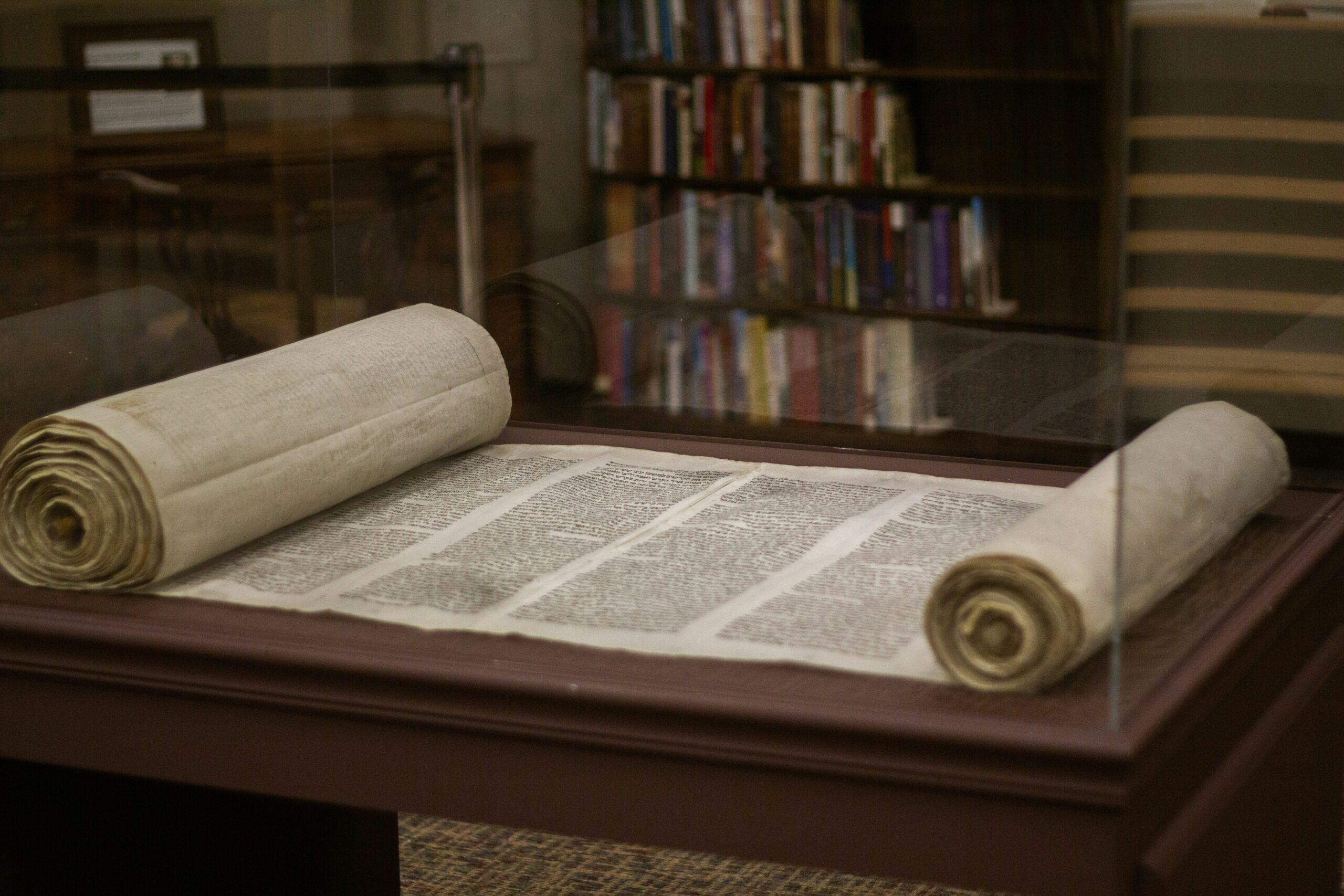
Introductions to Books of the New Testament
Luke
Providence Bible Church
New Testament Survey
October 22nd, 2023
A Study Paradigm for the Gospel of Luke
- The human Writer & original Recipients
The author of this Gospel is Luke!
‘… at no time were any doubts raised regarding the attribution to Luke, and certainly no alternatives were [suggested].’ NTI, p.99
Who was he?
‘The materials found in Scripture for a life of Luke are very scanty … Luke was of Gentile origin … inferred from the fact that he is not reckoned among those who are of the circumcision (Col 4:11, 5:14).
‘Very little is known about Luke … and nothing definite is known about his background or his conversion … According to tradition, Luke was a Gentile. The apostle Paul seems to confirm this … (Col 4:11, 14). That would make Luke the only Gentile to pen any books of Scripture. He is responsible for a significant portion of the NT, having written both this Gospel and the Book of Acts.’ MSB, p.1264
… he was not ‘an eyewitness and minister of the word from the beginning.’ (Luke 1:2).’ Unger, p.670
The Bible tells us also that Luke was a doctor, a physician – ‘Luke, the beloved physician, sends you his greetings …’ (Col. 4:14).
Although Luke’s Gospel is addressed to Theophilus, it is written primarily for non-Jewish readers.
‘… Theophilus … a person of high rank (‘most excellent’), equivalent to our word ‘honorable’ … [Luke] was a Gentile, and the Gospel [of Luke] was designed mainly for Gentile Christians, representing the universal importance of the coming of Christ for all nations and for all classes of men.’ Schaff’s, p.530
‘… there is evidence to suggest a Gentile destination … the Gospel [of Luke] may therefore be said to be designed for all who in the non-Christian world were not averse to Christianity and were genuinely interested in having a historical account of its origins.’ NTI, p.96
- The special Theme & Divine Intention
Luke focuses attention on the Humanity of Jesus – Jesus as the Son of man.

‘The focus of Luke is on Jesus as a man. Thus, we see the emotions and agonies of the man, Christ Jesus, as He performs His Father’s will on earth.’ Panorama, p.427
‘The special emphasis of Luke is the Humanity of Jesus … Luke features His kindness toward the weak, the suffering and the outcast.’ Halley’s, p.485
‘Where an author specifically states his own intention, that must always be given more weight than any scholarly conjectures …’ NTI, p.90
‘[Luke declares] to write in order that Theophilus ‘may know the exact truth about the things you have been taught.’ Unger, p.671

‘In his preface (1:1-4), Luke pleads the example of many predecessors for the attempt he is about to make and promises to give an orderly and accurate account of the traditions of the Gospel narrative received from eyewitnesses.’ Cambridge, p.63
‘Greek civilization represented culture, philosophy, wisdom, reason, beauty, education. Therefore, to appeal to the thoughtful, cultured, philosophic Greek mind, Luke, in a complete, orderly, and classical story, which has been called ‘the most beautiful book ever written,’ depicts the glorious beauty and perfection of Jesus.’ Unger
Point: Luke aims to give an accurate history of Christ’s life and ministry.
- The unique Position & enduring Contribution
‘There is something attractive about this Gospel. It is full of superb stories and leaves the reader with a deep impression of the personality and teaching of Jesus. It is perhaps for this reason that for many it is their favorite Gospel. It has may characteristic features which distinguish it from the other Gospels …
-
- Its record is longer than its Synoptic counterparts … especially detailed in its account of the last journey to Jerusalem. It is in fact the longest book in the New Testament.’ NTI, p.90
- … Luke brings out the wider implications of the gospel of Christ …
- a focus on individuals … his portraits are incomparable …
- Interest in social outcasts … the immoral woman (7:36ff) … Zacchaeus (19:8ff) … the robber (23:39ff) …
- Luke mentions thirteen women not mentioned elsewhere in the Gospels …’ NTI, pp.90-91
- The writing Date
‘… there is really little tangible data to enable the date of the Gospel to be specifically fixed.’ NTI, p.115
‘Luke and Acts appear to have been written at about the same time – Luke first, then Acts … a two-volume work … the Book of Acts ends with Paul still in Rome, which leads to the conclusion that Luke wrote these books from Rome during Paul’s imprisonment there (c. A.D. 60-62).’ Schaff’s, p.530
- The access Codes
‘… Matthew presents Christ as King,
Mark presents Him as Servant,
John presents Him as Son of God,
and Luke presents Him as Son of Man …’ Unger, p.670
‘The term “Son of Man” acts as a key phrase, and 19:10 is commonly taken as the key verse:
“For the Son of Man has come to seek and to save that which was lost.”
Luke narrates those events which demonstrate the humanity of Christ … he carefully shields His deity and kingship (Luke 1:32-35).’ Unger, pp.670-671
- The major Chapters & significant Passages
- The central Subjects & important Principles
- The basic Outline
-
- 1:1-4:13 His Inaugural Ministry – Birth and Preparation
- 4:14–9:11 His Foundational Ministry – in Galilee
- 9:12-50 His Developmental Ministry – departing Galilee
- 9:51-13:21 2nd Judean Ministry
- 13:22-19:27 His Instructional Ministry – in Perea
- 19:28-21:4 His Sacrificial Ministry
- 24:1-53 His Resurrection Ministry
Bibliography, with Abbreviations
Primary sources
Benware Benware, Paul N. Survey of the New Testament. Chicago: Moody, 1990
Panorama Crispin, Gerard. The Bible Panorama. Day One Publications, 2005
Geisler Geisler, Norman. A Popular Survey of the New Testament. Grand Rapids: Baker, 2007
Story Goodspeed, Edgar J. The Story of the Bible. University of Chicago Press, 1945
Halley’s Halley, Henry H. Halley’s Bible Handbook. Grand Rapids: Zondervan, 1962
W&B Wilkinson, Bruce, and Boa, Kenneth. Talk Thru the Bible. Nashville: Thomas Nelson, 1983
Secondary sources
Bengel Bengel, John A. Gnomon of the New Testament. Edinburgh: T&T Clark, 1873
Cambridge Cambridge Study Bible. Cambridge: CGT, 1977
NTI Guthrie, Donald. New Testament Introduction. Downers Grove: InterVarsity, 1968
MSB MacArthur, John. MacArthur Study Bible. Nashville: Thomas Nelson, 2006
Schaff’s Schaff, Philip. A Dictionary of the Bible. Philadelphia: American Sunday-School Union, 1880
Unger’s Unger, Merrill F. Unger’s Bible Dictionary. Chicago: Moody, 1985
Specific sources
CGT Farrar, Frederick W. Cambridge Greek Text … Luke. Cambridge: Cambridge,
1903
ICC Plummer, Alfred. ICC: Gospel According to Luke. Edinburgh: T&T Clark, 189
- The word document: Luke