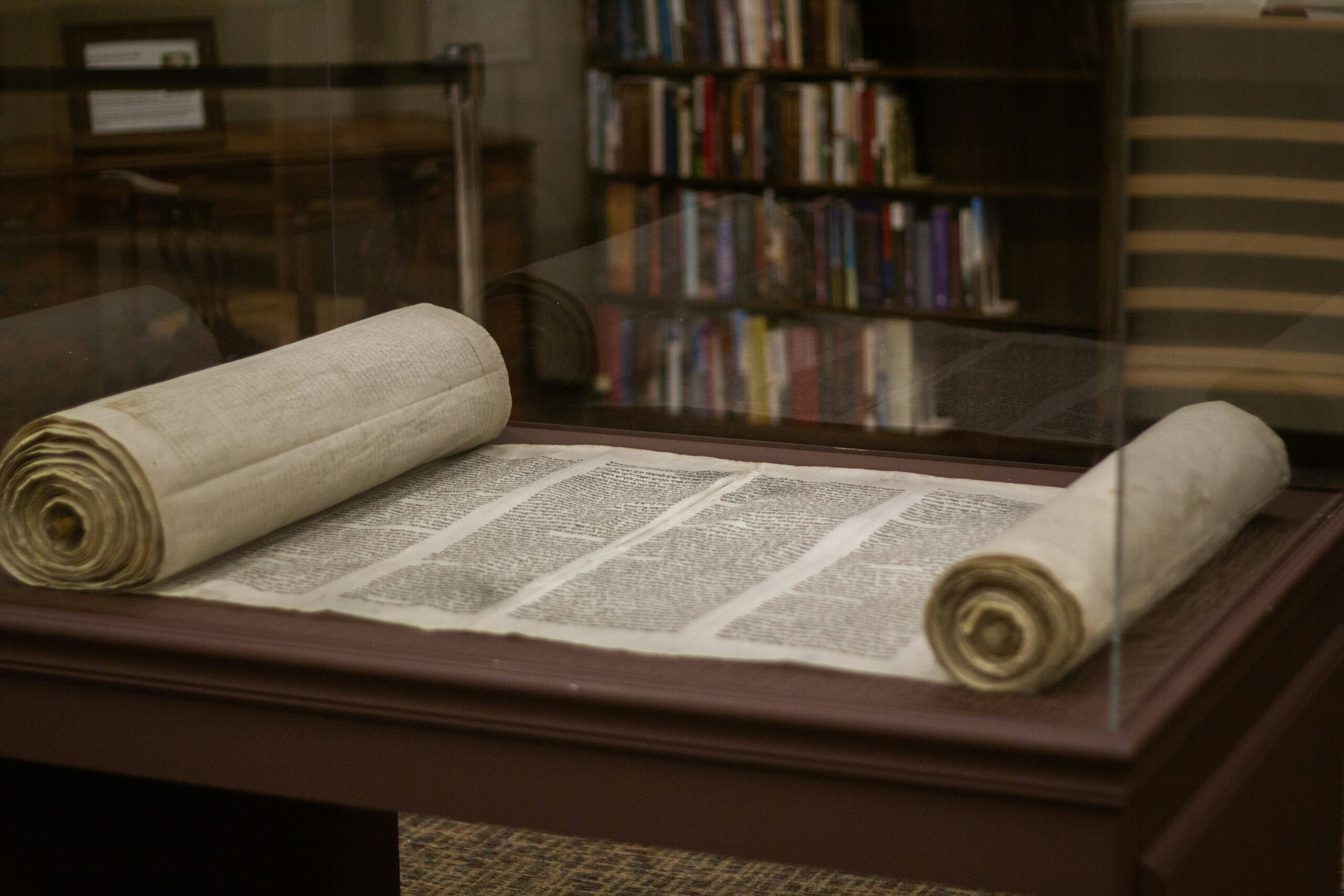
Old Testament Survey
Deuteronomy
OLD TESTAMENT SURVEY LESSON 6: Deuteronomy
“Second Law” (or “copy of this Law”) (Gk.), “These are the words” (Heb.).
INTRO: Memory and the Deuteronomy Paradigm.[1]
AUTHOR: Moses (Deut 1:1), Joshua (Deut 34).
DATE: Between 1406–1405 B.C. (Deut 1:3).
STRUCTURE: There are four central divisions in Deuteronomy:
- What God has done (Deut 1–4).
- What God expects (Deut 5–26).
- What God will do (Deut 27–30).
- The Death of Moses (Deut 31–34).[2]
THEME: The God Who Renews the Covenant.[3]
OBJECTIVE FOR STUDENTS: The objective for students is to understand and articulate the purpose of Deuteronomy in the Old Testament, the future significance of the Mosaic Covenant in the history of Israel as a nation (Deut 28), the Deuteronomy paradigm, and how we as Christians can apply this paradigm to our lives.
- What God has done (Deut 1–4):
- *Random note: The Land promise was not only given as a demonstration of God’s love to the Hebrews, but it also demonstrated God’s sovereignty as the only true God. In the cultures of the nations in the time of Deuteronomy, their gods would be limited by their geographic region. By conquering more land, God demonstrated that He is not only sovereign over one area of land but is sovereign over all lands.
- Chapters 1–4 contains Moses’ recounting to the Hebrews of God’s past faithfulness and Israel’s past unfaithfulness.[4]
- The Deuteronomy paradigm: Remember God’s love, love God, and then obey.
- The Disobedient paradigm: Forget God’s blessings, grow prideful/independent, do not love Him, and do not obey.
- What God expects (Deut 5–26):
- Chapter 5 records a reminder of the Ten Commandments to the people.[5]
- Chapter 6 records the Shema, a confession of sorts for the people to remember about Who God is and their need to obey Him.
- Chapters 7–13 record the promises of God, blessings for obedience and curses for disobedience.[6]
- Chapters 14–26 record God’s commands to the people as applications to His previously revealed Law, through Moses’ explaining.[7]
- What God will do (Deut 27–30):
- Deuteronomy 27–30 declare what God will do to Israel in the future, promising blessings for obedience and curses for disobedience.[8]
- Deuteronomy 28 is the parallel passage to Leviticus 26, speaking of God’s blessings for obedience and curses for disobedience.[9]
- The Death of Moses (Deut 31–34):
- Deuteronomy 29–33 detail Moses’ final address to the people, including exhortation, song, and blessing.
- Deuteronomy 34 records Moses’ death, as recorded by Joshua.
CONCLUDING THOUGHTS: Deuteronomy’s purpose in the Old Testament is to wrap up the Pentateuch (5 books written by Moses) in giving Israel a final exhortation before they would enter the promised land. Deuteronomy 28, like Leviticus 26, clearly lays out that Israel will experience blessings in the land if they are faithful to worship and serve God according to the Mosaic covenant and will not experience those blessings if they are unfaithful. This paradigm teaches us as Christians that obedience towards God was never intended to serve as hope that He will love us, but is grounded in His love for us demonstrated in our salvation, and our love for Him because of Who He is and what He has done.
POSSIBLE PAPER TOPIC: In a 2–3 page paper explain the Deuteronomy paradigm and what it tells us about the motives for obedience and how can we as Christians learn from this paradigm.
QUESTIONS FOR FURTHER STUDY (Not going to be on quizzes or exams): Who is the coming prophet that Moses speaks about in Deuteronomy 18:15, 18–19?
The future prophet of Israel that Moses speaks about is Jesus Christ and this text is identified to Him in both the words of Peter (Acts 3:22–23) and Stephen (Acts 7:37).
What does Israel’s land promise tell us about God’s nature, on top of His love towards His people?
Israel’s land promise demonstrates, on top of God’s love for Israel, that God (unlike the false gods of Israel’s neighbors) is not bound by one physical location (meaning, He is not only sovereign over one land but over everything for He is the only living and true God).
Bibliography
MacArthur, John. MacArthur Study Bible.
House, Paul. Old Testament Theology.
Schreiner, Thomas. The King in His Beauty.
Twiss, Paul, Old Testament I lectures.
Benware, Survey of the Old Testament.
Bidebach, Brian, Ordination Preparation lectures.
[1] Do you have a good memory? It is truly impressive how many digits of Pi kids your age can memorize, or how large of Bible passages they can recite from memory. Some kids have memories from the time they were toddlers. The book of Deuteronomy focuses much on the subject of remembrance, but not in the sense of the kind of natural ability as seen in the examples listed above. Instead, this remembrance is demonstrated in proactive contemplation of God’s works through the contemplation of His Word. The Deuteronomy paradigm sees obedience following this order: Remembering God’s love (contemplating His works and Word), loving God (the natural result from a true understanding of His grace and mercy – as seen in His deliverance of Israel from Egypt), and stemming from those things, obeying His commands (keeping His covenant). Moses warns of a future time where there will be a different paradigm where: God blesses Israel, they forget (growing complacent to contemplate His works and Word), and as a result do not love Him in light of their deliverance, which then prompts no obedience/disobedience).
Also: Notice the order of God’s love, Israel’s love, and obedience. Israel was not to obey God for His love, but in light of His love already given to them. That is not to say that the blessings of the covenant (Lev 26; Deut 28) were not contingent upon the obedience of Israel, however, they were not seeking to earn their salvation (becoming God’s people) because of their good works. The obedience of the nation was based upon the love which God already had showed them, and was prompted not out of a works-based anxiety for their salvation through works but instead through love because of what God had done for them.
[2] This structure has been proposed by Dr. Brian Bidebach in his Ordination Preparation class.
[3] This theme has been proposed by Paul House and Brian Bidebach. This theme better-represents the material of Deuteronomy than the book’s English name which means “second law” (because of translation issues) – see MacArthur’s Quick Reference Guide to the Bible for more details.
[4] The setting of Deuteronomy is tremendously powerful. All of the first generation of Hebrews except Moses, Caleb, and Joshua had died (Deut 1:35–36, 38), and Moses was standing in front of the people, preparing them for the conquest of Canaan that was only months away (Deut 1:3). The people saw how God’s Word had come to pass in the death of the first generation. At 120 years old, Moses had been Israel’s leader for their entire post- slavery history (the past 40 years) and here he gives his final address, which would have had major significance, building the anticipation for what Moses would say in his final address to the people. It has been rightly observed that Moses’ address, in a sense, is one of the greatest sermons of all time (behind the Sermon on the Mount).
Though much could be said of this section, the overall thrust of the history is to demonstrate God’s faithfulness and Israel’s unfaithfulness. God has been faithful in His promises to Abraham to give him a land (1:8) which the second generation in the wilderness inherits (1:34–39) and make his descendants as the stars in the sky (1:10), having delivered Israel from Egyptian slavery (which is mentioned throughout the whole book), and providing for them. In response to this Israel rebelled, complaining and making idols, leading to God’s punishment of their sin.
As God’s Kingdom of Priests and Holy nation (Ex 19), Israel was to have a unique understanding (Deut 4:6), being the only nation to have God’s special presence (Deut 4:7), having a uniquely righteous Law (Deut 4:8). Israel was commanded to avoid idolatry (Deut 4:15–19, 23) and obey in light of God’s love to Israel (Deut 4:20). However, though they were commanded to flee idolatry, Israel would worship idols in the future and be judged (Deut 4:25). But because God is faithful to His promises to the patriarchs, He would not destroy them entirely, and instead one day give them new hearts to return to Him (Deut 4:30 – in the New Covenant) because of His character (Deut 4:31 – compare with Exodus 34). God’s choice of Israel to be His chosen people was not based upon their obedience or their merits (on their own deserving), but instead out of His sovereign and faithful love (Deut 4:37).
[5] Notice how this text, like Exodus 20, begins with God’s deliverance of Israel (Deut 5:6), grounding their obedience in love in response to God’s love for them.
[6] Israel, had been set apart as God’s Holy nation (Deut 7:6; cf. Ex 19), and God’s choice to set them apart was not based upon their numbers (or anything deserving on their part), but on His love (Deut 7:7–8). God is faithful but also will not leave the guilty unpunished (Deut 7:9–10; cf. Ex 19; Lev 26; Deut 28). The people are commanded to obey (Deut 8:1) and remember (8:2) God’s commandments, for their tests in the wilderness was to teach the people of their dependence upon God (Deut 8:3). The land was not given to Israel because they deserved it by their own righteousness (Deut 9:4), but because of God’s judgement to the idolatrous nations and God’s faithfulness to His promises (Deut 8:5–6). God’s choice of Israel did not come out of His need for them for He owns everything (Deut 10:14), but came from His love (Deut 10:15).
[7] In some ways, Israel’s command to obedience as a holy nation (Deut 14:2) is similar to being told to obey by parents because of one’s family reputation (ex: “You shouldn’t do that, for you are a Smith!”). The commands for future kings separate Israel from their neighboring nations in many ways. God does not command them to appoint a king but knows that they will (Deut 17:14). This king must be an Israelite (Deut 17:15), not multiply horses (Deut 17:16 – trusting in God for military needs), not multiply wives (Deut 17:17a – trusting in God for giving descendants and following His definition of marriage as found in Gen 2), and not greatly multiply gold and silver for himself (Deut 17:17b – trusting in God’s provision for resources. This king would be commanded to make his own copy of God’s Law (Deut 17:18) so that he may fear God (Deut 17:19), and ultimately view himself as equal to his subjects (Deut 17:20).
[8] Even though Israel will disobey and be judged, God promises a future restoration when He circumcises their hearts in the New Covenant to come (Deut 30:1–10; contrast w/ 29:4), showing that God’s promises are not given or kept because of faithfulness or deserved actions of the recipient (because they are not deserved) but instead are given and kept because God is faithful and does not change or lie.
[9] Like the Leviticus passage, it is incredibly significant that the length of the blessings section is substantially less than the length of the curses section, indicating that Israel will not be faithful to God in the future.
- The Lecture: Deuteronomy
- The word document: Deuteronomy
- Back to OT Survey