Old Testament Survey
Part 5A, English Bible – Latin Branch
The History of the
written
Word of God
V.A. The English Bible – the Latin Branch
Ronald J. Frasco
I. Introduction
II. Revelation
III. Canon
IV. Original Languages
V. English Translations
A. Latin Branch
John Wycliffe – 1324-1384*
* noting his post-mortem ‘martyrdom’ – 41 years after his death and burial!
John Wycliffe has been called ‘the Morning Star of the Reformation.’ During the period of history when the church had sunk to the depths of corruption the light of truth began to shine. John Wycliffe was one of the earliest to begin to recognize and reflect that light.
Wycliffe’s incredible role of initiating reformation in the church began with a personal experience of God’s Grace. John Fox details how he first sought reformation for himself:
Wycliffe became imbued with the spirit of biblical research and translation, at a time when the Bible was almost an unused book to the great body of the clergy … Wycliffe found a Bible, and that he pored [sic] over it so long and earnestly, and with such fervent prayer to God, that it became to him the source of a new spiritual existence. [1]
Schaff details the spiritual context of Wycliffe’s spiritual journey.
For hundreds of years no eminent teacher had emphasized the right of the laity to the Word of God. It was regarded as a book for the clergy, and the interpretation of its meaning was assumed to rest largely with the decretists [scholars] and the pope. The Council of Toulouse, 1229, had forbidden the use of the Bible to laymen.… Wyclif stood forth as the champion of an open Bible. It was a book to be studied by all Christians, for “it is the whole truth.” Because it was given to the Church, its teachings are free to every one [sic], even as is Christ himself. [2]
Rather than mere criticisms and invectives against the Roman Catholic Church, Wycliffe’s most powerful indictment was his contrasting superlative view of Scripture. Schaff, again, points out that,
In his treatise [The Truth of Scripture] on the value and authority of the Scriptures, … more is said about the Bible as the Church’s appointed guide-book than was said by all the medieval theologians together. [3]
John Fox recounts that Wycliffe was:
… fully convinced of the errors of the Romish Church, and the vileness of its monastic agents [monks], he determined to expose them. In public lectures, he lashed their vices and opposed their follies. He unfolded a variety of abuses covered by the darkness of superstition … He inveighed, in his lectures, against the pope – his usurpation – his infallibility – his pride – his avarice – and his tyranny. He was the first who termed the pope Antichrist. [4]
One of Wycliffe’s eventual contentions with the Roman Catholic Church was that it was keeping the Bible from God’s people by preserving it in Latin only. Fox quotes Wycliffe as declaring, “The sacred Scriptures are the property of the people, and one which no one should be allowed to wrest from them.” [5] His great passion, then, became the translation of the Bible into the English tongue.
The translation of the Bible into the common tongue of the English people, and its general use, Wycliffe placed first in importance in all his attempts to reform the English church.… He appealed to the Bible as the one ground of faith, and asserted that every instructed man had the right to examine the Bible for himself.… Wycliffe translated not for the scholars, or for the rich and great, but for the plain people, and his style was such as suited those for whom he wrote – plain, vigorous, homely, and yet with all its homelyness [sic] full of a solemn grace and dignity, which made men feel that they were reading no ordinary book. [6]
Instead of using the original languages (Hebrew and Greek), Wycliffe used the Latin to translate the Bible into English. He was the first person to ever do this!
Predictably, the official Church reaction to Wycliffe’s efforts was strongly negative. One historian chronicles,
… the gift of the English Bible was regarded by Wyclif’s contemporaries as both a novel act and an act of desecration. The irreverence and profanation of offering such a translation was likened to the casting of pearls before swine. [7]
Primarily due to his outspoken criticism of the pope, Wycliffe was eventually excommunicated. He continued to work on his Old Testament translation but did not complete it before his death. So great was the hatred of the Roman Catholic Church for Wycliffe and his work, that even after his death they pursued him. Fox recounts that,
Forty years after [Wycliffe’s death], by a decree of the council of Constance, the old reformer’s bones were dug up and burned, and the ashes flung into the little river Swift …[8]

Schaff expands upon Wycliffe’s legacy:
Wyclif’s chief service for his people, next to the legacy of his own personality, was his assertion of the supreme authority of the Bible for clergy and laymen alike and his gift to them of the Bible in their own tongue … to make his English country-men [sic] more religious and more Christian. [9]
The priceless heirloom which English-speaking peoples possess in the English version and in an open Bible free to all who will read, learned and unlearned, lay and cleric, will continue to be associated with the Reformer of the 14th century.[10]

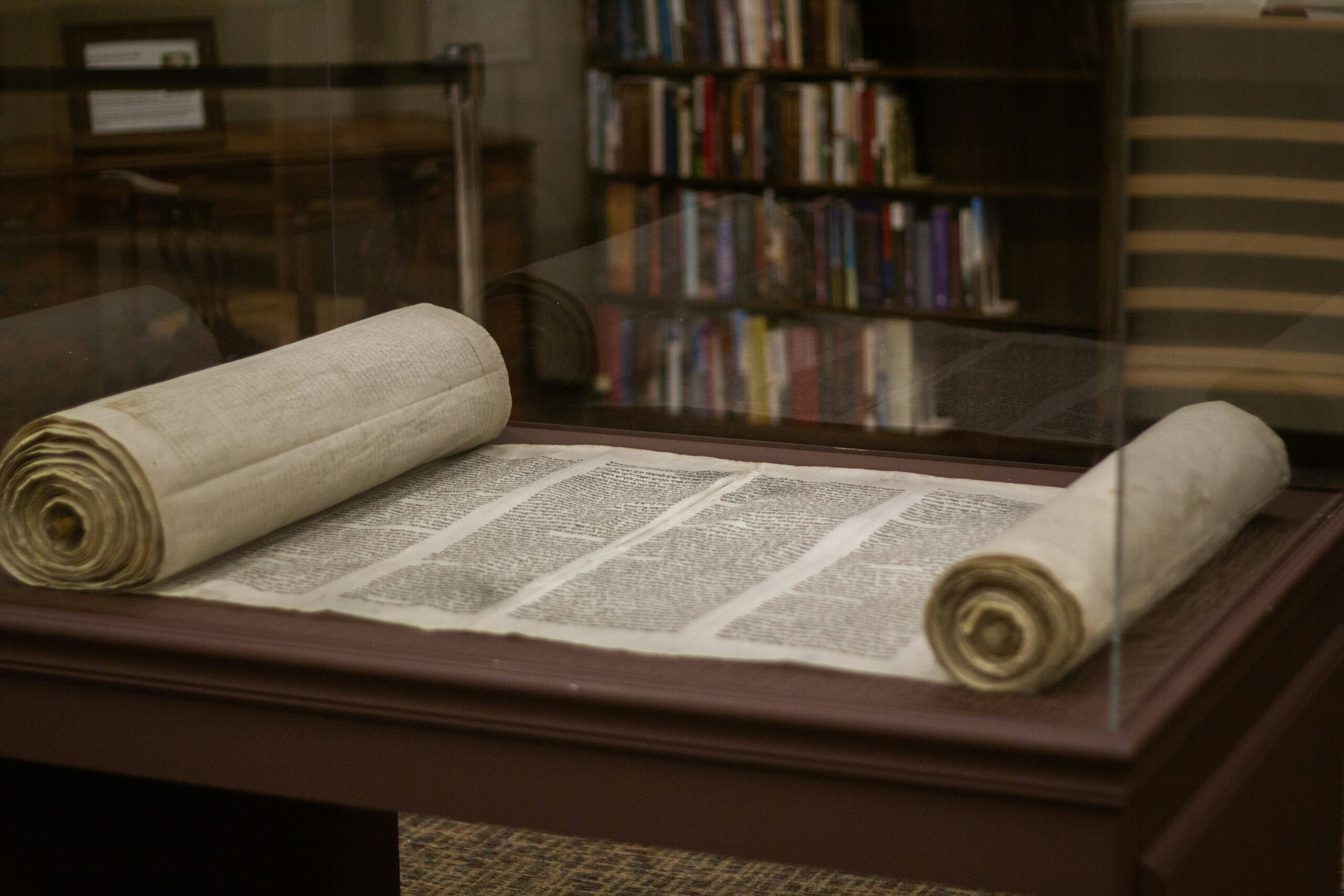
Image of Wycliffe’s Translation, Gospel of John.
John Purvey’s Bible – 1395
John Purvey, a long-time associate, even disciple of Wycliffe, revised Wycliffe’s monumental New Testament work and completed his translation of the Old Testament. This was the first complete Bible in the English language. Each copy was entirely written by hand! For his efforts, Purvey was imprisoned. Dr. Robert Thomas describes his translation:
Purvey’s work was a freer translation than the original work had been, since the earlier work was so literal that its English was stilted.[11]
Purvey, however, seems to have lacked the fortitude and zeal of martyrs. The Church had coerced the civil authorities that there were heretics in the land. Severe injunctions were threatened …
The culminating point of legislation was reached in 1401, when parliament passed the act for the burning of heretics, the first act of its kind in England.… The burning, so it was stipulated, was to be on a high place where the punishment might be witnessed and the onlookers struck with fear. [12]
Sadly, Purvey and three other professing adherents of Wycliffe’s views all recanted under the threat.

[1] John Fox, Christian Martyrs of the World (CMW), p.322
[2] David Schaff, History of the Christian Church (HCC), Volume V, Part 2, p.341
[3] ibid, p.338
[4] John Fox, Book of Martyrs (BOM), p.136
[5] ibid, p.323
[6] ibid, p.323
[7] HCC, p.343
[8] ibid, p.325
[9] ibid, pp. 338, 342
[10] HCC, p.345
[11] Robert Thomas, How to Choose a Bible Version, pp. 13-14
[12] HCC, pp.351-352
- The word document: Part 5A, English Bible – Latin Branch
- Back to HWWG