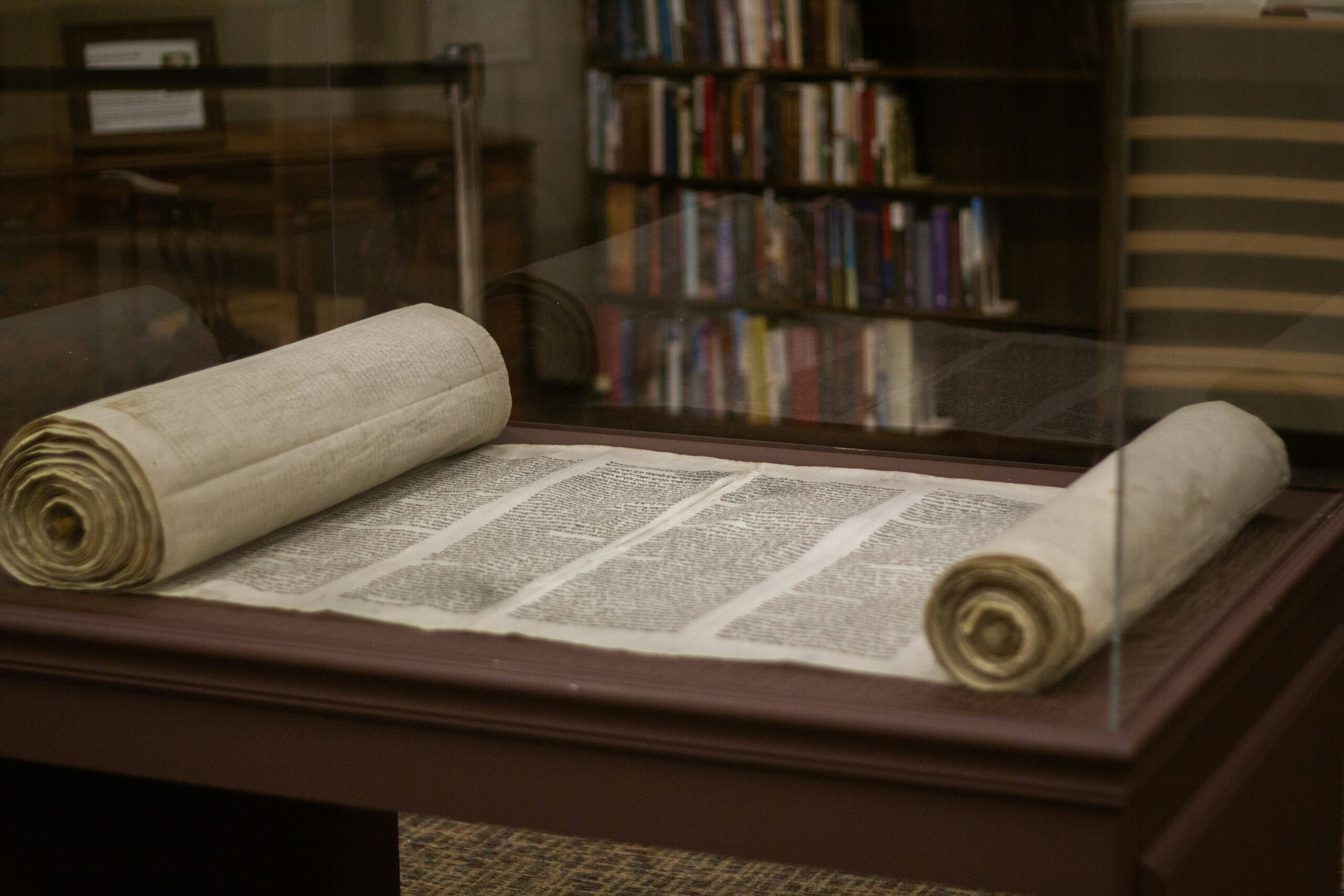
Old Testament Survey
Numbers
OLD TESTAMENT SURVEY LESSON 5: Numbers
“Ἀριθμοί” – “numbers,” referring to census, (Gk.), “In the Wilderness” (Heb.). INTRO: The faithfulness of God and unfaithfulness of Israel in their history.[1]
AUTHOR: Moses (Num 33:2; 36:13).
DATE: Between 1446 and 1406 B.C., probably right before Deuteronomy and during the last year of Moses’ life (1407–1406 B.C.? – Deut 1:3).
STRUCTURE: There are two central divisions in Numbers
- The First Generation of Israel (Num 1–25).
- The Second Generation of Israel (Num 26–36).[2]
THEME: The God Who Expects Faithfulness[3]
OBJECTIVE FOR STUDENTS: The objective for students is to understand and articulate how the book of Numbers teaches that God expects faithfulness from His people, how unbelief is the root of all sin (complaining and idolatry as vivid examples in the book), and how God is faithful to carry out the land promise in the Abrahamic Covenant to His people.
- The First Generation of Israel (Num 1–25)
- Numbers 1 begins with the marker of the first division, the first census of Israel’s warriors.[4]
- Numbers 2 lays out the arrangements of camps for Israel’s dwelling in the wilderness.[5]
- Numbers 3–10 speak of many Levitical duties, among some other instructions.6
- Numbers 11–14 speaks to many complaints among thepeople – even from its leaders
- to God.7
- Numbers 15 gives various laws for when Israel is in the promised land.8
 Numbers 16 records Korah’s rebellion, or the people’s rejection of God’s ordained leadership in Moses and the people’s complaining.[6]
1 This is mostly review from previous books.
2 This structure has been proposed by Dr. Brian Bidebach in his Ordination Preparation class.
3 This theme has been proposed by Paul House and Brian Bidebach. It seems that the narrative itself leans
towards this structure, since it is based upon the two censuses taken in the book (once in chapter 1 of the first
generation and once in chapter 26 – notably right after the Sin of Peor (chapter 25)).
4 Following our foundations of Old Testament Survey assumptions, assuming that the text is perfect and
without error because it is God-breathed (2 Tim 3:16–17), the number of capable male warriors (20 years old + and
able to go out to war), was 603,500. If one was to assume that each man had a wife and averaged two children, this
would put the total population in the wilderness at around 2.4–2.5 million people! This testifies to God’s powerful
provision of His people during their sojourn in the wilderness.
5 This would have been helpful for many reasons, not the least of which being battle strategy
6 This section speaks much about the duties of the Levites. These include their priesthood appointment (Num 3), specific arrangements for clans in the tribe of Levi (the duties of the Kohathites, Gershonites, and Merarites – Num 4), instructions on the issue of defilement and adultery (Num 5), Offerings of the leaders of Israel (Num 7), commands to make the seven lamps, for Levitical cleansing, and instructions on their retirement (Num 8), and instructions on the Passover (Num 9) and Silver Trumpets (Num 10). A couple of exceptions are the Nazirite vow, which was voluntary for any Israelite that wanted to dedicate themselves to God in a special way for a particular time (Num 6:1–21) and the cloud narrative (Num 9:15–23).
Random fact: The oldest copy we have of any Scripture is from amulets with the inscriptions of the Aaronic blessing (Num 6:24–26). These have been labeled the Ketef Hinnom silver scrolls and are certainly worth looking up in your free time. The amulets themselves have been dated to 600–700 B.C. by both Christian and secular archaeologists. The fact that these scrolls were worn as an amulet indicates the influence of the text in that culture, and judging by both the wearing of the text as amulets as well as it being understood among the people, confirms through archaeological evidence that the text was around with the biblical timeline.
7 Lament is a biblical response to suffering, whereas complaining doubts God’s faithfulness. The people complain to Moses, prompting God’s judgment on them, for this very reason. They complained generally (Num 11:1–9) and about their food provided by God (Num 11:4–9). Moses himself complains (Num 11:10–15), hinting that he is no better than the people of the first generation, and God is faithful to place His Spirit upon seventy elders in Israel to help him out (Num 11:16–30). God judges the people for their complaint of His provision (Num 11:31– 35) and Miriam and Aaron complain (Num 12). God promised Israel the land of Canaan (Num 13:2), and after the spies went out, and out of fright of the Canaanites’ size (seeing the Nephilim – Num 13:33) only Joshua and Caleb believed God and rebuked the unbelief of the people (Num 13:30–31; 14:6–10). God at this point again threatens to exercise His judgement on the people and build the rest of Israel from Moses (Num 14:12) like His threat of judgement on them after the golden calf incident (Ex 32:10), but Moses intercedes and pleads that for God’s own glory’s sake (Num 14:13–16) that He not wipe out the entire population through judgement (though the people deserved it), citing His character (Num 14:18). God is faithful to His people, and as a result, the people will not be judged in this way and their children will enjoy the fruits of the promised land, but the generation that grumbled will not (Num 14:30–31). Israel thinks it can reverse God’s judgement by hastily going in without God’s command, making light of God’s mercy and judgement, and are chased away in battle by the Amalekites and Canaanites.
8 A couple of important considerations to be made here. At the end of these commands, God orders Israel to make tassels on their garments to remember God’s commandments so that they will “not follow after your own heart and your own eyes” (Num 15:39). It is a quite controversial thing to tell our culture that we are all commanded to not follow our hearts but follow God’s commands. This has always been controversial, since the very beginning (Gen 3), but it is true. Also notice how God finishes the commands the same way He began the Ten Commandments (Ex 20:2) with the reminder of His deliverance of Israel out of Egypt (Num 15:41), grounding their obedience in their love for God’s redemption of them, not in a self-righteous pride for their good works.
9 Korah, Dathan, and Abiram all neglected God’s kindness to them (Num 16:8–11) and acted on their complaint, putting together a mutiny against Moses with 250 of Israel’s leaders (Num 16:2). God, in His judgement, threatens to judge the whole congregation but Aaron and Moses (and their families; Num 16:21), but Moses intercedes (Num 16:22) and God instead consumes Korah, Dathan, and Abiram in the earth (Num 16:31–32) and the 250 leaders by fire (Num 16:35), establishing not only Moses as leader, but God’s Word as true.
The people again complain (Num 16:41), and God threatens judgement on all the people again, and Moses tells Aaron to make atonement (a covering) to propitiate (satisfy) God’s wrath.
- Numbers 17 records God’s working of a miracle through Aaron’s staff to verify before the people that Aaron was God’s ordained high priest.
- Numbers 18–19 speaks of the duties assigned for the tribe of Levi and ordinance of the Red Heifer, respectively.
- Numbers 20 proves that God’s Word remains true that only Joshua and Caleb will see the promised land in the deaths of Miriam and Aaron, as well as Moses’ punishment for his disobedience at Meribah.[7]
- Numbers 21 demonstrates the faithfulness of God and the unfaithfulness of the people in the conquests of Arad, Heshbon, Bashan, and the people’s complaining and Moses’ intercession.
- Numbers 22–24 records the interactions between Balaam, the pagan prophet and Balak, the Moabite king, who wants to pagan prophet to curse Israel but can’t.[8]
- Numbers 25 is another golden-calf like account, where the people were swayed towards idolatry even though God had been nothing but faithful to them.
- The Second Generation of Israel (Num 26–36):
- Numbers 26 marks the beginning of the second section of the book, giving another census (this time of the second generation) of all those who would enter the promised land.
- Numbers 27–30 speak of miscellaneous laws and commands for the promised land and also reveals Joshua’s succession of Moses (Num 27:15–23).
- Numbers 31 records Israel’s conquest of Midian, however, the people are not faithful to obey God’s full command, hinting at what’s to come in Joshua and Judges.
- Numbers 32 deals with Reuben and Gad’s land allotment.
- Numbers 33 is a review of everything that had happened to the Israelites between Egypt and their conquest of Canaan up until this point.
This is key: “But if you do not drive out the inhabitants of the land from before you, then it shall come about that those whom you let remain of them will become as pricks in your eyes and as thorns in your sides, and they will trouble you in the land in which you live. And as I plan to do to them, so I will do to you” (Num 33:55–56).
In other words, if Israel did not obey God and drive out all the people in Canaan, they would lead them into idolatry and bring about God’s judgment on Israel as will be seen in Joshua and Judges.[9]
- Numbers 34–36 gives directions for apportioning the promised land among the tribes, cities of refuge, and inheritance of land through marriage.
CONCLUDING THOUGHTS: Numbers ends with some optimism but a lot of unknowns. Moses, along with the rest of the first generation would not go into the promised land, but Joshua, Caleb, and the second generation would. God had been nothing but faithful to Israel and Israel had constantly complained and even fell back into idolatry. It is difficult to explain how imperative it would be for them to drive out all the peoples of the land of Canaan. If not, then the people would have a corrupting idolatrous influence on Israel, which would breach the Mosaic covenant, and as a result bring about the curses for disobedience found in Leviticus 26 and Deuteronomy 28.
POSSIBLE PAPER TOPIC: In a 2–3 page paper, discuss why complaining is such an offense to God, giving at least three examples recorded in the book of Numbers.
QUESTIONS FOR FURTHER STUDY (Not going to be on quizzes or exams):
What is the oldest artifact of the biblical text?
The Ketef Hinnom amulets (or scrolls) are the oldest artifact of the biblical text, dating back to somewhere between 600–700 B.C. This artifact contains the Aaronic blessing as found in Numbers 6:24–26.
Is Israel’s conquest of Canaan an example of the horrendous practice of ethnic cleansing, like the German concentration camps of the 20th century?
No, Israel’s conquest of Canaan should not be categorized alongside the evil ethnic cleansings in history (mass-murder of people based on their ethnicity). With the example of Nazi Germany, the ideology behind their mass-murder was based on an evolutionary ideology called eugenics (the idea that some “races” of people had evolved more than others, and that those who hadn’t evolved as much should be exterminated). Israel’s conquest of Canaan had nothing to do with ethnicity so much as it had to do with idolatry and immorality. Religion and culture were so intertwined in the ancient near east that there was no separating the two, and Israel was to be used as an instrument of God’s judgment on the nations to eradicate the horrid idolatrous practices of the pagan nations.
Bibliography
MacArthur, John. MacArthur Study Bible.
House, Paul. Old Testament Theology.
Schreiner, Thomas. The King in His Beauty.
Twiss, Paul, Old Testament I lectures.
Benware, Survey of the Old Testament.
Bidebach, Brian, Ordination Preparation lectures.
[1] This is mostly review from previous books.
[2] This structure has been proposed by Dr. Brian Bidebach in his Ordination Preparation class.
[3] This theme has been proposed by Paul House and Brian Bidebach. It seems that the narrative itself leans towards this structure, since it is based upon the two censuses taken in the book (once in chapter 1 of the first generation and once in chapter 26 – notably right after the Sin of Peor (chapter 25)).
[4] Following our foundations of Old Testament Survey assumptions, assuming that the text is perfect and without error because it is God-breathed (2 Tim 3:16–17), the number of capable male warriors (20 years old + and able to go out to war), was 603,500. If one was to assume that each man had a wife and averaged two children, this would put the total population in the wilderness at around 2.4–2.5 million people! This testifies to God’s powerful provision of His people during their sojourn in the wilderness.
[5] This would have been helpful for many reasons, not the least of which being battle strategy.
[6] Korah, Dathan, and Abiram all neglected God’s kindness to them (Num 16:8–11) and acted on their complaint, putting together a mutiny against Moses with 250 of Israel’s leaders (Num 16:2). God, in His judgement, threatens to judge the whole congregation but Aaron and Moses (and their families; Num 16:21), but Moses
[7] Just as the bizarre account recorded in Exodus 4:24–26, God holds the spiritual leaders of His people to a higher standard than others.
[8] So much could be said here, but just for the sake of brevity, every time Balak instructs Balaam to curse Israel, all Balaam can do is bless them. Of particular importance (and assigned as reading) is Balaam’s prophecy as recorded in Numbers 24:17: “I see him, but not now; I behold him, but not near; a star shall come forth from Jacob, a scepter shall rise from Israel, and shall crush through the forehead of Moab…”. See what Balaam’s prophecy does here? It connects Genesis 49:10 that “the scepter will not depart Judah” with the promised seed that will crush the head of the serpent (Gen 3:15). In other words, the promised descendant of Gen 3:15, it is now revealed, will be from the line of Judah – a King of God’s people Who’s reign will have no end.
[9] You can almost hear similarities to the promises for curses for disobedience to the Mosaic covenant as is found in Leviticus 26 and Deuteronomy 28. This purging was not for ethnic reasons (as many who object to the Bible’s teaching would presume) but instead for God’s judgement purposes on the idolatry and subsequent immorality of these nations and to protect His people as a Kingdom of Priests and Holy Nation.
- Next in the series: Deuteronomy
- The word document: Numbers
- Back to OT Survey