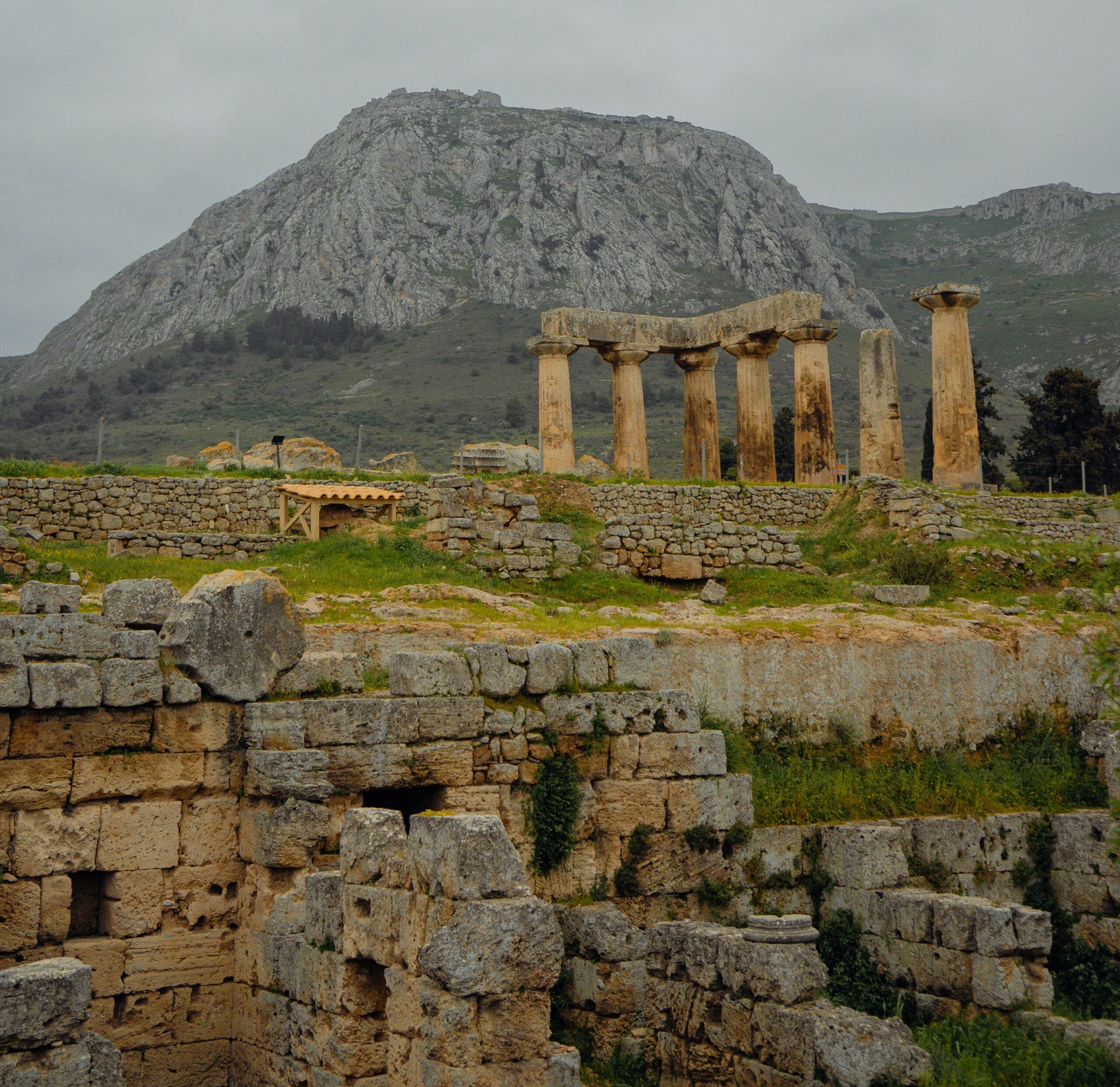
The Gaze of the Saints, Part 4
This sermon explores the concept of the “Gaze of the Saints,” urging believers to focus on eternal realities rather than temporary earthly struggles. It highlights how momentary afflictions produce an eternal weight of glory, shifting the Christian perspective from the decaying outer man to the renewed inner man. The teaching emphasizes the promise of a glorified body, contrasting the current frailty of the flesh with the future perfection of a dwelling from God. Believers are described as groaning under the burden of sin and mortality, yet longing deeply for the finality of death and the fullness of eternal life. The message concludes with the assurance that death is the last enemy to be abolished, offering hope and victory through Christ’s resurrection.
Transcript
Bill, their second Corinthians,
we find ourselves in that great section beginning in chapter
four. And as we did last week, I think my reviews get more brief
each week we are to paint the image. I think it was helpful
for people. If you want to take the totality of God’s truth,
the revealed word of God, you have a concentric circle. Inside
of that circle, you have the New Testament. Inside of that
circle, you have another circle that is Paul’s epistles. Inside of that circle, you have
Second Corinthians. Inside of that circle, you have
that great section on ministry in which we have been engaged
in considering for months, really. beginning in chapter 2, verse
12, all the way coursing through chapter 6, verse 10. But inside
of that circle, we find ourselves within another concentric circle
that begins in chapter 4, verse 16 and carries all the way through
chapter 5, verse 10. But inside of that circle, we
found ourselves in the midst of another and for our purposes,
the last of the concentric circles, beginning in verse 16 and coursing
down through verse four. And we have entitled this little
section, The Gaze of the Saints. What do the Christians look at? What do those that are bound
for heaven focus on in this earthly life? And we’ve begun to consider
that Paul in this greater section that goes all the way down through
verse 10, is essentially responding to the thought that he had initiated
about death, about this life and ministry being a process
of dying. If you’re in 2 Corinthians, you
can look easily back at chapter 4, verse 7, where Paul began
this thought Talking about affliction and perplexity and persecution
being struck down. And all of that he calls dying. Always caring about the dying
of Jesus. He even summarizes that in verse
12 by saying, death works in us, but life in you. Paul said,
basically, so what if I’m dying? I don’t doubt that I’m dying.
That’s how he characterized it. And if that’s the case, then
what? That’s seems to be the context
in which he slips into beginning here in verse fourteen, pardon
me, verse sixteen. And so we have here in verse
sixteen the reminder that we are being spiritually revitalized
even while we are dying, yet our spiritual side is being built
up. for glorification ultimately.
If you would, I want to pick up there in verse 16. We’ll read
it in full and then we’ll dial back in. Paul said there in chapter 4,
verse 16, Therefore, we do not lose heart. We don’t quit. But
though our outer man is decaying, yet our inner man is being renewed
day by day. For momentary light affliction
is producing for us an eternal weight of glory far beyond all
comparison. While we look not at the things
which are seen, but at the things which are not seen. For the things
which are seen are temporal, but the things which are not
seen are eternal. For we know that if the earthly
tent, which is our house, is torn down, we have a building
from God, a house not made with hands, eternal in the heavens.
For indeed, in this house we groan, longing to be clothed
with our dwelling from heaven. Inasmuch as we, having put it
on, will not be found naked. For indeed, while we are in this
tent, we groan being burdened because we do not want to be
unclothed, but clothed so that what is mortal will be swallowed
up by life. We have begun to look at this
section. And we see that there are things
that Christians are supposed to focus upon. And that’s why we entitled this
section, The Gaze of the Saints. We are being spiritually restored
piecemeal, but it doesn’t happen by accident. It doesn’t just
happen overnight. It is a process, that process
of sanctification. But it only happens As that sanctifying
grace works in and through us, as we also direct our faculties
on the great and spiritual goal of growing in Christ likeness.
As believers, we have begun to focus on heavenly, eternal things. Because the fact that our interests
have been changed, because God has realigned our desires, because
our perspectives are new in Christ, because of that, our eyes are
taken off of the mundane things of this earth and they are placed
on eternal things. What are they? In verse 17, Paul
begins to get into it. And he begins to zero in on what
is the gaze of the saints. What are those focal points of
the heavenly? And the first thing that we saw
that Christians are to look to is a wealth of glory. And Paul
leaves it completely undefined. Look at verse 17, for momentary
light affliction is producing for us an eternal weight of glory. And that’s all really that Paul
says about it. He alludes in some fashion in
the following verse just by talking about what is not seen. Even
there, underscoring the fact that he leaves glory relatively
undefined, but he says, it is a glory of such a kind that is
able to make us forget about all of our earthly difficulties.
Look again at the passage. He calls this affliction, and
this is a man who had undergone the most grievous human affliction,
being stoned and shipwrecked and beaten. And he calls it momentary
light affliction. This glory that is laid up for
us in heaven is of such a kind that it would make even the Apostle
Paul undergoing the most difficult struggles and trials, persecution,
oppression, affliction. It would make him call that struggle
momentary and light. That’s not exactly how we go
about it, is it? We play up the least struggle
to make it sound like we are the most suffering saint that
has ever walked the planet, but not Paul. Not Paul. He calls it momentary light affliction
because it is each in pardon me, because it is producing for
him an eternal weight of glory. Secondly, we looked at this section
and we saw Not only is it producing this eternal weight of glory,
as we focus on the things that aren’t seen, God, human souls,
God’s Word, those are the things that the Christian is supposed
to focus on in this life. We’re not supposed to be caught
up in all the temporal things that we see, because those are
the very things that are passing away. But Paul says there’s something
else that we must focus on as believers. And he does that beginning
in chapter five, verse one. The focal points of the heavenward
include not only a wealth of glory, but a glorified body,
and we spent several weeks just on that one thought. Look at
verse one, we know, and Paul says without a doubt, this is
an absolutely solid statement in Paul’s mind.
We know. that if this earthly tent, which
is our house, is torn down, we have a building from God. When Paul says, if, if this earthly
tent, which is our house, is torn down, Paul isn’t expressing
any doubt. It’s as if he could say, since,
because every one of us would say that in a very real way,
these earthly tents are already beginning to fail us. Our achy
bones, our receding hairlines, our achy backs, our eyes that
need bifocals, whether our pride will allow us to order them. Paul says, look, if, check that,
when our earthly tent, which is our house and what he’s talking
about in that earthly tent, he’s using the image of the tabernacle. housing the very glory of God. But in this sense, he’s using
it to speak of the dwelling place of our souls. And he says that
our souls are currently in this creaky, eroding structure called
a body. And that if this earthly tent,
which is our house, the household for our souls, if that’s torn
down, we have a building from God. We have that promise of
God. that He has prepared for us a
physical structure in which to house our souls that will be
perfect in glory and that will last us for eternity. We will
need no tune-ups. We will not need to take shark
cartilage. We will not need to take herbs. We will not need
to see the chiropractor. We have a building from God,
a house not made with hands, eternal in the heavens. We have
a glorified body. We spent several weeks looking
at the more lengthy treatment of that in First Corinthians
15. I would just commend you to that great section. But that’s
not all, Paul says, that we should have our eyes focused upon as
Christians. We’re talking about the gaze
of the saints. What is it that Christians eyes look to? What
are the focal points of those that are heavenward? Not only
a wealth of glory and a glorified body, but we also look to a finality
to death, a finality to death, a death to death. Look at verse
two. For indeed, in this house, we
groan, longing to be clothed with our dwelling from heaven
in as much as we, having put it on, will not be found naked. For while we are in this tent,
we groan being burdened because we do not want to be unclothed,
but to be clothed so that what is mortal will be swallowed up
by life. We look forward to that day,
don’t we? We look forward to the day where death is no longer
an issue, where life and only life comes into full view and
life and only life is fully enjoyed forever. We’re no more consideration
of death and dying, no more consideration of aging and aching. Paul says in the meantime, though,
we groan. Paul is beginning here to explain. What he has already said. We
do not lose heart. All the way back in chapter 4,
verse 16, and I believe this verse is part of that explanation. All the way back in chapter 4,
verse 16, Paul says, we do not lose heart. We do not quit. Yet
our inner man is being renewed day by day. Even in the midst
of this demise, physically speaking, yet our inner man is being renewed
day by day, for indeed in this house we groan. The word is a graphic word used
in a number of interesting places in Scripture. In your minds,
I go with me to Mark and the gospel of Mark. is recorded this little interchange
of Christ. Again, Jesus went out from the
region of Tyre and He came through Sidon to the Sea of Galilee within
the region of Decapolis. They brought to Him one who was
deaf and spoke with difficulty, and they implored Him to lay
His hands on him. Jesus took him aside from the
crowd by Himself, put His fingers into his ears. After spitting,
He touched his tongue with the saliva and looking up to heaven
with a deep sigh. He said to him, ethaphtha, that
is, be opened. Jesus knew. Jesus was empathetic
to the struggle that is human life. That is part of the reason
that Jesus took on human flesh. And here, He manifests that by
groaning along with us. Perhaps Christ groaned on behalf
of this man living his life, deaf and dumb, And Jesus groaning
out of his compassion, groaning in empathy with this man groaning. There’s another place that it
occurs, I told you, they’re all interesting places. This one I would call. The mandate
of the sheep. The mandate of the sheep, Hebrews
13, 17, just listen. Obey your leaders and submit to them, for
they keep watch over your souls as those who will give an account.
One of the reasons, one of the things that I lay out to those
aspiring to the eldership. That you are to keep watch over
this flock as those who will give an account. The writer of Hebrews here says
to the sheep, obey your leaders. Submit to them because they’re
watching over your souls as those who will give an account. They
take it very seriously. Let them do this with joy. And not with grief, not with
groaning. For this would be unprofitable
for you. The mandate for the sheep, James
519 or 59 also includes this little word. Do not complain. Do not groan. And you get this grievous, grief-stricken
sigh, don’t you? From the use of that word there.
Do not complain and grumble and mumble and murmur at your brothers
so that you yourselves may not be judged. And probably most
pointedly, for our purposes today, what does this word mean? What
is exactly Paul talking about when he talks about groaning?
Romans 8.23. Almost the same exact thought
when Paul says, not only this, but we also ourselves having
the first fruits of the Spirit, even ourselves grown within ourselves,
waiting eagerly. For our adoption as sons, the
redemption of our body, we in this body, everything has been
given to us in Christ. We know that we possess heaven.
But while we’re here, we groan. We groan, desiring our glorified
bodies, look again at verse two, we indeed for indeed rather in
this house, we groan, longing to be clothed with our dwelling
from heaven. Paul had already talked about
it. We know that it’s a body of some kind. We know that it’s
a glorified body. We know that it’s an eternal
body. We know that we’re not going to have it tuned or retooled
from time to time. And it’s our dwelling. That’s
our eternal dwelling. It’s that house that Paul speaks
of that houses our soul. It’s that heavenly, God-made
structure We groan because we long for it, don’t we? We groan
because we desire, deeply desire that heavenly home. As one said it, those who love
the Lord Jesus Christ, we can love Him with everything in us.
And yet we yearn, we groan and yearn deeply for the next life
when the perishable is going to put on the imperishable. Here,
Paul just speaking of his frustrations, the weariness, the disappointments
that he faced, the limitations, the weaknesses of the flesh,
the sins of the present life. All of those contribute to that
constant sigh that goes up from us longing to one day be freed
and to be found in that heavenly glorified body. When Paul says that he longs
here to be clothed, that we in this earthly life grown longingly. That, too, is a word that was
frequently on Paul’s lips and off of Paul’s pen. It oftentimes
is used, as he wrote, to express that just deep emotional yearning
for fellowship. for those whom he loved and those
churches that he had planted and those saints that he had
brought to Christ. The word often expresses that
longing for friends, the longing for fellowship, the longing for
home. But here, Paul uses it of us longing in a much deeper
way for something much more permanent, something eternal. And it isn’t
just the fact of longing for a body, but longing for everything
that comes with that. Peace with Christ in a sinless
eternity. Peace with Christ where the strife
and the struggle and the friction and the guilt is no longer. See, our flesh is not going to
be just done away with. It’s not going to be burned up
and annihilated, but it’s ultimately going to be glorified, beautified
Just as the human body of Christ was at the transfiguration, we
looked at it in full and we saw such a complete picture there
in 1 Corinthians 15. But Paul says, having gotten
a glimpse of that picture, I can’t wait. We long to be clothed with
our dwelling from heaven. And what he’s talking about there
is exactly what we talked about earlier. It’s that permanent
abode. It’s the permanent tent, if you will, that is no longer
a tent. It’s a home. It’s a structure.
It’s no longer a camping trip, as he talks about here. One said it this way. Just as the body is often compared
to a house in which the soul dwells, And sometimes to a garment
with which it is clothed. The two metaphors are here combined. And the apostle speaks of putting
on a house as though it were a garment. It’s a really interesting
image. I mean, when we talk about moving
into our house, right, we don’t talk about putting it on. We
gather up our friends, we get in the truck, we drive in and
we take occupation, we take ownership of the facility, we move in.
We don’t talk about clothing ourselves with a home, but that’s
the image that Paul uses here. He goes on and says, Paul’s mixed
metaphor refers to his resurrection body and the perfections of eternal
life, which would replace forever the debilitating sin caused corruptions
of life in this world. It would set Paul free from this
fallen humanness. And every one of us knows that
sentiment, right? We can’t wait to go put on our
eternal home. We can’t wait to go put on that
house that is made from God. But the word here is so clear. It isn’t just talking about a
house. We talk about houses all the
time. You can drive down the street and you can see houses
with signs out in front of them. We see lots of houses, but we
only have one home. It’s the difference here between
the word house and home. And Paul says, I can’t wait not
to get to a house, but I can’t wait to be home. I can’t wait
to be clothed. and to find myself nestled in
to my eternal dwelling, the dwelling from heaven, the dwelling from
God made with God’s hands. Look at verse 3. I’m picking
it up as we go from verse 2. Indeed, in this house we groan,
longing to be clothed with our dwelling from heaven inasmuch
as we, having put it on, will not be found naked. Now, you
don’t need to cover the kids’ ears. That little word naked there,
he’s not talking about anything impure there at all. He’s just
been talking about a dwelling being our garment, putting it
on. We have the two ideas combined there. What Paul is saying here when
he talks about the word naked, he’s not talking about clothing
to cover our physical bodies, but he’s talking about being
without physical bodies to house our eternal souls. We talked
about this grave concern that was rampant really in the Greek
and Roman world. This idea that all matter was
evil and that the way to really be purified was to burn off all
that old flesh and then your soul could be free and you could
roam about. But that idea was repulsive to
the Jew. He’s not talking here. About
a soul. Pardon me, what he’s talking
about here is not a body without clothing, but a soul without
a resurrected body. That’s what was repulsive to
Paul. As one said, the pagan Greeks
felt that their souls needed to be freed from their bodies
before they could enter the highest state of bliss, but not Paul. He reminded the Corinthians that
when his earthly tent was dismantled by death, he would not exist
forever as a naked, disembodied spirit. He was not looking for
release from His body, but for the perfections of His resurrected
body. That nakedness there refers to
a soul without a body. A soul without an encasement,
a structure, a household, a home. But on that last day, we are promised to receive a
resurrection body. We will not be left as disembodied
spirits to roam about through the universe unseen, nor will
we be left to bring dragging with us these frail, earthly,
weak bodies that we currently have. This tent where our souls
currently reside. 1 Corinthians 15 52 says it’s
going to be instantaneous in the moment in a twinkling of
an eye at the last trumpets. The dead will be raised imperishable
and we will be changed. We looked at the nature of that
body for several weeks there in 1 Corinthians 15. But the
bottom line is it’s going to be instantaneous And the minute
that we are clothed in that permanent dwelling, that home, we will
be home forever. We groan in this earthly life,
desiring our glorified bodies under a current heavy burden.
Look at verse four. Paul repeats the thought for
indeed, while we are in this tent, we groan. If you get the
structure of the passage, he says, we groan. Indeed, we groan
for indeed we groan. We know the sentiments, we know
the difficulties, and it isn’t just old age, but it comes with
it. But it’s all the difficulties,
even of youth. The sicknesses that we get, the
injuries that we suffer, The difficulties that we go through
day to day, even heartache and difficulty and frustration. We
groan, we groan, desiring our glorified bodies, we groan because
we’re under a heavy burden. Look at the passage again. We
groan being burdened. Paul goes on to explain and expand
upon verse two. He’s really just giving the reason
that we desire all of these things in verse two. He says, we groan being burdened,
not so much just because we desire to be rid of this current body. But we’re eager to be rid of
the corruption that’s in it, we’re eager to be rid of the
of the frustration of constantly babbling against sin. And against
all the forces that press in on us and all the mindset that
the world throws at us, we’re eager to be done with it all.
We’re temptation isn’t even a factor any longer. I mean, we just spent
an hour here preparing for the Lord’s table. Can you imagine
not coming to the Lord’s table, but being in the Lord’s presence
where we don’t need to come in confession any longer? The burden isn’t so much the
substance of the body. I can take Advil for achy knees,
but it’s the corruptible character. It’s the fact that even though
we just spent time at the Lord’s table, we’ve got to go back into
battle, not just tomorrow, but even today. And by the end of
today, we will have cause to bow on our knees and to confess
all over again for sin, that so easily clings to us. But there’s no doubt that in
addition to those things, Paul was overwhelmed. He was beat
up in his body. No wonder he was longing for
the other world. Not unlike each of us, the burden of sin, as
one said, crushing and the affliction that believers experience in
their bodies makes us to yearn and long for those spiritual
bodies. This word burdened is another
one of Paul’s very flavorful words. It just means to be overly weighted
down. Almost Luke 932 encapsulates
it when it says that they were overcome with sleep. Have you
ever been in one of those classes, you know, where you’re you’re
you just cannot you almost have to hold your eyes physically
open. That’s how the apostles were. Matthew 26 says that he
came and found them sleeping. Their eyes were heavy. They were
overly burdened. They couldn’t keep their eyes
open anymore. But Paul’s not talking about sleepiness here.
He’s talking about life and life is just oppressive, he says. It just weighs us down. For Paul,
it included, as we saw, his concern about so many others, not just
himself. Second Corinthians 8, when he
started this whole discussion, he said, we do not want you to
be aware, brethren, of our unaware brethren, of our affliction,
which came to us in Asia, that we were burdened excessively
beyond our strength so that we despaired even of life. Do you
think it was easy for Paul? He talks of his struggles as
momentary, light affliction, but they were severe burdens
that brought him to despair even of life. Can we expect any less? We groan, desiring our glorified
bodies under this heavy burden, longing for life. We want life. We long for life itself. We long
to see a finality to death. We long to see a finality to
this whole process of dying, which we all would agree We’re
in the very midst of. Look at verse 4. Indeed, while
we are in this tent, we groan, being burdened, because we do
not want to be unclothed but clothed. We long for that physical
body. We don’t want our souls just
set free. We do not want to be unclothed but
clothed so that what is mortal will be swallowed up by life. We desire to take on that eternal
building from God so that this death is going to be swallowed
up as so often has been promised. Jesus has already handled death,
and one day he says it is the last enemy that is going to be
obliterated, done away with. But we can look forward to it
as believers as having already been accomplished. That’s how
Paul looked at it. In Romans 5, he says, therefore,
just as through one man sin entered into the world and death through
sin. And so death spread to all men
because all sinned. For until the law, sin was in
the world, but sin was not imputed where there is no law. Nevertheless,
death reigned from Adam until Moses, even over those who had
not sinned in the likeness of the offense of Adam. Death reigned
and death still reigns. And yet, in a very real way,
life is coming. Life has already been promised.
Life in a very real has already been granted. And we have just
to lay hold of it. First Corinthians 15. Turn there
as we close, if you would. First Corinthians 15. And pick up with me, if you would,
in verse 22, first Corinthians 15, 22, as in Adam all dies.
So also in Christ, all will be made alive. But each in his own
order, Christ, the first fruits, after that, those who are Christ’s
that is coming, then comes the end. When he hands over the kingdom
to the God and father, when he has abolished all rule and all
authority and all power, For he must reign until he has put
all his enemies under his feet. The last enemy that will be abolished
is death. Skip down, if you will, to verse
51. Behold, I tell you a mystery.
We will not all sleep, but we will be changed in a moment in
the twinkling of an eye at the last trumpet for the trumpet
will sound and the dead will be raised imperishable and we
will be changed. For this perishable must put
on the imperishable and this mortal must put on immortality.
But when this perishable will have put on the imperishable
and the mortal will put on immortality, then will come about the saying
that is written. Death is swallowed up in victory. Oh, death, where is your sting?
Oh, death, where is your victory? Oh, death, where is your sting?
A quote from Isaiah twenty five, eight. Paul knows that death. Death is going to be swallowed
up, that Christ has conquered death by rising again, and the
doom that was pronounced on Adam. Has been obliterated and the
result there is victory, absolute, everlasting victory, life itself. As Isaac Watts said. And you
can hear the excitement in Paul’s own voice. But listen to how
Isaac Watts considered this eager longing to be one day free of
this earthly body and to be found in his eternal dwelling, his
home, the home for his soul, how divinely full of glory and
pleasure. Shall that hour be when all the
millions of mankind that have been redeemed by the blood of
the Lamb shall meet together and stand around Him with every
tongue and every heart full of joy and praise? How astonishing
will be the glory and the joy of that day when all the saints
shall join together in one common song of gratitude and love and
of everlasting thankfulness to this Redeemer. With that unknown
delight and inexpressible satisfaction, shall all that are saved from
the ruin of sin and hell address the Lamb that was slain and rejoice
in His presence.” Let’s pray. O Father God, we long to see an end to death and an
end to dying. Not so much because we ache,
but because we long to be with You With the glorified saints
in eternity forever. Father, encourage our hearts
with these great and precious promises. It’s in Jesus name
that we pray, Amen.
Messages: 28