Indispensable
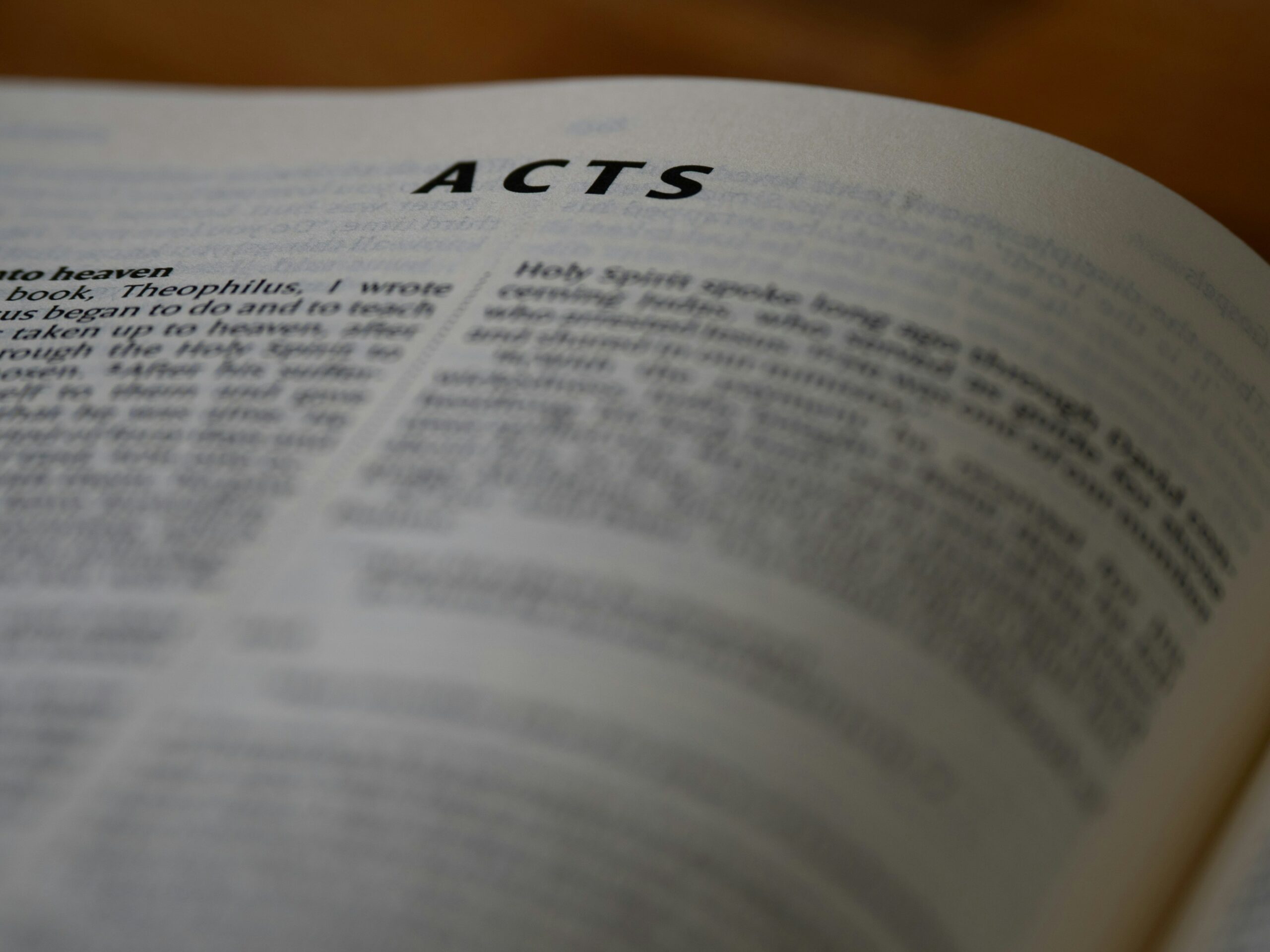
This sermon examines the Book of Acts to demonstrate that the resurrection of Christ is the foundational doctrine of the early church and the essential core of the gospel message. It traces the consistent testimony of Peter and Paul, who preached the resurrection to Jews, Gentiles, and even hostile religious leaders, affirming that it validates Christ’s identity and the power of God. The text argues that denying this doctrine undermines the entire fabric of Christianity, including salvation, the hope of eternal life, and the authority of Scripture. By highlighting the apostles’ willingness to face persecution for this truth, the sermon emphasizes that the resurrection is not merely a historical event but the guarantee of believers’ future resurrection and the definitive proof of God’s victory over death.
Transcript
If you would please take your
Bible and turn to the Book of Acts. This is the kind of stunt that
sometimes gets a guy voted out of church but we don’t even have
a quorum this morning. So we’re going to try to look
at the entire Book of Acts with regards to its testimony of the
doctrine of the resurrection. In our day and age, and really
it’s been this way throughout history in fits and starts, we
are facing a denial of the resurrection of Christ, but not just among
the unbelieving or academic community. We are facing a denial of the
resurrection of Christ even among those who profess to be believers. There have been attacks on the
resurrection throughout history. One of my least favorites is
what was called the Swoon Theory. But there have been many different
kinds of attacks over the course of history. All of them have
been an affront to the power of God. And in times past, we’ve
looked at these in more in depth. I just wanted to take a brief
survey of some of these. First, there is the falsehood
theory. that the disciples falsified Christ’s disappearance, that
they actually kidnapped the body and took it just as was warned
in the Gospel of Matthew, that the disciples intentionally stole
Christ’s body away, hid it, and then claimed that Christ had
risen from the dead. Well, that obliterates the trustworthiness
of Scripture, It’s unlikely that any fainthearted followers of
Christ, those who had fled in the night, would have had the
courage to go in and break open into a tomb, by which would immediately
have brought them the death penalty, and stolen a body and hid it
away, all for the purpose of claiming a lie. The swoon theory,
which theory I just mentioned a moment ago, my least favorite
of all, is that Jesus didn’t really die. He swooned or he
fainted and they put him in the tomb thinking he was dead and
he came to sometime later. Then there’s the vision therapy,
vision theory, pardon me, the vision theory where there was
this suggestion that it was purely subjective visions that people
reduced the resurrection to a mere myth, that they only thought
that they were seeing a risen savior. And I’m not going to
take the time to dismantle each of those arguments, except to
say that in varying degrees and with devastating consequences,
really, those attacks have been remarkably successful, not only
among unbelievers, but even in dissuading believers from their
faith in the resurrection. Well, the doctrine of resurrection
is among some circles deemed as expendable. Why would we fight
over this doctrine of all doctrines? For some, believing in the resurrection
is not necessary to enjoy a warm, pleasant relationship with God. It’s just not crucial for some
people. Spurgeon was not one of them.
Spurgeon said it this way, the resurrection of our divine Lord
from the dead is the cornerstone of Christian doctrine. Perhaps
I might more accurately call it the keystone of the arch of
Christianity. For if that fact could be disproved,
the whole fabric of the gospel would fall to the ground. Well,
and as we begin to look at the Book of Acts, I want to consider
this morning, what did the early church believe about the resurrection? How firmly committed were they
to the doctrine of the resurrection? If you’re in the book of Acts,
you’re likely in Acts chapter 1. Go ahead and turn there if
you’re not. Acts chapter 1. And in Acts chapter 1, Luke records
the final earthly hours of Jesus in what must have been a thrilling,
bewildering, intimate moment where Jesus Christ is addressing
his chosen apostles one last time. glanced down at verse 4,
gathering them together, he commanded them not to leave Jerusalem,
but to wait for what the Father had promised, to be baptized
with the Holy Spirit not many days from now. And so they had
heard this discussed before by Christ, but now today is the
day And Jesus adds in verse eight, you will receive power when the
Holy Spirit has come upon you. You shall be my witnesses, both
in Jerusalem and Judea and Samaria, even to the remotest part of
the earth. They didn’t know exactly what was going to happen, but
they knew it was going to be remarkable. They knew that the
Holy Spirit, the helper that Christ himself was going to give,
was going to come upon them in a new way and that there was
going to be remarkable power attended to that. So there had
to have been tremendous excitement among the apostles, even in the
face of knowing that the Lord was departing. But the whole
thing was perplexing to the disciples. Look at verse 9. After he had
said these things, he was lifted up while they were looking on,
and a cloud received him out of their sight. And as they were
gazing intently into the sky while he was going, behold, two
men in white clothing stood beside them. They also said, men of
Galilee, why do you stand looking into the sky? This Jesus who
has been taken up from you into heaven will come in just the
same way you’ve watched him go into heaven. And so with that,
Christ departs and they are left waiting. And that’s where we
pick it up, if you will, in verse 15. At this time, Peter stood
in the midst of the brethren, a gathering of about 120 persons
were there together and said, brethren, the scripture had to
be fulfilled, which the Holy Spirit foretold by the mouth
of David concerning Judas. Let me just pause and say this
is what Peter is doing. Peter is looking back into the
Old Testament and he knows that there is a particular prophecy
that points to the fact that they knew what Judas was going
to do. God knew it all along. He had
the prophets put it down in writing and that meant that Judas would
have to be replaced. Look at verse 16 again, the scripture
had to be fulfilled, which the Holy Spirit foretold by the mouth
of David concerning Judas, who became a guide to those who arrested
Jesus. For he was counted among us and
received his share in this ministry. And so he was one of the 12 is
what Peter is acknowledging. His argument comes in verse 20,
jump down if you would. For it is written in the book
of Psalms, let his homestead be made desolate and let no one
dwell in it and let another man take his office. This is Peter’s
argument from scripture that Judas had to be replaced. Why? He tells us in verse 21. Therefore, it is necessary that
of the men who have accompanied us all the time that the Lord
Jesus went in and out among us, beginning with the baptism of
John until the day that he was taken up from us, one of these
must become a witness with us of his resurrection. So greatly
did Peter and the apostles value the doctrine of the resurrection
that they determined it was absolutely necessary to find a twelfth apostle
to replace Judas, one who had seen the risen Savior. glance
down at that verse again just briefly. First of all, he says
he had to have accompanied the apostles during Christ’s earthly
ministry. Well, there were a lot of people.
There were the 12, but there were many disciples. There were
many disciples just even at the time around John the Baptist’s
ministry. And so he traces to that group
of people that were attending even John the Baptist’s ministry,
and says that he had to have been present even during that
time. He wanted him to know the full
scope of Christ’s earthly ministry. And he had to have been there
until the day when he was taken up. Now, it wasn’t just the 12.
Remember, even James, even the Lord’s brothers and his mother
were there when Christ was ascended into glory. And so Peter here
says it’s absolutely crucial that we find another witness.
And so, you know, the rest of the story, they put forward a
number of men, the lot fell to Matthias and he was chosen. The resurrection, the bottom
line, is of paramount importance. The apostles knew it, and their
entire ministry was built upon this truth. And right out of
the chutes, before even the bestowal of the Holy Spirit, Peter knows
well that they are going to have to have a 12th apostle as a witness
to the great things that they too had seen. James Boyce said
of the resurrection that the resurrection of Jesus is proof
that death is not the end of this life. Death is in fact defeated
for all who by faith are united to him. On the basis of the resurrection
of Jesus Christ, the believer can have perfect confidence and
the apostles had that. The apostles had confidence in
Christ because of their belief in the resurrection because they
had watched it happen. Turn, if you would, to chapter
2. In Acts chapter 2, we find essentially a meeting of the
saints, the church, if you will, waiting just as the Lord had
directed them in Acts chapter 1. And if you look at verse one,
it paints this picture so graphically. When the day of Pentecost had
come, they were all together in one place. Suddenly there
came from heaven a noise like a violent rushing wind. And it
filled the whole house where they were sitting. And it appeared
to them as tongues of fire distributing themselves. And they rested on
each one of them. And they were all filled with
the Holy Spirit, began to speak with other tongues as the Spirit
was giving them utterance. A fantastic scene. People from
all over the known world. Now there were Jews living in
Jerusalem, devout men from every nation under heaven. And when
this sound occurred, the crowds came together and they were bewildered
because each one of them was hearing them speak in his own
language. This was just a remarkable scene. People from all over the
known world, each one speaking and declaring a testimony of
Christ so that no matter where you were from, you could hear
it in your own language. A miracle. Jump down, if you
would, to verse 12. And they all continued in amazement
and great perplexity, saying to one another, what does this
mean? But others were mocking, saying they are full of sweet
wine. In other words, there were those in the crowd that mocked
these believers, declaring a testimony of Christ, who were suggesting
that they were already, early in the day, drunken. Now this
comment really seems to only provoke Peter to seize this moment
as an opportunity to preach his very first sermon. And he does
so beginning in verse 14. And he opens with a lengthy quote
from a minor prophet, Joel, where Peter explains the reception
of the Holy Spirit. This is exactly what Joel predicted.
This is exactly what Joel prophesied would happen. And coursing with
his newly given power from the Holy Spirit, Peter opens his
mouth and preaches what may be considered the first evangelistic
sermon of the early church. Watch what happens. Look at verse
14. Peter begins to preach and he says, men of Judea and all
you who live in Jerusalem, let this be known to you and give
heed to my words, for these men are not drunk as you suppose,
For it is only the third hour of the day, but this is what
was spoken through the prophet Joel. And from verses 17 through
21, he quotes this lengthy section from Joel. He basically counters
their argument that these guys are drunks. Jump down all the
way to verse 22, if you would. Peter then, having quoted Joel,
having vindicated these men, he begins to testify of Christ.
Men of Israel, listen to these words. Jesus the Nazarene, a
man attested to you by God with miracles and wonders and signs,
which God performed through him in your midst, just as you yourselves
know. This is just masterful. He basically
challenges them, their own memory, they watched and observed many
things that Christ did. even the raising of Lazarus from
the dead. This man delivered over by the predetermined plan
and foreknowledge of God, you nailed to the cross by the hands
of godless men and put him to death. They all knew this is
all yesterday’s news. They knew this already. What
they weren’t ready to assent to is what he begins to discuss
in verse 24. the resurrection of Christ. But
God raised him again, putting an end to the agony of death,
since it was impossible for him to be held in its power. What
Peter does is essentially extol the great value of the resurrection
to Christianity. God raised him up, and in so
doing, he put an end forever to the agony of death. Jump down, if you will. And by
the way, we’ll do a lot of jumping down. There’s no way that I could
go through the entire book of Acts in an hour. Verse 29, brethren,
I may confidently say to you regarding a patriarch, David,
that he both died and was buried and his tomb is with us to this
day. And so, because he was a prophet and knew that God had sworn to
him with an oath to seat one of his descendants on his throne,
he looked ahead and spoke of the resurrection of Christ. In
other words, Peter seizes upon this lengthy quote, and he tells
us that David prophesied of the resurrection of Christ. Look
at verse 32, this Jesus God raised up again to which we and I believe
that he may have even gestured to the 12 friends around him. We are all witnesses. We saw it with our own eyes. We met him and greeted him. We even had meals with him. Therefore,
having been exalted to the right hand of God, having received
from the father the promise of the Holy Spirit, he has poured
out, poured forth this which you now both see in here. In
other words, he comes full circle back to this whole allegation
that they were drunken. And he says the whole reason
that these men are behaving the way they are is a fulfillment
of scripture in the resurrection of Christ and the giving of the
Holy Spirit. Turn, if you would, to Acts chapter
3. Almost no sooner had Peter finished
preaching that sermon, he has another opportunity to preach
his second sermon. We find that in verse 11 of chapter
3. Here they heal lame man, and while he’s clinging
to Peter and John, all the people ran together to them at the so-called
portico of Solomon, full of amazement. But when Peter saw this, he replied
to the people, Men of Israel, why are you amazed at this? Or
why do you gaze at us as if we, by our own power or piety, we
made him walk? This wasn’t us. This wasn’t a
man-made deal. The God of Abraham, Isaac and
Jacob, the God of our fathers, have glorified his servant Jesus,
the one whom you delivered and disowned in the presence of Pilate
when he decided to release him. And so he continues this press
to indict the Jews who had crucified Christ. Even if they didn’t perform
the action, they are the ones that condemned him to death. But Peter, look at this merciful
Conclusion But you disowned the holy and righteous one verse
14 and asked for a murderer to be granted to you But put to
death the Prince of life the one whom God raised from the
dead a fact to which we The twelve of us are all witnesses Peter lays to them once again
the guilt the responsibility for Christ’s crucifixion, but
he also says to them, he wants them to know, this is Peter preaching
the gospel to the very ones who murdered Christ, and he says
to them that God raised him from the dead. He wanted them to know
that God All-powerful had raised the Lord Jesus from the dead
look at verse 16 on the basis of faith in his name It is the
name of Jesus which has strengthened this man Whom you see and know
and the faith which comes through him has given him this perfect
health in the presence of you all and now brethren Jewish brethren
I know that you acted in ignorance, just as your rulers did also.
But the things which God announced beforehand by the mouth of all
the prophets, that his Christ would suffer, he has fulfilled. Therefore, repent and return
so that your sins may be wiped away in order that times of refreshing
may come from the presence of the Lord and that he may send
Christ, Jesus, the Christ appointed for you, whom heaven must receive
until the period of restoration of all things about which God
spoke by the mouth of his holy prophets from ancient time. In other words, Peter preaches
the gospel He mercifully preaches the gospel to the very ones who
had killed the Lord Jesus Christ. And he does so by means of proclaiming
the resurrection. Charles Hodge. who is just such
a sound writer and commentator on the scriptures, declared it
this way. He said, it may safely be asserted
that the resurrection of Christ is at once the most important
and best authenticated fact in the history of the world. It
was predicted in the Old Testament. Check, we’ve already done that
one. It was foretold by Christ himself. It was a fact admitting
of easy verification. They weren’t able to produce
a body. The witnesses to the fact of
Christ was seen alive after his death were numerous, competent,
and on every account worthy of confidence. The testimony of
the Spirit continued to the present time and granted to all true
children of God a belief in the resurrection. So he closes by
saying, the effects produced by his gospel, the change that
it affected on the state of the world, allow no other rational
conclusion than the truth of his death and subsequent resurrection. Turn, if you will, to chapter
four. In chapter four, note that it’s
the preaching of the resurrection that is so important to Peter,
so important to the apostles, and it’s so hated by the world
that it ends up getting Peter and John arrested. Look at verse
one of chapter four. As they were speaking to the
people, the priests and the captain of the temple guard, the Sadducees,
came up to them, being greatly disturbed because they were teaching
the people and proclaiming in Jesus the resurrection from the
dead. Well, this gets them arrested
and they put them in jail and it says, look at verse four,
many of those who had heard the message believed the number of
the men who came to be about 5,000. On the next day, the rulers
and elders and scribes were gathered together in Jerusalem. And Annas
the high priest was there, and Caiaphas, and John, and Alexander,
and all who were of high priestly descent. When they had placed
them in the center, they began to inquire, by what power and
what name have you done this?” And so they’ve got Peter and
John right where they want them, or do they? Because Peter and
John seize hold of this opportunity to proclaim one more time, not
just Christ, not just indicting them for his crucifixion, but
note this, they proclaim his resurrection, verse eight. Then
Peter, filled with the Holy Spirit, said to them, rulers and elders
of the people. If we are on trial today for
a benefit done to a sick man as to how this man has been made
well, let it be known to all of you and to all the people
of Israel that by the name of Jesus Christ, the Nazarene, whom
you crucified, whom God raised from the dead, by this name,
this man stands before you in good health. The resurrection
of Christ was so important to them that even in the face of
persecution, even in the face of probably the death penalty,
they were going to be faithful and remain faithful and preach
Christ, not only Christ crucified, but Christ raised. One solid Theologian put it this
way, the resurrection of Christ constituted a declaration of
the Father that the enemy had been vanquished, the penalty
had been paid, and the condition on which life was promised had
been met. It symbolized what was destined
to happen to the members of Christ’s body. in their justification,
spiritual birth and resurrection. And so once again, Peter is proclaiming
to them the means of grace. He’s proclaiming to them salvation. If they would only humble themselves
and look to Christ. Turn, if you would, to the very
end of chapter four. Most of you know this if you’ve
been through one of our studies of the book of Acts, but there
are punctuated throughout the book of Acts, there are these
series of progress reports. I think more than 20 throughout
the book of Acts. Well, we come to one of those
progress reports that really is just telling readers how the
church is faring at that juncture. And it kind of gives the reader
a breather where we can pause and perhaps we’re wondering,
how is the church faring? And that’s exactly what these
little insertions accomplish. They tell us how the church is
doing in the face of such difficulty and persecution. And so the progress
report, one of the first that we see, falls in verse 32 and
33. And the congregation of those
who believed were of one heart and soul, and not one of them
claimed that anything belonging to him was his own, but all things
were common property to them. This is not teaching communism
or even socialism. It is teaching a magnanimous
spirit that was present in the church, looking for opportunities
to serve others. Look at verse 33, though. And
with great power, the apostles were giving testimony to the
resurrection of the Lord Jesus, and abundant grace was on them
all. They had bought in, they had believed, they saw the resurrection
now as vital to the preaching of the gospel. It wasn’t always
this way. The disciples didn’t understand
immediately what had taken place, but eventually they did. Remember
Mary Magdalene and Joanna and Mary, the mother of James. They’re
all standing there at the empty tomb and the angel had to report
to them. He’s not here. He’s risen. Remember
how he spoke to you while you were still in Galilee. In Luke
24, Cleopas and another follower meet up with Christ, a man that
they didn’t recognize as Jesus, and they express their disappointment
in the death of their Messiah. And Jesus himself says, Oh, foolish
man and slow of heart to believe in all that the prophets had
spoken. Was it not necessary for the Christ to suffer and to enter into his glory?
And then beginning with Moses and with all the prophets, he
explained to them the things concerning himself in the scriptures.
Then at the end of Luke 24. Those same two disciples burst
into the meeting of the apostles and they report to them what
had happened, that they had met Christ on the road. And even
as they are explaining that Christ is alive, Christ is resurrected,
Jesus stands in their midst. And he said, these are my words,
which I spoke to you while I was still with you, that all things
which are written about me in the law of Moses and the prophets
must be fulfilled, that opening their minds to understand the
scriptures, he said to him, thus it is written that the Christ
would suffer and rise again from the dead on the third day. They
didn’t always believe it, but now they did. Now they were willing
to proclaim the truth, even if it meant death. Now they were
willing to proclaim the truth with an abundant grace and with
great power, as it says in Acts 4. Turn, if you would, to Acts
5, Acts chapter 5. Don’t panic. We’re not going
to hit all 28 chapters. But in Acts chapter 5, the matter
comes up again. This is what I would label as
the second period of persecution in the church, the second great
period of persecution. Pick it up if you would at verse
17. But the high priest rose up along
with his associates, that is the sect of the Sadducees, and
they were filled with jealousy. They laid hands on the apostles,
put them in a public jail, and there they are left to cool their
heels in jail, except that an angel of the Lord springs them
out of prison and they go right back. I mean, if there was ever
a time to, you know what? We’re just rubbing these guys
raw. We’re provoking them unnecessarily. Let’s drop this whole crucifixion
and resurrection thing. Let’s go on to some nice little
Sunday school lesson about one of the patriarchs. That’s not
what they did. They went right back out and
began again preaching the gospel. Pick it up in verse 25. Someone
came and reported to the authorities, to them it says, the men whom
you put in prison are standing in a temple teaching the people.
Then the captain went along with the officers and proceeded to
bring them back without violence, for they are afraid of the people
that they might be stoned. When they had brought them, they
stood them before the council. The high priest questioned them,
saying, We gave you strict orders not to continue teaching in this
name. And yet you have filled Jerusalem
with your teaching and you intend to bring this man’s blood upon
us. You see, that’s the way they
read the indictment. Rather than accepting their responsibility
and seeing the very hand of God in that. Crucifixion, they thought. that Peter and John only wanted
to indict them so as to convict them. But Peter responds in verse
29, but Peter and the apostles answered, we must obey God rather
than men. The God of our fathers raised
up Jesus, whom you had put to death by hanging him on a cross.
Now there is a very subtle difference here that occurs for the first
time. Here are the disciples functioning
in the face of persecution, but this time their argument is reversed. And it’s for a fact. They address
the resurrection even before they address his death. Whereas
the apostles had been confronting Christ’s enemies with his murder,
now they address the one thing that provoked them even more,
his resurrection. The God of our fathers raised
up Jesus. Yes. Oh, by the way, the one
whom you put to death. By hanging him on a cross, he
is the one whom God exalted to his right hand as prince and
savior to grant repentance to Israel, forgiveness of sins. And we are witnesses of these
things. And so is the Holy Spirit whom God has given to those who
obey him. But when they heard this. Here’s
what they thought of the resurrection. When they heard this, they were
cut to the quick and intended to kill them. It was no longer
this indictment over his murder. Now they have a very similar
hatred, even for the doctrine of the resurrection. Turn, if
you would, to chapter 10. Let’s leap forward a little bit.
That’ll put you at ease. We’re almost halfway through
the book of Acts. In Acts chapter 10, Peter still,
this is the context where Peter is dealing with Cornelius and
his group that they come and they find Peter. Peter brings
them in, he feeds them. He, the next day, escorts them
to go and meet with Cornelius. And we pick it up in verse 34. Opening his mouth, Peter said,
I most certainly understand now that God is not one to show partiality. This is a crucial section in
God’s word. Remember the sheet full of animals
that had come down from heaven? And Peter thought at first that
it was just a dietary thing. And the whole point of it was
that he was opening, God was opening the gospel to the Gentiles. And so Peter opens his door to
Gentile servants of Cornelius. The next day goes and eats with
Cornelius. This is the course of that particular
message. I most certainly understand now
that God is not one to show partiality, but in every nation, the man
who fears him and does what is right is welcome to him. The
word which he sent to the sons of Israel, preaching peace through
Jesus Christ, he is Lord of all. You yourselves know this thing
which took place throughout all Judea, starting in Galilee, from
the baptism which John proclaimed. You know of Jesus of Nazareth,
how God anointed him with the Holy Spirit and with power, and
how he went about doing good and healing all who were oppressed
of the devil, for God was with him. We who are witnesses of
all the things he did both in the land of the Jews and in Jerusalem,
they also put him to death by hanging him on the cross. Now
remember, Jesus Christ, Peter here is preaching that Jesus
Christ is available to the Gentiles. He’s preaching to Gentiles. Look
at verse 40, God raised him up again on the third day. This
is also an important message for the Gentiles. And God granted
him that he become visible, not to all the people, but to witnesses
who were chosen beforehand by God, that is to us who ate and
drank with him after he rose from the dead. And so here in
the course of preaching the gospel, this for the very first occasion
to Gentiles, Peter sees that it is absolutely indispensable
to the gospel itself that the doctrine of the resurrection
be clearly articulated. But look at it, he says. He raised
him up, granted him that he become visible, not to all the people.
This is a testimony in and of itself. And he’s hearkening back
to that first morning at the tomb, resurrection day. And we
know that Mary Magdalene was just the first of many to see
the risen Savior. They’re recorded in John chapter
20. And then it says, to all the disciples, Matthew 18, 9,
and then to Cleopas and his friend on the road to Emmaus, and then
to the 10 apostles when they come bursting in and they tell
the 10 apostles, Thomas accepted. And then to the 11 apostles,
now Thomas is with them, recorded in John 20. and then to the seven
apostles who were fishing, and then to 11 apostles in Galilee,
Matthew 28, 16, and then 1 Corinthians records to more than 500 brethren,
and then to James, 1 Corinthians 15, 7, which we don’t even know
when this took place. Only Paul, by the Spirit, testified. to the disciples in Jerusalem,
Acts chapter one, which verses we just looked at, and then to
Paul on the road to Damascus. Peter says, God granted that
Christ become visible. He not only raised him from the
dead, but he revealed him to those who were still on the earth,
not to everyone, but to witnesses, which is exactly what Peter is
doing. He’s bearing witness to the risen Christ. If you would, please turn to
Acts chapter 13. Acts chapter 13. Now we round
the corner, we’re headed for home. We’re halfway through the
book of Acts, whereas Peter in his ministry had been the focus
of the first 12 chapters of the book of Acts. As you know, now
Luke turns his attention primarily to Paul for the remainder of
this historical account of the early church. Note how winsome
Paul is as we begin to look at his sermon here, how he addresses
his countrymen, the Jews. He continues to address them
without even missing a beat by expanding on the great blessing
that God had given to Israel and really to the whole world
in sending the Savior, the Lord Jesus Christ, as often as he
can. Paul here, among his countrymen,
within the circle of Israel, refers to them as brethren, Abraham’s
family. And essentially he says that
just as God has always provided for his people, he has done so
again by sending Jesus as Savior. Paul’s primary point here. is to recount God’s incredible
faithfulness to the nation of Israel. And he chose that he
chose his people. He blessed his people. He took
them from hateful nations. He provided them leaders. When
they childishly clamored for a king, God graciously gave them
what they wanted. But ultimately, The whole point
of Paul’s message is to move down towards the giving of a
Savior. If you would, just look at verse
16 briefly. Paul stood up, motioning with
his hands, said, men of Israel, he’s talking to Jews, and you
who fear God, listen. And he begins by telling them
first, verse 17, the God who chose our fathers, he made the
people great. He’s talking about their multiplication
there in Egypt. He led them out, ultimately.
Verse 18, he put up with them in the wilderness, which argument
we just considered in the epistle to the Hebrews. Verse 19, he
distributed their land. Verse 20, he gave them judges.
Verse 21, he gave them Saul, the king that they clamored for.
Ultimately, verse 22, he raised up David. Verse 23, finally,
God has brought to Israel a savior, Jesus. This is Paul proclaiming
to the Jews that God has been so incredibly gracious. Pick
it up if you would in verse 26. Brethren, sons of Abraham’s family
and those among you who fear God, to us the message of this
salvation has been sent. In other words, he says this
gospel is for us, Jews. Verse 27, for those who live
in Jerusalem and the rulers, recognizing neither him nor the
utterances of the prophets, which are read every Sabbath, fulfilled
these by condemning him. Remember, this was the predetermined
plan and foreknowledge of God. And though they found no ground
for putting him to death, they asked Pilate that he might be
executed. When they had carried out all
that was written concerning him, they took him down from the cross
and laid him in a tomb. Paul is recounting yesterday’s
news. They already had heard all about
this. It was well known throughout
the Jewish world what had taken place in Jerusalem. What they
weren’t ready to assent to, just like the people of Jerusalem
weren’t ready to assent to, was that God had raised him. Look,
if you would, at verse 30. But God raised him from the dead. And for many days he appeared
to those who came up with him from Galilee to the very ones
who are now witnesses to the people. In other words, Paul
says this is verified historically. People saw the resurrected Christ. And this, he goes on to say in
verses 32 and 33, all the way down to verse 37, this was a
fulfillment of prophecy. Go back and look at your Old
Testament, he says, it’s there. All you have to do is read it.
And then finally, he extends a gracious offer of salvation
to these Jewish people. Paul here declares his application
of the resurrection of Christ And it appears in our particular
translation as several points or thoughts. It’s really one.
It’s one thought that through faith in Jesus Christ and his
resurrection, we have what no one could ever enjoy by trying
to live up to the law in or through Faith in the Lord
Jesus Christ, whose death is confirmed as accepted by the
Father by means of the resurrection, we have forgiveness of sin. Turn, if you would, to Acts 17. Acts 17. Now, most of us are probably
very familiar with this. Paul is in Athens. He is walking
through the city, and Athens was known as the religious center
of Greece, where one historian quipped, they have more gods
than people in Athens. And Paul is walking past all
the statues, Zeus, and Neptune, and Diana, and Venus, and so
on and so forth, until he finally comes to a statue without a nameplate. They didn’t know who this particular
God was. He was to an unknown God. And
Paul begins to declare that God. He begins to proclaim that God. If you would pick up in verse
22 of chapter 17, Paul stood in the midst of the Areopagus
and said, men of Athens, I observed that you are very religious in
all respects. For while I was passing through
and examining the objects of your worship, I found an altar
with this inscription to an unknown God. Therefore, what you worship
in ignorance, this I proclaim to you.” In other words, Paul
says he seizes the moment that, look, here I am in the midst
of a heathen land where they worship all kinds of false gods
that are no gods. And he says, let me tell you
about this one that you don’t know. The God who made the world and
all things in it, since he is Lord of heaven and earth, does
not dwell in temples made of hands. Remember, Rome was famous
for their magnificent temples dedicated to their so-called
gods. Neither is he served by human
hands as though he needed anything. since he himself gives to all
life and breath and all things. And he made from one every nation
of mankind to live on all the face of the earth, having determined
their appointed times and the boundaries of their habitation,
that they should seek God. God did this as a favor to them
that they might look up and look for God, if perhaps they might
grope for him and find him, though he is not far from each one of
us, for in him we live and move and exist. Even as some of your
own poets have said, for we are also his offspring. Being then
the offspring of God, we ought not to think that the divine
nature is like gold or silver or stone, an image formed by
the art and thought of man. Now he takes them back to their
statues. He says, this is not God. Let
me tell you about God. Therefore, verse 30, having overlooked
the times of ignorance, God is now declaring to all men everywhere
should repent, because he has fixed a day in which he will
judge the world in righteousness through a man whom he has appointed,
having furnished proof to all men by raising him from the dead. The doctrine of the resurrection
was absolutely crucial to preach, not just to God-fearers like
Cornelius, not just to Jews like Peter had done, like Paul had
done, but Paul saw it as absolutely indispensable to preach the doctrine
of the resurrection even to ragtag, full-blown heathens. When they heard of the resurrection
of the dead, some began to sneer, but others said, we shall hear,
we shall hear you again concerning this. They saw the almighty power
of God on display. One faithful commentator said,
if our Lord, if our Lord’s record ended at the cross, it should
drive us to despair. But he is indeed declared to
be the son of God with power by his resurrection from the
dead. Turn, if you would, to chapter
23. And now you can leave off panicking
because this is the last reference to the resurrection in the book
of Acts, Acts chapter 23. It’s Paul’s testimony before
the council. Remember, he gets arrested and
this is ultimately a series of trials that he’s engaged in.
But looking up at the Jewish council, verse one, it says,
brethren, I’ve lived my life with a perfectly good conscience
before God up to this day. The high priest ultimately engages
him. Jump down for the sake of time
to verse six. But perceiving that one group
were Sadducees and the other Pharisees is a meeting of the
Jews, a council of the Jews called together to examine the apostle
Paul. And it says that Paul began crying
out in the council, Brethren, I am a Pharisee, a son of Pharisees. I am on trial for the hope and
the resurrection of the dead. And now he takes the resurrection
beyond just Christ’s resurrection, and he applies it to all believers. And you know what happens. It
splits the meeting in two. They begin arguing because some
of them didn’t believe in a resurrection. But that is the glorious truth
of the resurrection, that it isn’t just a matter of Christ
being raised from the dead. As good of news as that would
be, Thomas Watson put it this way,
Christ is risen, therefore the bodies of the saints must rise. Christ’s rising is a pledge of
our resurrection as the first fruits is a sure evidence that
the harvest is coming. So the resurrection of Christ
is sure evidence of the rising of our bodies from the grave.
It’s glorious news, he says, that Christ’s resurrection is
our resurrection. And so maybe when we started
today, maybe you were of the mind. We know that there are
many, even in the church in this day, that are of the mind that
the resurrection isn’t worth fighting for. That like so many
other doctrines that have fallen by the wayside, we can continue
to be religious. We can continue to claim that
we’re Christians. We just don’t want to divide
over a doctrine that’s controversial. And maybe the doctrine of the
resurrection isn’t that important. Well, you know, this is the last
time that Paul mentions, that Paul in the book of Acts mentions
the resurrection, but it wasn’t the last time that he addressed
it, because in his epistles, it’s in almost every epistle.
And in his epistles, he declares what is at stake if we set aside
the doctrine of the resurrection. Do you realize that if we set
aside the doctrine of the resurrection, The power of God comes into play
because Paul says in Galatians 1.1, God, the father who raised
him from the dead. That if God, the father didn’t
raise Jesus from the dead, then God’s power must be questioned. Jesus as savior must be questioned. Paul talks about this in Romans
1.4. He was declared the son of God
with power by the resurrection from the dead. Jesus Christ’s
lordship comes into question. Romans 8, 34, Jesus Christ, who
died, yes, rather, who was raised, who is at the right hand of God,
who if he didn’t raise from the dead, he isn’t seated at the
right hand of God and his lordship is called into question. If he
wasn’t raised from the dead, his eternal nature comes into
question. Romans 6, 9, knowing that Christ having been raised
from the dead is never to die again. It’s not just that he’s
not raised from the dead. You would have to suggest that
he remains dead. Not only the power of God, Jesus
as Savior, Lordship, His eternal nature, the motive and hope of
salvation. What do we have to look forward
to if Christ hasn’t been raised from the dead? This is exactly
Paul’s argument in Romans 6. As Christ was raised from the
dead through the glory of the Father, so we too might walk
in newness of life. Our union with him is tied to
this, Romans 7. Our salvation is tied to this,
Colossians 2.12, Ephesians 2.6. Our resurrection is tied to this,
our resurrection to eternal life, Romans 8.11, 1 Corinthians 6. Everything is bound up in the
resurrection, but there is at least one other major thing that’s
tied up. if we set aside the doctrine
of the resurrection. And this one thing touches everything
we’ve just mentioned. If there is no resurrection,
the power of God is destroyed, Jesus as Savior, the Lordship
of Christ, His eternal nature, our union with Him, our motive
and hope of salvation, all falls by the wayside. Because if there
is no resurrection, the gospel is destroyed. As I said, the
gospel touches the saviorhood of Christ, our salvation, our
future resurrection, the veracity of scripture, justification,
victory over death, the power of God. All things are encompassed
in the gospel message. No wonder J.C. Ryle said it this
way. We need not wonder that so much
importance is attached to the Lord’s resurrection. It is the
seal and headstone of the great work of redemption, which he
came to do. It is the crowning proof that
he has paid the debt which he undertook to pay on our behalf. He won the battle which he has
fought to deliver from hell and is accepted as our guarantee.
our substitute by the Father in heaven. Would you bow with
me in a closing word of prayer? Our merciful God, we could no
easier let go of the doctrine of the resurrection than we could
even of Christ himself. Lord, we thank you and praise
you for the testimony of the writer, Luke, by the counsel of Almighty God himself
attending by the Holy Spirit, tracing the doctrine of the resurrection
and its importance, not just through the early church, not
just to the Jews, not just to those who were inclined to be
religious like Cornelius, but even to absolute heathen, godless,
idolaters, The doctrine of the resurrection is absolutely crucial,
and we rejoice that you raised our Savior. And that because of that, we
have the hope of eternal life. Lord, we thank you and praise
you for the privilege we have to worship you. It’s in Jesus’
name that we pray, amen.
Messages: 15