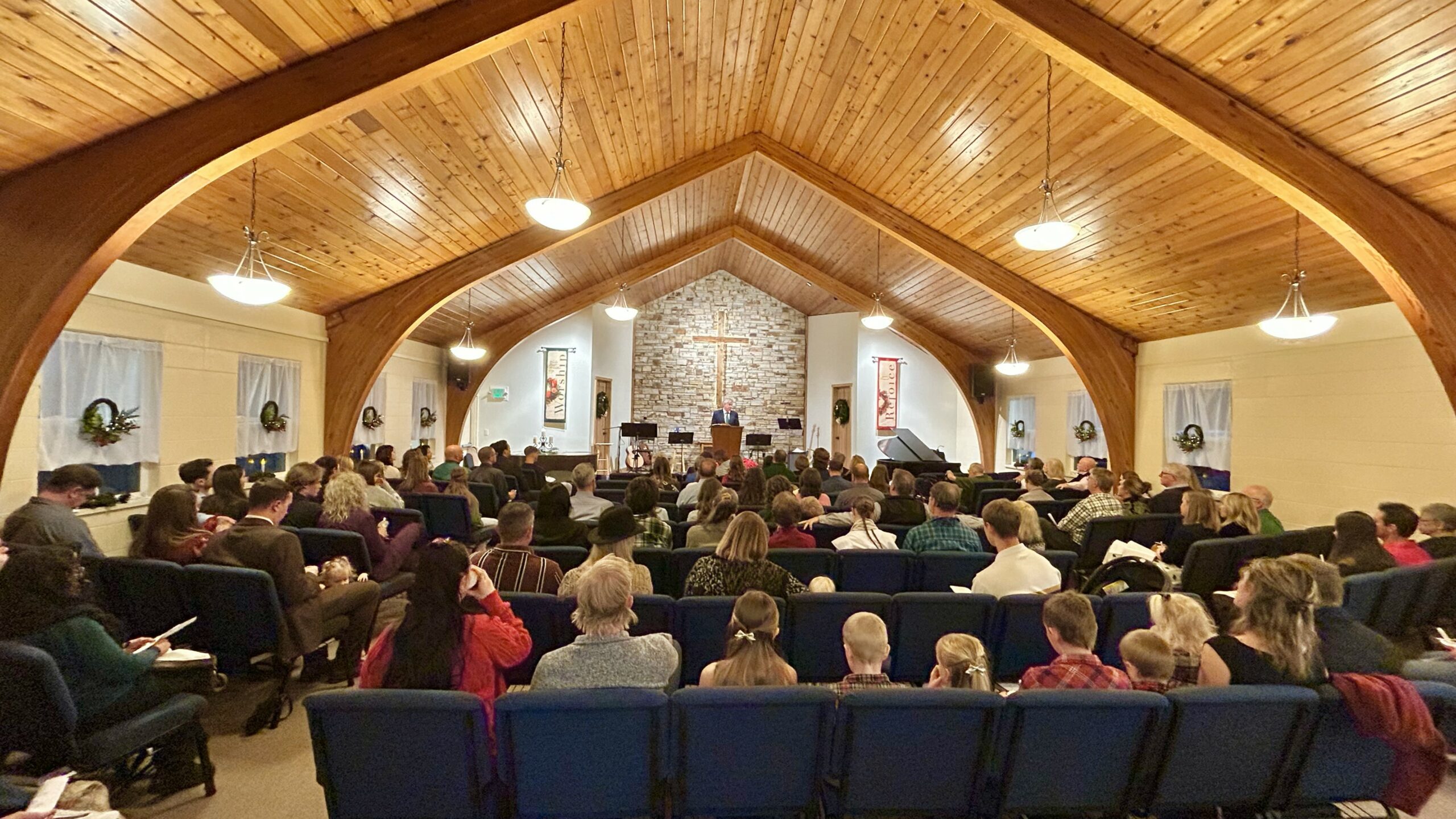
Focus on the Church Part 1
The sermon establishes the theological foundation of the church as a divinely ordained institution initiated at Pentecost, distinct from human invention or denominational labels. It explores the dual nature of the church as both a visible local assembly and an invisible universal body of true believers, emphasizing that only God discerns the genuine faith of individuals. The message highlights the rich biblical metaphors used to describe the church, including Christ’s body, bride, flock, temple, and family, to illustrate its multifaceted identity and purpose. Central to the exposition is the promise in Matthew 16 that Jesus Christ is the builder of the church, ensuring its permanence and growth despite persecution or human failure. The study concludes by framing the church’s simultaneous enjoyment of peace and increase as a divine work, setting the stage for a deeper examination of how the Holy Spirit sustains this growth.
Transcript
Church, the doctrine of the church,
your place in it, my place in it, God’s place in it. I hope
that in the next eight weeks what we want to do is just. Remind
God’s people or instruct those if you’re new, what our positions
are with regards to the church so that we can have a foundation,
a groundwork that from which we can operate in a spirit of
oneness. We’ll begin this morning. I’ll
begin quite generally. We’ll look at the nature of the
church primacy of it in the weeks to come. We’ll begin to look
at the revelation to the church, God’s word, and how that is to
be used and applied in the rather the authoritative exposition
of his word. ultimately revealing in sound
doctrine. In the weeks to come, we’ll look
at the practice and the function of the church, that the church
is to ultimately glorify God. But in the meantime, they are
to build up the saints and proclaim the good news of Christ to the
world. And then we’ll probably round
out our study with a consideration of the people of the church,
the membership and the leadership And we hope that by then we will
all be on the same page. We probably won’t all agree on
everything, but at least you’ll know where we’re coming from.
If you would take your Bibles and open to the Book of Acts. The Book of Acts, we had occasion
to study the Book of Acts several years ago in Sunday school. In our New Testament overview,
I went over the book of Acts as well, and I introduced a lot
of people to a phenomenon in the book of Acts that they were
previously unfamiliar with. Years ago, I took a winter in
seminary that One prof taught and it was really
an invigorating study I had I had always enjoyed the Book of Acts
but it was just so enriching to see some of the structure
of the Book of Acts and some of its really unique features.
One of the unique features is that punctuated throughout the
Book of Acts there are what I what I was introduced to as progress
reports how the church is doing how the church is faring. The
opening, the initial progress report you see in chapter one,
verse 14. And this is about how these go,
it just is kind of a window into how the church is faring in the
world. And it says that these all with
one mind were continually devoting themselves to prayer. Now, the
church hasn’t actually come into being yet. There are some of
the constituent elements there, most notably God’s people, but
it lacks organization and it lacks one other key element,
the Holy Spirit. The second major progress report
comes in Acts in Chapter 2, verse 41. Chapter 2, verse 41, Luke records,
so then those who had received his word were baptized. And that
day there were added about three thousand souls. They were continually
devoting themselves to the apostles teaching and to fellowship to
the breaking of bread and to prayer. Everyone kept feeling
a sense of awe and many wonders and signs were taking place through
the apostles and all those who had believed for together and
had all things in common. And they began selling their
property and possessions and were sharing them with all as
anyone might have need day by day continuing with one mind
in the temple and breaking bread from house to house. They were
taking their meals together with gladness and sincerity of heart
praising God and having favor with all the people and the Lord
was adding to their number day by day. Those who are being saved. That’s the first major progress
report, and we’re not going to go through all of them. You get
another one in Acts 4.4, that many of those who had heard the
message believed. You get another one in Acts 4.32
through 35. Another one in Acts 5.41 and
42, which basically points to the fact that every day in the
temple and from house to house, they kept on teaching and teaching
and preaching rather Jesus as the Christ. You get still another
in Acts 6-7. The number of the disciples continued
to increase. Another one in Acts 4-8. Pardon
me, 8-4-8. Another one in chapter 12, verse
24. Another one in chapter 16, verse
5. The churches were being strengthened
in their faith and were increasing in number daily. But I want to
take you back. If you’ve been flipping all the
way or I want to take you forward, if you parked in Acts chapter
two, go to Acts chapter nine, verse thirty one. Where we get yet another progress
report. And this progress report will
be the essentially the expositional framework for our time together
this morning. In Acts 9, verse 31, it says,
So the church throughout all Judea and Galilee and Samaria
enjoyed peace, being built up and going on in the fear of the
Lord and in the comfort of the Holy Spirit, it continued to
increase. If you wanted to, and if you
know me, this is the first place I start, if you want to break
it down to the simplest sentence, the church enjoyed peace And
it continued to increase. That is the most simple report
that could be broken out from that message. The church enjoyed
peace and it continued to increase. The King James uses the word
rest there for peace. We’ll look at specifically what
is in view there. But the church was enjoying a
season of peace as it was growing. The first thing that you would
have to say as you back away from that particular verse introduced
that word church and interjected into that discussion you would
have to back away from the totality of the New Testament and look
upon it and say that the church first and foremost is a God ordained
institution. This was not men’s idea. Men
did not come together and say, I know, let’s meet together.
And when we do, let’s call it the church and let’s begin to
put forward a system of government and let’s begin to put forward
a plan for worship. That’s not at all what happened.
This was God’s doing. This is God’s institution. As
one said it, the church is God’s assembly. Its beginning, its
history and its glorious destiny all rest upon the initiative
and the power of divine grace. It’s God’s church. Its people
are called forth by God, incorporated into Christ and indwelt by the
Holy Spirit. And so as such, the church is
the repository of God’s grace. It’s the repository of God’s
blessings. It’s the repository of the giftedness
of God’s people. It’s the repository of the resources
of God’s people, the officers, the word of God, the ordinances,
the discipline of the church. All are given to the church by
God. And as such. I don’t mean to
say. that God can’t or won’t use a
parachurch organization or somebody that is off by themselves disconnected
from the church. God can do whatever God wants
to do. But this is the institution that
God ordained. This is the institution that
God promised to build. And as such, the church is the
primary instrument through which he ministers in the world. Second statement I would make
about the church that we would observe as we back away and look
at the church and the teaching of it in the New Testament. Not
only is the church a God ordained institution, the church is a
dynamic institution. Which is comprised of all believers.
This answers the basic question is what what is the church when
you begin to say what is the church? A lot of times you’ll
hear people refer to the Baptist church. Or the Presbyterian church,
as if that is the totality of the church. Essentially, the Greek word originally. Which word is Ecclesia in the
Greek, it came from the word Ekkaleo, which means to call
out or to summon, and so some have simply called it the called
out ones who were gathered together. The our particular English word
we tend to use it in a number of different ways. We can refer
to a place. We can refer to a building. We
can refer to a local organization of believers. That’s the way
that I would prefer to look at it. This building is not a church
though we tend to speak of it as such. The church is the body
of believers. You are the church. And as I said a moment ago, we
have almost an absurd tendency to speak of the church with regards
to denominations. That is not the church. It is
a portion, a sliver of it. Originally, this word, as I said,
referred to an assembly of people, and the word was used very sparsely
in the gospels only three times. But outside of the gospel, it’s
used more than 100 times. Now, as I said, essentially Ecclesia
began to be known or began to refer to a local assembly, whether
it was for governmental purposes or or even nefarious purposes. But at the advent of the New
Testament church, the word soon became synonymous with the Christian
local body of believers and ultimately the Christian church in general. in a universal sense. The word
also pointed to, as I said, the universal church, not a particular
local assembly, but all Christians everywhere. As one described
that J.C. Ryle said, it’s the blessed company
of all faithful people. I love that. The blessed company
of all faithful people, the whole body of believers of every age
and tongue and people. It is a church composed of all
who are washed in Christ’s blood, clothed in Christ’s righteousness
and renewed by Christ’s spirit, joined to Christ by faith. It’s the blessed company. And
what a great way to speak of each other. You’re blessed. You’re
blessed. I’m blessed. And together we
come together and that is what constitutes the church. It is
the congregation the gathering the assembly of the faithful.
The third statement I would make regarding the church as you back
away and look at the totality of the teaching in the New Testament.
Is the church was initiated by God at Pentecost. That’s what
I believe that answers the question essentially when was the church
established. Now, some say that the idea of
the church can be traced all the way back to the covenant
with God and Abraham. Others would even go further
than that, and they would trace the church all the way back to
Adam and Eve. That here you have a gathering.
Ultimately, the gathering began to grow and that that was the
initial church. Well, I believe the church is
a new institution in God’s economy, which began at the giving of
the Holy Spirit At Pentecost, even those people who see a distinction,
though, between the church in Israel sometimes have a diversity
of opinion about the starting point of the church. Some say
that Jesus started the church during his earthly ministry,
which. Becomes a little problematic
as we look at some of the verses in question. Some say that the
church some hyper dispensationalists say that the church wasn’t started
until Paul came onto the scene with his at the outset rather
of his ministry later in the book of Acts. I don’t see that
at all. Most people and this is where
I am where we are is that the church started as Christ had
promised that the giving of the spirits at Pentecost Jesus When
Jesus spoke of the church in the Gospels Jesus was speaking
about a future institution. He promises there that he will
future build his church. Certainly the apostles were the
core of that they were some of the initial members they were
there at Pentecost. As the church was initiated,
but he is not doing so when he promises to Peter that he would
build his church. Another point to consider there
that if the church. If the church is truly the body
of Christ, then it is only logical that that body must be the redeemed
people of God. Who are redeemed. through their
faith in the finished work of Jesus on the cross. So Jesus
can’t be talking about the church as already having begun before
he’s even gone to the cross. Ultimately, though, Pentecost
is also the fulfillment of a very simple, but clear promise that
Christ had given to his own apostles, the promise of the Holy Spirit.
And as such, the church As one said, is the new creation of
God, which rests upon the work of Jesus Christ. It came into
actual historical reality when Christ baptized his disciples
with the promised Holy Spirit at Pentecost. So the church. As I suggested, is the institution
established by God at Pentecost. During his earthly ministry,
Jesus had promised to send a helper and in fulfillment of that promise,
a new ministry of the Holy Spirit began at Pentecost. And during
that earthly period of the church, the Holy Spirit manifested numerous
signs and gifts for authentication of the apostolic ministry. And
the Holy Spirit continues his work in building his church to
this day. The fourth statement. that I would make regarding the
church from what we gathered from the New Testament is that
the church has both a visible and an invisible element to it.
This statement answers the question, where was or probably more appropriately,
where is the church? Somebody wanted to invite you
to church, they’d say, where is the church? And in essence,
as we look back To the early testimony of the church that
would have been a very appropriate question. Where is the church
even the statement here in Acts 931 begs the question. Look at
the passage again. So the church throughout all
Judea and Galilee and Samaria. So are we to say that there was
one local fellowship in Judea. And that there was another local
fellowship in Galilee and that there was yet another local fellowship
in Samaria. Three distinct churches. Or were
we to understand that the gospel had so permeated these three
cities these three regions that the entirety of them was considered
to be a church. It’s silly. It really is silly.
Here the reference to Judea and Galilee and Samaria presents
the church as something larger than any one local gathering.
And yet a reference to some kind of universal gathering of that
body. And what you have here is an
indication that it is at the same time both. The church can be local and the
church is at the same time has a universal element to it. It
has a visible and an invisible aspect. The visible element which
is seen locally is comprised of professing believers some
who are true Christians and some who are not even in our midst.
As one said, the visible church throughout the world will always
include some unbelievers. That’s just the sad reality.
That someone could come day after day, week after week, year after
year, and never be touched by God’s saving grace, never come
to faith, never yield in repentance, never place their faith in the
Lord Jesus Christ. That’s just the sad reality.
I’ve said it before, and it’s a it’s a it’s a sobering thought. I think that there will be surprises
on both ends of the spectrum in heaven. There will be people
there that we look at and say, whoa, how did you get in? Well,
we know how they got in through faith in the Lord Jesus, through
the righteousness of Christ. But I think there will be, sadly,
other surprises as well. I sat next to them in church
for years. Why, he was a professing believer. He was a servant of
the church. But we can’t see like God sees. That’s what led Augustine one
time to. Make the following comment, he
said, there are many sheep without and many wolves within. There
are people, unfortunately, I believe true Christians that are out
there wandering about aimlessly without a local church. unattached
to anything locally but they’ve professed faith in Christ. And
unfortunately the church has seen its share of wolves over
the centuries. So the invisible or pardon me
so that pardon me the invisible church is comprised of all of
those who are truly genuinely called out. We don’t know who
they are. The genuine believing people
of God. And so, like in this passage
in Acts 931, the visible aspect of the church is in view since
there would be no real perceptible way of determining the increase
of the invisible church. If you were to go to Judea and
say, where is the church in Judea? It’s that building over there.
And the church in Judea is only those believers that are attached
to that local assembly. It’s not the entire city. One commentator very carefully
laid this out when he said in its true spiritual reality, as
the fellowship of all genuine believers, the church is invisible.
This is because we cannot see the spiritual condition of people’s
hearts. We can wonder at times whether
somebody is really a professing believer. We can even go to them
again with the gospel and say, based on how you’re living, you
need to repent and come to Christ. We look at people who attend
our local churches outwardly, right? He goes on to say we see
outward evidences of inward spiritual change, but we cannot actually
see into people’s hearts and view them in their true spiritual
state. Only God can do that. Only God
knows who are true believers, and so the invisible church is
the church as God sees it. The visible church. Is the church
as Christians on Earth see it. And all who profess faith in
Christ who give evidence of that faith in their lives. The fifth statement that I would
make regarding the church from what we gather from Scripture
is that the church is pictured. In Scripture under several amazing
metaphors. The church is seen in Scripture
as Christ’s body. What a beautiful image that we
all of our individual parts, some of us are feet, some of
us are eyes, some of us are ears and hands. But the totality of
us make up the body of Christ, of which he is the head. That’s
the that’s the illustration essentially that Paul is using in first Corinthians
12. Flip over to first Corinthians 12 for just a moment. 1 Corinthians 12 and we’ll pick
it up in verse 12. Again, we’re looking at the illustrations
that Scripture uses to refer to the church, the institution
that God created. And here he’s using the illustration
of the body. Look at verse 12, for even as
the body And he obviously leaves it general so we can assume that
he’s talking about the human body, even as the body is one
and has many members. He’s saying you literally have
one body, but you’ve got hands by God’s grace. You have feet
and knees. You have eyes and ears. The body
is one and yet has many members. And all the members of the body,
though they are many, are one body. So also is Christ for buying
one spirit. We were all baptized into one
body, whether Jews or Greeks, slaves or free. And we were made
to drink of one spirit for the body is not one member, but many. If the foot says, because I am
not a hand, I’m not part of the body, this is absurd imagery
that begin to divest yourself of body parts. Because I’m not a hand, I’m not
part of the body, it’s not for this reason any less the part
of the body. If the ear says I’m not an eye.
And so he goes on with this reasoning that many of us have different
functions. Many of us will be used by God in very different
ways. But in the totality, as God looks
at us, we are one body in Christ and we have many different functions.
Christ is the head. Christ is the head of the body,
as Ephesians says, that God gave him his head over all to the
church, which is his body. Same thing is echoed in first
Corinthians or pardon me, Colossians 118. He is also the head of the
body, the church. Christ is the head. We are the
remaining parts of that body. There’s another illustration
that’s used of the church, not only the body, but the bride,
the bride of Christ. What a beautiful image this is.
It’s that passage that whenever a young woman, when I’m preparing
to do a marriage, when she tells me, whatever you do, don’t don’t
do that, that Ephesians five stuff on me. OK, well, this is
where I go. Husbands, love your wives just
as Christ also loved the church and gave himself up for her so
that he might sanctify her, having cleansed her by the washing of
water with the word. And Paul spells it out with great
clarity at the end of that chapter. This mystery is great, but I’m
speaking with reference to Christ and the church. The church is
the bride of Christ. Beautiful image. Church is also
pictured as the flock of God. If Jesus says in John 10, I am
the good shepherd, he’s speaking of the church as his flock. The church is also mentioned
as the house of God or a building, a temple. 1 Peter 2, Ephesians
2. In Ephesians 2, Paul says it
this way, you are no longer strangers and aliens. You are fellow citizens
with the saints. You are of God’s household. What a beautiful image. Isn’t
that just comforting? To know that we can put our feet
on the recliner, as it were. We are part of God’s house. We’re
not guests. We’re not passing through. We
are of God’s household, having been built on the foundation
of the apostles and prophets, Christ Jesus himself being the
cornerstone in whom the whole building being fitted together
is growing into a holy temple in the Lord. Wow, what a what
a building this is. What a household this is. And finally, it’s pictured in
Scripture as a family. Over and over again, I Paul says,
I bow my knees before the father. He looked at God as his his father. And so should we. And there’s this tendency to
seize on one or to elevate one over against another, and I love
the way Dwayne Grudem carefully cautioned on the use of metaphors
and what we should do with them, how we should treat them. He
said the wide range of metaphors used for the church in the New
Testament should remind us not to focus exclusively on any one. Each of the metaphors used for
the church can help us appreciate more of the richness of privilege
that God has given us by incorporating us into the church. So we stand
back and we look at those metaphors and we wonder that we are now
part of God’s family. We’re being built into a building,
an institution. We are part of God’s flock. How
rich. The sixth statement that I would
make about the church. Is that the church is a divinely
granted institution which Jesus himself vowed to build. And I’m not talking about any
one local church. Local churches have come and
gone. I can’t even tell you how many church plants have come
even just to Fort Collins in our 15 years. churches, local
churches come and go. But Jesus Christ is building
and will build his church and it will not fail. Look at the
context, if you would turn to Matthew chapter 16. I’m not going to spend a lot
of time here. I’m going to suggest to you that you take some time
and study this. As we have time and may come
back. But there’s going to be a play on words between Petros,
Peter and Petra, the rock. And it’s intentional. And we’ll
share that in a moment. Look at verse 13. Now, when Jesus
came into the district of Caesarea Philippi, he was asking the disciples,
who do the people say that the Son of Man is? And they said,
some say John the Baptist and others, Elijah, but still others,
Jeremiah or one of the prophets. And he said to them, but who
do you say that I am? Simon Peter answered, you are
the Christ. The Messiah, you are the Christ,
the son of the living God. And Jesus said to him, blessed
are you, Simon Barjona. Because flesh and blood did not
reveal this to you, but my father who is in heaven. I also say
to you that you are Peter and upon this rock. I will build
my church and the gates of Hades will not overpower it. I will
give you the keys of the kingdom of heaven and whatever you bind
on earth should be bound in heaven and whatever you loose on earth
shall have been loosed in heaven. So the question becomes what
is this rock and for centuries one church whose leaders were
very tall hats suggested that here’s Peter the first official
leader the bishop the pope. He’s the first pope. Though he
was married. And so you have this even we’re
given this. Suggestion that this is what’s
being discussed in the passage I just read that that we are
being built upon the foundation of the apostles and prophets
and what they picture Peter as is the foundation of the foundation. Peter was the first and Jesus
said on this rock. But as I suggested there’s a
play on words. Peter Petros does mean rock and the feminine equivalent
Petra essentially is a play on words. To point back to the confession
that Peter made, that’s what I believe that it says. It’s
his testimony about Christ. And that testimony shall be the
rock, the foundation upon which the church is established. As
one pointed to it, it’s it shall be the central doctrine of the
church’s teaching. The divine Christ is the keystone
of the new edifice, the Christian church. It was his testimony
that Jesus was pointing to, but he suggested that the gates of
Hades would not overpower it, pointing to the inevitable persecution
that the church would and will and does face. Even in the face
of that fiery persecution, Christ is not going to lose sight. Many
local churches will come and go, and there will be those that
think that the church is failing. The church will not fail. The
church will never fail. God will never give up on the
church. He will build his church. There’s three things that you
can observe from that. Number one, Christ will build. It’s
his church. Christ will build his church.
It’s going to be persecuted. It’s going to suffer. It’s going
to struggle. But in the end, Christ is going
to finish his work. MacArthur said it this way, no
matter how beleaguered, persecuted, martyred, rejected, maligned,
poor or ignoble the true church may seem, the Lord will not abandon
his chosen ones. When the people of God seem weakest,
look again, Jesus is still building his church. The original plan
is still in operation. Modern times are no threat to
his sovereign purposes. The circumstances of our troubled
world do not alter his design. And no matter how corrupt and
how worldly the visible church has been or may become. Jesus
Christ is still building his church. He will build his church.
And Luke here, if you look at it, he’s careful to tell us that
the growth of the church came not from human effort. He’ll
use us by his grace. But it comes not from human effort,
but the Lord was constantly adding to their number. The Lord is
building His church. All the power of Satan. The gates
of hell will not prevail. And as such, and we’ll look at
these in much more detail in the weeks to come, these local
gatherings, these churches, are places where God can be rightfully
worshipped. And we’ll look at what proper
worship is. They can be places where God’s
people can be built up in the faith. There are places where
the unbelievers can come in and prayerfully, hopefully, hear
the gospel preached that Jesus Christ is the Savior and that
He’s paid the penalty for sinners. That we must place our faith
in Him for salvation. All of which, the glorification
of God, the edification of the saints, the proclamation to the
lost, All of which the ultimate purpose is to glorify God. Now. As God would have it. We’ve only
made it through three words. Of Acts 9 31. So the church and
hopefully we have a better picture of what the church is will come
back and we’ll consider that the rest of that passage. That
is really a fascinating discovery. It says it this way in the simple
sentence the church enjoyed peace and continued to increase. You
know the fascinating thing about that it’s not that the church
was enjoying peace there are many places throughout the world
where the church is relatively untouched not the least of which
is our country currently. The fascinating thing about it
isn’t even that the church continued to increase, there are churches
certainly much bigger than ours, massive churches. Immense, mega
churches, even in our day. The amazing thing about this
church, so the church enjoyed peace and it continued to increase.
It’s not that they had one or the other, it’s that they had
both at the same time. And God tells us why. And we’ll
look at that. But one of the things we want
to do this morning is close with a hymn. That it is, for all intents
and purposes, my favorite hymn. Because it’s about God’s work
in and through the church. And John knows that I can’t cut
any verses, so I purposed, no matter what, to save time to
sing all the verses. Would you go with me to the throne
of grace? Our merciful God, we thank you
for your institution, the church. We thank you that it is yours.
And you planned out its design and you brought it to life. You
gave to it the Holy Spirit in your word. And Lord, we rejoice
to be part of it. Lord, we are eager to discover
in the unfolding of this great passage how it is that the early
church was enjoying both peace and growth. Because the two don’t
always go hand in hand. Rarely. And only by Your grace. Father, thank You and bless our
time and our study and our consideration as we focus in on the church.
It’s in Jesus’ name that we ask. Amen.
Messages: 6