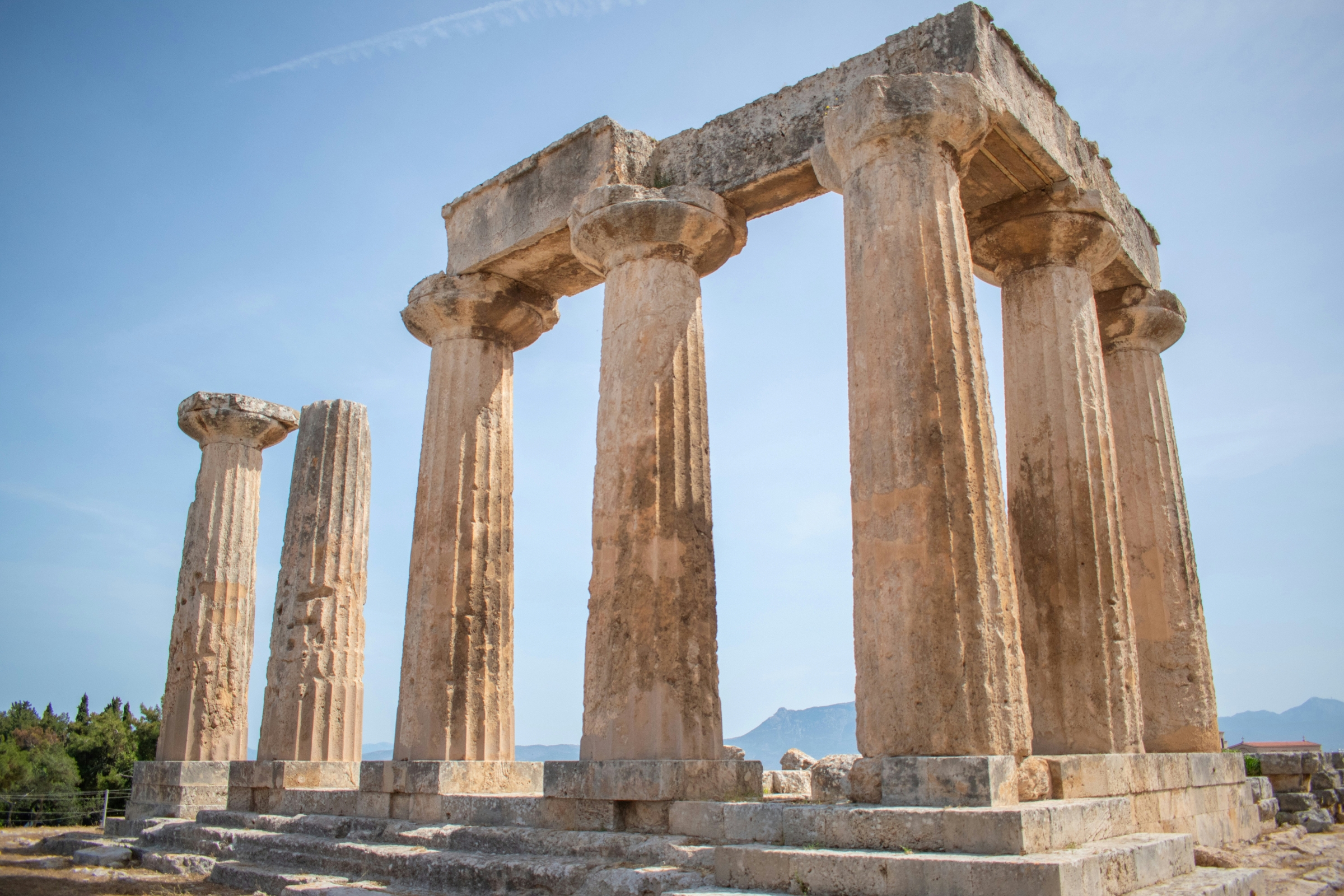
A Yearning for Wickedness
The sermon examines 1 Corinthians 10:1-11, where Paul uses Israel’s wilderness failures as a cautionary example for the Corinthian church and modern believers. It argues that spiritual privileges, such as divine provision and miraculous signs, do not guarantee immunity from sin if met with carelessness and self-confidence. The text identifies four specific sins—idolatry, immorality, testing the Lord, and grumbling—as persistent human tendencies that lead to severe divine judgment. By connecting these Old Testament episodes to the cultural context of Corinth and the present day, the message warns against the gradual erosion of faith through complacency. The central intent is to urge believers to remain vigilant, humble, and faithful, recognizing that God’s patience has limits and that His Word serves as a necessary instruction for avoiding the same destructive paths.
Transcript
If you would, please take your
Bible and turn to Acts, pardon me, 1 Corinthians chapter 10. We’ll turn to Acts 9 in an hour. Last week, we followed Paul into
chapter 10 and we saw that even though this is a new chapter,
the subject matter has not changed. Paul is still discussing the
subject of idolatry and the things pertaining to that subject that
he introduced in chapter eight, meat offered to idols. And so
three chapters of divine scripture tells us that this is a major
concern of Paul’s with regard to the Corinthian church. And
of course, we’ve seen that Paul’s concern goes well beyond the
simple question of whether or not to enjoy a brisket sandwich. Throughout his discussion, Paul
has confronted everything from the Corinthians’ selfishness,
their sinful indulgence, and their stubborn inflexibility
toward one another. Paul is addressing a new wrinkle
of sin here in chapter 10, that of carelessness, which was born
out of their self-confidence. They had begun to think that
they were impervious to sin and its destructive effects. And these struggles, as we have
seen, were not exclusive to the Corinthian church. These tendencies
to sin are woven into the human condition right down to us in
this day. And this should certainly not
surprise us either. These are the same sinful tendencies
that even God’s chosen nation, the Israelites, exhibited, even
though they were lavished with plentiful and glorious divine
manifestations. Even with all that, Israel still
yielded to their sinful inclinations and thereby dishonored God. And for that, they reaped terrible
consequences. The Corinthians could expect
no different, nor can we. We cannot become complacent in
our Christian life We cannot become casual about spiritual
responsibilities. We cannot become smug with regard
to the holy warfare in which we are engaged. We cannot afford
to cozy up to sin. As I explained it last week,
nobody plans on having an adulterous relationship or becoming part
of a cult or degenerating into an alcoholic or testing the Lord’s
patience. No Christian plans on engaging
in those sins. And yet every day people commit
adultery, embrace false teaching, give way to some excess. Sin does not just happen. People don’t just suddenly fall
into transgressions like these. They wade in slowly. As if in
a daze, a stupor, enabled by the proud assurance of their
own strength. This is Paul’s great concern
in chapter 10. For our purposes this morning,
I want to just read the first 11 verses. First Corinthians
chapter 10, verses 1 through 11. For I do not want you to be unaware,
brethren, that our fathers were all under the cloud, and all
passed through the sea, and all were baptized into Moses in the
cloud and in the sea, and all ate the same spiritual food,
and all drank the same spiritual drink, for they were drinking
from a spiritual rock which followed them, and the rock was Christ.
Nevertheless, with most of them God was not well pleased, for
they were laid low in the wilderness. Now, these things happened as
examples for us, so that we would not crave evil things as they
also craved. Do not be idolaters as some of
them were. As it is written, the people
sat down to eat and drink and stood up to play. Nor let us
act immorally as some of them did, and 23,000 fell in one day. Nor let us try the Lord, as some
of them did, and were destroyed by the serpents. Nor grumble,
as some of them did, and were destroyed by the destroyer. Now
these things happened to them as an example, and they were
written for our instruction, upon whom the end of the ages
has come. Now last week, In those first
five verses, we began to consider this chapter part of Paul’s ongoing
discussion of idolatry and all of its trappings. We considered
those first five verses Israel’s squandered privileges, and we
worked through a simple three-point outline. You remember it? God’s
outpouring of spiritual benefits, first and foremost, those amazing,
stupendous, miraculous, divine manifestations, which were designed
by God as faith builders for the Jewish people, the glory
cloud that led the liberated nation through the desert, The
astounding, marvelous, divided Red Sea, through which the Israelites
passed while Pharaoh’s army was drowned. And God’s extraordinary
provision of food, spiritual food as Paul calls it, divinely
provided sustenance. And miraculously supplied water,
what Paul appropriately calls spiritual drink. All these spiritual
benefits ought to have led Israel to a greater fidelity to God. They didn’t. They were squandered
and left wasted on the desert floor. The third and final point
to our outline captured the consequences of Israel’s squandering of these
privileges. It was God’s displeasure, verse
5, with Israel in the use of these spiritual benefits. That
single line of verse 5 simply says God was not well pleased. And because of that, most of
them, all but two, were laid low in the wilderness. And yet, we couldn’t help but
note that there is an uncomfortable transition between verses 1 through
4 and verse 5. A discussion of God’s spiritual
benefits that he had provided to Israel in verses 1 through
4 followed immediately by God’s great displeasure in verse 5.
Something happened. Something there in the white
space between verse 4 and 5 happened. Last week I referred to it as
point two, the gap of implication. It’s implied, but it isn’t detailed. And in the giving of all these
privileges, the cloud, the Red Sea, the manna, the water, God
had an expectation of faithfulness from his people. But those divine
benefits were squandered. Those spiritual benefits did
not yield the desired fruit of faithfulness. This is implied
in the white space, but it is this detail that Paul provides
for us in verses six through 11, which I would title a yearning
for wickedness. where Paul details a nation’s
persistent, sustained longing for sinful things. And while
there are recorded for us in the Old Testament accounts many
such occasions of Israel’s sin, Paul limits his recitation here
to four. He actually begins in verse six,
by looking back over his shoulder, in a sense, to those squandered
privileges mentioned in verses one through four. He simply refers
to them as these things. And he proceeds to tell the Corinthians
and us that these things happened as examples for us. This is amazing. Here is Israel, God’s chosen
nation, led on a protracted tour through the Sinai Desert for
40 years, partially for the purpose of recording these events for
the edification of future believers, whether in Corinth or right down
to our day for you and I. It’s simply amazing. And Paul
tells us not only that these things were recorded and why,
but also to what end. What was the reason that these
things were chronicled? Paul says, it was so that we
would not crave evil things as they, that is Israel, also craved. But the evil things that he mentions
here at the end of verse six cannot possibly be the things
to which he alludes earlier in that verse, namely the privileges
mentioned in verses one through four. None of those things were
in themselves evil. In the case of the first two,
the cloud and the sea, Israel didn’t even ask for those, let
alone crave them. God just provided the cloud as
a guide and the passage through the Red Sea. And as for the food
and the drink, though the wandering nation did indeed crave those
things, those things were not in themselves evil. It wasn’t
that the nation asked for them. God knew that they needed food
and water. It was how they went about it.
that displeased the Lord. And so Paul is pointing to something
else here when he speaks of evil things. We don’t have to wonder
because Paul lays it out for us. These evil things are in
verses 7 through 10. Four sinful episodes modeled
by Israel in the desert that Paul says must not be emulated. First, look at verse 7. And quite noteworthy, given Paul’s
subject at hand, he says, do not be idolaters. Look, if you
would, at verse seven, do not be idolaters, as some of them
were. As it is written, the people
sat down to eat and drink and stood up to play. It’s important
to note at the outset that in none of these four examples does
Paul indict the entire Hebrew nation of sin. Paul’s refrain
is instead, some of them. Some of them were idolaters.
Some of them were immoral. Some of them tried the Lord’s
patience. Some of them grumbled. Now this admonition here about
idolatry would not have caught the Corinthians by surprise in
any way. Earlier in the epistle, chapter
5, he cautioned them about associating with any so-called brother. if he is, among other things,
an idolater. In chapter 6, he proceeds to
remind them that idolaters will not inherit the kingdom of heaven. And so this admonition was nothing
new. The occasion of Israel’s idolatry
here is identified for us with the subsequent quote from Exodus
chapter 32. The people sat down to eat and
drink and stood up to play. Paul gives us the exact address
of this act of idolatry by the nation. Would God’s people please
turn to Exodus 32. Exodus chapter 32. And you probably have already
guessed if you’re not an expert student of scripture
that Exodus 32 is the incident regarding the golden calf. So I want to begin Exodus 32
at verse one. Now, when the people saw that
Moses delayed to come down from the mountain, the people assembled
about Aaron and said to him, come, make us a God who will
go before us. As for this Moses, the man who
brought us up from the land of Egypt, we do not know what has
become of him. Aaron said to them, tear off
the gold rings which are in the ears of your wives, your sons,
your daughters, and bring them to me. Then all the people tore
off the gold rings which were in their ears and brought them
to Aaron. He took this from their hand and fashioned it with a
graving tool and made it into a molten calf. And they said,
this is your God, O Israel, who brought you up from the land
of Egypt. Now, when Aaron saw this, he built an altar before
it. And Aaron made a proclamation and said, tomorrow shall be a
feast to the Lord. So the next day they rose early
and offered burnt offerings and brought peace offerings. And
here is the verse that Paul quotes. And the people sat down to eat
and drink and rose up to play. What a mournful day this was.
After all that God had done for them, extracting them from Pharaoh’s
grasp, saving them through the Red Sea, leading them by this
miraculous pillar, after all that they had seen and experienced,
they dictate to Aaron that he fashion an idol for them. Of
all things, a baby cow. This they claimed was their God. And in establishing this idolatrous
worship, Aaron, whose leadership here is beyond questionable,
he proclaims a feast to the Lord, which now was supposedly represented
by this gold cow. And verse six captures the people’s
full participation in this evil when it says that they sat down
to eat and drink and rose up to play. It was a party. It was a celebratory event complete
with food and dancing. Now, if you’ve ever seen Cecil
B. DeMille’s version in the Ten Commandments, while it’s somewhat
condensed and crowded, and relatively embellished. It couldn’t be far off from the
scene that’s described. On the other end of the spectrum,
John Calvin makes a fascinating observation. He notes how Paul
mentions the feast for the idol, but does not condemn the idol
itself. John Calvin goes on to draw the
conclusion that this would have fit the Corinthians perfectly.
They likely thought that enjoying some of the elements of the party
would not have been an actual participation in idolatry. That even these feasts and associated
activities, Paul will go on to show, were idolatrous. Back, if you would, to 1 Corinthians
10. For the Corinthians, living in
this heathen city, greatly given over to all kinds of idolatry,
this warning would not have been hypothetical. The Corinthian
Christians had to battle against the world forces of darkness
every day. They were surrounded by idolatry
in their city, their region, indeed the whole Roman Empire.
And we might be tempted to say, well, True, idolatry was bad
then, not so much now in our day. And generally speaking,
we don’t have idols and idol temples on every corner as the
Corinthians did, although you wouldn’t have to go very far
to find one. Just look for a statue. But idolatry
is much more prevalent than even just religious statues. Ask yourself
this, is there anything that I might be tempted to love more
than God himself? Is it a person? Is it a hobby? Is it a lifestyle? Is it your
reputation? Is it a person? Is it an unbiblical
idea, an image? Is it an object? Is it an account? Is it a dream, a possession,
a plan? If there is anything that you
could love more than God, that is an idol. But as sin begets sin, Israel’s
idolatry ultimately yet led to yet another evil, that of immorality. We find that in verse eight.
Idolatry and immorality are often seen in close relation to one
another throughout the Old Testament. Look please at verse eight. Nor
let us act immorally as some of them did. And 23,000 fell
in one day. Paul again provides an unmistakable
clue as to the specific occasion of this sinful episode when he
mentions the number of the dead. 23,000 fell in one day. And we find
this episode recorded in Numbers 25. Would you turn there please? If you’re new, Genesis, Exodus,
Leviticus, Numbers. Numbers chapter 25. Numbers 25
and let’s begin again in verse 1. While Israel remained at Shittim,
the people began to play the harlot with the daughters of
Moab. This was always God’s concern with intermarriage with heathen
nations. Nothing racial at all. but purely
the spiritual abandonment that would come with it. Look at verse
two. For they invited the people to
the sacrifices of their gods, and the people ate and bowed
down to their gods. You see, just like the Corinthians,
the Israelites thought that they were only going for dinner. They
didn’t see the connection between the celebration of the idol and
idolatry itself. Verse three, so Israel joined
themselves to Baal of Peor, and the Lord was angry against Israel.
The Lord said to Moses, take all the leaders of the people
and execute them in broad daylight before the Lord. This is a severe
punishment. So that the fierce anger of the
Lord may turn away from Israel. So Moses said to the judges of
Israel, each of you slay his men who have joined themselves
to Baal of Peor. Then one of the sons of Israel
came and brought to his relatives a Midianite woman in the sight
of Moses and in the sight of all the congregation of the sons
of Israel while they were weeping at the door of the tent of meeting.
When Phineas, the son of Eleazar, the son of Aaron, the priest,
saw it, he arose in the midst of the congregation, took a spear
in his hand, and he went after the men of Israel into the tent
and pierced both of them through, the man of Israel and the woman,
through the body. So the plague of the sons of
Israel was checked. Those who died by the plague
were 24,000. And there’s no controversy here.
Paul rounds down to 23,000. Moses rounds up to 24. The number was somewhere in between.
It’s an unimportant detail. The main point is that people
committed immorality and God struck them dead for their evil
craving. Please turn back to First Corinthians. This particular evil would have
been a temptation for the Corinthian believers. Historically, heathen
worship, the heathen worship of Astarte or Ashtaroth would
have included vile, a vile fleshly element that involved women. I’m going to leave it there.
They were provided for this part of their so-called worship. The
ancient form of idolatry developed into the preeminent idolatry
of the day in Corinth in the worship of Aphrodite. For her
worship, there were a thousand temple prostitutes who were dedicated
to this function, a key component of her worship. And so idolatry
and immorality were despicably bound together. This was not
an empty caution to the Corinthians, and given the low moral climate
of our own culture, neither is Paul’s grave caution here lost
on us. The world literally bombards
the Christian mind with filth and enticements to immorality
at every turn. How true are Paul’s words to
the Romans? Chapter one, although they know
the ordinance of God, that those who practice such things are
worthy of death, they not only do the same, but they give hearty
approval to those who practice them. They want nothing more
than to drag others down with them. There’s a third example of Israel’s
penchant for desiring that which is evil in God’s sight. And if
perhaps you haven’t engaged in those first two transgressions,
idolatry and immorality, surely we’ve all at least flirted with
these last two sinful desires, trying the Lord, putting Him
to a test, and grumbling. We all struggle with these. Let’s
look at this third evil, trying the Lord, testing the Lord’s
patience, verse nine. Nor let us try the Lord as some
of them did and were destroyed by the serpents. I have to tell
you first here that I think our translations are somewhat lacking
here because the word tempted or tried or a form of it in the
Greek actually occurs twice. Yet the translators merely allude
to it, just as my version, the NAS does. It just says, as some
of them did. Did what? Tried the Lord. Paul is driving this point home
by his repetition of the word, and I think we do well to note
that. I might suggest this. Let us not try the Lord as some
of them tried the Lord. Here too, Israel provides a lamentable
example. And Paul again gives us the specific
address for this episode. He does this by mention of serpents,
snakes. We find this incident also in
the book of Numbers in chapter 21. Would you turn there please? Numbers 21 And we’ll start in verse one. When the Canaanite, the king
of Arad, who lived in the Negev, heard that Israel was coming
by the way of Atharim, he fought against Israel and took some
of them captive. So Israel made a vow to the Lord
and said, if you will indeed deliver this people into my hand,
then I will utterly destroy their cities. The Lord heard the voice
of Israel and delivered up the Canaanites. Then they utterly
destroyed them and their cities. Thus the name of the place was
called Hormah. God did it. He answered their
prayer, but their faithfulness here was not long lasting. Look
at verse four. Then they set out from Mount
Hor by the way of the Red Sea to go around the land of Edom,
and the people became impatient because of the journey. The people
spoke against God and Moses. Why have you brought us up out
of Egypt to die in the wilderness? For there is no food and no water,
and we loathe this miserable food. The Lord sent fiery serpents
among the people and they bit the people so that many of the
people of Israel died. So the people came to Moses and
said, we have sinned because we have spoken against the Lord
and you intercede with the Lord that he may remove the serpents
from us. And Moses interceded for the
people. Then the Lord said to Moses, Make a fiery serpent and
set it on a standard, and it shall come about that everyone
who is bitten, when he looks at it, he will live. And Moses
made a bronze serpent and set it on a standard, and it came
about that if a serpent bit any man, when he looked on the bronze
serpent, he lived. Now, I’ll just tell you, no reference
to this section would be just and complete without pointing
out the magnificent application that Christ makes of this passage.
In John chapter 3, just listen, Jesus refers back to this same
incident, remember? He says, as Moses lifted up the
servant in the wilderness, even so the son of man must be lifted
up so that whoever believes in him will have eternal life. What glorious news that is for
us. By looking to Christ, even as we sang about this morning,
Christ alone. Jesus says that just as the Israelites
were instructed to look upon a serpent on a stick, lifted
up before them, so also sinners have to look to the crucified
Christ for salvation. Back again, please, to 1 Corinthians
10. So, to try the Lord was to put
him to the test, doubting either his will or his justice or his
ability or his faithfulness to respond. It is in essence to
dare God to respond by challenging him in sin. And in the case with Israel,
it was a long sustained and often repeated testing. The Corinthian
believers have become adept at this, doubting God’s provision,
doubting God’s will, doubting God’s promises, doubting God’s
warnings. And this is a particular problem
for us as well, isn’t it? Will he really come through?
Does he really care? Does God’s word really mean that? And so we have it. Idolatry,
leading to God’s rebuke for the golden calf. Immorality, provoking
God to strike dead 23,000. Trying the Lord’s patience, calling
down a plague of fiery serpents. And finally, verse 10, grumbling. An almost inaudible verbal complaint. These may not always be detectable
by men’s ears, but they no doubt reach God’s. Look at verse 10. Nor grumble as some of them did,
and were destroyed by the destroyer. Now, this specific occasion is
not as easily discoverable as the other three. The only real
clue we have is that of the phrase, they were destroyed by the destroyer. And for that, that for the cause
of grumbling. But there is a decisive incident
recorded again in the book of Numbers, this time in chapter
16. And so would you turn back to
the book of Numbers? If you are new with your Bibles,
you know where Numbers is now, don’t you? Numbers chapter 16. And on this occasion, I want
to glide all the way down into verse 41. On the next day, all the congregation
of the sons of Israel grumbled against Moses and Aaron, saying,
You are the ones who have caused the death of the Lord’s people.
It came about, however, when the congregation had assembled
against Moses and Aaron, that they turned toward the tent of
meeting. Behold, the cloud covered it,
and the glory of the Lord appeared. Then Moses and Aaron came to
the front of the tent of meeting, and the Lord spoke to Moses,
saying, Get away from among this congregation, that I may consume
them instantly. And then they fell on their faces.
Moses said to Aaron, take your censer, put it in fire from the
altar, lay incense on it, and bring it quickly to the congregation
and make atonement for them. For the wrath has gone forth
from the Lord, the plague has begun. Then Aaron took it, as
Moses had spoken, and ran in the midst of the assembly. For
behold, the plague had begun among the people. So he put on
the incense and made atonement for the people. He took his stand
between the dead and the living, so that the plague was checked.
But those who died by the plague were 14,700, beside those who
died on the account of Korah. Then Aaron returned to Moses
in the doorway of the tent of meeting, for the plague had been
checked. We’ve seen, you can turn back
to 1 Corinthians 10, we’ve seen or we’ve at least heard this
word for grumbling before. It’s an onomatopoeia, right?
Remember from eighth grade English? A word that sounds like what
it means, like a rushing river. The word in the Greek, get this,
is gungudzo. Doesn’t that just sound awful?
And it refers not to an audible complaint, but rather to that
murmuring that was so common of Christ’s enemies. A murmuring
expression of dissatisfaction or disgust, grumbling under one’s
breath. And in Israel’s case, it certainly
wasn’t a prayerful plea offered up before the Lord. This is not
a just concern that was properly set before God. These were rebellious
expressions of discontent and grumbling had practically become
the national pastime for Israel. Let’s just listen. Exodus 16
to the whole congregation of the sons of Israel grumbled against
Moses and Aaron in the wilderness. Exodus 17 3. The people thirsted
there for water and they grumbled against Moses. Numbers 14 2. The sons of Israel grumbled against
Moses and Aaron. Numbers 16 41. On the next day
all the congregation of the sons of Israel grumbled against Moses
and Aaron. But there are really no accounts
where grumbling was met with the punishment of death, only
here in number 16, where God moved to ultimately rebuke Israel’s
sinful complaints. We learn here that what Paul
refers to generically as the destroyer is actually a plague
sent by God to punish his people for their incessant complaining. Back to 1 Corinthians 10, and
note, I want you to just note verse 11. Paul reiterates what
he said basically in verse six. These things happened to them
as an example. An example not only for them,
but also for all who would follow thereafter. Because Paul says
they were written for our instruction. We can be assured that these
God given lessons are for us because he told the Corinthians
it was for them to whom the ends of the ages have come. And that
was 2000 years ago. So if it was relevant for them,
it’s absolutely relevant for us in our own day. The lesson here is the lesson
of Proverbs 21 11. When the scoffer is punished,
the naive become wise. A wise man learns from a fool’s
mistakes. And Paul lays out here that we
do well to read God’s word and observe Israel’s ways and learn
from their errors and alter our steps accordingly. Because if
we observe and learn nothing else, God will address these
things. Just like the Corinthians, like
the Israelites of old, we have enjoyed more than our share of
divine privileges, haven’t we? We may not have seen the seas
divided or miraculous words and deeds as the Corinthians enjoyed
of Paul, But we’ve enjoyed the rich blessings of salvation,
haven’t we? The mysterious working of God’s Spirit in our life,
bringing us to life, bringing us to repentance, bringing us
to faith in Christ. We enjoy the miracle of conviction,
don’t we? The Holy Spirit’s influence on
our heart and our conscience and our mind. We enjoy the life-giving
blessing of God’s Word nourishing us and challenging us, changing
us little by little into the image of Christ. As Peter says
it in his second epistle, God’s divine power has granted to us
everything pertaining to life and godliness. How could we ever
crave these things that God considers evil? idolatry, immorality, the
testing of God himself, and a grumblesome demeanor. We must watch and mortify
every trace of sin. Would you humble yourself before
him?
Messages: 91