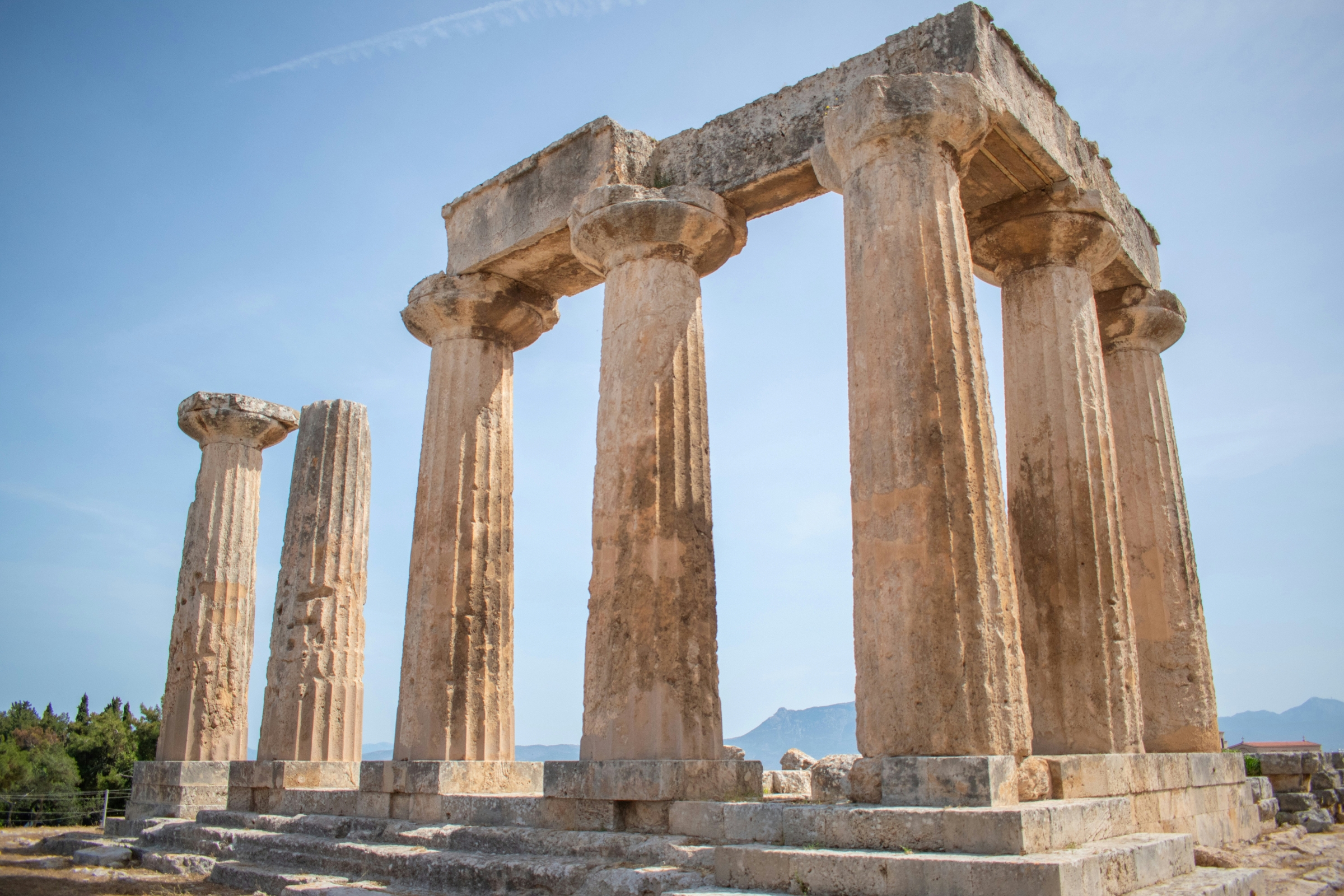
Privileges Squandered
The sermon examines 1 Corinthians 10, where Paul contrasts the spiritual privileges enjoyed by the Israelites with their subsequent failure and judgment. By highlighting the universal experience of the cloud, the Red Sea, manna, and water from the rock, the message emphasizes that even God’s chosen people can squander divine grace through self-confidence and carelessness. The central theme warns against the danger of spiritual complacency, asserting that no one is immune to temptation or failure despite their spiritual heritage. This historical example serves as a cautionary tale for believers to remain disciplined, humble, and vigilant in their walk with God. The tone is convicting and instructional, urging the audience to avoid the pitfalls of pride and to pursue a life of faithful obedience rather than relying on past blessings.
Transcript
Take your Bibles and turn to
First Corinthians chapter 10. We round the corner this morning
into chapter 10 of this great epistle. Challenging, no doubt,
and the challenging part continues. By now, we begin to get a sense
that This is a much bigger issue than we realized, isn’t it? This
issue of meat offered to idols and all the attendant concerns
that come with it, including selfishness, self-indulgence,
self-confidence. After all, this discussion about
idolatry and the insensitivity that the Corinthians were displaying,
this subject began all the way back in chapter eight. We’re
now into our third chapter on this matter, and Paul is still
addressing stubbornness, inflexibility, a lack of self-discipline, and
even downright carelessness in God’s people. Paul’s overall
point here in chapter 10 is that this is nothing new. The Corinthians were behaving
just like the Israelites of old, God’s people who, even with all
their privileges, dishonored the Lord. There was a casualness
in the way that they went about life. even their spiritual life. There was a self-confidence in
how they carried themselves that they alone could remain impervious
to temptation and false doctrine. There was a carelessness in the
way that they dabbled in so many questionable practices as if
they were beyond failing. Nobody is beyond failure. And the reality is that Nobody
plans on having an adulterous affair. Nobody plans on becoming
part of a cult. Nobody plans on degenerating
into alcoholism. Nobody plans on testing the Lord’s
patience. Nobody plans so many complaints
that amount to grumbling against the Lord. Nobody plans those
things. And yet every day people commit adultery. Every day people
become ensnared in some false teaching. Every day people who
at one time were able to stand proudly in their ability to manage
some area of freedom find themselves given over to excess. And every day, people tempt and
try the Lord’s patience in their incessant grumbling. This is
Paul’s great and growing concern, as expressed in 1 Corinthians
chapter 10, as is our habit will take the chapter in its entirety
plus one verse, because this is one of those chapters that
has a rough break near the end. Verse one of chapter 11 really
folds in best with chapter 10. If you would, 1 Corinthians chapter
10, For I do not want you to be unaware, brethren, that our
fathers were all under the cloud, and all passed through the sea,
and all were baptized into Moses in the cloud and in the sea,
and all ate the same spiritual food, and all drank the same
spiritual drink, for they were drinking from a spiritual rock
which followed them, and the rock was Christ. Nevertheless,
with most of them, God was not well pleased. for they were laid
low in the wilderness. Now, these things happened as
examples for us, so that we would not crave evil things as they
also craved. Do not be idolaters as some of
them were. As it is written, the people
sat down to eat and drink and stood up to play. Nor let us
act immorally as some of them did, and 23,000 fell in one day. Nor let us try the Lord, as some
of them did, and were destroyed by the serpents. Nor grumble,
as some of them did, and were destroyed by the destroyer. Now
these things happened to them as an example, and they were
written for our instruction. Upon whom the ends of the ages
have come. Therefore, let him who thinks
he stands take heed that he does not fall. No temptation has overtaken
you, but such as is common to man. And God is faithful, who
will not allow you to be tempted beyond what you are able, but
with the temptation will provide the way of escape also, so that
you will be able to endure it. Therefore, my beloved, flee from
idolatry. I speak as to wise men. You judge what I say. Is not
the cup of blessing which we bless a sharing in the blood
of Christ? Is not the bread which we break
a sharing in the body of Christ? Since there is one bread, we
who are many are one body, for we all partake of the one bread. Look at the nation of Israel.
Are not those who eat the sacrifices sharers in the altar? What do
I mean then? That a thing sacrificed to idols
is anything or that an idol is anything? No. But I say that
the things which the Gentiles sacrifice, they sacrifice to
demons and not to God. And I do not want you to become
sharers in demons. You cannot drink the cup of the
Lord and the cup of demons. You cannot partake of the table
of the Lord and the table of demons. Or do we provoke the
Lord to jealousy? We are not stronger than he,
are we? All things are lawful, but not
all things are profitable. All things are lawful, but not
all things edify. Let no one seek his own good,
but that of his neighbor. Eat anything that is sold in
the meat market without asking questions for conscience sake. For the earth is the Lord’s and
all it contains. If one of the unbelievers invites
you and you want to go, eat anything that is set before you. without
asking questions for conscience sake. But if anyone says to you,
this is meat sacrificed to idols, do not eat it for the sake of
the one who informed you and for conscience sake. I mean not
your own conscience, but the other man’s. For why is my freedom
judged by another’s conscience? If I partake with thankfulness,
why am I slandered concerning that for which I give thanks?
Whether then you eat or drink or whatever you do, do all to
the glory of God. Give no offense, either to Jews
or to Greeks or to the church of God, just as I also please
all men in all things, not seeking my own profit, but the profit
of the many. so that they may be saved. Be
imitators of me, just as I also am of Christ.” And with that,
Paul launches headlong into this lengthy and involved chapter. And what he wants to discuss
first of all is a series of privileges that the nation of Israel enjoyed
Privileges which were supposed to engender faith, cultivate
faith, increase their faith, and yet privileges that were
squandered, which did not increase their faith at all. The section
breaks up into three. In verses one through four, we
have a a historical overview of God’s outpouring of spiritual
benefits to his people. And then in verse 5, we see God’s
displeasure in the use of spiritual benefits. But I said that this
section breaks up into three. And there is a gap, a gap of
implication, I would suggest to you, where there is an expectation
of faithfulness, where benefits have been squandered. And I would
suggest to you that between verses four and five in the white space,
there is yet another, a third section that is implied. It’s assumed. and I can prove
it from scripture that it’s there, it’s God’s observation of spiritual
benefits wasted, squandered. That’s our outline for this morning.
Let’s look at the first section, God’s outpouring of spiritual
benefits. We begin in verse one, for I
do not want you to be unaware, brethren, that our fathers were
all under the cloud. Let’s note the first portion
of this verse, starting with that little word for. This is
precisely what ties this chapter to the previous. Paul is providing
support here, beginning in verse one for something that he’s already
said. And a quick backward glance to the last four verses of the
previous chapter provides us the context of Paul’s support
statement here in 10.1. I would suggest to you that rather
than explaining the final statement of chapter nine, verse 27, Paul
is explaining that entire paragraph. Verses 24 through 27. And using our outline from last
week, watch how this ties together. Our outline last week, in order
to enjoy a winsome influence over our family, over society,
over unbelievers, even in our church, in order to enjoy a winsome
influence, we must be striving for victory. We must run to win,
Paul says, We must be disciplined for reward, exercising self-control. We must be aiming for results,
running or boxing toward a particular goal. We must be trained to finish,
disciplined, Paul says, to complete the course. All with this explanatory note. For I do not want you to be unaware. Brethren, I want you to strive
for victory. I want you to be disciplined
for reward, aiming for results, trained to finish, and I do not
want you to be unaware. If we’re gonna strive for victory,
discipline ourselves for reward, aim for results, trained to finish,
we must keep one particular thing in mind, that is the performance
history of God’s people. We need to look back over our
shoulder into the history of God’s people and see just how
serious this training must be, just how serious this goal setting
must be. God’s chosen people, the nation
of Israel, enjoyed a remarkable provision of God’s spiritual
benefits, and yet they squandered them. and they reaped dreadful
consequences because of it. Note, please, one other strong
feature of this paragraph, the repetition of the word all, five
times in verses one through four. Look at verse one, if you would.
Our fathers were all under the cloud, and all passed through
the sea, and all were baptized into Moses in the cloud and in
the sea. and all ate the same spiritual
food and all drank the same spiritual drink. Paul’s point in this head-pounding
repetition is that these epic, astounding, soul-shaking events
were the universal experience of the Jews. That is, that these
things did not happen secretly. or only to a few. These privileged
exhibitions of God’s grace were the common experience of all
Israel. And Paul’s reason for reminding
them of all this is that the Lord has not changed. He is the
same yesterday, today, and forever. God’s standards do not change. But unfortunately, neither do
the weaknesses and inclinations of God’s people, then or now. But let’s look at these particular
benefits that Israel enjoyed. Not only that they enjoyed, but
what they squandered and because of which they were judged. The
first, we see it in 10.1, They were all under the cloud. Paul
says that our fathers were all under the cloud. The first blessing
or privilege about which Paul reminds the Corinthians, all
under the cloud, without a doubt here, the reference is to the
miraculous glory cloud that led Israel through the desert, remember?
a symbol to Israel, not only of God’s presence, but also of
his good favor to his people and his leading of his people.
It was a visual representation of God’s faithfulness. They were covered by the blessed
shelter of God’s presence wherever they went. And even the particular preposition
that God uses here, under, that Israel was under the cloud, it
expresses God’s divine protection over His people. Moses captures
the scene in Exodus chapter 13. We’re going to do a lot of turning
and flipping. And it might be good of you to
put something, a place marker in Exodus. We’ll be there a number
of times this morning, but would you turn to Exodus 13. Keep something, a finger, a thumb,
a bulletin in First Corinthians 10. In Exodus chapter 13, Moses captures this stupendous
miracle, and if you glide down to verse 21, we’ll capture just
a few verses. 1321, the Lord was going before
them in a pillar of cloud by day to lead them on the way,
and in a pillar of fire by night to give them light that they
might travel by day and by night. He did not take away the pillar
of cloud by day, nor the pillar of fire by night, from before
the people.” Flip over, if you would, to Exodus
14 and verse 19. Just another glimpse of this
cloud. The angel of God, who had been going before the camp
of Israel, moved and went behind them, and the pillar of cloud
moved from before them and stood behind them. And so this mysterious,
awesome cloud provided by God himself. Stay right there in
Exodus, but let me read you just one verse from Numbers. This
cloud was God’s testimony, not only to Israel, but to Egypt
and to other nations as well. Numbers 14, 14, they will tell
it to the inhabitants of this land. They have heard that you,
O Lord, are in the midst of this people, for you, O Lord, are
seen eye to eye while your cloud stands over them. And you go
before them in the pillar of cloud by day and a pillar of
fire by night.” It was a testimony to all, including Israel. If
you’re still in Exodus, please flip down to chapter 40. Exodus 40, and scroll down to
verse 34, if you would. The cloud, the pillar of fire,
ultimately stood over the tent of meeting and the tabernacle.
Pick up in verse 40, if you would. Then the cloud covered the tent
of meeting, and the glory of the Lord filled the tabernacle. Moses was not able to enter the
tent of meeting because the cloud had settled on it, and the glory
of the Lord filled the tabernacle. Throughout all their journeys,
whenever the cloud was taken up from over the tabernacle,
the sons of Israel would set out. But if the cloud was not
taken up, then they did not set out until the day it was taken
up. For throughout all their journeys,
the cloud of the Lord was on the tabernacle by day, and there
was fire in it by night, in the sight of all the house of Israel. What a powerful exhibition of
God’s love and His power towards His people. A visible testimony
that it was God Himself who was leading this nation. And they
all saw it. But there was so much more. Look
at, if you would, back in 1 Corinthians chapter 10, And again at verse 1, I do not
want you to be unaware, brethren, that our fathers were all under
the cloud and all passed through the sea. And just as clear as
the reference is to the glory cloud, so the reference here
to passing through the sea is equally clear, isn’t it? It points
to the miraculous passing through the Red Sea by the nation of
Israel upon their exodus from Egypt. Simple illustration. And we know that we can find
the full and detailed account of this back in Exodus 14. But for a lively and truncated
version of that account, please turn to Psalm 106. Psalm 106. Psalm 106, scroll down to verse
seven. Our fathers in Egypt did not
understand your wonders. They did not remember your abundant
kindnesses, but rebelled by the sea, at the Red Sea. Now Moses here in Exodus 14 adds
a few lines about this rebellion. They said to Moses, is it because
there were no graves in Egypt that you’ve taken us away to
die in the wilderness? Why have you dealt with us this
way, bringing us out of Egypt? Is this not the word that we
spoke to you in Egypt saying, leave us alone that we may serve
the Egyptians? For it would have been better
for us to serve the Egyptians than to die in this wilderness. Bunch of whiny babies, to which
Moses boldly declares, do not fear. Here he is standing at
the edge of the Red Sea with the Egyptian army closing in
on them. Do not fear. Stand by and see
the salvation of the Lord, which he will accomplish for you. For
the Egyptians whom you have seen today, you will never see them
again, forever. The Lord will fight for you while
you keep silent. That’s all they had to do. Resume Psalm 78 in verse eight. Where did I leave you parked?
Bear with me, bear with me. Flip over to Psalm 78. Psalm 78 captures this same account. Watch what happens here. Nevertheless,
he saved them for the sake of his name, that he might make
his power known. Thus he rebuked the Red Sea,
and it dried up. And he led them through the deeps
as through the wilderness. So he saved them from the hand
of the one who hated them and redeemed them from the hand of
the enemy. The waters covered their adversaries. Not one of them was left. Then
they believed his words. They sang his praise. And Moses
adds his review after the fact of this incredible event. At
the end of Exodus 14, the sons of Israel walked on dry land
through the midst of the sea and the waters were like a wall
to them on their right and on their left. Thus the Lord saved
Israel that day from the hand of the Egyptians and Israel saw
the Egyptians dead on the seashore. When Israel saw the great power
which the Lord had used against the Egyptians, the people feared
the Lord. And they believed in the Lord
and in his servant Moses. Could there have been a more
stupendous exhibition of God’s love and caring protection for
his people than that? But there is more. Look, if you
would, at verse two. First Corinthians chapter 10
verse two. I told you your fingers are going
to have to be adept this morning. all were baptized into Moses
in the cloud and in the sea. Now with this one, we have to
be very careful because Paul uses the very loaded word baptism
here, baptized. And the natural inclination for
us is to equate our own understanding of baptism and to read back into
the Jews experience under Moses. as if there were a rite of baptism
that were performed. It’s important to note, first
of all, that nowhere in the Pentateuch, nowhere in the exodus of Israel
out of Egypt, nowhere in the overall ministry of Moses is
there any mention or hint of a rite of baptism with regard
to Moses. This word baptism is just one
of many Greek words that proves to be somewhat problematic in
translation. There are many words that tend
to be transliterated rather than translated. Let me explain the
difference. Translation is the process of
rendering the meaning of a word or words. Whereas transliteration is the
practice of rendering merely the sound of the word. And when
we transliterate, instead of translating, we open the door
to ambiguity as to the word’s meaning. Let me give you a few
examples. There are dozens and dozens of
these. In the Greek, angelos, You know
the word. You’re going to be so impressed
at how well you know Greek. Angelos, angel. But the meaning
of the word is messenger. Anathema. Transliteration, anathema. But the meaning of the word is
cursed. Apostolos. The transliteration of the word
is apostle, but it means sent one. Diakoneo. See how good you are? Deacon.
But the meaning of the word is servant. Eulogio. We get our word eulogy from it,
but it literally means to speak well of someone. Koinonia. We just give up on that one and
call it koinonia, and everybody knows what we mean, but it means
fellowship. Presbyteron, we get our word
Presbyterian, but the word means elder. Scolios, we get our word, you
got it, scoliosis, but it means bent or curved. And so with baptizo,
translated as, transliterated rather, as baptism, but it means
to dip or to immerse. Well, the question is here, is
Paul speaking here of a religious rite practiced by the Jews that
had never before been mentioned in scripture? No. I would suggest to you that Paul
employs the simple meaning of the word here, to immerse. that the Jews were all immersed
into the leadership and experience of Moses. This is why Paul repeats,
in the cloud and in the sea, the nation of Israel was immersed
into a common experience with Moses. So that this reference
is not an allusion to our own Christian baptism, Verse 2 is
really just a poetic repetition of the events described in verse
1. But there is yet another expression
of God’s grace that was granted to the Israelites. Spiritual
food. Look, if you would, at verse
3. They all ate the same spiritual food. This, too, is an example
easily discernible from the Old Testament records. Paul simply
refers here to the divine provision of the manna in the wilderness,
and perhaps even of the quail that God provided. Now, the fullest
account of this is given, as you know, in Exodus 16. But for our purposes this morning,
I want to take you back to Psalm 78. Back to Psalm 78. to look at an abbreviated account
that was provided there for us by Asaph in Psalm 78. Psalm 78, and scroll down to
verse 20. And we’ll catch it in kind of the
middle of this Psalm, where he’s still talking about the water
that God provided. Behold, he struck the rock so
that waters gushed out and streams were overflowing. Can he give
bread also? They wondered. Will he provide
meat for his people? Therefore, the Lord heard and
was full of wrath, and a fire was kindled against Jacob, and
anger also mounted against Israel, because they did not believe
in God and did not trust in his salvation. Yet he commanded the clouds above,
and opened the doors of heaven, and it rained down manna upon
them to eat, and gave them food from heaven. Man did eat the
bread of angels. He sent them food in abundance. He caused the east wind to blow
in the heavens, and by his power he directed the south wind, when
it rained meat upon them like the dust, even winged fowl like
the sand of the seas. Then he let them fall in the
midst of their camp, round about their dwellings, so they ate
and were well filled, and their desire he gave to them. He fed
them. He fed them manna that God miraculously provided
them. And it’s called spiritual here
because this was not your ordinary bread. Dough made from flour
and baked in an oven. This was that mysterious substance
that was provided daily. It was a kind of substance provided
each and every day, gathered up and baked into cakes. And
it was used to miraculously sustain God’s people. Psalm 78, 24, he
rained down manna upon them to eat. You might recall that the
Jewish leaders of Christ’s day were only partly impressed with
his own miracle of feeding the 5,000. They held this miracle,
the miracle of the manna, to be supreme. John records that
they came to Jesus seeking an even greater sign, as impressive
as what God did for their forefathers in the wilderness. They said,
our fathers ate the manna in the wilderness. As it is written,
he gave them bread out of heaven to eat. And they say this because
they all, all of Israel experienced this. And yet there’s one final
supernatural privilege that God gave the Israelites, spiritual
drink. We find that in verse four as
well. They all drank the same spiritual drink. For they were
drinking from a spiritual rock which followed them, and the
rock was Christ. Well, for students of Scripture,
this too is a blessing given to the Israelites that is familiar
to us. Spiritual drink, the image of course, is no other than the
rock from which water flowed to assuage the Israelites’ thirst
in the desert. There was a miraculous supply
and therefore spiritual, not natural. There were two occasions
when this took place, one recorded in Exodus, the other in Numbers.
So for one, would you turn just to the one in Exodus, Exodus
17. Exodus 17. And verse one, then all the congregation
of the sons of Israel journeyed by stages from the wilderness
of sin according to the command of the Lord and camped at Rephidim. And there was no water for the
people to drink. Therefore, the people quarreled
with Moses and said, give us water that we may drink. And
Moses said to them, why do you quarrel with me? Why do you test
the Lord? The people thirsted there for
water and they grumbled against Moses and said, why now have
you come up against us from Egypt? Have you brought us up from Egypt
to kill us and our children and our livestock with thirst? So
Moses cried out to the Lord saying, what shall I do to this people?
A little more and they will stone me. Then the Lord said to Moses,
pass before the people and take some of the elders of Israel.
Take in your hand your staff, which you struck the Nile, and
go. Behold, I will stand before you
there on the rock at Horeb, and you shall strike the rock, and
water will come out of it, that the people may drink.’ And Moses
did so in the sight of the elders and the people.” And so then,
in a way, very similar account recorded in Numbers 20, no water,
the people grumbling against Moses and Aaron, water coming
forth from the rock, This is what Paul refers to as spiritual
drink, divinely provided water. It was spiritual, spiritual drink
as differentiated from natural drink because it came from a
spiritual rock. Now, some people have explained
this regular supply that Israel enjoyed. as a brook of water
that slowly trickled out and then followed them wherever they
wandered. One, one legend that the Jews developed
was that this rock, this boulder actually scooted around and followed
them wherever they went. That’s legend, not biblical history. Kind of a mobile drinking fountain,
if you will. But the Jews had, they had come
to believe this. And so Paul declares unequivocally
that the rock was Christ. That in some sense, the pre-incarnate
Christ was the divine source of this life-sustaining water,
just as he would in his incarnate state declare himself to be the
living water. And if you would, please turn
back again to Psalm 78, and I’ll join you there in a moment. Do
you remember when I said at the outset that there were three
points, the second of which is in the white spaces there between
verses four and five? I called it a gap of implication,
because Paul goes right from spiritual benefits to God’s displeasure
in how those spiritual benefits were treated. He goes right to
the punishment. We don’t ever see the transgression. We know
our Bibles and we know the transgression is there. As I said earlier,
something is presumed in the white spaces between verses four
and five. In verses one through four, we
see these abundant blessings and privileges. And then abruptly
in verse five, we’ve learned of God’s great displeasure But
we’re not told why. Why did this happen? Why was
God displeased? This Paul assumes. He assumes
that his readers will be quite familiar with Israel’s failings. This is here in the white space
between verse four and five. And there are literally hundreds
of places that we could turn to as examples of such failings. But I hope by now it’s a well-worn
spot. Turn back to Psalm 78, if you’re
not there already. Psalm 78, and glance down at
verse 29. So they ate and were filled,
and their desire He gave to them, before they had satisfied their
desire, while their food was still in their mouths. The anger
of God rose against them and killed some of their stoutest
ones and subdued the choice men of Israel. In spite of all this,
they still sinned and did not believe in his wonderful words.
So he brought their days to an end in futility and their years
in sudden terror. That’s there in the white space.
And the third point, not only God’s outpouring of these spiritual
benefits, God’s observation of these spiritual benefits wasted. And thirdly, verse five, God’s
displeasure in the use of spiritual benefits. Nevertheless, with most of them,
God was not well pleased. Nevertheless, What a sad word
to follow so amazing a list of God’s blessings and privileges. Cloud, the Red Sea, spiritual
food, spiritual drink, nevertheless, we might have expected something
like this. Therefore, God’s people drew nearer the Lord and served
him with great faithfulness. Isn’t that what you expect? But not this. Nevertheless. But there it is. Nevertheless,
God was not well pleased. And this is a truly alarming
thought declared here to the smug Corinthians. The spiritually
enriched Israelites turned their back on God. and they paid an
immeasurable price. Literally, God did not think
well of them. God was greatly displeased by
them. After all the privileges and
all the blessings, instead of humble gratitude and faithfulness,
there was dishonor and rebellion. And it wasn’t just a few of them.
a minority of this chosen nation. Paul says, with most of them,
God was not well pleased. And this, of course, is the great
contrast that Paul has established with his repeated use of the
word all. All the Children of Israel had
experienced these great works of God, and yet with most of
them, God was not well pleased. This is one of the classic understatements
in all of scripture. Most of them? All but two. All but two, Joshua and Caleb.
Only they entered the promised land from the Exodus generation. The writer of Hebrews carefully
alludes to this in 316 of Hebrews. In answer to the question, who
provoked him? The writer says, indeed did not
all who came out of Egypt led by Moses? Numbers 14 addresses
Moses and Aaron. How long shall I bear with this
evil generation who are grumbling against me? I’ve heard the complaints
of the sons of Israel, which they are making against me. Say
to them, as I live, the Lord says, just as you have spoken
in my hearing, so I will surely do to you. Your corpses will
fall in the wilderness. Surely you shall not come into
the land which I swore to settle you, except Caleb, the son of
Jephunneh, and Joshua, the son of Nun. That last statement,
corpses in the wilderness, is that which Paul alludes to at
the end of verse five. They were laid low in the wilderness. God struck them dead. Paul’s point in all of this,
in this chilling historical overview, is that the Corinthians too, and we too, We have enjoyed so many, many
of God’s blessings and privileges. We too have enjoyed, first and
foremost, God’s work of redemption and regeneration, a literal bringing
us to life through the gospel. Not only that Christ paid a great
price for our sin, but that he brought us to life and repentance.
And if that were not enough, Jesus sent the Holy Spirit to
dwell within us and ensured not only that God’s
Word would be communicated down to our day, but it would be written
down for us and supernaturally preserved so that we could have
a Bible in our laps to which we could turn at any time. And
not only His Word and His Spirit, but fellowship with like-minded
believers, countless answers to prayer, day-to-day sustenance
that we enjoy, His amazing provision for us, spiritual and physical,
and yet, even in the face of all of these,
we too can grow cold. We too can grow indifferent.
We too can grow complacent, overconfident, even proud. We can become just
like the Israelites of old in our conduct in spite of such
rich blessings in our lives. And so we must. As Paul sought
to stir in the Corinthians, we must be brought to caution in
the living out of our Christian lives. We must not allow ourselves
to become overconfident or naive about the dangers of sin and
temptation. We should humble ourselves before
the Lord. Let’s do that now. Our mercy.
Messages: 91