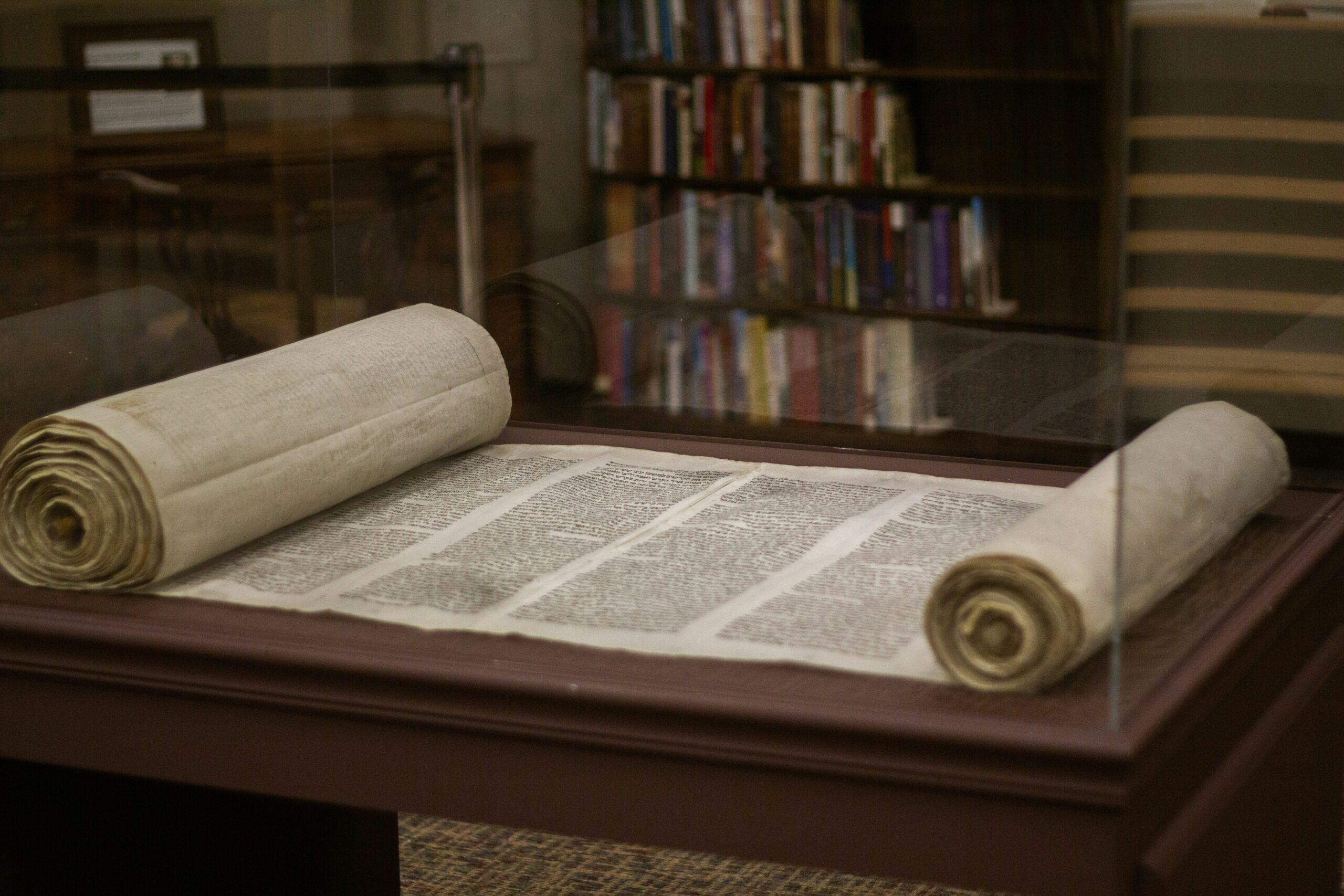
Overview of Judges, Adult Discipleship Class
The book of Judges presents a sobering portrait of Israel’s spiritual decline following Joshua’s death, marked by a recurring cycle of disobedience, divine discipline, temporary deliverance, and renewed apostasy, all set against the backdrop of ‘there was no king in Israel; everyone did what was right in their own eyes.’ Central to the narrative is God’s unwavering faithfulness despite Israel’s persistent idolatry, as seen in the repeated outpouring of grace through judges like Othniel, Gideon, and Samson—figures whose strength came not from themselves but from the Spirit of the Lord.
Transcript
hurt, right? All right, thank you. Yeah, no Celsius this weekend. We’ll start on time. But before we do that, let’s go before, as Pastor Ron says so often, God’s throne of grace and pray. Triune God, we come before you in your own strength, knowing that it was you, Father, who, before the foundation of the world was laid, chose us in Christ, that we would be holy and blameless before you, as we heard about today in our message.
We think of you, Lord, God the Son, and everything that you have done on our behalf, coming to earth and assuming human flesh, dying a death that we deserved, being raised on the third day, showing that you were victorious over sin and death, the seed of the woman coming to crush the head of the serpent, to reverse the curse forever and reign. We think of you also in your roles of being our mediator, so that we may commune with God and also as our great high priest who can sympathize with our weaknesses. And we come before you, Holy Spirit, knowing that it was you that caused our hearts to be born again, that opened our eyes to the truth of the gospel, that changed our hearts to love you and to hate our sin.
And also, you are the one who continues to sanctify us every day. We all know here, Lord, that our sanctification is indeed a process. Every week is a new fight against sin, but we are greatly grateful for your grace. Lord, not only in sanctification, but also in the illumination of your word, for showing us your word, opening our eyes to behold wonderful things from it.
And especially in a book like Judges, we know that we need your help. And so we earnestly plead with you that you would come that you would inform our reading of the text that we would understand it within its context That we would apply it properly And that lord that we would see you more clearly It’s in your name. We pray these things.
Amen So today we begin the book of judges or as mentioned last week sort of the wild west of the old testament um Last week we finished with the book of joshua. So if you’ll turn to the book of judges will begin in chapter one. Now, Judges is really an interesting book because, I don’t know about you, it’s not normally the first one on my list when I think of my morning devotions. I made that joke with the Leviticus as well, but it’s true. And I think the reason why is because there are so many crazy things that go on in the book of Judges.
And that’s the point. I oftentimes an illustration is used for the book of Ephesians in chapter 2 when it talks about you know We were dead in our trespasses and sins and it’s this dark section talking about our past But then we see the verses later, but God being rich in mercy, you know made us alive in Christ And so the dark sections sort of serve as that backdrop that makes the brightness of God, his glory, shine even brighter. Sort of like a black velvet at the jeweler. When you see a diamond by itself, it’s not quite as pretty visually, but when you put it in front or on top of the black velvet, it looks so much more bright and beautiful.
And I think the book of Judges serves as this for us in the Old Testament. the Book of Judges as sort of the Wild West, but yet it shows God’s faithfulness in an even more sweet and beautiful way. So if you were to divide up the Book of Judges, you could divide it into three different sections.
First section is chapter one through chapter three, verse six. And that could be described as the disobedience of Israel. The second section is chapter three, verse seven through chapter 16. which could be described as the deliverance of Israel. And chapter 3 could be described as the depravity of Israel, chapter 17 through 21. When we think of judges, we normally think of gavels. We think of robes. But the judges mentioned in this book are more certain like deliverer figures. There’s a cycle that takes place, as we saw in the book of Joshua, right?
Was Israel faithful to drive all the peoples out of the land? No, they weren’t, right? And remember how I talked about how that was setting ourselves up with everything we knew from what we had previously studied for success or failure. Failure, right?
God promised that for obedience, Israel as a nation would receive what? Blessings, right? Yeah, land’s part of the blessing, but absolutely. Blessings. And if they were to disobey and worship the idols of the nations, what would they receive? Curses, exactly. We find those in Leviticus chapter 26 and Deuteronomy 28.
The relationship between these things, though, comes specifically from leaving the people in the land. You see, these guys aren’t, it’s not like, you know, sort of a neo-Marxist interpretation of the Bible, that these guys are just racists, right? It’s the melanin colors of the Canaanites or whatever is the reason why they just need to drive them out of the land. No, it’s not an ethnic reason so much as it is a religious one. Because the peoples of the nations, did they worship the true God? No, they didn’t.
And custom and religious practice were so inextricably linked that if they were to leave them in the land, they surely would be a snare for Israel. And so the beginning of the book of Judges, that first section I mentioned, the disobedience of Israel, can be divided further into two different prologues.
What’s a prologue? Anyone know what a prologue is? Yeah, exactly, before the log, right? And we have like epilogue is what? After the log, exactly, good job. I won’t make you all raise your hands again, okay, relax. The first prologue is Judges 1-1 through 2-5. And the second prologue is Judges 2-6 through 3-6. So let’s start at Judges 1-1.
It says, now it came about after the death of Joshua that the sons of Israel inquired of the Lord, saying, who shall go up first for us against the Canaanites to fight against them? First of all, both of these prologues can be sort of framed around two descriptions or accounts, not different accounts, but just a repetitive nature of describing the death of Joshua, son of Nun, or as some like to say, Joshua the orphan.
Just kidding, just kidding. I’m just trying to help you remember these things. So Joshua died, and we had mentioned, we had kind of given him a grade last week. Positive or negative, generally? Joshua. Positive, right? He was a pretty good leader. All things considered, he was obedient. And what happened in the book of Joshua was Joshua was limited. He was one man. And so what Israel needed to do is they needed to divide the rest of the conquest according to all the different tribes. And as we saw in the book of Joshua, and to repeat again, were they faithful in that? No, they weren’t completely faithful. This is what led to this book of Judges.
There’s sort of a cycle that we see often in the book of Judges after the prologues when we get to the judges themselves in the deliverance of Israel section and it begins with the sin of the people worshipping an idol right they left the peoples in the lands and in the land and because of that they pursued idolatry and And after that, God, according to the Mosaic Covenant, brings about blessings or curses. Curses, right? Exactly. Brings about curses. He disciplines Israel by bringing a foreign oppressor over those specific tribes and areas.
After this, we see some sort of corporate repentance. The validity of that is up for debate because obviously this repentance only comes after oppression, not necessarily indicating anything positive on Israel’s spiritual end. ends with a temporary deliverance from a deliverer or a judge. We see seven of those cycles in the second section of the Deliverance of Israel chapter 3 verse 7 through chapter 16. There are seven total of those cycles and 12 judges in the midst of them.
It’s interesting too at the very beginning here that Judah is the first one that’s to go up. What was significant about Judah in Genesis 49 when Jacob blessed his sons? What did he say? What would not depart from Judah? the scepter, right? Exactly. Judah is uniquely blessed, as we saw in the book of Genesis about how Reuben, the oldest, and Simeon and Levi, the next two, all disqualified themselves from this specific patriarchal blessing, not the, just a blessing from Jacob. And so Judah has already sort of asserted itself as the patriarchal blessing, Like almost firstborn tribe, even though they’re not the firstborn.
So they go up, they go up to Jerusalem. The people of Jebus or the Jebusites were living there, and so they try to take it over. And verse 8 says, Then the sons of Judah fought against Jerusalem and captured it, and struck it with the edge of the sword and set the city on fire. But, however, we eventually end up seeing that this was not a fully successful driving out of the Jebusites. Now, verse 21 says, but the sons of Benjamin did not drive out the Jebusites who lived in Jerusalem, but the Jebusites have lived with the sons of Benjamin in Jerusalem to this day.
This is pretty important. As mentioned last week, Jerusalem wasn’t fully captured in a territory of Israel until David’s reign in 2 Samuel chapter five. And we see more defeat or more disobedience as well. In verse 27, it says, but Manasseh, the half tribe of Manasseh, did not take possession of Beth She’on and its villages, or Tanakh and its villages, or the inhabitants of Dor and its villages, or the inhabitants of Iblim and its villages, or the inhabitants of Megiddo and its villages.
So the Canaanites persisted in living in the land. And verse 28 says, it came about when Israel became strong that they put the Canaanites, they drove them out, right? It says they drove them out. No, they put the Canaanites to forced labor, but they did not drive them out completely. Once again, verse 29, Ephraim, the other half tribe, did not drive out the Canaanites, and so the Canaanites lived in Gezer among them. Zebulun as well, verse 30. Asher, verse 31. Naphtali, verse 33.
We see in the the sons of Dan and verses 34 and 35 that they subjugated the peoples of the land to forced labor And so at the beginning of chapter 2 we see the angel of the Lord appear again, which once again, I do believe that this is pre-incarnate Christ Theophany as we had talked about earlier And this is what the text says it says now the angel of the Lord came up from Gilgal to Bochim and And he said, I brought you up out of Egypt. Notice he says, I brought you up. If this was just an angel, that would be kind of strange.
And said, and led you into the land which I have sworn to your fathers. And I said, I will never break my covenant with you. Now, obviously, he’s talking about the Mosaic covenant, yes, blessings for obedience and curses for disobedience. But what’s also implied in this is the Abrahamic covenant, which involves what three things? I think Trinity got one of them earlier. What? Land, seed, blessing, right? Land, descendant, and blessing, right?
That God would make Abraham and his descendants into a great people, that they would be a nation that would have a land in the future, that they would have many people in the future, and that they would be blessed by God as a nation if they obeyed, and also in them, all the families of the earth would be blessed.
But he says though Israel and this is once again already Moses has said it’s not an if but when you disobey and The angel of the Lord is explicitly Pointing this out in verse 2. He says and as for you now, you shall make no covenant with the inhabitants of this land You shall tear down their altars, but you have not what? Obeyed me, what is this you have done? Therefore I also said, I will not drive them out before you, but they will become as thorns in your sides and their gods will be a snare to you. When the angel of the Lord spoke these words to all the sons of Israel, the people lifted up their voices and wept.
So we already see here, is Israel set up for success or for failure? Failure, absolutely, they were disobedient. And if we were to take the whole book of Judges, and we were to try to get some sort of theme from all of its contents, as some have said, a good theme is the God who disciplines. The God who disciplines, because he doesn’t totally reject Israel, he still is gracious throughout all the book, all these cycles of Judges, as they progressively get worse. But God is still kind.
And so we get to verse six of chapter two, and we already see the beginning of a second prologue. It’s the the writer of the book of Judges likely Samuel Who served as sort of the last of the judges and can be found his story can be found in first Samuel It’s likely writing this and so he writes the beginning of the second prologue in verse 6 begins with the death of who? Joshua see it’s it’s not by accident that this is happening twice It’s recounting God’s history with Israel and showing how they were disobedient And it says in verse seven, the people serve the Lord all the days of Joshua and the days of the elders who survived Joshua. And so Joshua, again, is given a pretty positive assessment.
And a common theme throughout the rest of the book of Judges is that in those days, there was no king in Israel, and everyone did what was right in their own eyes. They lost good spiritual leadership, and so we get to see the hearts of the people for what they really are. Verse 10, it says, that generation with Joshua also were gathered to their fathers. And there arose another generation after them who did not know the Lord, nor yet the work which he had done for Israel.
In Deuteronomy, there was a consistent emphasis on remembering. Remember Moses’ final plea to Israel, as he wasn’t going to enter into the promised land, and as they were going to follow Joshua, and God had already been faithful. thus far, and would be faithful, that they only needed to obey, constantly told them to remember. They had certain feasts to remember things. They celebrated the Passover to remember God’s deliverance of the Israelites from Egypt. And it says here that a new generation did not remember. And so then the next verses sort of lay out the rest of the book, which I’ll read them.
It says, verse 11, then the sons of Israel did evil on the side of the Lord and served the Baals. And they forsook the Lord, the God of their fathers, who had brought them out of the land of Egypt and followed other gods from among the gods of the peoples who were around them and bowed themselves down to them. Thus they provoked the Lord to anger. They were commanded to worship a holy God because God was not like the gods of the rest of the nation. Not like the gods of the Egyptians, not like the gods of the Canaanites, not like the gods anywhere in the world.
He was the true and the living God who we learned at the very beginning of the book of Genesis created the whole world and everything in it. The sovereign over all. He wasn’t sovereign only over Israel’s territory. He was sovereign over all. He was different. He was other. And because of that, he had requirements to live differently. As they loved the holy God, they were called to holy living.
And in the book of Leviticus, we saw all those laws to avoid the customs of the peoples of the nations that they would be driving out. In so doing, Israel would act as a kingdom of priests in a holy, what, nation, right? Exactly. And in so doing, as God blessed them, their role was to be a light to the rest of the dark world. And so that the rest of the dark world would want to follow God, the true God.
But because of that, because they disobeyed God, they became an even darker spot, as we will see through the rest of the book of Judges in the world. And so verse 18 talks about, when the Lord raised up judges for them, the Lord was with the judge and delivered them from the hand of their enemies all the days of the judge. For the Lord was moved to pity by their groaning because of those who oppressed and afflicted them.
But it came about. When the judge died, that they would turn back and act more corruptly than their fathers. We start with the first judge is Othniel, the nephew of Caleb, and he’s a pretty good judge. And we end with Samson. And Samson, unlike, you know, the classic Sunday school learning about Samson, he’s not meant to be portrayed as a hero. He really isn’t.
It’s God’s grace that works through him and through the rest of the judges and just like before the flood There is a spiraling out of control of sin not only in the whole world, but very specifically within Israel itself And so we see in chapter 3 Verse one, it says, now these are the nations which the Lord left to test Israel by them, that is, all who had not experienced any of the wars of Canaan, only in order that the generations of the sons of Israel might be taught war. So they’re being tested to show them what their hearts are really, their condition of their hearts really is, but also to teach them war. It’s amazing how even in a dark time that God has other purposes, greater purposes, to bring about good in the midst of evil.
I heard one person one time compare God’s providence to polyphonic texture in music, which that’s about as much as I know about polyphonic texture. It’s a very complicated thing, but from what I understand, it’s when multiple melodies are played at once, it’s like Bach is like a composer, would make these pieces called fugues, And what would happen is that there were multiple melodies playing at the same time. And one melody would be really beautiful. You listen to it, it’s a pretty sound. But when you hear all of them together, there’s an element of profundity to it that just makes you sit in awe. And it’s like God’s providence is like an infinite polyphonic texture. There are so many different things that God is working out to carry about his purposes, because his promises are based on his character.
And even though Israel wouldn’t see it in the moment, God used it for their ultimate good later, such as being taught war. God knew what they needed, obviously, being omniscient. And so we see in verse 5, the sons of Israel lived among the Canaanites, the Hittites, the Amorites, the Perizzites, the Hivites, and the Jebusites. And they took their daughters for themselves as wives and gave their own daughters to their sons and served their gods. Verse 7 summarizes, the sons of Israel did what was evil in the sight of the Lord and forgot the Lord their God and served the Baals in the Asherah. Just understand this for a second.
God has been nothing but faithful, right? I mean, all the way from the very beginning with Abraham, God didn’t have to promise Abraham the Abrahamic covenant. God worked in spite of Abraham, not because of him, right? Abraham was still a sinner, and yet God was still faithful. Same with Isaac. Same with Jacob.
I mean, when you think about how God had delivered them from Egypt, right, and brought about that great deliverance, and how God had supplied their needs in the wilderness, and how God had just been faithful up until this point in his patience, it should make us just have our minds blown at Israel’s disobedience. But it goes to show that this is a hard issue, once again, that Israel had left physical bondage, but they hadn’t left spiritual bondage. So bless you at the beginning of chapter 3 or verse 9 a new section.
We see the first judge, Othniel Othniel was was good. It said when the sons of Israel cried to the Lord the Lord raised up a deliverer for the sons of Israel to deliver them depending on your translation I think deliverer is more accurate Othniel the son of Kenaz Caleb’s younger brother the spirit of the Lord came upon him and he judged Israel And when he went out to war, the Lord gave Cushan Rishathayim, king of Mesopotamia, into his hand. So that he prevailed over Cushan Rishan Thayim. Boy, try naming your kid that. That’d be rough.
Then the land had rest 40 years and Othniel the son of Kenaz died. But then in verse 12 we see the cycle. Now the sons of Israel again did evil in the sight of the Lord. So the Lord strengthened Eglon the king of Moab against Israel because they had done evil in the sight of the Lord. And so, once again, Israel is being judged now by these foreign nations.
The seven cycles specifically, we see the first one in here, chapter 3, verses 7 through 11. There’s a second cycle in 3, 12 through 31, a third in chapter 4, a fourth in chapter 6, a fifth in chapter 8, a sixth in chapter 10, and a seventh in chapter 13. In this section after we see Othniel, we have Ehud, we also have Shamgar in chapter, sorry, I didn’t mean to make you turn there, chapter three, verse 31. So as you can see with Shamgar, there’s only one verse talking about him and going to show that some judges weren’t really focused on, and that’s why there’s seven cycles in the narrative, even though there’s still 12 judges.
Deborah and Barak, God raised them up used Deborah, even though rock was hesitant. We have that wonderful account of JL and the tent peg In the end of chapter 4 any of you remember that one? Once again, God is working even in the midst of evil. God is still working out his good purposes and then chapter 5 talks about the song of Deborah in Barak and Chapter 6, we see that Israel, verse 1, did what was evil in the sight of the Lord, and the Lord gave them into the hands of Midian for seven years.
And then we have the account of Gideon. Gideon who’s visited verse 11 by none other than the angel of the Lord I find this so awesome that they that the angel of the Lord appears so much in the book of Judges or so often because it goes to show that even in this darkest hour when they didn’t have a Good spiritual leader and there was no king in Israel that Christ, Israel’s future king, was still manifesting himself, showing his grace and mercy. It’s amazing. I think some more evidence here in the call of Gideon shows that this is Christ, pre-incarnate Christ. Verse 15, it says, Gideon said to him, oh Lord, how shall I deliver Israel? And he says, behold, my family is the least in Manasseh, which Manasseh was the son of who in the book of Genesis? Joseph, right, that’s why it’s a half-tribe, Ephraim and Manasseh. And I am the youngest in my father’s house.
But the Lord said to him, oh, that’s okay, have some more self-esteem, right? You just need to love yourself some more. You’re great, and glad to have you on my team, Gideon, woo-hoo. No, verse 16, but the Lord said to him, surely I will be with you. It’s almost identical to God’s call of Moses in Exodus chapter three. where Moses says, who am I that I should go to Egypt to deliver these people? And God’s like, I’ll be with you. In other words, you’re right. Who are you? Precisely. Now that we’re done with that, just know that I will be with you. Once again, all these deliverance accounts here in the book of Judges are because of God’s grace, his kindness.
Verse 22, when Gideon saw that he was the angel of the Lord, he said, alas, oh Lord God, for now I have seen the angel of the Lord face to face or intimately in conversation. Echoing Exodus chapter 33, which says, can anyone see God intimately and live? No, like in Exodus 33, the standard is no. That’s why Moses was hidden in the cleft of the rock. God preserved him through that.
And the Lord verse 23 says peace to you do not fear you shall not die I Verse 30 we see after the one of the altars of Baal had been destroyed It said the men of the city said to Joash bring out your son that he may die for he has torn Torn down the altar of Baal and indeed he has cut down the Asherah which was beside it and This is one of the places of the people of Israel, Manasseh, right? You said he was part of the tribe of Manasseh. And in Deuteronomy specifically, chapter 13, verses six through 11, if anyone was to promote idolatry, they were to be what?
Dead. They were to be executed in Israel if they were to try and sway people towards worshiping a false god. But here we see the exact opposite. Now Gideon is tearing down an altar of a false god and yet the whole city of a tribe of Israel is trying to kill him. It goes to show that spiritually speaking, Israel is doing really well or not really well. Not really well, not good at all. There’s many, many instances of this that we will continue to see where Israel is upside down from where they should be.
We see that the spirit of the Lord in verse 34 comes upon Gideon once again Not Gideon’s own wisdom or his strength that results in the deliverance of Israel, but God’s grace We see that Gideon Will have her trouble in verse 1 of chapter 7 gets some men And God doesn’t want a massive number. He doesn’t want 32,000. He wants 300 Instead of saying, this is Sparta, they say, a sword for the Lord and for Gideon, in verse 20. Different 300. And so they end up defeating the Midianites. It’s amazing.
They didn’t do anything that naturally would lead to a conquest. But it’s very much like Jericho. Was Jericho a natural conquest? Walking around seven times, shouting, I don’t know. If we were to go to one of our enemies is the United States of America, if we were like to have to go to Iran or something like that, we were to march around seven times and let out a big shout. I would be a little worried, especially if God hadn’t promised that they would be destroyed. That wouldn’t be the natural approach.
And once again, it shows since there are holy God, holy nation, holy conquest, something totally different. And so we see some more success in the because of Gideon success in verse 22 of chapter 8 It says the men of Israel said to Gideon rule over us both you and your son Also your son’s son for you have delivered us from the hand of Midian in other words be our king But once again, what tribe is Gideon from? Manasseh he’s not from the royal tribe, which is what Judah it’s important But Gideon said to them, I will not rule over you, nor shall my son rule over you. The Lord shall rule over you. That’s good. At least like giving lip service to what is good. Kind of like what Pastor Ron was talking about. Just that talking the talk as we see.
Because in verse 24, it said, yet Gideon said to them, I would request of you that each of you give me an earring from his spoil. And this eventually leads to creating an ephod, an article of worship, and placing it in his city. Now, Gideon, what tribe is he from again? Manasseh, right? What is the tribe that has been commanded and in charge of God’s worship? Judah’s the ruler in the Levitical system who was in charge. Levi, right? Gideon’s not part of Levi.
He’s disobeying God’s command. And more than that, he’s establishing it in Ophrah or Oprah. I don’t like calling it Oprah. I like calling it Oprah. Rather than the place that God would choose that he promised in Deuteronomy 12, as well as 16. So this isn’t good. And to add to all of this, you know what Gideon names his son? It says in verse nine, whose conspiracy is that? Bimelech, bimelech, right? And a bimelech or avimelech means son of the king. So think about it. Gideon’s like, oh, I won’t be a king, I won’t be a king, but what I’m gonna do is I’m gonna establish the place of worship, I’m gonna pretend I’m the spiritual leader, and I’m gonna name my son son of the king. I don’t know.
It just goes to show, it’s just lip service, it’s not actually living out a holy life. Gideon also, in verse 30 of chapter 8, said he had 70 sons. So once again, not good. He’s disobeying God’s direct command for kings in Deuteronomy, even though he’s setting himself up as a kingly character. He’s not supposed to multiply wives for himself, but it said he had many wives. And so, verse 33 says, after this 40 years of peace, it came about as soon as Gideon was dead, that the sons of Israel again played the harlot with the Baals. They didn’t remember in verse 34, and this led to Abimelech’s conspiracy. His son, his son thought it would be a great idea to kill all of his brothers. Which, once again, verse 30 of chapter eight says, Gideon had 70 sons. This was horrible. He ended up killing all of his brothers, but one, and tries to take power because of this, and there is a civil war amidst the people.
And so Abimelech ends up getting routed, and in chapter nine, verse 53, it says, a certain woman threw an upper millstone on Abimelech’s head, crushing his skull. And this part’s really funny. He said, then he called quickly to the young man, his armor bearer, and said to him, draw your sword and kill me so that it will not be said of me, a woman slew him. So the young man pierced him through and he died.
And so once Abimelech died, we see some more oppression, more oppression from the Philistines and the Ammonites. And we see Tola is the next judge. Although in verse four, it said that Tola, or after Tola, he judged 23 years, and then this man Jair, in verse three, judged Israel for 22 years, but he had how many sons? 30, which I mean, I’m not a biologist, even though I do teach a biology lab, but I don’t think that’s from one wife. Not good, right?
Once again, multiplying wives for himself, even as a deliverer, And so verse 6 says, the sons of Israel again did evil in the sight of the Lord, served the Baals and the Ashtoreth. And so God ended up bringing the Philistines and the sons of Ammon in verse 7 to oppress them. And so Israel cries out in verse 10, in verse 15 specifically, they say, we have sinned due to us whatever seems good to you, only please deliver us this day.
And I think a good application of this too is Israel’s faith doesn’t really seem that genuine because they’re only coming to God when they need something from him. They don’t really want to worship God for who he is. They’re only coming to him when they are oppressed, which God is certainly using that in his grace and he does that in our lives as well. But I think a good question that we all need to ask ourselves is, do we only come to God when times are tough?
It’s a convicting thought, but one that should push us towards more consistent fellowship with him. So then another judge in chapter 11 is raised up, Jephthah. And God blesses Jephthah. In verse 29 of chapter 11, it says, the spirit of the Lord came upon him, so that he passed through Gilead and Manasseh, Then he passed through Mizpah of Gilead and from Mizpah of Gilead he went on to the sons of Ammon, the people oppressing Israel. This vow is crazy.
This is another one of those judges stories that you probably didn’t hear in Sunday school or your youth pastor didn’t talk to you about. It says, Jephthah made a vow to the Lord and said, if you will indeed give the sons of Ammon into my hand, then it shall be whatever comes out of the doors of my house to meet me. When I return in peace from the sons of Ammon, it shall be the Lord’s, and I will offer it up as a burnt offering. So, a couple things other than the fact that that ends up being his daughter, and he ends up sacrificing his daughter because of that. But two things that are wrong with this.
We already see at the very beginning of this section in this tragic vow in verse 29, it says, the spirit of the Lord what upon him? Came upon him, right? Spirit of the Lord’s already upon him. He’s acting like he needs to make a vow to have the spirit of the Lord. Okay, God, if I make this vow, please give us success, right? If we succeed.
He’s not trusting in God’s blessing already. God’s already made that clear with the spirit coming on him. And also, human sacrifice has been condemned already. In Deuteronomy chapter 18, that specifically is in a religious context, but the implication is that people are commanded not to offer their children as sacrifices, which mom and dad praise the Lord, right? Very glad that, yeah, that’s definitely not our culture. Praise God for his grace.
And so what we end up seeing is his daughter comes out, And because of that verse 39 says at the end of two months she returned to her father who did according to the vow which he had made And she had no relations with a man thus it became a custom in israel And they had a custom that the daughters of israel went yearly to commemorate the daughter of jeff the gileadite Four days in the year so the implication is that she did die.
This is really sad We see in chapter 12, Jephthah, civil war, says verse 4, Jephthah gathered all the men of Gilead and fought Ephraim. And it was said that when the Ephraimites would try to cross, they would try to tell if they were of Ephraim because they had a lisp, right?
We hear of shibboleth is a word we use in our culture in verse six. They would say, say now shibboleth. But if they said shibboleth, they couldn’t pronounce it correctly. So they seized and slew him. So yeah, articulation is really important. I know Pastor Ron, you talk about the importance of articulation in preaching and teaching, but there really was a life and death situation.
We see in chapter 13, verse 1, Israel was awesome from here. They learned their lesson and nothing bad ever happened again. No, it says, now the sons of Israel again did evil in the sight of the Lord, so that the Lord gave them into the hands of the Philistines for 40 years. And then we come to a certain man of Zorah, the family of the Danites, whose name was Manoah, and his wife was barren and bore no children. And then someone appeared. It was the someone that appeared in verse three. The angel of the Lord again.
Behold, now you are barren and have born no children, but you shall conceive and give birth to a son. And this son he describes as having to take the Nazarite vow. Now it’s saying, now therefore be careful not to drink wine or strong drink, nor eat any unclean thing. For behold, you shall conceive and give birth to a son and no razor shall come upon his head.
Haircuts are not inherently sinful. Okay, we’re all on the same page. They’re not inherently sinful. This is just because of the Nazarite vow. And he shall begin to deliver Israel from the hands of the Philistines. It’s amazing. So, and this is Samson’s parents.
And verse 17, Manoah didn’t know was the angel of the Lord. So he said to the angel of the Lord, what is your name? So that when your words come to pass, we may honor you. But the angel of the Lord said to him, why do you ask my name, seeing it is wonderful? This sounds very similar to when Jacob wrestled God, right? In Genesis chapter 32, he asked him for his name and he wouldn’t give it. Revealing one’s name to someone was a sign of submission.
And so he’s showing his sovereignty over Manoah when he says this. It said, verse 20, it says, it came about when the flame went up from the altar toward heaven, that the angel of the Lord ascended in the flame of the altar. When Manoah and his wife saw this, they fell on their faces to the ground. They worshiped. And verse 22 says, Manoah, we will surely die, for we have seen who? God. It’s just amazing. And so we see Samson, he grew up and the Lord blessed him. In verse 25 it says, the spirit of the Lord began to stir in him. And so showing once again that this is Samson’s strength comes from God.
And here’s a little soapbox. I guess it’s not really that important. But you know, the depictions of Samson that we always see in the movies, we talked about a Bible TV show where he’s really built and muscular and he looks like he’s all roided up. I don’t feel like that’s probably what it was like.
Every single time he does something strong that demonstrates incredible supernatural strength, it says directly that it was when the spirit of the Lord came upon him. And when his hair is cut, what happens? He loses his what? His strength, showing it was God who was really bringing that about. So who knows? Maybe he was like a twig, you know, just going around.
And it made it even more clear it was God who was bringing about those great things. But verse 1 shows that Samson is definitely the worst of the judges. And we see that throughout the rest of this cycle. It says, then Samson went down to Timnah and saw a woman in Timnah, one of the daughters of the Philistines.
Good to marry foreigners, bad to marry foreigners. Specifically in Israel’s context, right? I mean, obviously, yeah. Yeah, not promoting some sort of racist ideology. I’m saying specifically in Israel’s context, because that would bring idolatry into the country. And it said that he loved foreign women, which, like Solomon, ended up being a thorn in his side. Or as the youth say, he was a total simp.
Verse six, it says, the spirit of the Lord came upon him mightily when he encountered a lion, so that he tore him as one tears a young goat, though he had nothing in his hand. It’s amazing. Although in verse nine, he scrapes honey and eats honey out of the carcass of the lion. Gross, but whatever. But that also shows that was something that was likely unclean, and Samson doesn’t care so much about following God’s law.
And so he ends up making a riddle with some of these foreigners. And he tells them, hey, look, I give you 30 pairs and changes of clothes. If you can’t guess it, or sorry, you give it to me, if you can’t guess it, if you can guess it, I’ll give you 30 changes of clothes. And they pressed his wife on it, this Philistine woman, and verse 17, he told her the answer to the riddle, and they told those guys the answer, and Samson wasn’t too happy about it.
Verse 19, it said, then the spirit of the Lord came upon him mightily. Once again, we should assume something very strong is about to happen. And he went down to Ashkelon and killed 30 of them and took their spoil, and gave the changes of clothes to those who had told the riddle. Verse 15, Samson saw that the spirit of the Lord Samson was not very happy and verse 4 says that he went and caught 300 foxes and took torches and turned the foxes tail to tail and put one torch in the middle between the two tails.
Hopefully Peta isn’t listening, right? Yeah, that’s crazy. It doesn’t say that spirit of the Lord came upon him when he did that. Once again showing Samson is not the hero that we kind of sometimes think he is. Verse 14 says, when he came to Lehi, the Philistines shouted as they met him, and again it says, and the Spirit of the Lord came upon him mightily, so that the ropes that were on his arms were as flax. He found a fresh jawbone of a donkey, so he reached out and took it and killed a thousand men with it.
Just insane. Verse 16 shows Samson’s weakness. We have the whole account with Delilah where he reveals that he has to follow the Nazarite vow and if he doesn’t, that he loses his strength, and he ends up losing his strength. But in verse 22 of chapter 16, it says, however, the hair of his head began to grow again after it was shaved off.
It seems random, but it’s not. It’s very similar to before the flood. There’s a verse in there that says, it was at that time that men began to call upon the name of the Lord. In the midst of the spiraling out of control of sin before the flood, there still was a remnant that God had spared for himself. And in a similar way, when there is nothing in the circumstances that seem positive, when hope is lost, things are bleak, God is still at work.
He’s not absent. And it goes to show with Samson’s hair growing. Samson then, in verses 28 through 31, seeks to avenge himself, cries out to God, Oh Lord, God, please remember me and please strengthen me just this time. Sort of for his own pride, not necessarily showing that he was doing it for God’s glory, but God did use it for his glory. The end of this cycle doesn’t end with a crying out to God either, which I think is significant. They had descended so far that they hadn’t even thought about crying out to God. Samson did in this instance, but not the people.
And so, chapter 17 onward, we find the last two epilogues. We have Micah’s idolatry. We have all sorts of different things of neglect of God’s law. And we see the Danites in chapter 18, that they took Micah’s idols, which is significant. The tribe of Dan then was known for idolatry after this, sort of similar to how Ephraim was. later on, as they were the largest half-tribe, technically, in northern Israel. And in the book of Hosea, God condemns the people of Israel as Ephraim. It’s very similar to the Danites being known for idolatry. So that in Revelation 7, neither the Danites nor Ephraim are mentioned in the 144,000 sealed.
Interesting thing to think about. The second epilogue, though, is, I think, particularly relevant, and we’ll end on this. It begins with a Levite who takes a concubine who’s unfaithful to him. and wants to go travel. And his travel plans required them to go through Jerusalem, which wasn’t Israelite territory, as mentioned before, in verse 10. They wanted to go through Jebus, that’s Jerusalem, and the servant, but his master in verse 12 said, no, we don’t want to go to foreigners who are not of the sons of Israel. You know, they’re not holy. We’re the holy people, they’re not.
Let’s go to Gibeah or Ramah. And so they came near Gibeah, which belongs, verse 14, says it belongs to what tribe? Benjamin, right? Which is part of the tribes of Israel. These are Israelite people. These are my people, right? I want to stay with these people.
And they want to stay outside at night, but an old man says, knowing better, is like, don’t do that. In verse 22, it says, when they were celebrating inside a house, the men of the city, certain worthless fellows, surrounded the house, pounding the door, and they spoke to the owner of the house, the old man, saying, bring out the man who came into your house, that we may have relations with him. What does this sound like?
What else in the Bible? Sodom. The implication is, Israel now is just as bad as Sodom. They’re just as bad, if not worse, than the nations around them. And so what ends up happening is the man doesn’t go out, but they put his concubine out there. And she ends up dying after the night is over. Verse 26 says she fell down at the doorway. She was lying at the threshold, verse 27. He told her in verse 28, get up, let us go. There was no answer. And verse 29 says he dismembered her and sent her throughout the territory of Israel. And so all the tribes of Israel saw this and were blown away. How could this happen in Israel?
And so all the tribes get together, and the end of the book of Judges talks about how they get together and assemble against Benjamin, saying, you know, one of your towns committed this indecent act. We should punish them. And Benjamin decided to stay with Benjamin. And so rather than join the rest of the tribes, Benjamin fought the rest of the tribes, and Benjamin was almost eradicated completely. It’s civil war. It’s horrible infighting.
And we see at the very end, there’s mourning for the lost tribe of Benjamin, which is not represented very, not gonna be represented by many numbers in the future. And we see at the very end of the book of Judges in verse 25, sort of the theme of the book of Judges that is repeated multiple times.
It says, in those days, there was no king in Israel. Everyone did what was right in their own eyes. So the problem here is that they don’t have a good spiritual leader, but the hearts of the people have went towards idolatry. And because of that, they’re doing what’s right in their own eyes, rather than seeking to live holy lives, worshiping the holy God. Now, the emphasis on no kings in Israel is significant, especially if Samuel wrote Judges, because it likely informed Israel of their need for a king.
And Israel in 1 Samuel ends up asking for a king. They say, we want a king to be just like the rest of the nations. And do you know what God does? He gives them a king like the rest of the nations. He gives them Saul. And Saul is just like the kings of the nations. Yet even in the midst of this all, God is still faithful to Abraham, Isaac, and Jacob.
His Genesis 3.15 promised that the seed of the woman would crush the head of the serpent. And it’s promised that the scepter would not depart from Judah and we’ll see that even during the time of the judges God is faithful in the book of Ruth to preserve the line of the king David and ultimately Christ as well.
Let’s pray Lord we come before you so humbled Everything that’s going on in the book of Judges Lord, it’s very clear that you were so patient and so gracious Merciful and kind to Israel even though that they continually forsook you for idols and Lord in our culture today the ideologies of the world the culture the practices all of these things if we’re not careful can have tremendous influence on us and so that they can affect our communion with you, can affect our thoughts of you, and can affect our Christian life, as even Pastor Ron mentioned today.
And so we pray for extra strength for your grace this week. We might seek you, that we might be reminded in a culture that’s doing what’s right in their own eyes, that we are different, that we are called to live wholly, set apart. And we pray, Lord, that in the midst of this, as we seek you, that you would perhaps show others in the world how we have everything in you, and that in so doing that perhaps some of them might even be saved through the preaching of the gospel. We love you, Lord, and we praise you. It’s in your name we pray these things. Amen.
Messages: 14