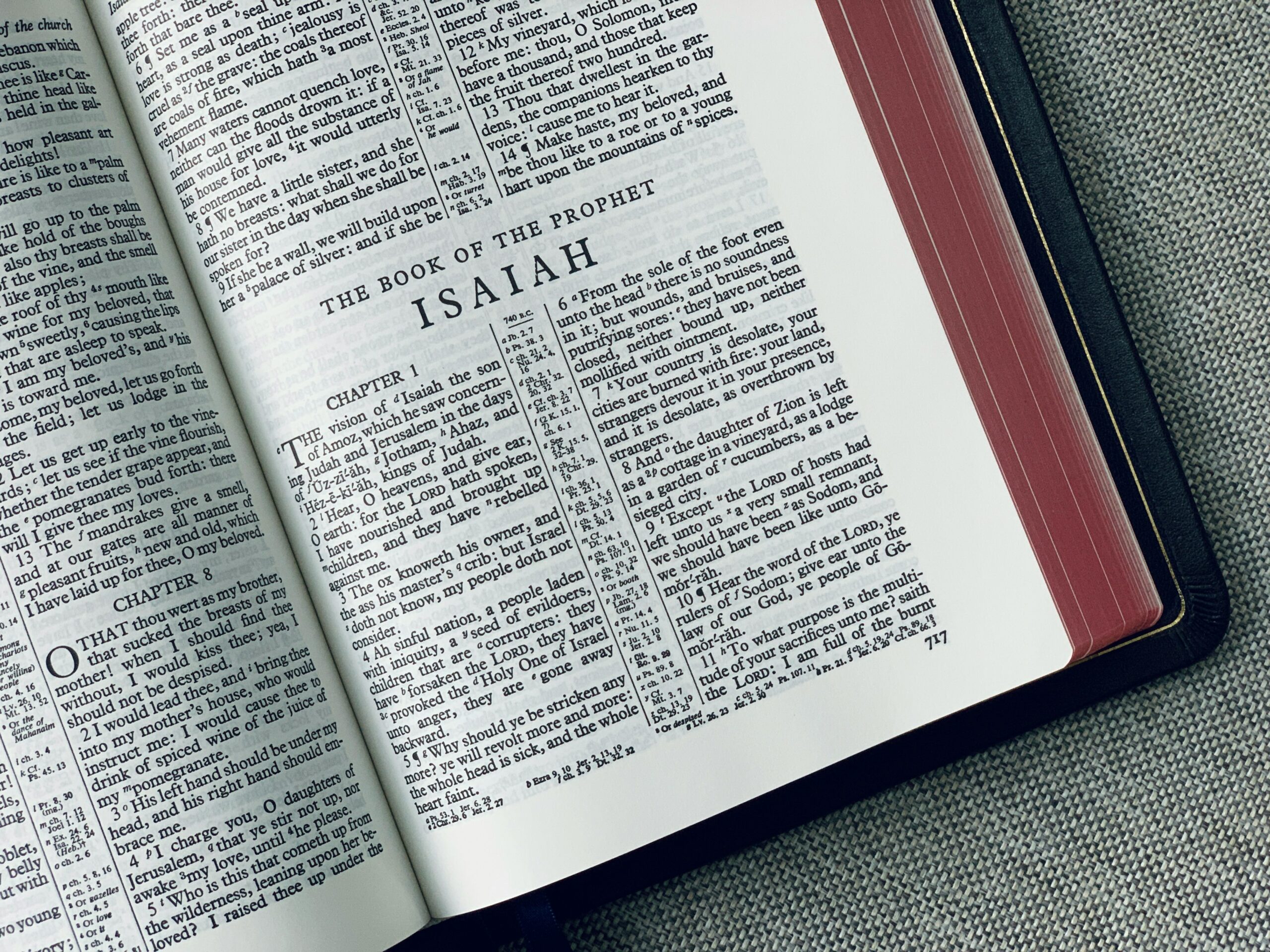
God Announces the Shepherd Pt 3
The sermon explores the profound contrast between the fleeting nature of human life and the eternal permanence of God’s Word, using the imagery of withering grass from Isaiah 40. It argues that while all flesh is perishable and subject to decay, the Word of God stands forever, offering unshakeable hope to those in exile or spiritual distress. The message connects this Old Testament promise to the New Testament revelation in First Peter, identifying the ‘living and abiding Word’ as the Gospel of Jesus Christ, which brings regeneration and new life. By highlighting the fragility of human achievements and existence, the text urges believers to find their security not in temporal things but in the immutable truth of Scripture. The tone is both convicting and comforting, calling the audience to recognize their mortality and place their faith in the imperishable seed of the Gospel.
Transcript
Exile here. We come to Isaiah
chapter 40, knowing that the backdrop is Isaiah 39, as we
have talked about for several weeks, where Isaiah had just
rebuked King Hezekiah because he had boastfully shown his treasures
to the kings of Babylon, to the emissaries that had come. And
Isaiah rebukes him and essentially tells him that one day The nation
would be plundered. The goods would be taken. All
the riches. All the people would be carried
off in captivity. And so it happened. And so that
mourning in lowly exile about which we just sang is this very
scene. Israel has been taken captive
and held captive for no brief season. They are longing for
salvation. But salvation of a different
kind, and they thought it would be a political salvation. They
thought it would be an earthly ruler that would come and conquer
these heathen kings and set them free. No wonder, with their hopes
being so fixed and so undefined, poorly defined, no wonder they
didn’t recognize the true savior when he came. Let’s go back again
to Isaiah chapter 40. A rich privilege to be able to
dip into this passage during this season. And I pray that
every heart has been provoked thus far into a deeper consideration
of their own life and calling. And their relationship with Almighty
God. If you would read along with
me as we consider Isaiah chapter 40. Where God opens comfort, O comfort
my people, says your God. Speak kindly to Jerusalem and
call out to her that her warfare has ended. That her iniquity
has been removed. That she has received of the
Lord’s hand double for all her sins. A voice is calling. Clear the way for the Lord in
the wilderness. Make smooth in the desert a highway for our
God. Let every valley be lifted up
and every mountain and hill be made low. and let the rough ground
become a plain and the rugged terrain a broad valley. Then
the glory of the Lord will be revealed, and all flesh will
see it together, for the mouth of the Lord has spoken. A voice
says, Call out. Then he answered, What shall
I call out? All flesh is grass, and all its loveliness is like
the flower of the field. The grass withers, the flower
fades when the breath of the Lord blows upon it. Surely the
people are grass. The grass withers, the flower
fades, but the word of our God stands forever. Get yourself
up on a high mountain, O Zion, bearer of good news. Lift up
your voice mightily, O Jerusalem, bearer of good news. Lift it
up, do not fear. Say to the cities of Judah, here
is your God. Behold, the Lord God will come
with might, with his arm ruling for him. Behold, his reward is
with him and his recompense before him. Like a shepherd, he will
tend his flock. In his arm, he will gather the
lambs and carry them in his bosom. He will gently lead the nursing
ewes. Who has measured the waters in
the hollow of his hand, and marked off the heavens by the span,
and calculated the dust of the earth by the measure, and weighted
the mountains in a balance, and the hills in a pair of scales?
Who has directed the Spirit of the Lord, or as his counselor
has informed him? With whom did he consult, and
who gave him understanding? And who taught him in the path
of justice, and taught him knowledge? and informed him of the way of
understanding. Behold, the nations are like
a drop from a bucket, and are regarded as a speck of dust on
the scales. Behold, He lifts up the islands
like fine dust. Even Lebanon is not enough to
burn, nor its beasts enough for a burnt offering. All the nations
are as nothing before Him. They are regarded by Him as less
than nothing and meaningless. To whom then Will you like in
God or what likeness will you compare with him? As for the
idol, a craftsman cast it, a goldsmith plates it with gold and a silversmith
fashions chains of silver. He who is too impoverished for
such an offering selects a tree that does not rot. He seeks out
for himself a skillful craftsman to prepare an idol that will
not totter. Do you not know? Have you not
heard? Has it not been declared to you
from the beginning? Have you not understood from
the foundations of the earth? It is he who sits above the circle
of the earth and its inhabitants are like grasshoppers who stretches
out the heavens like a tent curtain and who spreads them out like
a tent to dwell in. He it is who reduces rulers to
nothing, who makes judges of the earth meaningless. Scarcely
they have been planted. Scarcely they have been sown.
Scarcely has their stock taken root in the earth. But he merely
blows on them and they wither and the storm carries them away
like stubble. To whom then will you liken me
that I would be his equal, says the Holy One. Lift up your eyes
on high. And see who has created these
stars, the one who leads forth their host by number. He calls
them all by name because of the greatness of his might and the
strength of his power. Not one of them is missing. Why
do you say, O Jacob, and assert, O Israel, my way is hidden from
the Lord and the justice due me escapes the notice of my God?
Do you not know have you not heard the everlasting God the
Lord the creator of the ends of the earth does not become
weary or tired. His understanding is inscrutable.
He gives strength to the weary and to him who lacks might he
increases power. Though youths grow vigorous grow
weary and tired and vigorous young men stumble badly yet those
who wait for the Lord. will gain new strength. They
will mount up with wings like eagles. They will run and not
get tired. They will walk and not become
weary. I presented this chapter before
you, these passages, not only as merely the opening of Handel’s
Messiah, but as God’s announcement of a coming shepherd. A shepherd
that every person needs to know, that every person must worship. What we have presented before
you thus far is what I have subtitled, Glorious Truths of the Messiah’s
Advent. What are the truths surrounding
our Savior’s coming? We’ve begun to look at them.
We saw in the first two verses the comfort of peace, where God
immediately sent a message of comfort and those that were captive
in Babylon received that message and received it for what it was
a message of comfort to them. But it was also much greater.
The release from Babylon, the comfort that God would give in
that was just just the beginning of God’s great comfort to his
people. We see it as the comfort of Christ.
There were three things that The messenger was tasked with
calling out to his people. Not only. Not only this, that her warfare
had ended, that God had put an end, that God had enacted a peace
treaty through the Lord Jesus Christ, we know of that now that
her iniquity had been removed. There in verse two, that sin
had been dealt with and dealt with in full. We know that as. Justification, where we now stand
before God in the righteousness of Christ, if we have placed
our faith in the Lord Jesus. If we placed our faith in the
Lord Jesus, all of our sin went upon Christ and all of his righteousness
comes upon us. Not only that her warfare has
ended, that her iniquity has been removed, but that she has
received of the Lord’s hand double for all her sins, there is no
one. There is no one who has sinned any kind of a sin that
makes himself stand before God as unforgivable, as beyond the
scope of God’s grace. We saw also not only the comfort
of peace, but the preparation for glory. What is the preparation
for glory? How do we receive the very glory
of God? That’s what verses three through
five discussed as we saw last Lord’s Day. And the voice, the
heavenly messenger was tasked with this message that we were
to clear the way that we were to ready the path. For the coming
of God’s glory. It is a it is a ministry of repentance,
and that was the sentence specific ministry of John the Baptist
to ready the people for their God. We come to a third section
this morning as I introduced it to you. There is an exhortation
to proclaim here and not just for these messengers. This is
an exhortation for us to proclaim as well, but there is a two part. There are two parts to this initial
message. The initial message runs from
verse six all the way down through verse 11, but it’s a two part
message, not only the eternality of God’s word, but also an introduction
of the shepherding ruler. We’ll come to that section next
Lord’s Day, God willing. For this morning, if you would,
let’s focus in on verse six through eight. God has announced the
shepherd. That first this first portion
of the message, this eternality of God’s word is something that
must be considered in light of the comfort that has been proclaimed
us and the readiness by way of repentance which God has used
His Word to prepare, there comes another message. Look at verse
6. A voice says, call out. The answer
back, what shall I call out? And it’s almost as if the first
speaker says, say this. No, it isn’t in there. But what
we have is the words that flow from his mouth. Verse 6 says,
a voice says, call out. What shall I call out? In verse
six, essentially, we’re led into a conversation. And even though
the identities of the speakers is not presented or given, there
are a number of possibilities. It could be an interaction here
between God himself and an angelic messenger. It could be an interaction,
a conversation between God himself and the prophet Isaiah. That’s
the particular direction that I lean. It could be an angelic
messenger calling out these instructions to Isaiah. But it’s a different
herald, a different messenger than that of verse three. In
verse three, it just said a voice. We came to find out who that
voice is. It was John the Baptist, ultimately.
But here it again is vague, and these words are not attributed
to John in any way, shape or form. Isaiah records it here
and refers this first speaker as a voice and then refers to
the one responding to it in the third person. And some would
say because it’s in the third person, Isaiah can’t be the one
answering the voice. If Isaiah is the one being addressed,
the one responding with a question, what shall I call out? His use
of the third person is really easily explained. He merely describes
the scene as if he were an observer. But he’s not merely an observer,
he’s chronicling this for all time, he’s chronicling this because
this is the announcement of God’s shepherding ruler. This is the
announcement of the Messiah. What Isaiah does is just stand
to the back and he records the conversation as if it was passed
on to him third hand. I believe this is God speaking
to Isaiah directly. Nevertheless, God himself or
possibly this angelic messenger gives a simple command. His command
is call out, it’s a very general command. I want you to go call
out, cry to the people. And the details of this announcement.
Unfold in the remaining remaining verses of this entire chapter.
In these ensuing verses, the voice issues a series, as I’ve
already mentioned, of four messages that are to be proclaimed or
called out. The first, this exhortation to
proclaim, I’ve already told you, verses 6 through 11 is a two
part. The second message begins in
verse 12 and runs through verse 17. The third message begins
in verse 18 and runs through verse 26, and the fourth message
begins in verse 27 and will finish the chapter. As I said, the first
message is actually this two part instruction. The first portion
of this is a message about the nature of man. Contrasted with
the nature of God’s word. The second part of it is the
introduction. Of the Messiah. The great theme
of this little section, this message that he is tasked with
proclaiming is the fragile, ultimately the perishable nature of all
flesh. But it’s contrasted with the
imperishable nature of God’s word, and there is a strong and
powerful contrast that is set up here. Consider, if you would,
the verse 6B and following. Where the prophet is tasked with
these words, this is the message, all flesh is grass. What a great
way to go start a ministry, right? Here, Isaiah is tasked with going
out with that message. Remind the people of their mortality. Remind the people how fragile
they are. Remind the people that one day
as mortals they will no longer be. All flesh is grass and all
its loveliness is like the flower of the field. The grass withers
the flower fades when the breath of the Lord blows upon it. Surely
the people are grass. The grass withers the flower
fades. It’s an interesting image. One
that we don’t like to think of. And really one, especially in
the climate in which we live and in the day and age in which
we live, isn’t really readily present to us in the day-to-day
world. They have this grass now. It’s a blend. that you can purchase
at most of the nurseries where you can lay down and lay a bed
of appropriate soil for this grass and it has this tendency
to use very little water and to stay very green under very
adverse circumstances such as Colorado. I don’t even need to
tell you, all you need to do is drive by my house to learn
that I don’t have that grass. I don’t have that seed scattered
in my yard. I have the other kind. I have
the kind he talks about here. All I have to do is skip one
day of watering. All we have to do is have one
warm day and the brown spots begin to appear. And if the pattern
continues, the brown spots take over. It’s a common image in
scripture, which meant it was a very common illustration from
the day-to-day world in which they lived. And when he’s talking
about grass, he’s not talking about that which you might see
at Augusta on the golf course. What he’s talking about is the
long, lengthy grass, sometimes even waist-high. And it grew
very rapidly and was very luxuriant. It was a tropical grass, if you
will. It was so common that this illustration
is used repeatedly throughout the Old Testament, this tendency
for grass to grow up and flourish. And yet it was just as fragile
as could be. Listen to just a few. Of the
other occurrences where this passages or this idea, this illustration
is used, Job uses it, Job 8, 12, while it is still green and
not yet cut down, yet it withers before any other plant. Such
was the nature of this grass this luxuriant tropical grass. Job uses it again in 14 to like
a flower. He comes forth and withers. He
also flees like a shadow and does not remain. He especially
pointing it to the nature of man. Psalm 37 too, they wither
quickly like the grass and like the green herb. Psalm 102 11,
my days are like a lengthened shadow and I wither away like
grass. Isaiah 37, Isaiah uses it elsewhere. The inhabitants were short of
length. They were dismayed and put to
shame. They were as the vegetation of the field and as the green
herb, as grass on the housetops is scorched before it is grown
up. but was a common illustration.
You could look about at almost any direction and see this illustration
play itself out. The grass would grow up it would
flourish and in short short period it would die off. But the passage
is also the illustration rather is also used in this very passage
is cited a couple of different times in the New Testament. And
for this purpose, I want you to put a finger in first Peter. We’ll go there briefly and then
we’ll come back to Isaiah and then we’ll land again in first
Peter. Turn, if you would, to first
Peter, chapter one. First, Peter, chapter one. And in chapter one, just to kind
of begin to set the context for verses that we’ll look at in
a little more depth in a moment. Peter is basically giving them
the reason why they ought to live different kinds of lives,
why the church ought to be seen as one of the most loving places
in the world, the most. Why we our relationships with
one another should be so distinct from those of the world that
that alone is a testimony. Listen to this since not not
tossing us out as a possibility, but since you have an obedience
to the truth, purified your souls, and that doesn’t mean they did
it of themselves. Since you have an obedience to
the truth, purified your souls for a sincere love of the brethren,
fervently love one another. It’s almost like exactly what
he says in First Thessalonians four. Where he’s talking about
brotherly love there, and he says, excel still more. In other words, we can’t love
one another enough. We can’t practically love and
serve one another enough. You’ve already dedicated your
hearts to it. When you became a Christian,
you dedicated yourself not only to Christ, but to the body of
Christ, to the people of Christ. But he says, having committed
yourself to that fervently love one another, it ought to be palpable. You ought to long to see one
another and long to love one another and long to serve one
another, which is the practical outworking of your love for them.
That’s the context. Let’s press on fervently, love
one another from the heart, for you have been born again, not
of a seed which is perishable, but imperishable, that is, Through
the living and abiding word of God for all flesh is like grass
and all its glory like the flower of grass. The grass withers and
the flower falls off when the end. Peter omits this little
portion of Isaiah when the breath of the Lord blows upon it. Peter then concludes. With a
great promise. But the word of the Lord abides
forever. What Peter is pointing to there
is that, look, your lives were vain and empty and fragile. You were just waiting to die
until God moved upon you, until God changed you. How much more,
having been given this new lease, ought you to love in a practical
and an intense way your brothers and sisters in Christ? He basically, he grasps at these
simple illustrations to point out the fragile nature of life. All flesh is like grass. All people, not only all people,
but all animals, animals, we treat them as such. We treat
animals as if they’re grass. When they die, they die. We don’t
believe that they have a soul and we treat them accordingly,
that people we don’t tend to treat people or consider people
as grass. The writers of Scripture do.
Those who know God well. Looked at humanity and said it’s
we’re really not much. More hearty than the grass of
the field. Withers, it fades. It dies. Our life is brief and fleeting. But the word of our Lord abides
forever, and that’s the main point of what Peter is laying
out there, the whole point of the quotation is this contrast
between the brevity, the shortness, the fragile nature of human life. And the eternal nature of God’s
word. Go back one book, if you would, to James Chapter one.
James uses this illustration to not not as completely as Peter
does. And James uses it with a little
bit different purpose. Peter was telling us that, look.
You had these really fragile lives that God intervened, saved
you by his mercy, How much ought you love one another in your
service, in your prayer for one another, in your practical service
to one another? How much more should you love
and serve your brothers in Christ? James uses it in a completely
different context. Look at verse nine of chapter
one. But let the brother of humble circumstances glory in his high
position. Let’s not mince words here. He’s
talking about those who are poor, those without means. And he says
that the brother of humble circumstances is to glory in his high position.
This is a place that God. Has graciously placed you. Likewise,
let the rich man glory in his humiliation. You are your riches,
your best way of honoring God, your glory, as James would say
it is in your humiliation is in your humbleness. Why? Because like flowering grass,
he will pass away. The rich man, just like the poor
man, is destined to die. For the sun rises with a scorching
wind and withers the grass and its flower falls off and the
beauty of its appearance is destroyed. So, too, the rich man in the
midst of his pursuits will fade away. Now, it’s plainly evident if
you look at the passage. While James is speaking to the
rich man he doesn’t exempt the poor man from death. He’s not
just pointing this as a truth that touches only those who amass
earthly riches. He says this is a truth that
will touch either and both indiscriminately. It will not leave the rich untouched. That’s his point. As one said. He indicated the
attitude because of the brevity and the uncertainty of life.
This is this is as true for the poor man, but James presses it
upon the conscience of the rich, because while living in the midst
of plenty. He is more prone to forget it
than the poor brother. You see, you tell the poor man
that he is like flowering grass and destined to die. He feels
it. He feels it already. But you
tell the rich man, look, one day you’re going to die. The
rich man is so insulated so often from this truth, he has his visa,
right? He has his American Express membership,
has its privileges everywhere you want to be, right? He’s insulated
from these things and he forgets it quite easily. But look at
the final line. So, too, the rich man in the
midst of his pursuits will fade away. He’s essentially pointing
here. It’s an interesting image. It’s
a business trip, right? He’s in the midst of working.
I got a meeting. And then right smack in the midst
of it, God calls it home. That’s James’s purpose, you know,
there’s another place that will take a moment to look at the
context of this. This verse alluded to it at very
minimum, also in Psalm 90. Turn, if you would, to Psalm
90. If you’re running out of fingers, we won’t be back in
James. Take your finger out of James. Keep something or a marker
in First Peter. We will be back there momentarily. If you’re familiar with Psalm
90, or especially if you’re not, this is a psalm that I probably
have used more than any other at funerals. It is essentially
a text that is just ideal for laying before people their fragileness,
their transitory nature and the eternity of God. One pastor said
of this great, great song, he said, the sad and stately music
of this great song befits the dirge of a world. It preaches
man’s mortality in immortal words. In its awestruck yet trustful
gaze on God’s eternal being in its lofty sadness in its archaic
directness in its grand images so clearly cut and so briefly
expressed in its emphatic recognition of sin as the occasion of death
and in its clinging to the eternal God who can fill fleeting days
with ringing gladness. This psalm utters once and for
all the deepest thoughts of a devout man. Consider if you would Psalm
90 just briefly. A prayer of Moses the man of
God Lord thou has been our dwelling place in all generations before
the mountains were born or thou didst give birth to the earth
and the world even from everlasting to everlasting thou God. Thou
dost turn man back into dust, and dost say, Return, O children
of men, for a thousand years in thy sight, or like yesterday
when it passes by, or as a watch in the night. Thou hast swept
them away like the flood. They fall asleep. In the morning
they are like grass which sprouts anew. In the morning it flourishes
and sprouts anew. Toward evening it fades and withers. For we have been consumed by
thine anger. And by their wrath, we have been dismayed. Thou has
placed our iniquities before the our secret sins in the light
of thy presence. For all our days have declined
in thy fury. We have finished our years like
a sigh. As for the days of our life, they contain 70 years or
if due to strength, 80 years. Yet their pride is but labor
and sorrow. For soon it is gone and we fly
away. Who understands the power of
an anger and I fury according to the fear that is do the so
teach us to number our days that we may present to the heart of
wisdom. Do return, oh Lord, how long
will it be and be sorry for their servants? Oh, satisfy us in the
morning with my loving kindness, that we may sing for joy and
be glad all our days. Make us glad according to the
days thou hast afflicted us and the years which we have seen
evil. Let thy work appear to thy servants and thy majesty
to their children and let the favor of the Lord our Lord God
our God be upon us. Do confirm the work of our hands.
Yes confirm the work of our hands. Interesting images as we said
profound images. You have swept them away, verse
five, like a flood. He pictures that raging torrent
that comes along desert areas or even mountain areas. Sweeps
us away. They fall asleep. Speaking of
not just the sleep of death, but of the fact that when we’re
gone, we’re gone forever. In the morning, they are like
grass which sprouts anew. In the morning it flourishes
and sprouts anew. Toward evening it fades and withers.
It’s just that same image. Walking through the field in
the morning and you see the dew. Perhaps a rain the night before.
Everything springs to life. We watched it last year. We had
a couple of rainy weeks. Days. And everything on the hills
turned green. Until July. When everything dried
out. And a single spark created an
inferno that lasted for weeks, right? If you would, go back to Isaiah. Isaiah chapter 40. When at the end of verse 6, Isaiah
says, All flesh is grass and all its loveliness like the flower
of the field. We remember that those words
that he spoke were originally designed as a message of hope.
You realize that it was a message of hope to the exiles who were
captive in Babylon. What his point was was that human
help was going to be of no help to them. Human help is weak and
perishable. Humans are weak and perishable.
They were in desperate need of God’s help. that God had spoken and God had
given them a promise. God had given them encouragement.
And if God has spoken and God has done so, his words are solid
and believable and trustworthy and true. Look at the passage, all flesh
is grass, everything human, regardless of its quality, whether it’s
good, everything’s passing away. I got a letter from a friend
this past week that talked about they were in the burn area. lost
structures and expressed a desire to buy a place that wouldn’t
burn. There is no place. There’s no place like that. There
are no goods like that. There are no goods that can’t
be stolen or don’t rust or don’t wear out or that you can squirrel
away in such a fashion that they will be there forever. There
is no such place. There are no such goods. Everything
that we have. All of our accomplishments, all
of our deeds is just like the flowering grass. But I told you that it was only
James that brought out this point. All flesh is grass, all its loveliness
like the flower of the field, the grass withers, the flower
fades when the breath of the Lord blows upon it. Peter didn’t
didn’t focus upon that. His point had been made. Quite
simply in pointing out that we are as grass. We’re transitory,
we’re here today and gone tomorrow. That was Peter’s point, but James
had a different point. James wanted people to know really
and truly that all God has to do. Is. Blow a gentle breeze in their
direction, they are just like that grass. Psalm 103 echoes
that same thought as for a man, his days are like grass as a
flower of the field. So he flourishes when the wind
has passed over it. It is no more. The way James
said it is is even more pointed. The sun rises with a scorching
wind. And withers the grass and its
flower falls off. And what’s pictured here is man
literally at the point of his mortality, literally at the point
of his own earthly demise. As the scriptures say, time and
chance overtake us all. That’s the great message of Isaiah
40, the first part of it anyway. Psalm 39 echoes something that
the prophet said, Lord, make me to know my end. Show me just
how short the days are and what is the extent of my days. And
we’re not given that privilege. We’re not given the privilege
of knowing exactly how old we’ll be when we die, thankfully. All we know is that there is
a limit to them, and that’s what the psalmist is praying for.
Lord, show me how short this life is. Show me how transient
I am. 78 some 78 39 says you remember
that they were flesh but flesh a wind that passes by and does
not return various images in scripture that point to the fact
that we are passing away. One of the frequent verses I’ve
used in funerals as well as Ecclesiastes Ecclesiastes 7 2 Ecclesiastes
7 2 says it’s better to go in the house of mourning than in
a house of feasting. That almost is counterintuitive
isn’t it. Wouldn’t we naturally think it’s much better to go
to a party, much better to go to a wedding than a funeral? Why is it better? Because that,
I take that to mean death. Mortality is the end of every
man and the living takes it to heart. No wonder King David,
as he was approaching the end of his days, says, I am going
the way of all the earth. He didn’t need to convince David
of his mortality. The Bible speaks of life as a
fleeting vapor, fading flower, withering grass. The grass withers,
the flower fades. And it isn’t until the last line
that we even get a ray of hope. But it’s profound hope. It’s
overwhelming hope. The grass withers, the flower
fades, but the word of our God stands forever. What it’s talking about is every
word of God, every representation of God, and that the word of
God is just like God himself. It’s irresistible, it’s immutable,
it’s unchangeable, it’s perpetual, it will not fade away. As one
said, to God’s word, there is a permanent character, unlike
the flesh of man, which withers and fades, it stands forever.
It rises up, stands and endures. When God speaks, his word expresses
the truth and that truth cannot be annulled or changed. Forever. Psalm 119, 89, forever,
O Lord. Your word is settled in the heavens.
God’s word doesn’t fade. God’s word won’t go away. If
you will now turn back to first Peter. I promised we would get back,
we made it, it will be brief in first Peter. Peter wants to
characterize for us what this word is. What is this word of
God? What is this promise about which
Isaiah just so obtusely alluded to? Look at verse 22 once again,
since you have an obedience to the truth, purified your souls
for sincere love of the brethren, you have been brought, as one
said, into a completely new state of existence by God’s grace. You are born into a new family. God has adopted you as sons. Fervently love one another from
the heart. Look at verse 23. Why? For you have been born again. It was an act of God. God moved
upon you and brought you to life. Giving an image of the great
doctrine of regeneration for you have been born again, not
of a seed which is perishable. Now I tell all you gardeners
from time to time, don’t use bad seed in your gardens. Don’t
buy the stuff that’s on sale. Don’t buy stuff on the discount
rack. Don’t buy last year’s seed. Buy
good seed. And I’ll give you the brand afterwards.
Otherwise, yeah. Buy good seed. What he’s saying
here is you have been born again, not of some cheap seed, not of
some hybrid seed, not of some cultivated seed, Not of some
seed that has a poor germination rate, if you will. You have been
born of a seed which is imperishable. You know, some seed has a shelf
life. You put it on a shelf. Be careful what grass you buy,
because if it’s two or three years old, you’re getting grass.
It’s probably going to sprout about 40 percent. That’s the image that God’s using
here. You’ve been born again of a seed which is imperishable.
That is. through the living and abiding
word of God. What Peter points back to here
is the gospel. That’s how we’ve been born again.
That’s how we’ve been brought to life. That’s how we stand
now in the fullness of this promise that even though we are frail
and that we are mortal and that we are dying, we have been brought
to life in newness of life because of what God has accomplished.
Through his son, the Lord Jesus Christ, that’s the word of life.
That’s God’s word that is imperishable. That’s God’s word that lives
and abides forever and will not fade away. The Apostle Peter. By the direction of the Holy
Spirit applies this passage, Isaiah, Chapter 40, verse six
through eight, Distinctly and directly to the gospel. The gospel
of the Lord Jesus Christ and that by the manifestation of
God’s glory. We have come to know Christ because
God wanted us to see his glory because God wanted us to see
salvation. God revealed those truths to
us in time. That’s what Peter was or that’s
what Isaiah rather was talking about last week. All flesh will
see it together. They will see the glory of the
Lord revealed. This is it. It’s the Lord Jesus
Christ. And if you’re sitting here this
morning, whether you’re a young person or whether you’re an adult
that has chosen to live this pretend life, even among us,
pretending that you’re a believer. Perhaps you wandered in and you’ve
never expressed your faith in the Lord Jesus Christ. It’s for
you. This is the glory of the Lord. There is no greater promise.
There is no more waiting. There is no more waiting for
something more and greater. It’s the Lord Jesus Christ in
all that he has accomplished. It’s the main points of this
whole section. The contrast between a fleeting,
fragile life. in a life that can be brought
to brand new because of the relationship with the Lord Jesus Christ. What
Isaiah refers to is the glory of the Lord. It’s the salvation that is offered
in and through, and by no other means, the Gospel of our Lord
Jesus Christ. Let’s bow as we examine our hearts. Oh, father, God. We humble ourselves
before you. And those of us who know the
Lord Jesus, we know that it’s not because of anything in us. Our merciful God. We know that
there are those among us, not just young people. The people
perhaps who think that coming to church is good enough. Or
that a casual ascent to the gospel is good enough. or that merely
being here is enough. O Lord God, You so desired to
offer these words of hope to a dying people who were far worse
than captives in a foreign land. We were captives to sin. O our
merciful God, we pray that today might be the day of release for
some who are in our midst. Perhaps there are young people
who might be provoked to talk to their parents about this Jesus. Perhaps there are those that
even considering their own mortality, perhaps even for the first time,
they will die. We all will die. Perhaps gripped
with that truth. The gospel has a new and different
ring to it. Perhaps those who have sat for
far too long complacently might see this as the day of salvation. Lord God, move upon any and every
heart that does not know you and bring them to conviction.
Lord Jesus, we pray all of these things in your precious name. Amen.
Messages: 15