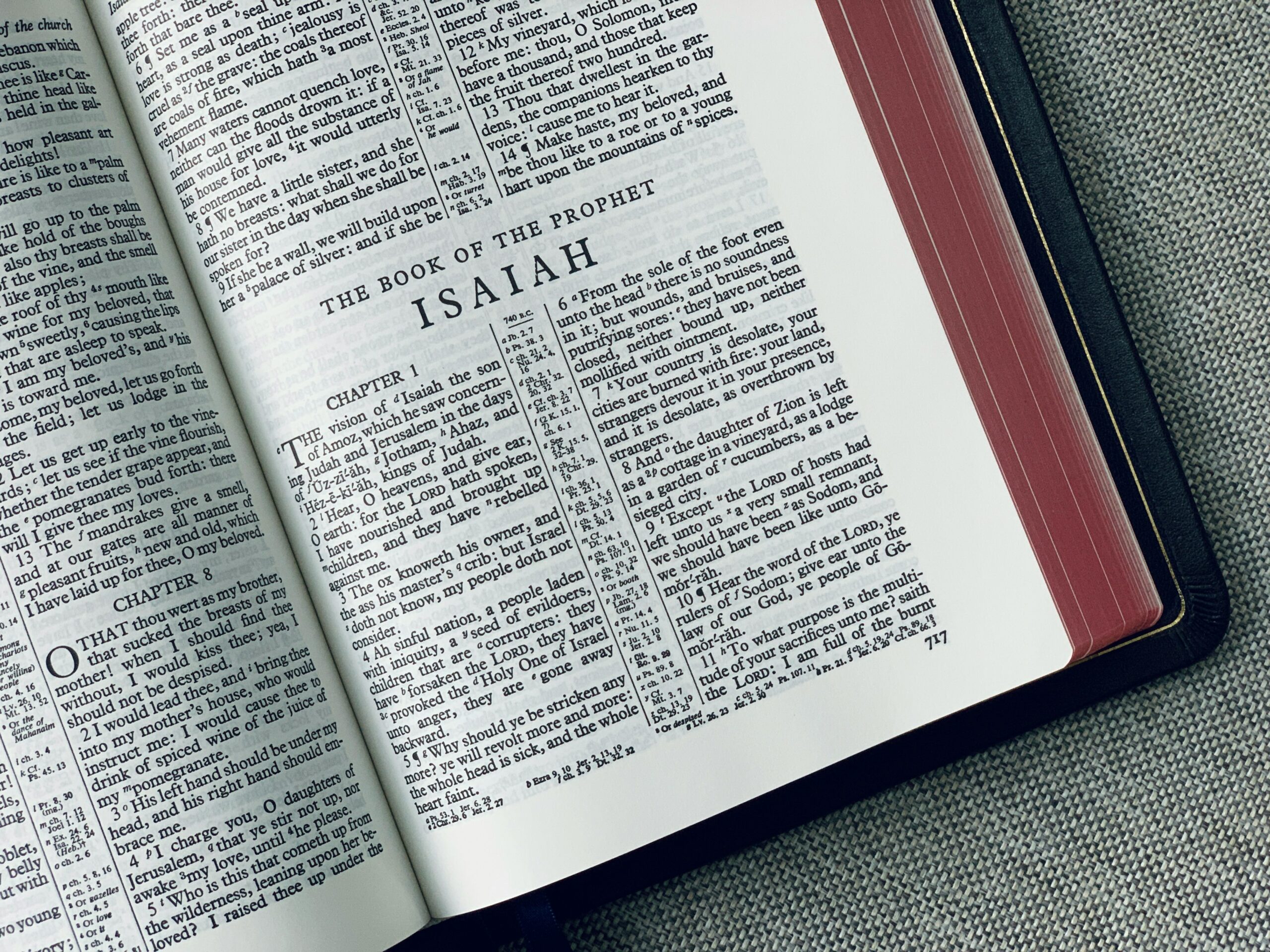
God Announces the Shepherd Pt 4
The sermon explores Isaiah 40:6-11 as a divine proclamation of the Messiah’s character, emphasizing that God calls His people to proclaim good news from a high place. The central message identifies four key attributes of the Messiah: He is fully God, possessing divine nature and eternal existence; He is mighty, coming with almighty power to rule; He is the judge, who will render recompense to all according to their deeds; and He is the shepherd, who tenderly gathers, protects, and cares for His scattered flock. The preacher contrasts the fleeting nature of humanity with the eternal standing of God’s word, highlighting the comfort found in the Messiah’s redemptive work. This exposition serves as a call to repentance and faith, urging listeners to recognize Jesus Christ as the ultimate fulfillment of these prophetic promises and to place their trust in His saving grace.
Transcript
As we began to consider last
Lord’s Day, we are in the midst of this chapter, in the midst
of this great proclamation of God himself announcing a shepherd,
announcing the Messiah. And we have begun to see the
glorious truth surrounding the Messiah’s advent as we have considered
these opening eight verses. We saw first of all the comfort
of peace that God intended comfort to his people and he announced
that in those opening verses he opens from there into the
heralds announcement of preparation for glory which is nonetheless
repentance. John the Baptist’s ministry essentially
fulfilling these passages in calling the people to repentance. As we begin to get into the next
section in verse six, Isaiah records here that it’s just a
speaker. We don’t. The speaker isn’t identified. And then there is somewhat of
a dialogue, as I suggested to you last week. Perhaps it’s not
Isaiah engaged in this dialogue that Isaiah is merely recording
the dialogue, but either way, it is a divinely given conversation. I would take it to be God himself
that is calling out these things, but it’s certainly possible that
it’s an angelic messenger that is in dialogue with Isaiah himself. As I shared with you last week,
the message here in verses 6 through 11 breaks up into two parts.
We focused on the first portion of that last Lord’s Day. Where
Isaiah just essentially points to the transitory pleading nature
of humanity as contrasted with the eternal nature of God and
his word. That opens up for the announcement
which has been building. Comfort was announced. Preparation
was called for. The context is set. that all humanity is fleeting
and fragile and desperately in need of an eternal God. And now the eternal God announces
essentially the main portion of this entire chapter, the shepherding
ruler that would come in order to take it in its context. Would
you pick up with me in verse six through verse 11? A voice says, call out. Then
he answered, What shall I call out? All flesh is grass, and
all its loveliness is like the flower of the field. The grass
withers, the flower fades when the word of the Lord blows upon
it. Surely the people are grass.
The grass withers, the flower fades, but the word of our God
stands forever. Get yourself up on a high mountain,
O Zion, bearer of good news. Lift up your voice mightily,
O Jerusalem, bearer of good news. Lift it up, do not fear. Say
to the cities of Judah, here is your God. Behold, the Lord
God will come with might, with his arm ruling for him. Behold,
his reward is with him and his recompense before him. Like a
shepherd, he will tend his flock. In his arm, he will gather the
lambs and carry them in his bosom. He will gently lead the nursing
youths. It is the introduction of the
Messiah that is the essential message of that second portion
of the opening message. The prophet essentially now takes. As his point of reference, the
time when Jehovah is going to move the time when God is going
to fulfill his promise and he looks to his people and he says
get yourself up on a high mountain. Take a place of great stature. Take a place of
high profile and proclaim Not only to your own people, but
proclaim to the nations. Be a bearer of good news, Zion. Be a bearer of good news, Jerusalem. Up to this point, as we have
seen, Jerusalem has been in despair. They’ve been plundered and pillaged.
They’ve been taken captive. They’re being held against their
will. They are under the great weight
of the punishment for their own sin. And they obviously needed the
consolation of the Lord, but not just soothing words, they
needed a rescue, they needed ransom, they needed redemption. But not as they thought it would
be. Up to this point, they are in
desperate straits. And so God tells them of all
people to get up on a high mountain, That of all people, God would
expect them to be the proclaimers of redemption, to be the proclaimers
of good news. It’s an image that is repeated
in scripture. This climbing to a hill to announce
some great announcement in the book of Judges, they told Jotham
he went out and stood on top of Mount Gerizim. And lifted
up his voice and called out. In the book of Samuel, first
Samuel, chapter 26, David likewise stood on top of a mountain and
called out to the people. And that’s the image that God’s
calling his people to. Perhaps not literally, but he’s
telling them to take the place of a herald, to take up the task
of being a herald, a proclaimer. And what are they to proclaim
but good news? The word there in the Hebrew
originally meant to smooth over, to make happy or pleasant. It
was joyful, happy news that they were to proclaim. And that little
word essentially lies at the root of our New Testament word
to evangelize. It is good news that they were
to proclaim. And it literally is the gospel
that they were preparing. They were bowed down. They were overwhelmed. But they
had the good news. Now, God was preparing to give
them the ultimate in good news in the coming of the Messiah. That primary meaning of the word
to make smooth. It is, as one said, not without
emotion. That we know the first occurrence
of the word which passing through the Greek of the Septuagint and
into the New Testament had such a fruitful history as embodying
the message of the gospel. In other words, what he says
is this is the first time that a full declaration of the good
news, the gospel has been uttered. The glad message, this good news
that Jerusalem was supposed to proclaim was to orient from the
people of God into Judea and Samaria and to the other uttermost
parts of the earth. Simeon echoed this. Upon seeing the Christ child
in the second chapter of Luke, Simeon said, Now, Lord, poor
old Simeon, you are releasing your bondservant to depart in
peace. According to your word, for my
eyes have seen your salvation. Which you have prepared in the
presence of all peoples, a light of revelation to the Gentiles
and the glory of your people, Israel.” It wasn’t just for Israel. It wasn’t ever supposed to be
just for Israel. Israel themselves were supposed
to be witnesses of the gospel. All the while, Israel was supposed
to function as a witness, a light to other nations. Isaiah takes
this principle up repeatedly throughout the book. Isaiah 25,
7, On this mountain He will swallow up the covering which is over
all peoples. In Isaiah 42, 6, I am the Lord. I have called you in righteousness.
I will hold you by the hand and watch over you. I will appoint
you as a covenant to the people, as a light to the nation. Says
the same thing in Isaiah 49 6 and Isaiah 52 10 that all the ends
of the earth may see the salvation of our God. Matthew 24. Jesus echoed that thought by
saying the gospel of the kingdom shall be preached in the whole
world as a testimony to all the nations. The gospel was never
meant only for Israel. The gospel was never meant to
be held essentially to their own breast, but it was to be
constantly proclaimed from the mountaintop by them. And so Israel
was supposed to testify, they were supposed to bear witness,
proclaim the good news, but what good news? When they lifted up
their voice mightily. What was it they were supposed
to declare? It was the good news that the Messiah, the Messiah
himself was coming. But even as the details began
to pour forth, even the nation of Israel to the last man couldn’t
have predicted the nature of the Messiah. They didn’t have
this kind of an individual in mind. And as God himself, or
perhaps that angelic messenger that we spoke of, as that messenger
began to provide the detail of the profile of the Messiah, even
the most self-respecting Jew would have been astounded at
the preview of his credentials. In these verses, God opens up
to mankind a fourfold glimpse of the character of the Messiah,
what he would be. First of all, look at verse 9. In introducing the Messiah, the
first thing that God himself allows to be known of him is
that the Messiah will be God. The Messiah will be God. Get
yourself up on a high mountain, O Zion, bearer of good news.
Lift up your voice mightily, O Jerusalem, bearer of good news. Lift it up, do not fear. Say
to the cities of Judah, here is your God. There’s no ambiguity
there. You don’t have to argue with
Jehovah’s Witnesses about John 1. Here is your God. The prophet essentially is seeking
to comfort the exiles. But ultimately, the exiles would
have to look down into the annals of history for the fulfillment
of this one, because this Cyrus didn’t fit this bill. Cyrus would
let them go as a heathen king, but he didn’t fit the bill of
God. The words in that very real sense, they can only have a future
fulfillment only with the coming of Christ with these things true. Jesus Christ is revealed in Scripture
as co-equal with God the Father. He is God. He is spoken of as
pre-existing from all eternity. He is, in essence, God, as the
Scriptures declare. The titles that are given to
Him, the worship given to Him, the miracles performed by Him,
the attributes He possesses, all of those testify to His divine
nature. John 1.1-5. We don’t need to
see this passage to the Jehovah’s Witnesses. In the beginning was
the word and the word was with God and the word was God. It’s Jesus Christ. John 114,
the word became flesh and dwelt among us. One pastor said of those solemn
words, when we are told that the word became flesh, this does
not mean that the word ceased to be what he was before. As
to his essential being, he was exactly the same before and after
the incarnation, but simply that he took on that particular character. That he acquired an additional
form, that is, human flesh, without any way a change to his original
nature, that is, deity. No wonder Jesus could say that I and the Father are one.
John chapter 10. But in Matthew’s gospel, and
I would have God’s people turn there just for a brief moment,
Matthew’s gospel in chapter one, we have another clear testimony
of the deity of Christ, which echoes this very passage. Matthew chapter one. And we take
it up in verse 18. Now, the birth of Jesus Christ
was as follows. When his mother Mary had been
betrothed to Joseph before they came together she was found to
be with child by the Holy Spirit and Joseph her husband being
a righteous man and not wanting to disgrace her plan to send
her away secretly. But when he had considered this
behold an angel of the Lord appeared to him in a dream saying. Joseph,
son of David, do not be afraid to take Mary as your wife for
the child who has been conceived in her is of the Holy Spirit. Now, what is implied there in
verses 18 and 20 that this child was by the Holy Spirit and of
the Holy Spirit is now going to be stated explicitly that
God had come to take on human flesh. Look at verse 22. Now,
all this took place to fulfill what was spoken by the Lord through
the prophets. Behold, the Virgin shall be with
child and shall bear a son and they shall call his name Emmanuel,
which translated means God with us. It was that miraculous blending
of deity and humanity. together in one, which was prophesied
by Isaiah centuries earlier. Here, Matthew cites as evidence
Isaiah 7.14, which verse we have considered on another occasion.
The Lord himself will give you a sign. Behold, the virgin shall
be with child and she will call his name Immanuel. Matthew, by
the direction of the Holy Spirit defines that word. Emmanuel,
God with us. It’s interesting, the naming
right was normally the. The privilege of the father.
But in this case, occasion, it was taken up by God himself,
but there’s been a bit of a controversy unnecessary, I might add, that
the name that Joseph was to call the baby was Jesus. God gave
him the name. But here in verse 23, we learn
that the child was to have a different name, Immanuel. And some have
stumbled over that. J.C. Ryle very adeptly explains
it. One name describes his office,
the other his nature. The name Immanuel is the name
which is given to our Lord from his nature as God-man, as God
manifest in the flesh. It signifies God with us. There
was a union of two natures, the divine and human. The Savior
is perfect man as well as perfect God. Hebrews one declares the
same truth. Turn, if you would, to Hebrews
chapter one. Hebrews tells us in its opening
pages that God had spoken, God had given a message, he had sent
this Messiah, the Messiah was God. And in him, all the deity
is encapsulated in Christ. Look at verse one. God, after
he spoke long ago to the fathers and the prophets in many portions
and in many ways in these last days, has spoken to us in his
son. whom he appointed heir of all
things, through whom also he made the world. And he is the
radiance of his glory that is God’s and the exact representation
of his that is God’s nature. And he upholds all things by
the word of his power. When he had made purification
of sins, he sat down at the right hand of the majesty on high.
Other verses say it much more simply and directly, even than
this. In him, Colossians 2 9, all the
fullness of deity dwells in bodily form. As one faithful saint would say,
nothing can be plainer. than that the scriptures do teach
that Christ is truly God and that he is truly man and that
he is one person. They assert of him whatever may
be said of God and everything that can be said of sinless man.
They assume it is a certain fact that Christ is God and man in
one person. The hymns of Christmas tell us. Christ, by highest heaven adored,
Christ, the everlasting Lord, late in time behold him come,
offspring of the Virgin’s womb, veiled in flesh, the Godhead
seed. Hail the incarnate deity, pleased
as man with men to dwell, Jesus, our Emmanuel. The first thing
that God wanted his people to know is that the Lord Jesus Christ,
the Messiah, is God. But there was more. It was much
more. The Messiah was not only God,
the Messiah would be mighty. Get yourself up on a high mountain,
God tells his people, say to the cities of Judah, here is
your God. Behold, the Lord God will come
with might. With his arm ruling for him.
This is literally with or in the strength of hand, it was
a Hebraism. It was the essence of his being
to say that the strength or his arm, the arm of the Lord, a favorite
phrase of Isaiah himself, but it also occurs in the Psalms
Psalm 89, 13. You have a strong arm. Your hand
is mighty. Your right hand is exalted. Likewise,
in Isaiah, my righteousness is near. My salvation has gone forth.
My arms will judge the peoples. It talks about the almighty power
of God in here. God says this Messiah will own
it. This Messiah will possess this
power. He’s going to come in strength,
he’s going to come in divine power, he’s going to come with
all power available to him. He doesn’t need to seek help
from anyone. We saw that that’s a power that is inherently bestowed
upon the Lord Jesus Christ by Almighty God. In Ephesians, Paul
prayed for the believers there that they would know the surpassing
greatness of God’s power, which he brought about in Christ when
he raised him from the dead, seated him in his right hand,
far above all rule and authority and power and dominion. Christ
is over it all. The very power. The saints would
come to know would sustain and energize them for ministry. Paul
said that everything that he did, Second Corinthians 12, nine
was in the power of Christ. Ephesians 3, seven, according
to the gift of God’s grace, which was given to me according to
the working of his power, all the power for ministry, all the
power for the church. was bestowed by the Lord Jesus
Christ himself, because all power has been given to him. And it
is power that will be objectively witnessed throughout the centuries
and into eternity. Second Peter 1 16 says, We did
not follow cleverly devised tales when we made known to you the
power and coming of our Lord Jesus Christ. In other words,
it’s as if he says, wait and see. You just wait. In Mark, Jesus Himself foretold
of this power, that they would see the Son of Man coming in
the clouds with great power and glory. And no wonder. I love the fact that we are reading
the book of Revelation at this time. Revelation 411, what a
testimony of Christ, what a testimony of God’s power. Worthy are you,
O Lord, our God, to receive glory and honor and power for you created
all things and because of you they existed and they were created. The Lord Jesus Christ, our Lord
Jesus Christ, the Messiah, is not only God, he is mighty. Thirdly,
Not only is he God and mighty, look down at verse 10. Behold,
his reward is with him and his recompense before him. The Messiah
will be the judge. The Messiah will be the judge.
And I can promise you no Jew believed that the Lord, the Messiah,
was going to come back and judge them. He was supposed to be a
helper. He was supposed to be this earthly
deliverer. Not a divine judge. Christ is going to bring with
him. Not only the reward. A blessing to his people, but
he was also going to bring his enemies their just recompense. Two things you observe here in
that little section, number one, that the Messiah, the Lord Jesus
Christ, would come as a judge. John’s Gospel, he identifies
it. He said, truly, truly, I and John 5 verse 25, truly, truly,
I say to you, an hour is coming and now is when the dead will
hear the voice of the Son of God and those who hear will live
for justice. The father has life in himself,
even so he gave the son to have life in himself and he gave him
authority to execute judgment because he is the son of man.
Peter, in preaching in the great book of Acts, Peter laid out
this same solemn truth in hearing of the salvation of the Gentiles.
He said, we are witnessing of all the things he did, both in
the land of the Jews and Jerusalem. They put him to death by hanging
him on the cross. God raised him up on the third
day just to identify who we’re talking about. And he granted
that he becomes visible not to all the people, but to witnesses
who were chosen beforehand by God. Verse 42, and it says, and
he ordered us to preach to the people. And solemnly to testify
that this is the one who has been appointed by God as judge. Of the living and the dead, Paul
preached the same thing. Paul preached the same thing
in Acts chapter 17. Therefore, having overlooked
times of ignorance, Paul says God is now declaring to men that
all everywhere should repent because he has fixed a day in
which he will judge the world in righteousness. Through a man,
not just any man, through a man whom he has appointed, having
furnished proof to all men by raising him from the dead, Second Timothy 4-1 says the same
thing. Christ Jesus, who is to judge
the living and the dead. But I said there were two things
to observe here. Not only that the Messiah would
be a judge, but that he would bring recompense. He would render
to each according to what was due. And I literally have dozens
of references throughout Scripture that proclaim this same truth.
Psalm 62, 12 in loving kindness, loving kindness is yours, O Lord,
for you recompense a man according to his work. Jeremiah 1710, I,
the Lord, search the heart, I test the mind even to give to each
man according to his ways. Jumping into the New Testament,
you find dozens more references. Second Corinthians 510, we must
all appear before the judgment seat of Christ. So that each
one may be recompensed for his deeds according to the body.
I promise you, the Jews were not prepared for this news. The
Jews were not prepared for the news of a Messiah who is going
to be God, who is going to be almighty. But least of which
they were prepared for a Messiah who is going to come as judge.
But that he is the Messiah, the Lord Jesus Christ is judge. And
there’s a fourth. There’s a fourth truth we see
from these verses. In the introduction of the Messiah,
we see that not only will he be God, he will be mighty, he
will be the judge, he will be the shepherd, the shepherd. Look at verse 11. Like a shepherd, he will tend
his flock. In his arms, he will gather the
lambs and carry them in his bosom. He will gently lead the nursing
use. What a tender image, even if
you don’t even you’ve never been to the farm, even if you’ve never
owned a sheep or seen a sheep in pasture, never seen this pastoral
scene. What a tender image. Our minds
can easily. Imagine. A shepherd caring for
a little lamb. God’s people, which are referred repeatedly
by God himself as his flock, God’s people, his flock are now
dispersed, scattered among the heathen foreign land. And what
he tells them is that he was going to send them a shepherd,
one that would gather them together, rescue the lost, bandage up the
hurting, feed those who were hungry, and care for them and
love them as only a shepherd could. In the Old Testament,
you have that image constantly used of God. Psalm 23, the Lord
is my shepherd. I shall not want. He makes me
lie down in green pastures. He leads me beside quiet waters.
He restores my soul. He guides me in the path of righteousness
for His name’s sake. It’s a beautiful image. And our
minds don’t even have to work overtime to see the beauty that
God was conveying in that image. Of the flock of God. In Jeremiah
31 10, Hear O Lord, hear the word of the Lord, O nations,
and declare in the coastlands afar off. He who scattered Israel
will gather them up and keep him as a shepherd keeps his flock. Now, as I said, the imagery is
throughout the Old and New Testament, but you see it in a very poignant
setting in Ezekiel. Just listen. In Ezekiel, chapter
34, verse 11, it says, For thus says the Lord God, Behold, I
myself will search for my sheep and seek them out. I’ve told
the Saints before one of my favorite passages in all of Scripture. And I know I say that of a lot
of passages. One of my favorites is John chapter nine, where Jesus
not only healed the blind man, but he went and sought him out
again. Because he wanted to heal his spiritual blindness, it’s
God that does the seeking always. I myself was searched for my
sheep. As a shepherd cares for his herd in the day when he is
among his scattered sheep. So I will care for my sheep and
I will deliver them from all the places to which they were
scattered on a cloudy and gloomy day. I will bring them from the
peoples and gather them from the countries and bring them
to their own land. And I will feed them on the mountains
of Israel by the streams and in the inhabited places of the
land. I will feed them in good pasture and their grazing ground
will be the mountain heights of Israel. There they will lie
down on good grazing ground and feed in rich pasture on the mountains
of Israel. I will feed my flock. I will
lead them to rest, declares the Lord God. I will seek the lost,
bring back the scattered, bind up the broken and strengthen
the sick. Only God. And that’s why when
this is so clearly here prophesied of Christ, of the Messiah, We
see that this is God’s fulfillment of his promises. Like a shepherd,
he will tend his flock in his arms, he will gather the lambs,
he will carry them in his bosom. He will gently lead the nursing
youth from the youngest and the most infirm, even to perhaps
those who are laden with baby lambs, the youth. The Lord Jesus Christ, would
step in and he would serve as shepherd. He would fulfill all
of those duties of a shepherd. He would watch over his people.
He would carry them himself. He would minister them with only
the care that a loving shepherd could, each one of them. The New Testament, as you know,
regularly presents Christ as not just a shepherd, but the
shepherd. when he was announced and the Magi came and were confronted
by Herod. Their testimony of Christ, quoting
Micah 2.4, was that you, Bethlehem, land of Judea, are by no means
least among the leaders of Judah, for out of you shall come forth
a ruler who will shepherd my people Israel. Jesus had a shepherd’s
heart. Looking over the The nation and
seeing their sinfulness and their waywardness, their coldness.
It says in Matthew 936 that seeing the people, he felt compassion
for them because they were distressed and dispirited like a sheep without
a shepherd. He had come for that purpose. But perhaps the most poignant. Significant passage is Jesus’
own words, and I would have the Saints turn to John Chapter 10. In John Chapter 10, Jesus sets
up this image, essentially a distinction between the hireling, which turns
his back at the first sign of trouble and at the very best
scatters the flock. But the great shepherd, on the
other hand, will gather them together. There is nothing he
will not do for them. Look at John 10 one. Truly, truly,
I say to you, he who does not enter by the door of the fold
of the sheep, but climbs in by some other way, he is a thief
and a robber. But he who enters by the door
is a shepherd of the sheep. To him, the doorkeeper opens
and the sheep hear his voice and he calls his own sheep by
name and he leads them out. What a beautiful image. He puts forth his own, he goes
ahead of them and the sheep follow him because they know his voice.
A stranger they simply will not follow, but will flee from him
because they do not know the voice of strangers. This figure
of speech, Jesus spoke to them because they did not understand
what those things were, which he had been saying to them. So
Jesus said to them again, truly, truly, I say to you, I am the
door of the sheep. All who came before me are thieves
and robbers, but the sheep did not hear them. I am the door. If anyone enters through me,
he will be saved and I will go in and he will go in and out
and find pasture. The thief comes only to steal
and kill and destroy. I came that they may have life
and have it abundantly. I am the Good Shepherd. The Good Shepherd lays down his
life for his sheep. That word good, it’s almost beyond
our English translating. It has the image of beauty. It has the image of nobility,
innate goodness. And here, what it points to is
that Christ is not just a shepherd and not just a good shepherd.
He is the perfect shepherd. He is the shepherd of all shepherds. Because of that, he tenderly
cares for his children, his sheep. He provides for what they need.
He leads them. He guides them. He bears with
them patiently. He cares for their sicknesses.
He cares for their needs. He bandages up their wounds.
He guards them. He protects them. As J.C. Ryle said, our Lord shows
here the distinguishing mark of a good shepherd. He will lay
down his life for his sheep. to save, protect and defend them. Now, Jesus Christ there in that
moment was telling us that when he laid down his sheep, he was
laying down his life for his sheep. He would do so on the
cross in his death on the cross for his flock. Hebrews 13 also uses this image
of a shepherd, it says, the God of peace who brought up the great
from the dead, the great shepherd of the sheep. First, Peter echoes that when
he refers to Christ as the chief shepherd, first first Peter,
five, four. And so this idea of the good
shepherd. In John points to the fact that
What Jesus does is inherently good. That is the best shepherd
there ever could be. Everything he does for us is
toward that great end of glorifying God. When he points to that idea
of the great shepherd of the sheep. He points to the fact
that this is one of the most astounding principles in Scripture
that pastors really are If you use the word literally are shepherds. To think that we bear the same
name or title as the Lord Jesus Christ. We don’t do the work
like he does it. We try. We labor by God’s grace
to do what he would have us to do, but only Christ is perfect. Only Christ fulfills that role
perfectly. But there in that last verse
that I cited, when we refer to Christ as the chief shepherd. He points to him as being overall. Common function, but he’s over
all of the church for all time. Christ will never relinquish
that role. It will always be the Lord Jesus
Christ gathering those to him. tenderly caring for them, patiently
bearing with them, tending to their hurts. God gave the nation a message,
and it’s our message too, that this Messiah, this Lord Jesus
Christ, who we now know, He is God. We don’t need to flinch
at declaring that great truth. He is mighty. The Lord Jesus
Christ is capable of anything. The Lord Jesus Christ is able to do anything far beyond
all that we ask or think. The Lord Jesus Christ is the
judge, and one day he will render to every man according to what
is due. And the Lord Jesus Christ is
shepherd. If you don’t know this Savior, This has been a season
already. These four verses for messages
rather. A season really of calling people
to repentance. If you don’t know the Lord Jesus
Christ, if you can’t answer definitively that you absolutely believe in
that Savior. The Savior, who is almighty God.
Who will be a judge. and who tenderly cares for his
sheep. If you don’t know the Savior, God is calling you to repentance.
God is calling you to place your faith in the Son that He sent
for that very purpose. Let’s go before Him in the quietness
of our hearts. O merciful God, Lord, we thank
You so much for this message that sounded, I’m sure, to the
Jews, like a foreign language. Certainly not what they expected.
But Lord, we have such a great privilege in looking back and
seeing your word unfold before. The world’s eyes. In revealing
to us the Savior. Merciful God, we pray for any
in our midst. Any even. Who are close to us? Family and friends who do not
know the Lord Jesus Christ Lord, this message is for them as well. That our Savior, this Messiah
you sent is God, who is almighty, who is judge and ruler. Grant
repentance for merciful God in Jesus name. Amen.
Messages: 15