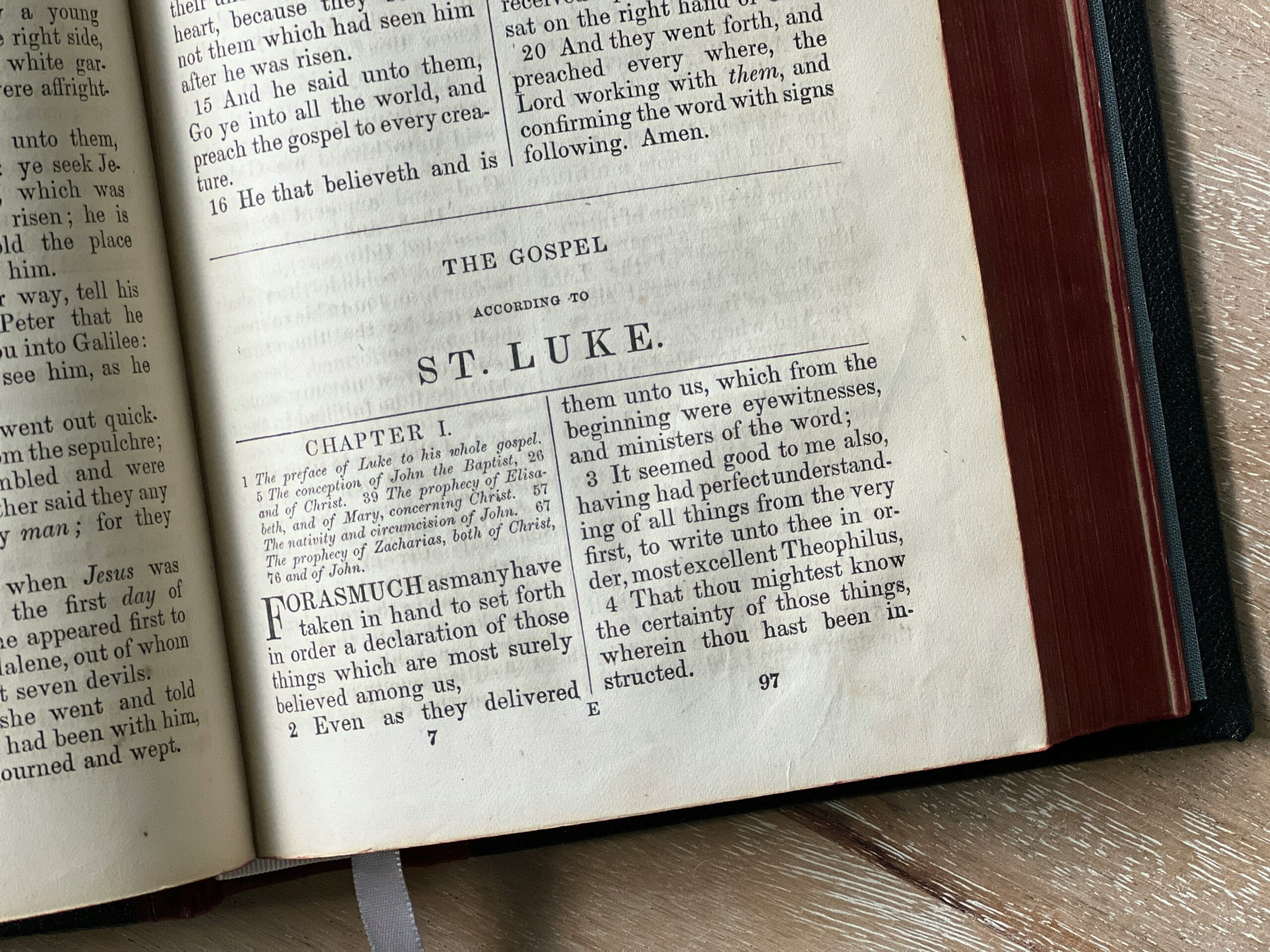
Progressing to Worship
This sermon traces the spiritual progression of the disciples from despair to worship following the resurrection of Jesus Christ. It identifies four distinct stages in this transition: the shift from despair to hope, the shock of encountering the risen Lord, the wonderment of His physical presence, and finally, the act of worship. The message emphasizes that true worship is not merely an emotional response but a settled conviction grounded in the fulfillment of Scripture and the promise of the Holy Spirit. By examining the disciples’ journey, the text highlights the necessity of divine illumination to understand God’s Word and the ultimate authority of Christ enthroned in heaven. The sermon concludes with a call to rejoice in the finished work of Christ and to engage in continuous praise within the temple and the life of the church.
Transcript
And one last time, at least for
this season, to the Gospel of Luke. We began our study in the Gospel
of Luke seven years ago. Back in June 29th of 2003. We were preparing to go back
to bivocational ministry at that point. George W. Bush was in his first term, and
I was well on the other side of 50 years of age. We, since then, have enjoyed
almost 150 messages from the Gospel of Luke, this great Gospel
of the Lord Jesus, and no one has enjoyed this study more than
me. It should probably be noted,
and several have pointed out when I talked about when we actually
started the study, that we have not been in Luke’s gospel the
whole time. Barb is convinced that I have
adult ADD, and maybe that is a symptom of it. First of all,
many other faithful men have come and nourished the saints
from God’s word. Greg Dennison, who I’ll talk
about more in a minute, he’ll be with us for the next three
weeks as we are away. Randy Witten. Adrian Donato has
filled the pulpit many times in his return from Honduras and
missions. Rick Anderson, my dear friend,
my initial seminary professor, as I described him to you, probably
the godliest man that I know. Many of the men from Southside
Bible Church down in Denver have come and filled our pulpit. Greg
Kurtz, Rick Wilson and others. Perhaps my own personal joy cannot
even be eclipsed by the mention of so many of the men from our
own body that have filled this pulpit. Trey King and John Magnuson,
Kevin Mark, Barry Johnson and others. And if that is the legacy
that I leave with, that other men learned how to preach, that’s
fine by me. If that’s it, if that’s all I’m
known for. It might also be noted and pointed out that I took several
hiatuses from the gospel of Luke. First Peter, we spent a year
and a half, Philippians a year, an eight month hiatus into 2
Corinthians and then back into Philippians for five more months.
But finally, back into Luke’s gospel this past January, picking
up in chapter 21. And so for me, it is with mixed
emotions that I close our study in this gospel. Joy, certainly,
at having had the privilege to study it first and foremost,
and then the added privilege on top of that to preach it.
But sadness, too, as we draw to a conclusion here. I shared
with a couple of men last week that as I was putting my commentaries
away on my shelf, some 40 or 50 commentaries in and through
all the Gospels that had been in various size shifting piles
around our home in various places, some of which I literally wore
out, broke to pieces in the old and crusty bindings. And I got
misty eyed. at putting those commentaries
back on the shelf, not knowing when, if ever, I
will ever have such a rich and deep study of the Gospels again. As one of the godly pastors of
early America referred to the commentaries, he called them
the venerable dead. that wait there to entertain
me. And I hope one day to be entertained by the godly men
again, perhaps in the study of the Gospel of John. And I thank
you for your prayers on my behalf during that time. I thank you
for your patience toward me. Usually, there was always somebody
that wasn’t quite thrilled with what I was doing. I heard at
various times that it was taking too long, that I was going too
quick, that I was taking too many breaks, that I need to get
back to the Gospel of Luke, that I need to finish 2 Corinthians. I know it wasn’t perfect because
it came from me. But I do appreciate your patience
with me. And my hope, my only hope, is that you know the Lord
Jesus Christ better that you love him more, that you are more
eager to serve him now than prior to June 29, 2003. If you would
turn to the Gospel of Luke. As I said, we are preparing to
go on vacation here in a couple of weeks. Greg Dennison will
be filling the pulpit for three weeks and then some of the men
from our own body will be filling in order to give me a little
bit of a break. I’m a little weary after seven
years. You can pray for us. I do have
a particular direction that I am strongly leaning, but I also
have several people that are pulling me away from that lean
in a particular direction. And so just pray for God’s clear
direction on where we might go here with regards to our study
of scripture. And Greg, many of you know, if
you don’t know him, you’ll have three weeks to get acquainted
with him. A godly young man who bring his whole family and you
can get to know them all. They are available for dinners
and lunches and whatever else the Lord might lay upon your
heart. I think that’s my introduction.
If you would. Take your Bibles and turn back
to the passage that we read. Interestingly enough, for our
scripture reading this morning from a New Testament, we don’t
plan these. But it’s uncanny how many times we’ve come across
one of these readings that is directly germane to the passage
that we’re preaching. We will get to the gospel of
Luke, I promise, because I have to finish today because I just
announced it. But there in that passage, in
Luke 16, these disciples are wrestling with the very scene
that we’ll be looking at this morning. The promised Holy Spirit. Yes, we know all about that.
But the departure of Christ And even there in verse twenty,
Jesus points out that you will weep and lament. That is hardly
the picture of a worshipful church. That is hardly a picture of a
worshipful people weeping and lamenting, grieving. And yet
Jesus points out to them that your grief will be turned to
joy, and we find it in this very passage. Worship doesn’t begin
that way, does it? It doesn’t begin that way in
our quiet times. And it didn’t begin that way in the church
either. It started with despair. Worship started with despair,
and what we want to find out this morning is how do we transition? How do we progress? From despair
to the worship of Almighty God, if you would take your Bibles
and I want to begin in verse thirty three, which is a bit
of a overlap of where we were last week that it’ll Kind of
set the tone of where we’re going to be this morning. Remember,
Jesus had dealt with several men on the road to Emmaus, one
named Cleopas, the other unknown. And it is those that are referred
to beginning in verse thirty three. And they got up that very
hour and returned to Jerusalem and found gathered together the
eleven and those who were with them, saying, the Lord has really
risen and appeared to Simon. They began to relate their experiences
on the road and how he was recognized by them in the breaking of the
bread. While they were telling these things, he himself stood
in their midst and said to them, Peace be to you. But they were
startled and frightened and thought they were seeing a spirit. And
he said to them, why are you troubled? And why do doubts arise
in your hearts? See my hands and my feet that
it is I myself touch me and see for a spirit does not have flesh
and bones as you see that I have. And when he had said this, he
showed them his hands and his feet while they still could not
believe it. While they still could not believe
it because of their joy and amazement, he said to them, have you anything
here to eat? They gave him a piece of broiled
fish and he took it and ate it before them. Now, he said to
them, these are my words, which I spoke to you while I was still
with you. That all the things which are written about me in
the law of Moses and the prophets and the Psalms must be fulfilled. But he opened their minds to
understand the scriptures and he said to them, thus it is written. that the Christ would suffer
and rise again from the dead the third day and that repentance
for the forgiveness of sins would be proclaimed in his name to
all the nations beginning from Jerusalem. You are witnesses
of these things and behold, I am sending forth the promise of
my father upon you. But you are to stay in the city
until you are clothed with power from on high. And he led them
out as far as Bethany and he lifted up his hands and blessed
them while he was blessing them. He parted from them and was carried
up to heaven. And they, after worshiping him,
returned to Jerusalem with great joy and were continually in the
temple praising God. They concluded. By the worship
of God, but that’s not where they began. They began, as we
will, back in verse 33, where we pick up the account of the
two men on the road to Emmaus that turned on their heels and
immediately headed back to Jerusalem. Back to Jerusalem and immediately
upon arrival, they begin to report all that had happened. Now, the
Lord Jesus, in the 40 days following his resurrection, appeared to
a great many people as the scriptures record. Jesus appeared to Mary
Magdalene. She was the first recorded in
John chapter 20. She was standing outside the
tomb, weeping and crying, and angels first came to her. And
then ultimately, as she turns to go away in verse 14 of John
20, it says she turned around and saw Jesus standing there
and did not know it was Jesus. The same problem that the men
on the road to Emmaus had. But Jesus reveals himself to
her in a new way. Jesus said to her, woman, why
are you weeping? Whom are you seeking? Supposing
him to be the gardener? She said to him, sir, if you
carry him away, tell me where you have laid him and I will
take him away. Jesus said to her, Mary. She turned and said
to him in Hebrew, Rabboni, which means teacher. She recognized
him as Christ revealed himself to her. Jesus revealed himself
to her again and to the other Mary, Mary of Clopas in Matthew
28 10. Matthew there records that after
the Sabbath, the two women went to the tomb. The earthquake had
taken place. They’re expecting to be greatly
grieved. And as they begin to leave the
tomb, with fear and great joy, it says, Jesus met them and greeted
them. And they came up and took hold
of his feet and worshipped him. We read about last week’s account,
the third such appearance of Jesus to his followers, to Cleopas
and to the other friend on the road to Emmaus. It is recorded
in Scripture that Jesus at some point revealed himself to Simon,
to Peter himself. Now, Scripture doesn’t supply
us with any detail about that appearance. Had Simon already
tried to tell his fellow apostles that Jesus had revealed himself?
Maybe they were mocking him. Is that why these two men came
in and buffeted his story with their own account? We don’t know.
Only that Jesus revealed himself to that one disciple, that one
disciple who most desperately needed to see the Lord Jesus,
who most desperately needed to be restored, the lonely, broken
and devastated Peter. Jesus revealed himself to the
ten apostles, and I say ten, because in Luke’s account it
mentions eleven, but eleven couldn’t have been there if this is the
parallel to the Gospel of John, to the account that is recorded
there where Thomas is clearly missing. And I take that to mean
that what Luke does here is just refer to the eleven just like
Scripture uses the word twelve to refer to the group of apostles,
even though there may not have been literally twelve there since
Judas is no longer available. Jesus also revealed himself later
on to all eleven apostles, John, chapter 20, verse 26, records
that later on in John, he reveals another occasion where Jesus
presents himself to seven disciples in John 21 who were fishing.
As I told you several weeks ago, one of my favorite passages in
all of scripture where Peter is restored to ministry. Ultimately, to the eleven apostles
again in Galilee is recorded in Matthew chapter 28. And then
First Corinthians records an interesting thing that really
we don’t get any help from from the Gospels or really from the
book of Acts. In 1 Corinthians 15, 58, Paul,
you remember, he opens that chapter by talking about the gospel.
And in the course of talking about the gospel, Paul says this,
I deliver to you as a first importance what also I received that Christ
died for our sins. According to the scriptures,
he was buried, that he was raised again on the third day, according
to the scriptures. And just so you know that I’m
that I haven’t just been making this up as we go along. It was
important for Christ to reveal himself risen to his followers. It was important because Paul
includes this as part of the gospel account. That he appeared
that he appeared to Cephas, then to the twelve, and after that,
he appeared to more than 500 brethren at one time. We don’t
have any help from the gospels. As far as that incident, we don’t
have any other information about it. We just know what Paul tells
us, that at some point, on some occasion, 500 people or more
were gathered to witness the risen Christ. Jesus appeared
to James. Jesus appeared to the disciples
in Jerusalem, which verse is probably a reference back to
this very occasion that we’ll consider this morning. And finally,
I think the 11th appearance, the 11th revelation of Christ
risen to his followers was to the Apostle Paul. That’s what
First Corinthians records when Paul says regarding the gospel,
last of all, as to me, as one untimely born, he appeared to
me also. And you say, when did that happen?
Well, Acts chapter nine would so that up on the road to Damascus. Paul came face to face with the
Lord Jesus Christ. And so we begin to consider this
passage in light of this progress towards worship. Because the
news that these two unfolded, even augmenting some account
or maybe even introducing this account that Peter had seen the
risen Lord as news. Either they were presenting it
for the first time or Peter had already shared with them. We
don’t know what. But these disciples bring this news of the risen
Savior. And no doubt, hope as well as
doubt weld up within them. As we begin to look at paces,
what I call paces along the pathway to the worship of God, the first
thing you come across is that their despair was turned to hope.
They were in despair. They were scattered. They were
broken. They had just recently come together
and now they’re literally behind closed doors. The Gospel of John
points out. And they are in despair. They
don’t know what tomorrow holds. All they know is their friend,
their Lord, the one that they believed was the Messiah, has
been taken from them in the most cruel fashion through the murderous
efforts of the Romans brought on by the efforts of the Jews
through the process of crucifixion. And now. They are devastated. And perhaps their devastation
turns to some kind of hope, but it couldn’t have been very substantial
because it was it was synthesized with doubt. Kind of a doubtful
hope wishful thinking at the very best, look at verse 35,
that as these two begin to relate their experiences on the road,
how he was recognized in the breaking of the bread and all
of those accounts, everything that included that incident on
the road to Emmaus. how a stranger approached them
from behind, wondered what they were talking about, and how they
painfully had to recount what they had gone through in the
days just prior. The trials, the beatings, the
abuse that Christ faced, and ultimately the crucifixion, then
the burial, and now the missing body. It was all too much for
them to bear, hardly too much for them to recount. And then
Jesus, not yet having revealed himself, begins to unfold to
them the scriptures, the Bible itself, taking them all the way
back to God’s Word and teaching them from there. And their account
afterwards weren’t our hearts burning within us. But these are progressing. along
this pathway to the worship of God, but hope is not worship. Hopefulness is not worship. Hopefulness,
at least the kind that they have here, is not worship itself.
Hope, real genuine hope, hope that is a confident, a settled
conviction before God, that kind of hope leads to worship, but
hope in and of itself is not worship. Hopefulness of the kind
that they had was really more doubt than hope. But note, secondly, the second
pace on this pathway to the worship of God was that not only was
their despair turned to hope, their hope turned to shock. The
shock isn’t worship. Look at verse 36. While they
were telling these things, he himself stood in their midst
and said to them, peace be to you. We don’t know what kind
or how Jesus entered the room. John’s gospel tells us, as I
said, the doors were closed because they were so fearful of the Jewish
elite. Whether Jesus passed through
the doors in some miraculous fashion, we don’t know whether
he opened them. We don’t know. It’s commonly
held that in some way, shape or form, he passed through the
doors. But whether it was through some
supernatural means, we don’t know. But either way, it was
a miracle. Either way, it was the risen
Christ that suddenly stood before them. Suddenly, in an instant,
Jesus Christ was before them. The very Savior who had been
taken from them by such violent means now stood before them. And Jesus says to them, peace.
built on the Hebrew shalom, peace, goodwill to you. And it was an
ordinary greeting. And some might even leave it
there and say that it was nearly an ordinary greeting. How else
would Jesus have greeted them? But as one said, it is implied
in this greeting that the great battle had been fought and a
great victory had been won over the prince of this world and
peace with God had been obtained for man according to the old
promise. Peace, in short, is the main
ingredient of the gospel. It implied further that our Lord
came to his disciples with a peaceful, gracious and forgiving feelings. But most of all, what Jesus meant
to imply by that is that he had won. That the battle was over. The Justice Paul says in Ephesians
2.14, he himself is our peace. Jesus enacted the peace treaty
by his blood and the war is over. The war is over, but the disciples.
The disciples are left with anything but a peaceful feeling. Peace
be to you, Jesus comes in and says, and you would think that
that would start the worship service, but it didn’t. Their
hope was turned to shock. Look at verse 37. They were startled
and frightened and thought that they were seeing a spirit, a
ghost. It’s amazing that the natural
human response to some kind of supernatural event, even no matter
how small, is usually one of shock, fear, And not the reverence
kind of fear, but being startled and frightened as these were.
To somehow come face-to-face with an angel or a being from
the other world is a horrific thing to come face-to-face with,
which is really just an indicator of what would happen to us if
suddenly we came face-to-face with God. If we’re afraid of
an angel, if we’re afraid of some being that has been sent
from the spiritual realm, what would happen? If suddenly we
came face to face with God and these were terrified, they were
terrified. But shock, terror, knocking knees
is no sign of worship. It could lead to a sign of reverence,
the fact that the very God of the universe has sent this being
on his behalf. that the very God of the universe
now stands before them probably didn’t enter into their mind.
They just knew that it was a spiritual being and they were terribly
frightened. Jesus responds to them and says,
why are you troubled? And this trouble is, I mean,
this is real trouble. They’re about to come apart at
the seams. Why are you troubled and why
do doubts arise in your hearts? You know what? What’s interesting
about this passage? It doesn’t ever say that they expressed
any doubt. Oh, you’re not really Jesus.
We heard the report. Oh, this is a trick. This can’t
be. They never said that. They didn’t
have to say that. They didn’t even have to say
that they were fearful because Jesus knows well their inward
thoughts. Jesus knows their fears, Jesus
knows their hearts and Jesus knows they are already in a state
of doubting. That’s not worship. Jesus says,
see my hands and my feet, verse thirty nine, that it is I myself
touch me and see for a spirit does not have flesh and bones,
as you see that I have. He called attention to the nail
prints in his hands and in his feet. And He showed them that
He was the very Savior that had just been crucified. Jesus had
just referred to those senses of touch and sight. And He points
out that these flesh and bones could be touched and looked at
and felt. And that was supposed to assuage
their fears. But it didn’t. Not entirely. As we progress along this pathway
to the worship of God, we see not only that despair was turned
to hope and hope was turned to shock, but shock was turned into
wonderment. And you say, are we getting close?
We’re getting close. But wonderment, mere awe, whether
it’s observing God’s handiwork as you stand at the edge of the
Grand Canyon, Or as you begin to wonder at the privileges of
the gospel, that the fact that Jesus died on the cross, mere
wonderment is not worship. Verse 40. Picks up the scene
when it says when he had said this, he showed them his hands
and his feet, and while they could not believe it because
of their joy and amazement. You say, well, those are good
things, aren’t they? Joy and amazement. Yeah, they’re
Good things, but that’s not worship. Hope was welling up within them.
They were certainly happy at the prospect, the possibility,
remote as it may seem right now, as we’re still in a state of
doubting that Jesus might really be alive. There was a sign of faith, but
it was small. There was a sign of faith, otherwise
it wouldn’t be joy, not true joy. But it was because of their
joy, it was because of the giddiness almost of their hearts, that
they could not exercise their faith. They were almost overly
excited by the prospect of Jesus being alive, and that prospect
led them, just like is so often the case with us, into excessive,
dangerous emotions. that took them off of the path
of worship. Jesus brings them back to earth
in such a basic fashion. Look at the end of verse 41.
He says, have you anything here to eat? Well, now that’s an interesting
turn of events. They gave him a piece of broiled
fish. They didn’t tell how they cooked it. And he took it and
he ate it before them. And I looked at this passage
and I stood back from it and I wondered, you know what this
passage regarding the Lord asking for food and eating seems to
be placed here largely just for the purpose of provoking thought
and questions regarding nature, the nature rather of our resurrected
bodies. I don’t know. Was Jesus actually
hungry? I don’t know. Did he require
sustenance? I don’t know. Will we require
sustenance? Will there be enjoyment of food
in heaven? Scripture certainly seems to
indicate that. But this verse is just put there to bring them
back to earth. Look, this is a real body. I’m
really alive. These are real nail prints in
my hands. And I’m desirous of food. Do you have anything to
eat? But their wonderment is not worship. And Jesus leads them along this
pathway. trying to correct them, trying
to bring them back to earth, trying to lead them into a deeper
understanding of who He really was. Look at verse 44. Now He turned to them, pardon
me, now He said to them, these are my words which I spoke to
you while I was still with you. And he basically brings them
back into remembrance of all those Bible lessons, all those
times he had taught them from the Scriptures, all of those
lessons that he had taught them about the Messiah. These are my words, which I spoke
to you while I was still with you. That all the things which
are written about me in the law of Moses and the prophets and
the Psalms might be fulfilled, Jesus says, the totality of the
Old Testament. All pointed to me. And just as
he did with those two on the road to Emmaus, he takes his
own precious disciples and he takes them essentially to Sunday
school and he teaches them from Genesis forward the lessons about
Christ. All of those types, all of those
signs, all of those figures, all of those things that pointed
to the Messiah and the truth about the Messiah. Then look
at verse forty five, then he opened their minds to understand
the scriptures. And it still takes God to do
that. You can give somebody a Bible.
You can pass out thousands of Bibles and what a great ministry
that would be. But without the key to the scriptures,
without the Holy Spirit unlocking those truths. It is like so many. myths and ciphers and clueless
stories. It always takes God and it took
God here with his own apostles. Then he opened their minds to
understand the scriptures. As one said, the minds of the
disciples had been closed by prejudice and traditional interpretations. They were very Jewish in that
regard. They were steeped in the Jewish traditions and in
the prejudicial ideas about the Messiah, that he was going to
be some kind of conquering king, not someone who would die on
a cross. As one of my Puritan heroes,
Matthew Poole, said, he did not open their understanding without
the Scriptures, but by the Scriptures. He knows that the Scriptures
would not give them a sufficient knowledge of the things of God
without the influence and illumination of His Spirit, and so they are
truly taught by God, who are taught by His Spirit. Ultimately,
we too, just like these apostles, desperately need the Spirit’s
influence in order to understand the Word of God. And so before
you open your scriptures, as we talk about in the Institute,
you fall on your knees, you bow your head, you fold your hands
and you pray and you ask God to enlighten you. Before we ever
come out here to preach the word, we go back there and we pray.
Open the people’s hearts to understand the word. Jesus continues, and
he said that unless it is written and he continues the Sunday school
lesson there in verse thirty six. Thus, it is written that
the Christ would suffer and rise again from the dead the third
day that repentance for the forgiveness of sins would be proclaimed in
his name to all the nations beginning from Jerusalem. And with passages
such as Isaiah 53, as we pointed last week, Psalm 22, All of those
passages that point to the fact that the Messiah, the Messiah
was to be a suffering servant. The Messiah was going to suffer
first before gaining glory and on the third day be raised again.
But Jesus brings them all the way back around. And he points
to them to the fact that Before the church is going to flourish,
before the church is really, truly going to be able to flourish
in worship, it’s going to need the fulfillment of a promise.
Look at verse 48. He says, you are witnesses of
these things, and he takes them right back to this point in time.
And he says, it’s you. You are the ones that are included
here in this moment that scripture has been pointing to for thousands
of years. And you’re here. Well, we have the benefit. If
all we had to look at was this passage, we might be scratching
our heads just as they were. But we have the benefit of Luke
Volume 2, right? Turn to Luke Volume 2. Ah, some
people have been here before. The Book of Acts, if you would.
Luke Volume 2. And I want you to consider the
passage that sheds so much light on this, exactly what they were
talking about. In Luke volume 2, look at chapter
1, beginning in verse 3. where it is recorded to these
he presented himself alive after his suffering by many convincing
proofs appearing to them over a period of 40 days and speaking
of the things concerning the kingdom of God. It’s exactly
what he’s doing right here. He’s opening their minds to understand
about the Messiah and about the kingdom of God. If you would
please just keep your finger there and flip back to Luke. Flip back to Luke. We’re going
to need both. And in Luke chapter 24, look at verse 49, where Jesus
says, And behold, I am sending forth the promise of my father
upon you. Well, what promise is that? It gives us a little bit of a clue.
Stay here in the city until you’re clothed with power from on high.
Well, what is that? Isaiah had spoken of it. In Isaiah,
44, three, it is recorded, I will pour out water upon the thirsty
land and streams on the dry ground, the dry ground. I will pour out
my spirit on your offering and my blessing on your descendants.
Joel spoke about it. Joel said it will come about
after this that I will pour out my spirit on all mankind. Your
sons and daughters will prophesy. Your old men will dream dreams.
Young men will see visions. Jeremiah talked about it. Jeremiah
31 said this is the covenant which I will make with the house
of Israel after those days. I will put my law within them
on their heart. I will write it. I will be their
God and they shall be my people. But Jesus just talked about it.
And he talked about it in the passage we just read in the Gospel
of John. In the Gospel of John, in John
14, 16, I will ask the father. And he will send you another
helper. That he may be with you forever, but the helper, the
Holy Spirit, whom the father will send in my name, he will
teach you all things. Verse 26 of chapter 14. It’s
the Holy Spirit. If you would go back to Luke
volume two. Look, volume two, it picks up
in verse four. It’s the same exact presentation. Gathering them together, he commanded
them not to leave Jerusalem, but to wait for what the father
had promised, which he said you heard of from me. John 14, six. It’s the Holy Spirit. For John
baptized with water, but you will be baptized with the Holy
Spirit not many days from now. So that when they had come together,
they were asking him, saying, Lord, is it at this time you
were restoring the kingdom to Israel? Jesus goes on to point
out those that’s not even important right now. The bottom line is
you are going to receive an infusing of power like the church has
never had. The power of the Holy Spirit.
The awesome power of the Holy Spirit, and only then Only then
will the church truly and fully worship Almighty God. Paces along
the pathway to the worship of God, not only was their despair
turned to hope, hope turned to shock, shock turned to wonderment,
but wonderment finally gives way to worship. Look at verse
50. It was recorded there that Jesus
led them out as far as Bethany, and he lifted up his hands and
he blessed them. Here in this special place to
the Lord Jesus Christ, where Mary and Martha lived, where
he had raised Lazarus, this area bordering the Mount of Olives
itself, And taking the posture of a priest, just as Aaron had,
he lifted up both hands as the high priest and he began to bless
his church. And while he was blessing them,
he parted from them and was carried up into heaven. If you still
have a finger in Luke volume two, look at verse nine of chapter
one. With the same thing is recorded.
These things have so deeply impressed Luke that whereas he ends his
gospel, he picks up with these same deep truths. Look at verse
9. After he had said these things,
he was lifted up while they were looking on. This was a fantastic
scene. This was an awesome, overwhelming
scene. And it just says that a cloud
received them out of their sight. Jesus had already told them,
don’t let your hearts be troubled. In my father’s house are many
dwelling places, if it were not so, I would have told you, for
I go to prepare a place for you. That’s where Jesus was going. Hebrews, the book of Hebrews,
three times uses an interesting little phrase. He uses an interesting phrase,
he sat down. He sat down, this was the day
that Jesus sat down, it is finished, his work is finished and he goes
to be with his heavenly father and three times Hebrews, one,
three Hebrews, 10, 12 Hebrews, 12 to he sat down, having offered
one sacrifice for sins for all time. He sat down at the right
hand of God. Paul speaks of it. Paul speaks
of it in Ephesians chapter one. I pray that the eyes of your
heart may be enlightened so that you will know what is the hope
of his calling. What are the riches of the glory
of his inheritance in the saints? What is the surpassing greatness
of his power who believe? What kind of power? These are
in accordance with the working of the strength of his might,
which he brought about in Christ when he raised him from the dead
and seated him at his right hand in the heavenly places. We have
a Savior who is comfortably enthroned in heaven, because His work is
finished. No wonder Paul, when writing
to the Colossians, said, if you have been raised up with Christ,
keep seeking the things above. Where Christ is, seated at the
right hand of God. Now, the passage in the book
of Acts goes on to point out that there were all kinds of
questions that angels had to come and minister to them and
comfort them and instruct them. But I want to take you back to
Luke’s gospel as we close. I want to take you back to Luke’s
gospel. Because it’s there, finally,
that despair that gave way to hope, that gave way to shock,
that gave way to wonderment, gives way to worship. And I believe
that the church, once they realized that their risen Savior was enthroned
in heaven for eternity. Look at verse 52. And they, after
worshiping him. Return to Jerusalem with great
joy. And we’re continually in the
temple praising God. It didn’t start in the temple.
It started there near the Mount of Olives, near the town of Bethany,
out there in the wide open with some 500 people likely gathered. And it says that they broke into
a spontaneous worship service. Wouldn’t you have loved to be
there? In a very real sense, we are there 2,000 years later. It didn’t start in Jerusalem,
but it picked up there in Jerusalem and began in the temple and spread
forth from there so that all of us down to our own day can
rejoice in a risen Savior who is enthroned on high, all power
underneath his feet. Worthy of worship indeed. Let’s
rejoice before him. Our merciful God, you have been
so good to us and so patient to open our own hearts to understand
this dear, dear gospel of Luke. And Father God, we rejoice that
you have more intimately revealed our Savior to us. Father, we
would be incomplete And we would be. We would not finish our work.
If we didn’t call to repentance any in our midst who do not know
the Savior. Who have not placed their faith
in him? Lord God. If there is any person
in our midst who does not know the Lord Jesus Christ, here is
the testimony of Him. It is the Lord Jesus Christ,
the only way for salvation for sinners, for all who come to
Him. Lord God, we pray that You would
break down the barriers of any who stand, as it were, in the
way We pray that You would overcome their hard heart and that You
would bring them to repentance. Lord, we thank You and praise
You that Your payment on the cross paid it all. We have no
cause anymore to carry this burden of sin ourself. Father, we pray For any who are
in our midst this morning, if they do not know the Lord Jesus
Christ. Make them to seek out someone.
Seek out one of the elders, seek out another friend. And make it right with the Savior
today. Lord God, we thank you and we praise you. We pray all
of these things in Jesus name, Amen. Oh, oh
Messages: 103