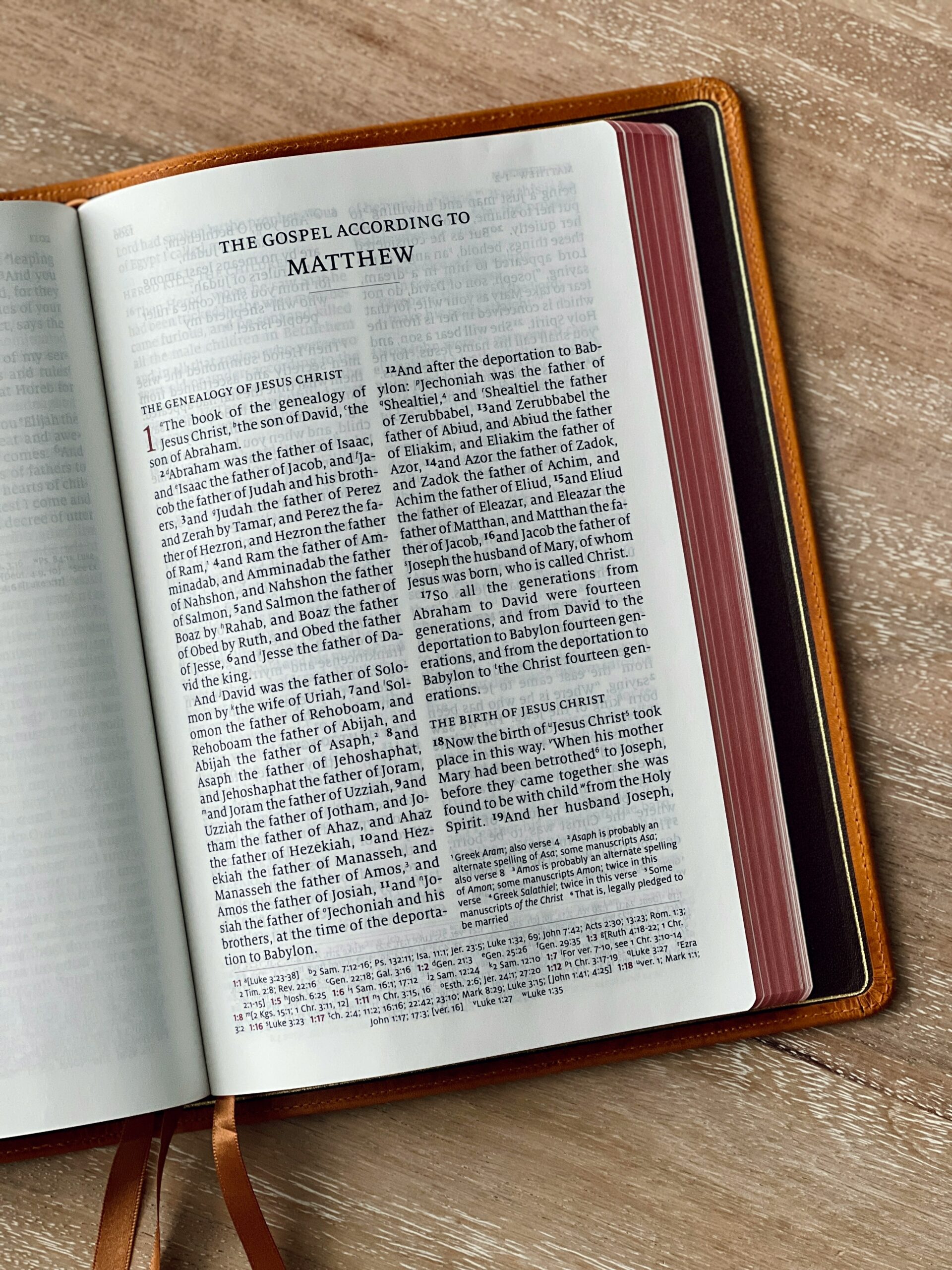
Handle with Care
The sermon explores the Parable of the Soils as a critical examination of how individuals receive and respond to the Word of God. It argues that this engagement is the most dangerous aspect of the Christian life, as it determines one’s eternal destiny and reveals the condition of the heart. The message emphasizes the sovereignty of God in salvation, noting that there is a divinely determined limit to His mercy and that unbelief can harden the heart to the point where repentance becomes impossible. By tracing the citation of Isaiah 6 through the New Testament, the text highlights that the rejection of the gospel is a consistent theme in Scripture, serving as a warning against casual or delayed response to the truth. The tone is urgent and convicting, urging listeners to handle the Gospel with the utmost care and to recognize the gravity of their spiritual posture.
Transcript
God willing, another day. If
I were to ask you, what’s the most dangerous thing you do? What’s the most dangerous hour
of your week? I’d probably get a variety of
answers. Some would say that it’s driving
I-25, and it’s certainly a dangerous thing. Some would say… heights and for whatever purpose
to change the light bulb or clean the gutters can be truly a precarious
deal. Some would say that it’s dealing
with some troubled neighbor or some troubled family member.
Some would say that it’s just the difficulties of life, the
stress that they face, certainly dangerous things. thing we do is spiritual in nature. The most dangerous thing we do
is this hour. Because we interface with God’s
Word. And to ignore God’s Word, to
downplay it, to belittle it, to treat it casually, is essentially
the most dangerous thing we can ever do. how we listen to God’s
Word, to what degree we apply it. It’s the most dangerous thing
we ever face. I’ve entitled the message this
morning, Handle with Care. When you think of the most precious
thing that you can imagine being sent through the mail, or shipped
by whatever means, the Word of God above all things, is precious
and valuable and must be treated and considered and handled with
the utmost care. We come to a passage of scripture
that talks about the use, the reception, the handling of God’s
word. Perhaps one of the most crucial
passages about that issue. If you would, take your Bibles
and turn to Matthew Chapter 13. Matthew Chapter 13. You know of it as the parable
of the soils. And that particular parable is
found in all three of the Synoptic Gospels. You can find it in Mark
Chapter 4. You can find it in Luke Chapter
8. But for our purposes this morning, I wanted to look at
Matthew’s version. It comes in the context of what’s
known as the Lord’s busy day in Capernaum. In that particular
day, He heals a demon-possessed man. That’s recorded in Matthew
chapter 12, verse 22 through 24. He then preaches two sermons. The totality of those aren’t
recorded, But they are alluded to in 12.25-45. Jesus then defends his ministry
as only Mark records in chapter 3, verse 20. He’s forced, because
of the size and aggressiveness of the crowds, he’s forced into
a boat to teach. Recorded in Mark chapter 4, verse
1. And then he teaches this parable.
The parable of the soils. But his day isn’t complete, even
in having taught this parable, because Mark records two additional
parables that Jesus teaches. I would have you note, before
we even turn our eye to the parable itself, that it is a very mixed
crowd that Jesus finds himself teaching. There are devoted followers. There are the apostles, disciples. There are also harsh critics
in the midst. There are curious onlookers,
and there are also those who are almost entirely disinterested. This point of the ministry, Jesus’
ministry, things are intensified in a good way and in a bad way.
He has many followers, but He also has much opposition. The Sermon on the Mount, which
Jesus had already preached, was essentially a call for Jesus’
followers to clarify their call. Who were they going to serve?
To examine their motives for following Him. The Parable of
the Soils takes things a step further. Here, in this particular
parable, Jesus explains the reason for all these differing reactions
to the same gospel truth. The bottom line is that people’s
hearts differ. At the very core there is a difference,
person to person. This is what ultimately directs
the response to the gospel. Jesus taught parables, even as
we just heard read. A parable is a blend of two words,
para, meaning beside, or from where we get our word para, dwell,
and bole, to cast. And so the image is to cast down
alongside a truth, in parallel with another statement, where
we can derive lessons and truth. If you would, the parable of
the soils, beginning of chapter 13 verse 1 of Matthew’s Gospel. That day Jesus went out of the
house and was sitting by the sea, and large crowds gathered
to Him. So He got into a boat and sat
down, and the whole crowd was standing on the beach. And He
spoke many things to them in parables, saying, Behold, the
sower went out to sow, and as he beside the road, and the birds
came and ate them up. Others fell on the rocky places
where they did not have much soil, and immediately they sprang
up, because they had no depth of soil. But when the sun had
risen, they were scorched, and because they had no root, they
withered away. Others fell among the thorns,
and the thorns came up and choked them out. Others fell on the
good soil. and yielded a crop, some a hundredfold,
some sixty, and some thirty. He who has ears, let him hear. And the disciples came and said
to him, Why do you speak to them in parables? Jesus answered them,
To you it has been granted to know the mysteries of the kingdom
of heaven, but to them it has not been granted. For whoever
has, to him more shall be given, and he will have an abundance.
But whoever does not have, even what he has shall be taken away
from him. Therefore I speak to them in
parables, because while seeing they do not see, and while hearing
they do not hear, nor do they understand. In their case, the
prophecy of Isaiah is being fulfilled. which says, you will keep on
hearing, but will not understand. You will keep on seeing, but
will not perceive. For the heart of this people
has become dull. With their ears, they scarcely
hear. And they have closed their eyes. Otherwise, they would see with
their eyes, hear with their ears, and understand with their hearts,
and return, and I would heal them. But blessed are your eyes,
because they see. And your ears, because they hear.
For truly I say to you that many prophets and righteous men desired
to see what you see and did not see it, and to hear what you
hear and did not hear it. Hear then the parable of the
sower. When anyone hears the word of the kingdom and does
not understand it, the evil one comes and snatches away what
has been sown in his heart. This is the one on whom seed
was sown beside the road. The one on whom seed was sown
on the rocky places, this is the man who hears the word and
immediately receives it with joy that he has no fur root in
himself. But it’s only temporary. And
when affliction or persecution arises because of the word, the Word and it becomes unfruitful. The one on whom seed was sown
on the good soil, this is the man who hears the Word and understands
it, who indeed bears fruit and brings forth some a hundredfold,
some sixty, and some thirty. We need to handle the Word of
God with care. We need to listen very carefully. what God says. We need to listen
because this is the most dangerous hour of the week. This is the
most dangerous thing that we can do. Life hangs in the balance. What we do with God’s Word. What
we do with the message of the Gospel. Jesus in the midst of
this busy week, closes out the day in preaching one of the most
profound parables he ever taught, certainly one of the most lengthy. More dangerous than flying, more
dangerous than riding a car, driving down I-25, more dangerous
than the most dangerous occupation, what we do with God’s Word and just clarify a few points.
Back all the way to verse 1 of chapter 13, where it says, on
that day Jesus went out of the house and was sitting by the
sea. He was near the sea, but as the crowds built, Mark records
that He got into a boat. He had to, because of the crowds.
Great multitudes were gathered, and Matthew just says, so that
He got into a boat. And He began teaching. When he says that some seed fell
beside the road, Luke records that that seed was literally
trampled underfoot, probably ground to the point of being
useless. But it rendered it edible to
the birds, and so the birds ate it up. Verse 5, he says, another
seed fell among rocky places. Some of the man’s seed, and in
that day and age, a sower would carry a bag of seed and would
literally reach into the bag of seed and grab a fistful and
cast the seed to the wind. Then the wind would disperse
the seed and it would land in a variety of places. Some of
this man’s seed landed on what only looked like good soil and
beneath a very thin layer The seeds began to grow, and
they grew very quickly. The roots of the plant had nowhere
to go. Without enough soil, because of the rocks below, the newly
sprouted seeds were unable to get enough moisture to even survive.
As soon as the hot, Mideast sun came up, it didn’t take long
for the plants to wither and kill these delicate, young little
plants. We’ll come back to those. Luke
adds that it’s simply because they had no moisture, not enough,
no ability for the roots to take up moisture and it’s only reasonable
that Mark adds that they yielded no crop. They never even came
to fruition. Regarding those seeds that fell
on the thorns, some of the manna seeds landed there in the briar
patches near the edge of the field. The soil was pretty good
there. No problem identified with the
soil. And there was plenty of moisture. That’s why the weeds are thriving. But the good seed also fell there.
And it began to take root. It began to grow up. But they
could never compete with these hardy thorn bushes. And eventually
the good plants were strangled. Every year I go out. to my garden,
and the one plant that I’m most aggressive about trying to eliminate
is the thistle. I don’t know that that’s exactly
the plant, but almost any weed does a much better job and has
an advantage against other delicate plants that are introduced. I
don’t have to do anything to the thistle. I don’t have to
fertilize it, I don’t have to water it, and yet And if I leave them unchecked,
they will kill everything in the garden. Some of these plants
might have survived for a season. Some of these plants, the sower
sowed for a good purpose. They might have survived for
a while, but they never grew to produce any crop. It says, finally, that some seed
fell on good soil. That was the nature of farming
in that day. You would plant far more seed than you ever hoped
to see bear fruit because of all of this variety of soil. The seed that fell on the good
soil, it just says, yielded a good crop. Some 100, some 60, some
30. It just says that some of that
seed farmer planted landed in good dirt. And those plants slowly
began to take root, and they used the nutrients, and the water,
and the soil, and they grew steadily stronger, and ultimately they
produced a great crop. Some plants did better than others,
and produced more than others, but they all produced. And Jesus
just ends His parable. He who has ears, let him hear. His disciples were more than a little troubled about
this. The whole purpose of their ministry,
the whole purpose of Christ’s coming was to speak the truth
to those who are without Christ, to proclaim it in their ears
for the purpose of them hearing and ultimately being able to
engage with the truth and repent. To them it was utterly baffling
that Jesus would mask that truth under these stories and would
essentially almost pull back the truth from them. And in verse
11, essentially they confront the Lord. And they, rather verse 10, and
the disciples were troubled when they said, why, why do you speak
to them in parables? Why are we playing games? Why
are we hiding the truth from these that are, we had a good
day. Look, all these people are here. Why on earth are you speaking
to them in parables? And Jesus begins. He begins to explain to you it
has been granted to know the mysteries of the kingdom, but
he says that it hasn’t been granted to everyone. We’ll come back
to that verse in a moment, but I want you to look at Jesus’
explanation in verse 13. I speak to them in parables because
while seeing they do not see. This is the very reason that
I’m using this parable, which masks and hides the truth, is
because they already were in a state of not inclining their
heart to believe anyway. They see, they think they see,
they have eyes, but they’re not looking. While hearing, they
do not hear. They hear the word preach. And he says that all of this,
he goes on to say, is a fulfillment of Old Testament prophecy. And he quotes Isaiah chapter
six, verses nine and 10. We’re gonna get very familiar
with that prophecy real quick. The quote of Isaiah chapter six,
verse nine and 10, is the third most frequently quoted Old Testament
passage in the New Testament. The passage is taken literally
from Isaiah’s commissioning. Remember, he’s standing there
before the Lord. Who shall I send? Send me. And
it’s these words that flow from God himself. This is part of
Isaiah’s commissioning, but it’s the third most quoted verse.
Leviticus 19.80. Pardon me, 1918 is the most quoted
in all of the New Testament. You’re curious, aren’t you? Good. You shall not take vengeance,
nor bear a grudge. You shall love your neighbor
as yourself. Most quoted verse, eight times
in the New Testament. The second most quoted verse,
passage, is Exodus 20. Or in Deuteronomy, the second
giving of the law, Deuteronomy 5.16, honor your father and your
mother. We ought to pay special attention
to those things that the Lord repeats over and over again. Love your neighbor as yourself. Honor your father and your mother. And the third most frequently
quoted passage is Isaiah 6. I told you it was from Isaiah’s
commissioning. Turn back, if you would, to Isaiah’s
prophecy, Isaiah chapter 6. In Isaiah chapter 6, as I’ve already
told you, it is Isaiah’s commissioning. And we pick that up in verse
1, in the year of King Uzziah’s death, I saw the Lord sitting
on the throne, lofty and exalted, with the train in his robe, filling
the temple. Seraphim stood above him, each
having six wings. With two he covered his face,
with two he covered his feet, with two he flew. And one called
out to another and said, Holy, holy, holy is the Lord of hosts.
The whole earth is full of his glory. The foundations of the
thresholds trembled at the voice of him who called out. While
the temple was filling with smoke, then I said, Woe is me, for I
am ruined. Isaiah thought he was a dead
man. Because I am a man of unclean lips, and I live among a people
of unclean lips. For my eyes have seen the King,
the Lord of hosts. Then one of the seraphim flew
to me with a burning coal in his hand, which had been taken
from the altar with tongs. He touched my mouth with it and
said, Behold, this has touched your mouth, and your iniquity
is taken away, and your sin is forgiven. Then I heard the voice of the
Lord, saying, Whom shall I send? And who will go for us? Then I said, Here am I. Send me. He said, And tell this people, keep on
listening, but do not perceive. Keep on looking, but do not understand. Render the hearts of the people
insensitive, their ears dull and their eyes dim. Otherwise
they might see with their eyes, hear with their ears, understand
with their hearts, and return and be healed. Then I said, How
long, O Lord? And He answered, Until cities
are devastated, houses are without people, and the land is utterly
desolate. The LORD has removed men far
away, and the forsaken places are many in the midst of the
land. Yet there will be a tenth portion in it, and it will again
be subject to burning, like a tarravant or an oak, whose stump remains
when it is felled. The holy seed is its stump.”
It was Isaiah’s commission I mean, how would you like that for your
commissioning? Go, and they’re not going to
listen. Go, and they’re going to have,
as it were, their fingers in their ears. They’re going to
see the truth, they’re going to hear the truth, and they’re
not going to respond to the truth. As I told you, it’s one of the
most frequently quoted Old Testament passages in the New Testament.
In this particular context, the parable of the soils, it’s quoted
in all three of the Synoptics, Matthew, Mark, and Luke. For that, I want you to just
get a full grasp, so turn if you would to the Gospel of Mark.
We’ve already seen Matthew’s full treatment, and Matthew cites
the passage in its fullness. Mark gives us an abbreviated
paraphrase, Mark chapter 4. In Mark chapter 4, he really
only picks up a portion of this verse, roughly about half of
what Isaiah records in verses 9 and 10, what Matthew records
in his verse 14 and 15. Mark, very briefly, which is
characteristic of Mark’s gospel? He was saying to them, to you
that have been given the mystery of the kingdom of God, but to those
who are outside, get everything in parables, so that while seeing,
they may not perceive. While hearing, they may not understand.
Otherwise, they might return and be forgiven. Very brief. Even more brief is Luke’s account,
Luke chapter 8. just to be quick and not worry
about being thorough, but to give you the general gist of
what was taking place. But in this particular occasion,
he does even less than Mark. Luke provides almost a brief
allusion to Isaiah’s words. Luke 8.10, verse 10. He said,
to you it has been granted to know the mysteries of the kingdom
of God, but to the rest it is in parables, that seeing they
may not see, and hearing they may not understand. Very brief. Very brief. But I told you, this is one of
the most frequently quoted passages in the New Testament. John also
quotes this passage, and for that I’d like you to turn to
John chapter 12. John chapter 12. in a minute, or the reason that
everybody keeps quoting this verse, it’s the same for everyone. You’ll hear it in John’s Gospel
very clearly. Jesus quotes this passage in
Isaiah as a commentary on the overall response that Jesus’
preaching was receiving. Look at verse 37. But though he had performed many
signs before them, It’s just amazing when you begin to think
of all the miracles that Jesus worked. Remember the man that
was healed in his blindness? And just because Jesus healed
him on the Sabbath, they wanted to arrest him? Though he had
performed so many signs before them, yet they were not believing
in him. This was fulfilled in the words
of Isaiah the prophet, which he spoke, Who has believed our
report, and to whom has the arm of the Lord been revealed? For
this reason he could not believe, for Isaiah has said again, he
has blinded their eyes, he has hardened their hearts, so that
they would not see with their eyes, and perceive with their
heart, if he converted and idealized them. Now hear what John does,
and the only way that you can explain that is that Jesus here
is interpreting what Isaiah was intending. What Isaiah said,
quite simply, was that they had, when he said, rendered the hearts
of this people insensitive, he’s telling Isaiah to go, and that
when you go, your preaching is going to render them dull. And
it wasn’t because Isaiah was unfaithful. It wasn’t because
he was slothful in his preparation for preaching. Jesus says, he
interprets that the very preaching of the
Word of God is going to render people dull. And so here He just
says that He has blinded their eyes
and hardened their heart. An echo of what Isaiah in his
prophecy originally said, rendered the hearts of those people insensitive. You know that this same verse,
Isaiah 6, occurs in another place. It occurs in Acts chapter 28
at the very end, the very end of Acts chapter 28, if you would
turn there. It forms a capstone to the book
of Acts, where so much incredible things have taken place, the
preaching of the gospel, the churches planted, and Paul’s
ministry there in the latter half of the book of Acts, and
all that went It’s an incredible episode. Pick
it up in verse 23. When they had set a day for Paul,
essentially what he’s doing here, Paul’s doing public supply. Paul,
would you come and preach? Sure, I’d love to. And so Paul
is set up there, he’s ready, they’ve got him all ready to
preach. Watch what happens. When they had set a day for Paul,
they came to him at his lodging in large numbers. He was explaining
to them by solemnly testifying about the kingdom of God. and
trying to persuade them concerning Jesus from both the Law of Moses
and the Prophets from morning to evening. This was not just
a casual, this wasn’t just a sharing on a track, this was the full
preaching of God’s Word even as we’ve heard testimony. Paul
was preaching the Word, Paul was pleading with them, Paul
was taking them to the Old Testament Scriptures and telling them about
the Messiah and pleading with them to repent. calling them
to faith in Christ. What was the result? In verse 24, some were being
persuaded by the things spoken. That’s always the most glorious
thing. What a great privilege that we have to share. Not everybody’s
going to believe, but some will. Some will believe on Christ,
and some were believing what Paul was preaching. The sad part of the ministry
follows. Some were being persuaded by
the things spoken, but others would not believe. And when they did not agree with
one another, they began leaving after Paul had spoken one part
of the Word. God’s people know what an ellipse
is. Remember that’s that three dots that says something else
is coming A pregnant pause. When they did not agree with
one another, they began leaving after Paul had spoken one hearted
word. And the drama builds. The Holy Spirit rightly spoke.
Isaiah the prophet to your father, saying, Go to this people and
say, You will keep on hearing, but will not understand. You
will keep on seeing, but will not perceive. For the heart of
this people has become dull. With their ears they scarcely
hear, and they have closed their eyes. Otherwise they might see
with their eyes, and hear with their ears, and would understand
with their heart and return, and I would heal them. The final time that that verse
is quoted in the New Testament, and that verse, as we already
acknowledge, originates in Isaiah. In that particular context, it’s
attributed to the Lord. In Matthew’s Gospel, it’s attributed
to the prophecy of Isaiah, which was given by the Lord. In John’s
Gospel, that John attributed to Isaiah the prophet, which
was given to him by the Lord. And in the citation of Paul by
Acts, if you note it, It’s attributed to the Holy Spirit. It’s the
Lord. It’s God. It’s that God gave
him this verse. It’s amazing. And you know what? The context is common. Throughout
all five, they all cite the passage for the same exact reason. Un-the-lief. Lack of faith. Un-the-lief. Rejection of the
truth. They disbelieved the simple gospel
of salvation from sin by faith in Jesus Christ. That’s all that
anybody was preaching. Believe on the Lord Jesus Christ
and you will be saved. In John’s gospel, it occurs in
real time. In Isaiah, that unbelief is forecasted. Look Isaiah, you’re going to
go out and nobody’s going to believe you. But in John’s gospel,
it occurs in real time. so many signs before them, yet
they were not believing in Him. They didn’t appropriate the truth
that was given. Likewise, when Paul quotes the
verse in Acts, by way of explanation to the very response to his preaching
the gospel, it just says that others would not believe. Here, not only in Matthew, but
in all the Synoptic Gospels, Matthew, Mark, and Luke, it occurs
in the context of unbelief, and Jesus’ explanation of that unbelief.
But what we have that flows out from that is in Matthew’s Gospel. Remember Matthew’s Gospel? Where
did I leave it? Turn back if you would to Matthew’s Gospel. In Matthew’s Gospel, it occurs
in a very And you could basically break out verses
11 through 17 in a three-fold manner. The Gospel of Jesus Christ is
an expression of the sovereignty of God and salvation. The Gospel
of Jesus Christ is prophetically explained, the reception of it.
The reception of the gospel is not only an expression of God’s
sovereignty and salvation, it’s explained prophetically, but
it’s also an invaluable truth. It’s an invaluable truth, verses
16 and 17. Let’s start this morning, and
we won’t make it very far, but let’s look at the reception of
the gospel as an expression of the sovereignty of God and salvation.
His reference here is to people, not only in the past, but presently,
who are rejecting God and His claims on their lives. And it
says in verse 11, He answered and said to them, to you it has
been granted to know the mysteries of the kingdom of heaven. But to them it has not been granted. There is a divinely determined
limit to God’s mercy. His long-suffering. God is absolutely
sovereign in salvation. And we have a tendency in our
own day and age to speak of that mercy as if it’s eternal, perpetual,
that you can wait as long as you want. You can put off dealing
with God as long as you want. You can presume upon the future
as long as you want. and assume that there will be
a tomorrow. And that anytime you’re ready,
whenever you’re ready, because that’s what’s paramount, you
can come waltzing into God’s presence and say, Lord, now I’m
ready. You got a good deal with me.
I find me willing to sign up. What this passage points to is
that there is a limit to God’s mercy. a timeline involved with
His long-suffering, and that in and of itself is an expression
of God’s sovereignty in salvation, that it’s not always available,
and people die every day without Christ. You do people a disservice
to say, wait as long as you want, whenever you’re ready. Come back
tomorrow. You don’t know if they have tomorrow,
and neither do they. Do you want to see something
absolutely astounding? Just remember, in John’s Gospel,
as we were looking at this passage, do you remember what Jesus did?
It’s absolutely uncharacteristic of the Jesus that we have a tendency
of presenting. John 12, 36 says, these things
Jesus spoke, and he went away and hid himself from them. Well,
that’s not the Jesus that we know, is it? That’s not the Jesus
that we preach. He’s always available, on your
terms, whenever you’re ready. That’s not what Jesus said. That’s
not what Jesus did. Jesus began to withdraw. To the point where in verse 39 it
says, for this reason they could not believe. It doesn’t say that
they would not believe. It says that they have gotten
themselves to a point where they could not believe. As I’ve said elsewhere, there
comes a point in time, in God’s mercy, where the will not, and
the will not that really captures so much of a person’s life, they
will not believe, they’ll defer it till later, I’ll deal with
God on my deathbed, There’s a point where that will
not becomes cannot. Verse 40 goes on to say, He has
blinded. God has blinded their eyes. He has hardened their heart.
There is no more opportunity for repentance. In Matthew 13, 11, it says, To
you it has been granted to know the mysteries of the kingdom. When we read here in Matthew
this solemn truth, to you it has been granted to know the
mysteries of the kingdom, the last thing that a child of God
should ever be is smug. Did God in His mercy reach down
and touch me? It waited literally on me just
long enough for me? No. God’s mercy moved. God’s mercy brought us to repentance. We can’t hardly be smug. We can’t
say, well, I believed and they didn’t. Instead, we should say with the
pen writers, and can it be that I should gain an interest in
my Savior’s blood? Or as we sang last Lord’s Day,
why was I made to hear His voice? It’s nothing but God’s sovereign
mercy that ever saves anyone. To those who believe, it was
granted. And to those who do not believe,
it has not been granted. It wearies me that people dismiss
the idea of God’s sovereignty and salvation under this umbrella
title of Calvinism and brush it aside as an unimportant doctrine.
Are we to believe that Jesus was a Calvinist? Calvin didn’t
invent these things. Jesus is the one that said it. To you it has been granted, but
to them it is not. The reality of God’s sovereignty
of salvation though here is clearly tied to the reception given to
them Whoever has, and what he’s talking
about here is spiritual truth, whoever has, it is like a seed,
it is like a kernel of spiritual truth that has been planted and
now is growing. Whoever has, to him shall more
be given. I can plant one bean, and with a little care and water
and fertilizer that one bean can grow and produce hundreds
of additional beans. Whoever has to him shall more
be given. He shall have an abundance that whoever does not have. And
what he’s saying here, it’s not that he doesn’t have anything
at all. Because how could there be anything to take away from
him? What he says is, He doesn’t realize that God in
His mercy is laying before him the truth of truths, that Jesus
Christ has paid the sin of sinners, and today is the day of salvation,
and he treats it as being unimportant. He treats it carelessly, casually,
and because of that, it’s the birds of the air, it’s the devil
himself that snatches that truth to where The would not becomes
could not. 1 Thessalonians 2.13 says, on
the one hand, when you received the word of God, which you heard
from us, you accepted it not as the word of men, but for what
it really is, the word of God. For those of you who have received,
who have heard of the preaching of the cross, that Christ has
come for salvation, you received it as being from God himself. But not everybody does. When
Paul wrote back to that church, Paul knew well that there were
people associated with that church that had spurned out of hand
with the gospel of Christ. He said that this is all in accord
with the activity of Satan, with all power and signs and false
wonders, with all the deception and wickedness for those who
perish. because they did not receive the love of the truth,
so as to be saved. For this reason, God will send
upon them a deluding influence, so that they will believe what
is false, in order that they may be judged who did not believe
the truth, but took pleasure in wickedness. You see, reception of rejection
is an indicator of the measure of divine grace, but there’s
a lot of it. And that’s why I said, this is the most dangerous hour
of the week. If you stepped in here, it wasn’t
an accident. You know, one of the most frequent prayers I pray
for the Lord today is, Lord, bring everyone that you would
have to be here. Which is a frightening thing
when you see people missing. The Lord wanted them to be absent. Remember the parable of the talents?
Please know that the parable of the talents was not just about
the right, it wasn’t about the right use of money at all. It’s
not necessarily about the right and proper use of gifts and skills
and opportunities. It’s about the right appropriation
of the gospel. That’s what readiness is about
in all of those chapters. What have you done with Jesus
Christ? When God came and He told you
that it was Christ who had come to pay for the sin of sinners,
what have you done with Him? Handle with care. The most dangerous power of the
Lord. Let’s go before Him. Our merciful God, as we begin
to get into this incredible parable. Lord, our hearts are so humbled. For those of us who have placed
our faith in Jesus Christ, we know that it was not because
of us. We know that, Lord, your mercy was so abundant in coming
and proclaiming Christ to us. At the time we heard Jesus had
already paid for our sin, and all you asked us to do was
to place our faith in Jesus Christ for salvation. Nothing in my
hands I bring, simply to the cross I plead.
Messages: 8