A Corrective Perspective
Amidst global chaos and moral turmoil, Psalm 93 serves as a theological primer that stabilizes believers by revealing the unchanging character of God. The sermon outlines seven divine attributes: sovereignty, majesty, omnipotence, eternity, magnificence, trustworthiness, and holiness. These qualities provide a corrective perspective against worldly instability, assuring Christians that God remains in absolute control despite societal upheaval. By focusing on these eternal truths, believers find comfort and confidence in God’s supreme authority and perfect nature. This theological foundation enables the faithful to maintain calmness and hope while living in a fallen world.
Transcript
Several years ago, during the 2020 COVID season, I noted it was plainly obvious that our world was experiencing a great season of instability. Everyone could see it and sense it. And that turmoil in our world touched nearly every facet of life, socially, racially, politically, financially, and so much more.
Politically, we are still polarized as a nation as much as any time since the Civil War. There’s a palpable hatred toward those of opposing viewpoints. Morally, we are still in turmoil. Sexual deviancy is now almost commonplace. And it’s well beyond even what has been witnessed at humanity’s lowest points. Homosexuality looks mild in comparison to the perversions now prevalent in society. Racially, we’re divided still. We’re admonished by the moralists of the NFL to end racism.
And that was probably an unrealistic goal to begin with without the gospel. But now it seems further away than ever. Financially, we’re still in turmoil. As a nation, we are now $40 trillion in debt. That’s a number four with 13 zeros behind it. After it, pardon me. Academically and medically, we’re in turmoil.
We’re no longer employing standards of acceptance into these important areas. Ethically, doctors now routinely transgress the Hippocratic oath, which says do no harm. In their rush to perform abortions, transgender surgeries, and assisted suicides, it’s just one more indication that our world is in great turmoil. And even ecclesiastically, we now have professing Christian churches that support and endorse all of these worldly positions. to go along with their unbiblical practices. Our world is in turmoil in nearly every facet.
And back in 2020, when I would discuss this, I would often make a comment that was somewhat shocking to others. I called it exciting. That’s right, the turmoil in our world was exciting. And I said so not because I have some morose desire for gloom and doom, rather that I saw it, and I still do, as an indication that God was doing something. Our whole world was in chaos, and that was thrilling because that meant God was at work. God has always been at work in our world. That’s a given.
But there are special seasons brought about by special reasons that have always been a part of the outworking of God’s providence. These periods are often accompanied by great upheavals in the world. And these seasons of disorder act as harbingers of some great act of God. And so, As Christians, believers in God, what should our mindset be in these delicate times? What is our response? How are we to live in such a disordered and chaotic world?
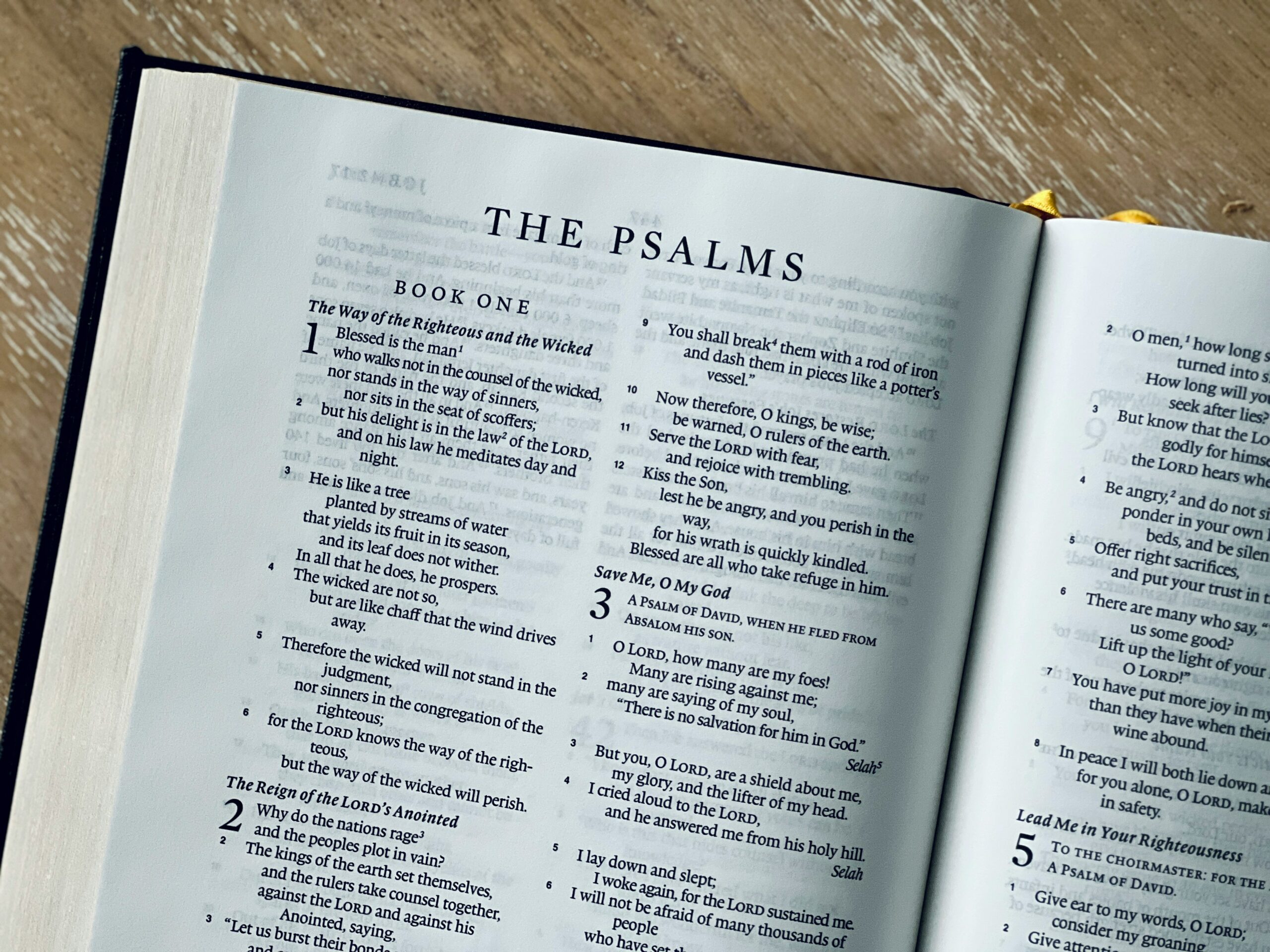
Psalm 93 provides us the desperately needed perspective. Psalm 93 is an exceedingly short psalm Neither lengthy nor complex, only five verses, but it is profound in its simplicity and its brevity. It’s simple, straightforward, but to it there is depth and instruction in the words. You have your Bible’s turn to Psalm 93, if you would, and follow along as I read.
The Lord reigns. He is clothed with majesty. The Lord has clothed and girded himself with strength. Indeed, the world is firmly established. It will not be moved. Your throne is established from of old. You are from everlasting. The floods have lifted up, O Lord. The floods have lifted up their voice. The floods have lifted up their pounding waves. more than the sounds of many waters, than the mighty breakers of the sea, the Lord on high is mighty. Your testimonies are fully confirmed. Holiness befits your house, O Lord, forevermore. Like so many of our psalms, we’re not informed of Psalm 93’s author. Many have ascribed it to David, and that’s a plausible suggestion.
Psalms 93 through 99 are a series of so-called theocratic psalms. A theocratic psalm is one that describes the ideal government, that of God himself, Theocracy is a form of government, and throughout history, there have been a variety of government models.
There have been democracies, governments that are led by the will of the people. There have been monarchies, governments led by the rule and authority of one person, whether king or pharaoh, Caesar, or a wide range of other titles. There have been oligarchies, government by a powerful few.
And over Israel, there was a theocracy, a government by God and his law over his people. The word theocracy, it’s fascinating, is one that historians believe to have been coined by Jewish historian Josephus. This is how he described Israel’s theocracy, a God-ordained government. It functioned, he said, by ascribing the authority and power to God and by persuading all the people to have a regard to him as the author of all good things enjoyed. Such was Israel’s government. God’s relationship with his people was established by a covenant. He was ultimately her king.
And one day, that idea of dominion will be granted to his son, Jesus Christ. But the psalmist’s idea of a theocracy goes well beyond Josephus’ idea. Instead of governmental rule over one nation, Israel, God’s rule and reign is over all creation. Ultimately, the whole world is under a theocratic government.
Well, not only do we not know the author definitively, neither are we informed of any particular historical connection in the psalm. While the writer alludes to turmoil in verse 3, It’s a general observation that would be true and applicable to any period of history.
This short psalm is also very challenging to outline. Everything that is laid upon it just seems to obscure its depth. I would call attention, however, to several curious features in the psalm. In verse one, the psalmist is talking about the Lord. extolling his virtues. In verses two and three, he speaks directly to the Lord. And that same pattern is repeated in verses four and five. Verse four is about the Lord, verse five is to the Lord. And so we could conceivably come up with some kind of a simple back and forth four point outline. I think we can do better.
On a shelf in our home, We have a very old book called the New England Primer. That word primer is spelled the same exact way as our word primer. A primer is used in a variety of different ways, but a primer is a small book that was used to introduce a subject or a concept. The New England Primer, was designed to teach the alphabet to small children, and it’s done so with amazing references to God and to His Word and to creation. I would suggest to you that what we have here in Psalm 93 is a primer on theology. Theology, you may know, is a compound between two words, theos, God, and logia, study. the study of God.
And in this primer, the psalmist is articulating the attributes of God, in short, and he’s doing so for the purpose of giving his readers perspective for the chaotic world in which they live. What they need to know is the character and the nature of God, and the psalmist provides his readers with seven such reminders. These seven attributes are all provided as a response to what the psalmist says in verse three, chaos. Right in the middle of the psalm, verse three, almost as if it’s out of place, inserted by someone else. It’s not out of place. It serves as the foil for the unfolding theology of the psalm. That’s at verse three, if you would again. The floods have lifted up, O Lord, the floods have lifted up their voice. The floods lift up their pounding waves.
There have been many suggestions about the significance of these floodwaters from the strange to the plausible, but unlikely. In our initial consideration here, we might be inclined to think of literal floodwaters. We’ve only recently seen videos of horrible destruction from flooding. I was quite surprised to see some, so many commentators suggest that the psalmist here is referring to the flooding of the earth in Noah’s day. I don’t believe it’s that at all. I don’t believe the psalmist is talking about water here at all. What the psalmist is doing is metaphorically using the image of a flood to speak of the chaos and turmoil so prevalent in our world.
That’s a frequently used image in Scripture. Just listen. Isaiah chapter eight. Now, therefore, behold, the Lord is about to bring on them the strong and abundant waters of the Euphrates. Sounds like a flood to me. Even the king of Assyria and all his glory, and it will rise up over all its channels and go over all its banks. Then it will sweep into Judah. It will overflow and pass through. It will reach even to the neck, and the spread of its wings will fill the breadth of your land.
O Immanuel. Isaiah captures the same image again in 1712. Alas, the uproar of many peoples who roar like the roaring of the seas. And the rumbling of nations who rush on like the rumbling of mighty waters. Jeremiah uses that same image. Who is this that rises like the Nile, like the rivers whose waters surge about? Egypt rises like the Nile, even like the rivers whose waters surge about. And he has said, I will rise and cover the land. I will surely destroy the city and its inhabitants.
Not a literal flood. In the Psalms. In the Psalms, the psalmist used this image plentifully. Psalm 42, which psalm we looked at several weeks ago. Deep calls to deep at the sound of your waterfalls. All your breakers and waves have rolled over me. Not a literal flood. Psalm 69, verse two. I’ve sunk deep in mire. There is no foothold. I have come into deep waters. A flood overflows me. That’s not a literal flood. Verse 15 of that same psalm, may the flood of water not overflow me, nor the deep water swallow me up, nor the pit shut its mouth on me. Not a literal flood.
Psalm 90 verse five, you’ve swept them away like a flood, they fall asleep in the morning, they are like grass which sprouts anew. And one more, not a literal flood. that the psalmist here is speaking about in Psalm 93 and Psalm 124 seals it. Had it not been for the Lord who was on our side, when men rose up against us, when they would have swallowed us alive, when their anger was kindled against us, when the waters would have engulfed us, the stream would have swept over our soul. The raging waters would have swept over our soul. Not a literal flood.
It’s the chaos of the world. These floodwaters of Psalm 93 are symbolic of the chaos and the commotions of our world. It’s an appropriate image. Wild, crashing waves of the sea pounding on the coast land. And yet, greater and more powerful than all of these is God, more majestic, more mighty than even the great ocean. So the context of this theological primer is the confusion and disorder, the lawlessness and rebellion, the mayhem and madness of our world.
The psalmist sees this, and he seeks to give God’s people perspective. stabilizing reminder of who God is. You go back to verse one. For this corrective perspective, the psalmist gives seven calming qualities of our God. Verse one, our God is sovereign. Our God is sovereign, the Lord reigns.
And the word used here refers to kings and what they do. The noun here refers to a king or to a sovereign. The verb refers to a king’s reign. And these words are indeed used with regard to earthly kings and their respective reigns. Here, it speaks of God’s sovereign rule and that it is over the entire universe. In the Psalms, God is often spoken of as king in a number of ways. It’s, this terminology is used to declare the principle of God’s sovereignty.
Psalm 47, 8. God reigns over the nations. God sits on his holy throne. Psalm 96, 10. The Lord reigns. It’s also used to assure God’s people of this fact. Psalm 97 1. The Lord’s the Lord reigns. Let the earth rejoice. Let the many islands be glad. Likewise, Psalm 146 10 echoes this. The Lord will reign forever. Your God, O Zion, to all generations. Praise the Lord. It’s also used as a caution to unbelieving nations.
Psalm 99.1, the Lord reigns, let the people tremble.
He is enthroned above the cherubim, let the earth shake. God is in absolute control of his entire creation. He’s neither subordinate nor controlled by anyone. As Isaiah presents him, he is the potter, we are the clay. Psalm 103, 19 declares His sovereignty rules over all. Nothing excepted. As such, God does what He pleases, when He pleases, for His own purpose and pleasure. God is sovereign in providence. He’s sovereign in our circumstance. He’s sovereign in our salvation. He’s sovereign over the nations.
Moses proclaimed to the people of God when he descended on the mountain, behold, to the Lord your God belong heaven and the highest heavens, the earth and all that is in it. The prophet Daniel says of God, it is he who changes the times and epochs. He removes kings and establishes kings. He gives wisdom to wise men and knowledge to men of understanding.
God is sovereign. Similarly, Job acknowledged in 1223, he makes the nations great, and then he destroys them. He enlarges the nation and leads them away. He deprives the chiefs of the earth’s people and makes them wander in a pathless ways. God is sovereign.
Good King Jehoshaphat said, O Lord, the God of our fathers, are you not God in the heavens? And are you not ruler over all the kingdoms of the nations? Power and might are in your hand so that none can stand against you. The absolute sovereignty of God must ever be the supreme comfort to God’s people, regardless of what’s going on in our fallen world. Every trial, every turn has been sifted through his loving fingers for our good. Our world has always had its pharaohs and Caesars and despots and dictators and presidents. They show up and they flourish and they bluster for a season. And then they die. They are no more. They are as so many bugs on the sidewalk beneath God.
But God is an eternal and perpetual King who reigns and rules over all. What greater comfort can there be for us to remember that God, our King, is reigning? There’s a second theological point. We find it as well in verse one, these calming qualities of our God, not only that our God is sovereign, but our God is magnificent.
He is clothed with majesty, the psalmist says. The general idea of this word majesty really has to do with pride. Psalm 1710, of God’s enemies, with their mouth they speak proudly. Isaiah uses the word graphically of the swelling of the waves of the seas. He uses it also of arrogant men, the proud crown of the drunkards of Ephraim. Well, none of those uses of the word would be appropriate for use with reference to God. But there is another sense in which this word is more generally used.
Think of the idea of pomp and pageantry of earthly sovereigns. Ornate royal robes, that opulent palace from which they emerge, the horses and chariots, banners and flags. Earthly kings use these things as a display of their power and their prestige. Without them, they would garner little respect from their kingdom’s people. With regard to God, there is a supreme measure of this. Isaiah also uses the word to speak about God.
In 12.5, he has done excellent things.
In 26.10, he uses the word to speak of the majesty of the Lord. It’s God’s glory that is captured in this word majesty. God is magnificent. His glory is ever on full display. The heavens are telling of the glory of God, Psalm 19. And our writer says that God is clothed with such majesty. He is appropriately arrayed for such a role. Unlike earthly kings, God does not need a purple robe. He doesn’t need a jeweled crown. He doesn’t need a diamond-encrusted scepter in order to secure His subjects’ respect.
We see God in His glory, His majesty. It’s part of Him. Isaiah saw it. In Isaiah six, in the year of King Uzziah’s death, I saw the Lord sitting on the throne, lofty and exalted, the train of his robe filling the temple. Seraphim stood above him, each having six wings. With two he covered his face, with two he covered his feet, with two he flew. And one called out to another and said, holy, holy, holy is the Lord of hosts. The whole earth is full of his glory.
Foundations of the thresholds trembled at the voice of him who called out while the temple was filling with smoke. Then I, Isaiah said, woe is me. For I am ruined because I am a man of unclean lips and live among a people of unclean lips. For my eyes have seen the king, the Lord of hosts. God carries the dignity of His office in His glory. In His grandeur and His stateliness, it fits the part of the King of all creation.
There’s a third theological perspective here, calming qualities about our God. Our God is sovereign, magnificent, and thirdly, He is omnipotent. Look again at verse one, at the latter half, the Lord has clothed and girded himself with strength. Indeed, the world is firmly established. It will not be moved. The third attribute by which the psalmist seeks to calm his Lord’s people is that of omnipotence, God’s omnipotence. In the previous sentence, God was said to have clothed himself with majesty. Here he has girded himself with strength. And it’s important to note that that word girded is a military word used of a warrior dressing for battle. That uniform of strength is a fitting image. One of the titles most frequently ascribed to God throughout the Old Testament is Almighty God. It declares that God lacks no resources for the accomplishment of his will. Nothing is too difficult for thee, as Jeremiah testified.
God has the power to create and sustain, the power to save and condemn. God has the power to do or accomplish any of his purposes. English Puritan Stephen Charnock essentially argued that without his power, God’s promises and threats would be empty. Listen to what he says. God’s power is that which gives life and action to all the perfections of the divine nature. How vain would be the eternal counsels if power did not step in to execute them. Without power, His mercy would be but feeble pity, His promises an empty sound, His threatenings a mere scarecrow. God has the power to carry out His will and His purposes, and the psalmist presents proof in this same verse.
Second half of verse one, the psalmist makes two additional statements. In the first, he declares God’s omnipotence. The Lord has girded himself with strength. But in the second, he presents proof of God’s workmanship. Indeed, the world is firmly established. It will not be moved. That word established just indicates a readiness, a preparedness.
And the psalm writers use it broadly to speak of God’s work. Psalm 97, he has established his throne for judgment. Psalm 65, six, he establishes the mountains by his strength. Psalm 74, verse 16, he has prepared, same word, the light and the sun. We came across this same word in Psalm 90 several weeks ago. Confirm, same word, the work of our hands. Establish it. Think of it like this. If you desired to build a house, you would interview contractors. And one of the questions, hopefully, that you would ask is, have you ever built a house?
The psalmist not only speaks of God’s power but he He says that God has mastered this discipline perfectly. Structure that God has built by his strength is firmly established. It will not be moved. This is our God. There’s a fourth theological reminder, a corrective perspective These calming qualities of our God, not only is our God sovereign and magnificent and omnipotent, He is eternal. Look at verse two, if you would, please. Your throne is established from of old. You are from everlasting. Here’s a fourth and obvious attribute of God.
Our God is eternal. In this word, used of God, his works, his ways, is used more than 400 times in the Old Testament, plentifully in the Psalms. Psalm 92 says it simply enough, you, O Lord, are on high forever. When Barbara and I first met, she shared with me that her dad had always told her of God, that he has always been and he always will be. That’s a good, clear definition of God’s eternality.
And we have it in three of the Psalms that we’ve only just recently considered. Psalm 45, verse six. Your throne, O God, is forever and ever. Psalm 73. God is the strength of my heart and my portion forever. Psalm 90, verse two. From everlasting to everlasting, you are God. You see, earthly kings or Caesars or despots or whatever title they might take on, no matter how powerful or impactful they have been on our world, they fade like withering grass.
Rome’s Caesar Caligula, one of the most evil, brutal, lasted four years. Russia’s Joseph Stalin, he conducted a withering campaign for 29 years. And then he too died. Hitler, horrible 12 years. Uganda’s Idi Amin, a bloodthirsty eight years. Cambodia’s Pol Pot, four years.
Earthly leaders, good and bad, they come and they go. The time and chance overtakes them all. As Solomon says in Ecclesiastes, they and their stupendous plans evaporate with their last breath. God, however, is everlasting. His promises are ever true. He will always be there for us. He will always uphold His commands, His promises, and His threats. There’s a fifth theological reminder here, calming quality. Our God is sovereign. Our God is magnificent. Our God is omnipotent. Our God is eternal. Our God is majestic.
We find this in verses three and four. The floods have lifted up, O Lord. The floods have lifted up their voice. The floods have lifted up their pounding waves more than the sound of many waters, than the mighty breakers of the sea. The Lord on high is mighty.
This fifth attribute is expressed by the word mighty. It’s a very seldomly used word, only 28 times in the entire Old Testament, and not even all of them of God. Interestingly, this word is often translated as majestic, the word that we used to present our second of these seven attributes. The words are different, but they express similar thoughts, but they’re different enough that we can observe a seventh, seven in total. The word used here in verse four Even though it’s translated as mighty is used to speak of a stateliness, a nobility, a dignity. It’s translated many different ways in scripture, mighty, noble, magnificent, and in the Psalms, especially majestic.
The best earthly leader is a, he’s a mere man with many limitations and shortcomings. He may look the part, adorned in royal garb. But in reality, they are worse than the emperor with no clothes. Because they believe that the outer garb changes their heart. God, however, is high above all of that. God has no weaknesses. God has no restraints. God has no shortcomings. He makes no blunders, no mistakes.
Our Lord, oh Lord, how majestic is your name in all the earth. Psalm 8. There’s a sixth character quality of God that corrects our perspective in this chaotic world. Sovereign, majestic, omnipotent, eternal, Magnificent and trustworthy. Trustworthy. Look at verse five, your testimonies are fully confirmed. The second to last attribute in our psalmist theological primer is that of trustworthiness. God is trustworthy. We can take him at his word. What a rare commodity in our day. We can trust His promises.
This is quite literally what Psalm five, or verse five says. Your testimonies are fully confirmed. A testimony is a declaration, whether of a beneficial promise or a threat of punishment. It is the statement of a witness. And it’s used this way more than two dozen times throughout the Old Testament. As it pertains to God, his testimonies essentially point to God’s laws, his mandates, his word. This is exactly how the word is used 14 times in Psalm 119. Listen, how blessed are those who observe his testimonies, verse two.
Verse 24, your testimonies are my delight. Verse 46, I also will speak of your testimonies before kings and not be ashamed. Verse 59, I turned my feet to your testimonies. Psalm 119 verse 95, I shall diligently consider your testimonies. Now bear with me, because when we come to Psalm 119, I’m purposing to read the whole thing anyway. Psalm 119 verse 119, I love your testimonies. Psalm 119 verse 125, I am your servant, give me understanding that I may know your testimonies. Verse 167, my soul keeps your testimonies and I love them exceedingly.
God’s testimonies are the things that he has said. As one defined them, testimonies are revealed truth and the promises that are grounded on them, all that God has spoken. But watch this. That simple sentence also says they are confirmed. They’re proven. They are in time shown to be right and accurate and true. Trustworthy. The same word that’s used in Psalm 78 to speak of trust or belief in God’s salvation, his wonderful works, and his covenant. The flavor of this word is captured well in Psalm 117. The works of his hands are truth and justice. All his precepts are sure. They are confirmed.
You know what, an earthly king at the end of the day, is a politician. He has a citizenry to whom he favors and to whom he answers in degree. He cannot be trusted like God can be trusted. He at best is a talking head from whom truth may only occasionally seep. God Everything that he says is absolutely true and trustworthy. You can take God at his word.
There’s a seventh theological concept that is communicated here, and no theological primer would be complete without this. These perspectives are corrective. They give us a calmness in the course of the chaotic world in which we live. God is sovereign, magnificent, omnipotent, eternal, majestic, trustworthy, and He is holy. Holiness befits your house, O Lord, forevermore.
This final attribute in our little theological primer is that of holiness. The word literally speaks of a set-apartness. And many things are set apart in Scripture for sacred use. Scripture speaks of a holy mountain, a holy temple, a holy hill, a holy heaven, a holy place, a holy sanctuary, holy array, a holy name, a holy throne, a holy spirit, a holy habitation, a holy land, holy attire, holy angels, and God’s holy word. Not surprisingly, God himself is set apart, holy. The Bible speaks of God’s holiness in a twofold sense. Essentially, holiness refers to his distinctness, his being set apart.
But this is explained because of God’s purity and his hatred for sin. That is why he’s apart from his creation. because of God’s holiness, His separation from sin, that we are commanded ourselves to be holy. 1 Peter 1, like the Holy One who called you, be holy yourselves in all your behavior because it is written, you should be holy for I am holy.
Know this for certain, no matter how nice your politician is, No matter how good your earthly king is, no matter how pleasantly some earthly ruler is, at his very best, he is only a relatively moral sinner. They are sure to be tainted in every corner of their being with sinful inclinations and immoral thoughts. God on the other hand is altogether holy. So that when Isaiah speaks of it, he can only utter those familiar words. Holy, holy, holy is the Lord of hosts. The whole earth is full of his glory. Would you bow before him now?
Oh Lord God, we thank you for this simple psalm, simple reminders of the character and the nature of God. Sovereign, omnipotent, trustworthy, and holy. Magnificent and majestic Lord, we thank you for these reminders that stabilize us in the course and context of a fallen and chaotic troubled world. Lord God, grant us your grace to focus on who you are. Focus on not only who you are, but what you are. You’re a loving, faithful God, our King and provider, our Savior. Lord God, we pray. that you would use us in this fallen world. Work into us a calmness, a trust in who you are that exudes from us, that others can see and sense, and draw them to yourself. Lord, grant us the words in those moments to proclaim Christ and salvation by him, the love of a God so noble, so holy, so eternal. Lord, comfort our own hearts that we may comfort others. It’s in Jesus’ name that we pray.
Messages: 22