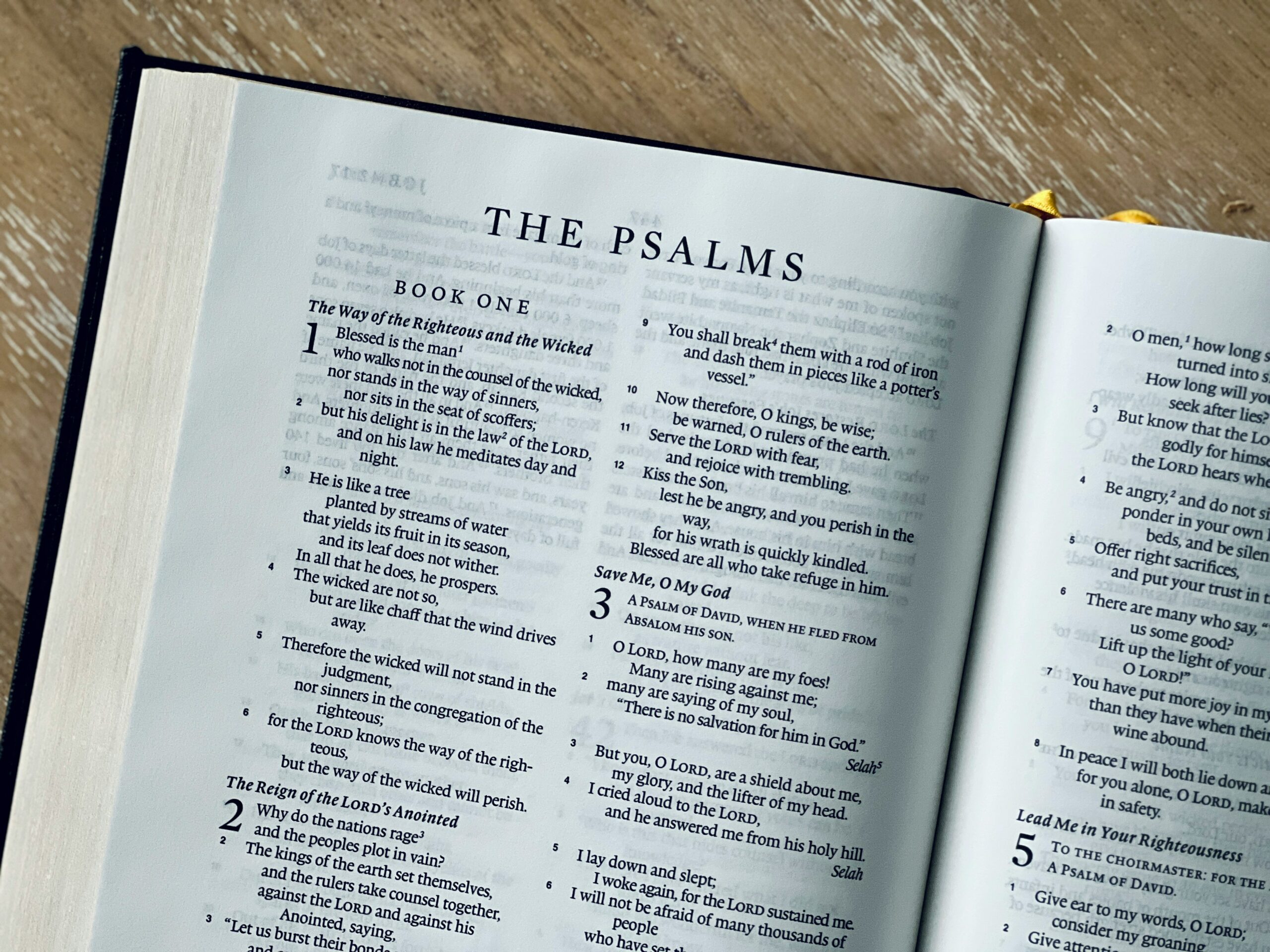
Sacred Vistas
This sermon explores Psalm 2 as a messianic prophecy that reveals four distinct aspects of Jesus Christ’s ministry through a series of sacred vistas. The text identifies the Anointed One as the target of global rebellion, the King seated in heavenly authority, the Son granted ultimate dominion over the nations, and the Lord who demands reverent worship. By connecting these Old Testament titles to New Testament fulfillment, the message highlights the contrast between the world’s futile plots and God’s sovereign, accomplished plan. The tone is both convicting and comforting, urging listeners to recognize the futility of resisting God’s authority and to find their ultimate security in taking refuge in Christ.
Transcript
Well, we march onward in our study of the Psalms, beginning our second course through the five books of the Psalms. Today, we find ourselves in Psalm 2 with God’s people begin to turn there. Psalm 2 is similar to Psalm 1 in that it contains no title identifying its author. However, one of the earliest collections of Psalms named the Psalms of David. This Psalm is one of the many that, if not written by David, were gathered into a collection under his direction. The Septuagint, the Greek translation of the Hebrew Old Testament, has a Psalm of David as its title, attributing it to the earthly king, but There’s one more piece of information that conclusively points to David as the author of Psalm 2. In Acts chapter 4, the friends of Peter and John, recorded by Luke, acknowledge that the words of Psalm 2 were uttered by the Holy Spirit through the mouth of David, God’s servant. This Psalm opens and closes with the psalmist, that is David’s words, he captures several citations.
He quotes the hostile people of the world in verse three. Having characterized God’s demeanor in response to the nation’s uproar, he quotes God himself in verse six. I have installed my king upon Zion, my holy mountain. And he quotes yet, of the yet mysterious Messiah in verses seven through nine. As you will recall, we began our study in the psalm several weeks ago with a look at Psalm 1. Psalm 1 is more of an instructional psalm, a comparison between the wicked and the righteous.
Both kinds of people are evaluated and ultimately judged accordingly by God. Psalm 2, however, is prophetic, as it presents what appears to be a contemporary rebellion against God. But while the psalm is set against that historical backdrop, the very mention of the anointed prophetically introduces the Messiah. The Messiah is God’s enthroned king, who is also God’s son. And as with many prophetic portions of the Old Testament, Psalm 2 has an initial reference to some eruption that was taking place, expressing the world’s hatred against God. But that hatred would ultimately be vented in full by the world’s combined hatred of Jesus Christ. Psalm 2 is a messianic psalm, the first of many in the greater book of Psalms. And as this is a messianic psalm, it is cited in the New Testament more than any other psalm, as we will see. If you would follow along as I read Psalm 2.
Why are the nations in an uproar? and the people’s devising a vain thing. The kings of the earth take their stand and the rulers take counsel together against the Lord and against his anointed saying, let us tear their fetters apart and cast away their cords from us. He who sits in the heavens laughs, he scoffs at them. Then he will speak to them in his anger and terrify them in his fury saying, but as for me, I have installed my king upon Zion, my holy mountain.
I will surely tell of the decree of the Lord. He said to me, you are my son. Today I have begotten you. Ask of me and I will surely give the nations as your inheritance. And the very ends of the earth is your possession. You shall break them with a rod of iron. You shall shatter them. like earthenware. Now therefore, O kings, show discernment. Take warning, O judges of the earth. Worship the Lord with reverence and rejoice with trembling. Do homage to the son that he may not become angry and you perish in the way. For his wrath may soon be kindled. How blessed are all who take refuge in him.
It’s a very straightforward outline, psalm rather, to outline. There are four equal parts, four sections containing three verses. And Jesus Christ, though he’s not identified in the psalm by name, is mentioned by four different titles in each of those sections. Those titles feed directly into the overall structure of this psalm.
Glanced down at you, if you would, at verses one through three, in that first section, the psalmist refers to him as his anointed, the father’s anointed one. In the second section, verses four through six, he’s referred to as my king. That is, God the Father’s appointed king. In the third section, verses seven through nine, he is referred to as my son. That is, God the Father’s son. And in the fourth and final section, he is referred to as the Lord.
A trip to the Grand Canyon will yield many what are called scenic overlooks, where visitors may take in a view of the portion of that amazing monument. A visitor cannot possibly take in the entirety of the Grand Canyon at any one vantage point. After all, it’s almost 300 miles long. But from various overlooks, people can get a sense of the vastness and the beauty of the Grand Canyon.
And I would liken Psalm 2 to those vantage points. Just as we cannot possibly take in the entirety of the Grand Canyon with a single view, much more we cannot grasp the fullness of Jesus Christ’s ministry in one glimpse. Scenic overlooks that Psalm 2 provides gives us perspective not of a giant hole in the dirt, but rather of a grand panorama of the Messiah’s ministry. Psalm 2 provides what I would call four sacred vistas, defining episodes in the grand range of the Messiah’s ministry.
First, verses one through three, as I told you a moment ago, we see Jesus Christ, the anointed one, targeted. In verses four through six, we see Jesus Christ, the king, seated on his throne. In verses seven through nine, we see Jesus Christ, God’s son, has ultimate authority. And in verses 10 through 12, we see Jesus Christ, the Lord, is to be worshiped.
Even from these magnificent vantage points, we don’t come away knowing everything that there is to know about the Savior. We’re not invited to hear of Jesus in eternity past. We’re not given an exhaustive view of His earthly ministry. And that, the brief view that we do get, is the hateful response of the world We are afforded only a brief glimpse of His eternal ministry, only that He is already reigning and ruling. Well, we will get to spend eternity getting to know more about Jesus Christ.
For now, the psalmist’s four vantage points are enough. Let’s consider these sacred vistas. the defining episodes in the grand range of the Messiah’s ministry. Back, if you would, to verses one through three, where, first of all, we see Jesus Christ, the Anointed One, is targeted. Our psalmist begins with a quick look at our Savior’s earthly reception.
It’s a picture of the world in turmoil, chaos, mayhem, Initially, we’re not even informed of the reason for the unrest, only that there is this uproar. And this is not a localized riot. It involves all the nations of the world. The nations are in an uproar. And the psalmist is not content to present a generalized view of the unrest. countries or nations, but he takes it right down to the individual level, where he says it is the peoples who are fomenting these plots, devising a vain thing. And this is not the people’s rebellion against earthly leaders, which is so often seen. Verse two tells us that the kings and the rulers are fully complicit in this turmoil, stubbornly taking their stand, foolishly taking counsel together. Whatever the cause, this is a worldwide rebellion.
Now, the psalm writer here may well have had a contemporary event in mind, some intense uprising in the world, but strife and conflict and violence have characterized mankind from the earliest moments of history. The psalmist is leading to a specific cause of this turmoil. We see it at the end of verse two. This global uprising is a mutiny, the psalmist says, against the Lord and against his anointed. This is not a conflict about borders or ideologies or religious freedom or oil. This is a revolt against God and his right to rule over his creation. And the idea that the world is hostile toward God and the things of God should not surprise us.
It has always been so. that this seething disdain is not only aimed at God in general, but it’s against one who the psalmist introduces as his anointed. That word is used in a general sense of priests and prophets who were anointed to their special tasks. But it’s used in a special way as here to refer prophetically to God’s Messiah. The New Testament, the parallel term is Christ, the Anointed One. We know that Jesus was destined for this hateful response, this treatment that the psalmist lays out. In Isaiah 53, the prophet tells us that he was despised and forsaken of men, a man of sorrows, acquainted with grief.
From the Gospels, we know that Jesus was fully aware that the eventual plan was to do away with him, just as they had done with God’s prophets. Jesus knew that their goal was to kill him. Mark 9 31 says that it was Jesus himself who informed his disciples that the Son of Man is to be delivered into the hands of men and they will kill him. Jesus did experience this level of hateful conspiracy. And Matthew 26 records that the chief priests and the elders plotted together to seize Jesus by stealth and kill him.
That was always the plan. We know the ultimate results. They hated Jesus to death. Let me give you indisputable proof. that the psalmist here, by referring to this mysterious one as the anointed one, is talking about Jesus Christ. Would you please turn to the book of Acts and to chapter 4. Acts chapter 4. This is the verse I alluded to a moment ago. Acts chapter 4.
And here, just a little Communion background Peter and John have been arrested for preaching the gospel There’s a wonderful response to their message and the authorities are disturbed by it. And so they arrest them Ultimately there they command them not to speak or teach at all in the name of Jesus and They release them We pick up the narrative in verse 23 When they had been released, they went to their own companions, likely some of the other disciples and apostles, and reported all that the chief priests and the elders had said to them.
And when they had heard this, they lifted up their voices to God with one accord and said, Oh Lord, it is you who made the heaven and the earth and the sea and all that is in them. who by the Holy Spirit through the mouth of our father David, your servant, said, why did the Gentiles rage and the peoples devise futile things? The kings of the earth took their stand and the rulers were gathered together against the Lord and against his Christ. These companions of Peter and John which likely included disciples and apostles, quote, from Psalm 2. They attribute not only the authorship of this Psalm to King David, they attribute the authority, pardon me, the authority’s behavior to this feudal rage jointly generated by the Gentiles, the people, their kings, and their rulers, They were lashing out at the Anointed One, the Christ, Jesus Christ.
Back, if you would, to Psalm 2. Seemingly, the entire world is conspiring against God and against His redemptive efforts through Jesus, and their plan is wicked and vicious. If you’re back in Psalm 2, would you look down at their collective cry in verse 3?
Let us tear their fetters apart and cast away their cords from us. Their collaborative plan is violence brought about by what they refer to as fetters and cords. You see, the world generally, and sinners individually, see God and His commands as restrictive and inconvenient, so much so that they desire to kill Him if they could. They want to live their lives free of God’s commands, and His scrutinizing eye Their passionate desire is to tear off and cast away the entirety of God’s sovereign dominion. But as the psalmist has already told us, their plots and plans are in vain. They will not stand. They will not disrupt God’s intentions. God mocks their plans. by seating his anointed king on his rightful throne.
You see just up ahead, there is a second vantage point for observing the overall ministry of the anointed one, the Messiah. This one we find in verses four through six. It refers to our savior as king. And so these defining episodes in the grand range of the Messiah’s ministry becoming more clear.
Not only is Jesus Christ the anointed one targeted, Jesus Christ the King is already seated on his throne. God, above and apart from these foolish people and their evil aims, reacts to this with derision. In verse four, David declares, he who sits in the heavens laughs. The Lord scoffs at them. God doesn’t treat this as comedy. He doesn’t laugh in that sense. The word is used to speak of celebration and laughter indeed, but here it is a laugh of incredulity.
Incredulity at the foolishness of men that think that they could thwart God’s plans. He knows that as he sits in the heavens, there is a gulf as wide as eternity between him and them. Psalm 37, 12, and 13. echoes a similar thought. Another of David’s Psalms, he says, the wicked plots against the righteous and gnashes at him with his teeth. The Lord laughs at him, for he sees his day coming. Psalm 59, David again pictures the men of this world as going about howling like dogs. God’s response to them is to laugh at them and to scoff at the nations. God doesn’t have to pause and think of how to fortify his defenses. He is almighty, and he is in heaven, and such thoughts of rebellion do not cause him any concern.
Instead, they are insanely irrational. And as such, they are amusing to God, and He rebukes them accordingly. The parallel term here, the Lord scoffs at them, means to mock or to deride someone. In Psalm 80, it’s used in the opposing sense, being the object of ridicule, our enemies laugh among themselves. Here it is God who is engaged in the taunting laughter about mankind’s feeble and hopeless plots against him. But it is this scoffing laughter, this scoffing laughter is not God’s only response.
He is provoked here to action. When at once his laughter ceases, men begin to shudder. You glance at verse five. Then, as soon as man stops, God stops laughing, men know that they are in trouble. Then he will speak to them in his anger and terrify them in his fury. Regarding this abrupt transition from laughter to anger, Thomas Adams, a noted 16th century pastor, said, oh, what are his frowns if his smiles are so terrible? As soon as God opens his mouth to speak, the people of the world sense his fury and are justifiably terrified.
They are at once dismayed. They’re left trembling and speechless. And now God speaks. Verse six, but as for me, I have installed my king upon Zion, my holy mountain. This is a most powerful statement. The men of the world were thinking that they might circumvent God’s plans. And yet, those plans are already accomplished.
Zion, God’s holy mountain here, mentioned as the locality of the capital city of the king’s domain. David here is not referring to his own temporal reign, but of the promise God made to him of an everlasting throne. It is the perpetual throne of David, which is here given in perpetuity to God’s anointed king, Jesus Christ. The Apostle Paul tells us in Ephesians 1 that God, in a display of the surpassing greatness of his power, raised Jesus from the dead and seated him at his right hand in the heavenly places.
This is already done. The writer of Hebrews declares it as such as well. We have a high priest who has taken his seat at the right hand of the throne of majesty in the heavens. This is a wonderful reminder of the promise from God, who says that we are to keep seeking the things above, where Christ is, seated at the right hand of God. The throne of grace, as the writer of Hebrews calls it. So what men sought to prevent, God has already accomplished. And God’s anointed King is no figurehead. He reigns supremely over all, as we will see in the subsequent verses.
This third vista by which God would have us to take in a view of Christ’s grand ministry, this time it is God’s Son that is referenced. the third defining episode of Christ’s ministry. He’s not only the anointed one who is targeted, the king who is seated, but thirdly, Jesus Christ, God’s son, has ultimate authority.
I will surely tell, verse seven, of the decree of the Lord. He said to me, you are my son. Today I have begotten you. Ask of me and I will surely give you the nations as your inheritance. The very ends of the earth is your possession. Here now, evidently the enthroned son is speaking because he refers to that which God the Father said to him.
Verses seven through nine. It is if we have been invited into God’s very throne room Privileged to listen in on God’s words of affirmation to his son. What an amazing passage. This commissioning of his son is not an amended plan. But it’s the outworking of God’s eternal statute or decree. Would you please look at the very end of verse seven? You are my son today. I have begotten you.
Paul was not uncertain about the one referred to here. I would take you back to the book of Acts, to chapter 13 this time. Acts chapter 13. Here, Paul is declaring the gospel to the Jewish people of Antioch, and first he recounts the Jewish people’s reaction to the Messiah. Verse 27. His execution, verse 28. His burial, verse 29. His resurrection and subsequent appearances, verses 30 and 31.
And if you’re in Acts chapter 13, would you just glance down at verse 32? where Paul says, and we preach to you the good news of the promise made to the fathers, that God has fulfilled this promise to our children in that he raised up Jesus as it is written in the second Psalm. You are my son. Today I have begotten you. Without any measure of uncertainty, Paul declares that the son of Psalm 2 is no other than Jesus Christ. The writer of Hebrews twice cites this verse in 1.5 of Hebrews. His initial argument that Jesus is better than the angels, the very theme of the book of Hebrews, Christ is better, He queries, to which of the angels did he, that is God, ever say, you are my son? Today I have begotten you.
In Hebrews 5.5, the unidentified writer points out that Christ did not glorify himself so as to become high priest, but he who said to him, that is God the Father, you are my son. Today I have begotten you. Back, if you would, please, to Psalm 2.
The writers of the New Testament were undeniably certain that Jesus Christ is the Messiah, the Son of God, who is in view here in Psalm 2. In verse 8, God Himself is still speaking. And here He blesses the Son with the nations as an inheritance, and the very ends of the earth is His possession. He bestows upon the Son the dominion over all creation. This principle, too, is echoed in the New Testament. In Ephesians 1, Paul says that Jesus is far above all rule and authority and power and dominion. and that God has put all things in subjection under his feet. Included in the son’s authority over all is the power to enforce it.
A person who attempts to exercise even duly assigned authority quickly finds resistance if there is no reason to comply. In its most basic sense here, the word refers to a stick when he speaks of a rod. Now, what that stick is used for varies greatly depending on the context. It could be a walking stick or a staff for guiding and directing sheep. It could be a scepter, a sign of royalty. It could be a club for defense. but a rod. A rod, as the psalmist intends it here, is a tool of correction and punishment.
And he says, you shall break them with a rod of iron. You shall shatter them like earthenware. Jesus Christ has all authority and the means to enforce it. In Romans 13, Paul tells us that not only has civil government been established by God, but God has also granted governing authorities the sword, the punishment for disregard of authority, whether fines or jail or even capital punishment. In like manner, God gives his son what he calls here the rod of iron. in order that he may administer authority.” This line about ruling the nations with a rod of iron is also quoted in the New Testament.
Let me just tell you about these. Three times in John’s Revelation, it is quoted in reference to the Lord Jesus Christ. Jesus cites it of himself. In his closing comments to Thyatira, chapter two, verse 26, it says, he who overcomes and he who keeps his deeds until the end, to him I will give authority over the nations, and he shall rule them with a rod of iron. The Apostle John cites it of Christ in 12.5.
She gave birth to a son, a male child, who is to rule all the nations with a rod of iron. And her child was caught up to God and to his throne, speaking definitively about Christ. John again cites Psalm 2 in Revelation 19, regarding the coming of Christ on a white horse, the one called Faithful and True, whose name is called the Word of God.
He is the one who will rule the nations with a rod of iron. For those who disregard the Son’s God-ordained authority, He has the power to enforce them, to break them, to shatter them like earthenware, like a fragile clay pot. Sometimes, Unfortunately, that is the only language that people and nations understand. When God brings them to their knees, peoples, kings, even entire nations are no match for the son’s duly constituted power and authority.
Well, in this glorious panorama of Christ’s ministry, we have one final scenic overlook to enjoy. We find it in the final verses of the Psalm. Defining episodes in this grand range of the Messiah’s ministry, not only is the Anointed One targeted and the King seated, God’s Son given ultimate authority, but fourthly, Jesus Christ the Lord is to be worshiped. Jesus Christ the Lord is to be worshiped. Verse 10, now therefore, O kings, show discernment. Take warning, O judges of the earth. Worship the Lord with reverence and rejoice with trembling. Do homage to the Son that he not become angry and you perish in the way. For his wrath may soon be kindled.
Now David resumes his address, having quoted the world and God and the Messiah. Now he resumes and it comes in the form of an appeal. And he calls out the leaders and the rulers of nations, kings and judges. And he admonishes them to show discernment, to take warning about their foolish direction. And he graciously warns the people of the world and their leaders of the dreadful course they’re pursuing. Be reasonable, he pleads. Exercise caution, he urges.
God is the one who exalts those who are humble and humbles those who exalt themselves. Instead of conspiring together to war against God, David mercifully invites God’s enemies to repent and worship him. Verse 11. But they are invited to do so only in humble sincerity, to worship the Lord with reverence.
It’s a frightening thing in our day. how so much of what is called worship is done without any measure of real reverence. Charles Spurgeon himself said, fear without joy is torment, to just cower in dread. Fear without joy is torment, and joy without holy fear would be presumption. Fear without joy is the cowering dread of an angry deity. And joy without fear is presumption, he says, insincerely playing games with God. Stuart and Thomas Watson said that the fear of God, that is humble reverence, promotes spiritual joy. The fear of God promotes spiritual joy.
It is the morning star which ushers in the sunlight of comfort. You cannot have comfort from God without worshiping him in reverence. Those who come before God are to do so with reverence, to rejoice with trembling, For our God says the writer of Hebrews is a consuming fire. So David calls every person to humble themselves in grateful homage to the sun. Because if we do not do that, his just wrath may soon be kindled and we will perish in the course of our life. David fittingly closes this psalm with an inspiring declaration.
How blessed are those who take refuge in him. Indeed, how astoundingly blessed are all, not one excepted, who take refuge from their sin and their guilt and their shame in him, the anointed one. King, God’s Son, the Lord. What a glorious panorama of Christ’s wonderful ministry. From hated and rejected to exalted, empowered, and worshiped.
How could we not take refuge in such a Savior? You humble yourself before Him. Our gracious King, we humble ourselves before you and we do rejoice that even when David wrote this psalm, he could not have known the fullness of this panorama, the ministry of the Messiah unfolding before him, even as he wrote. Lord God, we thank you and praise you for the Savior that you have provided.
We thank you, Father, that we don’t have to wonder or hope. We can read of this fulfillment page by page in the New Testament. Not only in the Gospels, but also in the letters and epistles, even in the book of Revelation from cover to cover. We see the fulfillment of your appointment of the anointed one, your son, the King. and our Lord.
Father, we tremble on behalf of any in this room who do not know the Lord Jesus Christ. Lord, we plead that they would take heed, that they would consider the Savior that has already paid the penalty for sinners. We pray that they would Repent of their sin and look to Jesus Christ, who is already on his throne, already reigning, already supreme in authority. Lord, we pray that you would have your way with each individual in the room. Lord, we pray that you would point them to take refuge, to seek safe haven in Christ their Savior.
And Lord, for all who have done so already, we rejoice that our sin is covered. We rejoice, Father, that we bear no guilt for it any longer. Jesus Christ took that on himself when he paid for it on the cross. Lord, yours now is to dispense grace to your children. to enable us little by little to denounce sin in our lives and to grow in grace to become more and more like our Savior, our Lord Jesus. Father, we thank you. We thank you for our salvation. We thank you for our Savior and for this magnificent view of his ministry. We ask your blessing In Jesus name, amen.
Messages: 22