Christians and Civil Government
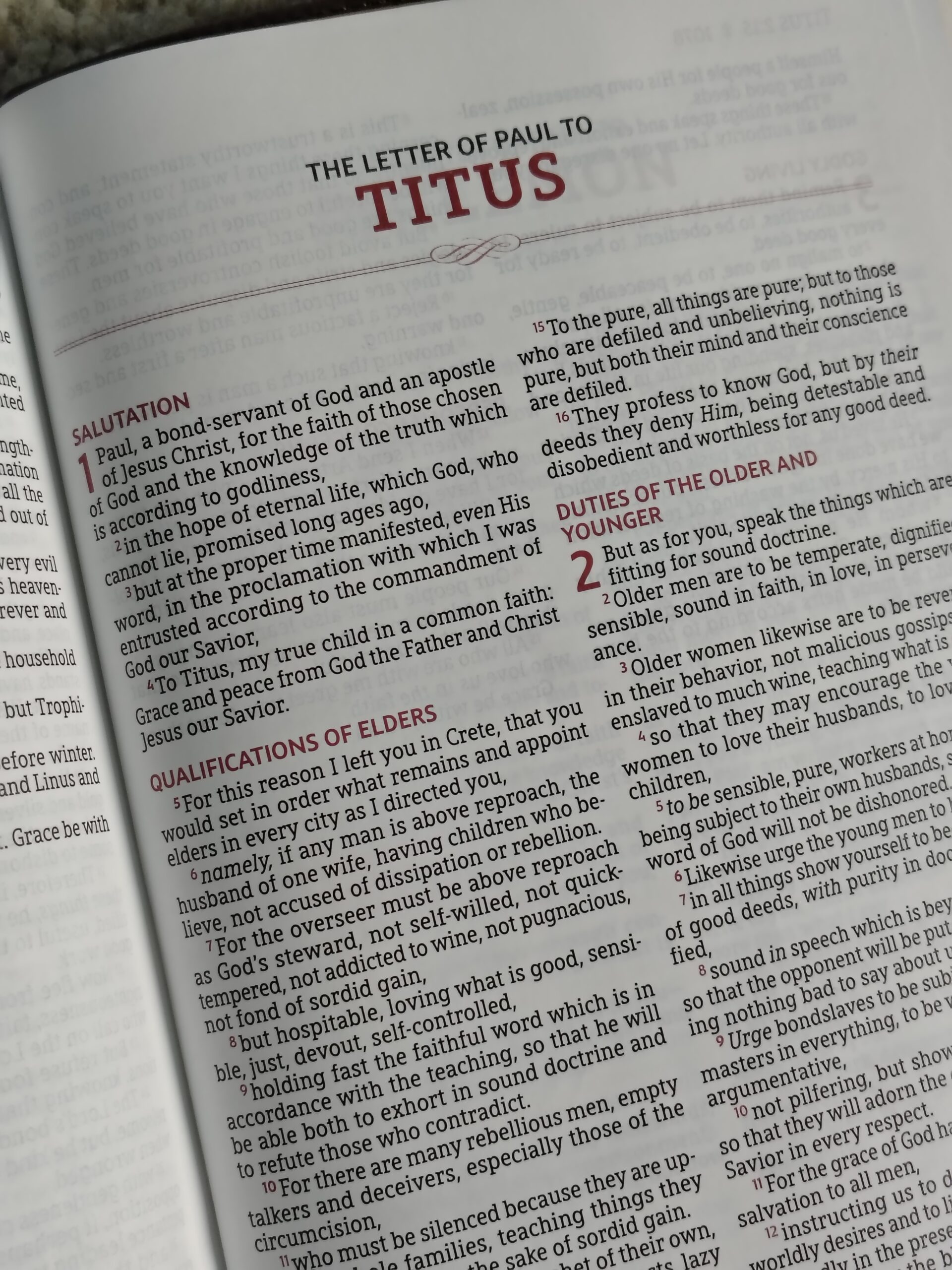
This sermon explores the biblical mandate for Christians to act as model citizens by examining the relationship between the church and civil government. It challenges the notion that government is inherently evil, arguing instead that it is a God-ordained institution designed to restrain evil and maintain order. The central message, drawn from Titus 3, urges believers to be subject to authorities, obedient to laws, and ready for every good deed, while maintaining a gentle and uncontentious demeanor. The preacher balances this civic duty with a reminder of the believer’s past in sin and the present reality of salvation by grace alone, emphasizing that good works are a response to God’s mercy rather than a means to earn it. Ultimately, the sermon calls for a balanced engagement with society that reflects the transformative power of the Gospel without resorting to political extremism or passive withdrawal.
Transcript
I brought you a curve ball this
morning. Would you turn to the book of Titus? The book of Titus
this morning. Those who know me well, who have
been here long enough to actually see me finish preaching through
a book of Scripture, if you entered into the Gospel of John, know
I have not just preached out of the book of John. We have
been in John for a lengthy season, coming on, I think, four plus
years. But we do finish books from time
to time. And whenever I finish them, I
remember that last day each time. I remember we finished the book
of Luke and the book of Romans. I remember putting those commentaries
back on the shelf for the last time. And there’s kind of a wistful
feeling. You become familiar. Each writer
has kind of a personality. You come to know them. And certainly
the book of scripture itself becomes just a precious gem in
your heart. And so you’re kind of wistful
to have to be actually done with it. And so from time to time
when I hear a passage read, I think of them as a familiar
friend. You remember you’re on the street and you bump into
somebody you haven’t seen for a long time? That’s how I think
of familiar passages that I preach. They become friends of mine.
And such is the case today. John read from Titus chapter
3 a couple of weeks ago, and I thought of that familiar friend. I’m in the midst of a project
right now, and I had to put John on hold just for a season, and
so I wanted to return to the book of Titus for a multi-purposed
consideration this morning. The book of Titus will be in
chapter three, but it begins to answer for us the question,
is human government evil? And I already see several people
chuckling because if it’s evil to the Christian, it’s irrelevant
and even unimportant. And I know a lot of Christians
that really think of government in those terms. It’s unimportant. It’s irrelevant. It’s kind of
a necessary evil, but it’s evil. And so the question becomes,
if government is evil, can Christians work with or cooperate with civil
government? Are we even supposed to be subject
to civil government, ungodly leadership? Are we always supposed
to be subject to them? Are we always supposed to obey
ungodly leadership? There’s been a big push the last
30 years for this idea of the separation of church and state.
Are church and religion at polar opposites and therefore we can
have our own realm and the government can have its own realm? The bottom line is that government
is God-given, scripture tells us, and its purpose is to restrain
evil and to punish sin. The scriptures present government,
human government, and the church as two separate kingdoms that
are really mutually dependent on one another. Each one has
a degree of authority. Each one has limitations. The
church is designed to instruct and to hold the state morally
accountable. Government is designed to uphold,
or rather to establish and uphold the law. The history shows that
too much power in either realm tends to corruption. This idea
of the separation of church and state and how we view our relationship
as believers sometimes becomes quite muddled. This idea of separation
of church and state, it’s a strong view for the last 25 years, essentially
referencing the First Amendment. Here’s how that came about. Settlers
came to America seeking religious freedom. They weren’t concerned
really about seeking liberty for others, really for themselves. That’s what they were looking
for. And they wanted to establish a state church that was more
to their favor than the church in England had been. And so after
the War of Independence, there were 13 states each with their
different religious orientations. There were Anglican communities,
Puritan communities, Congregationalists, Presbyterians, Quakers, Baptists,
not to mention Roman Catholics. Now the state didn’t, the states
didn’t want the federal government dictating to them individually
which denomination was going to prevail in their particular
state. The result was the First Amendment
to the Constitution, that Congress shall make no law respecting
an establishment of religion or prohibiting the free exercise
thereof. And we rejoice in that. We have
the privilege to meet here today because of that. The establishment, what it was
really looking to do is to prevent the idea of somebody rising to
power and saying, everybody now shall be Baptist or Presbyterian
or Catholic. There is to be a free exercise. And so in the First Amendment,
the word separation and or church or state aren’t even mentioned.
But 13 years after that amendment was written, Thomas Jefferson
was speaking to a gathering of the Danbury Baptists. And in
that speech, he mentions for the first time a wall of separation
between government and the church. But in his speech, what he was
articulating is that the wall was designed to protect the church
from state influence, not the state, from church influence. In fact, the very day after Congress
passed the First Amendment, they asked the President of the United
States to declare a day of thanksgiving and prayer, a public day of worship. But we’ve heard this idea of
separation of church and state so many times that we’ve come
to believe it. We’ve stopped fighting. We’ve
fallen right into line. We have yielded that territory. And so the question becomes for
us, how involved should we be? And typically, if you talk to
Christians, you’re at one of two polar extremes. Either those
who are post-millennial reconstructionists that want to take over society,
take over the world and usher in the kingdom, or those that
just want to sit back and do nothing, keep their hands off
and let the government do what the government will and we will
just preach the gospel. I would suggest to you that there’s
a balance between those. We want to do all we can. We
want to pray for human government. We want to work for good and
just government. We want to vote. And so I want
to look at this passage today in that context. With regards
to civil government, what is expected of us? What is the relationship
between Christians and civil government? The bottom line,
we are to be model citizens. If you would, I want to look
at Titus chapter three, verses one through seven. This is one of my old friends.
Remind them to be subject to rulers, to authorities, to be
obedient, to be ready for every good deed, to malign no one,
to be uncontentious, gentle, showing every consideration for
all men. For we also once were foolish
ourselves, disobedient, deceived, enslaved to various lusts and
pleasures, spending our life in malice and envy, hateful,
hating one another. But when the kindness of God,
our Savior, and His love for mankind appeared, He saved us,
not on the basis of deeds, which we have done in righteousness,
but according to His mercy. by the washing of regeneration
and the renewing by the Holy Spirit whom He poured out upon
us richly through Jesus Christ our Savior. That being justified
by His grace we might be made heirs according to the hope of
eternal life. That’s one of my dear, dear old
friends. What a rich passage. And in the
course of what I would even title a refresher course on Christian
civics. You remember that class you took
in eighth grade, ninth grade, whatever it was, on civics, where
it taught you about the three branches of government? and it
taught you what our role was in that, and the representatives
that were there to represent our interests? Well, we often
need a refresher course in Christian civics, and several places in
scripture provide that, but this is one of my favorite. In the
refresher course of Christian civics, Paul here gives reminders
to those who are called to be model citizens. If you’re a Christian,
if you name the name of Christ, if you have placed your faith
in Christ, if you identify yourself as a Christian, the government
ought to be able to look to you and say, there is a model citizen. There is someone that I wish
the rest would emulate. There goes somebody that if we
had a whole society of these, What a glorious place America
would truly be. And Paul wants to give us three,
I believe, reminders, three phases, if you will. After all, there’s
seven verses here. They’re probably six months worth
of material. First of all, the first reminder
for those who are called to be model citizens is that we are
reminded of our civic duty. that we live before a watching
world. Look at verse one. Paul says,
remind them to be subject to rulers, to authorities, to be
obedient, to be ready for every good deed, to malign no one,
to be uncontentious, gentle, showing every consideration for
all men. We have need of reminders, don’t
we? I live by sticky notes. Come to my house, they’re everywhere.
They’re in books. They’re on my desk. They’re in
my day timer. They’re everywhere. We have need
of reminders and lists. We make lists. I recently interacted
with a friend of mine who has the same practice that I do,
crossing out. You add to your list so that
your list looks more impressive. At the end of the day, as you’ve
crossed other things out, we live by lists. We need reminders. And Paul says to young Titus,
there on the island with so much already to do, to appoint elders
and to set in order what remains. And you imagine, even if there
were just a few churches, how much Titus had to do. But Paul
says, this has got to be one of the most important things
that you do. Remind them. Remind them. And when Paul says that, we almost
back away and wonder, had Paul already told these believers
on the island of Crete, what he expected of them. When he
says, remind them, it was something that they’d already been told,
they already knew, and perhaps even when Paul was there in person,
he had told them how to live under earthly rulers. And that’s
the truth, isn’t it? Most doctrine, most times, teaching
isn’t new, it’s just reminders. That’s all we’re doing is refreshing
our memory of things that we’ve already heard or already read.
And you say to yourself, this preaching thing, that’s a lot
easier than it looks now. In fact, 2 Peter gives us this idea,
this idea of a constant, we need a constant reminder. Peter says,
I’ll always be ready to remind you of these things even though
you already know them. That’s what ministry is. I consider
it right as long as I’m in this earthly dwelling to stir you
up by way of reminder. And then for a third time in
four short verses, he says, I will be diligent at any time after
my departure that you may be able to call these things to
mind. Reminding is the core of ministry. And so Paul says, Titus, I know
you have a full plate. I know you have a lot to do,
but I want you to start, and I want this to be a part of everything
that you do, a constant reminder to the saints to live a testimony,
to be a model citizen. And he says remind them, first
of all, to be subject. That I would say is the overall
attitude. It’s the umbrella There were
just to be those who are obedient we I don’t know who first printed
it up, but he is a millionaire. I’m sure Because after every
election the guy that made this bumper sticker sells more bumper
stickers each time He’s not my president Every time
somebody gets elected, somebody sells these bumper stickers,
and it doesn’t matter who it is, he makes money. The truth is, he is your president. The truth is, whoever is in rule,
whoever is in power, whoever is in office, whether it’s the
mayor or the governor or the senators, you were to be subject. That’s
the overall attitude. You’re to be subject to rulers,
to authorities, and he begins to set up a level of rule, not
just to Caesar, but to all of Caesar’s appointed men. This isn’t a new idea in scripture. I want to take you to a couple
of different places just for a brief illustration. If you
would, turn first to your left to Romans chapter 13. You know
where I’m heading. Romans chapter 13. In Romans chapter 13 verse 1
Paul says essentially the same exact thing. Now to the Romans
he knows that those people are literally under Caesar’s nose. They’ve got to have this principle
down. The island of Crete was a long
and far away forgotten place. But even there, Paul says, the
principle of subjection and model citizenry is crucial. Be subject
to rulers and authorities, he tells them, but look how he says
it to the Romans. Let every person be in subjection
to governing authorities. Why? For there is no authority
except from God and those which exist are established by God. And here’s the conclusion that
he draws. Therefore, he who resists authority
has opposed the ordinance of God. So if you have that bumper
sticker, peel it off. He who resists authority is opposed
the ordinance of God, and they who have opposed will receive
condemnation upon themselves. For rulers are not a cause of
fear for good behavior, but for evil. When was the last time
you were cruising down the road, you glance in the rearview mirror,
and there’s these red and blue lights? When was the last time
that those red and blue lights pulled you over And he walked
up to your window and gave you an award for your driving, right? Rulers are not a cause of fear
for good behavior, but for evil. They’re there to restrain sin. Do you want to have no fear of
authority? Do what is good and you will
have praise from the same for it is, that is government, is
a minister of God to you for good. Do you realize that what
he says? That government is a servant
of God. What an amazing concept. But
if you do what is evil, be afraid. If you commit a crime, be afraid.
If you break the laws of the land, be afraid. If you live out that principle,
he’s not my president, be afraid. For it, that is government, does
not bear the sword for nothing. For it is a minister of God,
an avenger who brings wrath upon the one who practices evil. Wherefore,
it is necessary, Paul says, to be in subjection, not only because
of wrath, but also for conscience’s sake. or because of this you
also pay taxes for rulers or servants of God devoting themselves
to this very thing you ought to have a smile on your face
when you file on April 15th. What a thrill what a privilege
it is. All right that’s a little bit of a stretch but. Verse 7
render to all what is due them. This is exactly what Jesus says
right. Render to all what is do them tax to whom taxes do
custom to whom custom Fear to whom fear honor to whom honor?
We are to be model citizens Paul says to those who are literally
right under Caesars nose This says the same thing to Titus
on the island of Crete Peter likewise says it, and I would
even say his audience is much more broad than Paul’s was. Turn
to 1 Peter, briefly. 1 Peter 2. Peter says it very bluntly, verse
13. Submit yourselves. This is getting
old, isn’t it? Subjection. Be submitted. Be
subject. Submit yourselves for the Lord’s
sake. Remember we said that we are
to be model citizens? We are citizens. We are children
of the King, but we live here now. And we are to be good witnesses
of the Kingdom of God. Submit yourselves for the Lord’s
sake to every human institution. whether to a king as the one
in authority or to governors as sent by him for the punishment
of evildoers and the praise of those who do right. So maybe
you will get an award the next time you get pulled over. For
submission to government, for such, that is submission to government,
is the will of God that by doing right you may silence the ignorance
of foolish men. This is the means of testimony. This is, you know, the anarchists
barking at us because we’re just like so many lemmings following
along doing exactly what the government says. Well, we don’t
want anarchy. We want order, law, and peace. So he summarizes it in verse
7 16 and 17 act as free men Do not use your freedom as a covering
for evil use it as bond slaves of God Honor all men love the
brotherhood fear God honor the king It’s a simple list be subject
to rulers and authorities back if you would to Titus and not only be subject to rulers,
but secondly, he says, be obedient. This is our response to specific
commands and specific laws. We ought to be exemplary. And you say, are we always supposed
to be obedient? Is there any such thing as civil
disobedience? there is, and I think there are
biblical examples of it, when government commands what God
forbids, or forbids what God commands. In other words, if
government suddenly said, you may no longer worship at Providence
Bible Church, well then we would have to disobey that order. No
longer meet here for the sake of worshiping this God of yours
in this building. well then we would have to disobey
that order. No longer read your Bibles. No
longer bow your head in prayer, whether at table or even in private. We would have to disobey. Or
when it commands what God forbids, some drunk fest. And you have these examples in
scripture, Acts 4, Peter and John whether it is right in the
sight of God to give heed to you. They had told them to stop
preaching Whether it’s right to obey you be the judge. We
cannot stop speaking what we have seen and heard And so there
is an example of gracious civil disobedience, and graciousness
is the key. Ultimately, they summarize their
command this way, we must obey God rather than men. So if government
is telling us to do something that God has commanded, then
we have to disobey. Now our world, I grew up in the
60s when this was all in vogue. Even today, we have these protests
and carryings on. Generally speaking, we obey God
unless they tell us to do something that God forbids or otherwise.
Thirdly, not only be subject, be obedient, be ready for every
good deed. Can we cooperate with the federal
government, with local government? Absolutely we can, and we should.
We should be eager to cooperate. If there are disasters or crises
or projects, we ought to be those who step up and come alongside
and serve. Only in the last few years has
this whole thing kicked up of faith-based initiatives. It’s
always been there, but now government just has created a thing where
they can kind of take some credit for it. Yes, we promote faith-based
initiatives. Well, I would suggest to you
that Christians are at the core of those. What it calls us to
is these civic duties, jury duty, right? That’s always a thrill.
Voting. I get a little weary listening
to people who don’t vote, complain about what happens in the world. Jury duty, voting, philanthropy,
coming alongside of human government, starting something that helps
people, volunteer efforts, military draft, taxes, orderliness, all
that, even general cooperation with the government. If they
command something and it’s reasonable, we’re eager to obey. Paul says, Titus, you got your
hands full, but I want you to go and I want you to remind these
people, remind them to be subject, remind them to be obedient, remind
them to be ready for every good deed. Malign no one. Doesn’t that correct a lot of
the whole political conversation that goes on in our day and age?
That just is so harsh and so critical to malign no one. The word literally means to speak
profanely or impiously, to revile someone, to slander them, to
say something that’s untrue or harsh. And it’s amazing to me,
even on conservative websites, to see things that are promoted
about the left. I remember this one kind of got
me in trouble. I don’t know. I can always erase the tape.
I remember when people were picking on Obama. Remember Obama’s pastor? He had said some outlandish things,
and I challenged. I said, well, you know, you listen
to Hannity, and you listen to Laura Ingraham, and you listen
to all these people, O’Reilly. And I said, do you know what
their pastor believes? And I began to recite some of the Catholic
doctrine. They believe that we pray to
Mary. They believe that Mary is our co-mediatrix. We want to be gentle. We don’t
want to malign people. There’s another one. Be uncontentious. There are times
where we’re going to have to stand on principle. But we don’t
want to be quarrelsome. We don’t want to be argumentative.
We don’t want to look for fight. I love the way that King James
translates this here. Brawlers. Just those that are
out in the street looking for a fight. Uncontentious. Gentle. Those are the qualifications
of an elder. Gentleness is the last in this
list. It just speaks of a meekness.
What one commentator described as a sweet reasonableness. Don’t
you love those kind of people? You just want to come around
them. You want to be around them. You want them around you. Showing every consideration for
all men. I remember when we were parenting,
we went through this material that talked about The preciousness
of others. That’s how you kind of train
your children. Think of the preciousness of others. That’s why you don’t
just shove the cart in the general direction of that little corral
in the parking lot. You want to think of the preciousness
of others, or at least of others BMW. Treat the other person like
you would like to be treated. Also, that’s the first reminder. But that’s the first of three.
And Paul says, if you’re gonna be model citizens, and I’m urging
you, Titus, to go to the island and tell the people to be model
citizens, not only a reminder of our civic duty, but a reminder
of our sinful past. A reminder of our sinful past. We were just like them, if not
worse. Look at verse three. For we also
once were foolish ourselves. disobedient, deceived, enslaved
to various lusts and pleasures, spending our life in malice and
envy, hateful, hating one another. What argument does Paul use to
support in calling us to model citizenry? The first thing he
brings up is our old life. Our pre-Christian life without
Christ, and He doesn’t do this to shame us or guilt trip us,
but to remind us and to humbly remind us how bad off we were. We want to wag our finger at
people who are not indwelled by the Spirit of God, who do
not have the grace of God. How can we expect them to glorify
God as they are. And He wants us to call us to
compassion for those people, for those who are yet as bad
off as we were. He reminds us already of our
salvation. We also once were foolish, and
that tells us that we’re not that way anymore. Just like our
earthly authorities, We once were, and the implication is
that we are no longer foolish. Spiritually unwise, dull, like
Nebuchadnezzar who was sent out to eat grass like a cow. We were without any kind of spiritual
understanding. And the scripture is replete
on this point, isn’t it? Here’s Ephesians 2. dead in your
trespasses and sins, in which you formerly walked according
to the course of this world, according to the prince of the
power of the air, of the spirit that is now working in the sons
of disobedience. Among them, among those sins,
we all too formerly lived in the lusts of our flesh, indulging
the desires of the flesh and of the mind, and were by nature
children of wrath even as the rest. And then you know the next
verse if you know the book of Ephesians but God. What a. What a comfort that is. Paul says likewise to the Colossians
you also once walked in those sins you were living in them.
We were like tea bags human tea bags steeped in sin. And then he paints this picture.
using these six descriptives. These are the disfigurations
of our sinful life. Just real briefly, we were disobedient. Well, to who? The parents, to
human government, to authority, to God, everyone. It just characterized our life.
We were disobedient to God, we were disobedient human authority
to governments or earthly rulers. We fought with our bosses, we
fought with our parents, we fought with anybody in authority. We
were the original anarchists. Even if we were outwardly obedient,
out of a wrong motive, and really it was just fear of punishment,
it wasn’t out of love of virtue. If we ever looked like we were
accidentally obeying, we were disobedient, we were deceived.
And this is an interesting word, it can be translated either deceived
or wayward. And I would say, you know, that
idea of waywardness, this is the original guy who’s a degree
off of True North. He has believed Satan’s lies
and he’s heeding his advice, he’s taken his directions, and
now that’s the direction that he’s going. When you think of
our lives before Christ, there is no God, or at least not that
kind of God, there is no hell, there is no punishment, there
is no heaven, there is no such thing as right and wrong, no
sin. Imagine the direction of your
life with that thinking. We are deceived and therefore
wayward. We were disobedient, we were
deceived, we were enslaved to various lusts and pleasures. Now you talk to any unbeliever
who is out there right now partying it up and the last illustration
they will submit to is that they are enslaved. That’s exactly
what it is. Paul says it to the Galatians,
while we were children we were held in bondage under the elemental
things of the world. In Galatians 4.8, he says, you
were slaves to those which are by nature no gods. They held sway. They held you
in control. And we remember it. Many of us. Disobedient, deceived, enslaved
to various lusts and pleasures, spending our life in malice and
envy. idea of malice is just a cruelty
of mind and attitude with a desire, the deep-seated desire to harm
others, to rejoice in other people’s calamity. And then hateful It just flows,
doesn’t it? And you remember this. If you
were not raised in the church from the earliest day as a child
and by God’s grace and privilege spared out of this slop, most
of us know exactly, we remember exactly what this was like. Hateful. You distrust everybody. You’re
not only hateful, you’re hateable. You engender a severe dislike
by everyone around you. Odious, one described it, offensive,
disgusting, repulsive, and hating one another. And Paul doesn’t say this to
browbeat us. Paul doesn’t say it to suggest
that he wasn’t any different. Paul knows, truth be told, he
was worse. He says it to remind us to humble
ourselves. To think of these as no worse
than us. Probably better. To have compassion on them. To
have mercy on them. But He offers us also a third
reminder. A reminder to those who are called
to be Model citizens not only a reminder of our civic duty
That we live before a watching world and a reminder of our sinful
past that we were just like them But thirdly a reminder of our
salvation See paul couldn’t go through that list without Balancing
it out and reminding us That god has mercifully saved us for
this purpose. He left us here In the midst
of this ungodly society, in the midst of these unbelieving leaders,
He left us here for this very purpose. Look, if you would, at verse
4. But when the kindness of God, our Savior, and His love for
mankind appeared, saved us not on the basis of deeds which we
have done in righteousness but according to his mercy by the
washing of regeneration by the renewing of the Holy Spirit whom
he poured out upon us richly through our Savior that being
justified by his grace we might be made heirs according to the
hope of eternal life what a mouthful what a profound passage but I
want you to just crunch it down I want you just to note the simple
sentence and the simple sentence in this great big long list of
verses four through seven but he saved us it’s a really simple
equation isn’t it in its entirety the entire passage
of verses 1 through 7 God calls us to a godly Christ testifying
life before an evil world and it’s urged upon us in light of
our salvation that we enjoy in spite of ourselves not because
of ourselves but I want you to note this in
the Greek everything in verse 4 much of verse 5 that precedes
the verb that completes the sentence it could well be translated like
this. But when the kindness of God
our Savior and his love for mankind appeared not on the basis of
deeds which we have done in righteousness but according to his mercy he
saved us. And that pattern is a pattern
in scripture isn’t it thankfully. Because if you think of it, disobedient,
deceived, enslaved to various lusts and pleasures, spending
our life in malice and envy, hateful, hating one another,
but God saved us. Ephesians 2, we just read it.
You were dead in your trespasses and sins, but God, being rich
in mercy, saved us. 1 Corinthians 6. Do not be deceived,
neither fornicators, nor idolaters, nor adulterers, nor effeminate,
nor homosexuals, nor thieves, nor the covetous, nor drunkards,
nor revilers, nor swindlers shall inherit the kingdom of God. And
such were some of you, but God. But you were washed, you were
sanctified, you were justified in the name of the Lord Jesus
Christ. See, as one said, sin, disrupted
our relation to God and estranged us from Him. But when we received
Christ as our Savior, we were justified, declared righteous,
given the standing as just, and brought into His favor. Look at the timing of our incredible
salvation. And here’s how it would go if
most people were telling the story, but after years spent
in the church, after giving many, many hundreds of dollars to missions,
but after many years of faithfully teaching Sunday school, I also
worked on the parking committee, but after many years of faithful
church membership in a particular denomination, but after faithfully
reading my Bible every day, it’s not a story. It never is the
story. The timing of our salvation is
this, but when the kindness of God, our Savior, and His love
for mankind appeared, it’s kindness. It’s God’s kindness. It signifies
the graciousness of God. It is that goodness of God, which
is part of His nature. graciousness, goodness, always
ready to bless others. This is what Paul says in Romans
2.4. It’s the kindness of God that
leads us to repentance. As we look and we see all of
the world and all that God has done and the beauty of the world
and the fact that there are people and beautiful things and wonderful
experiences, that’s God’s kindness drawing us to repentance. But
he says, not only the kindness of God, but his love for mankind.
And this word is a fascinating one, it’s philanthropia. You
heard it, philanthropy. It’s pity for man’s sake. God set up a faith-based program
for us. And it generally does mean kindness
to others who are in distress, where you see them, They’re troubled,
they’re down on their luck, and we come alongside them and we
help them out. Philanthropy. But God’s love for mankind is
a very practical love, isn’t it? God didn’t just look on us,
oh, those poor people. Look what they’ve done now. Ate
the apple, now destroyed all of humanity. But this word, philanthropy,
used of God is an infinitely practical term. God did something
about it. God moved. And if God doesn’t
move, nobody gets saved, but God moved. And what Paul wanted
Titus to remind them is that God had saved them. God had moved
because of his love, because of his kindness, Look at verse
5, because of His mercy. This is the cause of our salvation.
And Paul is always quick to remind, it wasn’t on the basis of deeds,
which we had done in some kind of righteousness. It wasn’t some
kind of law-keeping. It wasn’t how many times I’d
gone to church. It wasn’t how many times or how many philanthropy
projects I’d engaged in. It wasn’t deeds at all. It wasn’t
work. It wasn’t from any attempt to
secure salvation by being a good person. We didn’t do anything that merited
our salvation. We couldn’t do anything that
merited our salvation. And truth be told, as scripture
says, our filthiness, or our righteousness rather, was like
filthy rags in God’s eyes. I like that little simple explanation
that there are really only two religions in the world. One religion
is by human achievement. What can I do? How can I earn?
What can I do to get into heaven? And the other one is by God’s
accomplishment. And that’s what Paul is quick
to tell us about as well. He saved us not on the basis
of deeds, but according to His mercy. You say, why did He save
us? Because he was merciful. But
why? He was merciful. Mercy, Thomas Watson said, restrains
the speedy execution of God’s justice. This is the hand withheld. God had every right to strike
us. God had every right to punish
humanity. Each and every one of us. but to some he withheld that
punishment. And he wants to relieve the misery
that we brought on ourselves, that our salvation is out of
mercy, not out of any just desserts. And look at the means of our
salvation. Look at the end of verse five.
He saved us, not on the basis of deeds which we’ve done in
righteousness, but according to his mercy, by the washing
of regeneration and renewing by the Holy Spirit, whom he poured
out upon us richly through Jesus Christ our Savior. Paul says
that this salvation that was granted to us was done through
what he says the spirit’s regeneration and sanctification of the soul.
It was God’s work that saved us. It wasn’t us making ourselves
better people. It wasn’t us cleaning ourselves
up, reforming our behavior, shaping up so that we could be fit for
heaven. It’s God’s work. Now the amazing
thing was that several commentators read this whole thing of regeneration
as a washing referring to baptism. Crazy, crazy stuff. The washing of regeneration refers
to the spiritual work of God transforming a dead sinner to
life, bringing them to life. The word is a compound word,
palin, again, ganacea, birth, we are, you heard it, born again. It’s an enlivening. It’s a breath
of life breathed into us by God himself. Regeneration, said one,
is that act of God by which the principle of the new life is
implanted in man. The governing disposition of
the soul is made holy and the first holy exercise of this new
disposition is secured, it’s faith. And regeneration likewise,
you know this, throughout scripture, isn’t it? First Peter, blessed
be the God and Father of our Lord Jesus Christ, who according
to his great mercy has caused us to be born again. Ephesians
2 which words we alluded to a moment ago. But God being rich in mercy
because of his great love with which he loved us even when we
were dead in our transgressions made us alive together with Christ. You know one of my favorite passages
in scripture John chapter 3 Nicodemus which Jesus tells the sheepish
Nicodemus that he must use the most emphatic term the most emphatic
way that he can say it, you must be born again, Nicodemus. He didn’t tell Nicodemus to do
anything. Well, if regeneration is a work
of God’s Spirit on the human heart, the beginning of salvation,
then renewing is that same Holy Spirit continuing the work of
sanctification in a believer’s life. Doing the work, cleaning them
up is God’s work. Paul told the Colossians, put
on the new self. We avail ourselves to God. We
avail ourselves to His grace. We repent of our sin. We call
out for the grace of God to renew us. But this renewing is progressively
growing more and more in Christ-likeness. Isn’t Philippians 1.6 a comforting
passage to you? I’m confident of this very thing,
that He who began a good work in you will perfect it. That’s
that renewing. He will perfect it until the
day of Christ Jesus. And so we come to the end of
that and we say, so what’s the big deal? what’s the significance
of our salvation look at the passage again but when the kindness
of God our Savior and his love for mankind appeared he saved
us not on the basis of deeds which we have done in righteousness
but according to his mercy by the washing of regeneration by
the renewing by the Holy Spirit whom he poured out upon us richly
through Jesus Christ our Savior that being justified by His grace,
we might be made heirs according to the hope of eternal life.
I already talked about how sin
had torn apart and separated and estranged us from God Himself,
but when we received Jesus Christ, when we came to Christ in repentance,
we were justified. We stand before Him. We deserve
to go to heaven now on Christ’s merits. We are declared righteous. We’re brought into favor with
God. We are among His children. He wants us to be with Him and
near Him for all eternity. This idea of being heirs, isn’t
that profound? Ephesians 1, Paul says we have
obtained an inheritance. You know, in our greed, in our
natural inclination, we kind of begin to wonder, I wonder
if I get the biggest mansion on the hill or, you know, maybe,
maybe we all drive Lexus in heaven or whatever the case may be.
We’ve obtained an inheritance. I’ll tell you what it is in a
second. Romans 8 speaks of it as well. If we are children,
we are heirs also, heirs of God. and fellow heirs with Christ.
That’s what we inherit. We inherit God for all eternity. We have been justified by God’s
grace that purely out of His mercy we would enjoy Him forever. What great news this is. And
all we’ve got to do here on earth by God’s grace is be model citizens
Sign me up, right? We want to honor God in the here
and now. We want to be good citizens.
We want to cooperate with human government. Would you humble yourselves before
Almighty God? Our merciful God, we pause before you in the midst
of this very practical passage, theological, no doubt, convicting,
encouraging. But Lord, it’s practical in that
it tells us how to live before human government in the here
and now. That you have a purpose in that.
and that you desire to see them saved, you desire to have us
be a good and faithful witness here in this place. Lord, we
pray that you would protect us from snobbish arrogance that
holds forth our salvation out of some kind of selfishness or
self accomplishment. Help us to be reminded that We
were just like them before you moved, before your mercy saved
us. Father, we thank you and praise
you for your mercy towards us. It is great indeed. And we pray
that you would grant us the grace to be exactly what you would
have us to be in this fallen world as long as you have us
here. Lord, we pray that if there are
any who have not tasted of salvation, who do not know God’s mercy in
this practical way, who do not know whether they are saved,
our Lord Jesus Christ paid for the sin of sinners once and for
all. All we do is yield in faith, place our faith in the Lord Jesus
Christ for salvation. And we inherit God forever. What a profound thought. Lord,
we pray that you would have your way with every person in this
room. It’s in Jesus’ name that we pray.
Amen.
Messages: 7