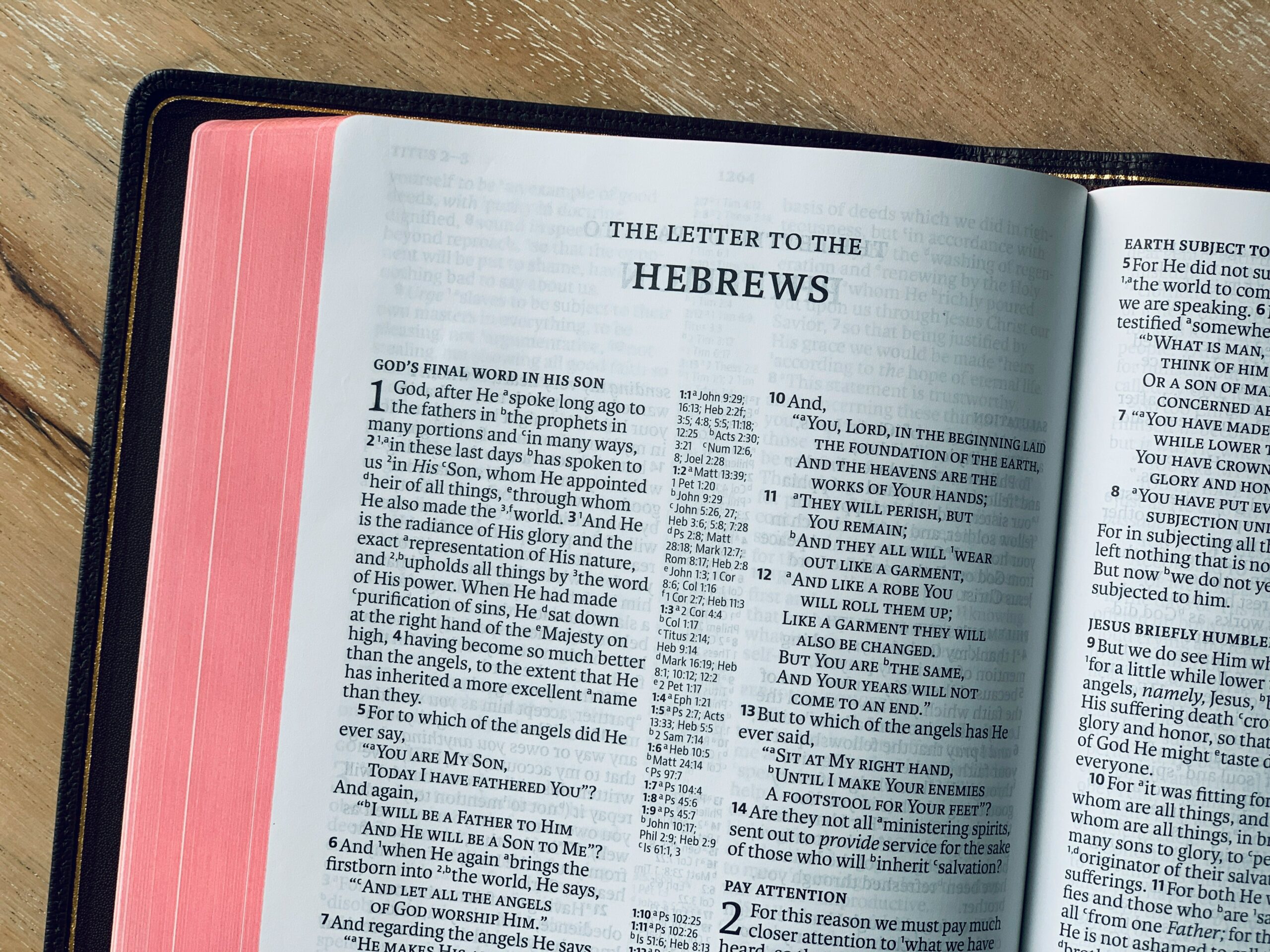
Life… Among the Living
This sermon explores the practical obligations of believers to the body of Christ, emphasizing the need to hold fast to the confession of hope without wavering. It argues that Christians are called to stimulate one another to love and good deeds, a duty that is fundamentally tied to faithful participation in corporate worship. The text warns against the danger of forsaking the assembly, identifying it as a potential indicator of apostasy and willful sin, which carries severe consequences. Conversely, the sermon highlights the example of early believers who endured persecution and supported one another, demonstrating that true faithfulness involves mutual encouragement and a focus on eternal possessions rather than temporary trials.
Transcript
All right, we are still in the
book of Hebrews. The book itself is broken up
into two major sections, doctrinal first, which carries all the
way up to chapter 10 verse 18. And then the writer here takes
a more practical approach applying these lessons that we’ve learned
about Christ. And there are three rapid-fire
encouragements right in a row. We’ve already looked at one of
them in chapter 10 verse 22, let us draw near so as to enter
the holy place. And then in chapter 10 verse
23 and 24, there are two additional. We’ll look at both of those today.
Let us hold fast to the confession in chapter 10, verse 23, and
in verse 24, let us consider how to stimulate one another
to love and good deeds. That’s where we’re headed. Again,
these are enduring admonitions. They are every bit as much for
us as they were for the first century readers to whom this
author writes. We’ve already been encouraged
and admonished. These are, after all, admonitions
and encouragements for saints who are imperiled. And I would
even suggest to you that we are more imperiled today than we
even thought we were last Lord’s Day. But if we are to glorify
Christ in trial, we must first of all listen to the one who
is greater than the angels, chapters 1 and 2. We must come to the
one whose salvation is greater than Moses, chapters 3 and 4.
We must draw near with confidence to his throne of grace, chapters
four and five. We must become spiritual adults,
chapters five and six. And then as we saw last week,
we are to draw near. We are to cultivate a confidence
as we come. We are to build upon that confidence.
and draw near to even a holy God. Well, the whole structure of
these final messages is built on the fact that we didn’t set
out to do a verse-by-verse study. We are looking at the admonitions,
the encouragements, whether they are the very few imperatives
that are presented in the book of Hebrews, or whether we are
looking at those familiar subjunctive verbs, those encouragements by
the author himself. Our entire study of the incredible
letter is built on those encouragements. And so we saw last week that
we were able to hit the gas as it were, and charge through chapters
seven through 10, because there wasn’t a single command, not
a single imperative, no exhortations, no strong encouragements in that
entire section from 7.1 to 10.18. And so it isn’t until chapter
10 verse 22 that we even see another imperative or encouragement,
but we have definitely migrated into the more practical section
and now they begin to come very rapidly once we get into chapter
10 verses 19 all the way down through chapter 13 verses 17.
And so this faithful friend, this writer of this grand exhortation
moves from the doctrinal to the practical and begins to give
us what I would call lessons from the preeminence of Christ. We began last week with that
consideration, let us draw near, and we pick up there this week,
beginning in verse 23. If you would read along with
me as we come to this new exhortation, really a series of them, beginning
in chapter 10, verse 23. where the writer urges, let us
hold fast the confession of our hope without wavering. For he
who promised is faithful. And let us consider how to stimulate
one another to love and good deeds, not forsaking our own
assembling together, as is the habit of some, but encouraging
one another and all the more as you see the day drawing near.
For if we go on sinning willfully after receiving the knowledge
of the truth, there no longer remains a sacrifice for sins,
but a terrifying expectation of judgment and the fury of a
fire which will consume the adversaries. Anyone who has set aside the
law of Moses dies without mercy on the testimony of two or three
witnesses. How much severer punishment do
you think he will deserve, who has trampled underfoot the Son
of God, and has regarded as unclean the blood of the covenant by
which he was sanctified, and has insulted the Spirit of grace? For we know him who said, Vengeance
is mine, I will repay. And again, the Lord will judge
his people. It is a terrifying thing to fall
into the hands of the living God. But remember the former
days when, after being enlightened, you endured a great conflict
of sufferings, partly by being made a public spectacle through
reproaches and tribulations, and partly by becoming sharers
with those who were so treated. For you showed sympathy to the
prisoners and accepted joyfully the seizure of your property,
knowing that you have for yourselves a better possession and a lasting
one.” As our writer here turns the
corner and begins to address his readers in these practical
applications, What he does here in verses 23 and 24 is issue
two more admonitions. One of them, though, is really
an echo, a repeat of what he’s already said. We’ll come to that
in a moment in verse 23. But I would suggest to you that
in verse 24 through 34, what we have is an exposition of our obligation
to the body of Christ. An exposition of our obligation
as Christians to the body of Christ. And that’s why I titled
this, Life Among the Living. Only believers really are truly
alive in a spiritual sense. And as such, we are alive among
them. We are living among the living,
and we are saddled with particular responsibilities as those alive
in Christ. And I would suggest to you that
we see serious or certain particular obligations given to us, stated
to us here, as obligations of the body of Christ. First of
all, I would present to you that the first one that we see is
in verse 24. The corporate duty there is pressed
in a review of what he has said already. We have the corporate
duty explained in verse 25. We have the corporate duty forsaken
in verses 26 through 31, and then finally the corporate duty
exemplified. But first I would have you go
with me to the beginning of this section, which again is review,
and look at verse 23. What the writer does here in
these several verses is really give us doctrinal and practical
ways of confessing Christ. Verse 23, let us hold fast the
confession of our hope without wavering. Last Lord’s Day, in
the immediately preceding passage, we saw that the exhortation of
verse 22, let us draw near, was itself an echo of a previous
admonition. In Hebrews 4.16, we’d already
heard His appeal, let us draw near with confidence to the throne
of grace. As believers in Jesus Christ,
we now enjoy a free and open approach and a relational access
to God himself. And so, he actually reiterates
the point in 1022, let us hold fast the confession. This is
not a new encouragement. We might even say that this thought
is the one great theme of this entire epistle, drawing near
to God. One faithful historian provided
a well thought out explanation to this. He said the simplicity
and spirituality of Christianity no doubt gave rise to much criticism. and placed the readers in danger
of drifting back to ritualistic and other outward attractions
of Judaism. They may have been strongly provoked
to let go by the pressing difficulties and urgency of the times. Remember,
there were troops gathered just outside the city wall. Mastery
of the true significance of the faithfulness of God to his glorious
promises should strengthen the Christian’s faithfulness to his
confession of hope in the Lord Jesus Christ. This is the writer’s
one great aim. He knew that they were weak in
their faith and his one goal is to shore them up. Well, so
this exhortation, this repeat really of an exhortation from
earlier, the exhortation that he turns to in verse 23 is not
new either. It too is a repeated exhortation,
repeated from that same section of scripture that verse 22 was
drawn from, this particular repeat is from chapter four, verse 14,
where he says, therefore, since we have a great high priest who
has passed through the heavens, Jesus, the son of God, let us
hold fast our confession. And this is the third time that
he’s used that little word, hold fast. It’s used in exactly the
same way in chapter three, both in verse six and in verse 14.
And while it’s translated as such in verse 414, hold fast,
it’s not the same word, but it still points to the same principle. So twice in a row now, a writer
has dipped back into previous discussions and has refreshed
them here. In a sense, he’s reviewing, reiterating
points already made. Let us hold fast our confidence,
chapter three, verse six. Let us hold fast the beginning
of our assurance, chapter three, verse 14. Let us hold fast our
confession, chapter four, verse 14. And so he echoes those same
exhortations again here in verse 22. Let us hold fast the confession
of our hope without wavering. for he who promised is faithful. Verse 23. In those previous probes,
a writer challenged these believers as to whether they really still
believed in the Savior they at one time had professed so boldly. Was their faith still characterized
by joyful assurance? a settled certainty of trust,
the kind of faith which undergirded the whole person. That is the
initial fruit-bearing response to the gospel. They should have,
they should still have that same confidence. These Jewish converts
at one time possessed it, and so here in verse 23, he isn’t
questioning whether or not they possess that confidence, he’s
encouraging them in the way. Let us hold fast the confession. And you guessed it, he does so
by way of yet another subjunctive verb. Let us, let us hold fast
the confession. As we just noted, this idea of
maintaining a firm commitment to the body of Christian truths,
which they had professed to believe. This confession refers to that
set of truths that as believers, any and every believer must hold
to for salvation. In the early church. This confession
was done not only initially as they placed their faith in Christ,
but absolutely immediately prior to baptism. And we still do the
same thing. When we’re doing a baptism, we
take opportunity to hear the baptism candidates testimony.
It’s what they claim to believe. It’s their confession. This is
why this Jesus is why he says is the subject of our confession. This is the one in whom we have
placed our faith. This confession refers to that
which we give our assent, our confidence, our affirmation.
It is that which we believe in the core of our being and like
the martyrs of old would defend to the death. This great confession
is a continued focus throughout this entire epistle. The writer
cares what his readers believe. This shepherd cares that they
maintain their confidence in Christ, their confession of faith
in Christ as God presented him to be, their confession of the
gospel and its necessary truths. It is a repeated thought. And
so we should take it here in chapter 10 as sort of a summary
of what he’s already said. Chapter 22, draw near. Chapter 10, verse 23, hold fast
the confession. But he does add something new
here, a very descriptive element. Let us hold fast the confession
of hope without wavering. And while he’s already admonished
them to maintain, to hold fast their confession, here he adds
to that with this simple phrase, without wavering. Not only should
we hold firm, he says, to the truths upon which we professed
faith, we must do so without wavering, without doubting, as
James would say. We don’t get any help from the
entire rest of the New Testament with regard to the significance,
the meaning of this little word. It just means to lean away from
something. This is the only place in all
of the New Testament that this word is used. But it refers to wavering with
regards to the truth. doubting with regards to the
things they once so firmly believed. This was a dangerous situation
for them. But a writer has more to say,
much more to say. And so in verse 24, he issues
now a new injunction. This is where I would suggest
to you that the whole subject is life among the living. an exposition of our obligation
as Christians to the body of Christ. First of all, I want
you to note the corporate duty pressed The corporate duty pressed
to us, verse 24, let us consider how to stimulate one another
to love and good deeds. This is yet another subjunctive
let us verb. It’s the third one in a row in
this practical application of the preeminence of Christ. Here,
let us consider how to stimulate one another to love and good
deeds. Our exhortation here is also built on a verb that we’ve
heard before, even in this letter, consider. He wants us to think
deeply on this subject, meditate on it, give it serious thought,
exert some significant mental effort in the matter of encouraging
your brothers in the faith as to how they can be more fruitful
in the Lord. He wants us to think about that. John Brown put it this way, Christians
are not merely to be concerned about their own improvements
and safety as individuals, but as members of one body, they
are to seek to promote each other’s best interests. They are to attend
to each other’s wants, infirmities, temptations, and dangers, and
to administer suitable assistance, advice, caution, admonition,
and consolation. They are to act the part which
is calculated to call forth in one another the workings of particular
affection which all Christians are to have for one another. In other words, we are to constantly
be about encouraging one another to be what God has desired and
worked into us to be and to become. Our focused attention should
be on our brothers in the faith, not for scrutiny’s sake, but
for their usefulness to Christ in his kingdom. How can they
best be used? This is done prayerfully. It’s
done thoughtfully. What are their gifts? What are
their strengths? What are their weaknesses? What
are their means? What is their training? What
are their contacts? We need to think on these things. We need to ponder and meditate
thinking not only of the resources, the strengths and abilities that
these individuals bring to the table, but also to the specific
needs of the body. This is something that we pray
about regularly among our leadership. How can we put to use each of
the members of our body? What are the current ministry
needs? What are the new potential ministries, maybe that we’ve
never enjoyed, but now are possible because of the giftedness, because
of the ability of one new believer? What are the potential ministries
that could be initiated by such a one? But I want you to see,
and I want you to note something here, this work this pondering
and observing and thinking and considering the gifts available
and the needs of the body, it’s not just a pastoral duty. It’s not only the elders or the
elders and the deacons who need to do this. This is a general
exhortation. In other words, this is the responsibility
of all the members of the church. It is the solemn duty of every
believer to consider how to stimulate fellow believers to love and
good deeds. Some of the best ministries ever
proposed in this or any other church have come from some faithful
saints who saw and observed available resources and particular needs
in the body and brought it up for consideration. And look at
this, once pondered, once considered, once the individual’s mind lands
on a potential ministry idea, he is to stimulate, literally
to provoke his brother to action. We don’t get a lot of biblical
assistance on the meaning and use of this particular word either. It’s only used one other place
in the entire New Testament. And on that occasion, it is heavily
translated. Meaning the assignment is given
to the meaning of this word. It’s nuanced, if you will. Acts 15, 39. You know this verse, it’s the
verse where the description of the ministry division occurs
between Paul and Barnabas. It says that there occurred a
sharp disagreement that they separated from one another. Barnabas
took Mark and sailed away to Cyprus. Well, the word, our word
here, is translated there as a sharp disagreement, a provocation
that was so significant that it caused a division between
Barnabas and Paul. In order to try to tie that into
the more general meaning of the word, you would have to look
at it from the point of view that Paul and Barnabas provoked
one another in a negative way. The word provoke is most often
used in a negative sense anyway. But here in Hebrews, it’s used
in a positive sense, to stir up, to stimulate one another,
to provoke one another in a good sense. And I take this to mean,
as I have observed for my many years in the church, most often
one usually has to become somewhat of a pest to his brother in Christ,
so as to provoke or stir up his brother to get him to serve. It’s sad, but true. Nevertheless,
we need to watch and pray and provoke and stir and pester and
encourage and stimulate our fellow believers in the use of their
particular gifts and abilities in the faithful services of Christ. or as our writer says here, to
provoke them to love in good deeds, to the love of one’s fellow
believers, practical love, servant-hearted love, tireless, faithful, perseverant,
selfless, magnanimous love, as seen especially in good deeds,
not works, not things done so as to be seen or so as to be
saved, but practical kindnesses, which often alone we see only
because God brings it to our attention. God gave us a view
of this particular need so that we might be used to meet that
need. We need to watch, we need to
pray, and we need to move when God prompts us to move. to stir
up our fellow believers to love and good deeds. But there’s a
second element of this exposition to the Christian’s obligation
to the body of Christ. Not only is this corporate duty
pressed to us at the beginning of verse 24, This corporate duty
is explained to us in verse 25. Look at verses 24 and 25 together,
let us consider how to stimulate one another to love and good
deeds, not forsaking our own assembling together, as is the
habit of some, but encouraging one another and all the more
as you see the day drawing near. And so the writer, has begun
his discussion of the believer’s obligation to the body of Christ
by first issuing a call to such, pressing home their solemn duty
to one another. But having done so, he immediately
begins to explain it. What does it look like? What
is it and what isn’t it? What does it and what does it
not look like? begins with the negative side
of the equation, what the faithful exercise of our corporate duty
is not, what it looks like when we’re shirking this solemn obligation. He says that when the professing
Christian is off the mark, when he is avoiding or underperforming
in the responsibility of service to his brothers and sisters in
Christ, it will be seen in his forsaking of the assembly. I don’t have to tell you that
this very often quoted verse, especially in conservative circles,
but unfortunately it is not always accurately aimed I’ve even heard
it levied against those who overslept and missed church, forsaking
the assembly. So if we are to appropriately
apply this principle, the first thing we have to do is correctly
understand it. Let’s consider first, what does
it mean to assemble together? Does this refer to even the most
informal gathering of two or more believers? impossible. Like our word stimulate earlier,
there simply isn’t enough biblical data to glean much in the way
of help, and so we have to focus on this particular passage. This
word too is only used one other time in the New Testament, 2
Thessalonians 2.1, and there it clearly has an eschatological
sense to it. The end times. Second Thessalonians
2.1 says this, we request of you brethren with regard to the
coming of the Lord Jesus Christ and our gathering together to
him. Well, it’s true that it is a
gathering believers, but that can’t possibly be the sense in
which it is used here in Hebrews chapter 10. While the writer
could have used other words, to communicate more clearly and
specifically to what he was referring. He could have used the word synagogue. He could have used the word ecclesia,
church, the gathered saints, but he chose to use this word. And we can make profitable sense
of it. The early church quickly established a pattern of meeting
together on the Lord’s day. for the express purpose of hearing
the apostles’ teaching, fellowshipping with their fellow believers in
corporate worship, which included numerous elements, not the least
of which was the celebration of the Lord’s table, breaking
of bread, and to prayer. In other words, the assembly
referred to their weekly corporate worship service. And what our
writer here addresses is the same challenge that every pastor
faces, the forsaking of that sacred assembly. In the case
of this writer, he knew of those whose faith had degenerated to
the point that this sad reality was already manifesting itself
in their lack of faithfulness in gathering with the saints
for worship. Some were taking corporate worship
for granted and were neglecting the privilege and the responsibility
of gathered worship. This writer, what we’ve referred
to again and again as a faithful friend, this writer addresses
this issue head on because he sees it as a possible indicator
of apostasy. Some of these professing believers
were wavering in their faith. And for some of them, that was
exhibited in their near abandonment of the Christian fellowship.
As I said a moment ago, this is every shepherd’s concern. Apostasy, like adultery, starts
somewhere. In the case of adultery, it may
start with a casual conversation, flirtation, and the like. but
it eventually leads to a very bad place. Likewise with apostasy,
it begins with a missed Sunday. Then there’s a string of them. Then excuses mount about lack
of attendance at church. The fellowship is not missed. It becomes easier and easier
to absent oneself from the fellowship, the very body of Christ, where
their fellow beloved believers, who are incomplete without the
presence of their beloved brother, a Sunday turns into a month,
a month turns into six, and without an ache in the soul for Christ’s
church in his innermost, this man is very near to falling away. He has forsaken the church. How? Or more specifically, what does
it mean to forsake the assembly? Well, specifically, the Lord
used this word to assure all believers of his own constancy
in maintaining a loving care of them. Hebrews 13, 5, I will
never desert you, nor will I ever forsake you. And what a meaningful promise
from the Lord’s lips, for he knew firsthand what it was to
be forsaken, didn’t he? For Jesus to assure his believers
of his unfailing love was already proven. They knew that he couldn’t
abandon his loved ones now after having gone to the cross on their
behalf. No wonder the great apostle himself
affirmed that there would surely be persecution by men, but that
the Christian would never be forsaken by God, 2 Corinthians
4, 9. Paul knew the heartbreak of being
forsaken by men. Demas deserted him. 2 Timothy
4.10, 2 Timothy 4.6, he says, no one supported me, but all
deserted me, all forsook me. Even with all of that, Paul was
never forsaken by God. To be forsaken is to be abandoned
or deserted entirely. And so this cannot in any way
be construed to refer to the occasional absence from the church. Regardless of how weak the excuse,
I’ve heard some really weak excuses for absence in my day. Forsaking
the assembly does not refer to someone who opts to go to brunch
with out of town visitors instead of coming to church. Or someone who chooses to occasionally
travel on the Lord’s day. Or certainly it doesn’t refer
to someone who is sick or sequestered by a pandemic. No, to forsake
the assembly is a much more sustained, much more thorough abandonment. It is a wholesale abandonment,
which is neither occasional nor temporary. The danger is that
it may start this way. It may start with an occasional
absence that turns into a prolonged absence from the church. It may
start that way, but an occasional absence, a temporary lapse of
faithfulness to gather for worship is not the forsaking of the assembly. My one sad observation after
nearly 30 years of ministry is that some people do not seem
to love the church. They do not love the church like
Christ loved the church. Christ died for the church. But
the church to the modern day believer is relatively dispensable. We can take it or leave it. We
don’t need to invest in it with our blood, sweat, and tears like
our predecessors did. It’s now easy church, as I read
about in a recent email. But this faithful friend saw
this tendency already in the first century. As he carefully
points out, it was the habit of some. It was the habit of
some to forsake the assembly. They were walking away. These
believers born out of the very fires of persecution were already
beginning to manifest this casual indifference to Christ’s church. And sadly for some it was, as
it is in our own day, habitual. Such an attitude towards something
that God and his son love so passionately is a strong indicator
of the early stages of apostasy. You cannot love Christ and not
love his church. It’s impossible. Look again at
verse 25. He’s describing what this consideration
to stimulate one another to love and good deeds looks like. It
doesn’t look like forsaking the assembly, but he says, encouraging
one another. and all the more as you see the
day drawing near. May it remind us of where we
are. We’re considering our solemn duty to one another as Christian
believers. The writer is presenting a careful
explanation. He has told us plainly what this
duty is not. It is not characterized by forsaking
the assembly, by absenting themselves more and more in a sustained
pattern of absence from corporate worship. That’s the negative
side, but what does it look like? What’s the positive side of this
equation? It’s all summed up in a single
word in the Greek. Three, according to our translation,
encouraging one another. This is a mutual obligation for
believers to encourage and to be encouraged. This is the heart
of the assembly. This is the heart of the Christian
church. This is the heart of corporate
worship. It not only has worship, has
not only an upward element to it, it has a horizontal element
in the form of encouragement, edification. And so, the Christian
is to be about the business of encouraging fellow believers,
especially in view of what he refers to as the day. This seems vague to us, doesn’t
it? The day, but it would not have
been vague to these first century believers. We must not allow
it to remain so for us. It cannot be referring to the
day of the destruction of their city. which was indeed impending,
but rather it refers to the day of the Lord, that dynamic event
spoken of by Christ, detailed by both Paul and Peter, culminating
in the return of Christ, as one seasoned commentator put it,
the day of days, the ending of all days, the settling of all
days, the day of the promotion of time into eternity, the day
for which the church breaks through and breaks off the night of this
present world. They were to remain faithful
to the great task of encouraging one another, building up fellow
believers in the faith until the Lord himself returned. And there’s a third element in
this exposition of the believer’s obligation to the body of Christ. Not only this corporate duty
pressed and this corporate duty explained, but the writer brings
them face to face with what it looks like when the corporate
duty is forsaken. The corporate duty is forsaken,
look at verses 26 and 27. For if we go on sinning willfully
after receiving the knowledge of the truth, there no longer
remains a sacrifice for sins, but a terrifying expectation
of judgment and the fury of fire which will consume the adversaries.
Well, in 25, verse 25, the writer spoke only of the distinct possibility
of forsaking the fellowship. That poor attendance that can
lead to a forsaking of that fellowship. But it is stated here, pardon
me, it’s stated there as a severe warning. We don’t want to be
among those who forsake the assembly. And in keeping with the directness
with which he has uttered almost every line of this epistle, he
presents before his readers now a worst case scenario. that those who actually did abandon
the church, they did forsake the assembly, they did quit the
fellowship. Davidson, excellent commentator,
says here, he speaks as a practical teacher. The abstract question
of whether a true believer could actually fall away was not before
his mind. Unquestionably, those to whom
he wrote, if they did not hold fast the confession of their
faith, they would not be saved. They would cease to hold fast
their confession. He’s not worried about trying
to give them a complete theology of the doctrine of salvation.
What he’s concerned about is the tendencies of some to already
be manifesting a spirit of apostasy, of wandering away from the faith.
And he begins by presenting them as those who sin willfully. This willful sinning of which
he speaks is not the sin of error or weakness. Every believer is
going to engage in that from time to time. It’s common to
all believers. One Puritan clarifies it for
us, a man who is at one time obtained such a knowledge of
the meaning and the evidence of the gospel as to induce him
to make an open profession of Christianity. He professed faith
in Christ. But now, he says, who has openly
abandoned its profession and lives in a state of determined
apostasy. He walked away from the faith.
It’s a deliberate and sustained action. It is a willful rejection
against knowledge and experience that ultimately issues forth
in a rejection of Christ and Christianity. These are those who have made
a profession of faith, they presented themselves for a time as true
Christians, but they loved their sin more than they loved their
Savior, and in time, they abandoned His body, the church, became
easy for them. They manifest a sustained defiance
to God and to His commands. It’s not an occasional or fleeting
episode with sin, This is a man with whom there is no brokenness
or repentance for his sin. The truth was they didn’t love
Christ’s church because they didn’t love Christ. Just as an
occasional absence from the church isn’t necessarily an indicator
of forsaking it, so sinning, even dreadful acts of sin, are
not necessarily an act of willful and apostatizing sin. It’s not
a single act, but a life course that is in view here. It’s a
state of being, a willful sinner. For such a person for whom Christ
and his sacrifice was not enough, there will be no other. There
certainly could be no better sacrifice, no better Savior. Jesus Christ was their last best
hope. The only thing that remains for
them now is certain judgment. Paul declares this in Romans
chapter two, because of your stubbornness and unrepentant
heart, you are storing up wrath for yourself in the day of wrath.
And he speaks here, a writer does, of this judgment as a fury
of fire. A quote from Isaiah 11, the judgment
of God is often referred to as under the metaphor of fire. Zephaniah
1.18, all the earth will be devoured in the fire of his jealousy.
And even in this great epistle near the end, our God, Hebrews
12.29, is a consuming fire. It’s as if our writer suddenly
notices among his readers or among those hearing him, he notices
a need for proof and so he provides it. Look at verse 28. Anyone who has set aside the
law of Moses dies without mercy on the testimony of two or three
witnesses. By way of a masterful piece of
argumentation here, the writer takes these readers, most of
whom were, again, Jewish converts to Christianity, he takes them
back to the Old Testament, back to the law, and specifically
to a high-handed disregard of God’s law by Israel in the sin
of idolatry. If you would turn to Deuteronomy
17, briefly, Deuteronomy chapter 17, I just
want you to see exactly what he’s referring to here. They’ve
set aside the law of Moses. They will die without mercy on
the basis of two or three witnesses. A lot of hints there as to which
passage this could be. It’s referring to Deuteronomy
17. Look at verse 2. If there is
found in your midst in any of your towns which the Lord your
God is giving you a man or a woman who does what is evil in the
sight of the Lord your God by transgressing his covenant and
is gone and served other gods and worship them or the sun or
the moon or any of the heavenly host which I have not commanded,
and it is told you and have heard of it, then you shall inquire
thoroughly. Behold, if it is true and the
thing certain that this detestable thing has been done in Israel,
then you shall bring out that man or that woman who has done
this evil deed to your gates, that is, the man or woman, and
you shall stone them to death. On the evidence of two or three
witnesses, he is to die, shall be put to death, he shall be
put to death on the evidence of one witness. The hand, he
shall not be put to death on the evidence of one witness.
The hand of the witness shall be first against him to put him
to death and afterwards the hand of all the people so you shall
purge the evil from your midst. It’s exactly what the writer
is alluding to and he basically says to his readers who knew
their Old Testament well, To engage in idolatry was to disregard
God’s law, to set it aside. The penalty was admittedly severe
in the extreme. Such a one was to be stoned to
death. What’s his whole point in making
this digression, offering this proof? If those who transgressed
God’s law under Moses’ leadership, how much more severe will the
punishment be to those who turn their back on Christ. Look at
Hebrews 10.29. Hebrews 10.29, how much severer
punishment do you think he will deserve who has trampled underfoot
the Son of God and has regarded as unclean the blood of the covenant?
by which he was sanctified and has insulted the spirit of grace,
for we know him who said, vengeance is mine, I will repay. And again,
the Lord will judge his people. The question is somewhat rhetorical
here. It almost doesn’t need to be
answered. How much more severe will the punishment be for those
who turn their back on Christ? But look for a moment at exactly
how he describes this abandonment. This is the one who he says has
trampled underfoot the Son of God, an outright rejection of
the Son of God himself. And he is regarded as unclean
the blood of the covenant, not just a disrespect of Jesus himself
as a person, but a disdain for his perfect sacrifice, an offer
of his divine blood now judged as worthless. And if all of that
isn’t enough, the apostate one has insulted the spirit of grace. God’s own Holy Spirit, who graciously
bestows God’s divine benevolence, is despised. Things couldn’t
get any worse. This is the man who has forsaken
God, and God has now forsaken him. Can God overlook this? He cannot, he will not. And the
writer assures us of this, that God is a God of vengeance who
will judge. No wonder he comes to the conclusion
of verse 31, it is a terrifying thing to fall into the hands
of the living God. God who is infinitely holy is
also infinitely powerful. As one pastor said it, we know
who he is and what he can do. He is the living omniscient God
who knows his true people and can sift them out from the false.
He is the omnipotent God who can defend his people and destroy
their enemies and vindicate his own character. And therefore,
when judgment is in his hands, it is an utter and absolute judgment. It is a thing to be feared more
than any other. To be brought before an earthly
judge is indeed intimidating, a fearful experience. How much
more to stand before Almighty God and to be seen in the unblemished
rawness of our own sin. So there’s an echo here of what
this writer says in chapter three, verse 12, where he spoke for
the first time of the living God. There he said, take care,
brethren, that there be in any one of you an evil, unbelieving
heart that falls away from the living God. And this brings us
to our fourth consideration of the Christian’s obligation to
the body of Christ. Not only this corporate duty
is pressed to us in verse 24 and explained to us in verse
25, We see corporate duty forsaken in verses 26 through 31. But now in these final three
verses, verses 32 through 34, we see corporate duty exemplified. What does it look like? What
is corporate duty look like? He’s going to paint us a beautiful
picture here. Remember the former days when,
after being enlightened, you endured a great conflict of sufferings,
partly by being made a public spectacle through reproaches
and tribulations, and partly by becoming shares with those
who were so treated. For you showed sympathy to the
prisoners and accepted joyfully the seizure of your property,
knowing that you have for yourselves a better possession and a lasting
one. As quickly as this shepherd introduced
this solemn and heavy warning in verse 26, just as quickly
he exits. He’s almost eager to put this
exceedingly strong warning behind him. And he returns instead to
a more pleasant picture of his flock. Remember when. Remember how things used to be.
Remember the former days. He interjects wistfully. We love to do that too, don’t
we? We love to reminisce. We love to look back and enjoy
simpler times, more peaceful times, more idealistic times,
more hopeful times. And really at the mere mention
of the former days, he had them right where he wanted them. He
didn’t want them consumed with the horrors of a far off judgment. He wanted them focused on the
here and now. But in order to focus their intention,
their attention rather, on who they were in Christ, he must
take them back to the former days. He takes them not only
to the beginning of their own walk with Christ, but to the
very beginnings of Christianity itself. They were there. They
were there in Jerusalem, likely when Christ himself was crucified. They were there when Peter and
John were arrested. And they were there and began
to feel the effects personally when, after Stephen was martyred,
they too began to feel the persecution of those who hated Christ. The
former days. They were not wishy-washy then. They didn’t waver then. Instead,
it says, they endured. Like bold and faithful soldiers
of Christ, they remained steadfast in their profession of faith. This was no easy or passing trouble
that they faced. It was a great conflict of sufferings. It was war. It was all out battle. It was real and legitimate suffering
that they experienced. Paul vividly describes such a
scene for the Thessalonian believers, also former Jews. Listen to this,
1 Thessalonians 2, for you, brethren, became imitators of the churches
of God in Christ Jesus that are in Judea, for you also endured
the same sufferings at the hand of your own countrymen, even
as they did from the Jews. who both killed the Lord Jesus
and the prophets and drove us out. They are not pleasing to
God, but they are hostile to all men. We have to be reminded
ourselves that such persecution and suffering did not come to
these believers, whether in Thessalonia or Jerusalem or Philippi, did
not come to them unexpectedly. It was not only predicted for
them by Christ himself, it was inextricably woven into the sovereign
providence of God. As Paul explained to the Philippians,
to you, it has been granted for Christ’s sake, not only to believe
in him, but also to suffer for his sake. And these believers
in Jerusalem did exactly that. And they did so in several ways.
First, they experienced persecution, even if light, even if it didn’t
cost them their life, it cost them their dignity because they
were ridiculed. They were made a public spectacle,
a laughingstock through reproaches and tribulations. They were harassed,
provoked, made fun of, ridiculed, belittled. And remarkably, and
only by God’s grace, they endured. They did not quit or abandon
their Christianity, their savior, their church, or even over even
the evil treatment by their enemies. Not only that, but when others,
other fellow believers face such difficulty and worse, instead
of hiding in the shadows like cowards or pretending that they
didn’t know whatever some poor soul was experiencing. They not only didn’t turn a blind
eye, they came alongside their brothers. They became sharers with them,
the writer tells us, in their mistreatment. This is the word
koinonia, this word sharers, which we translate as fellowship.
They became sharers in their trials. They had fellowship in
their fellow believers’ trials. And this was at times a costly
alignment. It required real practical help,
meals and kindness and lodging. They showed sympathy to the prisoners
by providing for their needs. These were those who really knew
how to weep with those who weep. They cared for their brothers.
They proved it by real tangible acts. And at times it was more
costly still because there were occasions when their houses or
property would be confiscated, seized. But none of that could
dissuade them to abandon their brothers in Christ because they
ultimately knew they had an eternity in heaven to enjoy. They had
a better possession and a lasting one. As this writer will go on
to tell of their forefather in the faith, Moses, who endured
a similar mistreatment because he considered the reproach of
Christ greater riches than the treasures of Egypt. Or as Peter
stated it so movingly in his opening chapter of his first
epistle, blessed be the God and Father of our Lord Jesus Christ,
who according to his great mercy has caused us to be born again
to a living hope through the resurrection of Jesus Christ
from the dead, to obtain an inheritance which is imperishable and undefiled
and will not fade away, reserved in heaven for you who are protected
by the power of God through faith, for a salvation ready to be revealed
in the last time.” They couldn’t quit. They couldn’t walk away
from the church. They couldn’t forsake the faith.
They had to consider how to stimulate one another to love and good
deeds. Let’s do likewise. Our merciful king, we humble
ourselves before your glorious throne, before who you are as
an exalted preeminent savior. And Lord, as we see these first
century believers wrestled with their faith, Lord, may we be
granted the grace to do likewise and to wrestle passionately with
our own faith, to hold fast and to look around us and to consider
how to encourage and stir up our fellow believers. Lord, we
would not be like those who squander these opportunities by forsaking,
even in little degrees, The assembly of our believers, our fellow
believers in Christ. We pray that you would give us
every means and stir us up. So as to walk with one another.
In order to please you. Lord God, we pray for our church
and we pray that you would make this true of our church. That we are those who look around. And see a weakness. See someone
who is not fully engaged, and we look for ways to stir them
up. We look for ways to employ them in the great service of
Christ. We look for ways to encourage
one another to love and good deeds. We plead this prayer before
you in Jesus’ name. Amen.
Messages: 20