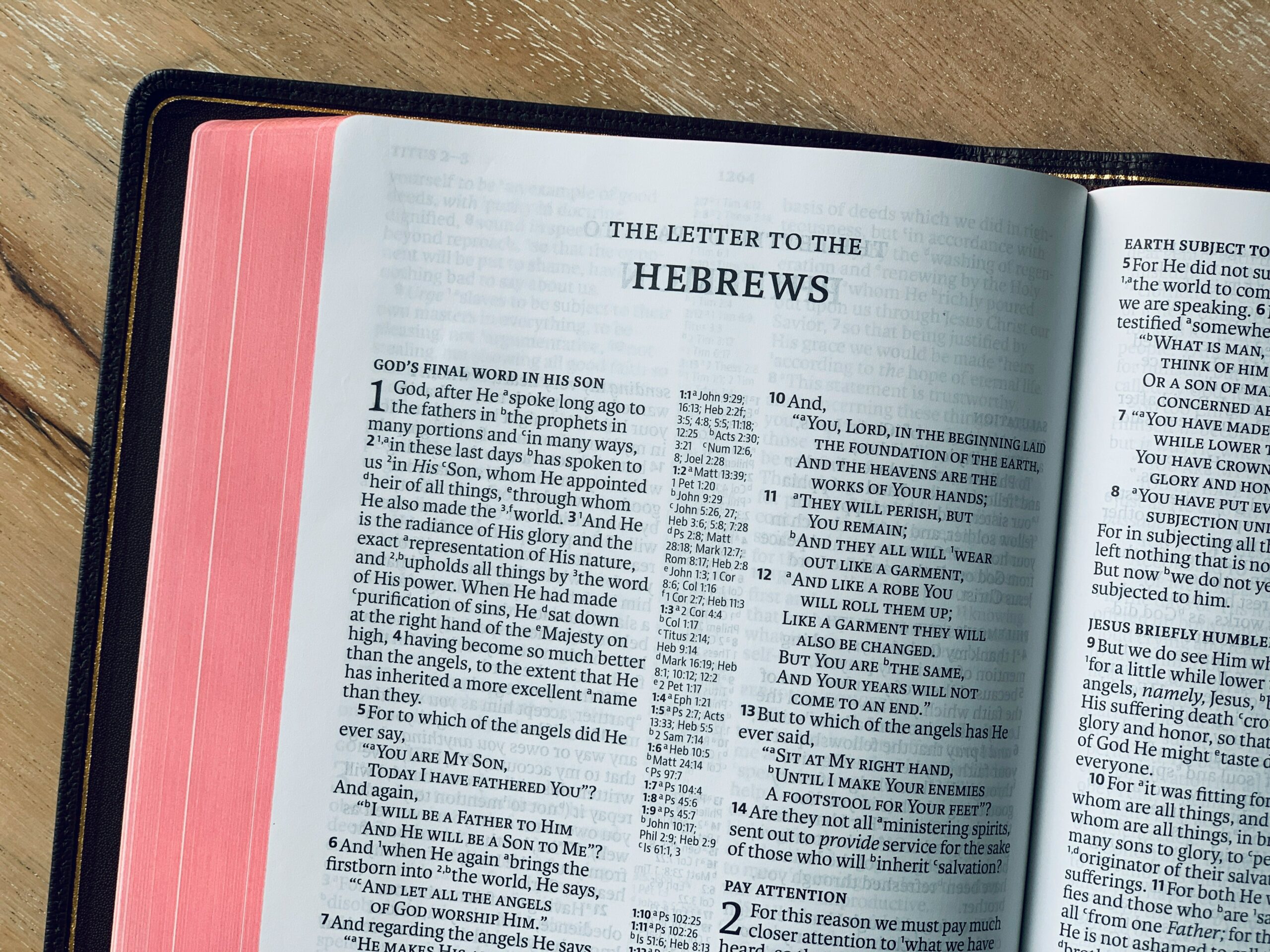
Nursery Duty
This sermon examines the warning in Hebrews 5:11-14 regarding the spiritual stagnation of believers who remain dependent on elementary teachings. The central message challenges Christians to move beyond ‘milk’ to ‘solid food,’ arguing that spiritual immaturity is a result of personal neglect rather than a lack of divine provision. The text highlights that true maturity is achieved through consistent practice and discipline, which trains the senses to discern good from evil. The tone is convicting and pastoral, urging the audience to self-examine their spiritual growth and avoid the danger of apostasy through complacency. It emphasizes that while God provides the means for growth, the believer must actively engage in the process to become effective in the kingdom.
Transcript
If you would, please take your
Bible and turn back again to Hebrews, to Hebrews chapter 5. Hebrews chapter 5. I actually
cut the reading short without realizing it. I had purposed
to take us all the way down to verse 20. We’ll we’ll do that
in the days and weeks to come. We’re not going to cover the
entire portion this morning anyway, but we have been in Hebrews now
for these past five or six weeks and our overarching title is Enduring
Admonitions, where we see these admonitions given to the first
century believers in Jerusalem, but we have also realized that
these are enduring in that these admonitions are for us. And so
the subtitle, Divine Encouragements for Saints Imperiled, we find
that easy to embrace given the challenge of our day. If we are
to glorify Christ in a great trial, we have learned, first
of all, that we must listen to the one who is greater than the
angels. That’s where this this writer began in chapters one
and two. He dealt with the truth that
Jesus Christ is better than the angels. His conclusion there
in chapter two, verse one. For this reason, we must pay
closer attention to what we have heard so that we do not drift
away from it. If we were to glorify Christ
in trial, secondly, we must come to the one whose salvation is
greater than that of Moses. This was his second great point
in chapters three and four, that Christ is better, better than
Moses. Christ’s salvation is better
than Moses. And so we worked through that
lengthy section assessing and examining and heeding the call
to enter salvation in Christ. That brought us to our third
consideration, the third enduring admonition, that if we are to
glorify Christ in great trial, we must draw near with confidence
to the throne of grace. That’s where we left off last
Lord’s Day, that in chapters four and five, the end of chapter
four and much of chapter five where the writer again picks
up the thought that he had already introduced that Jesus Christ
was better than Aaron, that Jesus Christ’s priesthood was better
than Aaron’s priesthood. And that brings us essentially
to almost a pause. And you can almost feel it. If
you’re reading through the book of Hebrews, you can almost hear
a sigh of relief for those that are reading. And you can hear
the writer pausing to gather steam to give yet another admonition. Because it’s with that foundation
that Christ is better than the angels, better than Moses, better
than Aaron, and better than their respective ministries, it’s with
that foundation that the writer pauses to issue yet another strong
admonition, this time without a direct reference to Christ
being better than anything. He just gathers up all that has
been said and issues yet another admonition, and it goes like
this. If we are to glorify Christ in great trial, we must become
spiritual adults. We must become spiritual adults. That’s the great theme from chapter
five, verse 11, all the way down through chapter six, verse 20.
Christian maturity. And this particular admonition,
as I’ve said, is not like those in the previous sections. There
is not a formal better than here. It’s just a warning built on
all that he has said thus far. It’s enough. that because Christ
is better than the angels, better than Moses and his salvation,
better than Aaron and his priesthood, there is yet another master response
that is expected of his readers, expected of us, and that is Christian
maturity. Please know that the writer like
any pastor would acknowledge, God is the one that causes the
growth of any believer. But that growth can be inhibited,
it can be stalled, and even undermined, as strangely as that sounds,
by the believer himself. And here too, as the writer has
hinted throughout this great epistle, what oftentimes appears
to human eyes to be a pause or even a setback in our Christian
walk is really the beginning of apostasy. And that is his
great concern as we’ve seen. Apostasy is just a great falling
away fully and finally from the Lord. And it’s a fearful thing. In this particular case, it’s
none other than a deadly complacency that he is concerned about. It’s
not just immaturity. It’s immaturity that may well
be a deadly complacency. So, as he and his readers are
taking inventory of the signs that are given, signs that are
observed in their lives, he urges them to consider these symptoms
that they could be an indication of a far worse condition. People
make many excuses for plateauing as a Christian. Some people blame
it on a lack of good teaching or that there’s no one to disciple
them. Or worse, that they fell into
objectively bad teaching early on in their Christian life, and
no wonder they are where they are. Ultimately, there are no
excuses. We have only ourselves to blame
if we do not grow. God has equipped every believer
with everything that they could possibly need for Christian maturity. Do you realize that? the indwelling
of the Holy Spirit, God’s perfect written word, fellowship with
God’s people who expose and confront and encourage us. Everything else, preaching, teaching,
discipleship, only adds to the equipping of the child of God. And so there are no excuses.
This is our writer’s clear admonition as he closes out chapter five
and moves seamlessly into chapter six. Before we proceed with a more
in-depth study, I just wanted to pause and have you notice
the structure of this section. Again, chapter five, verse 11,
all the way down through chapter six, verse 20. I would just want
you to notice the structure and that’s going to be our guide
for the next several weeks. I would call this particular
section this morning, nursery duty. That’s what the title that
I would give to it. If I had opportunity to change
the titles, nursery duty, because what he’s doing here is challenging,
debilitating immaturity in the church. debilitating immaturity. It is immaturity that is so deep-seated
that it ends up really making people ineffective for the sake
of the kingdom. The first section in chapter
5 verse 11 through 14 which we will be considering this morning,
the writer warns of a dearth of spiritual maturity. He looks
out over the church, the greater church of Jerusalem, and he sees
a great lack of maturity, not in every person, but he sees
that generally speaking, there are those that just simply have
not grown as they ought. There’s a dearth of spiritual
maturity. But there’s a second section,
and the second section really gets strong. Because in chapter
six, verses one through 10, the writer issues a strong persuasion
to spiritual maturity. Some of the strongest words in
all of scripture. And then finally, in chapter
six, verses 11 through 20, he urges an earnestness in spiritual
maturity, that it is our business. It does require our effort. We should be fully engaged, and
we will not grow if we are not earnest about maturing in Christ. Well, we’ll take those as the
discussion unfolds over the next several weeks. But I want to
have a follow-up just to this introduction about spiritual
maturity. Such is the Christian life that
it can be very aptly likened to our physical life. We can
be weak or strong, both physically or spiritually. We can be sick,
or well physically and spiritually. We can be fatigued or energized
physically or spiritually. And as the writer tells us here
in this passage, we can be mature or immature physically and spiritually. We begin our Christian life as
we do our physical lives as mere babies. We take our baby steps
as Christians. get our Bible, we begin to fumble
around with it. We eat our baby food. We hear
the basic Sunday school lessons. We learn our lessons as spiritual
children. The natural progression is expected
to be no different in our spiritual lives than in our physical lives.
We’re expected to grow. We’re expected to mature. Failure to grow. and naturally
mature physically is considered a dangerous condition. In addition,
food, which at one point in our physical lives, while basic,
is essential, so also in our spiritual lives, there is a foundation to be laid.
Milk, The simple teaching of God’s Word must be taken in so
as to produce the needed growth. That’s the illustration that
he will use. But as the child of God grows
and matures in the faith, milk largely gives way to more substantial
food, meat. We cannot imagine either extreme,
can we? A baby feasting on a steak? or
a grown man on an exclusive diet of milk. We eat, or we are supposed to
eat age appropriate meals. We don’t, or when we don’t, there
must necessarily be some very unfortunate underlying cause.
When we don’t grow physically, As we noted, it’s usually due
to disease. When we do not grow spiritually,
it’s usually due to an abuse or a misuse of the opportunities
for growth that have been afforded to us. And then when opportunities
for more spiritual instruction arise, we are unable to even
take it in, let alone digest it. The writer here is disappointed. If you don’t hear that in his
words, the writer is disappointed. He desires to provide deep theological
insights to his readers. And it should be observed that
in chapter seven, he will go on to do exactly that. He’s going
to do it anyway. But his great lament here in
chapter five, verses 11 through 14, is that this lesson, sadly,
is going to be way over their heads. This whole lesson about
Melchizedek is beyond their comprehension. They are simply too immature
spiritually to be able to make any sense of it. They have not
applied themselves. They have not disciplined themselves.
They have not grown. And now they are not prepared
for a lesson that otherwise they should have been able to consume.
And that’s what elicits the statement of concern and even the rebuke
and the appeal that rounds out this section. Let’s start at
the beginning, shall we? What I’ve called nursery duty.
challenging, debilitating immaturity in the church. That’s what our
writer is doing. And he warns, first of all, of
a dearth of spiritual maturity. Look at verse 11. Concerning
him, we have much to say, and it is hard to explain, since
you have become dull of hearing. Now, right off the bat, concerning
or depending on what translation you’re using, we come across
quite a divergence here. And I think the NAS might most
clearly call attention to it. The NAS says, concerning him. And if you’re reading from the
NAS, you will notice a little device employed by the translators
there that is very important to the New American Standard
translators. And I say device because it was
not inspired, it’s interpretational. The device is capitalization. Capital letters were not necessarily
inspired. And in the case here, When the
NAS capitalizes a pronoun, it is in reference to the deity.
When it says Him with a capital H, it’s talking either about
God the Father, or about Jesus, or about the Holy Spirit. And
so, when here they do not capitalize the pronoun Him, they are interpreting
this to suggest that the reference is back to Melchizedek. Concerning him, that is Melchizedek. Well, almost all other translations
effectively punt. They take a bland middle ground
here, and it’s perfectly legal to do this. It’s an accurate
translation when they soften the pronoun so as to leave it
completely undefined. This is how the ASV, the old
ASV said it. It just said, of whom we have
many things to say. And it doesn’t capitalize whom
either. It just leaves it undefined.
It could be Christ or Melchizedek. If you have a King James, that’s
what King James does with it. Of whom we have many things to
say. Undefined. Christ or Melchizedek. But it’s a person. Now, for those
of you reading the ESV, it becomes even more bland because the ESV
says about this, we have much to say, which is almost exactly
what the NIV does. We have much to say about this
utterly and completely undefined. Now, when the translator leaves
it undefined, like most do, they are leaving it up to the interpreter,
or in this case, the preacher, to figure out who or what is
being referenced. And there are three possibilities.
It could be looking back to the previous discussion of chapter
5 that was about Christ. It could be, secondly, looking
back to the previous discussion, which was at least in part about
Melchizedek, or it could, if you take that more bland approach,
referring to this, it could be looking back to the previous
discussion about Christ being of the order of Melchizedek,
and that’s the way that I would choose to proceed. One described
it in these terms, just listen carefully. It seems best to interpret
the pronoun him or whom of Christ as typified by Melchizedek. Melchizedek was a type of Christ. Christ’s priesthood and sacrifice
is the main and most difficult subject of the epistle, and this
is foreshadowed in Melchizedek, whose significance was overlooked
by the Jewish interpreters. That is our writer’s great concern. He says you should have been
able to go back to your Old Testament and read and find Christ over
and over again. And his big concern is their
immaturity was lacking and now they can’t even begin to digest
this deep lesson that is so rich in truth. And so he says, verse
11, concerning him, we have much to say. This isn’t just a light
Sunday school lesson. A writer, this faithful friend,
has much to say. And as I said, he will say it
beginning in chapter seven. Of course he has much to say
because the spiritual subject of Christ’s riches is inexhaustible. Remember the final words of John’s
gospel? There are also many other things
which Jesus did, which if they were written in detail, I suppose,
even the world itself could not contain the books which would
be written. Of course, he has much to say. When the subject
is Christ, there is indeed much. And so great is this particular
discussion that it will occupy much of chapter 7 all the way
through chapter 10. Concerning him we have much to
say and it is hard to explain.” It’s a fascinating thing that
we meet up with this interesting word only here in all of the
New Testament. It’s a compound Greek word that
contains the word from which we get our word, hermeneutics,
which refers to the discipline of the interpretation of scripture. And he says, it’s hard for me
to interpret this to you or to explain this to you. There are
a lot of reasons why something might be hard to explain. Sometimes it’s the subject itself,
like quantum physics. I don’t even know what quantum
physics is. It just sounds hard, let alone
how to explain it. Sometimes a thing might be hard
to explain because we have not yet mastered the subject. I can
have a glimpse of what is going on here. I have a glimpse and
understanding. I see a general principle here
that I’m beginning to understand, but it’s hard for me to, we’ve
all had those conversations. It’s hard to explain it yet.
so as to be able to teach about it with any degree of credibility. Sometimes the phenomena is of
such a sort that at least so far it is unexplainable. It’s unexplained so far and it’s
unexplainable and you know, none of those reasons come close to
explaining why this particular writer found it hard to explain
these things to his readers. Think of it. Based only on what
we’ve seen so far, in this masterpiece of biblical literature, this
is more than a capable scholar. This is a man indwelt by the
Holy Spirit, essentially doing what the Holy Spirit is dictating
him to write. He fully understands as he’s
bringing forth the Old Testament scriptures to explain these principles
of the new covenant. Even given the difficulty of
the subject, Christ’s relationship to Melchizedek, This writer has
already proven himself more than capable. It’s not that he’s falling
short. No, the answer lies with the
readers themselves. It was because of, and only because
of, their spiritual condition, immature as they were, that he
could not easily enter into the discussion about the glory of
Christ’s priesthood. The hardness lay with the hearers. the students, not with the teacher. Look at verse 11 once again,
concerning him, we have much to say and it’s hard to explain
since you have become dull of hearing. That is such a polite
way of saying you are thick-headed. I want you to see this. It wasn’t
always the case. At one point, they were sharp.
Mentally capable, they were vibrant and growing, but isn’t this way
any longer? There was a point in time when
they were not dull of hearing, but now they have become dull
of hearing. This is a rare but versatile
word here. It’s translated here as dull,
but look down at verse 12. In verse 12, you’d be hard-pressed
to find out which word is even translated there. It’s the word
translated as sluggish. And it’s used there almost metaphorically. We do the same thing when we
say that so-and-so is not the sharpest pencil in the box, right? That kind of thing. But here
in verse 11, he uses it in its most literal sense of dull or
blunted, the opposite of sharp in connection with a cutting
instrument, And he says, look, they had become so. Very sad. Over the years, through indolence,
laziness, neglect, sloth, indifference, apathy, inattentiveness, they
had lost their edge. They had lost their ability and
the appetite for the deeper things of God. And in short, they had
become dull. dull of hearing, sluggish on
the uptake, to use the other translation. The writer here
employs a well-known metaphor, doesn’t he, used to express sluggishness
to learn or gain understanding. He just calls them dull of hearing. Listen to how one commentator
stated it. He said, it is descriptive of mental listlessness. To a
person in this state, it is very difficult to explain anything.
For nothing, however simple in itself, can be understood if
it is not attended to. Remember when I said that if
we are not mature, it’s our fault. When the gospel was first preached
to them, it aroused their attention. It exercised their thoughts. But now, to many of them, it
had become a common thing. They flattered themselves that
they knew all about it. It had become to them like a
sound to which their ear had long been accustomed. The person
is not conscious of it pays no attention to it. And so it had
just become noise to them to learn more about Christ, more
about God, more about the Bible, more about the things of God.
It just became to them so much ho-hum. And he says, I see a dearth of
spiritual maturity And in verse 11, he addresses it head on concerning
him. We have much to say, and it’s
hard to explain since you become dull of hearing. How on earth
would he justify such a bold confrontation of believers? Look
at verse 12. That’s exactly what he does in
verse 12. He offers up an explanation to this harsh and sudden rebuke
to these readers. How would the writer defend such
strong words? Look at it. He takes them back
months, maybe years, probably, to their conversion. When he
says, by this time. It’s been a while, he says, it’s
been long enough. is his point, you’ve had plenty
of time to get grounded in spiritual things, to ready yourself for
even deeper instruction so as to be able to teach others. That’s the goal. That’s always
the goal. He says, effectively, you’ve
had plenty of time to prepare so that God might be employing
you in his service in the teaching and training of other younger
believers. This would be a thought in the
forefront of their minds. Because near the end of this
letter in chapter 13 verse 7, he urges them to cultivate a
fond memory of those who had taught them. Hebrews 13, seven
says this, remember those who led you, who spoke the word of
God to you, considering the result of their conduct, imitate their
faith. He takes them back to the Sunday school room. He takes
them back to the discipleship table. He takes them back to
those initial conversations, the encouragement of Christian
friends. And he says, remember them, remember
them fondly. Others taught you. Shouldn’t
you do more than just send a card of thanks? And I want you to notice here,
he says, ought. We don’t use that word a lot
anymore. I realized we ought to use it more often. You ought
to be teachers, he says. By this time, you ought to be
teachers. And that word ought. implies
that they owed it to others who were already in the faith. This
word is a word used in the realm of commerce. It talks about contracts,
and it really communicates ultimately indebtedness, like when you sign
an IOU. It’s a legal financial obligation. And you know this word, Luke
11, 14 or 11, for forgive us our sins, for we ourselves also
forgive everyone who is indebted to us. If someone has sinned
against me, there is an obligation that they have to seek forgiveness.
But it is also used symbolically of an obligation, and it’s used
plentifully in this regard in the New Testament, Romans 15,
one. We who are strong ought to bear the weaknesses of those
without strength. 1 Corinthians 9 10. For our sake,
it was written, because of the plowman ought to plow in hope. Ephesians 5 28. Wives love this
one. Husbands ought to love their
own wives as their own bodies. Second Thessalonians 1.3, we
ought always to give thanks to God for you. First John 4.1, we ought to love one another. And so this writer, this friend
says that they had an obligation. Every Christian has an obligation
to grow and to teach. That may not be from a pulpit,
it may not be in front of a large classroom, but they owe it to
their Christian brothers, even those of the future who will
become Christians, they owe it to ready themselves now so as
to be usable by God then. But most of all, they owed it
to God. They owed it to believers currently, they owed it to future
believers, but most of all, they owed it to God to be all and
to do all that they could in humble gratitude for the salvation
bestowed upon them, return back. They ought to have been teachers
by now. And you can hear the disappointment
in his voice, can’t you? Look at verse 12, for by this
time you ought to be teachers. It gets worse. You have need
again for someone to teach you the elementary principles of
the oracles of God. Look at this. Instead of being
teachers, they themselves were stuck in a cycle of remedial
coursework. They not only had to stay after
school, they had to repeat a grade. And not just once, year after
year after year. They were just stuck. Please
don’t get hung up here on this rare phrase, the oracles of God. He’s not referring to some deep,
dark mystery, some fantastic revelation that only a few people
know. It’s a rarely used translation referring to a short, pithy,
Portion of divine revelation just simple truths line upon
line as Isaiah says In Luke the same phrase is used
to speak of the Ten Commandments in Romans 3 Paul uses it to refer
to the law as given at Sinai and so here it points to the
divine revelation of the Old Testament and You have need again
of somebody to take you back to the Old Testament scriptures
to teach you all over again about God’s plan of redemption that
culminated with Christ, the Messiah. They still had not grasped God’s
master plan unveiled through the prophecies of the scriptures.
Jesus Christ as Messiah was ever and always the grand subject
of God’s revelation. One faithful pastor described
the process of this degeneration, and he does so in great clarity. Listen. He says, the habit of
spiritual apathy toward the things of God not only hinders progress,
but it produces decline. In other words, it’s just like
the rule of business, grow or die. There is no plateau. He goes on and says, it is impossible
for the mind to stand still when dealing with the utterances of
God. If the dark things do not become
plain, the plain things will become dark. Did you hear what
he says? This is essentially the theme
of the entire section that if you people don’t grow, he says,
you will decline. And if you decline in such great
degree, it will be as if you were never saved at all. It’s not that they were stuck
in the equivalent of some high school math course. This was
grade school, the writer says. This is the basics. These are
the elementary principles of Christianity on which they were
parked. We don’t even have to wonder
what these things are. He tells us exactly, explicitly
in chapter six. Glance down, if you would, at
chapter six, verse two. Well, we’ll take it from verse
one. Therefore, leaving, and again he says, the elementary
teaching about Christ. What is it? Let us press on to
maturity, not laying again a foundation of repentance from dead works,
of faith toward God, of instruction about washings and laying on
of hands, baptism, and the resurrection from the dead, and eternal judgment,
those things he calls the basics. This is the foundation. They’re
not unimportant things. These are need to know things.
You cannot be a Christian without understanding these things, faith
and repentance. But these things are the foundation,
they’re not the top floor, they’re not the edifice, they’re not
the structure itself. And so he suggests that as great
as these truths are, there is so much more. But they were stuck in the basics.
By now they could have and should have been stringing intelligent
sentences together in the instruction of others. but they were still
home practicing their ABCs. That’s how graphic this illustration
is. Look if you would again at verse
12, by this time you ought to be teachers. You have need again
for someone to teach you the elementary principles of the
oracles of God and you have come to need milk and not solid food. And with that the writer breaks
out a very simple illustration. Baby food, milk. And he basically says to them,
you are like a bunch of babies, he says, stuck on a diet of warm
milk. Please consider this, the writer
is not disparaging milk. It’s a good and necessary and
timely sustenance that is given by God himself. So also, however,
what he refers to here is solid food. That is also given by God. It has its purpose and time.
This too is a gift of God. And here is how one shepherd
described this simple illustration. Milk and solid food. He said, truth is to the mind
what food is to the body. and in different states requires
different kinds of nourishment. So the mind, according to its
capacities and attainments, requires different modes of instruction. And so he basically says, milk
for babies, and as the child begins to grow, there’s a time
where we have to begin to put them on solids. And then, as
the child grows, we give them a steak. Paul uses the same illustration,
as you know, and he uses it in much the same way, 1 Corinthians
3. Brethren, I could not speak to
you as spiritual men, but as to men of flesh, as to infants
in Christ. I gave you milk to drink, not
solid food, for you are not able to receive it, even now you are
not able. Both writers had the same exact
objective, to challenge their readers to maturity. Their neglect,
their laziness, is what had them dependent on baby food. There’s a similar, a familiar
quote, which I’d always attributed to George Whitefield, and it
turns out that Whitefield may have been quoting John Bradford,
his predecessor and a martyr in the faith. These are the words. Here’s the point. Let a man go
to the primary school of faith and repentance before he goes
to the university of election and predestination. The point
that I’m making here, of course, is that these readers had been
to grammar school. They had been through elementary
and they did not graduate. They had been instructed on the
basics. They were fully prepared for the next levels of education. Or were they? I made an interesting observation
reading one particular commentator this week. He kept repeatedly
referring to mature believers as aged, old. The reality is that age has nothing
to do with it. Well, it doesn’t have a lot to
do with it, let’s put it that way. Advancing in age does not
guarantee spiritual maturity. Do you realize that? That’s the
point. Some aged Christians are not necessarily mature. They’re
just old. Spiritual maturity is a result
of great discipline over time. And our writer knows that he
needs to back up this statement. He’s given the proof or the support
for his argument that it’s hard to even enter into this conversation
because they had become dull of hearing. They were like so
many babies, not yet weaned from their milk. And he begins to explain this
very simple illustration in verses 13 and 14. There’s a simple reiteration
here in these verses, kind of a summary application all rolled
up into one. He says here in verse 13 essentially
that you are what you eat. You eat baby food, you’re a baby. John Brown, a great godly commentator
said that he that uses milk describes the person who can relish and
digest nothing else. He who lives on milk who confines
his attention to elements and seems incapable of comprehending
anything but elements. Eat baby food, you’re a baby. There’s an easy way to identify
people in this condition. They focus on simple things and
simple things only. Everything else is unimportant
to them. There’s nothing wrong with the
basics of the faith. But for them, no doctrine, no
theology. To employ our recent illustration,
this individual never graduates from grade school, spiritually
speaking. The writer is utilizing masterful
reasoning here. And it’s a really clear, simple
equation. Listen to this. Milk is for babies. You drink milk, therefore you’re
a baby. Well, it’s a little more complex
than that, but not much. But basically, that’s what he’s
saying. Here’s the more detailed version, if you will. Simple truths are for the immature. You are not able to interact
on the deeper things of God. Therefore, you are spiritually
immature. And Paul uses this same argument
frequently in his writings. Galatians 4.3. So also we, while
we were children, we were held in bondage under the elemental
things of the world. There was a point in time as
unbelievers where the really simple things had our attention. 1 Corinthians 2 uses the same
thing. We speak wisdom among those who
are mature, a wisdom, however, not of this age nor the rulers
of this age. Ephesians 4.14, as a result,
we are no longer to be children tossed here and there by waves,
carried about by every wind of doctrine, by the trickery of
men, by craftiness and deceitful scheming. We’re not supposed
to live or think like babies. And he tells them, you have no
ability or interest in the deeper things of God’s word. What he
calls here, look at it, the word of righteousness. It just refers
to the greater treasure of Christian truth. That there’s more than
just the simple things of faith and repentance. The illustration here. as he’s
explaining it, stands like this. It’s like a man who comes to
the opening of a cave that is infinitely full of vast measures
of rare jewels. And he pauses before he enters
the cave and he looks down and he sees a glimmering speck And
he bends down to pick up the tiny treasure and runs home relishing
in his discovery, oblivious to the fact that there was so much
more to be discovered. In this particular realm, such
a person is in uncharted waters. He’s in way over his head. He’s
unaccustomed or inexperienced. To him, it is like a foreign
language to enter into a conversation about the deep things of God.
They know the basics and there’s nothing wrong with the basics,
but they cannot move from the basics to begin to employ God’s
word in examining and navigating the ongoing difficulties of life. Such a man is an infant. Did
you notice the way that he says this? He basically says, regardless
of your age, regardless of how long you’ve been a Christian,
regardless of how thick your Bible is or what translation
you’re using, regardless of whose teaching you’ve attended, if
you’re still hooked on milk, you’re a baby. Baby food is for
babies. And in verse 14, He fills out
his explanation of this simple illustration by talking about
solid food. Here in verse 14, it’s just the
balance of this illustration. It’s the explanation of it. And
whereas milk is baby’s food, solid food is for the mature.
Those who are trained in basics as all believers are, but who
apply them and grow in them, who are mature in the faith,
eat solid food. Look at verse 14, solid food
is for the mature who, because of practice, have their senses
trained to discern good and evil. You see, our writer here, it’s
almost as if he saved up some of these powerful words for the
last. Our writer closes this point,
his expression of alarm regarding the dearth of spiritual maturity,
with this very loaded sentence. And herein he gives us the secret
to maturity. It’s not magic. It does not necessarily
come with age. It does not accumulate by osmosis. It is the result of practice.
Consistent application of spiritual truth. This, in time, over time, develops
what he refers to as the senses. It’s the only time in all the
New Testament that that word is used. It refers to kind of
a cultivated ability. as a Christian. And when he says
that he is trained here, he utilizes the word of a word from which
we get our word gymnasium or gymnastics. One described it
like this, the spiritual maturity of which the apostle speaks is
the result of careful exercise. It belongs to those who have
their senses, their different organs of spiritual perception
trained. in virtue of their moral state
gained by long experience. In other words, he says every
day for the Christian is gym day. Every day is a workout day. All of life becomes our training
ground. What he refers to here is the
discipline of spiritual practice. It’s a rigorous application of
truth to one’s life to such a degree that principles become second
nature. He says that these believers
over time, by the consistent application of scripture, develop
a sense. They develop an ability to discern
good and evil. Discernment is just judgment.
Same word in Romans 14. He encourages them about passing
judgment. First Corinthians 12, 12 talks
about distinguishing of spirits, distinguishing judgment, discernment,
all the same. It’s the ability to discriminate
not only between what is good and what is bad, but between
what is good and what is best. That’s the wise Christian. One Puritan, as we prepare to
close, said it this way, the spiritually mature man is a person
who, by the use of his faculties under the influence of the divine
spirit in the study of divine truth, can examine doctrines,
make a distinction between things that differ, refuse the evil
and choose the good. That’s a mature Christian. I
began to think this week, looking for the silver lining in COVID-19. It was hard. Believe it or not, it does have
a silver lining for us as a church, because I think it offers up
a simple but sure test and examination of each individual’s spiritual
maturity. Ask yourself these questions.
as we prepare to close in prayer. During this time in which we
are mostly apart from the church, scattered, the gathered people
of God functioning by His Spirit for His glory, that’s the church
and we are largely apart from it, are we in this time advancing
in our Christian walk? Are we plateauing? Are we already
exhibiting a state of atrophy? Or this? During this time, am
I reading the scriptures and not merely reading, but feasting
on them as if they were my last meal? Are we studying them? Are we devouring them? Are we
investigating them and pondering them and meditating on them? Or this, are we, even in the
absence of the church, serving the church in some way, by prayer,
by some administrative function, by some kindness done to the
saints of the body? Are we discipling or encouraging
or caring for any of the members of the church? Or this. Are we praying for the
members of the church, the needs of the church, the missionaries
of the church, the plans of the church, the trials of the church,
the joys of the saints of the church? Or this, during this extended
time away, do we miss the church? Because if we have been able
to fill the void with anything, then it is not the church that
we were missing. And it is likely not the church
with which we were affectionately inclined in the first place. Do we miss the church at all? If we can answer in the affirmative
to those, or to most of those questions,
we are mature or developing in maturity, spiritually speaking. If not, we have good reason to
be greatly concerned about our spiritual growth. Would you join
me in prayer? Our merciful God, we humble ourselves
before your glorious throne, and we thank you for the privilege
to come into your presence, and we thank you for this faithful
writer, under the guidance and direction of the Holy Spirit
himself, to bring such an exacting examination, not only to those
first century believers, but to us. Lord God, we plead that
you would examine us, That you would show us where we are weak,
where we are content with milk and not solid food and grant
us the grace, Father, that we might grow. That we might become
what you would have us to be, that we might serve as you would
have us. That we might be ready for whatever
challenge you bring our way. Lord God, we plead for your grace
and your guidance. We pray all of these things in
Jesus name. Amen.
Messages: 20