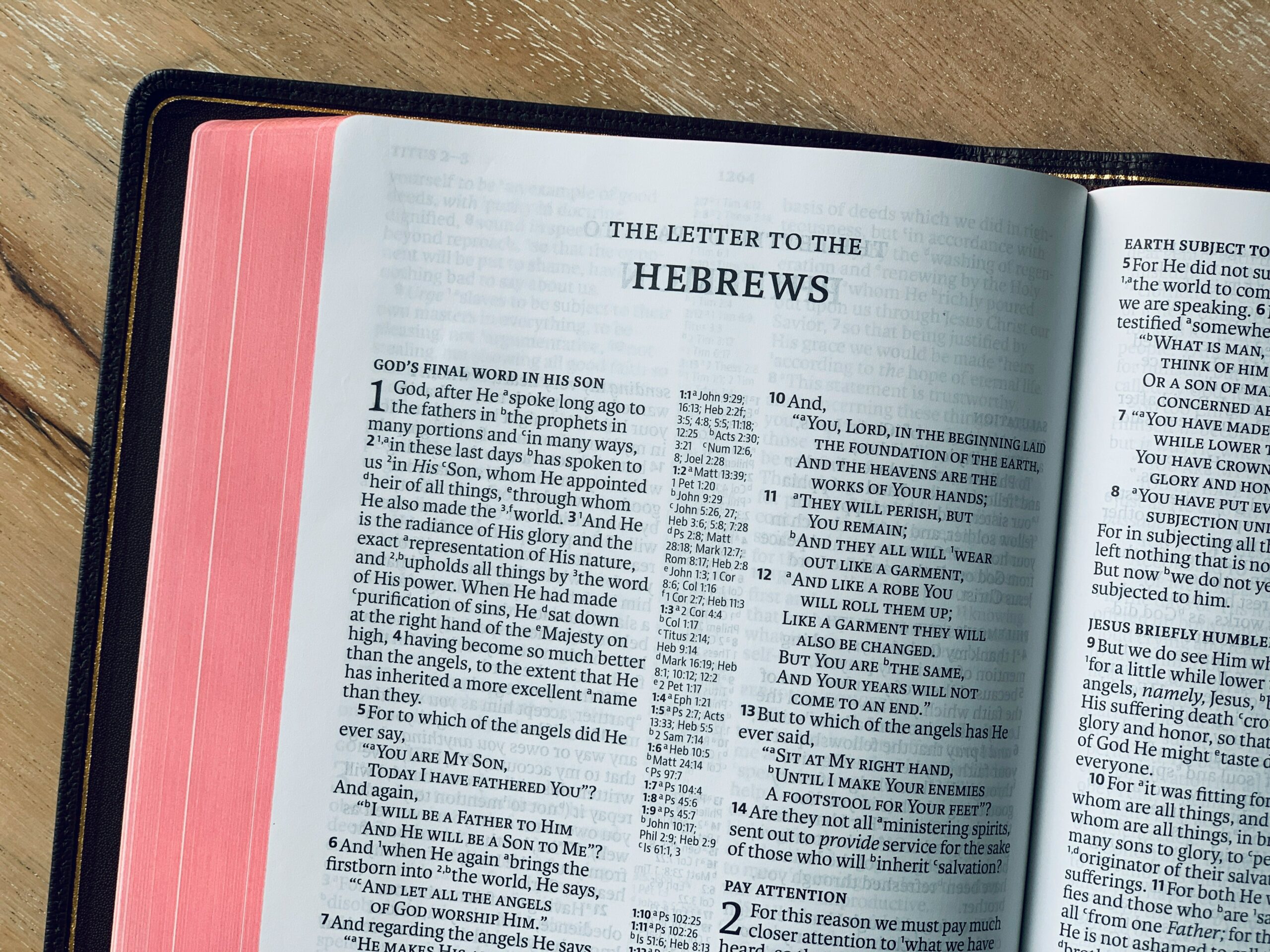
On Your Mark
The sermon exhortation centers on the necessity of strenuously living out the Christian life as a race to be run with endurance, grounded in the context of present-day trials and potential persecution. Drawing from Hebrews 12:1-3, the message emphasizes that believers must lay aside every encumbrance and the sin that easily entangles them to prepare for this spiritual contest. The text clarifies the metaphor of the ‘cloud of witnesses’ not as literal observers judging performance, but as a source of encouragement derived from the examples of faith in Hebrews 11. The preacher stresses that the Christian life is not a casual sprint but a long-distance marathon requiring consistent discipline, self-control, and perseverance. Ultimately, the goal is to fix one’s eyes on Jesus, the author and perfecter of faith, who endured the cross for the joy set before Him, providing the model for believers to remain steadfast and glorify God in the midst of adversity.
Transcript
if you would take your Bibles
and turn back once again to the epistle to the Hebrews. We find
ourselves in Hebrews chapter 12. Several weeks ago, we rounded
the corner into the second half of this epistle, which is actually
not found until chapter 10, the second portion of this epistle. It’s found in chapter 10, verse
19. We entered into that latter section
of the epistle, the practical portion of the book. It’s not
that there weren’t practical applications to us in the first
portion, there were. Chapter one, verse one, through
chapter 10 verse 18, or that there is no doctrine to be found
in the latter portion, chapter 10 verse 19 and following. What
we’re talking about is really a matter of degrees, that the
first portion is heavily weighted with doctrine, and the second
portion is heavily weighted with practical matters, practical
applications. It’s largely practical, whereas
the first section is largely practical. And because it’s practical,
this latter portion, the exhortations become much more plentiful, rapid
fire. In fact, in chapter 12 alone,
there are four more of these strong encouragements that the
writer provides. In verses 1 through 3, which
verses we’ll consider in a moment, he’s dealing with really our
Christianity. In verses 4 through 13, he addresses
the whole great subject of God’s discipline as of a father. In
verses 14 through 17, a very fascinating subject, he discusses
relational godliness, not just godliness in general, but he
zeroes in and applies it to our relationships. And then the final
exhortation of chapter 12 is found in verses 18 through 29,
and I would refer to that as almost a fearful thankfulness,
a respectful attitude of thankfulness before God. And since our study
of this book is centered around these exhortations, what we’ve
called enduring admonitions, we find them with increasing
regularity, especially here in chapter 12. These exhortations
are lessons built on the preeminence of Christ, or more specifically,
divine encouragements for saints in peril. These admonitions,
these encouragements, exhortations are very much for us as we have
seen. They’re not written only to those,
those first century Jewish converts. And in our current society, which
does seem to be disintegrating before our very eyes, these admonitions
serve as our direct divine counsel for our mindset and our conduct
in these days. I’ve said it for weeks and I’ll
say it again. I believe that Christians are
the most imperiled at this time. I see that we are very much on
the edge of an increased persecution because of what we believe or
because of what we do not believe. Not merely that we believe that
salvation is by faith alone in Christ alone. Although that one
doctrine puts us at odds with much, if not most, of the religious
world, including those who call themselves Christian. But that’s this overall belief
system of Christianity. That stems from our doctrinal
foundation, we might call it our worldview. That’s what puts
us at odds with our culture. Because of that, believers are
increasingly imperiled. We are no longer free to share
our opinion about homosexuality. We are no longer allowed to have
a thought, let alone express that opinion. And the vice of political correctness
squeezes ever tighter with each passing day. And so these words,
These profound and timely words in this epistle to the Hebrews
provide us with God’s guidance for these days, a virtual how-to
manual as to the means of glorifying God in the midst of such an hour. After all, that is our great
goal. That should always be our great goal, to glorify God. in
the moment of trial as we should. This faithful friend, this writer,
is still standing on the solid foundation of the finished work
of Christ, the mediator of a better covenant, the priest of a better
tabernacle, the sacrifice of a better atonement, and built
on that foundation he has given us exhortation after exhortation. If we are to glorify Christ in
a great trial, and we are in a great trial, we must, first
of all, listen to the one who is greater than the angels, chapters
one and two. We must come to the one whose
salvation is greater than Moses, chapters three and four. We must
draw near with confidence to the throne of grace, chapters
four and five. We must become spiritual adults. Chapters five and six. We must
cultivate an intimate relationship with the Holy God. Chapters 10.
Chapter 10, verses 19 through 22. We must fulfill our obligation
to the body of Christ. Chapter 10, verses 23 through
24. We must persevere to the salvation
of our souls. And that’s where we left off
of our great list last Lord’s Day. And so today we would add
that if we are to glorify Christ in great trial, we must strenuously
live out our Christianity. Chapter 12, if you would, verses
one through three. It’s a familiar verse. I’m sure
many of you, as I did, memorize this verse in your early days. Therefore, since we have so great
a cloud of witnesses surrounding us, let us also lay aside every
encumbrance and the sin which so easily entangles us. And let
us run with endurance the race that is set before us, fixing
our eyes on Jesus, the author and perfecter of faith. who for
the joy set before him endured the cross, despising the shame
and has sat down at the right hand of the throne of God. For
consider him who has endured such hostility by sinners against
himself so that you will not grow weary and lose heart. What the writer will urge us
through the extent of this great chapter chapter 12. Is really
the pursuit of a victorious rather a victorious pursuit of God’s
grace. The writer wants us to flourish
not just survive. But if we are to glorify Christ
in the midst of a great trial. And those first century Jewish
believers to whom he wrote were in an epic trial. Their entire
city, their entire way of worship, their entire way of life was
about to be destroyed. But make no mistake, we too are
in an epic trial. I believe that Christianity in
America is even on trial in this trial. How free are we going
to be to live out our Christianity? That’s the test. If we are to
glorify Christ in great trial, we must strenuously live out
our Christianity. It’s a beautiful image that he
presents in this passage. As we heard last Lord’s Day,
our writer had just taken us on a virtual tour of the impressive
hall of faith, as we have called it. Those godly saints of old
who, in the midst of their own God-ordained trials, exhibited
their great faith. This was all built upon the closing
line of chapter 10, verse 39, remember? We are not of those
who shrink back to destruction. but those who have faith to the
preserving of the soul. Is that true of us? Are we those
who persevere to the salvation of our souls? We, the writer
says, are the faithful. We would be, we strive to be
those modern day examples of great faith. Those who do not
recoil in fear because of a failure to trust in God and his plan
to refuse to take God at his word is the essence of faithlessness. It may begin as a weakness of
faith, but it proceeds to a careless indifference and eventually to
apostasy as we have seen. And that, he says, brings destruction,
eternal destruction, as we saw last week. That’s not us. That’s
not how the faithful are to live. The righteous, those who enjoy
the very righteousness of God, imparted to them as a gift by
His grace, by faith in His Son. live by faith the righteous live
by faith and as such they persevere in that faith they persevere
to the very end because of the grace imparted to them to the
salvation of their very souls where they join the long list
of God’s faithful who persevered by faith in their own trials
and their own heartache their own ungodly treatment by others
And this blends perfectly into an illustration after illustration
of those dozens and dozens of examples of faith recorded there
in chapter 11. As one faithful pastor put it,
here is an exhortation now renewed by all the accumulated force
gathered from every verse and every example of chapter 11.
I mean, can you imagine the suggestion that he makes? Take all of those
godly examples. And this is the exhortation that
the writer provides. And so right on the heels of
chapter 11, the writer again turns to his readers. They, too,
ought to join the great host of the faithful saints by persevering
through their own God designed trials. Look, if you would, at
verse one. Let us run. That’s the main exhortation
in this whole section. There’s one that’s parallel,
but it really is subordinate to this one point we’ll see in
a moment. Let us run the race that is set
before us. That is the main exhortation. The simple exhortation of these
verses is found right there in verse one. Everything else in
these verses modifies that one sentence, as we will see. Let
us run the race. And so he begins with this simple
metaphor likening the Christian life, the entirety of our Christian
duty, as a race to be run. One pastor explained, the duties
of the Christian are of a kind that call for the vigorous exertion
of all the faculties of his nature. It’s going to take everything
you’ve got blended with God’s grace and appropriating that
by prayer to run the Christian race. It calls for the vigorous
exertion of all the faculties of his nature, both intellectual
and active. The Christian life is a race
in which the powers of movement require to be fully put forth. It is active. It is laborious. It is persevering exertion. And even as the writer begins,
he acknowledges that we will have trials through which we
have to persevere, and these will be designed by God specifically
for us. They are set before us. We may
not be called. Like Noah was, in fact, I can
assure you, you will not be called as Noah was to build an ark.
God has promised that there shall not be another flood. We will
not be tasked with obeying God’s directive to go to a promised
land of inheritance as Abraham was. The promised place for us
is glory itself. We will not be responsible for
having a son as Abraham and Sarah were. in their advanced age,
one who would become the start of a great nation. Nor will we
ever face a similar test of offering up that dear son. The nation
is established. The test of faith was one. We
will not be faced with the specific tests that Isaac or Jacob or
Joseph faced. We certainly will not be called
to live the life that Moses lived faithful to God over Pharaoh
leading God’s people passing through the Red Sea. Those challenges
have been vanquished. There are countless episodes
of faith that cannot be matched simply because they were designed
by God for particular individuals living in a particular period
of time in the midst of a particular context. They weren’t for us. But there were other episodes
that we may well face by faith as our predecessors did. Would
you turn back to chapter 11? Turn back to chapter 11 and look
beginning in verse 33 and brace yourself for this because we
very well could face these. They were those who by faith
conquered kingdoms, performed acts of righteousness, obtained
promises, shut the mouths of lions, quenched the power of
fire, escaped the edge of the sword, from weakness were made
strong, became mighty in war, put foreign armies to flight,
received back their dead by resurrection. Others were tortured, not accepting
their release so that they might obtain a better resurrection.
And others experienced mockings and scourgings, yes, also chains
and imprisonment. They were stoned. They were sawn
in two. They were tempted. They were
put to death with a sword. They went about in sheepskins
and goatskins, being destitute, afflicted, ill-treated, men of
whom the world was not worthy, wandering in deserts, in mountains,
in caves, and holes in the ground. As the kids say, psych up. There’s
very little in that list that we could not potentially face.
Those were severe trials, no doubt. And while we may not be
called to duplicate the faith of those who experienced these
exact trials, we will be tested. We have a race to be run. The
course stands in front of us. It is set before us by God himself. And just like the advice given
to literal runners, we are to run our race. We don’t need to
concern ourselves with the pace or with the event that other
runners are scheduled to run. We don’t need to compare our
trial with those of others. We only need to run the race
that is set before us. And we, like our predecessors,
are called to gain approval. Remember, we had to brace ourselves
for that very thought. We’re called to gain approval
through the exercise of our faith. God is going to give us the faith. He’s going to give us the trials.
And all we need to do is appropriate the God-given faith and the God-given
trial to be found approved. This word
doesn’t specifically mean running a race. It could be used really
to refer to a wide variety of contests. But the foot race is
an appropriate image for the use of this word. He sets before
us the Christian life in the image of a running contest,
a race. And the illustration is clear
and really familiar. The stands are full. There’s
a hushed quiet that falls over the crowd. The runners are taking
their mark. The oval stands before them as
a challenging obstacle. The whole image is one that Paul
uses frequently. The most lengthy and detailed
of which is 1 Corinthians 9. Would you turn there? exercise
our fingers a bit this morning. 1 Corinthians 9, zip down to verse 24. Do you
not know that those who run in a race all run but only one receives
the prize? Everybody would have understood
this image from the Greek games. Everybody would have known that
there are no red ribbons, There are no participation trophies. Do you not know that those who
run in a race all run but only one receives the prize. Run in such a way that you may
win. Nothing wrong with winning. Everyone who competes in the
games exercises self-control in all things. They then do it
to receive a perishable wreath. but we an imperishable. Therefore
I run in such a way as not without aim. I box in such a way as not
beating the air, but I discipline my body. I make it my slave so
that after I have preached to others, I myself will not be
disqualified. Paul uses the same illustration
in Philippians chapter three. Would you turn there briefly?
He uses the same basic illustration to present himself as an example
to the Philippian church of running a race. Chapter 3, jump down
to verse 12. Not that I have already obtained
it or have already become perfect, but I press on so that I may
lay hold of that for which I was laid hold of by Christ Jesus.
Brethren, I do not regard myself as having laid hold of it yet,
but one thing I do, forgetting what lies behind and reaching
forward to what lies ahead, I press on toward the goal for the prize
of the upward call of God in Christ Jesus. He doesn’t talk
about a running context. contest, but that is exactly
the image that he intends to portray. He uses the same image
to Timothy, we’re not going to turn there, 1 Timothy 6, 12,
fight the good fight, take hold of eternal life to which you
were called, that you make good the confession in the presence
of many witnesses. And to that same son in the faith,
2 Timothy 4, he gives his own testimony of his life. I ran
the race. And I won. I fought the good
fight. I finished the course. I’ve kept
the faith in the future. There is laid up for me the crown
of righteousness with the Lord, which the Lord, the righteous
judge will award to me on that day. And not to me only, but
also to all who have loved his appearing. Paul uses this image
frequently. It was an image that would have
been familiar to first century individuals. Back to Hebrews,
if you would. So the image is that of a race,
a contest. But what does the image represent? To say that we’re in a race.
It stands for the Christian life, which we are to strenuously compete. And that’s the exhortation in
a nutshell. One godly pastor characterized
these verses in these terms. He said, the words contain the
practical improvement of the long and eloquent historical
proof and illustration of the power of persevering faith. What
he says is if you look back at chapter 11, he had just given
us a whole long string of illustrations of the necessity of faith. for
the purpose of enabling men to do whatever God commands, however
difficult. And some of those things were
remarkable. To endure whatever God appoints, however severe. To obtain whatever God promises,
however great and glorious, strange and seemingly unattainable. That
is what it means to run the Christian race. We are not to be as those
who casually approach their Christian life as if it were just one more
of the many activities that we pursue. Can we even call such
a one a competitor if he were to take the track in a sprinter’s
event but who at the sound of the starter’s pistol lists out
of the gate and sluggishly enters into a jog partway around the
track. It’s not a competitor. It’s a
sad image. But that’s exactly how many professing
believers engage in their spiritual life. Half-hearted, dull, lazy,
flippant, casual, lifeless. And this is the very reason that
he’s providing this exhortation. that he’s utilizing this illustration. He wants his readers to know
that they cannot possibly please God with a half-hearted effort
in the race that is called Christianity. They must blast out of the blocks
and strenuously pursue their Christian life. Let us run the
race that is set before us. And he says the same thing to
us. Run the race. Run the race that is set before
you. And in order to help us to do that, the writer gives
us four pointers from this text that help us to understand what
it is to strenuously live out our Christianity. First of all,
observe the spectators of this contest. Verse one, therefore,
since we have so great a cloud of witnesses surrounding us,
the writer here proceeds really to enhance the stakes of this
race. It’s not just a race. We know
that it’s Christianity. We know that there’s going to
be trial. We know that grace has been supplied, but there’s
also going to be observers in the stands. It’s not only a race,
it’s a race that is observed, it’s witnessed by others. It’s
a fascinating metaphor that the writer employs here. He refers
to these observers as a cloud, a great cloud of witnesses. We
don’t even know what to do with that, really. It’s a great cloud,
which means that there’s a great many of them. And the next question is even
more difficult to grasp. Who are these witnesses? Those who bear witness to something
that has happened in the past like those saints of Hebrews
11 that gave us so many different examples of faith properly applied
in the midst of trial. Is it those who bear witness
to something they’ve done or something that’s happened in
the past? Or are they those who shall bear witness to something
that will happen in the future? Are they going to be the ones
that bear witness of us and our faithfulness? Well, there are obviously two
very different approaches to this passage. The first is this,
are they those who have borne their own testimony over time,
Abraham and Moses and the like, whom the runners are to have
in view. We’re to look to these people
as great examples of faith and pattern our lives after them.
That’s one approach. And in this case, all of those
Old Testament saints mentioned in chapter 11 are the ones whose
lives we are considering as an example. They bore testimony. They lived out their faith. They conquered. And they have
a witness because of it. And we heard it. And now we are
pattering our lives after their example of faith. That’s one
approach to this. One described it like this. Throughout
the epistle, and especially in chapter 11, witness invariably
means one who bears witness, one who testifies to a certain
fact. And this is the more natural
meaning here. Well, so that’s the argument.
That we’re supposed to look at all those Old Testament saints
of chapter 11. That is the great cloud of witnesses
that we’re to look to. But there’s a second approach. Are they seen as merely observing,
sitting in the stands, watching us, prepared to bear witness
to our performance? Kind of scrutinizing, but observing,
scouting, maybe. You see, the other view is that
the ones referred to here are all of those Old Testament saints
mentioned in chapter 11 who are looking down upon our individual
efforts either cheering us on or dejected by our poor performance. This approach, this option is so prevalent
that one To be gracious, what he did was he took great pains
to write, let me just parrot back what I think I hear you
saying. And he was very careful to do this graciously. He said,
it has been supposed by many that these words teach us that
the departed spirits of holy men are acquainted with what
is going on in the church below and take a deep interest in the
labors and trials of those after their example as through persevering
faith, seeking for the full possession of promised blessings. In other
words, they’re up there and they’re looking down on you. Now remember,
this is not his position. He just wanted to be very careful
to lay it out as he understood people holding to this view.
He’s merely articulating what some people have believed that
this passage teaches. Some people, he says, believe
that they are watching. Abraham is watching. Moses is
watching. Jacob is watching. You might
as well have to say that they’re all watching. Sarah and Abel
and Noah, all of them are watching. They’re all tuned in. They’re
watching your life. Another writer characterized
these observers as witnesses to the sincerity and the reward
of faith. They’re watching, they’re observing,
they’re cheering us on. But I think there’s a third option. And I love the way Davidson graciously
carried it out. Excellent commentator, A.B. Davidson,
he said this, the notion of spectators is foreign to the connection,
the point of which is not that they behold us, it’s that we
behold them. They are conceived as, in a sense,
present, for we are surrounded by them. The point, however,
is the stimulus, which is their example and their presence should
be to us, not that we are running under their eye and subject to
their verdict or that they are absorbed in the interest of our
struggle. I mean, think of this for a moment.
This is truly an arrogant thought. To think that Moses and Aaron
and all the rest of them are gathered at the rail, glancing
down, watching to see how Frasco does. It’s absurd. And in some cases, they’re not
only watching, they’re watching in anticipation. They’re kind
of cheering him on. They’re, they’re wishful. Another. Pastor clarified and
said the whole paragraph is figurative, the whole paragraph. In accordance
with the principle figure which represents Hebrew Christians
as racers, the ancient faithful whose actions are recorded in
scripture are represented as spectators. They’re not really
there, they’re not really looking down. The inspired history is
converted, as it were, into glorious amphitheater from which the countless
host of venerable countenances beam encouragement. He said,
It’s an image. It’s as if they’re up there all
cheering us on. And he closes with this, we should
not deduce from these words, the dry, literal doctrine that
the saints above are conversant with our life here and fascinated
by the interest. I mean, can you imagine? We got
to tune in. There is no window in the floor
of heaven. There is no satellite link for
a TV-like device that allows the saints of old in glory to
view our earthly exploits, good or bad. That is the prerogative
of God alone. Even a writer of scripture, he
goes on to say, may be allowed to throw out a brilliant ideal
conception. He just builds this image of
a track meet. And he positions all those Old
Testament saints in the stands as it were, not literally. Even a writer of scripture may
be allowed to throw out a brilliant ideal without our tying him down
to having uttered a formal doctrine. The heroes of the past are present
with us in their spirit and example, and in the great deeds they did,
they surround us as a cloud. And we realize their presence
without supposing that they are conscious of us. It’s a beautiful
image. It’s a beautiful image, but it’s
an image. It’s an illustration. So we see not only the spectators
for this event, which are really not as such, but secondly, we
see the discipline required for this contest. It’s substantial. Look at verse one. Therefore,
since we have so great a cloud of witnesses surrounding us,
let us also lay aside every encumbrance and the sin which so easily entangles
us. Any athlete genuinely who desires
to compete has to prepare. It doesn’t just get up, get out
there and start running. And that is the instruction which
actually precedes the main command to run the race. Before we can
honor God in that race by competing to the very best of our ability
or in setting the metaphor aside for a moment, Before we can strenuously
engage in the Christian life, we must be prepared. We must
get ready to compete. That’s the clarifying insistence
in verse one. Let us also lay aside every encumbrance. The laying aside pictures an
athlete, in our case, a runner, peeling off the outer layer,
their warmups, their jacket, what have you. in order to be
free of any impediments for running their very best race. This too
is an image that is frequently used in scripture. Just listen
briefly Paul uses it in Romans 13. Let us lay aside the deeds
of darkness Ephesians 4 20 to lay aside the old self Ephesians
425 lay aside falsehood James 121 putting aside all filthiness
and all that remains of wickedness and First Peter 2.1, putting
aside all malice and deceit and hypocrisy, envy and slander. And here the writer has some
particular things in mind that are to be laid or set aside. First of all, he says every encumbrance. It’s the only time in the New
Testament that this word is used, but its literal meaning is a
weight. Now I know where you’re going
with this. I’m not making any suggestions, but it could be
used to speak of the excess mass on a person that has to be shed
before they can really run their best race. They are obstructions. One called them, uh, one set
of them that unless they are removed, they will certainly
impede their progress. Yeah. You think? And it really
could, if referring to an athlete preparing for a contest, it could
be used to dropping those extra pounds that would otherwise prevent
a runner from posting their personal record. Now, how this translates
across to the Christian life isn’t immediately clear. God
wants us all in a weight loss program? I don’t think so. The
writer isn’t proposing that. But there are things that are
excessive in our lives that are dead weight, baggage. These may come in the form of
activities that were spread too thinly. It may refer to priorities. As my friend once said, if you
have too many priorities, you don’t have any priorities. This
extra weight isn’t necessarily referring to sinful excess. He’s
going to deal with sin next. One commentator threw out some
noteworthy suggestions about this excess baggage. He suggested
that it’s bodily or mental peculiarities of the individual, love of ease,
or esteem, or wealth, or things that are to be laid aside by
one who desires to run well. There isn’t a one of us that
couldn’t address that list, right? We need to take a critical look
at the things of our life and cast aside anything that is superfluous,
anything that is dead weight. And we absolutely have to be
aggressive about ridding sin and sinful tendencies from us.
So that brings us to the second thing the writer urges us to
cast aside, sin. The sin, he says, which so easily
entangles us. The first thing that I would
have us observe here is that there’s a classic embellishment
to this translation that is really morphed into a kind of a franchise
industry, a cottage industry of itself, especially for so-called
biblical counselors that want to go in and deal with the besetting
sins, because that’s where they get it, is here. The older translation
has it. as the sin which doth so easily
beset us. And so from that we get besetting
sins. And so that familiar idea of
besetting sin, something that easily takes over a Christian’s
life. It’s important to note that six
words were used to translate one Greek adjective. The sin which doth so easily
beset us. One careful scholar dismantles
that translation pretty quickly when he says, the idea of what
we call a besetting sin does not lie in the passage. That’s
pretty clear. The thing spoken of is sin. We
all deal with that. There is no such thing as besetting
sin. It’s all besetting. It’s spoken of as a thing that
is apt to fold around itself as a garment impedes our running,
no doubt, the sin of turning away from the Christian faith.
What he points to ultimately is the sin of indifference to
Christ. The word does not occur anywhere
else in the New Testament, so we have little data as to its
comparative meaning. It could literally be translated,
well-wrapped. That’s what sin does. It’s well-wrapped around us.
The bottom line, if we are to strenuously live out our Christian
lives, if we are to run well the race which God has mapped
out for us, then we must be fully prepared. We must set aside,
cast aside every encumbrance and detangle some sin. There’s a third observation that
our writer makes here. not only the spectators in the
stands and the preparation for the race, but thirdly, the stamina
required for this contest. Look at verse one once again.
Therefore, since we have so great a cloud of witnesses surrounding
us, let us lay aside every encumbrance and the sin which so easily entangles
us and let us run with endurance the race that is set before us.
If we are to glorify God in our efforts in the midst of trial,
if we are to run well, if we are to compete as Christians
as we ought, we need to know what kind of race we’re running.
And he says here next that we’re to run the race with endurance. It’s not a sprint, not a 50-yard
dash. And you’ll likely hear the echo
from last week because we studied this word last week, endurance.
It is a very frequently used, we even suggested that this is
the great theme of the New Testament is the Christian’s need of endurance. Paul uses it, Peter uses it,
James uses it. We need endurance. We need to
persevere. This is the doctrine of the perseverance
of the saints. This is the word that urges us
to persevere. It urges us to endure, to persevere
to the very end. No sprinter would fare well if
he were to begin a marathon with the pace that he would use in
a 50-yard dash, right? Right out of the blocks, blasting,
going as hard and fast as he could. He would be done in a
moment, even if the race wasn’t. We have need of endurance. We
have need of going the long haul. It’s a long distance race. We
don’t need to just have a good day or a good week of Christianity.
We need a good Christian life. This, remember, is what characterized
that very lengthy list of Old Testament saints. From Hebrews
11, Chapter 13 said this, all these died in faith without receiving
the promises, but having seen them and having welcomed them
from a distance and having confessed that they were strangers and
exiles on the earth. We need endurance. We have need
of perseverance. There’s a fourth observation
that I’ll introduce and take up next Lord’s Day. If we were
to strenuously live out our Christianity as we are asked, you have to
not only consider that there are spectators, consider that
we have preparation that we need to put into effect, that we need
to prepare for the long haul, but we need a goal. We need a
goal, and the goal is Jesus Christ. That’s what he says in verse
two and following. Let us run with endurance the
race that is set before us, fixing our eyes on Jesus, the author
and perfecter of our faith. Would you join me in a closing
word of prayer? Our merciful God, it seems at times In the Christian
life, we forget our track shoes, forget our warmups. We forgot
what time the race was. We didn’t eat properly the week
of the race or the year before the race. We were completely
ill-prepared, unprepared. Lord God, we pray. that you would
change our hearts and our attitudes just as this writer sought to
change the hearts and attitudes of those first century saints
who allegedly were preparing to run a race. And yet, from
the exhortation that he provides, they must have been completely
unprepared. Lord, we pray that you would
change our hearts We pray that you would stir our hearts to
pursue strenuously this Christian life that you have bestowed on
us because of your grace. We know that you’ve given us
the grace to be found faithful. And in many cases, we’ve squandered
it or left it on the bus. Lord, Grant us repentance from this
casual approach to Christianity. Grant us grace to change. It’s
in Jesus’ name that we pray. Amen.
Messages: 20