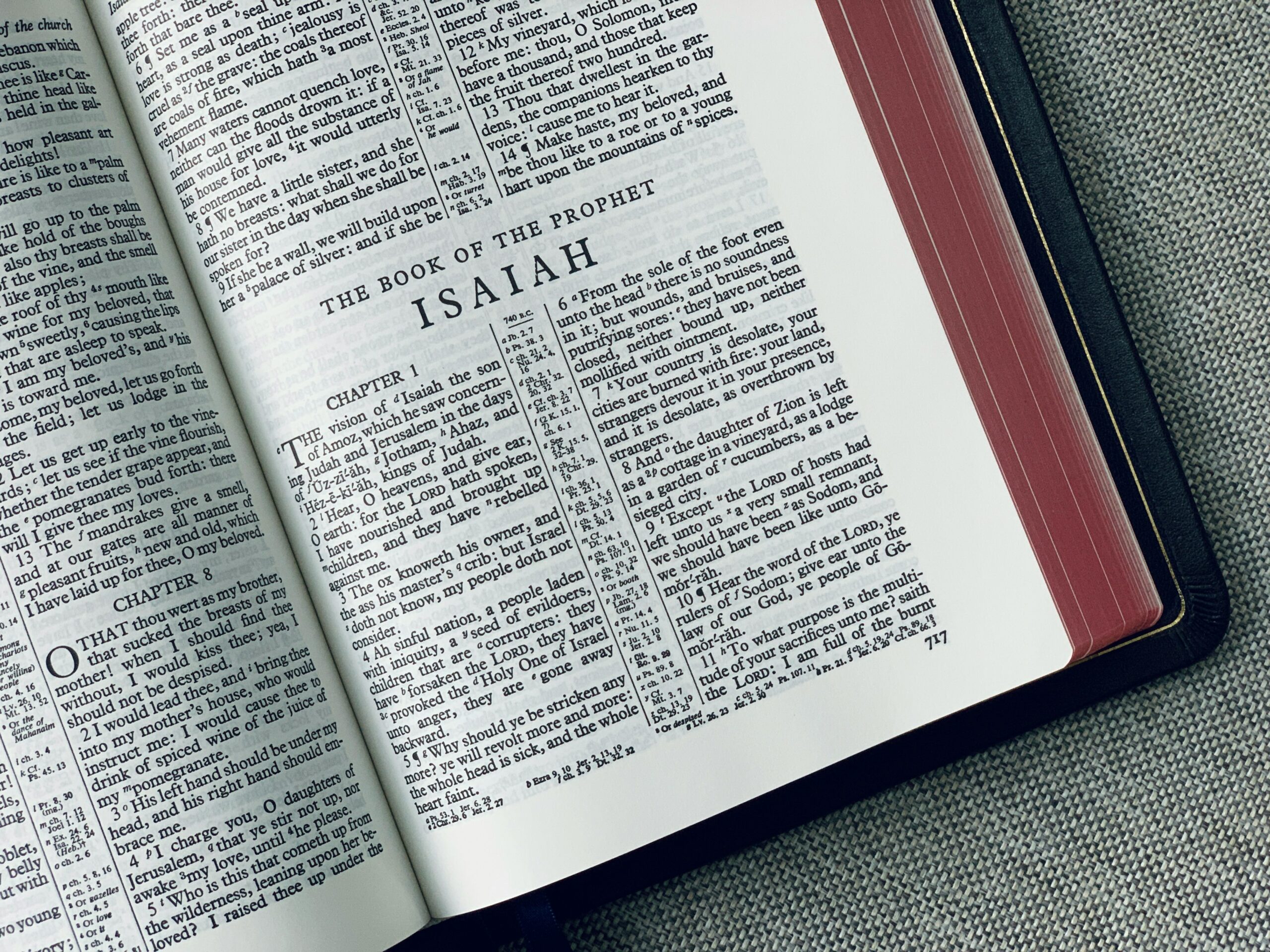
Light in a World of Darkness, Part 2
This sermon explores Isaiah 9 as the ultimate Christmas prophecy, highlighting the transition from national gloom to divine hope through the coming of the Messiah. The message identifies the Messiah’s appearance as light in darkness, fulfilling the promise to those who walk in spiritual despair. It examines the Messiah’s identity through His humble stature as a child and His divine titles, including Wonderful Counselor, Mighty God, Eternal Father, and Prince of Peace. The preacher emphasizes that Christ’s incarnation as the God-man was necessary to pay the penalty for sin and enact a peace treaty between humanity and God. Finally, the sermon describes the Messiah’s reign as sovereign, perpetually growing, and eternal, challenging listeners to submit to His unending kingdom.
Transcript
I say not to Luke, because for
many of you, you know, we’ve been studying the gospel of Luke
for the last two weeks. Now we’ve taken a time out into
the book of Isaiah to look at a special passage of Scripture
as we began last week. And we’ll conclude this week.
It’s interesting, I didn’t plan it this way, but that first hymn
this morning echoes precisely where we find ourselves in this
passage this morning. Love caused your incarnation. Love brought you down to Me.
Your thirst for My salvation procured My liberty. Oh, love
beyond all telling that led you to embrace. In love, all loves
excelling are lost and fall in race.” And then verse 3, “…rejoice
then, you sad-hearted, who sit in deepest gloom. who mourn o’er
joys departed and tremble at your doom. Despair not, He is
near you, yea, standing at the door. Who best can help and cheer
you and bid you weep no more?” We found ourselves in the same
spirit in Isaiah’s passage. Isaiah having proclaimed doom
to the nations, then turns in chapter 9 to proclaim hope. It
was this passage, as we were reminded last week, that was
one of the foremost passages in Handel’s mind, George Friedrich
Handel’s mind, when he locked himself in a room for a week
and wrote what we now know as the first portion of Handel’s
Messiah. We saw that Handel there began
to take the Old Testament prophecies that proclaimed so clearly about
the Messiah, and he began to set them to music, landing eventually
on the very passage that we will consider this morning, Isaiah
chapter nine. I suggested last week. I hope
that I began to prove my case last week that of all the great
Christmas songs, this is among the greatest. In my opinion,
arguably the greatest Christmas song, because the lyrics to this
Christmas song were written by none other than God’s own spirit
through the prophet Isaiah. They were set to music in 1741. by George Frederick Handel, but
the lyrics were written 700 years before Christ was even born. We saw last week as we began
to consider the context, God’s people had clamored for a king
and God gave them king reluctantly, even though God was their king
and would have been their king, longed to be their king. God
gave them what they want or what they wanted. And as a nation,
they had some good kings and some bad kings. The good kings
they had weren’t all that good. Even David, one of the best,
committed terrible sins. Solomon, among the wisest man
that ever lived, still was less than perfect. Eventually, the
kingdom would divide into Judah and Israel. And it’s that context
that we find ourselves in, the divided kingdom that Isaiah begins
to minister. Judah, the great kingdom that
so often sought to follow God, was struggling, struggling now
with the same sins that Israel had so often engaged in, idolatry. Immediately following his commissioning,
Isaiah goes out to confront Judah’s king, King Ahaz. Judah is facing
the prospect of being attacked not only by her sister nation,
Israel, which was bad enough in itself, but also by the godless
nation of Syria. Because of her sins, her sinfulness,
her chronic struggle in sin, God seems to be giving them over.
And just when things look the bleakest, Just when we see at
the end of chapter 8, darkness and gloom professed upon the
land, we begin to pick up in chapter 9. And if you would,
read along with me beginning in verse 1. But there will be
no more gloom for her who was in anguish. In earlier times,
He treated the land of Zebulun and the land of Naphtali with
contempt. But later on, He shall make it
glorious. By the way of the sea on the other side of the Jordan,
Galilee of the Gentiles, the people who walk in darkness will
see a great light. Those who live in a dark land,
the light will shine on them. You shall multiply the nation,
you shall increase their gladness, they will be glad in your presence
is with the gladness of a harvest as men rejoice when they divide
the spoil. For you shall break the yoke
of their burden and the staff on their shoulders, the rod of
their oppressor as at the battle of Midian. For every boot of
the booted warrior in the battle tumult and the cloak rolled in
blood will be for burning fuel for the fire. For a child will
be born to us, a son will be given to us, and the government
will rest on his shoulders and his name will be called Wonderful
Counselor, Mighty God, Eternal Father, Prince of Peace. There
will be no end to the increase of his government or of peace
on the throne of David and over his kingdom to establish it and
to uphold it with justice and righteousness from then on and
forevermore. The zeal of the Lord will accomplish
this. And so we began last week in
considering this passage in its entirety, in its context, and
I suggested to you last week We made headway towards what
I propose to you, three glorious aspects of God’s gift of the
Messiah. Three glorious aspects of His
kingdom, of His reign. First of all, we considered last
week the appearance of the Messiah. The appearance of the Messiah
was as light in the darkness. began to consider those first
two verses last week in the context of this great gloom, this darkness,
which was clearly meant to represent not just a problem for the land
of Galilee, Naphtali and Zebulun, but it was meant to imply the
darkness, the struggle of the human condition, the struggle
with sin. So often in Scripture, we saw
that darkness is associated with ignorance. It’s a metaphor so
many times for moral evil, sinful acts, a lifestyle. It’s a condition
of moral and spiritual depravity. That is darkness in Scripture.
We saw that it was a realm that men typically love, a realm where
sin reigns supreme, where all the forces of evil reign. We
saw also that it is a place where God is absent. God, there is
no darkness in God and God can have no part of darkness, no
part of sinfulness. But it is to those people who
live in darkness, it is to us who live in darkness, who live
in that kind of despair. Without hope and without God
in the world, it is to those people. It is to every person who ever
lived, that the light comes. Verse 2, the people who walk
in darkness will see a great light. This is the promise of
all promises. There isn’t anything better that
God can ever promise than this little promise right here. The
people who walk in darkness will see a great light. Those who
live in a dark land, the light will shine on them. What he proposed there Sadly,
never happened in Israel’s history. In fact, as we looked, instead
of that kind of blessing, oppression. They were carried off in bondage.
They were under almost constant war. They saw disease and death
and famine. They saw destruction and captivity
and ultimately slavery. It gave many cause to deride God,
not a just cause. But for 700 years, they languished
and this prophecy did not come true. Not for 700 years, and then we
turn to the Gospel of Matthew and in the Gospel of Matthew.
It was recorded in chapter 4, verse 12, when Jesus heard that
John had been taken into custody. He withdrew, remember, into Galilee
and leaving Nazareth, he came and settled in Capernaum, which
is by the sea in the region of Zubulan and Naphtali. As if you
even we didn’t even need Matthew to tell us that this was a fulfillment
of the prophecy. We see it fulfilled, but he does. And Matthew says, this was to
fulfill what had been spoken through Isaiah the prophet. The
land of Zebulun and the land of Naphtali by way of the Jordan,
beyond the Jordan, the Galilee of the Gentiles, the people who
were sitting in darkness saw a great light. In other words,
Christ’s coming and residing in that place was a fulfillment
of Isaiah’s scripture 700 years before. We just needed to be patient. God
had made a promise. God was going to fulfill His
Word. And the light had come. It was Christ by Messiah, by
the Lord Jesus Christ, the Messiah, taking up residence there in
Galilee in those very regions that were spoken of by the prophet
as being encased in darkness. He fulfills that prophecy. Jesus
Christ is the promised light, as we saw from Matthew chapter
four. Jesus Christ is the fulfillment
of those good promises. We also saw point number two,
not only the appearance of the Messiah light in the darkness,
but we saw the blessings of the Messiah. We saw abundance and
joy and peace and those things were promised. And those things
certainly never happened to Judah. They never happened to God’s
people Israel. Israel first was carried off
in captivity and then ultimately Judah was carried off in captivity.
How on earth then can we say from this verse beginning in
verse three that they experienced abundance and joy and peace?
They didn’t know any of that. Verse 3 says, you shall multiply
the nation. What it pictures is this great
numerical growth. The very core need of a nation,
strength in numbers, literally. It’s not what Judah experienced.
They enjoyed the opposite. They were winnowed like wheat.
They were sifted and their population dwindled dangerously low. Israel,
the same thing. Those that didn’t die of famine
were killed in war and those that didn’t die in famine and
war were carried off and enslaved. Later on in verse 3, you shall
increase their gladness. Israel and Judah experienced
anything but multiplication and gladness. They certainly didn’t rejoice.
They didn’t rejoice like the gladness of a harvest. They didn’t
rejoice like those coming back from dividing up the spoils of
war. They didn’t enjoy the peace that
verse 4 seems to promote. You shall break the yoke of their
burden and the burden of the staff of their shoulders, the
rod of their oppressor. They didn’t enjoy that. We never
even really experienced it until now. And Christ had come. And the blessings of the Messiah
come. And there is going to be abundance.
There’s enough for all. There’s enough blessing for our
neighbors. There’s enough blessing for our family. There’s enough
blessing for those that we don’t even really know that we can
reach out and say the kingdom is big enough. Because it speaks
of an ever growing kingdom, a kingdom of friends and neighbors and
co-workers and family. You shall multiply the nation. God in sending our father in
sending Christ Jesus began and there the flood tide of the nations
over time and history. And not only abundance, but gladness,
real joy. You know what we all seek? We
all want happiness. The problem is that almost everybody
is looking for it in the wrong place. He says real joy, real happiness. The only way to be glad in God’s
presence is to have your sins dealt with. It’s the only way
you can be happy in God’s presence. Christ was it. Christ is the
one that equips us to be able to stand confidently in God’s
presence. And that’s finally the final
metaphor of that little section. The peace that we enjoy, not
only abundance and gladness, but the peace. And it isn’t just
this national peace that Judah and Israel was to enjoy. That’s
what they assumed. The peace is a peace with God.
You see, as we were reminded, all of Scripture paints this
mighty war that takes place between the individual in his sinful
condition and a holy God. We are born at war with God and
every day is just a new skirmish, right? But when Christ came,
Christ enacted a peace treaty and he enacted a peace treaty
between a sinful fallen race and a holy God. And it’s only
through Christ that we have peace. Now with that, just a brief review. Let’s look at the third glorious
aspect of God’s gift, this gift of the Messiah. We’ve seen the appearance of
the Messiah and the blessings of the Messiah. We want to look
further at the identity Who specifically is this Messiah? We want to look at the identity
of the Messiah. We want to start by looking at
the Messiah’s stature. Look at verse 6. Verse 6 says,
rather ingloriously, rather feebly, a child will be born to us. Not exactly the way that Israel
was expecting their grand king that was going to take over the
world. Not exactly what they were expecting by way of a prophecy. They might have expected now
a mighty man will rise up. Now, a glorious king will ascend
to the throne. But they didn’t expect this,
a child. will be born to us. A son, someone’s son, undefined
will be given to us. His first and foremost, before
anything else here, identified as a child, someone’s son. So often in Scripture, The New Testament writers will
take this theme. They will take a tidbit from
the Old Testament and they will embellish it and build upon it. And such is the case with this
little world child. Tiny little word meaning tiny
little infant. The words are different, but
the thought is identical. This idea that our conqueror
Our Messiah was going to start His life as a child, and God
wants everybody to know that. The preciousness of this little
child. We see it in the birth accounts
in Matthew chapter 1. Just listen as I read verse 18. The birth of Jesus was as follows.
When His mother Mary had been betrothed to Joseph before they
came together, she was found to be with child by the Holy
Spirit. And Matthew seizes upon that
theme. And from then on, that word is repeated over and over
and over again. Child. Matthew chapter 1, verse
20 and 21. Joseph was considering divorcing
Mary because of this embarrassing situation. But when he had considered
this, behold, an angel of the Lord appeared to him in a dream
saying, Joseph, son of David, do not be afraid to take Mary
as your wife for the child. And then Matthew begins to refer
to the Christ child, the Messiah, as simply the child through the
first two chapters of his gospel. The child who has been conceived
in her is of the Holy Spirit. Matthew chapter 2. It happens
so frequently. Go ahead and turn. Keep your
finger in Isaiah. Turn to Matthew chapter 2. This was no ordinary child, this
was the child. This was the promised child of
Isaiah. In Matthew chapter 2, beginning
in verse 1, what child, what child caused the attention of
wise men from afar. Verse 1 says, after Jesus was
born in Bethlehem of Judea in the days of King Herod, behold,
Magi from the east arrived in Jerusalem saying, where is he
who has been born King of the Jews? When was the last time
a birth elicited that kind of a response? Demanded that kind
of attention? What kind of a king? Rather,
what kind of a child arrest the attention of an evil
earthly ruler. Look at verse three. When Herod
the king heard it, he was troubled. He was troubled. Then if you would, skip down
to verse seven and watch this pattern that Matthew develops.
Then Herod secretly called the Magi, ascertained from them the
time that the star was born. He sent them to Bethlehem and
said, Go and make careful search for the child. The Magi go out. They begin to
travel. Verse 9 records, Lo, the star
which they had seen in the east went on before them until it
came over and stood where the child was. Verse eleven, they
came into the house and they saw the child with Mary. You get the distinct impression
from Matthew’s gospel that it isn’t Mary. It isn’t even the
tandem Mary and the child. It certainly isn’t the trio of
Joseph and Mary and the child. The child is paramount. Which
does grave damage to the Catholic doctrine of Mary. It isn’t about
the mother. It’s about the child. It’s the
child and His mother. Every time. Look at verse 13. Arise and take the child and
His mother and flee to Egypt. Verse 14, And He arose and took
the child and His mother. Verse 20, Arise and take the
child and His mother Verse 21, And he arose and took the child
and his mother. God has a way just of repeating
for not for repetition sake, but to remind us of the beauty
of this moment that it goes against every earthly human idea of a
conquering Messiah. Goes against everything that
Israel ever thought of with regards to the Messiah, that he was going
to come as a child A child? But he did. He did come as a
child. He came not only as a child,
he came as someone’s son. He came as someone’s son. Not only will a child be born
to us, a son will be given. Mary was promised that son. Mary
bore that son. Matthew 1, dipping back there,
the angel first, when he came to Joseph, proclaimed this good
news to him. And he said in verse 21 of chapter
1, she will bear a son, not just any son, but the Son of God. She will bear a son and he will
call his name Jesus, for he will save his people from their sins.
And then verse 22 records all this took place that what was
spoken by the Lord through the prophet might be fulfilled, saying,
saying, Behold, the virgin shall be with child and she shall bear
a son and they shall call his name Emmanuel, which means God
with us. Remember, that is the context.
This was the good news that had already been given by Isaiah
to the people. The Virgin is going to bear us
a child. She was going to bear a son and
they will call his name Immanuel. God with us. People, we can’t
miss the significance of that. When it says that a son will
be given to us, we cannot possibly miss the significance of that,
because that’s where everything comes to rest. It has come and taken on human
flesh. This is God incarnate. This is
the miraculous, if you will, wedding or marriage of divinity
and humanity that Isaiah had promised 700 years before. This
is it. John 1, verse 14 said it this
way, The Word became flesh and dwelt among us. Paul, writing
to the Romans, said it this way. In Romans 1, 2, he said, of Christ,
which he promised beforehand through the prophets in the Scriptures
concerning his son, who was born of a descendant of David, according
to the flesh, who was declared the son of God with power. It’s
Christ. It’s the God man, we say, well,
what is the big deal about that? What’s as some have questioned,
what is the theological significance of that? It’s everything. It’s
everything. One Puritan said it this way,
when we are told that the word became flesh, it means that he
took on that particular character. He acquired an additional form
without changing his original nature. He remained the infinite,
unchangeable God, the Son of God. He merely took on human
flesh. What’s the big deal about that,
you say? If Christ had merely been the son of Joseph and Mary,
he would have been a man like you and I. And no sacrifice of
any kind after a life lived with human excellence would have been
enough to pay for sin. It had to be a perfect sacrifice.
No wonder when John the Baptist first saw him, he said, behold,
the Lamb of God who takes away the sin of the world. Here comes
a perfect man because he’s the God man. Here’s how one pastor explained
it many years ago. He said the restoration of human
nature was to be left undone. It could not have been done unless
man paid what was owing to God for sin. But the debt was so
great that while man owed it, only God could pay it. So that the same person must
be both God and man. And so it was necessary for God
to take manhood into the unity of his person so that he in his
own nature ought to pay for and could not pay, should be in person
one who could. In other words, he says Jesus
Christ, the God man, was the only one who could ever have
paid the penalty for sin. Another said it this way, the
wise God saw it the best way for our own redemption, that
Christ should be incarnate. It was not fit for any to satisfy
God’s justice, but man. Pardon me, and none could do
it, but God and therefore Christ being both God and man is the
fittest to undertake this work of redemption. And so when Isaiah
said to those people sitting in darkness, A child will be
born to us. A son will be given. What great hope that was for
them. They couldn’t possibly have understood its fullness.
They couldn’t have possibly grasped the depth of the meaning. But this was the hope. And Matthew’s
Gospel makes it clear. that what Isaiah was pointing
to was nothing short than our Lord Jesus Christ. All this took place that what
was spoken by the Lord through the prophet, Behold, the virgin
shall be with child. She shall bear a son. They shall
call his name Emmanuel, which translated means God with us.
That was the fulfillment. That was the fulfillment. We saw last week that sadly,
The Jews, after the fact, just began to torture and and mangle
the Scriptures in trying to reason away this proof. The Christ,
the Messiah, had come and they had rejected him, and so instead
of falling on knees of repentance and making right what had been
wronged and rejecting the Messiah, They began to invent all kinds
of ways to reason away this kind of thing. And so they laid this
passage, the son and the child, as being that of Hezekiah. No
doubt, one of their best kings. But a human, fallible, earthly
king who in time died like all the rest. They refused to acknowledge that
it could possibly be Christ the Messiah that all of these fulfillments
could be possibly true. One pastor said it this way,
the same that is the mighty God, a child is born, the ancient
of days becomes an infant of a span long. The everlasting
Father is the Son given. That’s Christ. That is Christ taking on our
human flesh The Word was made flesh. He dwelt among us. He
was given for us. As is so often said and quoted,
God so loved the world that He gave His only begotten Son. Such is Messiah’s stature. Israel
couldn’t possibly have been expecting that kind of help, that kind
of hope from a child, a son. But He was. He was the Son of
God. and is the fulfillment to all
the Scriptures, not only to Messiah’s stature, but let’s look briefly
at His title, of which there are several. Verse 6 says, His name will be
called Wonderful Counselor. Wonderful, Counselor. The Hebrew
word there is an interesting one. It kind of has this, it’s
amazing, it’s superlative beyond measure, but it also has almost
this meaning of being secret. It’s so wonderful, it’s almost
inconceivable. Exodus 15, 11 says of God, who
is like you among gods, O Lord, who is like you, majestic in
holiness, awesome in praises, working wonders. Working these
unknown, unfathomable things. Psalm 77, 11, I shall remember
the deeds of the Lord. Surely I will remember your wonders
from of old. Those things that were almost
inexplicable. Certainly had no easy human explanation. Psalm 78, sadly, they forgot
his deeds and his miracles that he had shown them. He wrought
wonders before their fathers in the land of Egypt, in the
field of Zoan. Those were the things that Israel
was supposed to recall generation after generation about God. It’s
a beautiful word. And then the word counselor.
Just means one possessing wisdom willing to impart it. And who
possesses wisdom greater than God? Nobody. Nobody. Speaking of Christ, Isaiah, later
in his book, went on to say in chapter 11, verse 2, the spirit
of the Lord will rest on him, the spirit of wisdom and of understanding,
the spirit of counsel and strength, the spirit of knowledge and the
fear of the Lord. Who possesses any more knowledge
than God himself? Nobody. What Isaiah was saying
is he is going to be God because he’s going to possess that same
precise kind of knowledge. I love Romans chapter 11 after
11 chapters of heavy doctrine about God. Unfathomable deep
riches of God. Paul in classic style ends with
the doxology and Chapter 11. The book isn’t ended, but Paul
says, oh, the depths of the riches of the wisdom and knowledge of
God. How unsearchable are His judgments and unfathomable His
ways. For who has known the mind of
the Lord or who has become His counselor? He is the counselor
to anybody and everybody. He’s the counselor. These words
point to Christ. Christ is the wonderful counselor.
Christ knew the whole counsel of God and He came, in essence,
to explain God to humanity. He came to live before us, as
we’ve been reading in John 14, and to live out God before humanity. He’s the wonderful counselor.
But his title, he stirs up the minds of his people to a special
kind of attention. We are to sit up and take notice.
We expect more from Christ than
what we see in an average earthly king. This isn’t your so-called
Christian counselor. This isn’t the best of the earthly
counsel. This isn’t all the wise men rolled
into one. This is far beyond all earthly
advice and counsel and opinion and knowledge put together better
even than the Internet. This is God’s working out the
plan of redemption. This is God imparting to humanity
God himself. How did Christ counsel? Why is
His counsel so good and so wonderful? What counsel did He give us?
He called us to repentance. What better counsel does a fallen
humanity need than, you know what? You better repent. You better fall on your knees
and apologize to God for how you’re living Otherwise you’re
doomed. What better counsel is there
than that at its basic level? So often Christ would counsel
those that he healed to go and sin no more. What better advice
is that? Only Christ knew whether that
sin had actually caused the physical maladies that they were experiencing
or the demon possession. Only Christ knew. We can’t build
a theology or a doctrine, as it were, and say that sickness
is directly attributable to sin in our life. I can’t say that,
but Christ knew. And so often when he healed somebody,
he would say, go and sin no more. What better advice is there than
that? He told his followers to treat
the other person as they would like to be treated, imparted
Command after command after command, clear God given words of advice
to sinners, fallen, needy sinners. Christ is the wonderful counselor. Christ is also, Isaiah says,
the mighty God. You know what? This one can’t
possibly refer to any earthly man. only to Christ, who was
God as well as man. That’s because in the Hebrew,
the word for God here is not Elohim. Elohim could be used
of an earthly leader as well. Elohim was often a title used
of God as Lord. But Elohim could be used of men
too. Exodus 7-1, the Lord said to Moses, see, I make you as
God to Pharaoh. Exodus 22, you shall not curse
God nor curse a ruler of your people, an Elohim of your people. For Samuel 28, 13, the king said
to her, Do not be afraid. What do you see? The woman said,
I see Saul. I see a divine being, an Elohim. Was it God that she saw? You
know what? That’s not the word that’s used
here. The word that’s used here is El, God. which is never used by Isaiah
or any other Old Testament writer in any other use other than that
of absolute deity, God Himself. That’s who Isaiah is referring
to. He is the mighty one. He is the
almighty God. Remember, that is the title that
is used of God more than anything else in the Old Testament. He’s
the mighty one. And Isaiah says that Christ is
it. Christ is the mighty one. Christ is he. Why does he say that? Because
he attributes to Christ all the works that have ever been done
by God in creation. All the work of creation, all
the work of, as we saw in Psalm 104, upholding all things by
the word of His power. God didn’t just set the world
in motion and set it in order and say, I hope it rains. I hope
they’re able to feed themselves. We see that God, in Psalm 104,
God is actively involved in the works of providence from start
to finish. That’s Christ. all the affairs of providence,
all the confusion of the languages, the miracles that Israel saw
in Egypt, all the works that Christ did even while He was
here on earth, the miracles and casting out demons and healing
those that were sick and dying and dead, power over the elements,
power over the wind, power to turn water into wine, Power to
rebuke the wind and the seas. This is Almighty God, Isaiah
says. That’s who’s coming. That’s who
Isaiah was promising to the people. None other than God Himself in
human flesh. Not only is He the wonderful
Counselor, the mighty God, this one’s a difficulty. Because He
calls Him Eternal Father. How can it be on the one hand,
a child, a son given to us and at the same time, the eternal
father? That’s easy. It’s literally the father of
the age, it denotes eternity, a perpetual duration. He has
been here forever. My wife one time asked her father,
tell me, you know, when was God born? And his, you know, his
off the cuff advice was dead on accurate. God always was and
he always will be. That’s confounding to us, to
my own children. It just it makes their heads
hurt. I understand that. I don’t get
it. I don’t really understand it.
Everything that we know has a birthday, everything that we can even touch
and feel has a birthday, but not God. But He points to His
eternity. And He says that this is the
Creator. This is the co-Creator. That was said of Christ. John
1, verse 3, “…all things came into being through Him, and apart
from Him nothing came into being that has come into being.” He
was there. And so to say that He is one with the Father, that
He is the Eternal Father, is not a stretch. It’s not a contradiction. It’s not a typo. Hebrews, chapter
one, verse three, he is the exact radiance of his that is the father’s
glory, the exact representation of his that is the father’s nature. No wonder Jesus could tell his
apostles and to those detractors that he was facing that if you’ve
seen the father, pardon me, if you’ve seen me, you’ve seen the
father. You’ve seen the father. Hebrews 1.3 is the exact radiance
of his glory, the exact representation of his nature. He upholds all
things by the word of his power. Colossians chapter one, same
thought, he is the image of the invisible God. No wonder Jesus
said, if you’ve seen me, you’ve seen the father. He’s the image
of the invisible God, the firstborn of all creation, for by Him all
things were created, both in the heavens and on earth, visible
and invisible, thrones, dominions, rulers, authority, all things
have been created through Him and for Him. Christ is the eternal
Father. Christ is one with God. Christ
is exactly the one that Isaiah had promised. He is the everlasting Father.
He is God, one with the Father, who from everlasting to everlasting
is the author of everlasting life and happiness to all who
know Him. The Father of a blessed eternity. Jesus Christ is the wonderful
Counselor, the mighty God, the eternal Father. And finally,
the final title that is attributed to Him is the Prince of Peace.
This is the one that’s come to put an end to the war, the war
with mankind and God, the war with sinful individuals and their
holy God. This is the one that’s come to
put the war to rest and to pay their penalty on the cross and
to give to them personal peace and peace in the land, ultimately
peace in heaven for eternity. It’s only Christ. It’s not just outward peace,
not just this blissful existence that so many people dream of
and sing of as they hold hands in their tie-dyed shirts. That’s
not the kind of peace that Christ is talking about. It’s a state of favor. It’s a
positive condition. It’s a condition of love and
blessing and peace with God Almighty. John Calvin said, the coming
of Christ will be the cause of full and perfect happiness. Just
as in the Hebrew, peace often signifies prosperity, for of
all the blessings, not one is better or more desirable than
peace. What’s more desirable than that? Christ is the one. Zechariah, after his own son
had been born, John the Baptist. Zechariah, remember, erupted
in praise, thanking God, not even for his own son. Thank God
for the Messiah that He had provided, and of Him He said that He was
born to shine upon those who sit in darkness, in the shadow
of death. Why? To guide our feet into the
way of peace. This whole reason that Christ
was born. We sing about it at Christmastime.
But so many people miss the real meaning of Christ. It’s personal
peace. It’s peace with God because of
what Christ has already done. Christ waged the battle. Finally, not only the Messiah’s
stature and the Messiah’s reign, pardon me, the Messiah’s stature
and the Messiah’s title, but thirdly, In this point number
three, the Messiah’s reign. We see the identity of the Messiah
in his stature, born as a little baby. We see the identity of
the clarified for us in the titles that he possesses. But we see
the Messiah identified here in the reign that he is going to
possess. First of all, it’s going to be
a reign of sovereignty. If you look at chapter six or
verse six, second portion. He says, and the government will
rest on His shoulders. It’s going to be a reign of sovereignty,
this Christ. He’s not going to be just a puppet,
not a mere figurehead like so many of the kings of the nations
were. This is going to be an active
reigning, active sovereignty. It’s going to be His government. The government of God’s people
is going to be in His hands. Here, the government of the Messiah,
He shoulders. He takes it upon Himself. It’s
in direct antithesis to what was said before. Previously,
the children of Israel were under the yoke of bondage, burdened
with this heavy burden on their shoulders, and Christ takes it
all and puts it on His own. He isn’t just talking about the
government of the world. Not talking about setting up
some kind of typical earthly kingdom. He’s talking about the
church for all time. Christ isn’t in charge for a
temporary season, he’s in charge for all time. The government
is his. John Gill, Spurgeon’s predecessor,
said it this way. His government consists in ruling
in the hearts of his people. in enacting laws for them, in
causing them to submit to them, in subduing their enemies, in
protecting them, their possessions, their properties, their rights,
their liberties, and in supplying them with everything that is
necessary. Christ. Only Christ. Not only is it a
reign of sovereignty, it’s a reign of perpetual growth. We would
like to think sometimes that Christ’s kingdom is fully formed
right here and right now. And it’s a nice thought. It’s
certainly something to look forward to, but it’s not true yet. It’s
ever growing. Look at verse seven, there will
be no end to the increase of his government or of peace. It’s
an ever growing organism. It’s an ever growing reality. It’s peaceable. This blessed
government that he speaks of is going to be enlarged without
end. It’s not going to be confined to Israel, not going to be confined
to a border land in this earth that we know it. It isn’t even
going to be confined to earth. It’s going to be extended far
and wide beyond the ends of the earth. And you know what? Christ
isn’t going to accomplish his ends with oppression. And tyranny,
like so many earthly governments have, by the administration of justice,
he’s going to uphold it with justice and righteousness. There’s a third and final thought
mentioned here regarding his reign. It’s not only a reign
of sovereignty. But it’s a reign of eternal duration.
Look at verse seven again, there will be no end to the increase. And if there’s no end to the
increase, there’s no end to the government. There will be no end to the increase
of his government or of peace on the throne of David and over
his kingdom to establish it and uphold it with justice and righteousness
from then on forevermore. No end. It is going to keep on
growing and keep on flourishing and keep on forevermore. What a glorious thought. And
Isaiah spoke this of none other than our Lord Jesus Christ, and
he has already taken the throne. He is already one, he’s already
been crowned, he’s already sitting on the throne that is going to
be there forever. His question for us is, are we
in submission to that sovereign head? Are we in submission to
Almighty God through our Lord Jesus Christ? Because without
that, there is no other hope. This is the light that is shining
in the dark land and there is no other. Message was given to Mary at
the news that she was going to bear the Messiah. The angel came
in and said to her, Greetings, hail, favored one. The Lord is
with you. Very perplexed at this statement. Kept pondering what
kind of salutation this was. And the angel said to her, Do
not be afraid, Mary, for you have found favor with God. And
behold, you will conceive in your womb and bear a son. You
shall name him Jesus. He will be great. He will be
called the son of the Most High. The Lord will give him the throne
of his father, David. And he will reign over the house
of Jacob. forever. His kingdom will have no end.
It’s going to be an ever increasing government. It’ll be multiplied. The bounds of his kingdom are
going to be more and more enlarged every day. Many will be added
to it every day. The glory of it is going to increase
every day. It’ll shine brighter and brighter
every day. As we’ve studied the kings in
Sunday school, we’ve seen that kingdom after kingdom after kingdom
have ended. The reigns of earthly kings vary
in degree. We saw that the evil kings reigned
for approximately 11 years apiece, I think. The good kings reigned
a little bit longer, 27 or 33 years, I think. But you know
what? They all died. All of their reigns
came to a screeching halt, but not Christ’s. The kingdom of Christ is a growing
kingdom and will come to perfection ultimately, but it will never
end. It will never end. This kingdom will have no end. The question for us this morning. Is it true for you? those words
of that old hymn. When we’ve been there 10,000
years, bright shining as the sun, we’ve no less days to sing
God’s praise than when we first begun. Let’s examine our hearts
before this Son that God’s provided, the mighty God. Our Heavenly
Father, we bow before You and thank You for the truth of this
passage. We thank You for the fulfillment
of it, given 700 years before Christ’s birth and engendering
many generations of hopelessness in its not having been fulfilled. But Lord, in Your perfect timing,
You did fulfill it. Your Word was true. There was
no cause to be angry at You and to doubt You. You fulfilled Your
Word with perfection because You sent Your Lord Jesus Christ
to be our sacrifice. Lord, we do acknowledge Him as
the wonderful Counselor, the mighty God, Eternal Father, the
Prince of Peace. Lord, we thank You for making
Him ours and making us His. We ask your blessing on the remainder
of Jesus name. Amen. If you would take your
him those and turn to him, number 165, the servants of God, your
master proclaim and we’ll just do the.
Messages: 15