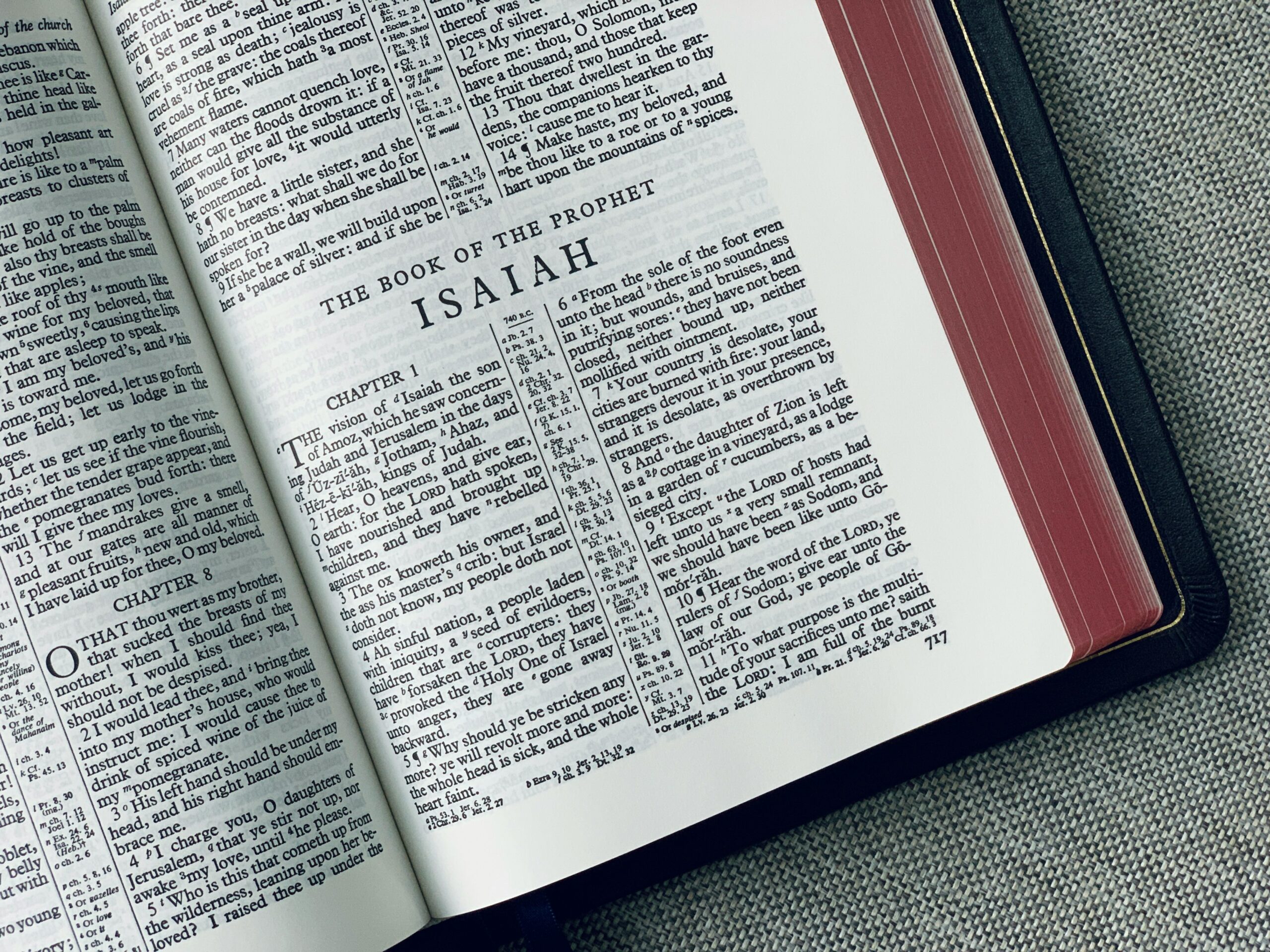
The Suffering Servant Pt 6
This sermon explores the concluding verses of Isaiah 53, presenting them as the final touches that complete the prophetic portrait of the Messiah. The speaker emphasizes that Christ’s suffering was not accidental but the deliberate will of the Father, fulfilling the purpose of atonement through a trespass offering that fully paid for human sin. By examining the theological concepts of justification and the satisfaction of God’s justice, the message highlights how the Servant’s anguish resulted in the imputation of His righteousness to believers. The exposition concludes with the promise of Christ’s exaltation and the universal scope of His intercession, inviting listeners to trust in the completed work of the cross for their salvation.
Transcript
God’s people would take their
Bibles once again and turn once again to Isaiah Chapter 53. Isaiah Chapter 53. We have come into not a museum. We’ve come not into a museum
to see a finished piece of work, but we’ve been invited right
into the artist’s very studio. We have watched as this master
artist has carefully mixed his colors and begun to place them
on the canvas. We’ve watched the skill with
which he’s placed the various colors in this portrait of the
Messiah. We have watched how meticulously
he works and reworks the canvas and returns again and again with
various shades and various colors. And again, contributes to the
work at hand. But we are in a studio and not
in a museum. We are watching the artist at
work, but It’s very important to note that the piece is not
yet finished, and if we walked away having only considered up
through verse nine of chapter three, we would walk away from
an incomplete painting far from a masterpiece. It is these concluding
verses, verses 10 through 12, where the artist dips back in
once again to all of these various shades and brings. This portrait of the Messiah
to its completion, to indeed the status of what can only be
called a masterpiece. If you would, let’s return again
and take it in its entirety as we savor this work of the Holy
Spirit working through the prophet Isaiah. Chapter 52, verse 13. Behold, my servant will prosper. He will be high and lifted up
and greatly exalted, just as many were astonished at you,
my people. So his appearance was marred
more than any man. Thus, he will sprinkle more than
any man and his form more than the sons of men. Thus, he will
sprinkle many nations. Kings will shut their mouths
on account of him. For what had not been told them
they will see, and what they had not heard they will understand.
Who has believed our message, and to whom has the arm of the
Lord been revealed? For he grew up before him like
a tender shoot, and like a root out of parched ground. He has
no stately form or majesty that we should look upon him, nor
appearance that we should be attracted to him. He was despised
and forsaken of men, a man of sorrows and acquainted with grief.
And like one from whom men hide their face, he was despised.
And we did not esteem him. Surely, our griefs he himself
bore, and our sorrows he carried. Yet we ourselves esteemed him
stricken, smitten of God, and afflicted. But he was pierced
through for our transgressions. He was crushed for our iniquities.
The chastening for our well-being fell upon him. And by his scourging,
we are healed. All of us. like sheep have gone
astray. Each of us has turned to his
own way, but the Lord has caused the iniquity of us all to fall
on him. He was oppressed, he was afflicted,
yet he did not open his mouth like a lamb that is led to slaughter,
like a sheep that is silent before its shearers, so he did not open
his mouth. By oppression and judgment, he
was taken away. And as for his generation, who
considered that he was cut off out of the land of the living
for the transgression of my people to whom the stroke was due. His
grave was assigned with wicked men, yet he was with the rich
man in his death, because he had done no violence, nor was
there any deceit in his mouth. But the Lord was pleased to crush
him, putting him to grief. If he would render himself as
a guilt offering, he will see his offspring, he will prolong
his days, and the good pleasure of the Lord will prosper in his
hand. As a result of the anguish of his soul, he will see it.
And be satisfied by his knowledge, the righteous one, my servant
will justify the many as he will bear their iniquities. Therefore,
I will allot him a portion with the great and he will divide
the booty with the strong because he poured out himself to death
and was numbered with the transgressors. Yet he himself bore the sin of
many. and interceded for the transgressors. We’ve seen the artist at work.
We’ve noted the richness of his colors, even the fascinating
subject matter with which he is attempting to paint a picture. But we don’t have a complete
picture. We don’t have a masterpiece, not yet. The artist is at work
and it’s If we were to stand back from this masterpiece, we
would certainly notice some of the masterfully mixed colors.
We would certainly notice the brushstrokes that are applied
with care. But we would have an incomplete picture of the
Messiah. Consider the first verse. In the first verse, the servants
astonishing reception, we would know that this Messiah was amazingly
received, even though from a human standpoint, he was horrifically
marred. And yet, amazingly, he was received
even by heathen kings. He was received. We would know
also from the second verse, verses one through three of Chapter
53, we would know that this servant was astoundingly rejected, rejected
even by his own people and largely because of his appearance, because
of his status. Because of who they deemed him
to be and believe that he was rejected even by God himself,
they judged him as unfit for office, certainly the office
of Messiah. From the third verse, we would
certainly come away with a picture that this was a this was a servant,
this was a man who had suffered incredibly. We would come away
with a picture of the servant’s amazing suffering. We knew from
those opening verses, verse four, that his mission was clear, that
he was there to bear our grief. He was there to share in our
misery and difficulty. He was there to give propitiation,
payment, pierced through for our transgressions, crushed for
our iniquities, chastened for our well-being, and scourged
for our healing, we would come away with the fact that no doubt. This man, this Messiah had come
for sinners, but we still wouldn’t have a complete picture. We would
have a picture of astonishing reception, astounding rejection,
amazing suffering, and even in the fourth verse, awful demise,
we would know that ultimately the suffering was unto death.
We would know that Christ suffered brutally. We would know that
from his demeanor, he never lost it. He never answered in kind
to those who were unjustly brutalizing him. We would know that through
it all, there was incredible indignity done to this Messiah. From verse 8, by oppression and
judgment, he was taken away. He was arrested and treated like
a common criminal. We know that he was buried. At
first with great indignity. With thieves and robbers. But
ultimately placed in the tomb of a rich man fulfilling scripture. And if it were to end there.
It is an intriguing picture. It is a picture that would beg
us to look again. It is a picture that would provoke
interest and curiosity. But it is not a complete picture.
I want to do that this morning. I want to look so that we can
complete the picture of what Isaiah has done here in Isaiah
52, 13 through Isaiah 53, 12. And that is to present the greatest
masterpiece of the Messiah that scripture ever presents. Just a few notes. In this third,
pardon me, in this fourth song that Isaiah presents, fourth
in a series of four songs, we come to the fifth and final verse
in verses 10 through 12, where we learn about the servant’s
awesome sacrifice. And by awesome, not only was
it terrific in the sense that it was brutal, we’ve already
seen that, but it was awesome in the sense that it meant something.
It was purposeful. It was by God’s design. It was
not empty. It wasn’t just suffering for
suffering’s sake. It wasn’t just another death
in a long string of human deaths. The suffering, this death had
a purpose and it is awesome. The artist, as I’ve pointed out
on many different occasions, dips back in to the color on
the palette Colors which he’s already mixed and used before.
He uses the word Lord. Used also in verse 1 and verse
6. He uses the word grief, which
he first introduced back in verse 3 and verse 4. He uses the word
crushed again to bring up to speed the purpose for which Christ
was crushed. He brings up the very term that
he used to start this description, my servant. He uses that term
in verse 11 and points to the fact that this knowledge, this
knowledge that he has is what leads to our salvation. The word iniquities is used again,
as he has already used it several times in verses five and six,
pointing to those for whom he came those for whom he died. He points to transgressors, likewise. He closes in verse 12, pointing
to the strong. And to death. The artist really
introduces almost nothing new in these closing verses, verses
10 through 12. What he does in dipping back
into the color is bring out the richness of this painting and
complete the masterpiece. If you would go with me to verse
10, where first of all, we read. About the atonement. The servants
awesome sacrifice included this element of the atonement. In
this fifth and final verse, the verses 10 through 12. We see
the background of what the Messiah endured and that the gracious
counsel of God was really fulfilled This didn’t just happen, this
was part of God’s plan, this was part of God’s development.
I want you to notice a couple of features, though, just as
we get into this opening section. Note the future nature of this
section, the word will is used eight different times, he will
see his offspring speaking of the Messiah, he will prolong
his days speaking of what God would do on his behalf. The good
pleasure of the Lord will prosper in his hand, a blessing to the
Messiah. As a result of the anguish of
his soul, he will see it and be satisfied. And I would suggest
to you that that is speaking of the satisfaction of God’s
justice. The righteous one, my servant,
will justify the many. He will bear their iniquities.
Verse 11, Therefore, I will allot him a portion with the great
speaking of the Messiah. And He will divide the booty
with the strong. Throughout this section, there
is a future element to it. It’s the culmination of the artist’s
picture. And here the artist, as he dips
his brush back into the manifold colors that he’s already used
and mixed, he places his finishing touch on this piece by beginning
with the atonement. Look at verse 10. The Lord was
pleased to put him. Pardon me, the Lord was pleased
to crush him, putting him to grief. Now, as I said again,
the artist returns to the master agent in this whole drama, the
Lord, he refers to him, which in this context can only refer
to God, the father. God, the father, was pleased
to crush him. God, the Father, has been a prominent
feature throughout, as I’ve already pointed out. To whom has the
arm of the Lord been revealed? Verse six, the Lord has caused
the iniquity of us all to fall upon him. This didn’t catch God
by surprise. This was all part of God’s design,
as we will see graphically here in a moment. We learn in verse
five that the suffering servant was crushed for our iniquities,
but here With a masterful and finishing stroke, Isaiah informs
us that it was the father himself who crushed him. The Lord was pleased to crush
him. Now, don’t misunderstand. This
word, it is what it means. Crushed. And God is frequently,
as we saw, the subject of the verb. God is the one that does
the crushing. Psalm 51, eight, let the bones
which you have broken rejoice. Psalm 90, you turn man back into
dust, you are the one that crushes. But don’t misunderstand, God
doesn’t take some kind of gleeful delight in watching Christ punished. This is speaking of the will
of God. It pleased God, meaning it fit with the very will of
God. As one said, the basic meaning
is to feel great favor towards something. It’s used in such
expressions as the land of delight, words of delight, where it speaks
of the pleasure which the land or words give. The word is used
further, though, in reference to a person’s great interest,
his business. So when it says that God was
pleased to crush. This means that this was at the
very core of God’s will. This was at the very core of
God’s design for Christ and for the redemption of mankind. Certainly. It was men that struck
Christ. It was men that brutally arrested
Him. It was men that battered Him and beat Him. It was men
that put Him on the cross. that ultimately the crushing
of the Messiah, that deep bruising was God. God made those men subservient
to His pleasure. God made them to fit His counsel,
His will, His predetermined plan. It all fit together as those
men moved to strike the suffering servant. This all fit the purpose
of glorifying God, this all fit the plan, the great plan of redemption. As one said, the sufferings of
the servant are referred to not to chance or to fate or even
to the wickedness of his persecutors, but to the absolute good pleasure
of the father. manifesting itself in fullest
measure in the hour of apparent failure. We saw it and we shook
our heads. The average person saw it and
they could not believe this. This is the Messiah. Likewise,
in verse three. Back in verse three, we discovered
that the Messiah was acquainted with grief. Here we are told,
too, that this was a result of the father’s will as well. The
Lord was pleased to crush him, putting him to grief. This was
an act of God. This was God’s doing that brought
him to grief. And it had a purpose and the
purpose was the atonement. The payment for the sin of sinners. Look at the verse in its entirety,
the Lord was pleased, putting him to crush him, putting him
to grief if he would render himself as a guilt offering. Word guilt. Appended to the word offering
pointed to a specific kind of offering the word guilt meant
to offend or to be guilty having offended or trespassed and the
basic meaning of the word is really guilty if you will. But it goes on. not just from
the act of guilt to the condition, the conscience that comes into
play, the state of being under judgment, having been rendered
guilty. The Leviticus uses the word abundantly
in chapters four through six, where any individual who had
sinned was deemed to be a guilty person. And there in Leviticus,
It unfolds the process of. Dealing with that guilt. And
normally restitution had to be made and 20% was added to that
and then an offering unto the Lord was given. It’s called the
trespass offering. And the goal of that was atonement
and forgiveness. And so this offering that is
paid. By the soul of the Messiah. would consist in the sacrifice
of himself paying for our sins with a violent death. This trespass
offering, even though in some translations I think they have
it as guilt offering, what it’s pointing to is a specific kind
of offering. Let me tell you more about those. Let me give you just a little
bit of a contrast between the two kinds of offerings. In a
sin offering, the variety of the sacrifice varied greatly. You could bring a bull, a pair
of doves, even a meal offering. You would bring it before the
Lord. It was presented by the congregation. We all would bring
an offering and generally on behalf of our sin, knowing that
we had sinned, we would bring this offering and lay it before
the altar and it was done on holy days. And the priest would take the
offering and he would represent the offer he would go on our
behalf and he would go before the Lord and present the offering. And from that offering especially
in the case obviously in the case of an animal sacrifice he
would take that blood and sprinkle various things or smear the blood
and the blood represented the forgiveness of the atonement.
There was another kind of offering though. The trespass offering
was really quite different. The trespass offering required
a ram or a male sheep to be sacrificed. It was presented by individuals,
we would bring an individual offering for a set and specific
sin, we would come before the Lord and we would bring our offering
and and give it to the priest and it was never done on a holy
day. This was done on all the other days, this was done for
our own sin. and a particular sin and the
priest would go before God and he would, as it were, represent
God and take the ram and sacrifice it. This also included it was
absolutely requisite that there be restitution, full payment,
full payment to whoever you had offended, plus a fifth. There was no sprinkling of this
blood was burned in its entirety. to represent just the absolute
horrific nature of the sin. There are all kinds of different
offerings. One author pointed out that every species of sacrifice
had its own primary idea. The fundamental idea of the bird
offering. Was this offering of worship
of sweet savor and to God peace offerings were a knitting of
our fellowship with God. It was a relationship builder.
These peace offerings, there was the the meat offering, which
was especially relative to our sanctification process, it was
growth. Sin offering was for atonement.
But a trespass offering was for compensation, it was knowing
full well that we had done something wrong in a particular arena,
and so the sacrifice of the servant here. What exactly does that figure?
Well, it absolutely figures in the trespass offering, but it
really encompasses all of them. It really encompasses all of
it, if you speak about the whole offering and the point of the
offering there being. This offering of worship. What
better offering is there to draw us near to Christ? The peace
offering the the the sacrifice that is offered there, the knitting
together, the building of the relationship. Christ begins to
work. He pays the penalty and he begins
the work of restoring a right relationship between a sinner
and God. Certainly, there was the sin offering, the general
sin, the sin of mankind, as is figured in this offering as well. But it was the trespass offering
that really comes in that Christ Christ has taken all of our sin
and paid it all in full, including the restitution, including the
plus 20 percent. Christ has taken it all. He is
abundantly paid for our sin. In its entirety. One said it
this way, the sacrificial character of the death of the servant is
distinctly defined. It is a trespass offering, an
expiation for the sins of the people. The man who confessed
his guilt voluntarily or involuntarily paid his shekels according to
the judgment of the priest and offered a ram. It involved the
idea not only of an atonement, but of a satisfaction according
to the nature of his sin. Jesus Christ paid it all. Jesus
Christ made an offering that covered not only all of my sin,
but all of the sins of sinners. As a result, Isaiah says, he
will see his offspring. This was the blessing of God
on his offering. That Offspring so often it’s
translated as the seed the seed of Abraham the seed of David. Speaking metaphorically originally
it meant literally to plant. But here it just says that Christ’s
offspring is going to be abundant. What a what a glorious promise
that is for you and I. Certainly we have if we have
placed our faith in Christ we are already a mark of that blessing
for Christ that God has already begun to make good on this promise
to Christ. But it also leaves wide open
the privilege of sharing Christ with others and seeing them come
and having them become part of the great offspring that God
gives to his son. Not only that, not only will
he see his offspring, he will prolong his days and the good
pleasure of the Lord will prosper in his hand. These are just additional
blessings of God and what Christ has accomplished. So often the
blessing of days, the lengthening of days was one of those certainly
given in the law. Obey your parents and it will
go well with you. You will see length of days as
the Hebrew has it. Earlier in this verse. The good
pleasure of the Lord will prosper in his hand early in this verse,
verse 10, it said the Lord was pleased to crush him. Now we
see that the good pleasure of the Lord is bestowing favor,
honor, glory upon the Lord Jesus Christ and he will prosper. The
root of that word just meant to accomplish satisfactorily
what was intended, in other words, God accepted what Christ had
done. It pleased him, and as a result,
God began to prosper him because that offering was so perfect,
so complete. We see in this portrait, this
portrait of the Messiah now coming into focus as we begin to step
back, we see that the picture was uncomplete, not yet finished
without the element of the atonement, not yet completed without seeing
that there was a purpose for which Christ suffered and died.
But now that we see that the Lord was pleased to crush him,
putting him to grief, this was God’s design, that he rendered
himself as a guilt offering, payment in full for all of our
sin. As a result, there would be a
blessing. There would be a blessing to
this Messiah. But the picture yet is still incomplete. Glance at verse 11. At verse
11, we see another amazing element in this awesome sacrifice that
Christ makes, it’s justification. Look at verse 11. As a result
of the anguish of his soul, he will see it and be satisfied.
This is God looking upon the sacrifice. By his knowledge,
the righteous one, my servant, will justify the many as he will
bear their iniquities. Let’s talk about the first of
these two sentences. As a result of the anguish of
his soul, he will see it. And be satisfied, make no mistake,
Jesus knew what he was doing. Jesus knew what he was doing
when he came to Earth, he came as the suffering servant, he
he had this already in his mind from eternity past. He had this
very portrait before his mind by way of the Holy Spirit. The
Holy Spirit communicated these things to Isaiah to communicate
to you and I that Jesus knew what he was going to receive.
And it was going to be anguish. And make no mistake, this anguish
is real. The word just talks about labor
and toil, frustration, but it often has this subtle nuance
to work that is drudgery. And it isn’t pointing here, it
isn’t taking away from the greatness of work, the nobility of labor. But it is pointing to the dark
side, to the difficult side, to the grievous, toilsomeness
of work. As a result, this word is often
translated many different ways, labor, toil, trouble, mischief,
sorrow, travail, pain, grievousness, misery. But it points to. Is that because
of the trouble, the misery, if you will, of what his soul endured,
not just in his body, because as we’ve seen in weeks past,
it was it was a complete. Mistreatment of Christ and it
reached to the innermost part of his being, even down to his
soul. This anguish. certainly touched
his physical body. But it broke his heart as well,
as we saw last Lord’s Day. And as a result of all that,
he ultimately would enjoy a satisfying or a pleasing sight. And it was
God’s acceptance of that sacrifice. God saw what Christ went through
and God saw that it was acceptable. God. God took it in full. When it says satisfied, we we
have a tendency to kind of dull the richness of the words of
Scripture. This fully paid the sin of sinners. The particular sense of this
word is to be satisfied by nourishment to eat until you’re full and
it’s you’re good. Satisfied. So often it talks
about physical eating, but it’s not limited just to physical
eating. Many times it’s used in a spiritual sense to be completely
satisfied with God’s good gifts. And in this particular case.
The suffering. Of his servant was completely
satisfactory to God. There was no other sacrifice
that ever need made, nothing ever needs to be repeated, Christ
never needs to suffer again, no other sacrifice could even
come close. God goes on. God’s Word goes
on and Isaiah goes on to say, by his knowledge, the righteous
one, my servant will justify the many. Once again, Isaiah
comes full circle in order to polish off his masterwork. The
servants abruptly reintroduced all the way back in the very
first verse of the song, chapter 52, verse 13, when Isaiah said,
Behold, my servant will prosper. Now, here in these closing verses,
having given us a rich description of this mysterious figure, Isaiah
begins to uncover new truths that not only will he be righteous. But this servant will have the
capacity of bestowing that righteousness upon others. Absolutely amazing. What is this knowledge? It said
by his knowledge, and it could be taken two different ways,
as you know, from a grammatical standpoint, is it others knowledge
about him. Our knowledge about Christ. Or is it Christ’s divine knowledge
that is in play, and I would suggest to you that it’s neither.
Some people said that it was our knowledge about him. Here’s
one. The righteous one makes others partake of righteousness
through their knowledge of him. So merely by hearing about Christ
and learning about him and and once we know about who he is,
I don’t think that’s what it’s talking about at all. I’ll tell
you why in a moment. Neither do I think that it’s
talking about Christ’s divine knowledge, I’m not taking that
away from him. I’m not suggesting that Christ wasn’t fully divine
in that regard. But I don’t believe that that
Isaiah here is talking about either one, and I’ll tell you
why. It isn’t our knowledge of him, nor is it his divine knowledge
that’s being referenced here, but it’s his full experience
as a suffering servant. His knowledge in that sense. He knew suffering. He knew pain. He knew the hardship. He knew
grief. He knew our sorrow. He fully
knew and fully experienced suffering on our behalf. That same exact
word. Remember what Isaiah is doing
here? He’s using Hebrew poetry and he’s dipping back in and
he’s selecting words, not just color. He’s taking words and
Back in verse 3, he said that he was a man of sorrows and acquainted
with grief. Acquainted? It’s the same word. He was absolutely fully and completely
knowledgeable. Absolutely experienced to the
full. Grief. Here in this particular
setting when it says, by his knowledge. It was God looking
upon what the Christ, the Messiah had offered. In its completeness,
by what the Savior had known and suffered and experienced,
the righteous one, my servant, will justify the many. That’s
what gave him the prerogative. Look again, by his knowledge,
the righteousness will justify the many. He will bear their
iniquities. Isaiah brings in the rich hue
of the atonement from earlier in His work. In verse 4, He made
us aware that the Messiah had borne our griefs and carried
our sorrows. Here, Isaiah completes the thought
by telling us that it’s our iniquities. Not merely griefs and sorrows
that Christ took upon Himself, but our sin. One said it this way, Because
our righteousness has its roots in the forgiveness of sins and
absolute as an absolutely unmerited gift of grace without works,
the prophecy returns once more from the just from the justifying
work of the servant of God to his sin expunging work as the
basis of all unrighteousness. What he points to there Is that he says, as God looked
upon what Christ had accomplished, taking all of our iniquities
upon himself, this was the Savior that was bestowed the privilege,
the right to bestow his righteousness on all who come to him. This toil that Christ endured,
this pain, this grief, the sorrows bearing our iniquities, Taking
our debt upon himself is what freed him up to offer his righteousness
to us in return. See, what he points to here is
not just that Christ, as we’ve seen in weeks past, isn’t just
that Christ fellowshiped in our sufferings, that he suffered
the same kind of suffering as us. He took all of our suffering
upon him. And as a result, he put his righteousness
upon all who believe in him. That’s what made first Peter
224 stand out so profoundly. He himself bore our sins in his
body on the cross. And the painting, the masterpiece
is almost complete. But not yet. In the servant’s
awesome sacrifice, we see his atonement. We see the rich foundation
of justification by faith. But we see in closing. The blessing
upon this Messiah, God’s blessing upon him. Look at verse 12. Therefore, I will allot him a
portion with the great that he will divide the booty with the
strong because he poured out himself to death and was numbered
with the transgressors. Yet he himself bore the sin of
many and interceded for the transgressors. This promise that God gives here. Is nestled between two other
elements, the humiliation that Christ experienced and the exaltation
that he would receive. What it points to is that Christ
submitted. So joyfully to this suffering
on behalf of sinners, but he wasn’t the center. Instead, he bore the sin of many. God says, therefore, I will apport,
I will allot him a portion with the great. Now, here’s an interesting
twist. Everywhere else in this entire section, that word great
is translated many. 52, 14, many were astonished. 52, verse
15, he will sprinkle many nations. 53, verse 11, he will justify
the many. Then in 52, verse 12, he bore
the sin of many. The word did have these legal
connotations, it was almost like the processing of a will. To give is a possession. But what it’s pointing to here
is that Christ was not going to give a possession, bestow
some kind of gift upon those who are great in some kind of
political sense. Great in the sense of being powerful,
great in the sense of being influential. When it says, therefore, I will
allot him a portion with the great, I will allot him a portion
with the many. I’m going to put him right in
there among them. That’s how Christ bears our sin. God sees us in him. God put him with them. God recognized
that Christ was on our behalf. And I think that’s what the second
phrase points to as well. He will divide the booty with
the strong. God doesn’t go and take the treasures of the world
and bestow them on only the strong. An idea like that would be utterly
absurd. Even still, there were those
that took it in this fashion. One said the great and the strong
are words which describe the kings and the rulers of mankind.
Do we have some kind of idea that the Savior, the Messiah,
someday is going to bestow his riches merely on kings who happen
to have been elected or chosen? I don’t think so. I think the strong here in this
verse, verse 12, is the same word. It’s the same word, and
I think it should be translated the same exact way that we saw
in verse eight. And in verse eight, it’s by oppression
and judgment, he was taken away. These are the oppressors. These
are the strong men that have prerogative of exercising their
strength in oppressing others. How will he divide the booty
with the strong? That even those who oppressed
Christ Even those who maligned him and abused him, even those
who hated God and hated his son. Even those are not outside the
pale of God’s justice, even those are not outside the pale of God’s
forgiveness. And if only they would come to
him in faith, God is not about to withhold the riches of his
treasures, salvation by faith from even those who oppressed
Christ. Because he poured out himself
to death. A word to pour out was used often as a figure of
death. It was it was literally the pouring
out of yourself. One pastor so richly described
that verse when he said the servant of Jehovah goes through shame
to glory. through death to life, he conquers
when he fails, he rules after being enslaved. He lives after
he has died. He completes his work after he
himself has been apparently cut off. His glory streams upon the
dark ground of the deepest humiliation to set forth which dark colors
were supplied by the pictures of suffering contained in the
Psalms and the Book of Job. And these sufferings are not
of his are not merely the sufferings of a confessor or a martyr. But a vicarious atoning suffering. The sacrifice for sin. So when
it says that he was poured out, he poured out himself to death.
He was numbered with the transgressors. He points to us. That it was
for our sins that Christ died, it was for our misdeeds. It was for our sinfulness that
Christ. Paid this mighty price. Yet he himself bore the sin of
many as Isaiah closes out and interceded for the transgressors.
Take you to an absolutely amazing description. Written many, many years ago,
he said the prophetic view ascends in these discourses step by step,
what he’s doing, he’s taking us on a walk, but it’s not just
any walk and neither is Isaiah. He’s taking us on a walk to the
cross. Prophetic view ascends in these
discourses, step by step, as it were, from the one broad space
covered by the foundation walls of the temple to the very summit
with its giddy height. On which the cross is planted
and the nearer it reaches the summit, the more conspicuous
do the outlines of the cross itself become. Until at last,
when the summit is reached, it rests in peace, having attained
what it desired when it set foot. Upon the first steps of the temple
tower, in other words, we see in full the purpose for which
Isaiah penned this. We see Christ crucified. We see
the penalty paid. We see the penalty received by
God himself and accepted in full. You have the idea here of the
suffering servants at the top of that hill, hanging on the
cross for our sake. The Messiah, the servant of Jehovah,
has paid our penalty in full. He himself bore the sin of many,
and he interceded for the transgressors. Now, mind you, what the artist, Isaiah is pointing
to there when it says the interceded for the transgressors. It’s not
I know that it’s true. It’s not talking about how Christ
sits in heaven even now interceding for you and I. So what that’s
talking about. We’re still at the foot of the
cross. We’re still beholding what God has done in sending
the suffering servant. To reach the culmination of his
experience. Crucifixion for our sin. And
when it says that he interceded for the transgressors. It’s pointing to. The cross on
top of the hill. It’s pointing to the savior that
even in the face of detractors and those who hated him. Look
down in prayer and said, Father, forgive them. So they know not
what they do. This is our Savior. That’s the
nature of our Savior. And now stand back. Consider the masterpiece of the
suffering servant. Who suffered and died for a purpose.
For the salvation of souls. Would you go before Him with
me? Oh, merciful God. We should never look on Isaiah
53 the same way again. We haven’t even begun to touch
its depths. We know that it’s a masterpiece,
and yet we can’t even fully articulate why. Lord, we see. We see the suffering servant
and we watch the unfolding stanzas of this rich description tell
us about what He did on our behalf. That so many rejected Him, and
yet He suffered. Suffered unto death, but not
without purpose. Lord God, if there are any here
who do not know the Lord Jesus Christ as their Savior, young
or old, visitor or regular attender, work in their heart. Our God,
we pray, bring them to faith. Help them to see that Christ
is the only way of salvation. And that it is justification
by faith. The fact that we can stand before
God fully justified. Not perfectly righteous ourselves,
but standing in the righteousness of the suffering servant. God,
grant them that grace. move in their hearts, bring them
to faith. We plead with you in Jesus name.
Amen.
Messages: 15