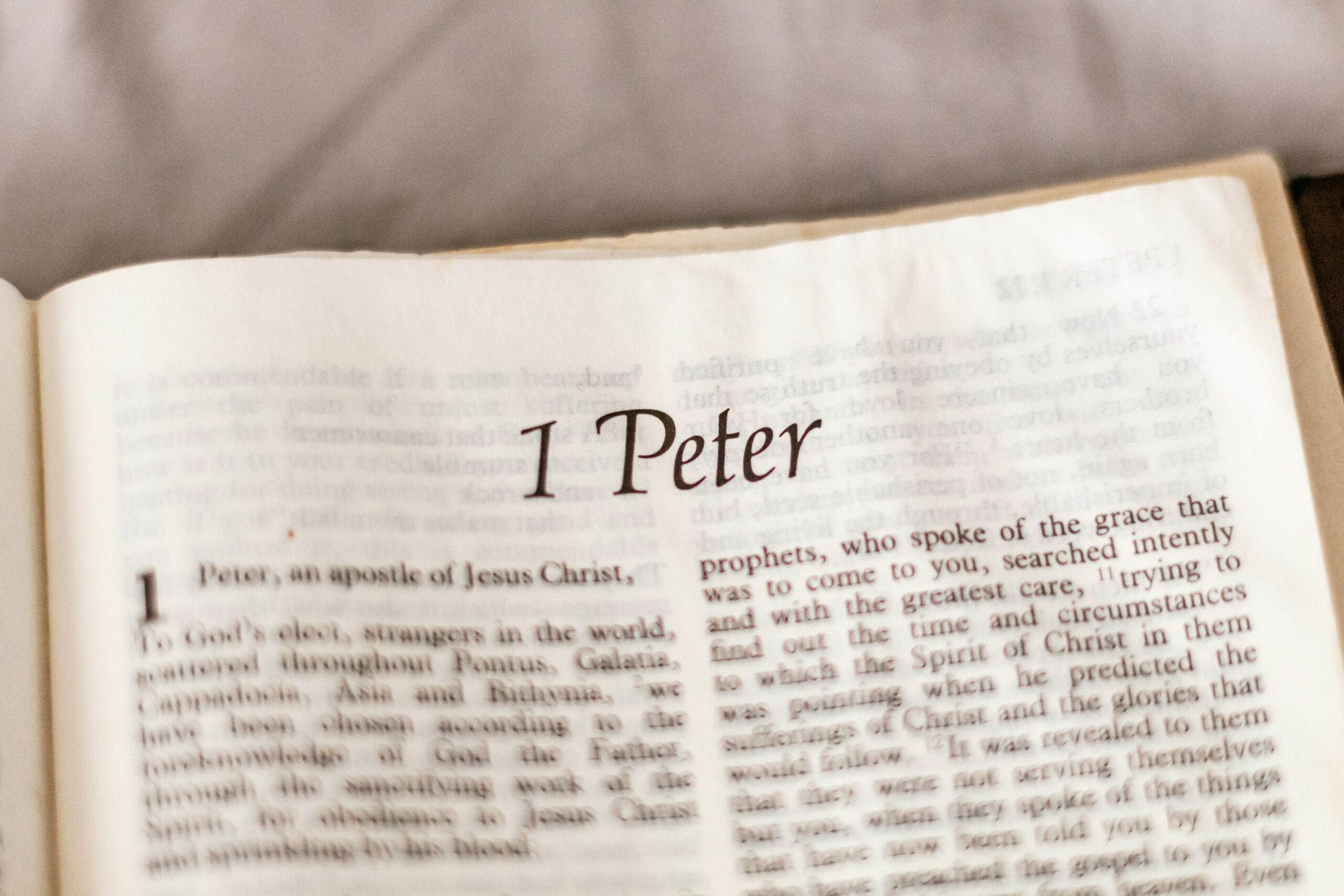
Blessings of the Cross of Christ, Part 2
This sermon explores the theological significance of Christ’s death as presented in 1 Peter 3:18, emphasizing that His sacrifice was not merely an example to follow but a substantive act of salvation. The central message identifies four key benefits of the cross: it was satisfactory to God’s justice, sufficient in its scope, substitutionary in its nature, and saving in its result. By highlighting the contrast between the ‘just’ Christ and the ‘unjust’ sinner, the exposition underscores the profound reality that believers were once enemies of God, engaged in spiritual warfare, but have been reconciled through the blood of Christ. The tone is both convicting and comforting, urging the audience to recognize their total depravity and the magnitude of God’s mercy, which enables them to face persecution with courage and maintain a clear conscience. Ultimately, the sermon calls for a deepened awe of the gospel and a commitment to live as ambassadors of peace, secure in the knowledge that the war between humanity and God has been decisively ended by Christ’s work.
Transcript
What a privilege to. To preach God’s Word in that
context, if you would take your Bibles and turn once again to
first Peter. And to the same passage that
we were in last week. And if I’ve never said it before,
if you’re looking at the bulletin and the passage in the bulletin,
no, my computer didn’t mess up. That’s how I intended the passage
to lay out. Those of you who’ve been around
me for a little bit know that I diagram it for a purpose so
that you can begin to digest and see how the passage is structured
so that you know what God’s outline is. There is an outline in every
passage, and this one is deep. I am going to go back and we’ll.
Read that passage in its entirety because there is context there
for the passage that we’re in and also to, as I’ve said before,
to forecast for you where we’re heading and how greatly you should
be praying for me as we take on these deep truths. First,
Peter, let’s begin, if you would, chapter three in verse 13. where Peter reminded them, and
who is there to harm you if you prove zealous for what is good?
But even if you should suffer for the sake of righteousness,
you are blessed. Do not fear their intimidation
and do not be troubled, but sanctify Christ as Lord in your hearts,
always being ready to make a defense to everyone who asks you to give
an account for the hope that is in you, yet with gentleness
and reverence. And keep a good conscience so
that in the thing in which you are slandered, those who revile
your good behavior in Christ may be put to shame. For it is
better if God should will it so that you suffer for doing
what is right rather than for doing what is wrong. For Christ also died. for sins
once for all the just for the unjust in order that he might
bring us to God, having been put to death in the flesh, but
being made alive in the spirit in which he also went and made
proclamation to the spirits now in prison who once were disobedient
when the patience of God kept waiting in the days of Noah during
the construction of the ark in which a few that is eight persons
were brought safely through the water. Peter is encouraging his flock. That’s his purpose. From the
very start of the epistle, Peter knew that this was a people,
a people of God who is under great persecution, already under
great persecution and about to experience much greater. And
so Peter wanted them prepared and he wanted them encouraged.
He didn’t want them losing heart and running out in the midst
of the battle. Back in chapter two, verse 13, he had exhorted
all to be subject. And that is the great stream
of thought that we find ourselves yet in here, even in the midst
of first Peter, chapter three. Here, we’re in the midst of an
application, which is an exhortation to the church in general. Remember,
submission had been dealt with in various ways with various
people. He had dealt with wives. He had
dealt with slaves. He had dealt with husbands. Here
he is dealing with the church in general, that in a sense we
are to be submitted to the persecution that comes our way by God’s sovereign
plan. And that’s why he starts this
whole discussion. Who is there to harm you? What
harm can they really do to your soul? The same point that was
made in the psalm that was read this morning. And so at the outset
of this passage, beginning in verse 13, remember, we looked
at five keys to a right response to persecution and simply laid
out there in verse 14. He said, be reasonable. Remember
who you’re serving. Just like the psalmist said in
God, I trust in God. I put my trust. What shall mere
man do to me? Secondly, we were exhorted to
be assured that we when we suffer, we are blessed. The smile of
God awaits us when we sustain the persecution, when we persevere
by God’s grace through whatever difficulty comes our way. The
smile of God, the blessing of God awaits. Thirdly, we were
exhorted to be composed, fearless in the face of opposition. Do
not fear their intimidation. Do not be troubled. We are to
keep our heads held high, we are to be unintimidated by the
world’s orneriness. Fourthly, we were
exhorted there in that passage to be devoted. And here, Paul,
or rather, Peter said, sanctify Christ as Lord in your hearts. There is a submission here that
issues forth in proclamation. But until we sanctify Christ,
until we embrace the difficulty that God has allowed to come
our way as being specifically carved out for us,
we are not going to be ready to proclaim Christ to anyone.
Sanctify Christ and then we will be ready to make a defense. And
fifthly, in that little passage, we were exhorted to be clean,
innocent. of that which we are accused.
Keep a good conscience. Don’t let them put unbiblical
standards upon you. And don’t, by any means, don’t
go against God’s clear standards simply to get the world off of
your back. They’ll never get off of your
back. Never. Just as Peter has done before,
he points us to the ultimate example in enduring difficulty. He’s given us some means here.
He’s given us some keys to a right response to persecution. But
now he wants us to have the motivation to do so. And he points us to
the ultimate example, and the example is Christ and Christ’s
suffering. As we begin to see in first Peter,
chapter three, verse eight. That’s the stream of thought
that is the context. But in verse 18, he says, for
Christ also died or depending on your version, suffered. Christ
suffered unto death. And he wants to use Christ in
our lives as an example that, look, we don’t need to fear their
persecution. We don’t need to cower. We don’t
need to give in or succumb to the pressures to live like the
world would have us to live. Christ has also walked this road. Christ suffered. Christ was persecuted. Christ was suffered and was persecuted
all the way to death. As we pointed out last week,
both of us suffer. Ultimately, both of us die. But
both of us die only once. And then we are ready for heaven. We looked last week at the first
two of four benefits that we noticed in this passage. Benefits
that really accrue to the one whose faith is in Jesus Christ. What did Christ’s death do for
you? The first blessing we looked
at last week was that Christ’s death was satisfactory. It was
payment for sin and it was satisfactory to God. We corrected our understanding
of that word last week, didn’t we? That satisfactory in school
is just, you know, it’s just so-so. But satisfactory to God
means it met God’s approval, the perfect standard. Christ
was the perfect sacrifice. We were reminded that in the
Old Testament economy, no imperfect, no blemished lamb would do. And
Christ fit the bill for a perfect, sinless sacrifice. One Puritan said it this way
in recounting what Christ has done, Christ also has suffered
once for sins, not his own, for he committed none. Therein he
is perfect. But for the sins of the people
in order to obtain the remission of them, to make reconciliation
for them and to take them and put them out of the way and finish
and make an end of them. That’s what Christ did. When
it says that Christ died for sins, it wasn’t this payment
that was constantly recurring in the Old Testament economy
where there was a constant sacrifice, as we saw. 250,000 animals per year estimated in
the Jewish economy. And Christ, but once, Christ
died for sins. Christ died to rid or expunge
sin. And even that is, as we saw,
another argument for patience in the midst of sufferings, isn’t
it? That some people have this faulty understanding that somehow
they’re paying God back as they’re going through whatever suffering
life has dealt their way. They’re earning their way. They’re
paying what little way they can to heaven. That’s not true. That’s faulty thinking. It’s
unbiblical thinking. Christ, in his sufferings, has
taken away the guilt of sin. He’s freed us from the punishment
of sin already so that even when we do suffer, Whether it’s a
trial or whether it’s something that’s come our way, it’s not
a penalty. We’re not paying God. We’re not
earning our way to heaven. Christ died for sin, not us. And Christ’s death for sin, Peter
goes on to say, was once and for all. The second point that
we looked at last week was that not only was Christ’s sacrifice
satisfactory, it was sufficient. Peter said, once for all. It
doesn’t need to be repeated like the Jewish sacrifices or the
sacrifices in the Jewish economy. Once. Once points to the fact
that Christ’s sacrifice was thoroughly sufficient. Hebrews 7.26 said that It is
fitting for us to have such a high priest, holy, innocent, undefiled,
separated from sinners, exalted in the heavens, who does not
need daily, like those high priests, to offer up sacrifices first
for his own sins and the sins for his people. Because this
he did once for all when he offered up himself. Christ was the perfect
sacrifice. Again, one Puritan and simply
by way of review in this passage said that in Christ offering
himself as a sacrifice for us upon the cross, he has so completed
the work of satisfaction of God’s justice. And purchased grace
and glory for them that nothing thereof remains to be done, nor
does the sacrifice ever need be repeated. Christ has done
it and he’s done it all. And it was perfectly acceptable
to God that Christ died for sins and that he do so once and for
all. That’s the review. If you would
stay in that passage and look at that third little inset, what
are the blessings of the cross of Christ? Not only is Christ’s
sacrifice satisfactory and sufficient, but thirdly, it was substitutionary. We’ve already acknowledged this
and there’s overlap in every one of these points. But let’s
focus on this for a minute when Peter says here, the just for
the unjust. The just for the unjust, if you
will, the righteous for the unrighteous. And what comes into focus there
is Christ’s nature versus ours. A holy God taking on human flesh
versus our sinful human flesh. Peter has made this point before. In 1 Peter 2.24, it says that
He Himself bore our sins in His body on the cross. Now, people,
you and I know this is basic stuff. This is the Gospel. This is one of the first truths
that you acknowledge that Jesus died for me. But we become so
familiar with it. I think sometimes we fail to
see the the profundity of it. This is overwhelming that God
would die for sinners. Paul was astounded by it. When
it says in Galatians 3.10, Christ redeemed us from the curse of
the law, having become a curse for us. That’s graphic language. In a characteristically graphic
book, the book of Galatians, Paul wanted the Galatians astounded
by this truth. That it isn’t just that Christ
died. It isn’t just that he died for
sins, but it was the just for the unjust. We deserved penalty. We deserved punishment. We were
the sinners. And we deserve the penalty of
a righteous God. Christ didn’t. But he took it
on willingly. He took it on willingly. Thomas
Watson said of Christ that Jesus leaped into the sea of the Father’s
wrath to save His spouse from drowning. This isn’t something
that happened to Christ. This is something that Christ
did willingly. The just for the unjust. Let’s ponder this for a moment. First of all, let’s consider
us as being unjust. That shouldn’t surprise you.
You know your own heart. You know this week you didn’t
live a perfect, probably not even a perfect hour, a perfect
minute. Our thoughts are self-consumed
and constantly drift towards sinfulness. And it encompasses
all of us, does this taint of sin. Isaiah was right when he
penned the words, all of us like sheep have gone astray. Each
of us has turned to his own way and the Lord has caused the iniquity
of us all to fall on him. The bottom line, people, is our
hope, our only hope as human beings rests on a perfect sacrifice. Spurgeon said it this way, the
great fact in which the Christian hope rests is substitution. And the reason that he said it
was that even if collectively we all died, we wouldn’t save
a single soul. And yet one righteous, perfect
sacrifice, the just for the unjust, did what all of our deaths couldn’t
do. And then some. Because Christ’s
death doesn’t secure just one, it secures many. The great fact in which the Christians
hope rests is substitution, the vicarious sacrifice of Christ
for the sinner, Christ suffering for the sinner, Christ being
made sin for us that we might be made the righteousness of
God in him. Christ offering up a true and
proper substitutionary sacrifice in the place of many, as the
Father gave Him, who are recognized by their trusting in Him. This
is the cardinal fact of the gospel. But don’t let it become so common
to you that you lose your awe of what has happened Matthew Meade, another Puritan,
hadn’t lost his awe when he wrote, Alas, it is an infinite righteousness
that must satisfy our sins, for it is an infinite God that is
offended by us. I mean, do you get the profound
nature of what he’s saying? He’s calling us to get a view
of the holiness of God, a perfect being. That’s what makes it so
absurd when we refuse to forgive those who offend us in an earthly
fashion. I mean, it’s absurd. Remember, that’s why Jesus essentially
pointed to it as the 10 million dollar sin. The fact that we
would go and choke a fellow slave for a 16 penny sin when God has
forgiven us an immeasurable debt, a 10 million dollar debt. He’s holy. We’re not. Matthew Meade goes on, it is
an infinite righteousness that must satisfy our sins, for it
is an infinite God that is offended by us. If ever your sin be pardoned,
it is infinite mercy that must pardon it. If ever you be reconciled
by God, it is infinite merit that must do it. If ever your
heart be changed and your soul be renewed, it is infinite power
that must affect it. And if ever your soul escape
hell and be saved at last, it is infinite grace that must save
it. That word unjust, it doesn’t
mean what we mean, what we speak of in our own day and age. When
we say that somebody did us an injustice, it means that they
cut in on us in traffic, right? Or they cut in on us at the grocery
line. Barb knows well, I don’t like
to go to the grocery store because in the grocery store, it is the
woman’s domain. And if you’re in the aisle, you’re
in the way. And she will, you know, not my
wife, but many Many will go right through you. That’s what we consider
in our day and age an injustice. And we’ve got to look at this
word and get a grasp of what it really means. It means that
we are totally and thoroughly sin-filled. We are totally deserving
damnation. We don’t deserve anything good
from God. We are unjust, unworthy. One Puritan, I love the way they
say things. He said it this way. He said,
we, by our sins, had infinitely wronged God. It’s not just that
God was a little bent out of shape with us or that He was
offended and sitting in the corner wishing that we’d come apologize.
He was infinitely offended by us. We had infinitely wronged
God. And if we could have shed rivers of tears offered up millions
of holocausts and burnt offerings, we could have never pacified
an angry deity. And therefore, Christ must die
that God’s justice would be satisfied. When Peter says, the just for
the unjust, he points first and foremost to the desperate situation
that we were in. And then in the same breath of
the glorious offering that Christ was. God gave Him. God gave Christ. God gave His
own Son. God gave the perfect, sinless
Savior, the just Jesus Christ to pay our sin. It’s astounding. It’s absolutely
astounding. Every time we hear it, we ought
to humble ourselves all over again. Our confession says it simply,
the office of mediator the Lord Jesus did most willingly undertake
and underwent the punishment due us, which we should have
borne and suffered. He was made a sin and a curse
for us, enduring the most grievous sorrows in his soul and the most
painful sufferings in his body. He was crucified and died. Consider
that. The next time you’re engaged
in some sinful indiscretion, consider that the next time that
you lose your temper. It was that for which Christ
died. When you look at it in those
terms, you begin to see how absolutely necessary it was that God send
a mediator, a perfect sacrifice that had to be both God and man,
because if he hadn’t been man, It wouldn’t have been a fitting
sacrifice for mankind. And if He hadn’t been God, the
sacrifice wouldn’t have been enough, would it? Christ literally was made sin. He didn’t sin. He was made sin so that God could
pour out His wrath upon Christ for us. One of the favorite passages
that I’ve ever preached, one of my own personal favorite and
the favorite of the people. Second Corinthians 521. He that
is God made him that is Christ who knew no sin to be sin on
our behalf that we might become the righteousness of God in him.
What a glorious truth. There was nothing in us There
was no human potential. There was no neat personality. There was no striking good looks. There was no great family history. There was nothing, nothing in
you that moved God in your particular direction. It was purely God’s
mercy. God didn’t look down on you and
say, ah, in him, there is a songwriter. There is somebody that I can
use for my there is a guy that I can use in the business world.
There is a person. I mean, how much more simply could
Paul have said it in Ephesians one, he made known to us the
mystery of his will, according to his kind intention, because
he did. I mean, what a simple answer
is that because of his mercy? Why did God love me? Because
he did. I wonder, Paul says in Romans,
it does not depend on the man who wills or the man who runs,
but on God who has mercy. It was purely God’s mercy that
moved him in your direction. Now, back in chapter one of this
book, we read that the sinless of it was the sinlessness of
Christ that gave the blood its value. This is the just. paying the penalty for the unjust.
What we see there is that the unjust man is saved or perfected
by the sufferings of the just. It isn’t just that he sets an
example for us, but he bears the penalties of us. He’s a substitute for the unjust. One said that he died is the
one true sin offering just on behalf, the just on behalf of
the unjust. Well, may we who are ourselves
unrighteous be content to suffer, especially for his cause and
truth. And remember, that is Peter’s entire context and point. The Christ took our sins on willingly,
the just for the unjust. Can we not bear? A little unkindness
in the office for Christ? Can we not tolerate the comments
of our family about our faith for Christ? Christ was the just. Earlier
in this letter, Peter asserted that Christ had committed no
sin, right? Chapter 2, verse 22. And in intimating that point,
what he says is that Christ never had a single thought. He never
uttered a sinful word, never did a sinful deed. Nothing in
Christ’s life ever did not please God. Christ’s life is perfectly
pleasing to God. And God is the perfect standard.
His behavior was in every respect holy and upright. That’s the
Christ that we know of the Scriptures, isn’t it? The just. Isaiah 53,
by His knowledge, the righteous one, My servant will justify
the many. Hebrews 4.15, we do not have
a high priest who cannot sympathize with our weaknesses, but one
who has been tempted in all things, yet without sin. He is the just. This is exactly what led Martin
Luther to his absolutely overwhelming understanding of what really
took place on the cross. And when Martin Luther realized
it, he said this, Lord Jesus, you are my righteousness. I am your sin. You have taken
upon yourself what is mine and given me What is yours? You have become what you were
not so that I may become what I am not.” Martin Luther grasped the truth. The truth that Christ, the just,
had paid the penalty in full for the unjust. One Puritan wrapped up this point
with this thought. He said in one word, the great
fact on which the Christian hope rests is substitution, the vicarious
sacrifice of Christ for the sinner. That is the gospel. But there’s a fourth blessing
to the Christian. There’s a fourth blessing that
we enjoy from Christ’s death on the cross, not just as an
example for us in the midst of our own persecution, but real
tangible blessing. Not only was Christ’s sacrifice
satisfactory, secondly, was it sufficient? Thirdly, it was substitutionary,
but fourthly, it was saving. It was saving. It did something. It really accomplished something. And if you look back at verse
18, you see it clearly there for you. Christ also died for
sins once for all, the just for the unjust, in order that he
might bring us to God. And with that, Any Jew, anyone
who really knew God’s character, knew that something profound
has taken place because a Jew knew that he was not going to
approach God. Only the high priest would go
into the Holy of Holies and that only once with a rope tied around
his ankle so that if God struck him dead, they had the means
to extricate him out of the tent. Something happened. Something
happened that changed the nature of the person. That he might
bring us to God. Because that is not the average thought of someone
who knows the nature of God. Someone who knows the nature
of God, like Isaiah in chapter 6, falls on his face and cowers
in God’s presence and does everything he can to get away from God’s
presence because of his holiness. So how is it that Christ purposes
to bring us to God? We’ve already acknowledged that
we were sinful. We’ve already acknowledged that
Christ the just has paid the penalty and something takes place
here. And what takes place is salvation. I remember seeing a news show one
night in the midst of some skirmish or war or battle, and I remember
it was a little girl that they were interviewing and they were
talking to her about war. And she was saying how she wished
that there would be peace again, that she had taken it so much
for granted. And she said this, and I’ll never
forget it, because with tears in her eyes, she said, because
of war, now I know what is peace. And people, that’s what we constantly
need to keep in our own minds. Because now we want to just walk
blissfully through the Christian life, forgetting all about the
skirmish, the conflict, the war, that was between us and God.
It was a war. We are, by nature, God’s enemies. Not that He’s an enemy with us.
We are enemies of His. Now, I know that that’s shocking
language, but that is the language of Scripture. Scripture says
that we are at enmity. We are hostile towards God. There
is enmity between us and Him. There is strife. That’s exactly what was in Paul’s
mind. He’s not talking about human
relationships necessarily or exclusively when in Galatians
5.19 he says, the deeds of the flesh are evident. You want to
know what an unchristian looks like? This is what it looks like.
Immorality, impurity, sensuality, idolatry, sorcery, enmities,
strife, Romans 1.30 says that those who
do not know Christ are haters of God. People, that was you
and I before you embraced Christ as your Savior. If you’re a Christian
today, there was a point in your time, in your life where you
could have perfectly been called a hater of God. I know it’s true
in my own life. I didn’t like what God had to
say to me. I didn’t like all the rules and
regulations of what Scripture seemed to be offering. I didn’t
like the fact that God sat there looking at me from heaven. I
hated that. And so did you. I know that because
God just told me that. Haters of God, all of you. Romans
129, they are filled with all unrighteousness, wickedness,
greed, evil, full of envy, murder, strife, deceit, malice. I mean,
we weren’t such a great lot after all, were we? But God is a God of peace. Jesus Christ was called the Prince
of Peace. That’s why He came in Luke 179. He came to shine upon those who
sit in darkness and the shadow of death to guide our feet into
the way of peace. Jesus literally came down as
it were, took us by the hand, and now he’s walking us down
the way of peace, peacefully towards God. The gospel message itself is
a message of peace, isn’t it? Acts 10.36, the word which he
sent to the sons of Israel, preaching peace, through Jesus Christ. And people, it’s not talking
about some earthly or political peace where we all stand around
with hands held and all we are saying, give peace a chance,
all that other nonsense. That’s not at all what he’s talking
about. He’s talking about peace with the Holy God with who you
were once at war with, spiritually speaking. No wonder the Christian
message, the Gospel is called the Gospel of Peace. Ephesians
6.15 What is pictured here is is that of a mediator in court. A lawyer on your behalf, if you
will. That in order to end the war, God sent His Son to be a
mediator. To reconcile people to Himself. You didn’t come willingly. Christ
came after you. Christ enacted the peace treaty. Listen to what happened. Paul
said it in Ephesians 2, 13. But now in Christ, you and he’s
talking to you and me, you who were formerly far off have been
brought near by the blood of Christ, for he himself is our
peace, who made both groups into one who broke down the barrier
of the dividing wall by abolishing in his flesh the enmity, the
battle, which was in the law of commandments contained in
ordinances that he himself might make into the two groups one
new man, thus establishing peace and might reconcile them both
in one body through the cross, having put to death the enmity.”
Jesus Christ came to enact a peace treaty and he didn’t ask us for
our permission. Colossians 121, same thought.
Although you were formerly alienated and hostile in mind, engaged
in evil deeds, yet now He has reconciled you in His fleshly
body through death.” This is Christ’s doing. This is what
Christ accomplished. When it says that in order that
He might bring us to God, that is what’s woven in. That He died
for sins once for all, the just for the unjust. It was purposeful. This death on the cross. Romans
5, 6, you know the passage. While we were still helpless
at the right time, Christ died for the ungodly, the just for
the unjust. For one will hardly die for a
righteous man, though perhaps for the good man, someone would
dare to die. But God demonstrates his own
love toward us and that while we were yet sinners, Christ died
for us much more than Having now been justified by his blood,
we should be saved from the wrath of God through him. For if while
we were enemies, did you ever characterize yourself as the
enemy of God? That’s what you were. If while
we were enemies, we were reconciled to God through the death of his
son, much more having been reconciled, we should be saved by his life.
Christ came to enact a peace treaty. And he did it by his grace. You couldn’t earn your way into
this peace treaty. You couldn’t work your way into
it. It’s purely by God’s grace. One
person said that this divine grace is the sovereign and saving
favor of God and exercised in bestowing blessings upon those
who have no merit in themselves. We didn’t come with a little
bit of righteousness or a little bit of personality, nothing.
Remember, we just acknowledge that. What kind of peace comes from
it? Certainly, it’s inward peace. There’s a peace in the heart
because the war is over. We have communion with God now, a oneness,
a fellowship with the Holy Creator. We have clarity of conscience,
which Paul has already pointed out more than once in his writings. We have personal holiness. We
have corporate unity, one with another. I mean, how is it that
people can get along and another motivator for it? We’re called
the civil harmony. Peace in the community. We should
be the most peaceable people of all. And evangelistic, shouldn’t
we be those first and foremost to go about seeking to proclaim
righteousness and reconciliation with Christ? So, Paul said in
2 Corinthians 5.18, all these things are from God who reconciled
us to Himself through Christ and gave us the ministry of reconciliation
Namely, that God was in Christ reconciling the world to himself,
not counting their trespasses against them. And he has committed
to us the word of reconciliation. Therefore, we are ambassadors
for Christ as though God were entreating through us. We beg
you on behalf of Christ be reconciled to God. When was the last time
you preached that to your neighbor? We beg you. be reconciled to
God. That’s Christ’s purpose. I know that’s strong language
to think that we were at war with God. But that’s what Christ came to
set us free from. Jonathan Edwards dealt with that
whole issue of war against God. Jonathan Edwards, probably the
greatest preacher and theologian that America has ever produced.
He said it this way. The strictness of God’s law is
the principal cause of man’s enmity against God. In other
words, he says, we don’t like what God says in our natural
hearts. If God were at once. were one
that did not so much hate sin, if he would allow them in gratification
of their lusts in some degree, and his threatenings were not
so awful against all criminal indulgence, if his threatenings
were not so absolute, if his displeasure could be appeased
by a few tears, a little reformation or the like, they would not be
so great an enemy. Nor would they hate him so much
as they do. But God shows himself to be an
implacable enemy to their idols and has threatened everlasting
wrath, infinite calamity for all that they do in the service
of their lusts. And this is what makes them irreconcilable
enemies to them outside of Christ. But Christ is the peacemaker.
Paul said through him we have access, confident access. Hebrews 7.25 says that he is
able to save forever those who draw near to God through him. What did Christ do? What blessings
did we gain? He paid a penalty for sins, your
sins. And he paid it only once. It
was a perfect sacrifice. Because he was the just suffering
on behalf of the unjust and his whole goal, his whole aim was
to restore this broken and damaged relationship between you and
a holy God. And it’s that which we enjoy,
isn’t it? That’s what we talked about when I bowed my head in
prayer. I said that we’d talk about this
again. that we enjoy this fellowship
with God purely because of what Christ has done on the cross.
You bow your head in private prayer because of what Christ
has done on the cross. We have fellowship with one another
because of what Christ has done. Stephen Sharnock, the Puritan,
said it this way. God, apart from Christ, is an
angry, offended sovereign. Unless we behold him in and through
Christ, the mediator, the terrors of his majesty would overwhelm
us. We dare not approach the father,
except in Christ, because of our sins, we first fasten our
eyes upon Christ and then upon the father. If Christ does not
bear our guilt and reconcile us to God, we perish. Before
any man can think to stand before the face of God’s justice or
be admitted to the secret chamber of God’s mercy or partake of
the riches of grace, he must look to the mediator, Christ
Jesus. Let’s do that. Let’s do that. Oh, merciful God, we bow before
you and we’re so humbled by this passage. We thought that the
ill treatment that we were receiving from family and friends or neighbors
because of our faith two weeks ago was insurmountable,
oppressive, discouraging. Yet, Lord, now we find new courage
because of Your grace to go out and meet whatever unkind treatment
the world has for us for Christ’s sake. And Lord, it’s not only
because of his examples. It’s not only because of the
principles that you gave us, but it’s because of the motivation
of what Christ has done for us. That he died for sin. And he died for us. Lord God, we
thank you for the sacrifice paid for us. We thank you for the
sweet communion that we now have with a holy God, something that
we never on our own could have reestablished. Lord God, we love
You and we thank You for the Savior that You provided, the
great meat eater, our Lord Jesus Christ. We pray these things
in Jesus’ name.
Messages: 61