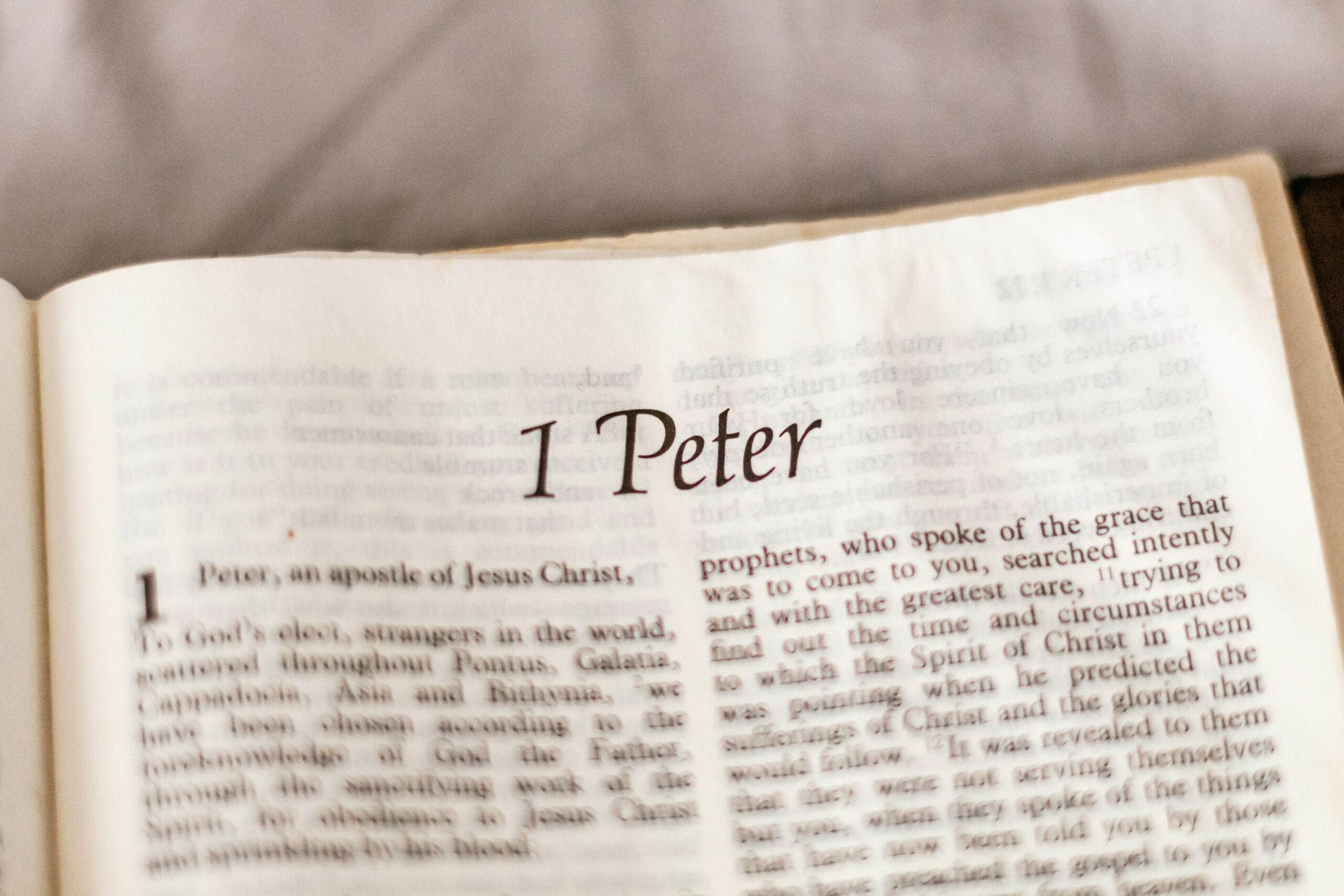
God’s Construction Project, Part 5
This sermon explores the theological depth of 1 Peter 2, presenting the church as a spiritual house built upon Jesus Christ, the living stone. The exposition highlights Christ as the flawless cornerstone, emphasizing His divine appointment and the immovable nature of God’s redemptive work. It addresses the identity of believers as a chosen race and holy priesthood, called to offer spiritual sacrifices of worship and service rather than animal offerings. The message counters the tendency to waver in faith by affirming that those who believe in Christ shall not be disappointed or make haste to flee from their secure position. Ultimately, the sermon encourages believers to find their identity and stability in the unchanging foundation of Christ, who knits together all aspects of the church.
Transcript
That song was just what a great
groundwork and foundation for the passage that we’re considering
this morning. If you would, let’s go back to
First Peter, First Peter, chapter two, where we have been for a
number of weeks. First Peter, chapter two. We have for some weeks been considering
God’s building program, an edifice that God is building, that God
has been constructing for thousands of years and the groundwork of
which was laid in eternity past. As we began to look at this really
incredible passage, I certainly had no intention of spending
What is it, five or six weeks on this? But the depth of it,
and it seems to just deepen the further we look at it, the depth
of the passage really is just overwhelming. Just a couple of
notes for you. If you have the bulletin there,
you have the passage. not only in its entirety as we’ll
consider it this morning, but the passage greater. And then,
if you will, just an explanation about the box inserted there
to the right of the passage is a quote from Isaiah from where
essentially verse 6 comes. And we will be dipping in and
out of that particular passage this morning. Let’s go back and
consider the passage Beginning in v. 4, we’ll read it. Read
along with me if you would. And we will come back and consider
more in depth v. 6. And coming to Him as to a living
stone, rejected by men but choice and precious in the sight of
God, you also, as living stones, are being built up as a spiritual
house for a holy priesthood to offer up sacrifices acceptable
to God through Jesus Christ. For this is contained in scripture.
Behold, I lay in Zion a choice stone, a precious cornerstone,
and he who believes in him shall not be disappointed. This precious
value, then, is for you who believe, but for those who disbelieve,
The stone which the builders rejected, this became the very
cornerstone. And, a stone of stumbling and
a rock of offense. For they stumble because they
are disobedient to the word and to this doom they were also appointed. But you are a chosen race, a
royal priesthood, a holy nation, a people for God’s own possession. that you may proclaim the excellencies
of Him who has called you out of darkness into His marvelous
light. For you were once not a people,
but now you are the people of God. You had not received mercy,
but now you have received mercy.” We looked at this great passage,
which itself was intended to be an undergirding, encouraging
passage of Peter to his people. If you remember, the first chapter
of 1 Peter is all about salvation, the end of which is our expected
response to salvation. And almost the if you will, overwhelming
expectations of being holy as God is holy and upholding all
of those things that Christ encourages us to do. And we come away from
the end of 1 Peter 1, perhaps even somewhat disheartened, as
even the first century Christians likely did. How can we attain
to this? And as always, it is only by
the grace of God. And that is exactly what Peter
commends us to in 1 Peter 2, verse 1 and following. It’s the
Word of God. It’s the Word of God that’s going
to give us instruction. It’s there from which we derive
the grace to carry on, to do the things which God desires
of us. And so this passage following
on its heels is intended as one of those supportive verses, an
encouragement to us that God has begun the work, that it isn’t
so much us buckling down and trying harder. God has already
done the work in us. He’s begun a great building project
of which we are the material. We looked, beginning at God’s
construction project, and we saw, first of all, the foundation
of the structure is none other than Jesus Christ. He is the
living stone. He is the one that we are constantly
coming to. He is the one that we are drawn
to. And He is the one that we not only come once and for all,
but we come and we keep coming. We come and we do not let go
of Christ. that coming to Christ, the idea
of coming and remaining and perpetually coming. We come to Christ as to the living
stone, the one that gives life to all things, especially to
us. Christ is the living stone, but
not all received Him. It is clear, and we’ll come back
to this particular element next week, but to a great portion
of people, He is rejected. Rejected by men. Despised and
forsaken, as Isaiah said. But in God’s eyes, He is choice
and precious. Another concept that we’ll come
back to this morning. Christ is the foundation. Christ
is the living stone there spoken of in those earliest verses. And so we saw not only the foundation
of the structure, but the materials for the structure. If we know
that Christ is the foundation, then what is God using for the
building blocks of this great edifice? And it is us. Peter says, you also as living
stones. And so we, having touched Christ,
have come to life. He, having touched us, has brought
us to life. And now we, too, are viewed in
this illustration that Peter is using, derived from Old Testament
passages. We, too, now are living stones.
We, too, are now part of this great edifice. We, too, are now
woven into the fabric of these walls. We are no longer just
detached stones, as it were, in a field, but we are a particular
kind of stone. We are perfectly carved out and
perfectly worked into this fabric. Not only the foundation of the
structure and the materials of the structure, but the purpose
of the structure. We spent some weeks on this.
It is a spiritual house. It’s not a physical structure.
It’s not one of these big, fancy architectural achievements that
is going to make a magazine and live in fame for years to come. This goes far beyond that. It
supersedes any building project that man has ever taken. In fact,
all of the building projects that man has undertaken together
don’t stack up to this one that God has begun. And it is the
church. It is the church. It’s not a
domestic structure. It’s a religious one, a spiritual
one. It is the church. The spiritual
house in the Old Testament economy was viewed as God’s temple. And
now God is building this invisible, if it were, spiritual temple
that is not made with hands. The building project goes on
to this very day. We’ll come back even to this
verse, perhaps today, Ephesians. Paul uses the same illustration. As I said, derived from Old Testament
passages when he said, no longer are you strangers and aliens,
but you are fellow citizens with the saints. You are of God’s
household having been built on the foundation of the apostles
and the prophets. Christ Jesus himself being the
cornerstone in whom the whole building being fitted and held
together is growing into a holy temple in the Lord. You also
in whom you also are being built together into a dwelling of God
in the Spirit. And so you have this image of
this grand superstructure called the church in which you and I
are building blocks resting on the firm foundation of the Lord
Jesus Christ. It’s an overwhelmingly perfect
analogy of what God is doing in the world. Finally, did I
say finally? Not quite. The foundation of
the structure, the materials for the structure, the purpose
of the structure, the occupants of the structure are a holy priesthood. At the end of verse five, Peter
points out that we are being built up as a spiritual house
for a holy priesthood to offer up sacrifices acceptable to God. For some of us, depending on
our backgrounds, that caused us some concern. The whole doctrine
of the priesthood of all believers has been beat around through
the centuries and overstated and understated and misunderstood.
Make no mistake, Christ has paid the final sacrifice. He is the
perfect sacrifice. And there remains no more need
for anybody to ever offer any physical sacrifice for sin again,
period. But you say, then how are we
priests? Because priests by nature bring sacrifices. We are priests. Christ Himself said it. God’s
Word teaches clearly here that we are a priesthood and we do
bring sacrifices. They’re just not sacrifices for
sin any longer. It isn’t the idea of even the
Roman Catholic priesthood where Christ is re-sacrificed week
after week after week. We don’t even go through the
motions. We don’t even pretend to offer up some kind of sacrifice
for sin. But we do, as priests, now have
a free access to God. We do, as priests, minister as
servants of God. We do, as priests, offer up sacrifices. And what are they? We spent some
time on those. We do bring sacrifices. First
of all, we bring ourselves and our whole selves. As Romans 12,
1 said, we offer up ourselves as a living and holy sacrifice
acceptable to God. That is our spiritual service
of worship. We bring everything within us,
heart, soul, mind and strength. We present our bodies to God.
We live unto Christ. We do all to the glory of God.
That is our spiritual sacrifice. And not only that, but our worship.
We bring everything that is within us and we bow in humble reverence
before Almighty God. Hebrews 13.15 We bring our service. Paul looked at his life being
poured out and spent For the Macedonian people, not the least
of which were the Philippians, as a drink offering. Paul looked
at his own life, if it was poured out and spent. He called it the
sacrifice and service of your faith. What a great concept and
what a transforming perspective. It would change the way the church
operates if we all behaved that way, wouldn’t it? If we all looked
at every opportunity as an opportunity to be a fragrant offering before
God, a thank offering. Not only that, we looked at our
material goods as being the means of offering up an offering to
God. The privilege, as the Philippians
considered it, the privileged participation in the ministry
that God has in the world. There were many. things that
we were told that we could offer up, not the least of which was
our prayer. Our prayers are thank offerings
before God. Our prayers ascend as a fragrant
aroma towards God. And so we are priests and we
do come bearing gifts for God. They just aren’t offerings for
sin any longer. They’re a different kind of offering.
And so we came to point five. point five in this great passage
of the features, outlining the features, if you will, of the
spiritual structure that God is building. What is God engaged
in? He’s shown us the foundation. He’s shown us the materials and
the purpose. He’s shown us the servants, the occupants of that
great structure. And finally, He lays out before
us. He unfolds that scroll, right? Curled up and He unrolls it and
flattens it out on the table before us and shows us the blueprint
of that great structure. What is the blueprint? It’s laid
out there for us specifically in the Old Testament, in the
prophecies that were given for us. And we began to look at that
quote that is a loose, if you will, quote or paraphrase from
Isaiah chapter 28. And that’s where we’ll pick up
And just the briefest of reviews this morning. First of all, we
saw in this blueprint about Jesus Christ, who is the foundation.
First of all, and we see that the blueprint is all about Christ. It all points to Christ. Jesus
Christ is paramount in every syllable of this passage. First of all, we noted the awe
of Christ. And we all had to admit that
this is a word perhaps because of our English language, perhaps
because of our spiritual dullness, perhaps just because of our carelessness,
we skip right over. But perhaps it is because we
have lost our awe of Christ that we skip right over this. When
Peter says this is contained in Scripture, he is quoting,
but that quote points back to an Old Testament formula that
every time a great concept was introduced, and we saw it, we
went through so many of those last week. Behold. When God wanted
to get the people’s attention, He laid out more than 1,200 times
in Scripture, Behold! Pause and look. And not the least of which was
Christ. Christ was the foremost of God’s
revelations. And He says, behold, look. Look at what I’m doing. As one said, the Lord is marvelous
in the least of His works. You walk out and you stoop down
and you pick as we did this past week, the last of the summer’s
flowers. And you look at the marvelous
handiwork of God and the color of it and the structure of it
and the beauty of it. The Lord is marvelous in the
least of His works. In the beautiful changing of
the fall leaves. But in this, He has manifested
more of His wisdom and more of His power and let out more of
His love to mankind than in all the rest of His works. Yet, we
are foolish. And we childishly gaze about
on trifles, don’t we? We get caught up in so many goofy
things. So many unimportant things. So
many things that we see as the forest before us and we lose
sight of Christ. In fact, we set aside the view
of Christ. We childishly gaze about us on
trifles and we let this great work pass by unregarded. We scarcely
afforded half an eye. Turn your wandering eyes this
way. Look upon the precious stone
and behold him. Not in mere speculation, but
so behold him as to lay hold on him. What he tells us to there
is to stop from our busy, crazy, ridiculous lives and to focus
on the only thing that matters. Our Lord Jesus Christ. Behold. And as I said last week,
I think we’re very much in danger of having lost our awe. I mean,
where else? How else could we have possibly
loaned out that word to everything? From a video game to even a view
of a canyon, there’s nothing awesome if it isn’t Jesus Christ. Secondly, noting of this sure
foundation, not only the awe of Christ, but we looked at the
divine work of Christ, or if you will, the divine work of
God in Christ. Look again at the passage. The
simple sentence there is plain. I lay a stone. It’s God speaking. He calls us to attention and
then He tells us what He’s done. I did it. I lay a stone. It’s God’s work. It’s God’s work. And because it’s God’s work,
it is immovable. It is unchangeable. It will not
be daunted. Charles Hodge, the great commentator
and shepherd, said this, all the promises of the church to
the church of old of the Messiah as a future savior. From the
declaration that was made to our first parents in paradise
to the last prediction concerning him by the prophet Malachi demonstrate
the impossibility that Christ, the foundation which God has
laid, should fail. That’s the message that God wants
us to grasp. Is that this is a work of Almighty
God and it will not be moved. It will not be shaken. He continues
and closes with this. Nothing is more abundantly set
forth in Scripture than this. Nothing is more sure and irreversible
than this promise and oath. The Scriptures expressly speak
of it as utterly impossible that the everlasting dominion of the
Messiah should fail. When God says, I lay a foundation,
what he in essence implies there, I have laid it and it will not
ever be moved. What a glorious truth to you
and I. Because there is the firmness
of our foundation. There is the eternal security
that we so long to enjoy. It is a stone of the Lord’s laying. It is laid by none other than
Almighty God. Our mediator, our Savior, our
Redeemer has been sent forth by God Himself. And that firm
foundation stands. Remember, we looked at a couple
of verses and just by way of review, Psalm 118, which we will
come back to again this morning. The stone which the builders
rejected has become the chief cornerstone, a parallel to the
passage that we’re considering. This is the Lord’s doing. God did it. God won’t be budged. God won’t be defeated. Isaiah
9.7, there will be no increase of his government or of peace
on the throne of David and over his kingdom to establish it and
to uphold it with justice and righteousness from then on and
forevermore. The zeal of the Lord will accomplish
this. I get from Scripture that God
is serious about this, that God wants us to know this message,
that it’s not going to be budged. That it is a firm foundation.
That it’s not going away. One pastor said, Jesus Christ
is indeed the alone Head and King of His church who gives
it laws and rules and wisdom and righteousness. He alone is
the rock on which His church is built. God planted Christ. God set Christ
in place. And we all are built on Him and
we will in Him not be moved. We won’t be moved. If you go now just across the
page, if you’re looking in that passage, you see that in Peter,
he points out that it is in Zion that this stone is laid. And
it’s a subtle little detail that Peter includes there from this
paraphrase of the Old Testament passage, but it’s absolutely
crucial to our understanding. First and foremost, Christ came
to the Jews. He came to Zion, the city of
David, Jerusalem. That’s exactly where Christ began
His ministry. It’s exactly where He was crucified
and killed. He came to God’s people. And He’s not done with them yet. To Zion Christ came. Over and
over again in Scripture, you have these terms Zion and Jerusalem
and the city of David used interchangeably. Psalm 48, too, beautiful in elevation. The joy of the whole earth is
Mount Zion in the far north, the city of the great king, King
David. Psalm 51. By your favor, do good
to Zion. Build the walls of Jerusalem.
There is that interplay of this language. First Kings 8.1 Solomon assembled all the elders
of Israel, all the heads of the tribes, the leaders of the father’s
households, the sons of Israel to King Solomon in Jerusalem
to bring the Ark of the Covenant up from the Lord of the Lord
from the city of David, which is Zion. There is that interplay
in these words. And Jesus Christ came first and
foremost to those people. We see also, if you’re looking across the
page in the little drop in box there, that there’s a little
phrase that Peter left out. For what purpose? We don’t know.
But I wanted just to do the entire context of the passage justice. Look across the page where it
says a tested stone. Jesus Christ is a tested stone. In what sense? And there has been great debate,
whether you take this actively or passively, and I just wanted
to stay with me, this is the hardest part this morning to
grasp. In what sense is Jesus Christ tested? Was He tested
by God? Is it passive? Or is He the one
that tests us? Or as some would even go so far
as to say, He’s both. Is it just merely a stone that
has been tried? Is it that kind of a stone and
approved by the builders and therefore set in place? That’s
how many took it to be. One who stood every test. We’ve tested Him, haven’t we?
Saints of all ages have looked at Christ and examined Christ
and found Him to be true. And in that sense, He’s tested.
Satan tested Him. All the principalities and powers
were poured out and trying to tempt and trip up Christ. They
tested Him. Certainly, the attacks on Christ
at the end, His arrest, His attack in the garden, His crucifixion. All of those were tests upon
Christ and they found Him to be an immovable stone. And in
that sense, you would say, yes, Christ in that sense was tested. The great majority of the ways
that this word is used refer to God’s examination of His people. In very few exceptions, it’s
God who is tested by His people. And so it’s evident that at least
in this passage, there should be that consideration that perhaps
Christ is the one testing us. Overall, As you back up and look
at this passage, you look at the foundation of it, you look
at the context of it, that original meaning seems to be more appropriate
here. Christ was the one tested. Christ
is the one examined. Christ is the one scrutinized
over the centuries and found undoubtedly to be true without
flaw, without blemish. And in that sense, Christ is
the tested stone. And having been tested and found
approved, he now stands as the foundation. If you want to, if you would, I
want to pick up our third point right here. Considering Christ as the sure
foundation, not only the awe of Christ and the divine work
of Christ, but thirdly, the beloved purpose of Christ, the beloved
purpose of Christ. Verse six says, for this is contained
in Scripture, behold, I lay in Zion a choice stone, a precious
corner stone. And as I said, as we began to
look at this, we saw some interesting things. And the more we study
it, the deeper it gets. When it says of Christ that He
is precious, it speaks there of unequaled value. It’s exactly what we saw of Christ
in verse 4, right? That some rejected Him. Others believed in Him. But to
God, God’s assessment of Him was that He was infinitely precious.
beyond costly, infinitely precious, priceless. By all the conditions
that give worth to anything, whether it’s rareness, or it’s
inward excellence, or it’s outward useful virtues, Christ is beyond
them all in God’s eyes. Let’s go to this, as I called
it, a purpose, a beloved purpose of God. God had a purpose for
Christ. He sent him for a specific purpose.
And in God’s eyes, it was highly esteemed, most highly esteemed.
And that is that Christ would serve as the cornerstone for
this great structure that God purposed to build. We’ve touched
upon it. We’ve alluded to this cornerstone.
What exactly is it? And in order to understand that,
in a day where there weren’t all the modern tools, the greatest
tool in any structure was the cornerstone. Because it not only
set the horizontal plane, it set the foundation and it set
the square for the walls. It was the most important stone
in the whole building. It described It set the building’s
plumb line. It set its horizontal features
and its vertical lines. It said it’s all of its angles
had to be perfect. The cornerstone was the most
crucial. And so God, in essence, says
here by use of this word that God’s the that this main stone
had to be flawless. And what he says was that Christ,
having been approved, being precious, having been tested, is akin to
that perfect stone set in the corner of a building. Jesus Christ
is the only one who could have fulfilled this. The only one
who could have perfectly set the angles of God’s house was
the perfect living Lord, our Lord Jesus Christ. The interesting thing about this
whole passage is, is that this truth is echoed over and over
and over again in Scripture. Christ is the perfect cornerstone. As we began As we began this
study, remember we spent three weeks on Peter. Just the word.
Just the name Peter. Remember we saw a man who was
transformed. Changed by God. We remember looking
back at Peter from the Gospels. It is not the same Peter that
we see writing this epistle. It’s a changed man. His attitudes,
his actions, his behaviors, his affections were all changed. And nowhere was that more acute
than in his perspective of the church. See, because Peter probably
had a mind that he was going to have a really substantial
role in the church, that he was going to be perhaps even Mr.
Big. I was talking with a brother this week, and ministry has this
tendency to mirror itself after Christ, that Christ ministered
to the disciples in general, and then he ministered to the
twelve, and then he narrowed it down to the three. And then
there was one that he spent a special amount of time with, and that
was Peter. And so wasn’t it only natural that Peter would think
that he would be in charge of everything, that he was going
to call the shots when Jesus left? And God changed his heart stunningly. And I’ll tell you where. Turn
to Matthew chapter 16. Matthew chapter 16, Peter had
his whole concept of the church turned upside down and straightened
up and reoriented. We’re not going to take the passage
in its entirety, but I do want to zero in on chapter 16, verse
16. Where Simon Peter answered to
Christ in answer to, you know, who am I? Peter says, you are
the Christ, the son of the living God. And I don’t get the image here
that Peter was looking for some kind of kudos for having the
right answer. But Jesus responded to him and
said, blessed are you, Simon Barjona. And Jesus wasn’t there
telling Peter that he’s more special than anyone else, but
he is saying that the knowledge that you have is a blessed gift
from God and the means to articulate it, the means to grasp it is
a special gift from God. Blessed are you, Simon Barjona.”
He uses his old name to make a specific point here. Because
flesh and blood did not reveal this to you, but my Father who
is in heaven. He took you, a rotten, vile sinner,
fishing by the side of the sea, and He drew you in and changed
you from the inside. And now it’s only because of
what God has done in you that you can say that. I say to you that you are Peter,
a rock. And upon this rock, I will build
My church.” And for centuries, the Roman Catholic Church said,
there is your proof that Peter was the first pope. That’s not at all. That’s not
at all what God was saying there. In fact, he’s saying just the
opposite, that it’s not going to be on men. It’s not going
to be on a guy named Peter, a rock. It’s not on Simon Barjona, who
is changed by God. It’s not on him and all of his
giftedness at whatever he had to bring. It’s upon this rock,
this testimony that Peter made. It’s upon this testimony that
you are the Christ, the Son of the living God. You are the foundation. You are the cornerstone. And Jesus says on that, I will build
my church. And no wonder then when Peter
gets into this epistle and he begins to encourage the saints
with what God is doing, we see in this a changed man. When Peter
writes, coming to him as to a living stone, rejected by men but choice
and precious in the sight of God, this comes from the lips
of a man transformed by God’s grace. It’s a different man. Turn to another passage of Scripture.
Ephesians 2. Ephesians 2. In Ephesians chapter two, Paul
is in the deep doctrinal section of this passage of Scripture. He has just called out essentially
one of the grandest prayers in all of Scripture on behalf, on
their behalf there at the end of chapter one. And now he is
essentially bestowing upon them or reminding of them the virtues
bestowed and the blessings bestowed upon them. Look at verse 19. where he says, so then you are
no longer strangers and aliens, but you are fellow citizens with
the saints. You had these people, particularly
the Gentile believers, that deemed themselves, because of what everybody
said around them, to be second-class citizens in the church. And Paul says it’s not true.
You’re no longer strangers and aliens. You are fellow citizens
with the saints and are of God’s household.” And he takes that
as if it’s fabric being woven together. That’s how intricately
related to the church they are. How so? Having been built upon
the foundation of the apostles and prophets, Christ Jesus Himself
being the cornerstone. Paul uses this same imagery to
point to the foundational nature of the Lord Jesus Christ. Peter
again. Go back to Peter. Go back to
Acts chapter 4. Acts chapter 4. The earliest days in the church.
The church now has just been established and founded and is
growing in the Lord and being blessed. And because of that,
and because they were doing healings and because miraculous things
were taking place, Peter and others find themselves arrested. Look at verse three of chapter
four. They laid hands on them, put
them in jail until the next day, for it was already evening. And
many of those who had heard the message believed. And the number
of the men came to be about five thousand. On the next day, the
rulers and elders and scribes were gathered together in Jerusalem. And Annas, the high priest, was
there and Caiaphas and John and Alexander and all who were of
high priestly descent. And when they placed them in
the center, they began to inquire, by what power and what name have
you done this? How is it that you did these
healings? Then Peter, filled with the Holy
Spirit, said to them, Rulers and elders of the people, if
we are on trial today for a benefit done to a sick man as to how
this man became well, let it be known to all of you, to all
the people of Israel, that by the name of Jesus Christ, the
Nazarene, this is the coward. This is the one who wouldn’t
even name Christ’s name to a little girl by the fire. Let it be known to all of you
and to all the people of Israel that by the name of Jesus Christ
the Nazarene, whom you crucified, whom God raised from the dead,
by this name, this man stands here before you in good health.
He is the stone which was rejected by you, the builders, and which
became the chief cornerstone. This is not the testimony of
a man who is looking to be the foundational element of the church.
This is a man who is transformed and changed by the living God
and who now knows that Christ is our only hope. Christ is the
sure foundation. Christ is the only one. Speaking of the stone, one Puritan
said, the foundational element of this corner stone, he said,
it is both for the beauty and strength of the building, because
it knits and cements and keeps the parts together. And of this
use, Christ in the spiritual building. Angels and men are
knit together in Him. Jews and Gentiles. Old and New
Testament saints. Saints above and saints below.
Saints in all ages and times and places. And it is a precious
stone that He is. A pearl of great price. People, it’s Christ. It’s Christ. He is the foundation. He is the
cornerstone. He is the one that the Old Testament
blueprint outlines as being the hope of Israel and the hope of
all mankind. It’s Him upon whom God is building
the church. And finally, this morning, and
this time I mean finally, not only do we see in this passage
the awe of Christ and the divine work of God in Christ and the
beloved purpose of Christ, but look at finally the special blessing
of Christ. What’s in it for me? That’s what people have echoed
throughout the ages. And the prophet here tells us
at the outset, and Peter echoes it. Behold, look, I lay in Zion
a choice stone, a precious cornerstone, and he who believes in Him shall
not be disappointed. If you look across the page into
the small box, The quote there from Isaiah differs
a little bit as it closes. He who believes in it will not
be disturbed. Perhaps you could make an easy
jump from one to the other. Disappointed, disturbed. It’s
interesting, though, the Old Testament word means hasty. In
an essence, what it was used to describe there is a refusal
to flee in terror. You’re not going to run away. Remember, as we looked at the
core of this passage in its context, it was all predicated upon Israel
putting their hope in something else, something other than God. And God said, don’t do that.
I have a firm foundation that I’m laying for you in the Messiah.
That was the purpose of the passage in its context. And you know
what? It’s the purpose of Peter using that passage here to undergird
those first century saints who had placed their faith in Christ
and now were wavering. Isn’t it you and I? Isn’t it
you and I that claim to believe in Christ, and yet as we look
at our finances, or we look at this, or we look at that, or
we look at our bosses, or we look at our earthly situations,
our stations in life, or we look at our physical health, don’t
we waver? Don’t we begin to place our faith
in something, anything other than Christ? We do. He who believes in Him shall
not make haste. He’s not going to be hasty. He’s
not going to greedily catch at some other way of escaping his
danger. He’s not going to take the coward’s way out. But he’s
going to patiently wait on God. He’s going to put his firm faith
on God and he’s not going to be moved. And in the end, he’s
not going to be disappointed. The one who believes in Christ
does not waver. doesn’t vacillate. He has a firm
foundation. His faith is fixed upon Him. He knows Christ to be most precious,
more precious than anything. One pastor said in closing, let
us often read again the simple, strong assurance which closes
this chapter of mysteries. He who trusts in Him shall not
be put to shame. He shall not be disappointed.
He shall not, in the vivid phrase of the Hebrew itself, make haste. No, we shall not make haste from
the safe place. We shall not make a hurried retreat
ever to be beaten away from Christ. The fortress cannot be stormed.
It cannot be surprised and it cannot crumble. For He, the Son
of God, the Lamb of God, the sinner’s everlasting righteousness,
is the believer’s unfailing source of peace.” What comforting words these must
have been to the first century saints who looked around and
were facing a persecution unlike really has ever been poured out
on mankind before or since. And Peter looked at them and
he told them, you know what? God has already begun to build
you into the fabric of the church. And it’s not going to fail. Because
it’s built on Jesus Christ, he who believes in him will not
be disappointed. Let’s pray. Our merciful God. We love Your
Word. We love its richness and its
depth. We love its encouragement. We
love it because it proclaims Christ. And Lord God, we pray
that if there is anyone here today that has not placed his
faith only in Christ for salvation, that You would humble them that
they would shudder to walk out of here without knowing that
firm confidence of salvation in Christ. Father, we thank You
for those of us who have placed our faith in You, who have been
drawn by You, received this gift of salvation by faith. Let us
not waver. Instead, Lord, build us up. Buoy us in the faith. Strengthen
us that we might be a mighty testimony of faith in Christ. Be glorified in us, we pray.
We ask this in Jesus’ name, Amen.
Messages: 61