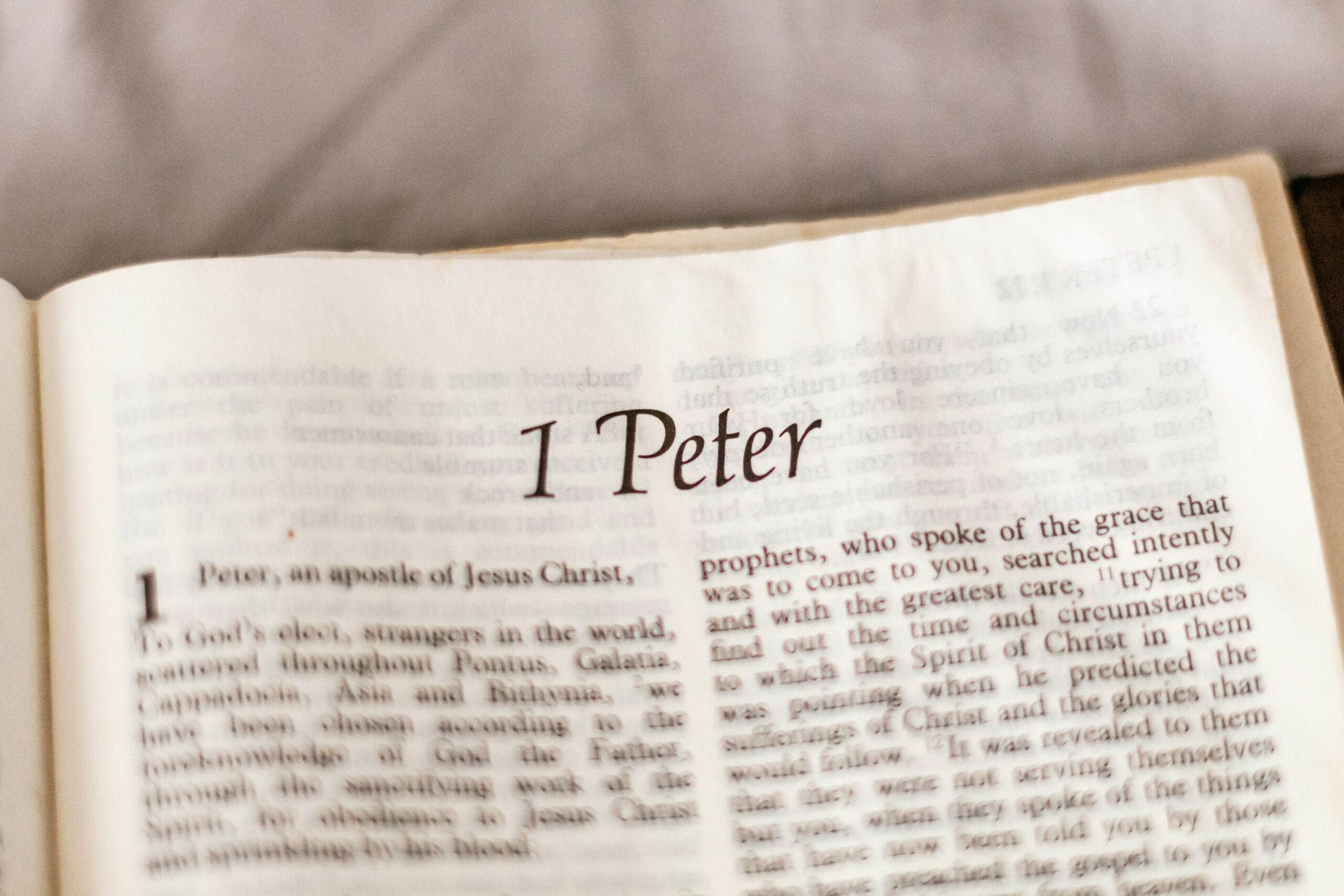
The Godly Man of the House
This sermon addresses husbands, urging them to submit to God’s standard of care by living with their wives in an understanding and honorable manner. The central text, 1 Peter 3:7, is presented as a call to recognize the wife as a ‘weaker vessel’ not in terms of spiritual inferiority, but as a prompt for tender physical and emotional protection. The message emphasizes that a wife is a ‘fellow heir of the grace of life,’ establishing her as a spiritual equal who shares in the same eternal destiny through God’s sovereign grace. Three motives are outlined for this conduct: the wife’s physical nature, her spiritual standing, and the direct impact of a husband’s behavior on his prayer life. The tone is convicting yet pastoral, challenging men to move beyond superficial gestures to a deep, consistent, and sacrificial love that mirrors Christ’s relationship with the church.
Transcript
Words of Grace about Husbands. 1 Peter 3. Barb used to love it when I would
read this little illustration. It was so funny back then. She doesn’t think it’s so funny
anymore. It came from an early version of the Saturday
Evening Post. It was called The Seven Ages
of the Married Cold. Perhaps some of you have heard
it. It’s a pretty popular pastor’s illustration. Basically, it talks
about the reactions of a husband to his wife’s colds during their
first seven years of marriage. And I can see some of you smiling.
The first year of marriage, the reaction went like this. Oh,
sugar dumpling, I’m really worried about my baby girl. You’ve got
a bad sniffle and there’s no telling about those things with
all this strep going around. I’m putting you in the hospital
this afternoon. I have a general checkup and
good rest. I know the food isn’t so good,
so I’ll be bringing in your meals from Rossini’s. I’ve got everything
all arranged with the floor superintendent. Second year. Listen, darling. I don’t like the sound of that
cough. I’ve called Doc Miller and asked him to rush over here.
Now, you go to bed like a good girl, please. The third year. Maybe you’d better lie down,
honey. Nothing like a little rest when you feel lousy. I’ll
bring you something. Have you got any canned soup? Oh, it gets
worse. The fourth year. Now, look, dear,
be sensible. After you’ve fed the kids and
washed the dishes and finished the floors, you’d better lie
down. The fifth year. Why don’t you just take a couple
of aspirin? The sixth year. I wish you would just gargle
or something instead of sitting around all evening barking like
a seal. The seventh year. For Pete’s sake, stop sneezing.
Are you trying to give me pneumonia? The unfortunate thing is that
there’s a little reality to that, and that’s probably what makes
us, at least us men, It is sad, but true. We men have a tendency
to become callous to the needs, to the feelings, the sentiments
of our wives. And we stumble and fall on our faces. And then we have to, you know,
we have to get up and say, I’m sorry, I’m sorry, I’m sorry,
I’m sorry, I’m sorry, I’m sorry. We have this tendency to basically
come home with flowers and start from scratch all over again.
We have this tendency to treat ourselves like we are the kings
in the castle. There is this mentality that
says, I am the man of the house. And that much is true. In fact, I even use that little
phrase for the sermon title this morning,
the man of the house. God’s desire is not to strip
away that title, the man of the house, but to ensure the fact
that we are a godly man of the house. That’s God’s goal with
us. You know well the context of
this passage. We’ve talked about it for about
six weeks. It goes back to chapter 2, verse
13, doesn’t it? You can simply trace it right
back to there And you must because Peter gives this little indicator,
this arrow that points us back when he says likewise. In chapter
two, verse 13, he began this grand theme, which itself was
built off an exhortation to be mindful how you live in this
society because they’re watching. Be mindful of your testimony.
But he said in verse 13, submit yourselves for the Lord’s sake
to every human institution. And so he includes in that exhortation,
everybody, everybody that it’s even possible to speak to. Children,
older women, young men, old men, all people in the church, submit
yourselves for the Lord’s sake to every human institution. And
they are to do so, as I’ve already said, keeping in mind the goal.
Look at verse 15. For such is the will of God that
by doing right, ye may silence the ignorance of foolish men.
You will have people tell you and chide and mock Christianity
and say that a Christian marriage is no better than anybody else’s.
And they will cite some overblown statistics that say a Christian
divorce is as high a rate as anyone else’s. Well, Peter’s
exhortation is don’t let that be true. Don’t let that be found
to be true. Submit yourself for the Lord’s
sake to every human institution so that you can silence these
fools. We saw this submission applied
to servants whose model Christ is in verses 18-25. Jesus doesn’t
call them to anything that He hadn’t already Himself modeled,
right? As we spent several weeks on those great passages looking
at the suffering servant who is none other than Jesus Christ.
We saw this applied to wives in chapter 3, verses 1-6. We
spent several weeks on that. And here, in this passage, applied
to husbands. Look at the passage, if you would.
Chapter 3, verse 7. That’s a short passage, but there’s
plenty there for us men. You husbands, likewise, live
with your wives in an understanding way, as with a weaker vessel,
since she is a woman, and grant her honor as a fellow heir of
the grace of life, so that your prayers may not be hindered. When Peter says likewise there,
he does point us back. And he points us back, as I’ve
already indicated, to that little word, be submitted or subject. Only in this particular case
here, he’s focusing now on the husbands. He is particularly
as particularly addressed here, he is called to submission or
subjection not directly to his wife, because that in essence
undoes the subjection of the godly wife. Though his wife is
the benefactor of his submission, he is called instead to submit
to godly standards and behavior in his home which specifically
benefits his wife. As I said, we live in a day where
men become so calloused to how they treat their wives and so
indifferent to their feelings and sentiments that this is something
that takes us. I mean, all the men know this
is work. This is as hard a work as we
ever engage in is developing and maintaining that caring concern,
that nurturing mentality. that is urged upon us in the
scriptures. There’s this tendency on Mother’s
Day. On Mother’s Day, the tendency
is that it’s something that the children celebrate on behalf
of their mother. We’ve determined a long time
ago, because of the difficulty of childbirth, But Mother’s Day
was going to be a very special day in our home. And it’s not
just the children that celebrate Mother’s Day. Husbands and especially
fathers ought to be those that not only participate, but actively
engage that day in an honor of their wives and mothers. Let’s take a few moments to look
at this passage. When Peter says, you husbands,
likewise, he again puts the husbands directly in view now. And husbands
are no less tied to their duty than their wives are to their
own. The trouble is, is that many
men love to hear sermons and talks about submission. They
love that part of it. But when it comes to this one,
you know, they gloss over this and immediately advance to verse
eight and following. We are to make. This a duty, we are to make this
a glorious duty as unto Christ, the way that we treat our wives.
We’re not to pretend that our wives are under some command
that we somehow have escaped. As I said, that likewise points
back to the duty of submission, but this time it’s the believing
husband who submits, as it were, to serve his wife. Husbands basically
carry out that command by adhering to the principles of caring for
their wives’ needs. It’s pretty simple. He says,
live with your wives in an understanding way. What does that mean? You’ve no doubt met husbands
whose wives would describe them as he’s so understanding. What
does it mean? Especially for us, you know,
block headed individuals that really are going to need it simplified
in order to grasp what is being commanded of us. What does it
mean? Live with your wives in an understanding way. Literally,
it says, according to knowledge. Live wisely. Live like you know
what you’re doing. This knowledge here spoken of
essentially sees itself expressed in the regard or the care or
the honor that the husband pays to the wife. We’re supposed to
be considerate. We’re supposed to be thoughtful.
We’re supposed to exercise practical understanding intact. And as I said, it’s work. This
understanding, as one said, speaks of being sensitive and considering
the wife’s deepest physical and emotional needs. Not supposed to chide them or
despise them because of their weakness, or to use them like
a slave in our home, but to respect them and care for them, to treat
them gently and graciously, to cover over their infirmities. Paul’s exhortation to the Ephesians
is not unlike this one. When Paul says in Ephesians 5,
husbands, love your wives, he gives us one of the most difficult
commandments in all of Scripture. It’s not that because of the
quality of the person that we’ve been paired with that it’s difficult
to love them, but the standard is so high. Listen to how he
goes on. Husbands, love your wives just
as Christ loved the church. And a lot of times when I’m doing
pre-marriage counseling with a young couple, you know, the
young gal will react to the earlier part of that passage, the submission
part. And I’ll say, you know what?
You’ve got it easy. He’s got it hard because the
standard for him is Christ. As Christ loved the church and
gave himself up for her so that he might sanctify her, having
cleansed her by the washing of water with the word, talking
about Christ and the church. It’s basically nothing can stand
in the way of me pleasing and taking care of and ministering
to you. Nothing. I should be willing
to die. If need be to care and provide
for you. So husbands ought to love their
own wives as their own bodies. He who loves his own wife loves
himself.” Now you see, I had to learn this. And it wasn’t
easy. This whole caring concern for
his wife, Paul talks about it and says that a single man ought
to be able to bring along a believing wife. But if he does, He does. She’s going to have needs and
he’s going to have to be careful how to minister to those needs.
And then I seized early on in seminary as a single man. And
it’s only by the grace of God that I didn’t remain a single
man. I seized upon that little piece of counsel in Paul’s writings
there in Corinthians. that those who have wives, let
them be as though they had none. And so, I was not going to have
a ball and chain. She was going to get down in
the trench with me and roll up her sleeves and labor and serve.
But Paul’s counsel there in its completeness says that the most
logical, loving thing for a husband to do, that if you have a wife,
you must care for her. And it took some time. But the
Lord got my attention. We are to live with our wives
in an understanding, patient, knowledgeable way. We are to
know what makes them tick. We are to know their fears. We
are to know their strengths. We are to know what they need
to be taught. We are to know where they need help. We are
to live sensibly and understandably with them. And there are some
good husbands in our midst. And then there are the rest of
us. There’s a second part of this
equation. That we are to live with our wives in an understanding
way, and we are to grant her honor from that little Greek
word, timao, which is used often of our worship of God. Remember,
that’s the word that says that we are to set an estimate of
value upon our God and then treat Him accordingly. That’s what
Temao means. It means to establish a value
for a person or thing and then treat them accordingly. And so
if that’s the case. What would you say your wife
is worth? Better yet, what would the body say your wife is worth?
What would the neighbors say your wife is worth? We ask the
same question with regards to God. What would the neighbors
say that your God is worth? But the word is the same and
the import is the same. Men, we are to look at our wives
and establish a value for her and treat her accordingly. That word honor carried throughout
Scripture, we’re to honor God, no doubt. But we are also to honor our
parents, Matthew 15, 19, Matthew or Ephesians chapter six, Luke
18. We are commanded to honor widows.
And first Timothy. But here in first Peter, it says
that we are to honor all men, and so this is really just a
an argument from the greater to the lesser. We’re to honor
all men. How much more should we honor our wives? In verse 217, there it’s an application
of being subject to all human institutions, right? And there
we’re commanded to honor all here for the godly husband he
is told to honor his wife. As I said, Peter uses an argument
from the lesser to the greater. To honor all men, how much more
should we honor our own wives? Every person, Remember that argument
in 2.17. Every person is created in God’s
image and therefore is due in some degree respect, honor. Even the guy sitting by the side
of the road holding a, you know, I will work for food sign. He’s
due honor from you. Christians aren’t supposed to
discriminate against any class of people because of race or
nationality or economic status. All of them are due honor, as
we focused upon. How much more are wives, men?
What is your estimate of your wife? And as you think that through,
and the first thing that comes flooding into our minds, doesn’t
it, is all of her shortcomings. Well, she’s not perfect. You
know, She tries hard, but you know, she’s a good wife. What if I remind you that she’s
God-given? She’s God-given. That’s what
Proverbs says. Proverbs 18.22 He who finds a
good wife finds a good thing. It’s not that he who finds a
wife finds a good wife. That’s not the exhortation there.
A wife is an inherently good thing. He who finds a wife finds
a good thing and obtains favor from the Lord. She’s God given.
He attains favor from the Lord. An undeserved blessing is this
woman. Now, what is she worth? And once you set that value,
how do you carry it out? Once you esteem her or set a
value for her that is accurately derived, then how do you behave? What does it mean to be giving
honor? Well, it means first of all,
man, that we speak well of her. It’s one thing to kid around,
but sometimes the kidding goes too far, doesn’t it? And it becomes
that coarse jesting that Paul spoke of in Ephesians 5. were to speak respectfully to
her and about her and were to do so with deeds and words were
to care for her and provide for her. We noted honor in the New Testament.
It’s a it’s a lofty word. It’s spoken of how we treat God,
how we treat widows, how we’re called to treat all men and how
we treat our wives. How far does it go? It goes not
only to how we treat them in general, it’s not just on her
birthday, right? Some of the greatest meals in
our home that ever get cooked, right? Anniversary and my wife’s
birthday. But it’s not just those days.
How do we treat them in general? How do we talk to them? Do we
talk down to them? Are we rough to them? Do we give
them harsh answers? How do we show affection to them?
How do we respond when they do erupt in weakness? How do we respond when they do
erupt in anger? How do we exercise our leadership
in the home? Is it harsh and overbearing?
We’re called to gentleness. We’re called to tenderness and
sympathy and reverence. We’re called, men, hang on to
your hats. We’re called, if need be, to
give an apology. We’re called to actually go and
express our remorse about our deeds and to ask for forgiveness
from our wives. Oftentimes, it isn’t what we
say, but how we say it. We’ve learned, probably just
like you have, Somebody sooner or later needs to respond so
as not to escalate the discussion, right? Why shouldn’t it be us,
man? And what about listening? What
about listening to hear and understand and not just to respond, not
just to get your word in, not just to perpetuate the argument?
A lot of times in counseling, which is usually when it’s reached
this point, oftentimes it’s too late. But a lot of times when
husbands and wives are having communication issues, what I’ll
use as a remedy is just to say, OK, I
want you to parrot back what she just said. And most times
men can’t do it. It’s almost like we have an innate
inability to listen, to really hear her out and to be able to
articulate back exactly what she’s saying. We can’t do it. We need to listen in order to
hear and understand and grasp the whole picture, not just to
respond, not just to get our side of the argument in. I mentioned tact a minute ago.
What is tact? Tact is what one described as
a special deference to someone else, a courtesy, a respect and
a kindness. Sometime years ago, I heard this
little rule of thumb that really it’s interesting that we even
have to say this. Treat your family like company and your
company like family. Isn’t that sad? It basically
says that the way we treat our family is not so great. And then when company comes,
oh boy, you put on the dog, you vacuum everything, clean everything
and everybody puts on their best face. Why shouldn’t we treat our family
like that? Why shouldn’t we treat our wives like the most important
person that we’ll meet in a week? We’re called men to a practical
understanding of her, a consideration of her that goes beyond just
taking out the trash and changing the diapers. Making sure the
paper comes off the toilet roll. That was something that took
me about a year of marriage to figure out. There’s actually
two different ways that I’ll explain it to you men in the
afterwards. There’s two different ways the paper can come off the
roll, off the top or off the bottom. And there’s a right way
in our home and a wrong way. And it took me some time, but
it goes beyond just those things, but it must include those. What about wise guidance? Are
you impetuous? Are you close to being a fool?
Do you do just absurd and random things just because you feel
like it? We’re called to wise guidance.
We’re called to cultivate that trust in our wives so that they
don’t have to be fearful of where the next $50 is going. Submission,
said one, is never an occasion for tyranny. We don’t have the
privilege of saying, you know, do this because I said so. Or
who are you to question me? Those kinds of attitudes. This whole thing serves, doesn’t
it, gentlemen, as a guard against the abuse of the domestic authority
that this passage entrusts into our hands, doesn’t it? It guards
against this. This mitigates against that abusive
mentality. We’re called to a chivalrous
respective, our wives, and that includes things like opening
doors. Remember when you were dating? What did that last, a
week? As one pastor called it, respectful
and affectionate attention, isn’t that a beautiful way to put it?
respectful and affectionate attention. Your wife is to be listened to,
conversed with, cherished for who she is, appreciated for what
she does. Our children reminded us, apparently
we taught them this at one point in their young lives, we reminded
them that love is a verb. Remember, Elvis is the one that
said, I can’t help falling in love. And what so often happens
in marriages is people claim at the end of it, they couldn’t
help falling out of love. Love is a verb. Love is something
you do, not necessarily something you feel. We’re called to love our wives
in an understanding way and honor them among all the people that
we know. And you say, why? What’s the big deal? Well, Peter here gives us, as
we begin to turn the corner and wrap up this morning, Peter gives
us three motives, three specific motives that we’re called to
be a godly husband. I just described in very brief
terms what a godly husband is. He treats his wife with understanding
and he honors her. It’s as simply as I can say it.
He is called to a thoughtful esteem of his wife, first of
all, because of the woman’s nature. Look again at the passage, you
husbands, likewise live with your wives in an understanding
way as with a weaker vessel, since she is woman. The word
vessel there, when it’s in the plural, it would refer to all
the implements that are in the home or in the business. or perhaps
even the tack on a ship. It’s all those tools that you
use. It’s even used of men. So it’s not just it’s not accurate
just to describe the woman as a vessel because it is also used
as a man as containing what’s called divine energy or where
you can either be the subject of divine mercy or divine wrath. That’s how Scripture uses it.
Paul is spoken of as a chosen vessel to bear God’s name. I remember when I taught some
sixth graders the book of Acts, when we seized upon that passage,
when we really saw what it meant, it means an implement, a tool,
a weapon in God’s hand. And we used that, we called it
God’s toolbox. And every time we saw God use
Paul in some way, we’d chart it out. Identify the tool and
the way that he was used. That’s what God says here that
women are vessels, instruments in God’s hands. In Scripture,
there are vessels of wrath, there are vessels of mercy, and when
it’s used here of the woman as God’s instrument along with man,
it is for God’s service in the family and in society. That’s
how God intends this word to be used here. And so the husband
here is supposed to live with the wife, remembering that she
is an instrument of God. An instrument whereby something
is accomplished. Just like with the husband, a
child of God to be used by him for his glory. And we’re supposed
to add to that. We’re supposed to enhance that
usefulness, not detract from it or abuse it. Both the husband and the wife
are vessels in God’s hand. They are of God’s making to fulfill
His gracious purposes, said one. Both are weak. The woman is weaker. The husband has a sense of his
own weakness and that she, like himself, is God’s vessel, ought
to lead him to act with tender and wise consideration toward
her. Men, I haven’t had any of you
come up to me lately and say, you know what? I have arrived.
Jesus can come back anytime now, because now I’m perfect. You
know what? An understanding of our own hearts
and lives, an acknowledgement that we too are weak, should
make us more considerate of our wives, not less. But when we
say that she is a weaker vessel, how? Because I know when it comes
to dessert, it isn’t the case. My wife can turn down any dessert,
no matter how glorious it looks, sitting on that chilled plate
with a fork, and the dessert is crying out to taste and enjoy. And my wife, no thank you. And so we have this standing
rule. You never turn down the dessert. You just slide it over
my direction. Men and women are different. We’re just cut out
different. There are things that, you know, I learned after I was
married, there are hormones, there are emotions. From time
to time, I told my wife that she can look out on the beauty
of a tree and just begin to cry. They have a different way of
thinking, as we said several weeks ago, they have an almost
innate and Paul acknowledges that in first Corinthians seven,
they have almost innate desire for security. They are not inclined
to take all kinds of crazy risks. Bungee jumping is not their thing
by nature. Physical stamina is not necessarily,
and I’m not saying, ladies, don’t attack me after the service,
don’t beat me up. There are women that I’ve met
I wouldn’t race, I wouldn’t get into a weightlifting contest
against, I wouldn’t, you know, all those things. I’m not talking
about any of that across the board. To illustrate it, I call it the
Arizona meltdown. This is how we function. This
is when I’ve told people for many years, this verse right
here, 1 Peter 3, 7 is the single greatest verse that the Lord
has used in my life with regards to marriage. over and over and
over and over again, it’s come up in my face. Husbands, live
with your wives in an understanding way as with the weaker vessel
and grant her honor as a fellow heir of the grace of light that
your prayers may not be hindered. I mean, I know it. I’ve heard
it. Stop already. That’s what I’ve said sometimes.
One of the first chief times that it came about was what we
call in our home, the Arizona meltdown. Now, the goal, the
plan was pretty simple. We were going to load up everything
that we had and leave Barb’s family in Dallas and drive to
California. Simple equation, right? The first
day was a little bit difficult. It took about 13 hours through
an absolutely driving rainstorm. Each of us had a vehicle, each
of us had a trailer, each of us had difficulty. This is back
in the day before cell phones and before we didn’t think of
radios and walkie-talkies. If you wanted to communicate,
you flashed your light or you just ran off the road and waited
for the other one to double back and come back. So the first day
took about 13 hours. The second day was completely
opposite. The first day was dark and rainy and foreboding. The second day was just glorious. Nothing but blue sky and sunshine
and about 120 degrees. And after about another 10 or
12 hour day, I could have driven all the way to Los Angeles, right? We pulled into a gas station.
I called my father. We were going to stay the night
in Phoenix and then press on to LA the next day, give my wife
some rest. And I went back to the car to
let her know it’s about another 45 minutes just down, just a
little further on. That was it. We weren’t going any further.
Barb had driven as long as she was going to drive without air
conditioning, pulling this trailer, We call it the Arizona meltdown.
And I’m sure you men could tell me similar stories of times when
your stamina, your vigor, your strength, your big dreams, your
great risk, you had the vision of where you wanted to be and
you were going to get there. Except for your wife. When they’re called weaker, it
cannot, as one said, be held to apply to character or ability,
nor is it true of health or physical endurance necessarily. The husband
is typically physically stronger in the sense of being more muscular
and in his ultimate responsibility for the direction of the home,
typically speaking. But just as submission, as one
said, imply inherent inferiority of the ones who submit. So the
word weaker does not mean the wife is intrinsically weaker
in character or intellect. It means just that the woman
possesses generally less physical strength than men. And that’s
another thing that we need to exercise understanding about. Because of that, the husbands
are called to be the sacrificial providers and protectors of their
wives. Men, we are called to what some judge to be outmoded
and out old fashioned in our day. We’re called to chivalry
and it goes far beyond just opening doors. Although the first time
that I found out that chivalry is outmoded was on a date with
an individual who got angry with me for opening the door. That’s
when I knew I was in trouble. I don’t have this deal figured
out. We’re called to protect them physically and spiritually.
We’re called to provide for them. For some reason, according to
God’s design, he’s bestowed upon the woman a measure of weakness
and infirmity, and that’s natural. Whether it begins with pain in
childbirth and bringing and educating the children up. There’s just a difference there.
And that is our motivation, men. Because they’re so easily discouraged
and provoked and they take hurt, we are called to care for them
in that. There’s a second motivation. This godly man, this godly husband
is called to a thoughtful esteem of his wife, not only because
of her physical nature, but because of their spiritual standing. He says, grant her honor as a
fellow heir of the grace of life. I mean, you just begin, don’t
you men, to turn the corner to realize that you are heirs of
heaven and heirs of Christ I mean, it’s an overwhelming concept.
And we’ve studied in the past that merely by God’s grace and
coming to Christ and coming to faith in him, that now we are
made heirs of all these glorious things. And you can hardly wrap
your arms around that concept when now we’re greeted with this
equally amazing concept that we are fellow heirs. That our
wife is not trailing behind us. Our wife is not riding on our
coattails as we march into heaven. She’s walking beside us. She’s
a fellow heir. Galatians said it differently,
but we studied it in weeks past. There’s neither Jew nor Greek,
neither slave nor free, neither male nor female, for you are
all one in Christ Jesus. Spiritually speaking, she is
your equal. She is your spiritual equal. The way Peter says it here, she
is a fellow heir of the grace of life. What is that? It was interesting that a lot
of people, not a lot of people, a few people, took this to mean
the life that we’ve been given up to and including the blessing
of marriage. I don’t see that. I mean, that’s
good. Life is good. Marriage is great. But you know what? When he begins
to speak in that lofty spiritual language about being an heir
and about the grace of life, I take that to mean life eternal. Eternal life in heaven with God
purely because of His grace. One pastor described it in these
terms, both the work of God saving grace in his own, which is here
called the grace of life, because it quickens the soul. And that
right there squares with the epistle of Peter, doesn’t it?
Because Peter talked about that concept of regeneration, of bringing
to life the dead. And that was us in sin, wasn’t
it? But your wife, your precious
wife is a fellow heir of the grace of life. God brought her
to life. This grace quickens the soul
where it is for spiritual performances and clears its right to eternal
life. And likewise, eternal life itself,
which may be safely conceived to be comprehended in the same
expression. These are the free gifts of God’s grace proceeding
merely from his favor and love. Your wife didn’t deserve it either.
It was a gift of God’s grace and it was bestowed upon sinners.
And now you walk side by side with all the saints into heaven. Another said it in even clearer
terms, these words refer not to natural life and the good
things of it, nor to the external gifts of the spirit, nor even
to the gospel and the influences of it. But grace here and glory hereafter
is what is meant. God’s own people without any
differences to sex as men and women equally share in grace
as it signifies the love and favor of God. It is grace. In that the blessings are of
grace, they are free and sovereign and special. It is the grace
of life in that by it, men and women who were dead in trespasses
and sins are made alive by regeneration. That’s a glorious truth. We are walking to heaven side
by side merely because of God’s grace, and we will spend eternity
together, but not as husband and wife. And what a great reminder
that she is not just your wife, she is your sister in Christ.
She is a fellow heir. Thirdly, the godly husband is called to
a thoughtly esteem of his wife First of all, because of her
physical nature. Second of all, because of their
spiritual standing. Third of all, because of his
prayer life. What? A lot of head scratching going
on. You mean to tell me the way that
I live in my home and conduct my home and carry myself in my
home that my prayer life can be affected? That’s what Peter
said. Grant her honor as a fellow heir of the grace of life so
that your prayers may not be hindered.” It’s a military term. It literally means to block or
to cut into, like breaking up a road or blowing up a bridge
in military strategy. What he says here is that, as
one said, the size of an injured wife can come between a husband’s
prayer and God’s hearing. And you say, well, how does that
work? Does it mean that God will plug his ears to the husband? Or does it mean that the husband,
if his heart isn’t right, he’s not going to be able to pray
aright? I think both things are true. The husband whose heart isn’t
right and whose conscience isn’t clear isn’t going to be able
to pray accurately. But I think it’s equally true that God is
going to turn a deaf ear to that man if he can’t even treat his
God given wife Like God has commanded him to treat her. God owes him
no ear, no hearing. Speaks not only of God’s unwillingness
to attend to our prayers, but also of our own inability to
pray. The warning is clear here. That
if a husband in Christ is not fulfilling his responsibilities
toward his wife, God may not even answer his prayers. He’s speaking to us as Godly
husbands. Those are strong words. Are there any stronger? He can’t
threaten us to cast us to hell if we are in Christ and He’s
speaking to us as Godly husbands. But what about cutting off all
of the blessings that we enjoy and the ability to appeal Just like in Ephesians 5, gentlemen,
I think we have the harder job. To live with our wives in an
understanding way is not an easy thing for us. But God can help. God’s willing to teach us. Let’s go before the throne of
grace. O merciful God, The men of this body so desperately
need your help. We are not what we should be. And Lord, we blow it so easily
and so easily let ourselves off the hook. But Lord, we desire
to change. We desire to be the men that
you’ve called us to be. And Father, if there’s any humility
in us, Grant us the grace this week
to go to our wives and humbly ask them how we can love them
more effectively, how we can be more understanding toward
them and how we can honor them. Father, be glorified in our homes,
we pray, as you make the changes. We thank you and we praise you
in Jesus name. Amen. The.
Messages: 61