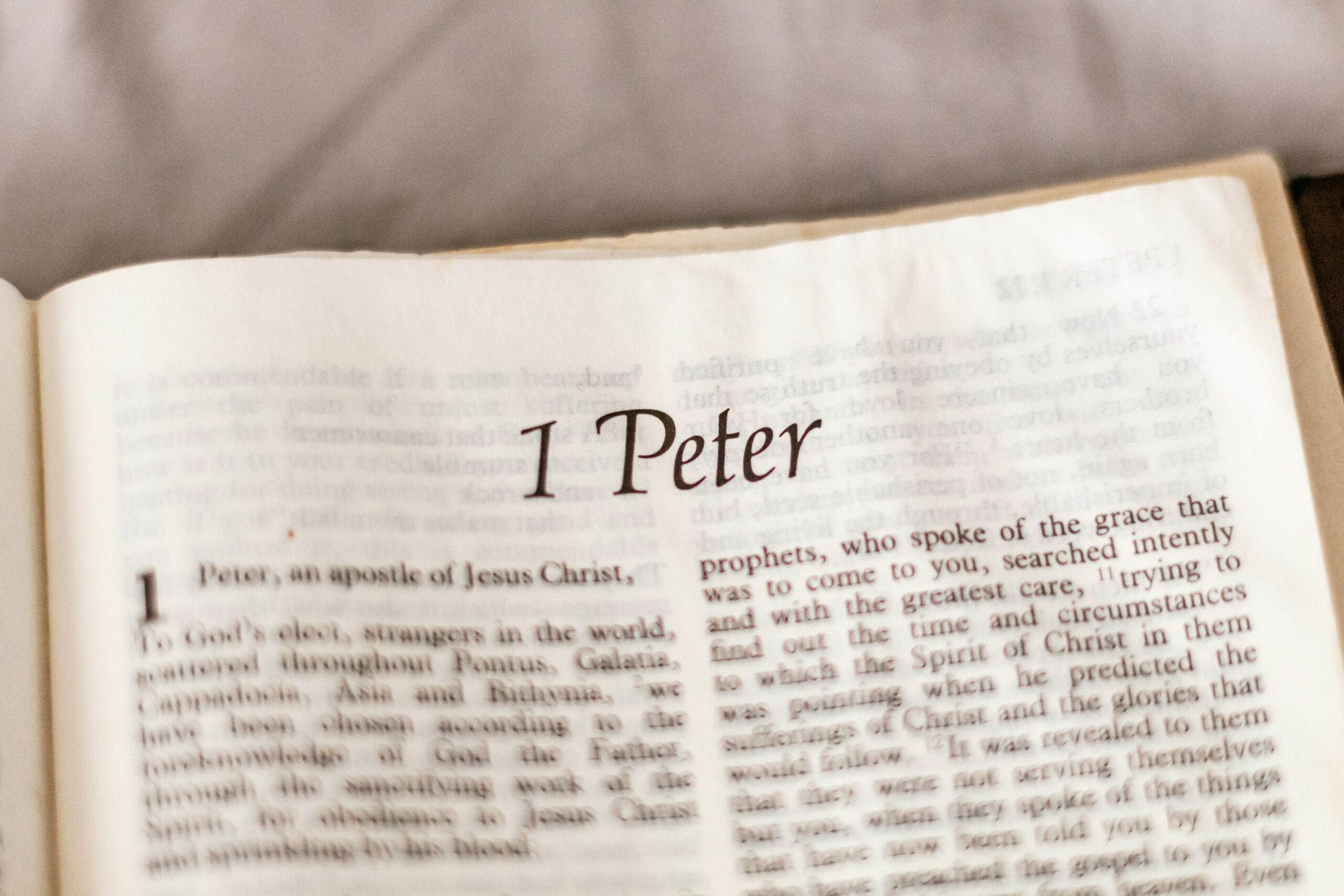
The Faithful Christian’s Service, Part 2
The sermon examines the dual responsibilities of Christian ministry outlined in 1 Peter 4:10-11, emphasizing that believers are called to serve as faithful stewards of God’s manifold grace. It distinguishes between the two primary activities of the church: the ministry of the Word and practical service, arguing that both are essential for the health of the body of Christ. The preacher urges those who speak to do so only with the utterances of God, rejecting modern trends that prioritize personal opinion or entertainment over the pure Word. By citing examples from Acts and the life of Paul, the message highlights the necessity of relying on divine strength rather than human wisdom. The tone is convicting and instructional, calling the congregation to examine their hearts and commit to zealous, God-centered service in the final hour.
Transcript
And I suppose I should begin
by repeating a little bit about what I began with last week,
because upon seeing some of the faces, particularly of the men,
and then having some conversations throughout the week, you would think that I named
names, which I did not. You would think that I pointed
fingers, which I did not. And you would think that I singled
out and exposed individuals, which I did not. But, if the
Holy Spirit was active and you came away convicted last week,
I can’t help that. I can help you and pray for you
and pray that in the days and weeks and years to come, the
Lord would find more fruitfulness out of your service. But I can’t help you feel any
better. We began last week in considering just my observation
since my earliest days as a Christian, my observation of the careless
and casual approach that many have to church, and particularly
to service in it. As I said last week, many people
live as if they had a thousand lifetimes. And that if I could
afford to squander this one as I defer my service to Christ
for another lifetime, that would be adequate. What I called it
is a practical disdain for the church. a practical disdain. In other words, there are many
who would profess the most vigorous and heartfelt faith and love
for Christ, but practically speaking, they have a disdain for Christ
and His church and His people. They are lazy. They are indifferent
to the needs of God’s people. They are distracted by all the
world’s entertainments and therefore unavailable. If they serve at
all, they are unfaithful. And the Lord knows who they are.
One of the most frightening passages in all of the New Testament,
right? Matthew 25. And in some sense, it’s encouraging. I was hungry and you fed me.
I was naked and you clothed me. I was in prison and you came
to visit me. And they say to him, Lord, what
are you talking about? When was that the case? And he
said, to the least of these, you did it to me. And then he turns that illustration
around and says, I was hungry and you didn’t come. You give
me nothing to eat. I was naked and you didn’t clothe
me. I was in prison and you didn’t come. And there are those that
have the audacity to say when Lord. Every one of us. Every one of
us could step up and serve the Lord more faithfully. Every one
of us. We began last week in looking
at this great passage. The culmination of this section
where we looked at the four specific fruits of 11th hour intensity. And the more I look at this and
the longer I look at this, the worst my H’s look. I told you
that I would throw out H number three last week. And the closer
I looked at number four, it really doesn’t fit either. And so perhaps
in several years, if I have an opportunity to repreach this,
we’ll use a different letter. We looked at four specific fruits
of this 11th hour intensity. Peter says it’s the last day
because it’s the last day we should step up. We should be
serving all the more zealously. The urgency of the hour, first
of all, should affect our head. That we should be changed people. We should be living differently
and thinking differently. Secondly, the urgency of the
hour in verse 8 should touch our hearts. That we should live
in such a way that those who are about us, those who look
on, see how much we love one another. Thirdly, and this is
the one that I initially threw out, the urgency of the hour
should affect our home. And I told you that it doesn’t
even begin to touch what is urged there. That we should be, ideally, We should be hospitable and it
goes far beyond our home. It goes to everything that we
possess. It goes to our time, our use of our time. It goes
to all that the Lord has entrusted into our care in the use of it
for others. We closed out this section in
verse 10 and 11 last week. Just wrapping it up and in a
sense, setting it on the shelf so that we could delve even deeper.
The urgency of the hour should not only affect our head and
touch our hearts and open our home, it should move our hands. That’s a great little feeling,
isn’t it? Except then I began to read and study the passage
and it isn’t just our hands that he’s talking about. So there
goes that H. I want to go back, if you would,
to the fullness of the passage so that we can pick up the context
and we’ll clarify where we’re headed this morning. Peter wrote
and he told us it’s the 11th hour when he said the end of
all things is at hand. And we qualified that. Certainly,
it isn’t the end of God. It isn’t the end of souls. God’s
Word is eternal. There are things that are going
to perpetuate. What he does say is the end of
gospel opportunity is here. It’s at hand. The end of all
things is at hand. Therefore, be of sound judgment
and sober spirit for the purpose of prayer. This 11th hour should
affect our head. We should be most aware of the
brevity of the opportunity that we have left. That’s what he
says. Above all, verse 8, keep fervent in your love for one
another. And we ask the question, how many of us could really describe
the one another kind of love that we have? And some of you,
you care for each other very greatly. But how many of us could
really describe it as fervent? You know, I was fervent when
I wrote my wife that poem that pleaded with her to change course
and to marry me. That was fervent. How fervent is a love for one
another? Verse 9, Peter urges a third. He says, be hospitable to one
another without complaint. You know, hospitality comes pretty
easy. It’s almost fun to kind of clean
up the house and get some special food going and organize things
until they show up. And then they come with all their
idiosyncrasies and all their issues and their children. And
they do their thing. And then when they finally leave,
don’t we, we kick the door on the way out. And then we begin
to just mutter Peter says that’s not the hospitality
that we’re looking for. Be hospitable to one another
without complaint. Count it a privilege to serve
one another. Long for the opportunity to open
your home and to open your wallet and to open your toolbox and
to serve one another with whatever God has given you. And then to do it. And if there
is any observation of difficulty, give it up to the Lord. Don’t
complain. And then finally, we turn the corner into verse 10
last week, where Peter said this, as each one has received a special
gift, employ it. in serving one another as good
stewards of the manifold grace of God. Whoever speaks, let him
speak, as it were, the utterances of God. Whoever serves, let him
do so by the strength which God supplies, so that in all things
God may be glorified through Jesus Christ, to whom belongs
the glory and dominion forever and ever. Amen.” We wrapped up
that section of the H’s and set it aside perhaps to never take up as an
outline again. And what we did is set our sights,
in a sense, to a new outline just contained in these two verses,
verses 10 and 11. And we looked at faithful Christian
service. That’s where we began last week.
Five particulars into ministry in the church of Christ. We noted, first of all, that
Christians serve because they are gifted. God has given you
gifts for a set and specific purpose that you would move,
that you would do something for Him. Look at verse 10. As each
one has received a special gift. It says as, not if. It doesn’t
say, you’re a Christian, we know, and if perchance God maybe has
given you kind of a gift. Don’t you love all those qualifiers
people talk with sometimes? That’s not at all what he says.
You have received a gift and you are to use it. Paul said in Ephesians to each
one of us, grace was given at the moment of conversion. You
received a gift package from God. He equipped you. He gave you a way to glorify
him in the church of Christ by rolling up your sleeves and exercising
it. We noted that they’re given sovereignly.
It’s a grace gift. It’s not because of who you were.
God didn’t tap into some rich vein of resourcefulness, some
great potential that was in you, some superior talent that, oh,
if God could only get a hold of. It’s not it at all. He sovereignly gave you a gift
and He gave you in varying quantities, in varying kinds, these wonderful
gifts for the service of Christ and His church. Christians serve
because they are gifted. Secondly, the second particular
of ministry within Christ’s church, Christians serve not only because
they are gifted, Christians serve others. The gifts were not given
for self-service. They weren’t given for our own
glory. They weren’t given to build up our own reputation.
Look at verse 10 again. As each one has received a special
gift, employ it in serving one another. That’s the body of Christ
to which you’re called to minister. We’re called to put our gifts
to work for others. Recall to exercise these gifts,
as Paul said in Ephesians, as part of that which each joint
supplies according to the proper working of each individual part. And I said it last week and I
say it again, if you as a member of Christ’s body aren’t exercising
your giftedness, then the body of Christ is incomplete and in
a very real sense, sick and broken. Thirdly, There were five particulars
of ministry in the church. Christians serve because they
are gifted. Christians serve others. And three, Christians
serve as faithful stewards, or at least they’re supposed to.
It is a stewardship. You will have to give an account. What account you give remains
to be seen. Look again at verse 10. As each
one has received a special gift, employ it in serving one another
as good stewards of the manifold grace of God. The fact that God
gave any of us a gift in and of itself would be the manifold
grace of God. The fact that he gave us all
the identical gifts would still be the manifold grace of God.
But the fact that he gives a variety of gifts to all of God’s people
in varying quantities has to be the grand expression of the
manifold grace of God. It’s varied. And it’s varied
to such an incredible degree that Peter grasps at this word. You might even call it variegated
or multicolored. It’s incredible, Peter says,
this grace of God that comes. The grace here, what he’s talking
about, isn’t so much in the theological sense, But in this wide, varied
sense, this bountiful sense that comes only as it can from God,
this great abundance, the manifold nature of the gifts that God
gives. Don’t you count it a joy and
a pleasure when you meet somebody that has a gift that you don’t
have and they’re able to exercise it in humility? And you’re able
to enjoy it as one of God’s children? That’s what Peter’s talking about
here. He’s talking about just the beautiful way that he has
equipped the church. But we are stewards. And we are
stewards that one day are going to give an account. We’re going
to stand before God just like those who We’re wondering, when
did we clothe you? When did we feed you? We’re going
to stand before God and answer, how did we use this gift that
He gave us for a set and specific purpose? To serve the body of
Christ. We’re stewards and we’re called
to be faithful stewards. And we left off there last week
and we turned our attention to point number four. The fourth out of five particulars
of ministry in the church is that Christians serve not only
because they are gifted, they serve others, they serve as faithful
stewards and fourthly, they serve in various ways. And I want to
go back here to this statement, the manifold grace of God. Peter says it, but he doesn’t
describe it necessarily. He just says that God gives grace
in a multicolored fashion. But he doesn’t really spell it
out, at least not yet, not in verse 10, he doesn’t. He just
mentions this manifold grace of God. And in so doing, he speaks
of diversity of gifts. A variety of gifts, many colored,
different kinds of gifts given in different measure. Right.
We’ve seen that the NIV here translate this translates this
little section faithfully administering God’s grace in its various forms,
in its various forms. I tell you the truth. I like
manifold better. All believers are gifted. The
gifts differ, but all are to be used since we are stewards.
That much Peter has sewn up there in verse 10. And then he moves in verse 11, and
in so doing, he uncovers the two great distinctions in the
church, the two great activities of the church. And you can’t
distill it down any further than this. And really, to expand it
does little to Peter’s argument. There are basically two great
ministries of the church preaching and practical service. That’s
what he says. It’s the teaching ministry of the service of the
worship service. Pardon me. It is the teaching
ministry of the church and it is the service of the people
in the church. Those are the two great activities. I want to take you to a couple
of places, go to go to Acts chapter six. In Acts chapter six and people,
it’s ironic that we had this discussion this past week about
deacons and how come Providence Bible Church doesn’t have deacons.
It’s not that we decided that we didn’t. In fact, I think some
of the steering committee men will affirm, I think for about
five years running, we brought it up every time we met. Anybody
ready to be a deacon yet? Anybody feel called to serve
as a deacon? In fact, I put it at least currently where we stand
right now. The reason we don’t have so many
deacons is there’s so many of you doing the work of deacons. So when we look at this passage,
I’m not saying that what Peter is advocating in the passage
at hand is that we have church deacons. What he’s advocating
is that you all continue to serve. It’s okay that we have church
deacons doing the same thing, isn’t it? But I do want you to
look at this in the line of reasoning of the two great activities of
the church, the ministry of preaching and the ministry of service.
Look at Acts chapter six. In those days when the number
of disciples was increasing, The Grecian Jews among them complained
that the Hebraic Jews, because their widows were being overlooked
in the daily distribution of the food. They came to the leaders
of the church with a complaint about practical service. They
didn’t come criticizing the sermon. They came complaining about the
practical service in the church. So the twelve gathered all the
disciples together and said, It would not be right for us
to neglect the ministry of the word of God in order to wait
on tables. In other words, they acknowledge
their own call to a particular kind of ministry in the church,
and they acknowledge an equally important ministry in the church
to which they are not called. And to dabble in that would be
to minimize their efforts in their own calling. And then in
verse three, brothers, choose seven men from among you who
are known to be full of spirit and wisdom. We will turn this
responsibility over to them. And with that, you essentially
have the establishment of the deaconate or the deacon ministry
in the church. And they say. Once we have now
that service ministry element in the church, look at verse
four, and we will give our attention to prayer and the ministry of
the word. There are these two elements
of service in the church, and neither one is supposed to look
at the others being illegitimate. Neither one is supposed to look
at the other one and say that you are necessarily unimportant. There are two. elements of ministry
within the local church. Turn, if you would, to Acts chapter
18. Acts chapter 18. And I love this passage because
it really underscores the glorious nature of the word. And it also
underscores the providential necessity and the willingness
of the Apostle Paul to roll up his sleeves and do what needed
to be done in the moment. Look at verse 1 of chapter 18. After these things, he left Athens
and went to Corinth, and he found a Jew named Aquila, a native
of Pontus, having recently come from Italy with his wife Priscilla,
because Claudius had commanded all the Jews to leave Rome. He
came to them, and because he was of the same trade…” This
is where you get this whole idea. It’s right here. “…because
he was of the same trade, he stayed with him.” And they were
tent making. They were working, pardon me,
for by trade. They were tent makers. And you
have this from time to time. You know, a missionary goes abroad
and they are tent makers. Well, they’re not literally making
tents. Some of you think, boy, the camping
ministry in Christendom has just reached an all time high. We’re
not all tent makers. What they’re saying there is
that they are bivocational. Paul, we don’t know anything
more about it than this. That for some reason and for
some course of his life, Paul had learned the trade of tent
making. He paired up with these people and began to engage in
some type of enterprise for profit. Making tents, literally. Paul
literally made tents. I don’t. And he was reasoning
in the synagogue every Sabbath and trying to persuade both Jews
and Greeks. Paul hadn’t set aside his labor in the word. Paul hadn’t
set aside his preaching ministry. Now he’s doing both. But watch
what happens in verse five. But when Silas and Timothy came
down from Macedonia, Paul began devoting himself completely to
the word, solemnly testifying to the Jews that Jesus was the
Christ. Now, we don’t know exactly what
happened. Some have speculated that they brought a gift, a financial
gift that freed Paul up. Pray for that, you know, that’s
fine. Some have speculated that now
Paul’s two helpers come and they’ll make the tents and Paul will
minister in the word. That’s fine, too. What we’re
looking at here is those two great ministries of the church,
that they’re not diametrically opposed. Even Paul’s current
situation, he identifies it wasn’t ideal. We’ve acknowledged that
many times in our own church. This isn’t ideal. It’s not a
perfect setup, but it is what God, the sovereign God, has ordained
it to be. There are two essential ministries
of the church, let’s look at those. Let’s look at them just
for a moment. In Acts, they are establishing
the office of deacons to free those up to preach the word. Look again, if you would, at
verse 11, whoever speaks Let him speak, as it were, the utterances
of God.” Some of the older translations call them the oracles of God. Deep sayings that originated
with God Himself. In other words, what Peter says
here from the very beginning, is that if you are going to open
your mouth, if you believe that you are called to teach and you
are going to open your mouth, whether it’s teaching in a Sunday
school class or preaching from the pulpit, it better originate
from God. People don’t need your advice.
People don’t need your homespun wisdom. They don’t need your
opinions. What they need is God and His
Word. What we speak, we must speak
as if it were woven out of God Himself, communications of God,
from God. One Puritan said it this way,
let him speak as the oracles of God. This relates not only
to the manner of speaking, that it be by faith in that word the
preacher speaks and a due reverence of it, but also that he preached
nothing but the pure word of God. What a great message for
the church in our day to hear. That we’re not supposed to come
with stories and opinions and anecdotes. We’re supposed to
originate our message from the pure word of God, he goes on.
That he preached nothing but the pure word of God and not
obtrude upon the hearers the fancies, figments or traditions
of men. What Peter says is that if you’re
going to teach, and there is a plethora of people always willing
to be a teacher, right? Coaching baseball, right? A 12
year old standing out in center field. We have him out in center
field in the middle of nowhere for a reason. But suddenly he
wants to be the instructor of the team. And it’s not unlike
that in the church. Everybody wants to be… I bumped
into an individual last week, some know, not by name, came
through our church and after a mere two months announced to
me that he believed God had called him to preach. And we said, well,
that’s great. Well, you know, let’s give that
some time. And after, I think, another week
or two, three maybe, he was irritated at me because I hadn’t given
him a preaching date. Contrary to what God’s Word says,
let not many of you become teachers. But if you’re going to teach
and if you’re going to preach, you know, I had just for a moment
there, I wanted to approach him and say, so where are you preaching
now? If you’re going to preach. You need to consider yourself
as being charged, not with your own opinions, but the utterances
of God. You preach what God tells you
to preach and you preach it as God tells you to preach it. You
know what? What is so humbling and frightening
about this whole admonition is this is exactly what the Lord
Jesus himself was saddled with. Consider this, John, chapter
seven, Jesus answered, My teaching is not my own. It comes from
Him who sent me. If anyone chooses to do God’s
will, he will find out whether my teaching comes from God or
whether I speak on my own. He who speaks on his own does
so to gain honor for himself. That he who works for the honor
of the One who sent him is a man of truth. There is nothing false
about him. Jesus said that about Himself. And now we have an epidemic of
men that will open their mouths and speak directly from their
own sick hearts.” Paul said it even more simply
than that. When he outlined ministry and the responsibilities of ministry,
he didn’t say, go to the people and comfort them with your words.
He said, preach the word. Preach the word. I mean, what
more simple exhortation do we have than that? Preach the Word, not your theories
of life, not your philosophies and all of your accumulated knowledge,
not your speculations, certainly not your opinion. You see, when
Paul says that in 2 Timothy 4, he hearkens back to the testimony
of Scripture that he had just given. This is what he said about
the Word. All Scripture. Every word of
it. Every word of Scripture is inspired
by God and profitable for teaching, for reproof, for correction,
for training in righteousness. He didn’t say, that we are to
do it expository, but that’s what he hinted at. We’re to open
the Bible and delve into the passage and teach that. And Paul
did this with great faithfulness. Compare Paul’s practice and Peter’s
exhortation here with modern approach. The modern approach
is to be careful what you preach so as to not offend anyone. The
modern approach says that if you preach, make it entertaining.
If you really have to give a sermon, keep it short and make it upbeat
and plenty of PowerPoint and all kinds of other helps for
the people. In fact, most of the church nowadays
says preaching is just plain optional. It’s an outmoded, unimportant
accumulation for the church. Paul’s on the example, on the
other hand, said this, I did not shrink from declaring to
you the whole counsel of God. He preached, he said in first
Corinthians, not in cleverness of speech, he preached the word. Not his opinion, not notions
and fancies, as the Puritan said, not stories, not worldly wisdom,
not our own agenda, not philosophy, not humorous anecdotes, not life
experiences. Paul preached the word. He tells Timothy that his main
function, his main job is to preach the word of truth, the
gospel with the whole counsel of God that’s set forth in the
scriptures. The problem is that the church
so often today believes that successful ministry is determined
by a mere counting of the heads. I remember early on one pastor
telling me, take care of the depth of your ministry and let
God take care of the breadth of it. Why does Paul insist on preaching
the Word? Why does he limit himself to
this little narrow amount of material? Why does
Peter here say, whoever speaks, let him speak the oracles of
God? Because only Scripture performs
its work in you who believe, so says 1 Thessalonians 2. Only the Scriptures are living
and active and sharper than any two-edged sword, right? Hebrews
4. Only God’s Word abides forever, Isaiah 40. Only the Bible is
truth, as Jesus spoke of it in John 17. Only the Scriptures
promote sound doctrine. Only the Scriptures are able
to give you the wisdom that leads to salvation. That’s why Peter
says, if you’re going to open your mouth, you better speak
the oracles of God. To use speaking gifts to others
means that the one speaking endeavors to use God’s word, to bring God’s
message to God’s people. You see, what Peter hits at here
is the easiest tendency of all. To think that we can assist others
with our own wisdom, to comfort them with our words, to instruct
them with our ideas. But he says those who are entrusted
with the ministry of speaking should be very careful to speak
God’s words, to be faithful to the gospel. Therefore, this injunction
to speak God’s word constitutes essentially an exhortation to
the speaker itself. If you’re going to speak, You
better do it God’s way. One Puritan said it this way,
Charles Bridges, one of my great heroes. He said, because therefore the
lack of knowledge of God is the cause of all iniquity among men,
Contrarywise, the ground of all our happiness and the seed of
whatsoever perfect future grows from us is a right opinion of
things divine. In other words, he says, if there’s
any good in you, if there’s anything virtuous in you, it was a seed
planted in you by God himself. That it’s God’s grace growing
up, welling up within you and changing you. And he says, if
you lack anything, if there’s any sin, it’s because you don’t
know God as you ought. He said, this knowledge we may
justly set down for the first and chiefest thing which God
imparts to his people. And our duty of receiving this
at his merciful hands is the first of those religious offices
wherewith we honor him on earth. In other words, he says, what
you are doing right now is the chiefest thing that you can do.
Calvin said it more simply. Worship is the highest activity
to which an individual can attain. He goes on and says, for the
instruction, therefore, of all sorts of men unto eternal life,
it is necessary that the sacred and saving truth of God be openly
published to them, which open publication of the heavenly mysteries
is an excellency termed preaching. Bridges says the same thing that
Peter says, that there is a ministry in the church that it is of crucial
importance for the salvation of souls, for the building up
of the faithful. And that is the preaching of
the word. But Peter isn’t finished. Peter
says there’s another element of ministry in the church, and
a crucial ministry that must be exercised if the church is
to be healthy, if the church is to be whole, if the church
is to glorify God. Look again at verse 11. Whoever
speaks, let him speak as it were the utterances of God. Whoever
serves, let him do so as by the strength which God supplies. You know what? You say, I don’t
preach. That’s fine, but you are as bound
to the means of God as I am to open God’s Word and to preach
it. You are bound to draw on God and His grace to exercise
your own God-given gift. You’re to do it in the same zeal,
with the same intensity, with the same focus as if you are
preaching the Word. And we’ll take that up next week.
Let’s bow and examine our hearts. O Father God, we pause before
You and we are humbled that You have, in a very real
sense, caught us all off guard. Lord, we see that we are called
to serve, that our hands are supposed to move as the hymn
says, at the impulse of your love, except we’re sitting on our hands.
You’ve given us gifts that we’ve hidden under a rock. And Lord, no doubt an argument could be
made that the most egregious offense against Christ and His
kingdom would be to have given the gift of utterance, the gift
of preaching, the gift to speak and to proclaim the oracles of
God and to be keeping our mouth shut.
Father, I ask that you would examine every heart. And before
we turn our attention to the gifts of service, examine our
hearts on this chief gift to the church, the privilege to
proclaim Christ to the lost and to proclaim your word to the
faithful. God, examine us and change us
for your glory. It’s in Christ’s name that we
pray. Amen. Thank you.
Messages: 61