Shepherding Directives
The sermon argues that Scripture presents a single, God-given model of church leadership consisting of a plurality of elders, rather than a hierarchy of pastors and deacons. It demonstrates that the terms elder, overseer, and shepherd refer to the same office, using passages from Acts, Titus, and 1 Peter to show their interchangeability. The message emphasizes that this office is defined by spiritual maturity and the responsibility to care for the flock with the same loving diligence as Christ. The preacher urges the congregation to recognize this biblical structure as the standard for healthy church governance and pastoral care.
Transcript
It’s great to be back. Most recently,
as some of you know, somebody mentioned, I went to New York
to be with Barb and the kids as she’s visiting a little more
extended time with her father. Still a possibility that it was
kind of a surprise to me, but that’s life, that her dad may
come and join us here in Colorado. So we’re still kind of praying
through that and working through that. But thank you for your
prayers. The last week was, it’s always good to know that you’re
in good hands and that The Lord is caring for you, but
it was especially hard for me to be away from you folks this
past week after just what’s been kind of a hectic summer. If you
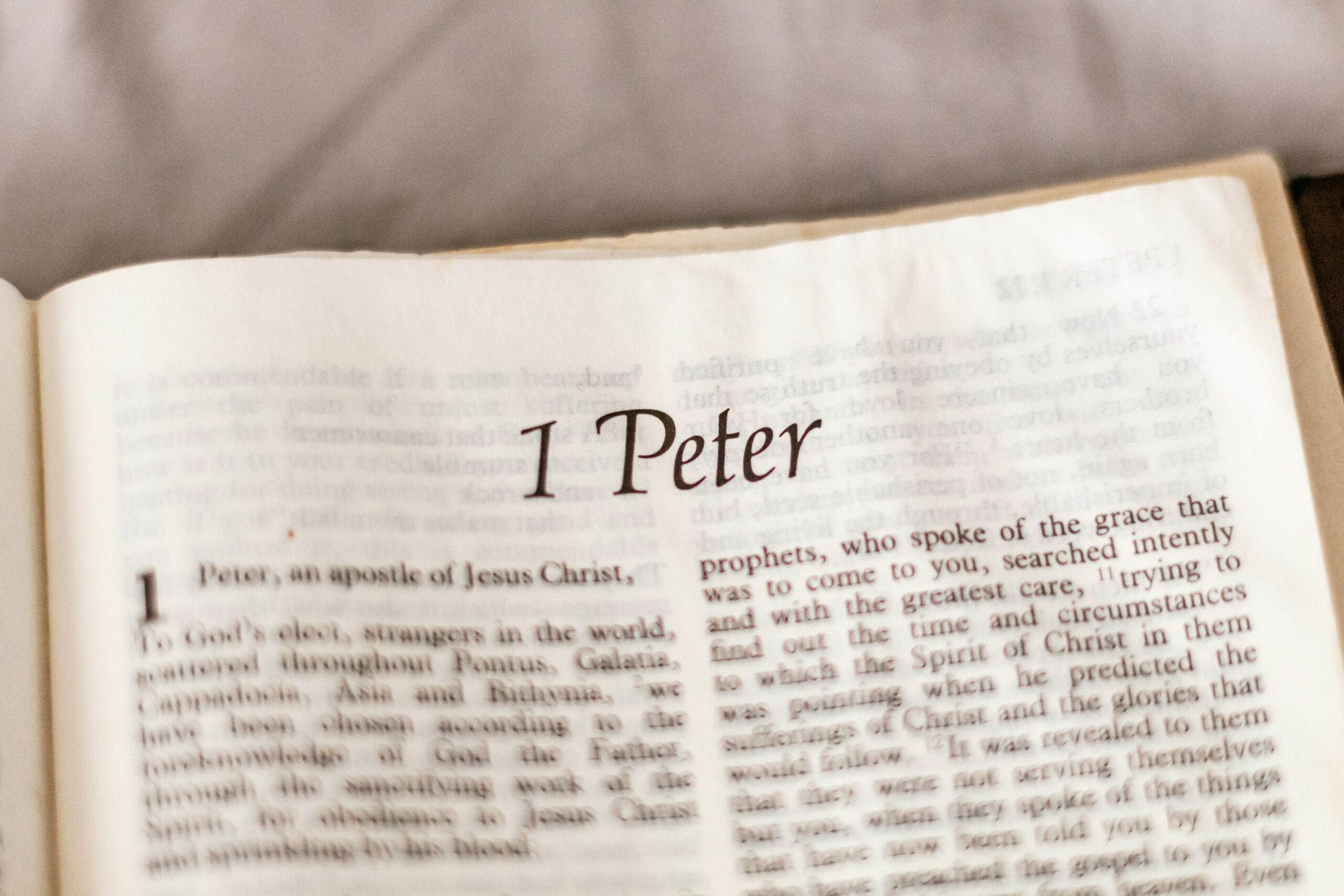
would, let’s take up our Bibles. Turn to 1 Peter 5. I’m just thankful that I don’t
have a hanging sermon that I’ve got to dip back into and re-contextualize. Peter really does here turn the
corner in a new way. He even addresses a particular
segment of the church. There is, of course, in all passages,
a context. And it is a fascinating, but
I’ll make it a brief transition here. You know that Peter throughout
the book has been talking about suffering. And Peter isn’t finished
with that subject even yet. At the end of chapter 4, remember
his exhortation really was kind of along the lines of a repair
manual on how to face suffering. And in the very last section
there, he says, verse 19, Therefore, let those who suffer according
to the will of God entrust their souls to a faithful Creator in
doing what is right. And Peter did exactly what Paul
did there on the shores of Ephesus in entrusting their souls to
a faithful Creator. And we talked about this last
week. There is no better place to be. than in God’s hands. There is no better place to be
than entrusted to the physician of souls. But, Peter knew that
these were people who were earthbound currently, and they were bound
to face earthly difficulties. When we say that they are entrusted
to a faithful Creator, there’s no doubt that God is going to
care for them. Ultimately, God is their shepherd. And yet, Peter, almost in the
same breath here beginning in chapter 5, says that you know
what? You do need some earthly shepherds. You can very well be entrusted
to God, but you still need earthly shepherds who will oversee you
and protect you and provide for you in an earthly sense. There
are those who would say or lodge the argument that there is no
one form of church government. That is the prevailing argument
in the church today. that the Scripture really is
silent about church government. You know what? And even if you
look around, and I’m talking about the evangelical churches
of the area, if you consider even in your past the evangelical
churches that you’ve come from, there really are a multiplicity
of models that are in place. Now, some would challenge whether
they’re effective or functioning, I remember in seminary, a professor
to me one day said, if the people are godly, any form of church
government will work. If the people are ungodly, it
doesn’t matter what form of church government you employ, you’re
going to have trouble. Well, the problem is, is that people by
and large are sinners, not ungodly in the We are sinners. And where you have sinners, you’re
going to have trouble. That doesn’t mean that there’s
a perfect form of church government that’s going to do away with
all that. But, back to the point, there are those that say that
there is no one distinct form of church leadership that is
articulated in Scripture. And I would contend with that.
I’ve suggested that there are basic models in the church. And
there are some that are so out there that really to give them
any credence, there is essentially the Protestant version of the
Catholic hierarchy in some circles. I would say that Scripture so
quickly dismantles that hierarchical structure. We’ll talk a little
bit about that in a moment. To give that credence is really
a waste of time. There are those that say that
there should be no church leadership structure. That it’s just free
form and anybody can come in and do anything and you know
about how long that would last. There is, of course, and this
is a prevailing model in its popularity. There is the purely
congregational model where members decide and everything from the
color of the carpet to what doctrine we’re going to adhere to is decided
by a vote, a show of hands. There is the traditional baptistic
structure from which most of us have come or are familiar,
where you have pastors and underneath them deacons that act as some
kind of a clutch between the pastor and the people, because
the people are constantly pushing back and the pastor’s in charge,
sitting up there at the top of the heap, and the deacons essentially
do his bidding and kind of communicate with him. They act as a liaison
between the people and the pastor. And then there is the elder structure
in the church. Those three basically are the
prevailing, the popular prevailing structures in the evangelical
church. Some think, as I’ve said, that
Scripture is silent altogether regarding government in the church,
and they just prefer for this free form deal. And as a result,
people use that argument to support virtually every kind of leadership
structure in the church. But is there really no God-given
form of government in Scripture, as some people would allege?
I would propose to you, and I would seek to prove at least beginning
this morning, that there is a very well-defined leadership model
in the church And I’ve articulated it elsewhere, and I’ll provide
some of this for you probably next week, a little booklet on
biblical church leadership. I believe that a God given model
of church leadership exists. And it consists of a multiple
number of godly men that are referred to in Scripture as elders,
overseers and pastors or shepherds. They all refer to the same office.
who are recognized by the local church as being appointed by
God. We don’t bestow this authority
on anybody. We merely recognize what God
has already worked into a man. And they jointly and humbly shepherd
their loving and obedient flock. It’s there in Scripture. And
it’s here in this passage. If you would, look at 1 Peter
5 and we’ll read just the first Four verses. Where Peter writes, Therefore
I exhort the elders among you, as your fellow elder and witness
of the sufferings of Christ, and a partaker also of the glory
that is to be revealed, shepherd the flock of God among you, exercising
oversight, not under compulsion, but voluntarily, according to
the will of God. And not for sordid gain, but
with eagerness, nor yet as lording it over those allotted to your
charge, but proving to be examples to the flock. And when the chief
shepherd appears, you will receive the unfading crown of glory.”
I believe there is a God-given model of church leadership. And largely in the church, there
is an awakening to this. I mean, when I came out of seminary,
the whole eldership model was really radical. And it isn’t
radical. It’s just that the church for
almost 150 years had moved steadily away from it and abandoned the
whole eldership model in the church. The Baptist church that
was established in America was firmly rooted in an elder rule
structure. And along about the mid-1800s,
the church began to move away from that. And essentially it
started innocently enough that instead of calling the leaders
of the church elders, they simply called them pastors. And then
suddenly you have this division between the pastors and now you
have this other leadership structure called the deacons. And the deacons
naturally took on more of a leadership role than is articulated in Scripture. And you have this perfect little
division. Pastors and deacons and laity. The only problem is, is that
Scripture doesn’t make that line of demarcation, at least not
that clear. Deacons function in a support
role in the church. They’re not teachers. They’re
not designed to be teachers, whereas elders, the plurality
of them are. And that’s the distinction. As
I said, this leadership model consists of a multiple number
of godly men. And we could spend weeks just
on this single word, examining every little facet of what an
elder is. We’re not going to go into the
character qualities of an elder. You could turn to 1 Timothy 3
or Titus 1 and the messages that we’ve preached there on those
particular passages. But the men that are called to
lead the church, and it is an exclusively male office designed
there by God, articulated in 1st Timothy 2 and 1st Timothy
3 and Titus 1 and many other places, they’re supposed to be
godly men. And the character is marked out
there for you in those passages. There is a well-defined leadership
structure in the church. And when Peter wants to finally
now address the leaders in this local first century church, he
does so by the title Elder. Look again, if you would, at
verse one. Therefore, I exhort the elders among you. And in,
I believe, every case where this word is used with regards to
spiritual leadership in the church, it is used in the plural. We’ll
come back to that point perhaps another time. Peter wants to address the spiritual
leadership of the church. And really, more than likely,
in a multiplicity of churches. He wants to address the spiritual
leaders here for a moment on the work that they do, the attitude
with which they attack it, and the blessing that comes commensurate
with that service. It’s plainly evident here, and
we’ll talk more about the nature of the office in a moment, that
Peter is addressing people that aren’t just old in age, not just
elders in age, but elders by office. What made a man an elder was
not His age merely, but His maturity, His standing in the Lord, His
spiritual maturity, and ultimately His recognition as such by the
church. Remember, you have an office
given to you that is reckoned not because of the years, but
by the graces that you manifest by God. One said, that an elder
must walk the aisles of his church and tread the streets of his
parish as men, in one sense, prematurely old…” Trey has
the corner on the market on that one on me. “…as prematurely
old, as men of that truest dignity which consists not in wealth,
not in rank, not even in age, but in bearing Christ’s commission.”
It’s not just that they’re old, because there are plenty of old
fools in the church. What he says is here that he’s
referring to that office of spiritual leadership in a church. One man
said of this office that when a man comes or enters into this
eldership, no small honor is conferred upon him. For he is
entering upon the oldest religious office in the world, an office
whose history can be traced through Christianity and Judaism for
4,000 years. When a man enters the eldership,
no small responsibility falls upon him, for he has been ordained
as a shepherd of the flock of God.” As a defender of the faith. And in this passage before us,
The office referred to is referred to here as elders. But Scripture
uses three titles, as I’ve already suggested, to refer to that same
office. Elder, Overseer, and Shepherd. And I want to take a moment this
morning just to look at each of those. Elder, Overseer, and
Shepherd are all referencing the same spiritual office of
leadership in the church. And the reason I want to take
a few minutes is this is where the confusion lies. In fact,
all three of those terms, it’s interesting, are found in this
passage before us this morning. Look again. Therefore, Peter
says, I exhort the elders among you, skip down to verse 2, shepherd
the flock of God among you, exercising oversight. You have overseers
in the church that shepherd the flock and they’re called elders.
It’s as simple as that. Let’s look at these three terms
first this morning. Three Greek words which are used
in reference to the primary permanent office of spiritual leadership
in the church. I say primary because the office
of elder isn’t the only office. And the other sad thing that
happens in churches is they have only elders and no deacons. That
isn’t by design even in this church. We have many people who
are functioning as deacons in this church. We just desire that
sooner or later that would be formalized in the office of deacon
in the church. When I say that it is the primary
office, there are deacons, there are elders, and those are essentially
the two offices in the church. And when I say permanent, this
is exactly what Christ intended in perpetuating the eldership
in the church. And we’ll see how he did that
here shortly. Elder. Let’s look at this term
first. The word, if you are familiar
with your Greek, is presbyteros from where we get the Presbyterian
church, which is named so because of its affinity for the elder
rule structure. Although in many Presbyterian
churches, that has even been corrupted or mitigated in the
last few years. This word is used some 70 times
in the New Testament. Typically, it’s in reference
to mature age. With this particular word, there’s
no historical mistranslation, as we’ll see in a moment. It
has occurred in other places with other words. But the term
and the importance of the office simply, especially in the United
States, fell by the wayside in evangelical churches. There became
this super office of pastor or, you know, especially in evangelical
circles, senior pastor. And the role of deacons was played
up. And the office of elder just
simply fell by the wayside. In its non-technical use, the
word is used to describe literal aged people, older people, implying
in some cases even seniority. That’s not why a person becomes
an elder. I’ve already stated that. It is used in a technical
sense in a variety of different ways. It’s used as elder in the
office of the Jewish system elder. We’ve already articulated that
this office was in place for 4000 years. Now, the Jewish system
elder had much the same function, though. a little bit limited
in the authority. But Matthew 16, 21 and many other
passages refer to that. From that time, Jesus Christ
began to show his disciples that he must go to Jerusalem and suffer
many things from the elders, the chief priests and the scribes.
So this threefold collocation of offices was the Jewish leadership
structure. There are also another technical
usage of this term refers to those what I would call eternal
elders. Part of the heavenly council,
the 24 elders that surround God’s throne spoken of in Revelation,
used 13 times there in the book of Revelation. Revelation 4.4,
for example, around the throne, there were 24 thrones. Upon the
thrones, I saw 24 elders sitting clothed with white garments. And there was a third technical
use of this, and this is the one that we would want to take
a moment with this morning, because it refers to the elder in the
Christian church. If you would, take your Bibles
and turn to Acts chapter 11. In Acts chapter 11, we have basically
the office mentioned, and it really is just a very brief passing
here. In chapter 11, verse 30, it said,
“…this they did, sending it in charge of Barnabas and Saul
to the elders.” And so really what you have here is merely
a forecast. We know that there is this office.
We know that they’re called elders. Everything else is undefined
at this point. Turn over, if you would, to Acts
14.23 where we have the office set forth. It wasn’t enough for
Paul now to go from church to church and to establish these
small local churches. It says that Paul went back through,
and in verse 23 of chapter 14, it says, when they had appointed
elders, plural, for them in every church, And so it wasn’t enough
just to have a super elder, a bishop, if you will, who sat over a number
of churches in his region. That wasn’t at all the design
of God. The design of God was to have
elders, shepherds in every church. And it goes on to say, having
prayed with fasting, they commended him to the Lord in whom they
had believed. What a beautiful place to be.
commended to the Lord in his care, ultimately, and yet with
local earthly shepherds to care for them. In Acts chapter 20, you can turn there. I’m not going
to spend too much time there because we’re going to come back
to that passage at length. Acts chapter 20. Paul, when Paul
wanted to have a council, as it were, he summoned from the
Ephesian church their spiritual leaders. And we read about that
in verse 17. From Miletus, he sent to Ephesus,
and he called to him the elders of the church. And when they
had come to him, and Paul here begins a very lengthy expression. We’ll come back to that passage
later. In 1 Timothy 4.4, Paul there refers to the elder board,
if you will, the presbytery, the gathering, the collocation
of leaders there in the church called elders. In 1 Timothy 5,
he says that elders are due double honor. We’ll talk about that
again maybe another day in another context. It essentially refers
to financial remuneration for some. That’s the only place,
or one of the only places where you get a very clear affirmation
of paying any elder. Later on, you have this protection
in 1 Timothy 5.19. Did I have you turn there? Turn
to 1 Timothy 5.19. And I’ll repeat some of what I just
said. In 1 Timothy 5, You have a couple
of references to the office of elder in verse 17. You have the
exhortation to the double honor, which I referred to in First
Timothy 519. They’re provided an extra kind
of protection against false accusation. Do not receive an accusation
against an elder, except on the basis of two or three witnesses,
I believe that is one, if not the only place where elder is
presented there in its singular form. Titus 1.5 talks about appointing
elders. James 5.14 talks about calling
the elders when they’re sick. 1 Peter 5, our passage here,
later on will exhort the younger men of the church to be subject
to the local elders. And so you do have this term
used for an office of spiritual leadership in the church. But
is it the only office or is it the primary office? Because there
is another word that has created much confusion for 2000 years
in the church, and that is the office of overseer. Is it a distinct
office from that of elder? The word is episkopos, epi meaning
over, and skopeo meaning to watch, to watch over. And that’s what essentially led
some to say that there should be a pope who watches over a
multiplicity of churches, a bishop. The word episkopos, to oversee,
only two occurrences of this word refers to the spiritual
duty, and it’s in this passage in front of us. One of the two
occurrences of the verb in all of scripture. And it’s in this
very passage in direct context with the eldership. The elders
job, in short, is to oversee the flock. It’s as simple as
that. But let’s examine the data. The feminine noun, episcope,
just refers to inspection or overseership. One of the four
occurrences refers to the ministerial office. First Timothy 3.1 says
this. It is a trustworthy statement.
If any man aspires to the office of overseer, it is a fine work
he desires to do. Now, we haven’t proved that the
two offices are one in the same. It’s at least theoretically possible
by reading that statement that Paul there in 1 Timothy 3 is
referring to this super office of overseer, and Peter and Paul
in other places are referring to another office of elder. It’s
possible. It ain’t likely. The masculine noun, episkopos,
overseer. Three of the four occurrences
refer explicitly to the ministerial office. Philippians 1, Paul and Timothy
bond servants of Christ Jesus to all the saints in Christ Jesus
who are in Philippi, including the overseers and deacons. You
mean to tell me that here in this very well-developed first
century church, now Paul, essentially the great supporter of the eldership,
doesn’t even mention elders as he writes this key epistle. That
is an argument in favor of the fact that elders and overseers
are the same office. First Timothy 3.2, we just read
an overseer speaking about the qualifications for the office.
Titus 1.7 speaks of the overseer must be above reproach. Speaking
of a very similar set of qualifications, spiritual qualifications. But there is a third word, and
before we clear everything up, let’s muddy the water completely.
We have this office of elder. We have perhaps a second office
of overseer. But there’s a third word that’s
used for spiritual leadership in the church. And that word
really confuses things because that word is pastor. The word is poyman, translated
almost every time. And even in my precious New American
Standard, it’s translated every time but one. as shepherd. And why the translators decided
to use the word pastor, I’ll never know. But the word essentially
means shepherd. And typically it is used in reference
to Christ and to his care of the flock of God. The verb literally
means to tend or to shepherd or to nourish. It’s that beautiful
image where we first got from the Old Testament, Psalm 23 included. It’s used 11 times in the New
Testament. Five times clearly referring
to Christ. Plain as day. Two, with reference
to literal shepherding. That’s what those who take care
of sheep do. But three, plainly refer to this
image, this illustration that is pervasive throughout Scripture,
not just in the New Testament, of the responsibility of church
leadership to shepherd those under their care. In fact, one
of the occurrences of this word refers to false teachers who
sort of shepherd this flock. I mentioned Acts 20 a moment
ago. Don’t turn there just yet. But
in Acts 20, 28, Paul’s exhortation to the elders there was to be
on guard for yourselves and for all the flock among which the
Holy Spirit has made you overseers to shepherd the church of God,
which he purchased with his own blood. In the passage before
us, we’ve already read it, but he says, shepherd the flock of
God among you. That’s what essentially spiritual
leadership is. It is a shepherding. It is a
care. We’ll talk more about that as we turn to that particular
passage. All this to say, of the 18 times
that the noun is used, eight are in clear reference to Christ
as the Great Shepherd. Five allude to Christ as such.
Four refer to literal shepherds. Word. One time out of the 18,
it refers to church leader and it’s translated only here in
all of Scripture as pastor. That’s why I tell you, I don’t
prefer the title. I don’t prefer the title pastor.
But if you’re going to use it of me, you have to use it of
all the elders in the church and I’ll show you why. I believe
that the biblical data demands that there is but one primary
office of spiritual leadership in the church, and all three
of these terms reference that one office. The three terms,
elder and pastor or shepherd and overseer or bishop, if you
must, all refer to the same leadership office. This is proven. I mean, if you
look at the data, it’s proven. The fact that the qualifications
for an overseer, on the one hand, in 1 Timothy, are almost identical
to the office of elder referred to in Titus. In Titus 1.5, 1.5-7,
you have this interplay where on one hand, Paul uses one term
and then in the same breath, he uses the other to refer to
the same office. Listen, just listen. For this
reason I left you in Crete, in order that you might set in order
what remains, and appoint elders in every city as I directed you.
Namely, if any man is above reproach, the husband of one wife, having
children who believe, not accused of dissipation or rebellion.
For the overseer must be above reproach.” It’s in the same breath
in Acts chapter 20. If you’re still in Acts chapter
20, I think you’re not in Acts chapter 20. Turn to Acts chapter
20. In Acts chapter 20, we’re not going
to read all of it today, but we are going to spend some time
in this passage in the maybe next week or weeks to come. In
Acts chapter 20, all three of these terms, as I’ve already
suggested, are used in conjunction with one another. Look there in the passage, verse
17. “…from Miletus he sent to Ephesus and called to him
the elders of the church.” And he goes on there in his exhortation
to say, be on guard for yourselves and for all the flock. There
is that shepherd flock motif drawn up from the Old Testament.
Be on guard for yourselves and for all the flock among which
the Holy Spirit has made you overseers. Bishops, as I said,
if you must, I’ll tell you in a second where bishops even came
from. Overseers whose function is to shepherd the church of
God, which he purchased with his own blood. All three terms
in the same passage. And here in 1 Peter, you have
exactly the same collection of terms as we’ve already seen.
I exhort the elders to shepherd the flock of God, exercising
oversight. The logical conclusion, the only
reasonable conclusion from all the biblical data is that elders
and overseers and shepherds, or if you want to call them pastors,
they all refer to the same spiritual office. So the only right thing
to do in the church is if you have a plurality of elders, as
God has blessed us with, you either refer to them all as elders,
or you refer to them all as pastors, or you refer to them as shepherd.
But there is no hierarchy. There is no structure within
that office. And to do so is dangerous to
the church, as we’ve seen elsewhere. One elder has as much authority
as the next elder, regardless of his training or background.
It’s because of what God has done in his life and heart. MacArthur
said it this way, simply. Bishops and pastors are not distinct
from elders. The terms are simply different
ways of identifying the same people. All three terms refer
to the same office. So the term elder emphasizes
who the man is, overseer speaks of what he does, and pastor deals
with how he feels in the pastoral role of caring and feeding. John
Murray, Presbyterian godly instructor of another day, said it this
way, elders are shepherds of the flock. They are to shepherd
the church of God and the flock of God. It is the same term,
shepherd, that appears in Ephesians 4.11, the only place in Scripture,
as I said, that it’s translated pastor. Since Paul penned the
latter, it would be necessary for us to infer that he has in
view the same function which he enjoined upon the elders from
Ephesus. And so the conclusion is that
the pastors, shepherds of Ephesians 4.11, are those designated in
Acts 20 as elders and overseers. And I know that all that data
is hitting you and you’re overwhelmed. The bottom line is, God has provided
a spiritual leadership structure in the church. And it all rolls
into those three simple terms. Elder, overseer, and shepherd. Now, those three terms all refer
to the same office of spiritual oversight in the church Nevertheless,
the term elder is the most prominent. It’s the most prominent in this
passage, and it’s the most prominent in Scripture. The New Testament
records evidence of pastoral oversight by a council of elders,
plurality of elders in nearly all of the first century churches.
Listen to the data. Elders were found in the church
of Judea and in the surrounding area. So says Acts 1130 in James
5. We read the passage in Acts,
James 5, 14 and 15. Elders clearly governed the church
in Jerusalem. This first century fledgling
church, perhaps the first of its kind, was governed by elders. So says Acts 15. Remember, they
had a council and they went back and they had this council with
the elders of the church. Among the churches that Paul
planted and shepherded, leadership by a plurality of elders was
axiomatic. Remember, we read the passage
where Acts 14, 23, where he went back and established a system
of elders in each church, Derbe, Lystra, Iconium, Antioch, Ephesus,
Philippi, Crete, all of them. And according to this particular
letter, which traveled far beyond just one local church, it went
throughout Asia Minor, Pontus, Galatia, Cappadocia, Asia, Bithynia. It’s reasonable to assume, because
Peter’s writing to them, that each of those churches, local
churches, had elders. The majority of the instruction
that is given to the spiritual leaders of the church are given
to those who are formally called elders. I’ve already mentioned
the book of James. He says there to call for the
elders if you’re sick. In 1 Timothy 5, he exhorts the
church to financially support the elders. Paul instructs the
elders in the local church about protecting elders in the local
church from false accusation, which passage we read. He gives
qualifications for the elders in Titus. In the writer of the
book of Hebrews instructs the readers to obey and to submit
to elders. Paul teaches that elders are
the household stewards, leaders and instructors of the church
in such passages as 1 Timothy 5, Titus 1 9. That is the primary
office of the church. The fact that it’s referred to
in a variety of different ways does the office itself no damage.
In fact, many times there is direct exhortation or direction
given directly to the elders. James tells the congregation
to call on the elders when they’re sick, and he gives the elders
direct information on how to go about that prayer meeting.
Peter charges the elders to pastor and shepherd and oversee the
congregation. Paul warns the elders about being
too authoritative. Peter warns the elders about
being heavy handed and authoritative here in 1 Peter 5.3. And so what
you have is this overwhelming data that
far from saying that there is no formal leadership structure
that’s there in the church, you have clear, unmistakable evidence
that there is one leadership structure that is clearly given
in the church, and it is the office of elder that can be referred
to by a multiplicity of titles. And those elders together shepherd
the flock of God among them. while we have just a few moments,
let’s begin at least to look at what that work looks like. What is this work that elders
do? We’ve seen the office of spiritual
leadership, the elders, but let’s look at the work of spiritual
leadership. This shepherdly oversight that
is provided by God for the church. Look again at the passage, if
you would. 1 Timothy, beginning in chapter 5, verse 1, Therefore,
I exhort the elders among you as your fellow elder and witness
of the sufferings of Christ and a partaker also of the glory
that is to be revealed, shepherd the flock among you. We’ve already
seen the word. We know that it clearly refers
to the office of leadership in the church. But what does it
mean? The King James, if you’re reading
one of the older translations, might even read feed or feeding. I think the New King James updates
it. Feed or nourish is the idea behind
it, but that’s so limiting based on the meaning of the word. The chief functions of the shepherd,
as they’re depicted in the Bible, are to seek out the lost. Remember
Psalm 23. Gather the scattered. to watch over and defend against
wild beasts and robbers, and to feed and water, to lead. That’s what a shepherd did. That word shepherd is a word
that, when it’s used of Christ, includes all that Christ does
for our souls. It doesn’t just talk about Him
as our Savior in this point-in-time fashion. It speaks of Christ
as the ongoing shepherd and guardian of our souls. Speaking of His
loving care, His feeding, His instruction of us, His guidance
and government of us. It is an image that was woven
throughout the pages of the Old Testament that was merely naturally
adopted in the New. It is a very natural adaptation
of that office into the Christian church that the elders of the
church should be seen as those who shepherd and care for their
flock was just unnatural. Psalm 23. You know the psalm.
You could probably recite it by heart. The Lord is my shepherd.
I shall not want. He makes me lie down in green
pastures. He leads me beside quiet waters. He restores my soul. He guides
me in the paths of righteousness for His name’s sake. There you
have the consummate passage on what shepherding is to look like.
There is to be this gentle and intense concern, this loving
care. for the flock. It is spoken of
by way of illustration in Isaiah. Like a shepherd, he will tend
his flock, Isaiah 40.11. In his arm, he will gather the
lambs and carry in his bosom. He will gently lead the nursing
ewes. That’s the spirit. That’s the
attitude. That’s the work that an elder
is called to do is to gently care and love the flock of God
as God has already done. God delegated this office before. Don’t be surprised that Christ
is the shepherd. Who are you to shepherd this
local flock? Well, God had repeatedly delegated
this office. kind of sets this in motion.
Ezekiel 34, 23, I will set over them one shepherd, my servant
David, who became a type of Christ there. He will feed them. He
will then feed himself and be their shepherd. Speaking of Christ,
we’ve already noted that this is a word that is used of Christ,
referring to Christ as the great shepherd. a beautiful image that
that is for Christians, but it doesn’t stop there. When Peter
wants to direct the spiritual leaders of the church, he calls
them shepherds. When Paul wants to get the attention
of those Ephesian elders, he calls them shepherds. He tells
them to shepherd the flock and it brings up that imagery of
Christ. Even from John 10, I am the good shepherd. That is our
model as elders. That’s the standard that we’re
called to. That loving care of the flock. I said a moment ago at the outset
of this, that Christ essentially set this office in motion And
he did so in John chapter 21 when he called Peter back into
the ministry. Remember, Peter had cashed it
all in and decided to go fishing after the crucifixion and after
those terrible days. Peter had much to be ashamed
about, frankly. But the gracious master went
and found him. And he called him to himself
and he put him back into service. And in John 21.16, it’s recorded
that he said to him a second time, Simon, Simon, son of John,
do you love me? He said to him, yes, Lord, you
know that I love you. He said to him, shepherd my sheep. And in that moment, I believe
Christ bestowed this shepherding office, first of all, to the
apostles and the apostles to the elders until the Lord returns. And that beautiful image of the
shepherding sheep function continues. The loving care of the flock. One pastor said it this way of
the shepherding function of the elders. Elders as the spiritual
overseers of the flock are to determine church policy, oversee,
ordain others, rule, teach, preach, exhort and refute and act as
shepherds. setting an example for all. Those
responsibilities put elders at the core of the work of the New
Testament church. Understandably, elders cannot
afford to allow themselves to be consumed with business details,
public relations, minor financial matters and other particulars
of the day to day operations of the church. They are due to
devote themselves, first of all, to the prayer and the ministry of the word
and select deacons to handle the lesser matters.” What a beautiful
summary of the office that God has given to the church for its
care and sustenance. When Puritan said likewise, it
is not enough for ministers to preach, yea, sacredly and diligently,
But they must, besides, take a particular oversight of their
flock. And looking into their conversation,
or how they live, their conversation and behavior, and applying themselves
accordingly in admonition, exhortation and comfort. If a minister knows
any of his people to be riotous or profane, he must rebuke them.
If any are out of the way, he must admonish them. He must hearten
them that are in good course to go on still, and He must comfort
them that languish under their sins, temptations, and fears. In a word, He must deal with
everyone as the cause requires.” There is a very clear model for
church leadership, and there’s only one. in the pages of Scripture. It’s the office of elder that
God gave to oversee this precious flock of God and to shepherd
them as Christ Himself would. Let’s pray. Our merciful God,
we thank You that the biblical data is clear. There is a good
model, a God-given model in Scripture. of how the church is to be shepherded
and cared for. Father, we thank You. We thank
You for the Word that You’ve protected down to this age that
secures this office even to this day. Father, help us not to be
foolish in the exercise of this office. Give us wisdom and grace
and dignity. Help us to be careful overseers
of this flock and to shepherd them with the loving hand of
Christ Himself. Father, we thank You. We thank
You for the clear, unmistakable means of spiritual oversight
that You’ve left us in Your Word. We ask Your blessing as we go.
It’s in Jesus’ name that we pray, Amen.
Messages: 61