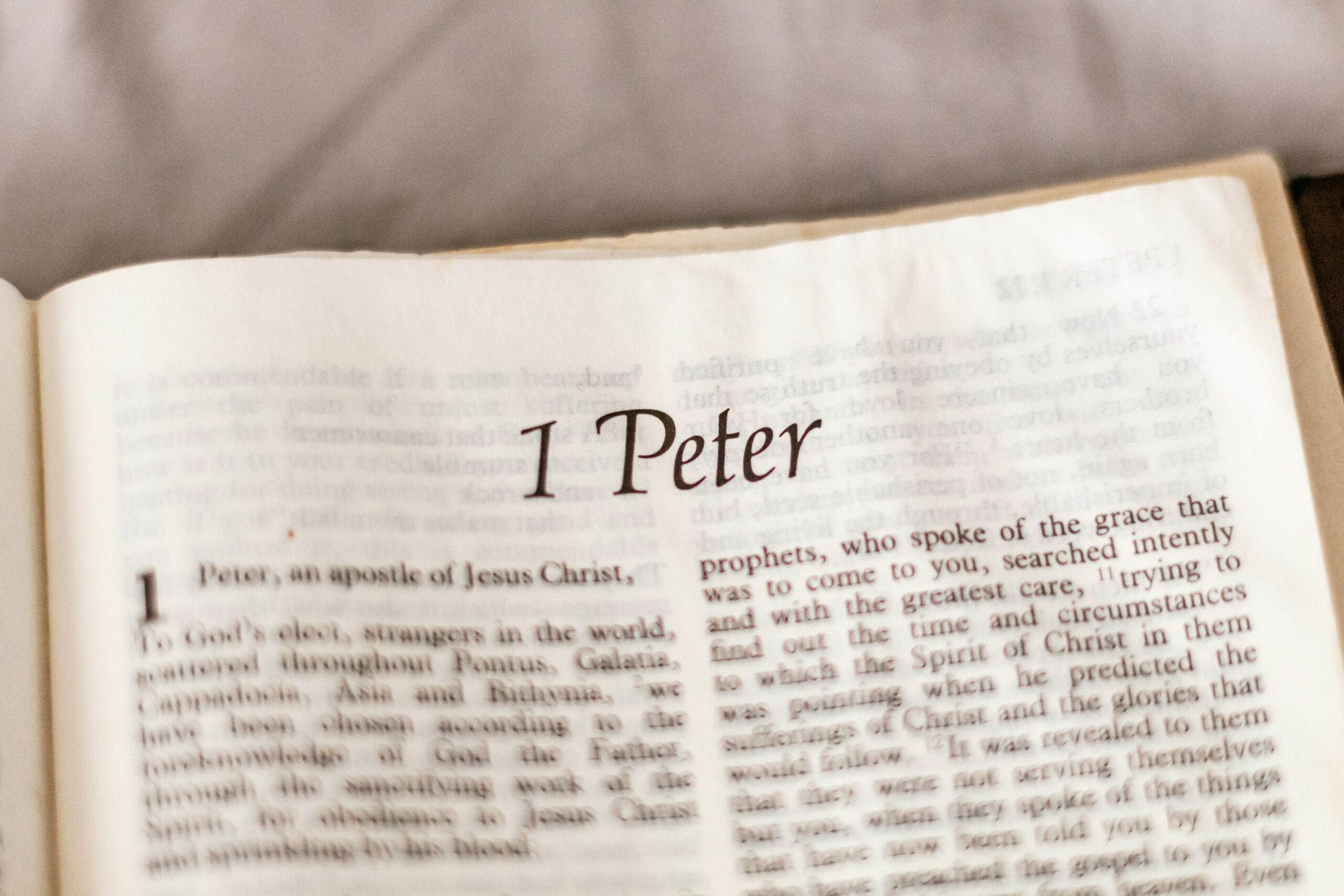
God’s Construction Project, Part 3
This sermon explores the theological concept of the believer as a member of a holy priesthood, grounded in the imagery of the church as a spiritual house built upon Christ. It clarifies that while the Old Testament sacrificial system for atonement is fulfilled in Christ, the New Covenant calls for spiritual sacrifices that reflect a transformed life. The primary offering is the believer’s own self, presented as a living sacrifice in response to God’s mercy, followed by the continuous offering of praise, service to others, and material generosity. These acts are not means of earning salvation but are expressions of gratitude and worship that please God. The message encourages believers to view their daily actions, prayers, and resources as sacred offerings that contribute to the glory of God.
Transcript
For sure, take, if you would,
also your insert, if you would like the passages there that
we’ll be considering with a place for notes. We come again to first Peter
and to chapter two, which we have been considering now for
several weeks, we will put a couple of different thoughts into the
mix by way of reminder and jump in where we left off last week. What we are essentially considering
here is Paul’s encouragement to these first century believers.
Remember, that first chapter opened up with almost a doctrine
of salvation, at the end of which was our response, our only reasonable
responses to that great salvation that God has given. And as we
looked at the responses, our hearts began to sink because
we realized that we can’t do that perfectly. We can’t respond
to God in a perfect way as we ought. And that’s exactly what
chapter two is about. First of all, chapter two calls
us to the word. The word is what is going to
give us the encouragement, the instruction, the guidance in
order to respond properly, as God has called us to, to this
great salvation. But Peter didn’t want to stop
there. And what he does here in verses four and following
is give us a great encouragement that God has already begun a
building process in which he’s using us as the very material
for that building. God has begun the work. He’s
going to continue it. The thought is very similar in
flow to Philippians 1.6. What God has begun, God will
finish. So it’s God’s construction project
that we are considering, and it is the church. We’ve seen
that in the weeks past. We looked at the elements of
this structure, the features of this spiritual structure that
God is constructing. We saw, first of all, the foundation
of the structure is none other than the Lord Jesus Christ. He
is the cornerstone. If you would, I want to go back
and we’ll pick the verse up or pick the passage up in verse
four, take it in its entirety and reconsider a few things.
Verse four. where Peter writes, and coming
to him as to a living stone rejected by men, but choice and precious
in the sight of God, you also as living stones are being built
up as a spiritual house for a holy priesthood to offer up spiritual
sacrifices acceptable to God through Jesus Christ. For this
is contained in scripture, behold, I lay in Zion a choice stone,
a precious cornerstone, and he who believes in him shall not
be disappointed. This precious value, then, is
for you who believe, but for those who disbelieve, the stone
which the builders rejected, this became the very cornerstone
and a stone of stumbling and a rock of offense, for they stumble
because they are disobedient to the word and to this doom
they were also appointed. But you are a chosen race, a
royal priesthood, a holy nation, a people for God’s own possession,
that you may proclaim the excellencies of Him who has called you out
of darkness into His marvelous light. For you were once not
a people, but now you are the people of God. You had not received
mercy, but now you have received mercy. We considered that the foundation
of the structure is the Lord Jesus Christ. He is the living
stone on which the church is built. Many have rejected Him,
but that doesn’t change His preciousness in God’s eyes. He is choice and
precious in God’s eyes. He is the living stone on which
the church is built, giving life to everything that touches Him.
Everyone that touches Him and comes to Christ receives life. We considered and are reminded
that Christ is the foundation of the structure. The materials
for the structure were presented there in verse five as well,
where Peter said, you also as living stones are being built
up. The process is already underway.
He points to you as the materials of this great wall. You’re living
stones. You derived your life from Christ.
And as we pointed out, the word is an interesting word there.
It doesn’t mean a rock, a stone, a piece of rubble lying in the
field. This is a perfectly worked hand carved stone. Each one of
you, each one of you fits into that wall as part of Christ’s
design. Thirdly, We noted not only the
foundation of the structure and the materials for the structure,
but the purpose of the structure is a spiritual house. Don’t look
for a building. Don’t look for a great edifice,
the greatest church ever built, physically speaking. Because
the house that God is building is a spiritual structure. It
can’t be seen with the eyes. It isn’t a common structure. It’s not just a house per se. It is a religious structure.
It serves a noble purpose. It is the church. It is, as the
Old Testament referred to it, the house of God. It’s God’s
dwelling place. As Paul in Ephesians said, it
is not a house that is merely made with hands. It’s not one
of these simple structures. Paul in Ephesians chapter two
said, you are no longer strangers and aliens, but your fellow citizens
with the saints and you are of God’s household. And he means
that extremely literally. You are literally woven in to
the very fabric of this structure. Having been built upon the foundation
of the apostles and the prophets, Christ Jesus himself being the
cornerstone. Paul uses the same imagery as
Peter. In whom the whole building being
fitted together is growing into a holy temple in the Lord, in
whom you also are being built together into a dwelling of God
in the spirit, Ephesians chapter two, verses 19 and 20, a great
passage. What that passage particularly
points to and what this imagery we so easily miss is the image
that we get even from the vine and the branches. We are nothing
without Christ. We are the image of the husband
and the wife in Ephesians chapter five, the image of chapter four
Ephesians, the head and the members of the body. Those are the images
that the scriptures point out to us. And this one is no different.
This one is no different. It is a spiritual house. We are
being built together. Christ is the foundation stone.
Without Christ, we are nothing. And finally, we came last week
and last two weeks, actually, to the to the purpose of the
structure, from the purpose of the structure to the servants
of the structure. Who are those? And this is where,
you know, if you press the image too far, you get all hung up
and you start fretting and wringing your hands, because how can we
be part of the structure and the occupants of it at the same
time? I don’t know. It’s Peter’s invention by virtue
of the Holy Spirit, so you’ll have opportunity to ask him at
a future date, I hope. The servants of the structure
are also you and I. Somehow we not only form the
walls, but then God says we occupy the structure. And it’s a beautiful image. The
purpose of the structure is a spiritual house. It’s a spiritual house
where God dwells and the servants of the structure are us, you
and I. We’re called a holy priesthood, and that causes us great difficulty
because everything that we know about the priesthood We think
it’s over and done with, don’t we? Unless we’ve studied this
one passage in all the New Testament that points to this issue. We think the priesthood is over
and done with because Christ came as our high priest and what
the old priesthood could not do and in permanently going into
the holy of holies and embracing God with a perfect sacrifice,
satisfying the sin of all mankind, Christ did with one sacrifice.
His own. And we considered that last week,
Christ is our high priest, and in that he has gone in and satisfied
God perfectly with one sacrifice. Then how is it that we’re called
priests? And that causes us some difficulty. Because the idea
of a priest was to go in as a mediator between God and man. Fallen man was a sinner. He had
no right of access to God, no way to approach his holiness,
even as we’ve sung about this morning, really no desire to
go to this holy God, no real relationship with him. His tendency
was to flee him and avoid God because he was at war with God,
say the scriptures. So he needed a priest. The priest
would go in before God and minister before God on behalf of the people
and come out on behalf of God and speak to the people. That
was the priest’s function. We saw, we looked at some examples
of those who usurped authority and laid hold of this priesthood.
Saul did it. Uzziah did it. And both of them
were rebuked. So how is it that we are priests
in any sense of the word? We began to look at it last week. We are now. As followers of Christ. Allowed to approach God in a
new and different way. We are allowed to come near to
God, come near to the throne of grace. The very throne, I
believe, where Isaiah was met with such trepidation. Now, you
and I have the privilege of advancing into that very throne room and
coming to the throne of grace and pleading for ourselves mercy. Every true Christian has an access
to God, every true Christian has a privilege to utilize sacred
things, just as the priest did of old. We’re all allowed to
come near. We’re all allowed this free access
to God. We’re all allowed to come to
the throne of grace with boldness and confidence. We’re not kept
at a distance like the people of old were. The throne of grace is a privilege
for us. Look again in verse 5. where Peter says, you also as
living stones are being built up as a spiritual house for a
holy priesthood. And that priesthood is you and
I. In Exodus 19, God’s Word says almost wishfully
there that God’s people were to be as a
kingdom of priests. And now God has that kingdom
and it’s you and I. We are God’s kingdom of priests.
We are those who have ready access to God through prayer. We are
those that can come to before a holy God because of what Christ
has done. But let me take just a moment
or two to clarify just a few things, because a lot of people,
this whole idea of priesthood, where this brings some difficult
images, depending on their background. If their minds wander too far,
they can even bring in all kinds of improper thoughts and glom
them on to this idea of the priesthood. Let me tell you what it is not
or what it does not do. This priesthood is not a strict
parallel with the Old Testament priesthood. We no longer have to bring a
sacrifice for sin. All priests bring a sacrifice,
as we will see in a moment. All priests. That’s the idea
of a priest is a mediator who goes in with this sacerdotal
ministry and brings an offering to God. That’s what a priest
does. And so we are not in a strict
parallel with the Old Testament priest. We are no longer bringing
an atoning sacrifice for sin before God. Another thing that it is not
or does not do, it does not nullify the office of New Testament elder.
You get people in this day and age that they want to obliterate
all authority in the church based on the priesthood of all believers.
You hear this argument all the time. I probably hear a lot more
than you do, but the argument is advanced constantly. And it
is this it is almost a strictly American concept. It is anti
authoritarian, this mindset that says, you know, we don’t need
authority in our lives. It is basically a child of the
60s now grown up and with shorn hair advancing this idea that
we don’t need authority, especially in the church. Because of the priesthood of
all believers. And the only way to do that is
to nullify or to obliterate some of the clear teachings of the
New Testament on the matter. The priesthood of all believers
does not nullify the New Testament leadership model of the eldership. Not only that, it is not or does
not do one other thing, it is not A parallel or equal to the
idea of the Roman Catholic priesthood, because I said it again a moment
ago, all priests go in and bring an offering to God. That’s exactly
what the Roman Catholic priest does in the mass, the mass. And this is why we’ve talked
about this before. That’s why the mass is so problematic
to you and I. Because it is a re-sacrifice
of Christ week in and week out, or depending on how frequently
you attend, day in and day out. It’s a re-sacrifice of Christ
over and over again. And it all boils down to the
transubstantiation argument that Christ is present in that sacrifice
and therefore being sacrificed all over again. The priesthood of all believers
does not mean that we are going to re-sacrifice Christ in any
way, shape or form. And so in that sense, it is not
parallel to the Roman Catholic priesthood. What does it do? We’ve talked a little bit about
it so far. As we said, the overarching blessing
that we get from this priesthood, and if you will, a priesthood
with a small p, what have you, What it does is allow us that
great access to a holy God through Christ, through what Christ has
done. We no longer need a mediator
because we have the great mediator in our Lord Jesus Christ. We
don’t need any more sacrifice because He was the perfect sacrifice. And now each of us, you don’t
need me to pray for you, to intercede on your behalf because you have
the Holy Spirit and none other than the Lord Jesus Christ interceding
for you. It’s not to say that we can’t
pray for one another, but you don’t need me. You don’t need
any other believer in order to have access to your great and
holy and almighty God. Number secondly, what this does
do is give us ministry, if you will, even with a small M. Every
one of us is in the ministry. Every one of us has been gifted.
Every one of us has been given opportunities to glorify and
praise God and serve him for his glory. Every one of us. And in that sense, we are all
priests. And finally, this priesthood indicates that our sins are paid
for that we are cleansed, that we are prepared. That’s what
a priest was. He was one that didn’t just waltz
into the Holy of Holies. He was prepared beforehand. He
was cleansed beforehand. He was ready to go into that
great place before God and each one of us by virtue of what Christ
has done. It is a glorious concept, people. A glorious concept. Christians
have access to God through Christ, their great High Priest. We don’t
have to have a priesthood like the Levitical priesthood announced
in the Old Testament. Christians can come boldly at
any time before God, they don’t have to wait certain points of
the year, certain junctures to have somebody else go in and
mediate on their behalf. So we talked a little bit about,
we talked a lot about the priesthood last week. I’m going to press
on from there. What is the function of the priesthood?
Just as I’ve already said, to offer up sacrifices. But these
sacrifices that we offer up are of a different kind. They are spiritual sacrifices. Look again at verse five. You
also, as living stones, are being built up as a spiritual house
for a holy priesthood to offer up spiritual sacrifices. And this is essentially where
we left off last week. The primary function of the Old
Testament priest was to offer animal sacrifices to God, but
because of what Christ has done, his sacrifice was so perfect
that no other sacrifice ever need to be made ever. for atonement,
none. So what in the world are we going
to do? What kind of a sacrifice are
we bringing? Just as we’ve said, there is
no priesthood without sacrifice, that is what a priest does. And
the offering of sacrifices was the basically the main employment
of the Old Testament priest. But now the priesthood is different. It’s a spiritual priesthood and
sacrifices have to be spiritual as well. Sacrifice isn’t done
away with, as we saw last week. It’s just different now. It’s
a spiritual sacrifice. And as always, we’ll get into
each one of these as we go. You can’t even begin to bring
God anything until you’ve brought him yourself. You can’t sacrifice
anything until you’ve offered yourself. Until you’ve come to
Christ in faith and placed your faith in Him as the only means
of salvation. Until you’ve yielded up yourself,
God isn’t interested in anything else that you have to offer. Calvin said it this way, the
foremost of spiritual sacrifices is the offering of ourselves,
for we can never offer to God anything unless we have offered
ourselves and then follow our prayers. Then follows our giving
of thanks, our gifts, and all exercises of piety. God is completely
disinterested in that kind of offering. Someone who says that
they have a gift for God, though they withhold the very basics
themselves. The sacrifices that we offer
to God are not for sin, as we’ve said, because Christ has already
taken care of that. The sacrifices that we bring
are spiritual. They are distinct from the material
sacrifices that were offered in the past. And you know what? It isn’t just here that Peter
makes this distinction. Even the prophets and the psalmist
made this distinction frequently in the Old Testament. Listen,
Hosea 9.4. Listen in your mind’s eye. They
will not pour out drink offerings of wine to the Lord. Their sacrifices
will not please him. Well, I thought that’s what sacrifices
were for. Listen to Hosea. Their bread
will be like mourners bread, all who eat of it will be defiled
for their bread will be for themselves alone. It will not enter the
house of the Lord. There was a kind of sacrifice
that was displeasing to God. And it’s repeated throughout
the Old Testament, most notably in Isaiah chapter one. Here’s
a God who designed sacrifices. He designed the law. He designed
the priesthood to minister to those who were condemned by the
law. This was God’s doing. And yet,
God says, what are your multiplied sacrifices to me? Isaiah 1 11. What are your multiplied sacrifices
to me, says the Lord, I have had enough of burnt offerings
of rams. And the fat of fed cattle, I
take no pleasure in the blood of bulls, lambs or goats. You
say, I thought this was God’s program. We’re only doing what
you said to do, God. No, they’re not. When you come to appear before
me, who requires of you this trampling of my courts? Bring
your worthless offerings no longer. Incense is an abomination to
me. New Moon Sabbath, the calling
of assemblies. I cannot endure iniquity and
the solemn assembly. It wasn’t the solemn assembly,
it wasn’t the sacrifices, it wasn’t the incense that God had
a problem with. It’s that they brought both. I hate your new moon festivals
and your appointed feasts. They become a burden to me. I’m
weary of bearing them. So when you spread out your hands
in prayer, I will hide my eyes from you. Yes, even you multiply
your prayers. I will not listen. Your hands
are covered with blood. God took these things seriously.
And where the sacrificial system is wholly rejected because of
the wickedness of the worshipers, that’s what’s going on there
in Isaiah and Hosea. Other times it emphasized the
superiority of righteousness to sacrifice. In other words,
God would rather have the one even if we were neglectful of
the other. Hosea 6, I delight in loyalty
rather than sacrifice. And in the knowledge of God rather
than burnt offerings, God said, give me righteousness and leave
your sacrifices behind. Micah 6, With what shall I come
to the Lord and bow myself before the God on high? Shall I come
to Him with burnt offerings, with yearling calves? Does the
Lord take delight in thousands of rams and ten thousand rivers
of oil? Shall I present my firstborn
for my rebellious acts, the fruit of my body, for the sin of my
soul? He has told you, O man, what
is good. And what does the Lord require
of you? More sacrifices? That’s not what Micah said. He’s
told you, oh man, what is good and what does the Lord require
of you but to do justice, to love kindness, to walk humbly
with your God. God put a premium on a different
kind of life, a changed life, a God honoring life. That’s what
He wants from you and I first and foremost. There are sacrifices
for this priesthood, but the sacrifices of this priesthood
are, first of all, our own lives. Give them up for God and for
his glory. One pastor said it this way,
spiritual sacrifices mean or they imply rather God honoring
works done because of. The work that God has done in
our life. It means a different body. It
means praising God, doing good work, sharing one’s resources,
bringing people to Christ, sacrificing one’s desires for the good of
others, praying, etc. Those are all sacrifices. But
first and foremost is our very life, our very life. One old
Puritan said it this way in a word that sacrifice of ours, which
includes all these and without which none of these can be rightly
offered is ourselves, our whole selves. Our bodies are to be
presented as living sacrifices and they are not without our
souls, it is our heart given that gives all the rest for that
commands all. In other words, he says, you
come with a right heart, you bring everything else with it.
Everything else trails in behind like a train. You come without
your heart and no sacrifice. No sacrifice, no matter how pleasant
in an earthly sense it is, is displeasing to God. He goes on
and says, this makes the eyes, the ears, the tongue and the
hands all to be holy as God’s peculiar property. And being
at once given and consecrated to Him, it becomes a sacrilege
to turn them to an unholy use. This makes man’s delight to hear
and speak of things that concern God and to think on Him frequently,
to be holy in his secret thoughts and in all his ways. It’s giving
of ourselves first and foremost. Remember, Christ came across
a scribe and he challenged him face to face And the scribe was
purposing to essentially challenge Christ. And in Mark 12, it says
of him, the scribe said, Right teacher, you have truly stated
that He is the One. There is no one else besides
Him. And to love Him with all the heart, with all the understanding,
with all the strength, and to love one’s neighbor as himself
is much more than all burnt offerings and sacrifices. There is a sacrifice
we bring, but first and foremost, it’s us. It’s ourselves, it’s
body and soul. It’s exactly what Paul had in
mind in the twelfth chapter of Romans, after eleven chapters
of solid doctrine. Paul says now, what’s our response? Romans 12.1, I urge you therefore,
I’ll plead with you if I must. I beg you from the depths of
my being. I urge you, therefore, brethren,
by the mercies of God.” What he does is say, look back over
your shoulder and see how magnanimous God has been to you. See how
good and how forgiving a God He’s been. How long suffering
He’s been towards you. What great provision He’s made
for your souls. I urge you, therefore, brethren,
by the mercies of God, to present your bodies a living and holy
sacrifice acceptable to God, which is your spiritual service
of worship. Christians are to offer up, as
Jonathan Edwards, the great American Puritan said, they are to offer
up their own hearts to God in sacrifice. They dedicate themselves
to God. Edwards went on, and he said,
the Christian gives himself to God freely as of mere choice,
and he does it heartily. He desires to be God’s and to
belong to no other. He gives all the faculties of
his soul to God. He gives God his heart and it’s
offered to God as a sacrifice when the heart is broken for
sin. A sacrifice before it can be offered must be wounded and
slain. And the heart of a true Christian
is first wounded by a sense of sin. The great evil and danger
of it, and it is slain with a godly sorrow and true repentance before
you can ever bring anything. To Christ, it must be a heart
of repentance. Christians. Once they offer their
lives to God in obedience, they essentially do what the Apostle
Paul here says in offering their bodies to be a living sacrifice. It is a perpetual sacrifice.
It is a daily sacrifice where we get up every day and mortify
the sin that is in our flesh as an offering to God. Remember, we are living sacrifices. They offer up their bodies. They
dedicate their bodies to holy uses and purposes. They yield
their members as instruments of righteousness. Remember what
Paul said in Romans 6? We don’t yield our members to
instruments of unrighteousness or sin, but to righteousness. They yield their eyes, their
ears, their tongues, their hands, their feet as servants to God
to be obedient to the dictates of His Word and the Holy Spirit
in the soul.” Said Edwards. Is that what you’ve done? Is
that the offering that you bring this morning? Is that the offering
that you bring before anything? It’s yourselves. It’s an interesting
word here. This little word, present. It was a technical term for presenting
a sacrifice. It was the act of laying it at
the altar to place beside is literally what it means. And
it can be used in many other common ways. It was used of the
presentation of Christ in the temple. It was used of Paul presenting
his converts. And in many ways, it’s used just
as in a common sense of presenting, as it were, the meal at the table. In several passages, it’s used
where we actually do the presenting ourselves, just like in this
passage. We come in, we present ourselves, we are the offering
and the presenters at the same time. I mentioned Romans 6, 13. Do not go on presenting the members
of your body as sin. It goes on and says, present
yourselves to God as those alive from the dead. We come in before
God and we present, and we present ourselves. The idea, said one here, is that
the living activities of man, the condition of life on the
earth, they are devoted to the service of God by service of
man as a thank offering. It’s a response. It’s all a response,
remember? It’s God that gave us this great
salvation. He is building us into a holy
structure, but our response as priests is a sacrifice of ourselves. The type of sacrifice implied
is not the atoning type, but the thanksgiving type. The motive
is given by the mercies received. The method is the imitation of
the earthly life of Christ. And the sacrifice is not negative,
merely in self-denial and surrender, but positive, positive. Positive, it is a willing dedication
of ourself in service and the power Of the Holy Spirit, it’s
because of what Christ has done that we come willingly and we
offer ourselves as a living sacrifice to do and be used by God for
his glory. Paul said it differently. Same thought, different words
in first Corinthians 620, you’ve been bought with a price, therefore
glorify God in your body. Use all the faculties of your
being to please and to glorify God in everything that you do.
In the Old Testament economy, animals were free from blemish.
They were presented as being devoted to God. And under this
new economy, things are no different. God wants us to be pure. God
wants us to be right and good. He wants us to be consecrated
for a holy use. And people, that is a daily effort. That is an ongoing thing. You’re
never going to reach a point in time where you say, OK, now
I’ve arrived, now I can present myself. It is a constant representing
of ourselves before this God, is a constant cleansing, a constant
pleading, a constant confession. Charles Hodge said the sacrifice
then which we are about to make is not a transient passing, certainly
not a dead service. It is a living sacrifice, like
the offering of a victim, unlike the offering of a victim, which
in a few moments was consumed upon the altar. It is a living,
perpetual sacrifice, which is never to be neglected or recalled. There’s another sacrifice that
we bring. Not only do we bring ourselves,
we present ourselves, as Romans said, we bring our worship. Our
worship is a sacrifice offering to God. Hebrews 13, 15 turn,
if you would. Hebrews, chapter 13, verse 15. In Hebrews 13, 15, there are
about a half a dozen or so places where this idea is used of us
bringing in some kind of a sacrifice to God. And it’s such a it has
such a contrast with what we typically think that our sacrifice
has been paid, presented in Christ. And we don’t have anything to
do but to sit back and enjoy the luxurious living of a Christian
life. Well, Hebrews 13 says that we
do bring sacrifices. Hebrews 13, 15, through Him,
that is through Christ, then let us continually offer up a
sacrifice of praise to God that is the fruit of our lips that
give thanks to His name. This spiritual priesthood does
bring offerings. It does bring God the sacrifice. And it brings God the sacrifice
of praise. It is the sacrifice of a hearty
and seer praise or praises of God’s people. And they are more
acceptable to God, it says, than all the bulls and rams and goats
that are ever offered. It is the sacrifice of praise. John Brown, the great Puritan,
penned these words regarding this. He said, while they have
no sacrifice of atonement to offer, they still, as a spiritual
priesthood, are required to offer up spiritual sacrifices to God.
The fact that the perfection of the Savior’s atoning sacrifice
supersedes entirely the necessity of their attempting to do anything
for the payment of their own sins. You know what he says?
It’s almost like we despair. Well, then we have nothing to
give. Christ’s sacrifice is so perfect. We have nothing to give
God. You’re right. Almost. Because he goes on to say, but
it is also the most powerful of all motives to their diligent
discharge of their duties as spiritual priests in presenting
themselves to God, a living sacrifice. The Jews would bring sacrifices
of sin, but they also would bring sacrifices of thanksgiving, an
ox, a sheep, a goat. And those were sometimes presented
in token of gratitude for some blessing that they had received
from God. But as Christians, we don’t stop there. If there
was ever a people that owed God a debt of gratitude, isn’t it
us that it is finished? Our debt is paid in full. We don’t have thank offerings
to bring, but we have something much better than that. We come bearing a thank offering
to God of a different kind. It is, as Hebrew says, the fruit
of our lips giving thanks to God’s name. One pastor said it this way,
God demands the sacrifice of our praise and our good works
in his name. He demands sacrifice, not in the form of ritual or
ceremony, but in word and deed. It is our praise of him and in
our service to others. That’s what we bring. Praise
of God in word and deed are inseparable. You get these people from time
to time that they want to come to church and it’s just church
that they want to do. And they never serve anybody. They never
do anything for the kingdom. They never open a book. They
never teach anybody. They never share. They never
open up. They live in this kind of isolation, but they want to
be able to come here. Praise God, live on a mountaintop, whatever.
He says, The praise of God in word and deed are inseparable.
Lip service must be accompanied by life service. It’s great thought. That worship is to be done, as
Hebrews says, continually, and I take that to mean in good times
and in bad, much like the song that we sing, Blessed be the
name, whether it’s good times or bad times, hard or easy. Things
are going great. Things are going lousy from an
earthly perspective. Praise God. Praise God. There’s a third thing we bring.
The sacrifices of this new and holy priesthood, not only ourselves,
not only our worship, but thirdly, our service. You mean our service
of one another can be a pleasing sacrifice to God? Yes, that’s
what the Scriptures say. Jot down Philippians 2.17 Philippians
2.17 It’s an interesting passage and
we don’t have time to consider it in its fullest sense. But
Paul is basically articulating to the Philippian church the
depths to which he had gone in serving them. And he wasn’t boasting
and he wasn’t complaining. He’s talking about his very near
demise, he knows he’s already been arrested, he’s already nearly
been killed. beaten times without number,
he says, and shipwrecked and all kinds of other difficulties.
But he says in Philippians 2.17, even if I’m being poured out
as a drink offering upon the sacrifice and service of your
faith, I rejoice and I share my joy with you all. He brings
forth that image of sacrifice again. Our service is a sacrifice
to God, is a pleasing aroma, if you will. The word there literally
is spendomai. And no, it isn’t what the husband
thinks when the wife goes to the mall. It literally means
to be spent. Paul saw himself as being spent
for God. Poured out. And the reference
there was to the drink offering, which was poured out on the sacrifice
and around the altar. And here, what Paul points it
to is his own death. He says, even if I am put to
death, I just consider it as being poured out on the very
sacrifice of your own faith, which is a gift to God. The apostles image there is that
of an altar on which their faith was laid by him as a priest,
while his own blood was poured out as the usual drink offering,
said one. Here, another. He views the Philippians
and their character of consecrated believers as a burnt offering
to God. And upon that sacrifice, the drink offering, the outpoured
wine, which is his own lifeblood, his martyrdom for the gospel,
which he has prepared for them. I mean, wouldn’t that mindset
radically transform the church? If you and I for once began to
look at all that we do, with the idea or the mindset, the
attitude of heart that all that we do, even our most strenuous
efforts for the sake of the kingdom are merely an offering back to
God, poured out to Him, a thank offering, even as Paul suggests,
even if it costs us our own lives. Do we do that? Is that how we
consider whatever service we entertain? There’s a fourth. Our material goods. Our material goods are an offering,
but not before our whole selves. Don’t think that you can proceed
your giving of self and giving of your own life and heart to
Christ with a money offering. Salvation cannot be bought. Philippians
4.18 is the verse here in consideration. The situation was this. Paul,
as an itinerant minister, went around and usually he was ministering
to others even before himself. But his ministry had needs a
lot of times attended by great numbers of people. And he went
about trying to relieve the ministries there in places where there was
famine and distress. And so often churches would minister
to him with a gift, not the least of which was the Philippian church.
And Paul responded to what they had done in Philippians 4.18,
and he said to them, I’ve received everything in full. They had
sent him a gift. I’ve received everything in full and I have
an abundance. I am amply supplied, having received
from Epaphroditus what you have sent.” And how does he characterize
this gift, this monetary gift? Because we tend to downplay that.
Remember, that’s part of the whole secular realm. And we bring
our offering into church reluctantly because, you know, it’s something
we’re supposed to do, but it’s not how Paul looked at it. I’ve
received. would from Epaphroditus what
you have sent a fragrant aroma, an acceptable sacrifice, well
pleasing to God. He used the imagery of the Old
Testament offering. The same thing recorded in Genesis
8.21, Exodus 29.18, you shall offer up in smoke the whole ram
on the altar in some way, shape or form. It wasn’t just a barbecue,
people, but the offering itself represented a fragrant aroma
to God. Such was Christ’s sacrifice received
to God. Ephesians 5, 2, speaking of Christ
who loved you and gave Himself up for us, an offering and a
sacrifice to God as an aroma, a fragrant aroma. Paul says,
get this, that the offerings that you bring, the monetary,
mundane, earthly coins and paper that you put, can be a fragrant
aroma, just like the precious offering, a thank offering to
God. Second Corinthians, Paul addresses
the churches of Macedonia and he’s talking to the Corinthians,
but he mentions the churches of Macedonia who had to include
the Philippian church. The Philippian church was so
joyful and so giving and so generous. Listen to what Paul said. And
he does this not by way of rebuke to the Corinthians, but by way
of encouragement. Look at what this poor little
church has done. Now, brethren, we wish to make
known to you the grace of God, which has been given in the churches
of Macedonia, that in their great ordeal of affliction, these are
people that were undergoing difficulty themselves. In a great ordeal
of affliction, their abundance of joy and their deep poverty
overflowed in the wealth of their liberality.” This is almost oxymoronic
speak here. Out of affliction, joy, out of
poverty and abundance of wealth and liberality. And he goes on
and says, “…for I testify that according to their ability and
beyond their ability they gave.” Of their own accord, nobody had
to compel them, begging us with much entreaty for the favor of
participation in the support of the saints. They literally
pleaded with Paul for the opportunity to participate. It was a fragrant aroma, Paul
said, an acceptable gift. Finally, and I’ll wrap it up
here. The final thing that we offer
up as priests to God is our prayer. Our prayers come to God as a
fragrant aroma as well. Revelations 8. Another angel
came, stood before the altar holding a golden censer and much
incense was given to him so that he might add to the prayers of
all the saints on the golden altar, which is before the throne.
And the smoke of the incense with the prayer of the saints
went up before God out of the angel’s hand. I mean, that’s
an incredible image. Do you mean God loves to hear
from us so much that He considers that as that fragrant aroma,
the smoke of the altar? Yes. It is a difficult thing to get
our hearts wrapped around, isn’t it? That God somehow has chosen
us, building us into a holy structure, for a holy, sacred purpose, a
spiritual purpose as a priesthood, a kingdom of priests who come
in and bring offerings before a holy God. It’s almost unthinkable. And I believe that’s exactly
why Peter put these words here. By means of encouragement of
a kind that we can only barely begin to grasp. That all that
we do, all that we say can be a fragrant aroma to a holy God. Let’s examine our hearts. O Lord, we come before You and
we get caught up so much in the mundane and thinking that what
we do doesn’t matter and rightly focusing on the one true sacrifice
of Christ and thinking that that’s all that’s due and all we have
to do is sit back and enjoy. But Lord, Your Word says that
we are priests not of a kind like Christ, that we are priests
nonetheless and we do bring offerings. Lord, change our thinking in
this regard, change our heart, our minds. Make us to be people
that bring forth good and wholesome offerings. Acceptable at your
throne. Lord God, we thank you and praise
you for this great encouragement that is your word in this passage.
We pray that you would use us for your glory. It’s in Jesus’
name that we pray. Amen. Thank you.
Messages: 61