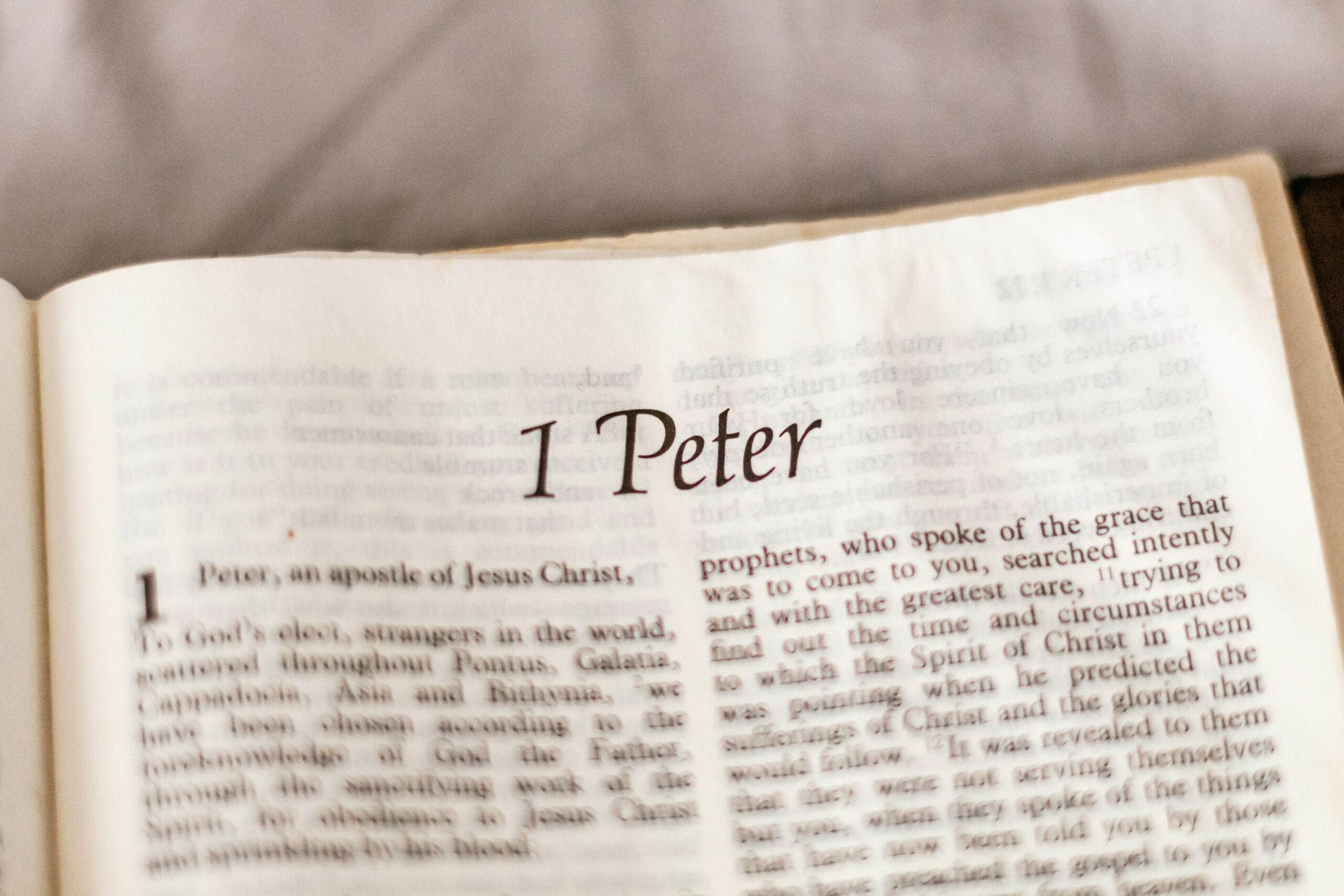
Shepherding Directives, Part 2
This sermon examines the biblical mandate for church leadership, arguing that Scripture clearly defines a distinct structure of elder oversight rather than leaving it to human invention. The central message draws from 1 Peter 5, emphasizing that elders are called to shepherd God’s flock with voluntary willingness, free from compulsion or the motive of sordid gain. By weaving together the restoration of Peter in John 21 and the exhortation of Paul in Acts 20, the teaching highlights the solemn responsibility of spiritual leaders to protect, feed, and guide the congregation with humility. The tone is instructional and convicting, urging those in ministry to serve with a forward-looking zeal and a heart motivated by divine grace rather than personal ambition or material benefit. Ultimately, the passage serves as a reminder that the flock belongs to God, and leaders are merely stewards entrusted with the care of His people.
Transcript
know that I’m going to be able
to weave even a single sentence of that into the morning message,
that God’s Word is able to stand on its own. If you would, take
your Bibles and turn to 1 Peter 5, which passage we began last
Lord’s Day. And we began by wrestling with
the question, Is there really no distinct form of church government
that is explicitly provided for us in Scripture? And the simple
answer was that we believe that there is a very clear and distinct
church government that is articulated in full in Scripture. Typically
in evangelical churches, there are three popular forms. And when I say popular, there
are some absurd eccentricities out there where churches try
and function without any government. And certainly that is not biblical. There are churches
out there that try to function just by movement of the spirit
in some kind of mystical fashion. I remember perhaps the only person
that in all seven or eight years of the church we’ve run off was
a guy that came in and insisted that we’re not supposed to set
a time for the church service. We’re not supposed to determine
who preaches beforehand. We don’t pick the hymns, the
Scripture readings, nothing. We just let the Spirit move.
We ran him off. I don’t know where the Spirit
directed him. I just know it wasn’t here. There is the traditional
congregational structure. These are the popular methods
of governing the church where everybody votes on everything.
There is the traditional Baptist structure where there is a pastor
who is, as it were, the CEO of the company. And he kind of functions
dealing with his underlings, the deacons, who in turn put
it down to the people how things are going to be. And then the
people buck the system and fights ensue. And it is a system that
is almost flawed and begging for trouble from the very beginning. And then thirdly, we looked at
the elder structure. This is the one that is clearly
given in Scripture. the means of governing the church.
Some people would argue that Scripture is silent. I can’t
even imagine how, because there is so much data about the eldership
and about the leadership of the church that it would be unavoidable
in reading the Scriptures. And so, as we have said elsewhere,
We believe that there is a God given model of spiritual leadership
that consists of a multiple number of godly men referred to in scripture
as elders, overseers and pastors, or even better, shepherds who
are recognized by the local church as being appointed by God and
who jointly and humbly shepherd their loving and obedient flock. If you would, I want to take
you back into this passage, 1 Peter 5. And we’ll begin at verse 1. I make no promise to finish through
verse 4 today, but that’s where we’ll stop reading this morning.
Where Peter writes, Therefore, I exhort the elders among you,
as your fellow elder and witness of the sufferings of Christ,
and a partaker also of the glory that is to be revealed, shepherd
the flock of God among you. exercising oversight, not under
compulsion, but voluntarily, according to the will of God,
and not for sordid gain, but with eagerness, nor yet is lording
it over those allotted to your charge, but proving to be examples
to the flock. And when the chief shepherd appears,
you will receive the unfading crown of glory.” It is our contention that there
is a well-defined leadership structure in the church. When
Peter here wanted to address the leaders of the local flocks
to whom he was writing, and I say flocks in plural, I don’t think
that he had any one church in mind, but a multiplicity of churches,
all of whom were overseen by a plurality of elders. And he
addresses them as such. We noted that this word here
for elder is not used in the standard sense that merely meant
older or senior. He’s not necessarily talking
just to the older men of the congregation, but to those who
are prematurely spiritually aged. those who have reached some level
of spiritual maturity and whom the congregation has recognized
as such and serve as elders or overseers in the church. There
are a multiple number of uses of that word. Presbyter, from
where the Presbyterian Church gets its name, but the primary
spiritual meaning, the spiritual office is one of elder. We saw
when it was initiated in Acts 11. We saw when the office was
advanced and set forth by the Apostle Paul going to each church
appointing elders. When Paul, as we saw, wanted
to call a council together in order to pass on just some crucial
information there in Acts chapter 20, which passage we’ll read
at length here in a moment, Paul summoned to him the elders of,
I believe, a variety of churches. Paul, in both of his pastoral
epistles, Timothy and Titus, lays out the standards for who
would serve as elders. And that is who is in view here
in Peter’s mind. We noted that this office can
be referred to by one of three names. And in fact, all three
of the terms appear in this passage. the primary term that is used
for those who lead the church is elder. But, Peter goes on
to say that the elders are to shepherd the flock, and in every
placement one in Scripture, that’s how it’s translated, that elders
are shepherds. They are shepherds of the flock,
as we’ll be reminded in a moment. But there is a third word by
which elders are referred, and that is the word overseer. That
too is in our passage. I exhort the elders among you,
shepherd the flock among you, exercising oversight.” And that’s
what the word, which unfortunately came to be translated even in
the older versions, older translations of the Scriptures, bishop. And
because of that, entire churches gravitated to an unbiblical structure
of church government where you have one man, a bishop with a
tall hat sitting, overseeing a multiplicity of churches. That’s
not Paul’s design. It wasn’t Peter’s design. It’s
man’s design. It’s a man-made system that perpetuates
that idea. So, what we suggested is that
this term elder, pastor, shepherd, overseer, all refer to the same
spiritual office. That’s where we were last week.
That’s where we spent our time. The argument came from this passage. The fact that all three terms
are used interchangeably in this passage. The same thing happens
in Acts 20, and we’ll review that in a moment. The logical
conclusion, we said, was that all Three of those terms point
to one spiritual office in the church and that there are only
two offices in the church, elder and deacon. The elders may be
referred to as elder, overseer, shepherd. Deacons may be referred
to by other terms, including servant. A word that has unfortunately
taken on unfortunate connotations in our service, but To be a servant
in Christ’s eyes, is there any higher place? We’ll be reviewing
that thought in a moment as well. And so we come, essentially,
to the second point by way of review last week. We saw, first
of all, those assigned to spiritual leadership are elders. That’s
what is in view in Peter’s mind. The office is elder. of spiritual leadership is shepherdly
oversight. And this is where we just began
last week. It’s shepherdly oversight. And
here’s where we’ll maybe slow down a little bit and review
some and introduce some new thoughts as well. As soon as Peter introduces
this word shepherd, We must be, as he must have been, brought
back immediately into the scene there on the shore in John chapter
21, where Peter was restored to ministry. Do you remember
that scene? Peter had denied the Lord three
times. Eventually, upon seeing his Lord
crucified, chucked the ministry that he was called to and decided
to go back to his vocation of fishing. He wasn’t there fishing
out of recreation. This wasn’t a break. He had abandoned
that to which he was called. This was a very serious situation
and a very solemn occasion ensued where Christ, remember, in somewhat
of a covering, came. They didn’t quite recognize Him
as the Lord immediately, but eventually Peter does so, flings
himself into the sea and approaches the Lord. And the Lord begins
this difficult and painful process of restoring Peter to the ministry. And it ultimately culminates,
remember, feed my sheep, shepherd my flock. This image was indelibly
burned into the mind of Peter at that moment. And for Peter
to bring it up here, This is a most solemn occasion,
and no wonder Peter couches it in these terms. Look back at
verse 1. As your fellow elder, I don’t
sit in judgment over you. I am not looking down on you. I count it the grandest privilege
of all to be among your number. As your fellow elder and witness
of the sufferings of Christ, Peter just merely wants to remind
them that He was there. He walked with Christ. He saw
Him. And ultimately, even though His
own fleshly heart wanted to abandon the ministry because of this
suffering, Christ restored Him. And Peter knows it. And at the
end of that, look at what he says at the end of verse 1, a
partaker also of the glory that is to be revealed. The Lord one
day is going to bless me with unspeakable glory. This was a solemn, solemn occasion
for Peter to pass on the responsibilities of shepherding the flock of God
which work he had abandoned and then been reinstated. This whole imagery of shepherding
takes us all the way back to the New Testament, doesn’t it?
It must. Listen again to Psalm 23 and
to the delicate and gracious, loving work of a shepherd. This
is David speaking about the Lord Himself and how He functions
in David’s life and the child of God’s life. The Lord is my
shepherd. And everything else in that whole
psalm hangs underneath that statement. The Lord is my shepherd. I shall
not want. The Lord is my shepherd. He makes
me lie down in green pastures. The Lord is my shepherd. He leads
me beside quiet waters. The Lord is my shepherd. He restores
my soul. The Lord is my shepherd. He guides
me in the paths of righteousness. This image of a shepherd and
sheep is one of the most precious and delicate in all of Scripture.
And for Peter to reintroduce this image, to perpetuate this
image on down to our day, is an unspeakable blessing. Because
it was the Lord, first and foremost, who modeled shepherding. It’s
the Lord God Himself who is the chief shepherd. It is the Lord
Jesus Christ who took on that imagery in John 10 and said,
I am the Good Shepherd. To be called a shepherd, that’s
the most humbling thing in the world to me. It’s the most humbling
thing in the world for the Lord to place me in the office which
title is Shepherd. What did a shepherd do? The main purpose of a shepherd,
as the Scriptures lay them out, was to seek out the lost, to
gather the scattered, to watch over and defend against wild
beasts, the wolves that Paul will mention in Acts 20, the
robbers, to feed, to water, to lead, to protect, to bind up
those that were injured, What a precious picture of the ministry
that little word is. If you look throughout the pages
of Scripture, jot these down if you care to, the verse references. When a shepherd is functioning
properly, when an elder is doing the work of shepherding, he is
protecting. Acts 20.17-38 He is feeding 1 Timothy 3-2. He is leading 1 Timothy 5, the
very passage in front of us. He is caring, Acts 20. He is praying, James 5, verse
13. He judges doctrinal issues, Acts
21, verse 17. He counsels and resolves conflict. Same passage there in Acts. And
ultimately, Whatever it was that requires care in the church of
the flock, that is the elder’s responsibility. One pastor said
it this word, in one word, it was their duty to promote to
the utmost of their ability and by every means within their reach
the spiritual good of all those committed to their care. What
a grand statement. I remember the first time that
we found out that we were going to have a child. I mean, my knees
almost buckled because I suddenly realized that I was now responsible
for another soul. And that is exactly the case
of a shepherd. Some would argue that our church
is small. There are days where I get here and I say, Lord, it’s
too big. This is too overwhelming because now I, we are responsible
for all of these souls. And for their spiritual growth
and development. It is a solemn, solemn call. One pastor summarized. the ministry
in these terms and this by way of review. Elders, as the spiritual
overseers of the flock, are to determine church policy. Acts
15. Oversee. Acts 20. Ordain others. 1 Timothy 4. Rule, teach, preach. 1 Timothy 5. Exhort and refute. Act as shepherds. Setting an
example for all. Those responsibilities put elders
at the core of the work in the New Testament church. Understandably,
elders cannot afford to allow themselves to be consumed with
business details, public relations, minor financial matters, and
other particulars of the day-to-day operations of the church. There is no better commentary,
and I’m going to take a moment to read a lengthy passage. But
I want you to turn there. Acts chapter 20. I’ve alluded
to it a half a dozen times, and we looked just briefly at it
last Lord’s Day. Acts chapter 20. And as you’re
turning, John Brown, the great and godly Puritan, he explained
the calling of shepherding in these terms. He said, it is not
enough for ministers to pray, yea, sacred and diligently, but
they must besides take a particular oversight of their flock and
looking into their conversation, the way they live and their behavior
and applying themselves accordingly in admonition, exhortation and
comfort. Basically, John Brown says, whatever
it takes, minister to each one. Each one is different. You’re
going to have to minister to each one uniquely. And that’s what Paul did. Paul is traveling, you know,
in Acts chapter 20, and he wants to have a meeting. He wants to
impart some very solemn exhortations to those to whom he serves. And if you’ll note, as you’re
coursing through this passage, we’ll come back to this in a
moment, there are a series of I wills. in this statement, and
you come away with either that Paul is a grand egotist or he
is a godly shepherd who has, by God’s grace, set forth a faithful
example that he desires his flock to follow. And that’s how I see this passage.
Paul’s not an egotist. Paul called them to look at the
way that he lives and the way that he lived in front of them
Acts chapter 20, and I want to pick it up in verse 17. And all
we’re doing here, I want you to see a picture of shepherding.
This is what shepherding looks like. From Miletus, he sent to
Ephesus and called to him the elders of the church. And I take
that to mean that there were more than one There was more
than one local church in Ephesus. There were a multiplicity of
churches. And he summoned the elders from the various churches
to himself. And when they had come to him,
he said to them, you yourselves know from the first day that
I set foot in Asia how I was with you the whole time, serving
the Lord with all humility, with tears, with trials which came
upon me from the plots of the Jews. Paul says, look, I was
with you and I exemplified before you faithful ministry. I was
with you. You saw it. Look at verse 20. How I did not
shrink from declaring to you anything that was profitable.
Sometimes elders, shepherds are called upon to use faithful words. Faithful words that injure. They’re
designed by God to injure. They’re designed by God to cut
to the quick and to go to the soul. and to eradicate the cancer
that is spreading throughout. Paul goes on, teaching you publicly
from house to house, solemnly testifying to both Jews and Greeks
of repentance toward God and faith in our Lord Jesus Christ.
Paul said, you know what? I made it my life’s work. I poured
into you profitable work. The Gospel itself. Verse 22,
And now, behold, bound in spirit, I am on my way to Jerusalem,
not knowing what will happen to me there, except that the
Holy Spirit solemnly testifies to me in every city, saying that
bonds and afflictions await me.” Part of being a shepherd is acting
courageously in the face of the unknown. If we knew only that
good and pleasant things lay out there for us, what kind of
leadership is that? The fact that Paul knew the difficulty
lay out there for him, and he still went forward, is the apex
of leadership. Paul wasn’t fearful for his body. Look at verse 24. Paul underscores
it. I do not consider my life of
any account as dear to myself. I mean, how else could he have
come to the position that it’s better to die and be with Christ? To die is gain, Philippians 1. I do not consider my life of
any account as dear to myself so that I may finish my course
with the ministry with which I received from the Lord Jesus
Christ to solemnly testify of the gospel of the grace of God.
That was his whole purpose in life. And now behold, I know
that all of you among whom I went about preaching the kingdom will
see my face no longer. Therefore, I testify to you this
day that I am innocent of the blood of all men and would to
God that all pastors could say this. But unfortunately, we can’t
all say this. For I did not shrink from declaring
to you the whole purpose of God, the whole counsel of God. I didn’t
hold back anything because it might be uncomfortable for you
or it might get me in trouble. Paul says, I gave it to you as
the Lord laid it in my lap. And here is where he turns his
exhortation to these local shepherds. Be on guard. Remember, as I said,
he’s already called the elders to himself. And now he begins
to speak of the flock. Be on guard for yourselves, first
of all, because you’re worth nothing If you are dismantled
or tainted, you’re of no good to the flock if you don’t guard
yourselves. Be on guard for yourselves and
for all the flock among which the Holy Spirit has made you
overseers to shepherd the church of God, which He purchased with
His own blood.” Do you get the high view of the church that
Paul had? Did Peter hear echoes in his
exhortation? This is God’s church. And we are called to shepherd
this flock and to oversee it and to watch for ravenous wolves,
he goes on to say. Look at verse 29. I know that
after my departure, savage wolves will come in among you, not sparing
the flock. And from among your own selves
men will arise, speaking perverse things to draw away the disciples
after them. Therefore, be on the alert.”
This is shepherding work. All of it is. Calling the elders
to himself, testifying to emulate his walk, extorting them to shepherd
the flock in their midst. This is all the work of a shepherd.
This too is the work of a shepherd. Look at verse 32. Knowing what
your limitations are as a shepherd and knowing that ultimately they
need to be entrusted into God’s care, because we’re not always
going to be with you. And now I commend you to God, to the
work of His grace, which is able to build you up and to give you
the inheritance of all among those who are sanctified. And
then Paul here takes them back again to his own testimony. I
want you to look at how I lived. I have coveted no one’s silver
or gold. You yourselves know that these
hands minister to my own needs and to the men who are with me
in everything. I showed you that by working
hard in this manner, you must help the weak. Remember the words
of the Lord Jesus Christ that he said he himself said it is
more blessed to give than to receive. These are all the functions
of the shepherd. This is a loving shepherd. Tending
his flock. And now, by God’s design, he
is handing it off to others who he prays will faithfully shepherd
this precious flock. If you would, go back to Peter.
With that backdrop in mind, the grand example of the Apostle
Paul in shepherding his greater flock in the world, in passing
on the shepherding function, and to call them to follow in
His example in a multiplicity of ways? With that as a backdrop,
I want you to look at Peter. Peter says the same exact thing. And I believe by virtue of the
Holy Spirit working through them both, it’s a common message.
I exhort the elders among you, verse 1, skipping down to verse
2, shepherd the flock of God. And I’m not going to spend a
lot of time on this, but for Trey and for I and for any who
would desire to be shepherds in the church, you’ve got to
constantly remember it’s not your flock. It’s God’s flock. It’s the flock of God. It’s His
sheep that you’re tending, not your own. You have no right to
batter them and bruise them and abuse them in various fashions.
We’re called to shepherd God’s flock. We’re called to tend a
small group of God’s sheep. Shepherd the flock of God. Look
at this. In all the times I’ve studied this passage, I read
right past it. There are those that see shepherds,
and probably largely because shepherds see themselves as sitting
above it all, sitting above the heap. I mean, where else would
you get the title reverend? Or worse, in some high ecclesiastical
churches, the very right reverend. What kind of nonsense is that?
Look at what Peter says. Shepherd the flock of God among
you. He doesn’t talk to them as being
over anybody. You are among the sheep. You’re
down in there and you smell like them and you look like them and
you’re among them. You know better than them. It’s just that God in His providence
has called you to serve in a particular capacity. But you are among the
sheep. Shepherd the flock of God among
you, exercising oversight. And He gives these three attitudes
for spiritual leadership. And boy, do these turn on its
head much of what goes on in Christ’s church. First of all,
he says, shepherd the flock of God among you, exercising oversight,
not under compulsion. Not under compulsion, but voluntarily. There are those places in which
I’ve served that have in some fashion a rotating
eldership. And from time to time, you have
this thing where it’s his turn to serve and he is literally
forced into it. But I was on break. But I served
10 years ago. But I’ve served for the last
10 years. That’s all right. We want you to continue to serve.
I don’t believe that the calling to eldership ever exempts you
from service unless you disqualify yourself and you’re done. There are those that are placed
in this role under compulsion. They’re either voted in or they
feel compelled, you know, by some other means to serve. They’re placed there and they
never can serve as an elder is designed to serve because their
heart isn’t in it. They’re lazy and indifferent.
Cotton Mather, one of the godly forefathers of our own country
in a spiritual sense, spoke of one pastor and what his thoughts
were upon one entering the ministry. He said he looked upon the conduct
of the church, and that is the spiritual oversight of the church,
as a thing attended with so many difficulties So many temptations
and humiliations as that nothing but a call from the Son of God
could have encouraged him to take it up. Did you get that? You can’t do this under compulsion. You can’t be voted in against
your will into this office. To serve in that capacity is
disaster. He saw that flesh and blood would find it no pleasant
thing to be obliged to the oversight of a number that by a solemn
covenant should be listed among the volunteers of the Lord Jesus
Christ.” He says, the only way that you should ever take up
this office is if you know in your heart that God has placed
you there. You can’t serve under compulsion. But Peter goes on to say, we
can’t serve under compulsion. We’re called to serve voluntarily
according to the will of God. If you believe that it’s God’s
will, if you believe that God has gifted you and equipped you
to serve in this capacity, then you don’t go kicking and screaming.
You don’t go with your heels making a mark in the dirt. You
go willingly, voluntarily. One pastor said, the shepherd
must be diligent rather than lazy. That’s pretty much what’s
in view here. But it starts with the heart.
You’ve got to be heart motivated rather than being forced to be
faithful, passionate about your duty rather than looking at it
as some kind of drudgery that you’re fulfilling some kind of
stint. One other pastor said that these
shepherds are to perform their duty, not under an impulse from
without, as if someone is compelling you to the work, but under an
impulse from within. Their service must be rendered
willingly and heartily. And it is the Lord that must
prompt you from within. Remember, Paul said the same
thing. If anyone desires the office
of overseer, he desires a good thing. That word there, if you
want to look it up, it’s epithumia, lust. It is a strong desire. And if you don’t have a strong
desire to serve the Lord in this capacity, don’t seek the office. Because you can’t do the work.
It’s impossible. Isaac Watts. My dear brother
and faithful shepherd, who I cannot wait to embrace one day, said
it this way, apply yourself to your work with pious delight. Not as a toil or task which you
wish were done and ended, but as a matter of inward pleasure
to your own soul. Enter the pulpit with the solemnity
of holy joy that you have an opportunity to speak for the
honor of God and the salvation of men. Then you will not preach
or pray with sloth or laziness, with coldness or indifference. The elder is not to accept the
office under any kind of coercion. That doesn’t mean that men are
allowed to grab or grasp at this office with some kind of a power
play. The desire must be there, but the church must also see
in him the work of God. The common response is one of
humility, that I’m not equipped for this. I remember years of
wondering, Lord, can this possibly be? Any Christian is going to have a
certain reluctance, a degree of reluctance about his own inadequacy.
Insufficiencies. Remember, even Moses didn’t actually
want to serve the Lord in the capacity of public speaking. But one goes on to say that there
is a way of accepting the office and of rendering service as if
it was some grim and unpleasant duty, as if it was a weariness,
as if it was a burden to be resented. I’ve served with men with that
attitude. It is quite possible for a man
to be asked to do something and for him to do it, but to do it
in such an ungracious way that the whole action is spoiled. Every Christian should be tremblingly
eager to render such service as he can. What a beautiful way
to put it. Voluntarily, according to the
will of God. If God has placed you there,
take it up. Take it up voluntarily and serve. to the glory of God. There’s
a second picture that is painted here
for us by Peter. Peter says, “…shepherd the
flock of God among you, exercising oversight, firstly, not only
under compulsion, but voluntarily.” But look there at the end of
verse 2. “…And not for sordid gain, but with eagerness.” Be
zealous, in essence, is what Peter says here in this point.
Not only be yielded to God, be willing, but be zealous when
you get there. The word there, assorted in the
older translation, King James translation, was translated filthy
lucre, which led to an entire industry, an entire theology,
if you will, about money. Because there are some people
that think that all money is inherently by nature filthy,
filthy lucre. I mean, I’ve taught and we’ve
looked at Scripture in a hundred different ways. The case cannot
simply be built from Scripture. God doesn’t see money as inherently
evil. But distorted gain, what does
that mean? Essentially, it means that we
are to be careful and very careful about the temptation to be motivated
by money or material benefits. I don’t even think what is primarily
in view here is embezzlement, where you take more than what
is rightly yours. And we hear about too many cases
in the church where pastors entrusted with those things. I think I
remember telling you that in seminary, one of my favorite
professors said that there are three pitfalls for men in the
ministry. Girls, glory, and gold. And he basically said, don’t
have anything to do with the collection. Don’t have anything
to do with it. Not only don’t count the money,
but even more than that, I don’t want to know who gives what,
not even to a penny. I remember, I think it was my
first year of ministry, we were talking about some point and
somebody disagreed and said, yes, but so and so, they disagree
with this too. And they’re big givers. And I
said, how do you know that? And why did you just tell me
that? Because I don’t want to be motivated by that. That’s
exactly what this is. A fondness for sordid gain. It’s the only place in all of
Scripture that this verb appears, but the noun appears in two other
places, and both of them are in the qualifications for elders.
1 Timothy 3 and Titus 1.7. Not fond of sordid gain. It just refers to unjust gain,
making money by embezzlement or discreditably theft, cheating,
fraud, cheating on your taxes, cheating on your insurance, whatever
the case may be. Paul doesn’t want those kind
of men in the ministry. And Peter here says, has no place,
has no place in the attitude of a shepherd. One pastor said it this way,
the basic scriptural qualifications for an elder make it clear that
he is characterized as a selfless servant committed to sacrifice
and not preoccupied with money and materialism. That is not
to say that shepherds should not be properly compensated,
he goes on to say, Paul taught that those who minister the words
should have a right to live by that ministry. First Corinthians
nine, first Timothy five, several other passages. He’s basically talking here about
that mindset that’s overly focused
on the dollar and not on souls. What this points to is not even so much just the
dollar, although money, as I said, a hazard to many. What he’s talking
about is the mindset, the mindset that creates some kind of obligatory
demand upon the congregation. Isaac Watts says here, Be vigilant,
be temperate in all things, not only as a soldier of Christ,
but as an underleader as part of his army. Be temperate, abstain
sometimes even from lawful delights, so that you may make the work
of self-denial easy, so that you may bear hardship as becomes
a soldier, and always watchful, lest you become too easily entangled
with the affairs of this life. It’s not just about the money,
it’s this mindset. Peter is here concerned with
the sinful acquisition of wealth. One pastor said it this way,
true shepherds will never use the ministry to steal the sheep’s
money or to acquire it dishonestly like false prophets always do.
False shepherds, charlatans, heretics who masquerade as servants
of God in order to make themselves rich. Ministry for money and
personal gain is a prostitution of the calling of the Lord. No
true shepherd should need personal wealth to motivate him. Remember 2 Peter 3. In their greed they will exploit
you with false words. This is a person who is selling
out merely for money. He’s doing what he does for money. He’s doing the ministry only
to gain. And Paul says that attitude is totally unacceptable. Peter
here says the attitude that would put money above people is totally
unacceptable, and therefore he balances it with eagerness. Not
for sordid gain, but with eagerness, zeal. In fact, he probably almost
can’t even come up with a word strong enough. The word is a
combination of two words, pro, which means forward, and thumos,
which is heart or spirit, a forward spirit, an eager spirit, not
one sitting, you know, just kind of lazily waiting for ministry
to come to him. It denotes zeal. That’s a word
that it’s almost become a dirty word because of the zealots that
we read about in the New Testament. Not just willingness, but a zeal
for the work of shepherding. True shepherds, really, are going
to eagerly rejoice at the privilege to serve, even at personal cost. Because of the high calling and
privilege, we should be willing to serve freely and eagerly.
It literally means of a ready mind. And there’s only one way to do
that, and that’s by the grace of God. Because there will come
hard times and difficult times. Charles Bridges, who wrote that
great book, there’s probably no better training book for the
ministry than Charles Bridges Christian Ministry. Charles Bridges said it this
way, to bring the heart to the work and to keep it there. To
exchange the indulgence of ease for labor and self-denial. the
esteem of the world for the reproach of Christ and His cross, to endure
the prospect of successive disappointment and discouragement, this it is
that raises within the evil spirit despondency, which can come forth
by nothing but prayer and fasting.” You know what he says? We need to be zealous. And we
need to let nothing stop us. And the only way to do that is
by prayer. To constantly call out for the grace of God in the
midst of discouragement. What a great lesson it is. If
for nobody else, I told Trey this morning, if this is for
nobody else, it’s for Trey and I. To be fed and nourished and
to realize that we are to shepherd and we are to do so with a yieldedness
that only God can provide and a zeal that only God gives. To
examine our own hearts. A gracious God, we come before
you. We humble ourselves before you
and thank you for this precious word. We thank you, Father, that
though it is directed to the shepherds, Lord, there is much
to encourage and nourish the saints. Father, we thank you
and praise you that we see that you have provided for the church,
that this flock ultimately belongs to you that you are ultimately
the shepherd of this flock and all local churches, and that
you have equipped them with faithful shepherds who provide their earthly
care. Oh, Lord God, we thank you again
for another glimpse into this passage. And we pray that as
we press on through it, that you would bless our perspective
anew in the calling and care of the church. We thank You and
praise You. It’s in Jesus’ name that we pray,
Amen.
Messages: 61