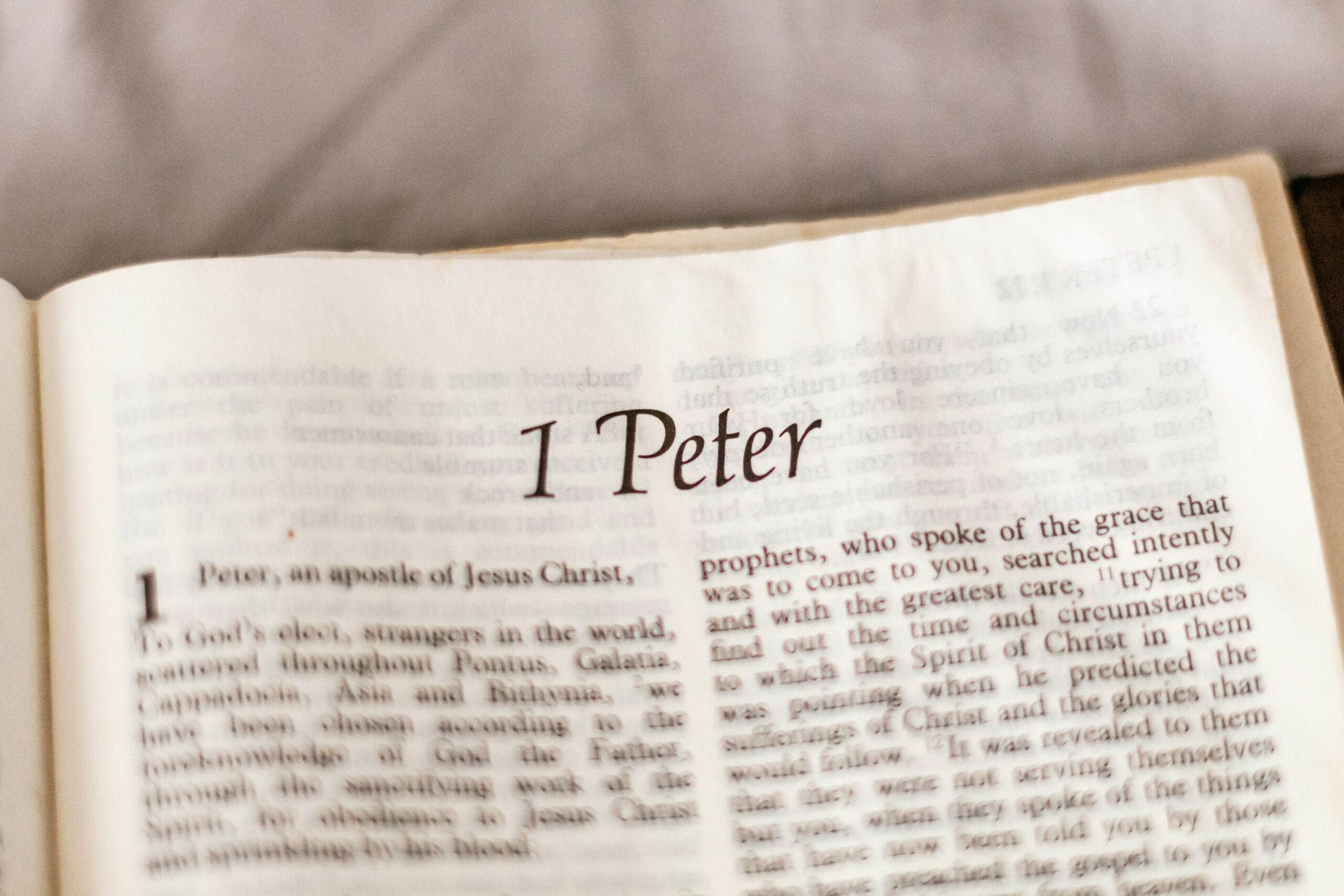
Blessings of the Cross of Christ
This sermon explores the theological significance of Christ’s death as presented in 1 Peter 3:18, framing it as the ultimate motivation for believers facing persecution. The central message emphasizes that Christ’s sacrifice was both satisfactory and sufficient, addressing the guilt and penalty of sin once for all. By contrasting the repeated animal sacrifices of the Old Testament with the finality of Christ’s atonement, the exposition highlights that Christian suffering is not punitive but purposeful, rooted in the example of the innocent Savior. The tone is pastoral and comforting, urging believers to find courage in the knowledge that their penalty has been fully paid and that their endurance in faith reflects the character of Christ.
Transcript
If you would take your Bibles
and turn to 1 Peter 3. And you will recognize that as
a section that we’ve been in for some time. And from the looks
of it, we’ll be there yet a little while. The immediate context of the
passage, as you know, we’ve been in for more than a month, is
the subject of submission, which has really begun back in chapter
two, verse 13, when Peter urged us to be subject there in that
passage. But here in the midst of an application
of an exhortation that was really directed to the church in general,
which itself began back in verse eight. I wanted to just review
that and briefly where Peter said to sum up, let all of you
be harmonious, sympathetic, brotherly, kind hearted and humble in spirit. Paul or Peter rather, had given
some specific applications of this general exhortation to be
subject. And in this case, he turns his
attention back to the church in general and says, in summary
fashion, let me apply this to the church. Now, the general
theme of this entire section of Scripture is really encouragement,
isn’t it? Ever since the opening words
of chapter one, it is encouragement in the face of persecution. And
it culminates here in this passage when, just prior to the passage
before us, Peter says, who is there to harm you? Who really
can touch the important part of your being, your soul, if
you prove zealous for what is good? In that context, we consider
five keys to a right response. The reason that I put the entire
passage in there this morning, and we’re going to read it in
its entirety. The reason I put the entire passage
in there, and especially in the format that it’s in, is so that
you can feel and detect the flow of the passage as Peter delivered
it. Peter does give us keys for responding
to persecution. But there is a passage that follows
that is even more profound, if possible, than that simple advice. If you would, go back to 1 Peter
chapter 3 and we’ll pick it up in verse 13. If you choose to
read from your bulletin, if you can read that fine print, so
be it. But go back to chapter 3, verse 13. Where Peter said, following his
exhortation, And who is there to harm you if you prove zealous
for what is good? But, even if you should suffer
for the sake of righteousness, you are blessed. And do not fear
their intimidation and do not be troubled. But sanctify Christ
as Lord in your hearts, always being ready to make a defense
to everyone who asks you to give an account for the hope that
is in you, yet with gentleness and reverence. And keep a good
conscience so that in the thing in which you are slandered, those
who revile your good behavior in Christ may be put to shame. For it is better, if God should
will it so, that you suffer for doing what is right rather than
for doing what is wrong. For Christ also died. for sins,
once for all, the just for the unjust, in order that he might
bring us to God, having been put to death in the flesh, but
made alive in the spirit. In which also he went and made
proclamation to the spirits now in prison, who once were disobedient,
when the patience of God kept waiting in the days of Noah,
during the construction of the ark, in which a few, that is
eight persons, were brought safely through the water.” There’s obviously much to tackle
in the weeks to come. But the passage before us, the
passage in bold, verse 18, is really a support verse, an undergirding
for those five keys to a right response to persecution. It gives
us, if you will, the motivation, the reason why we should tough
it out and bear up under persecution patiently. We were exhorted there
as just by way of review, first of all, to be reasonable, to
remember who it is we serve, to be assured, to remember that
the smile of God awaits the culmination of our suffering. We are in the
midst of persecution to be composed. There, when he says, do not fear
their intimidation in verse 14 and do not be troubled, he urges
us to be fearless in the face of opposition. Following on top
of that, he says that we are to be devoted, sanctify Christ
as Lord in your hearts. That there is a submission there,
there is a devotion to Christ that issues forth in proclamation. And finally there, the fifth
key to dealing with persecution is to be clean. Be innocent in
that which you are accused. Keep a good conscience. And we
talked about all the ways that we can go about maintaining a
good conscience, informing it with the Word of God and feeding
a good conscience with the Word of God and living in accordance
with the Word of God and not with the mere rules of men. But undergirding all of that
is this statement. And this statement buffets really
the statement in verse 17. It is better. If God should will
it so that you suffer for doing what is right rather than for
doing what is wrong. In essence, what we said there
was that everybody’s going to suffer. There is a degree of
suffering that is just measured out for all in this life. And
there is absolutely suffering in the afterlife for those who
do not know Christ. Everybody suffers. And Peter
simplifies it by saying it’s better to suffer for Christ. It’s better, if God should will
it so, that you suffer for doing what is right rather than for
doing what is wrong. And Peter cites as an example,
what better example could he cite? The Lord Jesus Christ. Just as Peter has done before,
he points us to the only one who is most acquainted with purposeful
suffering. This isn’t just suffering for
suffering’s sake. It is suffering with the end
in view, just as ours was. Again, And I want to take you
back to the general context of this section. In this epistle,
we are in the great stream of thought that began back in chapter
two, verse 13, submission to suffering. But in this section
that we begin in verse 18, everything gets compressed, if you will. And we have an intensive focus
on suffering. Suffering. Between chapter 2
v. 19 and chapter 5 v. 10, the word
suffering is mentioned at least 11 times. I’ll tell you why I
say at least in a moment. More than any other epistle by
far. I think 4 was the most any other epistle had. And here in
this little section, 12 times perhaps, suffering is mentioned. Look back, if you will, at chapter
2 v. 18. Because you’ll get the same gist
from that passage that you’ll get in this one. That ultimately,
Christ is our focus. Christ is in view. Christ is
our model. Look at verse 18, where this
word suffering occurs five times. In this section, verse 18, servants
be submissive to your masters with all respect, not only to
those who are good and gentle, but also to those who are unreasonable.
For this finds favor, if for the sake of conscience toward
God, a man bears up under sorrows when suffering unjustly. For
what credit is there if when you sin and are harshly treated,
you endure it with patience, that if when you do what is right
and suffer for it, you patiently endure it? This finds favor with
God. For you have been called for
this purpose, since Christ also suffered for you, leaving you
an example for you to follow in His steps, who committed no
sin, nor was any deceit found in His mouth. And while being
reviled, He did not revile in return. While suffering, He uttered
no threats, but kept entrusting Himself to Him who judges righteously.”
And with that, Peter focused our hearts and our minds on the
very concept of suffering. That’s the introduction. That
it’s going to come our way. That we shouldn’t count it as
a surprise when persecution and suffering come our way. And he
points us to the model of models. Our Lord Jesus Christ, who suffered
for us. In the immediate context, we’ve
already glanced at it briefly, but look back again at verse
14 where Peter reminds, even if you should suffer for the
sake of righteousness. Even that kind of suffering. And then finally, again, the
context in verse 17, it is better. If God will it so that you suffer
for doing what is right rather than for doing what is wrong.”
This is Peter’s focus. He wants us zeroed in on this
idea, this concept, this blessing of suffering. Christ’s death,
said one, is supremely able to bring illumination and courage
to those who suffer innocently. because it was the conclusive
and definitive embodiment in all of history. What he says
is that, look, any suffering that we endure is never going
to come near to that which Christ suffered. Christ’s suffering
was purposeful, and this was an innocent Savior. In whatever
innocence we have, It is as a Christian. It is as a follower of Christ. It is bearing up the sufferings
of Christ. And it will never eclipse what
Christ has done. Let’s go into this great, great,
I’m sure I have favorite passages. This may be my favorite sentence
in all of Scripture. Look back again, if you would,
at verse 18, for Christ also died. Depending on what translation
you’re reading, even old or new, some may have the word suffered
even there. And due to a variant of readings
in the Greek text, there are some translations that would,
they should be translated suffered. And because of other Greek texts,
the word died is equally permissible. We don’t know exactly how or
why or what the scribal error was in that case, whether somebody
thought that since Peter was talking about suffering, he must
still be talking about suffering, because it really is just a change
of one letter, an A to an E. And so, in essence, you don’t
even really have a problem here because ultimately Christ suffered
unto death. Christ died. The issue really for us to focus
on here in this little sentence is that when the Apostle here
says that Christ also died, he raises a comparison between The
Christians suffering and Christ’s suffering. That’s purposeful.
That’s what he intended to do. The Christian and Christ suffer,
both suffer, both ultimately are put to death, both are put
to death only once. Both are put to death innocent,
Christ being the just, we being made righteous in Christ. But this word also, it points
all of us back to that earlier section and reminds us that we
can’t be taken aback. We can’t be surprised or caught
off guard by suffering. Because Christ has already triumphed
in his suffering, even though he died an excruciating death. Our suffering doesn’t compare
to Christ’s, ultimately speaking. Hebrews 12 says that you have
not resisted to the point of shedding your blood and striving
against sin. We may have our co-workers look
down their noses and mock us. We may have family members begin
the process of shunning us or putting us down for our faith.
But we haven’t resisted to the point of shedding blood. In that
sense, our suffering is different than Christ’s. But what is in
focus here when Peter says Christ died, he points to the atonement. He points to that element of
Christ’s work, particularly his death, which made possible the
restoration of fellowship between believers and a holy God. One of the old confessions said
it this way, the office of mediator the Lord Jesus did most willingly
undertake. And he underwent the punishment
that was due to us, which we should have borne and suffered.
Being made a sin and a curse for us, enduring the most grievous
sorrows in his soul and the most painful sufferings in his body,
he was crucified and died. Christ died. Christ also suffered
and he suffered unto death. And he, over all others, is our
model in suffering and enduring, not just patiently, but with
joy. With joy, the sufferings that
come our way because of Christ. Christ is our model. Matthew
20, the Son of Man did not come to be served, but to serve and
to give His life as a ransom for many. That’s why He came. That’s why He came. And you say,
that’s simplistic. And this could be a great Easter
message. Christ died and Christ rose again. But you mentioned
something about blessings. That somehow this is a good thing
that Christ died. The blessings of the cross of
Christ. What is the blessing to the believer? I think that was Peter’s purpose
here. Peter paused in the midst of
this great suffering, this persecution that was breaking out. He had
given them the simple steps which are not, I don’t mean to overly
simplify them, but he gave them the steps in facing that persecution. And now he points them to the
Savior who stands ready to give them the necessary grace and
has given them the example. And he gives them the purpose
behind what Christ has done. And he reminds us thereby of
our salvation. I want to look at four blessings
of the cross of Christ. And we may not get too far today,
but first of all, Christ’s sacrifice was satisfactory. It was satisfactory. Now, I know what you’re thinking.
If you’re in school and you get satisfactory, remember, I think
they start you out with smiley faces or frown faces. Or the face that’s just got two
eyes and a straight line for the face. That’s satisfactory
in school for those of you who haven’t been in school for a
while. And then, of course, in high school, then you progress
to a new grading system and it’s A’s and B’s and C’s and C would
be the satisfactory, right? But when it comes to Christ,
When it comes to making a payment for sin, satisfactory isn’t just
okay. It’s not the grade C. It’s not
that face with just a plain face on. This sacrifice that Christ made
was propitiatory. It was the cause of Christ’s
death. And it answers the question,
why did Christ die? Peter states that he died. And
immediately he tells us why Christ also died for sins. He died for sins. This was a
sacrifice. In the Old Testament economy,
you know, God required animal sacrifices to symbolize the need
to atone for sin by the death of an innocent substitute. And
oftentimes, families would be encouraged to bring a baby lamb
into their midst and to raise the baby lamb, and then at that
opportune time, to sacrifice that baby lamb so that everybody
knew the horribleness, the sinfulness of sin. Exodus 29, verse 36, Each day
you shall offer a bull as a sin offering for atonement. You shall
purify it on the altar when you make atonement for it. You shall
anoint it to consecrate it. Leviticus 1.4 and 5. He shall
lay his hand on the head of the burnt offering that it may be
accepted for him to make atonement on his behalf. He shall lay the
young bull before the Lord and Aaron’s sons, the priests, shall
offer up the blood and sprinkle the blood around the altar that
is at the doorway of the tent of meeting.” This was horrible,
ugly business. But it was a covering for sin.
God wanted it to be that way. God wanted it to be ugly and
horrible. He wanted them to know the depth
of their sin. Why the blood? Leviticus 17,
for the life of the flesh is in the blood. I have given it
to you on the altar to make atonement for your souls. For it is the
blood by reason of the life that makes atonement. That’s what was paying, even
though in temporary fashion for the sin of God’s people. Leviticus, chapter 23, the Lord
spoke to Moses on exactly the tenth day of this month, the
seventh month is the day of atonement. It should be a holy a day of
holy convocation for you. You shall humble your soul souls
and present an offering by fire to the Lord. And people could not have understood
exactly what all of God’s prophecies meant. But when they heard Isaiah
53, all of us like sheep have gone astray. Each of us has turned
to his own way. But the Lord has caused the iniquity
of us all to fall on Him. In some way, this Savior was
going to be the sin bearer. They didn’t know how. They didn’t know even why God
would choose that method. But they knew that the Messiah
was going to carry away the sins of the people. Perhaps in some
new sacrifice. Perhaps some new devotion to
God. The New Testament presents Christ
as that perfect sacrifice. Repeatedly throughout Scripture,
you know. Romans 5, while we were still helpless at the right
time, Christ died for the ungodly. We’ll come back to that point.
For one will hardly die for a righteous man, though perhaps for the good
man, some will even dare to die. But God demonstrates His own
love toward us that while we were yet sinners, Christ died
for us. Christ died for sin. Christ died
because of sin. Christ came to die and came to
take sin upon Himself for us. Hebrews 9.28 echoes the same
thought. Christ also, having been offered
once to bear the sins of many, will appear a second time for
salvation without reference to sin to those who eagerly wait
for Him. Christ suffered for sin. Christ
took our sin upon Himself. It wasn’t His own sin because
He never committed sin. It was for the sin of the people. It was for you and for I. Christ died in order to obtain
the remission of those sins, having taken them upon Himself,
to make a reconciliation with a holy God In essence, to put
them away, to package them up, to finish them off. One Puritan said it this way,
the reason or meritorious cause of Christ’s suffering was the
sins of men. That’s what brought Christ here.
That’s what had him take on human flesh. That’s what took him to
the cross. That’s why he died. The reason or meritorious cause
of Christ’s suffering was the sins of men. Christ suffered
for sins. The sufferings of Christ were
a true and proper punishment. This punishment was suffered
to expiate and to make an atonement for sin. This wasn’t an accident,
people. This wasn’t a lynching. This
was a sacrifice offering. But instead of a goat or a lamb
or a bull, it was the Lamb of God. This word for sins, it’s the
word that is repeatedly used in Scripture as a sin offering. That’s why you could never say
that Christ died because He sinned. He died as a sin offering. Romans 8, 3. What the law could
not do, weak as it was to the flesh, God did, sending his own
Son in the likeness of sinful flesh as an offering for sin. He condemned sin in the flesh.
Galatians 1, 4. Christ, who gave himself for
our sins so that he might rescue us from this present evil age.
Hebrews 10, 6. In whole burnt offerings and
sacrifices for sin, you have taken no pleasure. It was Christ
and Christ alone that would ultimately satisfy God. Christ suffered and died to accomplish
the expiation of sin. As one said, this is but another
argument for patience under sufferings. And that, as we said at the outset,
is part of the feature of this passage, that he’s told us how
to deal with persecution and suffering. And now he gives us
a great example. When he says, this is another
argument for patience under sufferings that Christ, by his sufferings,
has taken away the guilt and freed us from the punishment
of sin so that our sufferings, even though they be not only
by way of trial, but of correction, yet are not properly penal or
vindictive. Do you know what he says there?
It’s a deep thought. He says you’re going through
life and you’re suffering these things. And we have this tendency
to think that God is this big, gruff bully in heaven that just
sends us things to kind of help us pay our way to heaven. Let’s put him through this. Let’s
put him through this little trial. He messed up, he was a sinner,
he’s still got some penance to do. He says, when you’re going
through difficulty or sufferings or you’re feeling the heat of
persecution, it couldn’t be further from the truth because Christ
has already paid that penalty. You can’t add to that. We can’t
augment what Christ has already done. And we’ll come to that
again when he mentions once for all. Christ freed us from guilt. He freed us from the punishment
of sin. When we go through sufferings,
it can be anything but payback by God as some kind of divine
bully. Everything that comes to us now
is for our own good. It’s for our correction. It’s
for our purification. It’s for His purpose. We may
not ever even know why we’re going through what we’re going
through. But it’s certain we know what it isn’t. We know that
it’s not God punishing us for something that we’ve done. Hebrews 5.1, turn there just
real briefly. Hebrews 5, chapter 5, verse 1. This is the example that Peter
puts before us. Every high priest taken from
among men is appointed on behalf of men in things pertaining to
God in order to both offer gifts and sacrifices for sins. He can
deal gently with the ignorant and misguided since he himself
is also beset with weakness. And because of it, he is obligated
to offer sacrifices for sins as for the people. So also for
himself. Christ took on that role. As
the high priest and in so doing, he offered himself as a perfect
sacrifice. He was our representative. His foremost task was to offer
an all sufficient sacrifice for the sin of the world and being
perfectly God and perfectly man, only he was equipped to do that.
Back to first Peter, if you would. Christ also died. Christ died for sins just as
though He Himself had committed them. That is what is almost
unthinkable in this passage. Sin caused, if you will, the
sinless Christ’s death. Our guilt was transferred, or
if you want to use the big theological word, it was imputed to Him.
He suffered the penalty that was due to us. He appeared in
order to take it away, to put it away forever by his sacrifice. William Ames said of this, that
this liberation was not affected by power or prayers, but rather
by the giving of a just price. In other words, God demanded
a fair price The price, which could not be
paid by man, required the work of a mediator to intercede between
God and man, making a perfect reconciliation between them and
only Christ. Only Christ fit that bill. The
mediator is Christ and Christ alone. And in the priesthood
of Christ, his payment for sins by his sacrifice obtained God’s
favor. He bore our iniquities, and in
so doing, He took away the sin of the world.” And so, satisfaction, in this
context at least, takes on a completely different meaning. Far beyond
our current understanding of the Word. Because even a goat
was, at least for a time in the Old Testament economy, satisfactory
to God. God accepted it as such. Christ
wasn’t the first to die for sin. Christ wasn’t the first to die
even. Criminals die. Everybody dies. Christ was the first to die for
the sins of others, for the sin of the world. And for God, the
death of Christ was satisfactory. It was acceptable. Christ died
for sins. Secondly, there’s a second blessing
that not only do you not have to worry about your sin anymore,
that Christ has paid the penalty for that sin, that even your
death would not have absolved. Not only is Christ’s sacrifice
satisfactory, it is secondly sufficient. It is sufficient. This answers the question of
frequency. How satisfactory was Christ’s
death? Because we know a goat and a
bull, a lamb from time to time, even turtle doves were satisfactory
for certain and particular sins and sacrifices. How satisfactory
was Christ’s death? Look again at the passage. Christ
also died for sins once for all. Once the sacrifices of the law demanded
were offered day by day and year after year. Leviticus 5.7 kind of, you know,
grades on a curve. If he cannot afford a land, then
he shall bring to the Lord his guilt offering for that in which
he has sinned. Two turtle doves or two young
pigeons, one for sin offering, the other for a burnt offering.
In order to atone for sin, the Jews, one person calculated,
literally slaughtered millions of animals over the centuries.
And it wasn’t just slaughter for slaughter’s sake. It was
purposeful slaughter. This was commanded by God to
bring this innocent creature before God and to kill it in
a graphic fashion. One person estimated that during
the annual Passover celebration, as many as 250,000 sheep would
be sacrificed. And then they’d come back the
next year and do it all over. And they’d come back the next
year and do it all over. And so you think back through the
centuries how many animals were sacrificed. And yet, God says, if Christ
once, once for all, Jesus Christ’s one sacrificial death, put an
end to the insufficient gaggle of sheep and goats and
critters that were taken to the altar one time for Christ. This is an echo of exactly what
the writer of Hebrews said. When the book of Hebrews opens
and that glorious passage speaks of Christ, without even mentioning
His name initially, it says of Christ that He is the radiance
of His, that is, the Father’s glory, the exact representation
of His nature, and upholds all things by the word of His power.
When He had made purification of sins, He sat down on the right
hand of the Majesty on High.” In other words, it was enough.
It was satisfactory and satisfactory for all time. If you’re reading the King James,
the King James simply has once. Christ also died for sins once. Because this all from time to
time has been taken to mean Christ died for all people, you can’t
even stretch it that far. It just means once and for all.
What’s done is done. And if it’s done once, And God
has accepted it. It is satisfactory to God. It
is all sufficient. There is a finality to this offering
that can never need repeating. It distinguishes the one sacrifice
from Christ, from all those repeated deaths under the law. If you would, I want you to go
back to the book of Hebrews. This time to chapter seven, because
in this one little word, once Peter declares a truth that is
advanced in a great portion, even repeatedly throughout the
book of Hebrews. First, I want to take you to
Hebrews seven, verse twenty six. Speaking of Christ, the writer
here said, For it is fitting for us to have such a high priest,
holy, innocent, undefiled, separated from sinners and exalted above
the heavens, who does not need daily, like those high priests,
to offer up sacrifices, first for his own sins and then for
the sins of the people, because this he did once for all when
he offered himself up.” There’s no need of repeating the sacrifice. Hebrews 9, if you would. Hebrews
chapter 9. Look at verse 11. But when Christ
appeared as a high priest of the good things to come, he entered
through a greater and more perfect tabernacle, not made with hands,
that is to say, not of this creation and not through the blood of
goats and calves, but through his own blood. He entered the
holy place once for all. Having obtained eternal redemption,
For if the blood of goats and bulls and the ashes of a heifer
sprinkling those who have been defiled sanctify for the cleansing
of the flesh, how much more will the blood of Christ, who through
the eternal Spirit offered himself without blemish to God, cleanse
your conscience from dead works to serve the living God? Christ
is perfect. Christ was the perfect sacrifice.
It never needs repeating. Hebrews 9.24, look down just
a little bit there. For Christ did not enter a holy
place made with hands, a mere copy of the true one, but into
heaven itself, now to appear in the presence of God for us.
Nor was it that he would offer himself often as the high priest
enters the holy place, year by year with the blood that is not
his own. Otherwise, he would have needed
to suffer often since the foundation of the world. But now, once,
at the consummation of the ages, he has been manifested to put
away sin by the sacrifice of himself.” How often? Once. Once. And inasmuch as it is appointed
for men to die once and after this comes judgment, so Christ
also, having offered once to bear the sins of many, will appear
a second time for salvation without reference to sin for those who
await eagerly for Him. Flip over to Hebrews 10. One
last passage. In Hebrews 10, the writer takes up this theme
once again. By this, will we have been sanctified
through the offering of the body of Jesus Christ once for all. Every priest stands daily ministering
and offering time after time the same sacrifices which can
never take away sins. But he, having offered one sacrifice
for sins for all time, sat down at the right hand of God. It
is finished. There is no more work of atonement to be done.
There is no more payment for sin to be made. It is finished. That whole thing had to provide
a tremendous amount of comfort to those first century Christians.
They had already come to faith in Christ. Peter isn’t leading
them in that direction. He’s telling them what they already
own, what Christ has already done. What he reminds them of is that
Christ in His death has paid their penalty once and for all,
and He’s taken terror out of the equation, a fear of hell. He also reminds them that no
Christian would ever have to die more than one death. And
in so doing, he reminds them that in that one death, which
is so soon over, I mean, how long does it take to die? Essentially points to eternal
happiness with God. Once and for all. What a great
comfort it must have been to these first century believers
who were facing persecution and had already been given the tools
for dealing with the persecution. And now they’re pointed back
to Christ who had already paid for their penalty and who stands
eagerly, arms open, ready to receive them in heaven. One pastor said that in offering
himself as a sacrifice for us upon the cross, He has so completed
the work of satisfaction to God’s justice for the sons of the elect
and of purchasing grace and glory to them that nothing remains
to be done, nor does that sacrifice ever need to be repeated. The merit, the satisfaction,
the perfection of Christ’s sacrifice was such that for him to suffer
one time was enough to overcome all the sacrifices that had ever
been made and ever would be made. Again, one of the older confessions
says it this way. The Lord Jesus, by his perfect
obedience and sacrifice of himself, which he through the eternal
spirit offered up once to God, has fully satisfied the justice
of God. He has procured our reconciliation
and he has purchased an everlasting inheritance in the kingdom of
heaven. One time. One time. Christ died. And when Peter equates what we’re
experiencing in our earthly sufferings to what Christ experienced, in
a sense, there is a purpose. It’s not the same purpose as
Christ, but it’s the same kind of suffering. It’s purposeful
suffering. It’s designed by God. And in Christ’s case, it was
designed by God to make payment for our sin. We’ll take up the
final two points next week. But meditate upon these truths. That Christ not only died, but
it was a purposeful death. It was a death for sins, your
sins. But it was a death once for all.
It was a perfect sacrifice for the sin of sinners. Let’s thank
God for that. Our merciful God, we pause and
we humble ourselves before You in a very real sense broken for
the truth that it was our sin that sent Christ to the cross,
but in a very real sense rejoicing that Christ came and did that
for us. Lord, while death puts in perspective
our puny sufferings, Peter, by the Holy Spirit, linked these
two together. Our sufferings of persecution
and Christ’s suffering unto death. Lord, we thank you for our divine
example in Christ. We thank you for your divine
purpose in sending him. that He died for our sin, and
that it was a perfect sacrifice that secured our place in heaven. Lord, we thank You and we praise
You for these glorious words. We ask Your blessing as we mull
over and meditate upon these truths today. Be glorified in
and through us. It’s in Christ’s name that we
pray. Amen.
Messages: 61