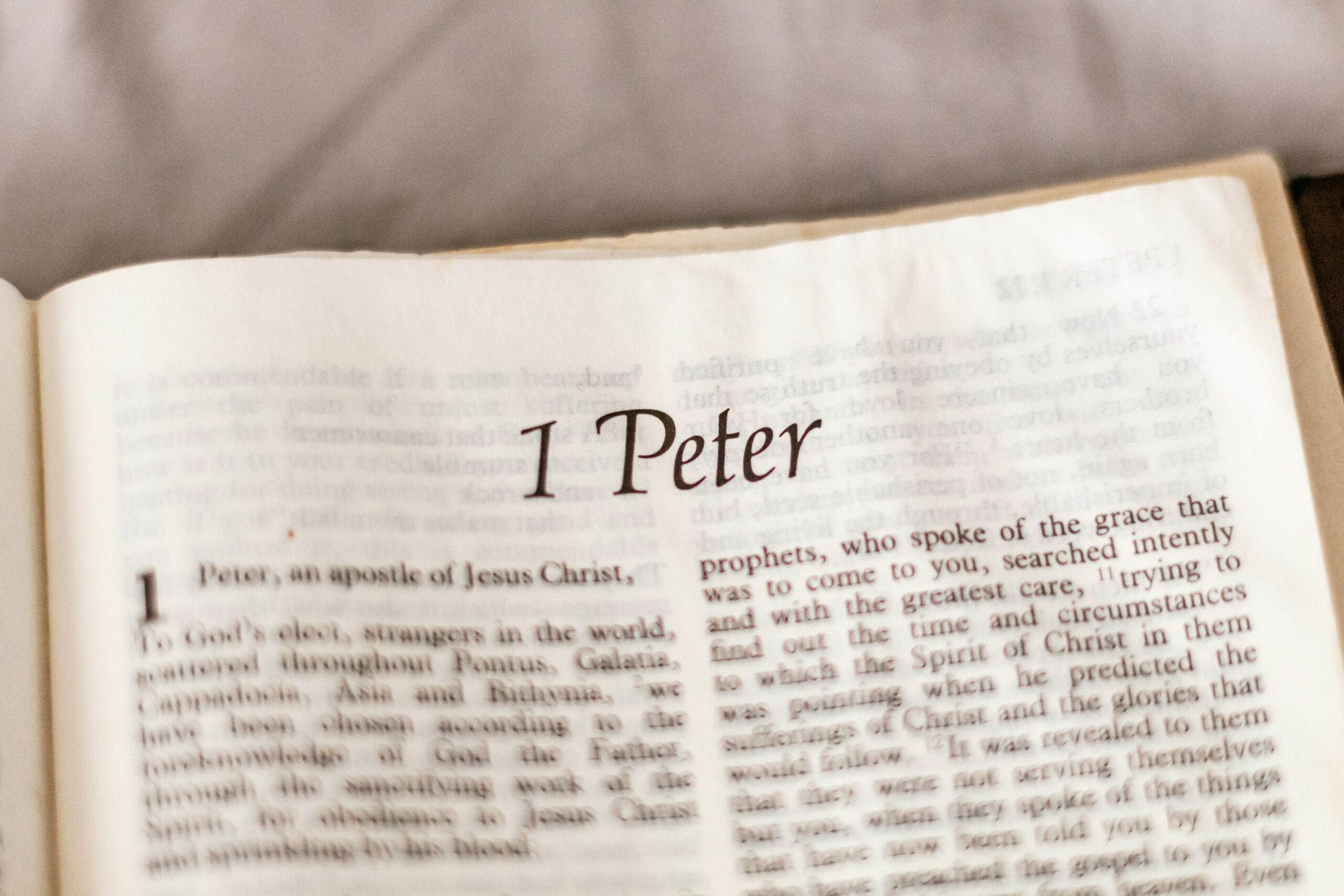
Cooperation of the Diety
This sermon explores the doctrine of election through the lens of 1 Peter 1:1-2, arguing that salvation is the result of the cooperative work of the Trinity rather than human effort. The message refutes the Arminian view that God merely foresees human faith, asserting instead that God’s foreknowledge is an intimate, sovereign decree that precedes and causes faith. It details the specific roles of the Father in electing love, the Spirit in sanctifying and regenerating the believer, and the Son in providing atonement through His blood. The tone is pastoral and instructive, emphasizing the humility required to accept that salvation is entirely of grace, with no merit found in the believer. The sermon concludes by encouraging the audience to rest in the assurance of God’s sovereign choice and the completed work of Christ.
Transcript
written about the subject about
which I’m preaching. I don’t know. I know very few. The subject that John alluded
to is the subject that we took up last week and really essentially
three weeks ago. The whole matter of election.
and you find it in that hymn. If you just open back up to the
hymnal, 469 is the number. You find it in that hymn right
in the heart of that hymn. This is one of the reasons I
cannot wait when I get to heaven. I call him a friend because he
says what Scripture says and it just makes my heart long to
be near people like him. Isaac Watts. And he says it and
it’s so accurate when he says, why was I made to hear your voice? And as I said last week, a proud
Calvinist or somebody who holds to the doctrine of election is
a contradiction of terms. The very understanding of election
is something that we don’t deserve. Why was I made to hear your voice
and to enter while there’s room when thousands make a wretched
choice and rather starve than come?” Are we better than them?
Do we know more? Were we able to figure it out?
Did we hear better preaching? Did we have a better translation
of the Scriptures? What Isaac Watts says there is
there’s nothing in us, nothing that commended us to God. And
the answer comes in verse 4, “‘Twas the same love that spread
the feast.” It’s God and God alone. “‘Twas the same love that
spread the feast that sweetly drew us in, else we had still
refused to taste and perished in our sin.” There is nothing
in us. It’s all God. If you would, I
want to take you back after that lovely opening I want to take
you back to 1 Peter 1, just the first opening verses, where we
have spent now many weeks looking first at the Apostle himself
and then looking at the church and what Peter laid out as important
features of the church. And we’ve zeroed in beginning
last week and will finish this week on the whole matter of election. Follow along with me, if you
would, beginning in verse one, Peter. An apostle of Jesus Christ
to those who reside as aliens, scattered throughout Pontius,
Galatia, Cappadocia, Asia, and Bithynia, who are chosen according
to the foreknowledge of God the Father by the sanctifying work
of the Spirit, that you may obey Jesus Christ and be sprinkled
with His blood. May grace and peace be yours
in fullest measure. We have seen this little epistle
that was written to the church scattered abroad, not just to
Jews of the quote unquote dispersion. This was written to the church
facing just an unprecedented persecution that was only going
to get worse and worse. Peter wants to encourage their
hearts because the troubles are coming and they’re going to be
manifold and they are going to be severe. and they are going
to last a long, long time. And Peter pointed out initially
the basic structure of the passage, some features of the church that
are unmistakable. They are to be unmistakable.
We saw God’s flock as seen from the world’s perspective that
we are aliens. People, we don’t belong here.
We don’t fit in. We shouldn’t fit in. That is
as it should be. Not only that, The church is
seen from the world’s perspective that we are aliens, but the church
is seen from the gospel’s perspective that we are scattered. I had
the privilege today, one of my sweetest times of fellowship
with my kids is planting the garden. We had even help yesterday
from Cambria, literally just sometimes it just takes a scattering
of the seeds. That, as a garden expert, I will
tell you, is the best way to plant spinach. Don’t plant spinach
in little rows. Scatter the seed and let it grow
and it will take over everything. The weeds don’t have a chance.
This is exactly the image that Peter uses when he says to the
church, you’re scattered throughout Pontius and Galatia and Cappadocia
and Asia and Bithynia. And what he implies there is
that’s only the beginning. And there’s all those little
towns in between and all around. And it’s only going to get greater. The dispersion of Christianity
is only going to spread so that what Peter plants in their mind
is the church of Pontius and all parts in between and the
church in Galatia and all parts in between and Cappadocia and
Asia and so on. It’s a good thing. It’s a great
thing. It’s a beautiful image that Peter gives there. And there’s a third unmistakable
feature of the church that we picked up on last time. Not only
the church, God’s flock is seen from the world’s perspective
that we are aliens and that we are scattered from the gospel’s
perspective, but from God’s perspective, we are chosen, handpicked, hand
selected. We did a study. We spent almost
our entire hour on one little word chosen. That’s exactly what
the word means. It was a pattern that was established
in the Old Testament with God choosing Israel, God choosing
hand-picked His servants, time after time after time, so that
when you get to the pages of the New Testament and you begin
to hear Christ talk about election and choosing, it’s a natural
fit. It’s how God operates. It’s just
how God operates. God chose the tribe of Levi.
God chose King David. God chose his apostles. God chose
the prophets. God is the sovereign one who
is constantly exercising his will. And it just fits with the
matter of salvation. As we began to look at election,
we noted that it isn’t so much the fact of election, because
every Christian who names the name of Christ believes in election.
You can’t not believe in election of some kind. It’s how we describe
election that begins to differ or distinguish us one from another. It’s the kind of election. And the kind of election that
causes trouble. Is the unconditional nature of
election that God didn’t look down and see in you some good
human potential. Or God didn’t look down and see,
oh, there would make a good Christian. Or there’s a man from a good
family upbringing. Or there’s a long lineage of
faith. God looked in you and saw nothing
that commended you to Him. And that’s the humbling part. It’s not because of anything
in us. that God set His electing love
on us. We began to look last week, and
I told you that we’d come back and answer some of the difficulties.
We touched upon some of the difficulties last week. That it’s unfair.
Oh, really? Oh, really? Do you know that God would not
have been unfair to send every last one of us to an eternal
hell? That wouldn’t have been unfair. That God chooses any is a mark
of His utter goodness and mercy. Some people said that it’s against
free will. We dealt with that one. Some
people said that it discourages evangelism. We dealt with that
one because, in my opinion, it promotes evangelism. You want
to tell people, even the last line of Watt’s hymn, we long
to see the churches filled. We long to see people come to
Christ. We’ll deal with the last objection
here momentarily. And as we closed out yesterday,
rather last week, we began to see that really there are two
absolute requisites needed prerequisites. If you’re a college student,
a couple of prerequisites that are absolutely necessary before
you can really come to a proper grip with the doctrine of election.
One is the sovereignty of God. And we spent some time on that
last week. You have got to understand that God is absolutely and completely
sovereign. His will is supreme before you
can ever come to the grips with the doctrine of election. The
second thing is the whole matter of the fallen condition of man. Where are we and where are we
really? Can we really elect ourselves to heaven by a mere choice? And
we said last week, based on what we see from the
garden and the fall of mankind and the curse that followed,
we discovered or were reminded really that we are from that
standpoint inherently sinful. That’s where our sin nature came
from. Adam and Eve did not have a sin nature. They chose to sin. They acquired a sin nature and
we with them. Not only are we from that standpoint,
from that point forward, inherently sinful. Secondly, we are temporally
vexed. That’s where people, the weeds
in the garden come from. That’s where the pain in the
childbirth comes from. That’s where the strife between
the sexes comes. Not only inherently sinful, temporally
vexed, but physically dying. That’s why I said last week,
I don’t believe that there’s anything such as what you read
in the obituaries week in and week out. He died of natural
causes. It’s not natural. It’s not what
God designed. It’s not what is best. It’s inevitable,
but it’s not natural. Not only inherently sinful and
temporally vexed and physically dying, but spiritually dead.
We’re not alive. We’re not weak, laying in the
hospital bed. We can’t sit up, as Sproul says,
and take the gospel medicine. We’re dead. Ephesians 2.5, you
are dead in your trespasses and sins in which you formerly walked
and dead is dead. Spiritually dead. One Puritan colored it in these terms. He said, we distinctly affirm
that spiritual death and in consequence, eternal death is the chief and
appalling feature of the fall of man. I mean, it’s bad to have
weeds in your garden, but what’s worse, weeds in your garden or
a perpetual death? It’s bad to have pain in childbirth.
It is a mark of the curse. In fact, I didn’t even know the
effects of the fall based on the sweat of the brow and the
difficulties that I faced as a man until I saw my wife in
labor. That’s when I knew the effects
of the fall. But we don’t really even grasp
the full effects of the fall with regards to our spiritual
deadness. It is the chief and appalling
feature of the fall of man. And unless God remedies that,
we are hopeless and helpless. I want to turn, I want you to go
back to the passage. And I want to look this morning
at how Peter clarifies and instructs us with regards to this doctrine
of election. If you want to call it the doctrine
of those who are chosen, if you want to insist on that biblical
word, that’s fine, because the word is used interchangeably
throughout the scriptures, both Old and New Testament. To choose,
to elect, it’s God’s doctrine. It’s a biblical doctrine. I’ve
been titled the message today, curiously, the cooperation of
the deity. And I did it to kind of bait
or tease the whole mentality that there are those that believe
that we cooperate with God, that our faith, working together with
his efforts and his salvation, his plan of redemption and Christ’s
sacrifice on the cross and us coming to faith and exercising
our faith, we cooperate with God. No, we don’t. What I want to look at this morning
is not God’s cooperation with us or our cooperation with God,
but God’s cooperation within the Godhead. How did God function? That’s what Peter wants us to
know. He doesn’t even talk about us at all. Nothing about our
efforts, nothing about our faith. Nothing about us at all, except
to marvelous grace of God that comes to us purely because of
God’s mercy. It’s the cooperation of the deity
within the Godhead. It’s the Trinity’s action on
behalf of the elect. What did God do for us? What
did the members of the Godhead do? That’s what we want to look
at. That’s what Peter wants us to
know. It is the outworking of God’s gracious choice, first
of all, in the application of the Father’s love, second of
all, in the application of the Spirit’s sanctifying work, and
thirdly, in the application of the Son’s atonement. Peter says to those who are chosen
according to the foreknowledge of God, the Father, by the sanctifying
work of the Spirit, that you may obey Jesus Christ and be
sprinkled with his blood. How you could come away from
Scripture itself? In its totality, not believing
in the Trinity, even though the word is never used in the Bible.
Here, one of the clearest places in all of Scripture, where the
three members of the Godhead are not only seen, but are seen
operating independently somewhat, carrying out their own efforts
on behalf of the elect. This little verse presents to
us these three phrases that modify that little word chosen. All
three of these phrases modify it. That’s why the structure
is there in the passage in the bulletin. These have been identified
as three pillars, if you will, of election. And note that every
member of the Trinity here is intricately involved in the process
of election. This has been seen as this doctrine
that is a doctrine of God is this austere, heavy, foreboding
figure that just simply goes through and willy nilly picks
out those that he set for salvation. And it’s seen as this hard, unloving
doctrine that is part of the Old Testament heavy view of God. Here, you see, everybody’s involved.
You can’t blame it on God the Father. Because here you see
all three members of the deity are intimately involved in this
whole process with regards to God’s beloved elect. And just
know, I mean, there’s no way that I can go in here and prove
this except to know from the totality of Scripture how the
Godhead functions. There may be different roles
that they play, but they’re all essentially cooperating in this
effort. It is God who is doing the electing. It’s God who is
who is exercising foreknowledge. It’s God who is sanctifying and
it’s God who paid the penalty for our sin. But each one of
those members of the Godhead have a different role. It doesn’t
exclude any of the other two. From those particular actions,
this what you have here is a divine cooperation. And not a cooperation
of God with men, but a cooperation, a functional cooperation of God
with God. Said one, the primary purpose
of these three clauses is to open up at the outset of the
epistle, the transcendent origin, nature and the purpose of the
church and its life. It is, as he says, three moments
in God’s redemptive activity towards men, not only his knowing,
knowing of those he will choose, but his sanctifying gift of grace
and his finished work as seen in their obedience and pardon.
It’s a beautiful passage and it’s deep. Let’s look at the
first, the Trinity’s action on behalf of the elect. First thing
we want to look at is the outworking of God’s gracious choice in the
application of the father’s electing love, the father’s electing love. It’s too bad John Hall isn’t
here because he kids me every time that I alliterate these.
I didn’t alliterate this one. It’s the father’s foreknowledge. It’s the spirit’s sanctification. As for the third, God didn’t
alliterate that one. The father’s electing love. Let’s
look at that first. He says that we are chosen according
to foreknowledge. And here is where the argument
begins, because what you have is people say, well, this explains
everything. God merely looked down the annals
of history and He saw those that were going to respond to the
gospel. And He said, ah, I’ll pick him and him and him and
her and her and her and him. And that’s how it works. And
that’s an easy answer. Except that’s not what the word
means. The word is only used here in
Acts 2.23, which passage I’ll have you turn to in a moment.
But the preposition here in the compound word implies the fact
that God’s knowledge is part of His eternal counsel. It’s
all woven together so that the knowledge that God has is with
a view to choice and calling. All that to say is you can’t
separate God’s knowledge from His electing love, from His choosing,
from His purposes and designs. It is all one and together. One pastor described this. Faulty understanding in these
terms, he said, one popular explanation for election by those who cannot
accept God’s sovereign choice based on nothing but his own
will stems from a faulty understanding of foreknowledge. According to
that understanding, the term simply means foresight or supernatural
knowledge of the future. We know God has that, right? Proponents say that God in his
omniscience looked down the corridors of time and saw those who would
believe the gospel and who would not, and he then chose for salvation
those he knew would choose to believe. Simple, right? Simple
fix. In describing what is known as
the Arminian position, one characterized it in these
terms. God’s choice of certain individuals
for salvation before the foundation of the world was based upon his
foreseeing that they would respond to his call. I mean, this is
just complete circular reasoning. He selected only those He knew
would, of themselves, freely believe the Gospel. Election,
therefore, was determined by or conditioned upon what man
would do.” It’s not God setting His love upon anybody. It’s God
sitting there, twiddling His thumbs, waiting for those who
would respond in eternity past. The faith which God foresaw and
upon which he based his choice was not given to the sinner by
God. But resulted solely from man’s
will, it was left entirely up to man as to who would believe
and therefore to who would be elected to salvation. God chose
those whom he knew would of their own free will choose Christ.
Thus, the sinner’s choice of Christ, not God’s choice of the
sinner. is the ultimate cause of salvation. There are some problems with
that perspective. The greatest of which is that
it makes man sovereign instead of God, because we choose God.
We choose God, not God choosing us. We choose whether we’re going
to place our faith in Christ. We choose whether we’re going
to respond to the gospel, whether we’re going to submit to his
will. We choose. There is a problem with that
view. It takes election out of the hands of God and it puts
it squarely in the hands of men. And that makes the purposes of
Almighty God conditioned upon the precarious wills of people. Lorraine Duttoner said it this
way. He has created a set of sovereign. It basically implies
that he has created a set of sovereign beings upon whom a
certain extent of his will and actions are dependent. God can’t
save you until you pick him. It represents God as a good old
father who endeavors to get his children to do right, but is
who is usually defeated because of their perverse wills. It represents
him as having evolved a plan which through the ages has been
so generally defeated that it has sent innumerably more persons
to hell than to heaven. Because it’s completely conditioned
upon their will. There’s another problem with
this view, it gives man undue credit for his own salvation.
And I already pointed out last week that, boy, do we want that.
We want anything that we can hang on to. We want some way
desperately that we can pay God back. Or maybe level the playing
field so that we’re not as bad as we seem to be, we at least
have this faith that we can exercise in Christ. Why? We want some credit so that
we can share in the glory that belongs to God alone. That’s
the problem. We want to be little co-kings
with God. Co-sovereigns with God. We want
to cooperate with God. There’s a third problem. The third problem is that it
assumes, this view assumes that fallen man can seek after God.
We spent a good portion of the time last week showing that we
are dead. We don’t exercise wills towards
anything. We don’t choose divine things.
When the scripture hints that we have a free will, we have
a free will to operate within the sphere where we can operate.
And the sphere is between one sin and another. We have a sinful
nature and that’s where we function. We don’t suddenly wake up one
morning and decide to choose heaven and eternal things and
divine, good, holy things. It stems from our view of God. What we believe about these things
stems from our view of God. That’s why I said it’s absolutely
necessary to have a healthy view of the sovereignty of God before
you can really come to grips with what election is and what
it means and how it relates to you. A.W. Pink, the godly pastor of
another day, said it this way. He characterized the God of his
day in these terms when he said, the God of the 20th century is
a helpless, effeminate being who commands the respect of no
thoughtful man. I mean, these are shocking words. What he’s saying is the average
church of his day had this view of God. The God of the popular
mind is the creation of a maudlin sentimentality. The God of many,
a present-day pulpit, is an object of pity rather than awe-inspiring
reverence. To argue that God is trying His
best to save all mankind, but that the majority of men will
not let Him save them, is to insist the will of the Creator
is impotent, and that the will of the creature is omnipotent.
To argue that man is a free moral agent and the determiner of his
own destiny and that, therefore, he has the power to checkmate
his maker is to strip God of the attribute of omnipotence. God is now practically a helpless
spectator. That is the perspective. If we believe that all God does
is look down the corridors of time and wait and worry and wring
his hands to see who might respond so that he can elect them, that’s
baffling and very near blasphemous. The use of the Greek word here
that is rendered for knowledge proves that it cannot mean merely
knowledge of future events. It refers to God’s eternal, predetermined,
loving and saving intention. It is God choosing and setting
His electing love upon a certain portion of people. Peter used
a very related word. The verb was foreknown in reference
to God’s knowledge from eternity past that he would send his son
to redeem sinners. Now, consider this logic. The use of this verb cannot possibly
mean that God looked into the future, saw that Jesus would
choose to die, and so he made him the Savior. That’s the same
exact logic. In the same way, God the Father
foreknew his plan for Christ’s crucifixion before the foundation
of the world. And in the same way that he knew
that, he foreknew the elect. Foreknowledge involves God’s
predetermining to have a relationship with some individuals based upon
His eternal plan, not ours. Not ours. It is the divine purpose
that brings about salvation to sinners. It’s not merely an advanced
knowledge that observes how others will respond. In fact, Consider
this. In the Old Testament, remember?
I’m not going to get too graphic here, but you remember knowing
someone was an indication of the ultimate act of human intimacy. It’s a deeply intimate word to
say that God knew Israel. God loved them intimately. They
were His only. They were the apple of God’s
eye. The point here is just simply this, that God’s having information
about someone, not simply having information about someone, but
that God established an intimate relationship with someone, namely
you. For knowledge was God establishing
that by divine decree before time began, you would come to
faith. It was His sovereign good pleasure,
an account of no foreseen merit in them. Say, the old creeds. John Bunyan, the faithful Puritan
writer, called this election of free and unmerited favor. There was nothing in us. Not
even our faith commended us to Almighty God. The canons of dork,
when they began to wrestle with this very issue, they summarized
it in these very simple terms. They said that certain ones neither
better nor more worthy than any others. We weren’t more worthy. We didn’t
deserve God’s love. That is precisely the point of
election itself. I love the old confessions. The
1689 has it very clearly. Those of mankind that are predestined
to life, God has chosen. It’s a simple sentence. Those that are of mankind that
are predestined to life, God has chosen. I mean, it basically
says the same thing twice. But the beauty of that passage
isn’t in its simplicity, but then you go and you see all of
the ways that that truth is colored. Listen. Those of mankind that
are predestined to life, God, before the foundation of the
world, God has chosen. Those of mankind
that are predestined to life, God, according to His eternal
and immutable purpose, has chosen. Not because of anything in us.
Those of mankind that are predestined to life, God, and the secret
counsel of His good pleasure of His will has chosen. And it goes on and on and on.
“…in Christ, unto everlasting glory, out of His mere free grace
and love, without any foresight of faith or good works, or perseverance
in either of them, and all this to the praise of His glorious
grace.” It’s Ephesians 1. That’s, in essence, what you
have there. This foreordination. predetermination refers to the
counsel of God, which after the deliberate judgment, certain
people from among mankind were designated to that privileged
position. And in that sense, this should
humble us to our faces. We don’t deserve this. Stephen Charnock, the what I
would call the overwhelming Puritan to ever read any of his works.
You literally have to set this aside after time. Because it
just begins to take you apart. He said this about election,
it could not be foresight of works done in by them or of faith
that might determine God to choose them. God foresaw no rational
act in man before the act of his will to give him a reason.
Nor does he foresee faith in any before the act of his will,
determining to give him a faith. Faith is the gift of God. Election
is the cause of faith and not the cause of election, not faith
the cause of election. Men are chosen not because they
believe, but they believe because they are chosen. I mean, could
that be any more simple? I want to go to the second point. We’re looking at the cooperation
of the deity. The Trinity’s action on behalf of the elect. We’ve
seen what God has done. God the Father. We’ve seen the
Father’s electing love. Now, how does it happen? How
are we taken from this state of deadness in sin and have the electing love of the
Father applied to us? Peter tells us it’s by the sanctifying
work of the Spirit. The Spirit moves upon us, just
like Jesus explained to Nicodemus, you must be born again. And he
didn’t. If you read the passage, he never tells Nicodemus to do
anything. He doesn’t tell Nicodemus to
exercise his faith. He doesn’t tell Nicodemus to
go get baptized. He doesn’t say anything to Nicodemus that he
should do. He simply tells him what must be done and what must
be done is a mighty work of the Spirit in the man’s life. Or he’s done. He’s hopeless. Sanctification by the Spirit
is what represents the inward working of God in our hearts
and lives, what we basically celebrate in the waters of baptism.
It’s the going down and the coming back up to live and walk in newness
of life. It’s merely representative of
what God’s already done in our lives. It’s the work of the spirit
and people, I don’t believe here that what he’s saying is that
the sanctification of the spirit does not mean that at the moment
of salvation, you’re perfectly sanctified. Do I need to prove
that? He’s not saying that at all.
What he says is you’re set apart. That’s what sanctification is.
You’re set apart from a common use, from a vulgar use, from
a everyday and sinful use to a holy use, to a godly use, to
a pure and God honoring purpose. And in that sense, this sanctification
of the spirit includes not only regeneration, but justification
and the initiation of the whole process called sanctification.
He starts us on the path of holiness. He sets us towards a purpose
of a holy life. He doesn’t purify us right there
and then. Not actually. Another pastor said it this way,
the sanctifying work encompasses all that the Spirit produces
in salvation, faith, repentance, regeneration, adoption, all those
things the Spirit initiates. When He moved upon you the first
time, you were a dead sinner. You had no thoughts, no longings
toward God. The Spirit began to woo you.
The Spirit woke you up. The Spirit saved you. The Spirit
gave you the faith to exercise. He regenerated you out of your
deadness. And then you saw Christ. You
saw Christ and you could not help but love Him. You could
not help but embrace the loving Savior that you know had died
for you. One pastor said it this way,
it is the Spirit who awakens within us the first faint desires
and longing for God and goodness. We’re not born of that. It’s
the Spirit. awakens us. The Spirit convicts
us of our sin, leads us to the cross where that sin is forgiven
and enables us to walk the way to holiness, to be freed from
the sins which have us in their grip. We don’t escape by our
own designs, by our own efforts, by our own decision to be. I’m
going to be done with this resolution for the year 2000. That’s not
how it works. It is the Spirit who grants us
the grace to gain the virtues which are the fruit of the Spirit,
who gives us the assurance that our sins are forgiven and that
Jesus Christ is Lord. It’s the Spirit. That’s the sanctifying
work of the Spirit. It’s not us. It’s not us in the
diligent reading of our Bibles discovering these things as if
God didn’t exist. The sanctifying work refers to
the separation from the world, consecration unto something purer
and better than ourselves, holiness itself, holy like God is holy. At that moment of salvation,
the sanctifying work of the Spirit sets believers apart from sin
to God and separates them from darkness to light and sets them
apart from unbelief to faith and mercifully separates them
from a love of sin and brings them to a love of righteousness.
Good words from a godly pastor. Good words. There’s a third member of the
Trinity in whose efforts on our behalf we see. We see the outworking
of God’s gracious choice in the application of the father’s electing
love. In the spirits sanctifying work
and thirdly, in the son’s atonement. Peter says you are chosen According
to the foreknowledge of God, the Father, by the sanctifying
work of the Spirit, that you may obey Jesus Christ and be
sprinkled with his blood.” The whole design of Christ’s
atonement was that it would be applied. The image is a beautiful
one, and I want to take you… I’m fearing we don’t have the time.
I want to take you to Leviticus chapter 14 quickly. Leviticus
chapter 14. Genesis, Exodus, Leviticus, third
book in the Bible. Working your way in chapter 14.
And quickly, if you find yourself in verse one, it says, The Lord
spoke to Moses saying, This shall be the law of the leper in the
day of his cleansing. Now, he should be brought to the priest.
The priest should go outside the camp. Thus, the priest shall
look. And if the infection of leprosy has been healed in the
leper, then the priest should give orders to two live clean
birds and cedarwood and scarlet string and hyssop for the one
who is to be cleansed. The priest shall also give orders
to slay the one bird in an earthen vessel over running water. As
for the live bird, he shall take it together with a cedar wood,
the scarlet string and the hyssop, shall dip them and the live bird
in the blood of the bird that was slain. Then he shall sprinkle
seven times the one who was cleansed of the leprosy.” This was the
law of the leper. This was how he was to be cleansed.
And so Israel was very familiar with this imagery. Let me take
you to another, if you would. Back one book to Exodus, chapter
24. Exodus, chapter 24. There were three occasions when
sprinkling was mentioned in the Old Testament. Not only when
a leper had been cleansed, which we just read, but a sign of setting
apart for the service to God as Aaron and the priests were
done. And on this particular occasion,
from the covenant that God made with Israel, look at verse one
of chapter 24. Then he said to Moses, Come up
to the Lord, you and Aaron, Nadab and Abihu and 70 of the elders
of Israel. You shall worship at a distance.
Moses alone, however, shall come near the Lord, but they shall
not come near, nor shall the people come up with them. Then
Moses came, recounted all the words to the people, all the
words of the Lord and the ordinances. And they said, all the words
which the Lord has spoken, we shall we will do. Moses wrote
down all the words, and then if you skip down to verse six.
In the midst of presenting this offering, Moses took half the
blood, put it in basins, the other half of the blood he sprinkled
on the altar, then he took the book of the covenant, read it
in the hearing of the people, and they said, all the Lord has spoken,
we will do. We will be obedient. So Moses
took the blood and sprinkled it on the people. It was a covering
for their sin. It was an application of the
atonement. And what Peter is speaking about
here in his opening words of his epistle is not some literal
ritual that the people were to undergo, but a figurative, spiritual
truth that they had already, by faith, come to know. The application
of the blood atonement, the blood of Christ to their own lives
and to their sinful lives. What this signifies is the application
of the blood of none other than the perfect sacrifice, the blood
of the Lord Jesus Christ. Who was given to satisfy sin
and to expunge from the guilt of sin those who knew it all
too well. And it’s performed on our part
by faith. When we come to Christ and we
yield ourselves to Him, we place our faith in Him and in Him alone
for salvation. That is the sprinkling that Peter
is mentioning. It’s a beautiful thing about
this book. Peter’s not done with any of these three. He’s introduced
us merely. Because if you look in verses
3-12, Peter now is going to expound there in this upcoming chapter
on the whole matter of foreknowledge. God’s electing love. He’s not
done with sanctification because in verses 13-17, he’s going to
go back and urge it upon us all the more. Be holy as God is holy. And he’s not done with the blood
atonement because he takes us back to the cross. And he says,
because of what Christ has done, because of the precious blood
of Christ. People, there was nothing in
us that commended God in our direction. It is simply his gracious,
loving choice, and it should humble us to the core of our
being. We don’t deserve to be here.
And we certainly don’t deserve to be there in heaven with him. Let’s thank him. Our merciful King, we bow and
humble ourselves before you, acknowledging that you are the
sovereign God of the universe. You’re the sovereign God of the
scriptures. And we acknowledge even more, and we can’t even
begin to fathom it, that you have set your electing love upon
us. You chose us. We didn’t choose
you. You loved us first. Lord, we
thank you and praise you for Peter’s words, for the clarity
of them, for the cooperation of the Godhead in our salvation. Lord God, we are forever humbled
at Your feet. And pray for the grace to be
faithful with this truth. It’s in Jesus’ name that we pray,
Amen. I have a sign-up sheet that we
have in a month for people to pray and to ask if you want to
tell your people about it. Okay, in Sunday school? Well,
yeah, I can do it right now. I need this for the service.
Oh, you do? But if you wanted to tell them
about it, they could call me. Okay. Or they can see me. Great. Okay. Yeah, feel free
to… I’ll tell them in Sunday school
and then we’ll hit you afterwards. We’re usually still here. Yeah.
Or call you. How you doing? Good. There’s a little guy.
Messages: 61