Fruits of 11th Hour Intensity
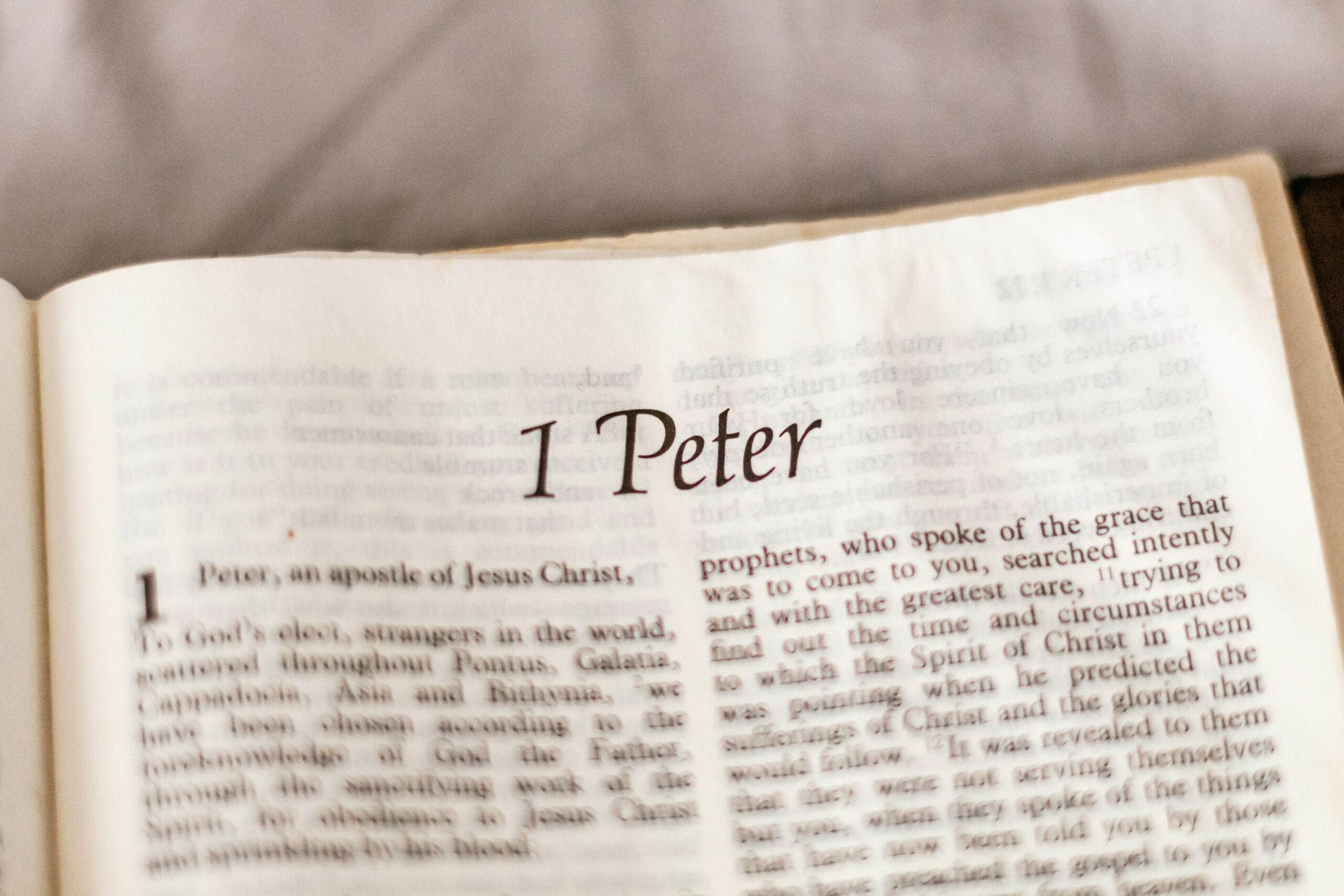
This sermon examines the call to spiritual readiness in light of the imminent end of all things, as presented in 1 Peter 4. The message argues that the urgency of the final days should produce four specific fruits in the believer’s life: sound judgment and sober spirit, fervent brotherly love, practical hospitality, and the active use of spiritual gifts. It emphasizes that Christians must avoid emotional instability and triviality, instead maintaining a steady, prayerful focus on God’s Word. The text highlights that love covers a multitude of sins by fostering patience and covering one another’s faults, while hospitality extends beyond mere dinner invitations to a radical care for strangers. Finally, the sermon urges believers to identify and employ their unique spiritual gifts to serve the body of Christ, ensuring that their lives reflect the gravity of the times.
Transcript
to the passage I want to consider
this morning is in your Bible. First, Peter, chapter four, verse
seven. It is also in the bulletin with
places for notes, if you prefer. Tell you how we ended up in Peter.
You know that we’re taking a brief, well, at this rate, an extended
break from Luke. Continuing to study that great
chapter, the Olivet Discourse, and we’ll return there in time.
In the past five or six weeks, we’ve been focusing specifically
in our preparation at the time to receive an elder and to recognize
an elder in Trey. And so in doing so, we were looking
at some specific verses, namely Second Timothy. that spoke of
the elders’ responsibility in the church to preach the Word
in the face of a spiritually decadent society. to reprove,
rebuke, exhort when necessary, applying all of God’s grace in
those varied circumstances that God might use us for the correction
of individuals. And so I began to think, you
know, we’ve been focusing so much on the elders and as we
take this hiatus from Luke, Perhaps the congregation needed some
guidance of what their goal is or what their directives are
for these difficult days. And it was toward that end that
I went back into Peter and reconsidered this verse for us this morning. Essentially, the context here,
and I’m not going to give you all of it, four chapters worth
of data would certainly gobble up my time. But Peter essentially
takes them right up to what he calls or what I would refer to
as the 11th hour. He says the time is incredibly
short. We are in a sense in the last
days is what Peter alludes to. And the question ever before
us is what if We were on the Titanic. What if the nuclear
warheads were on their way from Russia? What if we contracted
a terminable illness? How would we live in light of
that urgency? How would we live out our last
moments, our last weeks, our last years? And that is the essence
of what Peter tells his readers. Let me give you, first of all,
the urgency, he says, and then may I give you some directives
in light of that urgency. If you would, I want to take
you back for the sake of context to verse one of chapter four,
1 Peter, chapter four, beginning in verse one. Where there he
writes, therefore, since Christ has suffered in the flesh, arm
yourselves also with the same purpose. Because he who has suffered
in the flesh has ceased from sin, so as to live the rest of
the time in the flesh, no longer for the lusts of men, but for
the will of God. For the time already past is
sufficient for you to have carried out the desires of the Gentiles,
having pursued a course of sensuality, lusts, drunkenness, carousals,
drinking parties, and abominable idolatries. And in all this,
they are surprised that you do not run with them into the same
excess of dissipation and they malign you. And what Christian
has not experienced that? That if you get saved out of
the world or if you have had the great pleasure of God to
be raised in a Christian home, how many of us have faced the
catcalls of those who call themselves friends because simply we didn’t
participate in their sin. They put us down, they criticize
us, they make fun of us. But they shall give an account
to him who is ready to judge the living and the dead, for
the gospel has for this purpose been preached even to those who
are dead, that though they are judged in the flesh as men, they
may live in the spirit according to the will of God. And it’s in that context that
Peter turns essentially to the urgency of the hour, to the eleventh
hour. We’re living in a difficult day.
We’re living in days when people’s hearts are cold and hard to the
gospel. Even people who allegedly profane. I didn’t intend it that way,
but in Proclaiming Christ, they profane Christ. They want to
say that they believe Christ, but in the way that they live,
perhaps my Freudian slip is more accurate than I realized. They profane the name of Christ.
It’s in that context that Peter turns the corner here to verse
7 when he says, the end of all things is at hand. Therefore,
be of sound judgment and sober spirit for the purpose of prayer. Above all, keep fervent in your
love for one another because love covers a multitude of sins. Be hospitable to one another
without complaint. As each one has received a special
gift, employ it in serving one another as good stewards of the
manifold grace of God. Whoever speaks, let him speak,
as it were, the utterances of God. Whoever serves, let him
do so as by the strength which God supplies, so that in all
things God may be glorified through Jesus Christ, to whom belongs
the glory and dominion forever and ever. Amen. Peter issues
an urgent call. The image that came to my mind
immediately when reading this and now I wasn’t alive when these
posters are printed. Apologies to those who may have
been, but I’ve seen the posters and it’s Uncle Sam on the picture
of the poster and he’s pointing a long, skinny finger and he
at the bottom of it, it just simply says, I want you. That’s
essentially what Peter is doing here. He’s pointing a finger
at his people. He’s telling them the urgency
of the situation, the gravity of it. He tells them, I want
you for service. What greater composure is needed? What great composure
is needed in a situation where the end of all things is at hand? To be on a sinking ship is one
thing. To demand great composure. To
be preparing for the end of nuclear war, perhaps. But the ticking
clock of time and eternity, Peter says, is a far greater motivator
spiritually than even any of those earthly calamities. The
end of all things. is at hand, he says, and go with
me on this. Think of it. When he says all
things, that is pretty plain, isn’t it? Worldly enjoyments,
all of those things that we do that we love so much. The end
of that is at hand. The end of time itself is at
hand. That’s what eternity is. All
clocks will stop. And eternity will perpetuate
forever and ever. Pain will stop. Suffering will
stop. Trials will stop. Sorrows will
stop. But so also, friends, will opportunity. Opportunity will stop. Opportunity
to proclaim Christ, to preach. Opportunity to share with loved
ones and friends. Opportunity to repent of even
our own sins will cease. This thought is so replete throughout
Scripture. I almost am gilding the lily to share
it with you, but turn to Matthew, if you would. In Matthew, chapter
24, which passage, by the way, I’m currently studying as we’re
studying Luke 21, but in Matthew, chapter 24, Jesus issues a very
similar sentiment here. Matthew, chapter 24, verse 37. The coming of the Son of Man
will be just like in the days of Noah. Rain? No. Suddenness. For as in those
days before the flood, they were eating and drinking and marrying
and giving in marriage until the day that Noah entered the
ark. And they didn’t understand the flood until the flood came
and took them away. So will the coming of the Son
of Man be. What it speaks there is suddenness. imminence, as we speak of in
theology proper, and throughout the pages of Scripture, you have
interspersed this idea of imminence in order to provoke the way that
we live. Listen with me, because I think
I’ll burden you if I have you turn to every one of these scriptures.
Listen carefully. In Romans chapter 13, we are
called because of the urgency of the hour to holiness. Listen,
Romans 13, 11, and this do knowing the time that it is already the
hour for you to awaken from sleep. For now, salvation is nearer
to us than when we believe. Isn’t that a fascinating thought?
We come to Christ and then we begin to just kind of put ourselves
on the moving walkway of life. Don’t we? Waiting for Jesus. Paul says the night is almost
gone. And the day is at hand. Have
you ever woken to a sunrise? I’m hoping some of you have. You’ve woken prior to the sunrise. You’ve seen it dark. And you’ve
actually had the great privilege of seeing the sun come up. It’s
so subtle, isn’t it? One moment, it’s pitch black.
And then just subtly, gradually, but steadily, the light comes. That’s the imagery that Paul
is using there. And one day, spiritually speaking,
we are going to see night lifted and day dawn. And it will be
that way forever. And Christ will be here. He concludes
by saying, let us therefore lay aside the deeds of darkness and
put on the armor of light. The time has come, people. In Hebrews. The urgency of the
hour is used to provoke commitment to the local church. Hebrews
10, 25 says that we are to be those who are not forsaking our
own assembling together, as is the habit of some. Of course,
it was that way in that day. It’s not that way anymore, is
it? But encouraging one another and all the more as you see the
day drawing near. The urgency of the hour should
propel us, provoke us into a absolute commitment to the local church. What about patience? Paul uses
it to provoke the Philippian believers to a long suffering
patience with one another. Philippians 4.5 says, Let your
forebearing spirit be known to all men. The Lord is near. What a great thought. What a
great thought. How would you live if you knew
that Christ would come back this afternoon? How would that affect
your lunch? How would it affect your lunch
conversation? How would it affect the way you
drove home to lunch? Endurance. James 5.8. There,
James uses it, this urgency of the last hour to call us to endurance. Don’t give up. The end is at
hand. You too, be patient, he says.
Strengthen your hearts for the coming of the Lord is at hand. How many of us live that way?
Finally, one last little example about the last hour in which
we live. 1 John 2.18 says, children, it
is the last hour. This is, people, the 11th hour. And if it was that way 2,000
years ago, At least in God’s, according
to God’s clock, a few more seconds certainly have ticked off. Children,
it is the last hour, and just as you heard that the Antichrist
is coming, even now many Antichrists have arisen from this, we know
that it is the last hour. Just when we think that this
world can’t get any more evil, more evil, more foolishness,
more heresy arises. It is certainly a sign. that
the clock of God’s is ticking. And if these believers in first
century Christianity were called to an 11th hour readiness, how
much more are we? Peter moves to apply this exhortation
to readiness, to be composed in the face of uncertainty, to
be useful to glorify God in these moments and not just sit back
and pray and wait for Jesus. It’s too many people doing that.
Peter said that is not adequate for a child of God. What I want
to look at this morning in our time is four specific fruits
of what I would call 11th hour intensity. 11th hour urgency. What kind of urgency must we
have and what must it do to us as believers? Peter essentially
and primarily addresses ministry within the local church. This is for us. Four specific
fruits of 11th hour urgency. First of all, the urgency of
the hour should affect our head. It should affect our head. Look
at the very first verse, verse seven. Therefore, be of sound
judgment and sober spirit. Sound judgment is one of the
very frequently used words in Scripture. It just means sensible. It is the exercise, if you will,
it is the exercise of grace in making good and God honoring
decisions. It literally means to be in your
right mind, temperate, self-controlled, not flighty, not unbalanced,
not just giddy and foolish. Peter here exhorts us to think
biblically, to dig into the Scriptures, to know God, to principalize
God’s Word, and then to live according to those principles
for His glory. Think and live in a Christianly,
God-honoring manner. That’s what Peter’s calling us
to as opposed to this overly emotional, irrational, impulsive
way of life that seems to grip so many. Self-control is often how it’s
described, particularly in relation to good judgment, discretion,
common sense. It’s not light and frivolous. It’s serious. One person described
it in these terms, the sensible person is in command of his mind. He has control of the things
that he thinks about and the things that he does. He doesn’t
allow circumstances or immorality or foolishness of others to distract
him and gain his attention and his interest. Not only does he
not become involved in things that are outright immoral and
unspiritual, but he avoids things that are trivial, foolish and
unproductive. What a great thought. So much
of our lives are wrapped up in this trivial, just kind of nonsense
that the world generates. These are strange words for Peter,
aren’t they? This is one of the marks to me
of a miracle of God in working into Peter’s life. I mean, isn’t
Peter the one that was constantly asking the foolish questions
that everybody was thinking? He just had the overt courage
or foolishness, if you will, to go ahead and blurt it out.
He’s on the Mount of Transfiguration. When God Himself is manifesting
Himself in the Spirit, something that only a few people in the
world have ever seen, and immediately Peter’s idea is to throw up some
tents. Impetuous. That describes Peter. before a work of divine grace.
And now look at him, Peter, gently, shepherdly, calling his people
to exercise sound judgment. This is a changed man. It’s a
changed man. You can’t read the epistles of
Peter and not see there a completely different man than what we see
in the pages of the Gospels. right up until the very end.
He caches it in in John chapter 21. Forget it. I’m going fishing.
And even as Jesus reinstalls him in ministry, he can’t even
get it straight. All he wants to do is focus on
everybody else. But immediately walk into the
pages of 1 and 2 Peter and you see a changed man. not only sound judgment, but
sober spirit. Originally, the word meant free
of wine. And for so many, that’s all it’s
ever described to be sober. Well, people, if that’s all we’re
called to is soberness, then boy, some of us would get an
A plus. But it goes so far beyond that.
It means calm, circumspect, prudent. The sober minded person is a
steady person. They’re not flying off the handle,
either emotionally or angrily. They’re steadfast. They’re solid.
Once Puritan described it in these terms. He said it’s easy
for the Christian to be carried away with this and that and the
next sudden enthusiasm. To have a mind which becomes
readily intoxicated with the latest fashion and the newest
craze. Maintain the essential steadfastness
of the man who knows what he believes. That is the sober minded
man. That’s the sobriety, the spiritual
sobriety that is in view here. What Peter was trying to guard
them from was essentially the intoxication, if you will, spiritually
speaking, of false prophets, false views. He wanted them grounded
in the Scriptures so that they would be steadfast against all
those moral and immoral influences. What Peter implies here is that
this 11th hour, these last days, these final moments of the great
spiritual war, are very dangerous days. Very dangerous days in
which we live. It seems like each year I go
back and now I’m totally current on all the wacky stuff that’s
out there. All the strange views that have
increased in popularity. And then I go away for a year
and I come back and now I’ve just learned of a whole new bunch
of stuff. In fact, as we were flying out, some one of the guys
mentioned what’s called the emerging church, the emergent church.
And I said, boy, that sounds like a good thing. The church
is emerging in the 21st century. Then I began to read about it
and listen to other men talk about it. It’s not a good thing
at all. It’s a thing that belittles God
and His character and His word. Paul wants us, or Peter here,
exhorts us to a serious and sober consideration in view of the
times. They’re very dangerous times.
Keep a cool head, he says, for the purpose of prayer. Did you
ever notice how difficult it is to go straight from a party
or straight from even a celebratory time with just a few friends,
horsing around, kind of talking, bantering back and forth. Do
you realize how difficult it is to go to a prayerful frame? Even if you fall on your knees,
it takes your mind some time to transition. And Peter says,
I want you to live over here. I want you to live ready to pray
at a moment’s notice. I want you to live where it’s
going to be easy to transition your mind into prayer because
of the difficulty of the time. It’s another urgency. The urgency of the hour should
not only affect our head, it should touch our hearts. Look
at verse 8. Above all. Above all, keep fervent
in your love for one another. Even the form of the verb there
says that these believers to whom Peter was writing, and I
would say the same thing about our church, we’ve achieved some
measure of success. One of the things that I was
so encouraged about as I began to tell other people about my
church and tell other men kind of how things were going was
exactly this, that you know what? Our people are loving one another.
They love the Lord and they love the word and they love one another. All Peter says here to his congregation
and to us by proxy is keep it up. Keep fervent. The worst thing you can do here
is begin to plateau because no sooner do you reach the plateau,
you know what? The plateau has the other end,
doesn’t it? You think you’ve arrived and you think you’ve
done all you need to do, and then you taper off, don’t you? We know our hearts. Over and
over again in Peter’s epistle, he reminds them, he exhorts them
to one another kind of love. 1st Peter 1.22, flip back just
a couple of pages. In 1st Peter 1.22, Peter said,
since You have, in obedience to the
truth, purified your souls.” He’s not talking to unregenerate
people. He’s not wondering about their salvation. He assumes their
salvation. He’s seen it in action. He knows
where the grace of God has come. He knows that it’s touched their
lives. Since you have, in obedience to the truth, purified your souls
for a sincere love of the brethren, fervently love one another from
the heart. We have a tendency to let the
embers die down, don’t we? In doing kindness, in praying
for one another, in practically loving one another. And Peter
says, stoke the fires. Don’t give up. Don’t let it cool
off. John Brown, the great Puritan
pastor, said this, wherever you see the image of your Lord, wherever
you find a fellow Christian, Someone who professes Christ,
wherever there is a consistent profession of the faith of Christ,
there we ought to fix our Christian affections. It’s the church,
people. We ought to fix our Christian
affections and having fixed them, we are not easily to allow them
either to abate or to be transferred. We are to love one another. And we’re to stoke the fires.
And if you do something kind and you revel in it for a time
and you see the embers beginning to die, you’re to build yourself
back up and get back in there and find some new way. The word brotherly love here
used by the apostle expresses the strong, natural affection
between parents and children. That part is a given. Of course,
a parent is going to love his child. Of course, the children
are going to love the parents. But it’s also applied to affection
really of any kind. Christians should love one another
with the same kind of sincerity, the same intensity, the same
eagerness as with their nearest relatives. I mean, imagine evaluate
your own love for the people in this church based on Peter’s
exhortation there. Is it fervent? Or is it casual? Is it intense and constant or
is it? Occasional and fading. Flip over
to chapter two, verse 17. Chapter 2, verse 17, Peter says,
let me cover all the bases. Honor all men. Well, that pretty
much takes care of it. Love the brotherhood. Fear God. Honor the king. I mean, is there
anything that isn’t encompassed in those exhortations? Honor
God. Love the brotherhood. Fear God.
Honor the king. But there where he says love
the brotherhood, That’s our exhortation. It’s the second time that Peter’s
given it. Chapter three, verse eight. To sum up, Peter says, let all
be harmonious, sympathetic, brotherly, kind hearted and humble in spirit. The word there that is used is
Philadelphia used. Everybody knows to describe brotherly
love. There is such a thing as a human
brotherhood. There is such a thing as a blood
brotherhood. And what Paul here, or Peter
again, is expressing is a spiritual brotherhood. And it is to be every bit as
tender, every bit as affectionate, every bit as loving as even the
home. Lest you think that this is just
an exhortation that Peter gives, flip over to Romans chapter 12. Because Paul here in Romans 12
paints the picture in full color of what brotherly love is to
look like. I want to pick up in verse 9. Let
love be without hypocrisy. People, he’s not talking about
husbands and wives. Let love be without hypocrisy. Abhor what is evil. Cling to
what is good. Be devoted to one another in
brotherly love. Can you honestly say in your
heart that you’re devoted? I’m devoted to my wife. Many of us would say that of
our spouses, but are we devoted to one another in brotherly love? Give preference to one another
in honor? And then you begin to see this
long litany of things that Paul uses here to describe what brotherly
love is. Not lagging behind in diligence. If you say you’re going to pray
for somebody, pray for them. If you say you’re going to care
for somebody, care for them. Diligence is carrying forth what
you’ve purposed to do. Fervent in spirit, there’s our
word again, it’s an intense love and care for one another serving
the Lord. Well, wait a second. I thought
you said we were loving one another. Ultimately speaking, we’re serving
the Lord as we serve one another. What a beautiful thought. rejoicing
in hope, persevering in tribulation, devoted to prayer, contributing
to the needs of the saints, practicing hospitality. All of those elements,
Paul says, describe what it means to love one another. Love your
brothers. We’re to stoke the fires of love
in our hearts for one another. One pastor said that Christian
love is not an easy sentimental reaction. That kind of love is
easy. It demands everything that a
man has got of mental and spiritual nerve and muscle and sinew. It
means loving the unlovely and the unlovable. It means loving
in spite of insult and in spite of injury. It means loving when
love is not returned, but even spurned. Now, How would you describe
your love for others? Is it fervent? That little word
there means a stretching, an intense, unremitting, unwearied
reaching. You can’t give up. Our love for one another ought
to be stretched in that sense, eager and fervent. And there’s
a reason behind it. Peter says, he says, keep fervent
in your love for one another because love covers a multitude
of sins. A lot of debate about what this
means. This means, say some, that in
loving others, God is going to overlook my faults. Couldn’t
be further from the truth, people. It’s not what it means. Are they
covered from God? No. God sees what they do. And simply loving them is not
going to turn God’s eye from their deeds. God sees them and
He will deal with them. Our sins aren’t forgiven. Neither
are our brother’s sins. Both are covered by the blood
of Christ, if at all. We always have Christ to look
to. So then who are they covered
from? They’re covered from us. When we love others, we’re going
to have a decreased tendency to focus so much on their sin
and sinfulness, their bad habits, their rude ways. He says that
if we are actively loving one another, we’re going to have
the habit of covering up their sin, not focusing in on their
sin for the purpose of just loving and serving them and letting
God bring them to conviction for those things. Proverbs 10.12 is probably the
likely source for this very thought. Proverbs 10.12 says hatred stirs
up strife. That’s where it comes from. But
love covers all transgressions. It doesn’t mean, people, that
you don’t go to your brother if he sinned and lovingly confront
him and even in cases, as we’ve talked about in weeks past, rebuke
him. That is to love him. But there’s also a time for just
bearing with him. This maybe it’s just a husband-wife
thing, but Barbara and I do this all the time Usually it’s me
having a bad day Barb just puts up with me She knows that the
Lord’s gonna deal with it and invariably he does Then I come
crawling in you know The opposite is so ugly, isn’t
it? Listen to how one described it. Charles Bridges in his excellent
book on Proverbs. There is no better commentary
on Proverbs than Charles Bridges. He said, hatred, however, varnished
by smooth pretense is the selfish principle of man. Like a subterraneous
fire, it continually stirs up mischief, creates or keeps alive
a rankling coldness, disgusts, dislikes, it carves at the infirmities
of others, aggravates the least slip, or resents even the most
trifling or imaginary provocation. Now in his big 50 cent word description,
this is a person who sits waiting to be offended. And even before
they’re offended, they take offense. They can’t wait to bring up other
people’s sins. Hatred stirs up strife by dragging
the faults of others to light and charity covers them up. Isn’t that Christ-like? Psalmic commentators went off
the deep end with this. I think the sense of it is plain. To give us an axiom to bear with
one another in patience. There’s a third mark of the urgency
of the hour. The urgency of the hour should
affect our head. It should touch our hearts and
it should open our home. And even as I say that, I do
the word a disservice because so many people, they think of
hospitality as having people over for dinner. And that just
is the tip of the iceberg for what hospitality is. Look at
verse nine. Be hospitable to one another. It literally means a lover of
strangers. You see, and I don’t know, but
Tom Bodette must have been a lover of strangers because he started
this series of places where strangers, when they came into town, would
have a place to stay. And he even tells us that he’ll
leave the light on for us. people, if Christians were practicing
this kind of hospitality, there would never be a need for a hotel.
You know, one of the beautiful ministries of New Tribes Missions,
they have a network across the country. And when a missionary
is doing deputation and traveling from church to church across
this nation, no matter where they are, they can pick up the
phone and say, I need a place to stay tonight. Oh, fine. Let
me give you an address. What a great ministry. It means
a practical lover of strangers were commanded to love the church.
That much is easy. Now we’re commanded to love even
strangers. This is radical stuff. Romans 12, which we read a moment
ago, said that we were to be contributing to the needs of
the saints practicing hospitality. That’s what hospitality is. Contributing
to the needs of the saints. Remember the widows that we considered
in First Timothy. In 1st Timothy 5, Timothy there
lays out four different kinds of widows. And there’s only one
kind that the church is really specifically called to specially
care for. To even put them on the payroll
if need be. And Paul lays out the qualifications
of these special widows, that they have a reputation for good
works, having brought up children. If she has shown hospitality
to strangers, does God put a premium on this activity? You better
believe he does, because you know what? It is also one of
the qualifications of an elder. If you are not showing practical
love to strangers, then you’re not a man to lead
the church. Hebrews 13, 2. Who hasn’t had
this verse waken them up in the night? Do not neglect to show
hospitality to strangers. If it hasn’t woken you up in
the night before, it will now. Do not neglect to show hospitality
to strangers, for by this some have entertained angels unawares. That person who you neglect to
show kindness to may just be an angel in clothes. It’s the love of strangers, and
it is especially needful in Peter’s day because the inns, the so-called
motel sixes of his day were dens of iniquity and debauchery. Most
people wouldn’t think of staying in a motel. Our dear friend Adrian
Donato said that when he came, he told us that in Honduras,
a motel is absolutely off limits. And when he moved there, he said,
oh, yeah, we got a motel for the night. And all the pastors,
you know, utter shock. That describes what they were
like in this day and how needful it was to have a home, to have
others that would minister to you and care for you and provide
for you. I tell you, you’ll have the privilege of meeting our
hosts next week. I wouldn’t be more happy and
more enthused for anybody to visit our church than if the
president himself walked through our doors. And I’ll tell you
more another day. We should be ready to befriend,
to care for in whatever means we need to loan them a vehicle.
And I’m talking about Christian people now. Loan them a vehicle. Give them our bed. Loan them
our tools. Whatever it needs. Give them
our money. We should be ready. Most people
have reduced this whole idea of hospitality into having people
over for Sunday dinner, and it’s not that. Not primarily. It’s
travelers, but it’s not only travelers. It’s Christians, but
it’s not only Christians. The true test, one person said,
of godly, self-giving hospitality is what we do for others solely
out of the concern for their welfare, not into some kind of
sick desire for reciprocation. I mean, haven’t you heard those
conversations? Well, it’s their turn. We’ve
had them over three times and they’ve only had us over once.
It’s not what it’s about. It’s not what it’s about. Not at all. No. Doesn’t this one get you? Look at the end of this exhortation. Note, this hospitality is to
be done without grudging. I mean, haven’t we all? Let’s
be honest. I don’t want a show of hands.
Haven’t we all done this? No sooner the door closes and
we… Good riddance, you know? Somebody
said that guests are like fish. Both smell after three days.
You know what? That’s the kind of grudging that
Peter’s talking about. He’s talking about relishing
in the joy to serve one another and not backbiting them. No sooner
did they leave. I thought they were never going
to leave. There’s a fourth mark of this 11th hour intensity.
Not only should the urgency of the hour affect our head and
touch our hearts and open our home, but fourth and finally,
it should move our hands. This, too, is simplified. If
you look at verse 10, Peter gets very practical here and he says,
as each one has received a special gift. Giftedness is not optional. Each believer in the Lord Jesus
Christ has what I call a gift package. Most people don’t just
have one thing that God has equipped them to be able to do to serve
the body of Christ. He gives them a number of ways.
Everybody can pray, right? So there’s one. Isn’t that a
special gift to be able to go before the Lord of Glory, the
God of the universe, and entreat Him on behalf of your brothers
and sisters in Christ? As you’ve received a special
gift, employ it. Put it to use. Do something. Put your God-given gift to work
for others. Every believer’s spiritual gift
package is unique. What one called a spiritual snowflake. Every one of you is different
than the next. And so often what happens is
we begin looking at other people and wondering, well, how come
I don’t have theirs? And I’m bitter because I don’t have his
gift or her gift. I want to do this. I mean, it’s
a well-known fact that no wonder so much is written in the New
Testament. Do not lay hands on a young man too quickly. Let
not many of you become teachers. So many, almost every young man
I ever talked to says one day I want to be a pastor. And we do that about all kinds
of gifts. Somebody sings, we want to sing.
Somebody does this, we want to do that. And describing the spiritual
snowflake, this pastor said, it is as if God dips his paintbrush
into different colors or categories of gifts on his spiritual palette
and paints each Christian a unique blend of colors. Isn’t that beautiful?
Isn’t that incredible that God loved you enough to give you
a set and specific way, a unique way known only to you that you
can serve the body of Christ? Because the Holy Spirit sovereignly
super intends the distribution, the gifts believers cannot earn
or pray for or in any manner generate. You can cultivate a
gift. You can exercise a gift you can’t yearn and long for
and purchase. And to hold God into giving you
the gift doesn’t work that way. Have I had you turn to Romans?
Turn to Romans in closing. Great way to close our section. Romans, chapter 12, again, I
think I had you look at one verse, but Romans, chapter 12, verse
three, where Paul says, For through
the grace given to me, I say to every man among you not to
think more highly of himself than he ought to think.” That’s
a great thought, isn’t it? Because I think we’re all prone
to that. Years ago, I read this quote, it goes something like
this. Everybody loves a somebody. Some even love a nobody. But
nobody likes a nobody who thinks they’re a somebody. Isn’t that
true? When they think more highly of
themselves than they ought to think, you just begin to be repulsed
from them, don’t you? But to think so as to have sound
judgment, as God has allotted to each a measure of faith, he’s
given to each a gift package. For just as we have many members
in one body and all the members do not have the same function,
so we who are many are one body in Christ and individually members
of one another. And since we have gifts that
differ, let us, according to the grace given to us, let us
each exercise them accordingly.” He says, if you’re called and
gifted on an instrument, play the instrument. If you’re good
at numbers, work the numbers. If you’re good at the computer,
work the computer. Whatever God has done, however
God has put you together, serve the body of Christ. Peter mentions according to the
manifold grace of God, the diversified, very many colored ways that God
has equipped you. We’re in the 11th hour. We’re
in the last days. We’re in the final moments, perhaps
not only of our own lives, but of history itself. God wants
us affected. He wants our heads affected.
He wants our hearts affected. He wants our hands affected.
He wants our homes opened. Let’s pray for His grace. Our merciful God, what a great
privilege it is to serve Christ as we serve Your body. Grant
us the grace, Father, for Your glory. It’s in Christ’s name
that we pray, Amen.
Messages: 61