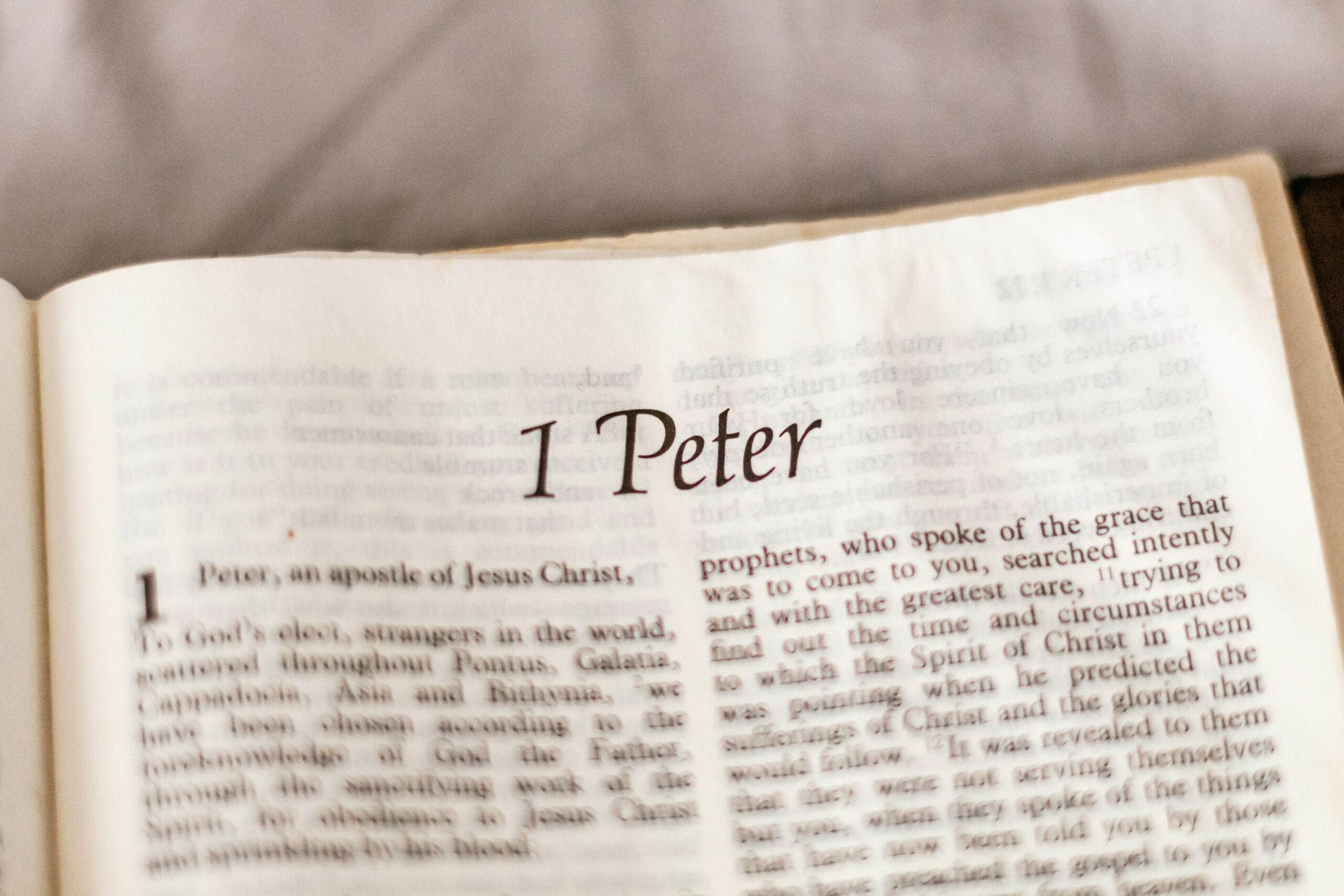
Reborn to Glory
This sermon explores the doctrine of regeneration, emphasizing that spiritual rebirth is a sovereign act of God rather than a human achievement. It addresses the theological tension between total human inability and divine initiative, illustrating how God’s mercy overcomes the spiritual death caused by the fall. The message highlights three specific blessings resulting from this new birth: the motivation of God’s mercy, the restoration of a living hope anchored in Christ, and the promise of an imperishable inheritance reserved in heaven. Through references to 1 Peter, Ephesians, and John, the exposition presents salvation as a passive reception of grace where the believer is enlivened by the Holy Spirit to see and embrace the truth. The tone is both convicting regarding human depravity and deeply comforting regarding the security and certainty of God’s redemptive work.
Transcript
The opening section, in a sense,
of that great epistle, beginning in verse 3. In weeks past, we have discussed
the doctrine of human inability, the inability to incline ourselves
to God. And in a sense, in this passage,
we have the explanation for how it is that we come to know Christ. If we have an inability to draw
near to God in and of ourselves, we have in this passage the answer
to that conundrum. We have in this passage as well
the application, the practical application of our election.
How do we get from point A to point B? How do we, who are,
according to Peter’s words here, chosen by God, how do we in time
find ourselves to be saved? This passage provides those answers. If you would, I just want to
begin in verse 3. We’ll go through verse 5 this
morning. Blessed be the God and Father
of our Lord Jesus Christ, who, according to His great mercy,
has caused us to be born again, to a living hope through the
resurrection of Jesus Christ from the dead, to obtain an inheritance
which is imperishable and undefiled and will not fade away, reserved
in heaven for you, who are protected by the power of God through faith,
for a salvation ready to be revealed in the last time. As I said,
in weeks past, we were reminded of the terrible doctrine of total
inability, a complete inability brought on by the fall. Remember,
when we went through the book of Genesis, we found ourselves
to be from that point in the garden, along with Adam, inherently
sinful. and temporally vexed and physically
dying and spiritually dead. The effects of the fall were
radical, overwhelming. When Adam sinned against God’s
clearly revealed command, he lost his innocence. And having
lost their perfect righteousness, which was theirs, Adam and Eve
lost precious communion with God and acquired instead a sentence
of death. And because they were wholly
representative of us, their sin nature was passed on to all. Their death was our death. Their
sin was our sin. Their penalty is our penalty. We receive their sin nature along
with its deadness, leaving us completely unable to commend
ourselves to God and wholly dependent upon undeserved mercy for salvation. And we know that. We know that
we believe that we are completely at God’s mercy for our salvation. What we don’t know is how we
get from point A to point B, or so often we forget. It’s so
bad that the Bible presents unbelievers as having no hope and without
God in this world. Ephesians 2. Furthermore, every part of man’s
being was affected by the fall. Our nature, our affections, what
we love, who we love, our understanding and our will, all were affected
by the fall. As we said last week, remembering
from Jonathan Edwards’ great sermon, men are naturally God’s
enemies. We are enemies with God from
the moment we’re born and we are naturally incapable of any
God pleasing act. And I know that sounds strong,
but that’s the Bible’s testimony. As such, we are not only sinners
by nature, but also by choice. We do what we love and we love
sin. William Parks said it in even
stronger language, if I may, when he said, we distinctly affirm
that spiritual death and in consequence, eternal death is the chief and
appalling feature of the fall of man. He said, that’s as bad
as it gets. The fact that we are spiritually
dead as a result from the fall is so much worse than weeds in
our garden. It’s so much worse from the fact
that one day we will die physically. It’s so much worse. It is the
chief and appalling feature. And that every man born into
the world is by nature as impotent for any real good, as incapable
of doing an acceptable work for God, and as thoroughly dead to
all truthfulness impressions as a stock or a stone. He said,
no more can we commend ourselves to God by our good works than
can a rock in the field. We will ever remain in that condition,
he continues, going down to the lake beneath unless God, by His
might, rescue him. And what a great light at the
end of a very dark tunnel that is. Because what William Parks
gives us there is that ray of hope. He’s told us how bad it
is. And now he gives us the hope
of reconciliation with a holy God. He wraps up with this profound
sentence. He says, Adam literally squandered
away our stock of ability and left us without strength. And
though 10,000 hells were threatened, we are so corrupted and ruined
by the fall that we could not keep one of God’s commandments
perfectly for a single hour. There is no hope for any man
who thinks that they are going to commend themselves to a holy
God by keeping God’s law. There’s no way that we can ever
be saved by being a quote-unquote good person. That is the religion,
if you will, of America in our day and age. It’s the religion
of the world. And it has been so ever since
man walked the face of the earth trying to commend himself to
God. We are inherently sinful. We’re temporally vexed. We’re
physically dying and we’re spiritually dead. I love the way one Puritan
put it. Preaching on John 6.44, which
says, no man can come to me unless the Father who sent me draws
him, and I will raise him up on the last day. Commenting upon that verse, the
great Puritan said, through the fall and through our own sin,
the nature of man has become so debased and depraved and corrupt
that it is impossible for him to come to Christ without the
assistance of God and the Holy Spirit. Again, a ray of hope. Now, the reason why man cannot
come to Christ is because his nature is so corrupt that he
has neither the will nor the power to come to Christ unless
he is drawn by the Spirit. And the ray of hope gets brighter.
We declare upon scriptural authority that the human will is so desperately
set on mischief, so depraved and so inclined to everything
that is evil and so disinclined to everything that is good, that
without the powerful, supernatural, irresistible influence of the
Holy Spirit, no human will ever be constrained towards Christ.
But if you caught a glimpse of the ray of hope, And you saw
it brighten. Then you see the full light of
the hope of glory when you learn that the influence of the Holy
Spirit is powerful, supernatural and irresistible. The fall of man was bad. It was terrible. It was the worst. It had the most ill effects on
mankind that could ever have lodged upon them. But there’s
hope. There is hope. And in this passage,
we see it this morning. What I want to look at this morning
is blessings of new birth in Christ. Blessings of new birth
in Christ. There are three elements that
I want to look at. But first of all, I want to take us to
this Word This word that is so misunderstood and so smudged
over by wrong thinking. Go back to the beginning, if
you would. Blessed. Oh, how very happy. Thank God. Blessed be the God and Father
of our Lord Jesus Christ, who has caused us to be born again. We just pause. This is Mother’s
Day. And on Mother’s Day, we rejoice
and celebrate in our birth, in the fact that our mothers gave
us birth. That is the word that is employed
here. The word is employed to speak
of birth, genao, to give birth. And there is no way around that
translation of this word in this passage. And if you note, the
form of this verb in this passage has nothing to do with us. It
is God who gave us birth. Spiritually speaking, it’s God
who did it, not us. We, being spiritually dead, could
do nothing. And very much like the image
of our natural birth, where we didn’t tell Mom when it was time
to come, We didn’t choose our birthday, if you will. God granted that as well. And
our mothers gave us birth, gave us life, and in a very real way,
the parallel is perfect. The parallel is perfect. God caused us to be born again. We didn’t choose Christ. We didn’t
choose the day of our salvation. We didn’t choose to be saved
at all. God enlivened us. As I said,
because sin had adulterated God’s creation and left humanity with
a darkened understanding. And because that general revelation
that all the world sees that testifies that there is a God,
Paul said they are without excuse, remember? But it’s insufficient. All that
testimony, the sunrise in the morning is insufficient evidence
to lead sinners to salvation. And that’s why sinners need what
Calvin and the reformers referred to as the spectacles of grace,
new eyes, the ability to wake up and see for the first time. Together with the illuminating
work of the Holy Spirit, Scripture imparts the truth that leads
to salvation. And we see it with new eyes.
We see it with opened eyes. Practically speaking, the Spirit’s
illumination of God’s Word and the individual’s inevitable response
is the work of regeneration, new birth. Those who are elect,
chosen of God before the foundation of the world, are by a special
and instantaneous work of the Holy Spirit regenerated. Regeneration
is completely a work of the Holy Spirit. The sinner is entirely
passive in the process. But once spiritually enlivened,
once we do come to life, And upon hearing the Gospel, the
individual will certainly come to saving faith in Christ. Regeneration
precedes faith. That’s where I want to take us
this morning. It’s a parallel passage that
I’d like you to turn to. Ephesians 2 In Ephesians chapter 2, we have
that horrid passage that speaks of our depravity, our fallen
condition, and the dreadful effect on us. And then we have the glorious
work of God following right on the heels of that dreadful passage.
Pick up with me, if you would, in verse 1. where Paul recounts
to the Ephesians that you were dead in your trespasses and sins. Prior to their coming in Christ,
spiritually speaking, before God, they were dead. As my seminary professor used
to refer to it, we were animated cadavers. We were living, walking,
moving about, but for all intents and purposes, we were dead men. You were dead in your trespasses
and sins in which you formerly walked according to the course
of this world, according to the prince of the power of the air
and the spirit that is now working in the sons of disobedience.
Among them, we all too formerly lived in the lusts of our flesh.
We loved it. We lived there. We wallowed in
it. Indulging in the desires of the
flesh and of the mind and were by nature Didn’t mean that we
had to acquire sin over time. That it piled up on us and stuck
to us. We were, by nature, children
of wrath, even as the rest, but God. And immediately, It isn’t
just a ray of light, a ray of hope. Immediately, Paul opens
the floodgates to them of the glory of God. But God, being
rich in mercy because of His great love with which He loved
us, even when we were dead in our transgressions, made us alive. God is the one
that gives life. The word here in Peter, In Peter’s
epistle, anagonao, it’s a compound of the word. It just means to
give life again. He brought us to life from death. The idea here in Ephesians expressed
entirely with completely different words, but it means the exact
same thing. God gave us life and He gave
us life again. It’s a glorious thought. Regeneration, said Charles Packer,
or new birth, is an inner recreating of fallen human nature by the
gracious, sovereign action of the Holy Spirit. Regeneration
in Christ changes the disposition from lawlessness and godless
self-seeking which dominates man into one of trust and love,
of repentance for past rebelliousness and unbelief, and a loving compliance
with God’s law, it enlightens the blinded mind to discern spiritual
realities and liberates and energizes the enslaved will for free obedience
to God. It’s God. It’s God moving upon
us and opening our spiritual eyes so that we see. We see spiritually. There’s a
famous story in Scripture about this very issue. And for that,
I want to take you to John chapter 3. In John chapter 3, we see a blind
man, not a literal blind man, a spiritual blind man. who had
before him the resources of God’s Word, and had in front of him
the very Savior of the world, and was too blind to see.” It’s
an interesting passage, and you’ve heard me probably use this example
before of a hard break in Scripture that does damage, in a sense,
to the flow of the passage. This little number three placed
where it is in John chapter three does us a little bit of difficulty.
And for that reason, I want to take you back just a couple of
verses, three verses specifically to chapter two, verse twenty
three. Listen to the flow. Now, when he was in Jerusalem
at the Passover, during the feast, many believed in his name, beholding
the signs which he was doing. That’s key. But Jesus, on his
part, was not entrusting himself to them, for he knew all men. In other words, Jesus saw right
through their motives. He knew that there were many
that were following him, not because they knew they were desperate
sinners in need of a savior, but because they were in it for
a free meal. Because they wanted to see some miracle. They wanted
some self-serving need on their part met by God. Jesus, on His part, was not entrusting
Himself to them, for He knew all men. And because He did not
need anyone to bear witness concerning man, for He Himself knew what
was in a man, now there was a man. The flow of the passage begins
at least in verse 23 of chapter 2. And what it tells us is there
was a man that was coming to Christ to sneak up on Him, as
it were, to steal towards Him in the darkness of night. And
Jesus knew him at his core. Nicodemus didn’t pull anything
over on Christ. Jesus knew him even better than
he himself. Jesus knew what was in a man.
Now there was a man of the Pharisees named Nicodemus, a ruler of the
Jews. This man came to him by night,
whether because of secrecy or shame or some combination thereof. It wasn’t a noble approach to
Christ. And he said to him, Rabbi, and
he immediately begins to try to butter up the Savior. Rabbi,
We know that you’ve come from God as a teacher, for no one
can do these signs.” There was an element of faith in Nicodemus. There was an element of having
been impressed with Christ in Nicodemus. We know that you’ve
come from God as a teacher, for no one can do these signs that
you do unless God is within. Jesus answered, In a sense, what
Nicodemus is doing is saying, we know that you’ve come from
God. What we don’t know is, why don’t you tell us the rest? Jesus answered and said to him,
truly, truly, I say to you, unless one is born again, he cannot
see the Kingdom of God. There’s our word. Unless one is born again, Jesus
gave him the answer, but it was an answer not only for Nicodemus,
but for every person who’s ever been born. Every person who’s
ever been born physically, Christ knows. Every person who’s ever
been born has a desperate need to be born again. I remember
in the 70s when this word began to be bandied about, you know,
It rose in popularity. I’m a born again Christian. Every
Christian who’s ever come to Christ is a born again Christian.
We’ve all been reborn if we are in Christ. What Jesus was pointing out to
Nicodemus is that his religion of human achievement was worthless. And that he had every need to
come to Christ fully and to be born again. Nicodemus wouldn’t let up, though. In verse four, look at it. Nicodemus
said to him, how can a man be born again when he’s old? He
cannot enter in a second time into his mother’s womb and be
born. Can he? I don’t believe Nicodemus was
getting smart with Christ. I think he was just flat, overwhelmed
and did not understand, could not comprehend what Christ was
trying to say. Christ told him, you must be
born again. And I believe Nicodemus, as a
good spiritual man, desired that. It was something that he wanted
to go and do. But Christ hadn’t told him to do
anything. Jesus answered and said, truly, I say to you, unless
one is born of water and the Spirit, he cannot enter into
the kingdom of God. That which is born of the flesh
is flesh. Speaking of our natural birth. That which is born of
the Spirit is Spirit. Do not marvel that I said to
you, you must be born again. Don’t get all caught up in it,
Nicodemus. It’s an absolute spiritual necessity. The problem is you can’t do anything
about it. Look at the next verse. Do not
marvel that I say to you, you must be born again. The wind
blows where it wishes and you hear the sound of it, but you
do not know where it comes from or where it is going. So is everyone
who is born of the Spirit. Jesus wasn’t telling Nicodemus
to do anything. He was merely telling him the
truth that it is an absolute spiritual necessity that a person,
a sinful person. Be born again. Nicodemus answered in verse nine
and said to him, How can these things be? Jesus went on to give
him a lengthy answer in a sense of rebuke. I believe ultimately
Nicodemus came to Christ. We see him with Christ’s body
after the crucifixion. I believe that Nicodemus came
to Christ. But that day, that day, Jesus
didn’t tell him to do anything. He merely stated the necessity.
And for centuries, especially reinvigorated at the time of
the Reformation, this doctrine. Has played itself out again and again
in the church, at times being covered up and obscured and misunderstood,
and then in the days of the Reformation brought to light again. We must
be born again and there’s nothing, absolutely nothing we can do.
Regeneration, said one, is a creative work of God and therefore a work
in which man is purely passive and in which there is no place
for human cooperation. It consists in the implanting
of the principle of the new spiritual life in man in a radical change
of the governing disposition of the soul. It’s God. It’s God
that awakened you. And as a result, it is an instantaneous
change of man’s nature. That’s regeneration. That is
the new birth that Nicodemus was told was a necessity. That’s
where it comes from. Charles Spurgeon, this is one
of the dearest doctrines to his heart. Listen to Charles Spurgeon. When
he said evangelical repentance can never exist in an unrenewed
soul, we are as helpless to cooperate in our regeneration as we are
to cooperate in the work of Calvary. And as it is the cross alone
that meets the guilt of sin, so it is regeneration alone which
meets its power. Sinner. Unconverted sinner, I
warn thee that thou canst never cause thyself to be born again.
And though the new birth is absolutely necessary, it is absolutely impossible
to thee. Unless God and the Spirit do
it, do what you will, and still at your very best, there is a
division as wide as eternity between you and the unregenerate
man. The Spirit of God must make you anew. You must be born again. And the same power which raised
Christ from the dead must be exerted in raising you from the
dead. The very same omnipotence that raised the Lord Jesus Christ
must come again and do as great a work as it did in the first
creation In making us anew in Christ Jesus, our Lord, that
is the glorious truth of regeneration. It is the power of God at work
in you, enlivening you spiritually. He concludes with this thought,
he said, in the salvation of every person, there is an actual
putting forth of divine power whereby the dead sinner is quickened,
the unwilling sinner is made willing, the desperately hard
sinner has his conscience made tender. He who rejected God and
despised Christ is brought to cast himself down at the feet
of Jesus. There must be a divine imposition,
a divine working, a divine influence, or else do what you say. Without
that, you perish and you are undone. For except a man be born
again, he cannot see the Kingdom of God.” If you’re here today,
and you name the name of Christ, and you’ve seen God’s work in
you, it’s because God moved upon you. God awakened you. And you
woke up and you saw your sin for what it was. And you saw
Christ for who He was. And you could not help but embrace
Him as your Savior. Blessed. No wonder Peter starts
off with praise God. Praise God, because I could do
nothing, but God did everything. Praise God. Blessed be the God
and Father of our Lord Jesus Christ, who has caused us to
be born again. It was all Him. And I want to
look as if regeneration alone isn’t a blessing in and of itself.
I want to look at these three blessings as we close. First
of all, this spiritual blessing, this blessing of new birth in
Christ, was granted to us by God and motivated by His mercy. We’ve seen it over and over again,
even already in Peter’s epistle, this recurring theme of God’s
mercy. Prior to this, differentiated
from His grace. Mercy is what, as Thomas Watson
said, the element that restrains, as it were, the speedy execution
of God’s justice. We deserve it. We deserve punishment.
We deserve hell. And God, in His mercy, withholds
that punishment. Titus 3.5, we’ve seen it in times
past. He saved us. We didn’t save ourselves. He saved us not on the basis
of deeds which we’ve done in righteousness, but according
to His mercy. Even the passage we read at the
outset of the day, Ephesians 2, you were dead in your trespasses
and sins. Among them we all lived in those
sins and our lusts, but God, being rich in mercy, made us
alive. It’s always the mercy of God.
We deserve nothing of His goodness. Nothing of His grace. That’s
what motivated God. He didn’t look down, as we said
a couple of weeks ago. He didn’t look down on you and
say, in Him, boy, I’ve got a good deal. I better save that one. There’s another blessing, a temporal
blessing in granting us new life. God restored to us hope. He restored
to us hope. He says here that He caused us
to be born again to a living hope. We don’t even understand
what hope is. We hope that we win the lottery. We hope that certain things happen. We hope that we’re able to graduate
this semester. We hope that the school year
ends quickly. That’s not hope. That’s not the
biblical doctrine of hope. Hope is a settled confidence
down in the soul that looks to God for the fulfillment of promises. It takes God at His word even
against all odds. It’s faith. As one person defined
it, hope is the species of trust which gives the mind a firm persuasion
that all promises and all expectations will be fully realized. It’s not just that God’s going
to give you part of the promise. It’s not that God’s going to
give you a consolation prize. If God has promised something
to you, and He has, He will do it. and He will do it abundantly,
fully. Those who do not know Christ,
those without faith in Jesus Christ are characterized as having
no hope. Hopelessness speaks of those
who don’t have any firmly anchored convictions. Life just kind of
comes and goes and flows. One described them as being mariners,
seamen, without a compass or a guide, adrift in a rudderless
ship in a starless night on a stormy sea far from harbor. I mean,
what an image. I mean, I’m not a sailor, but
you can imagine being out on a boat in the middle of a dark,
starless night on a ship without a rudder, just drifting. That’s
what the hopeless are. That’s what those who have no
faith in Christ, no relationship with God. In fact, the core, the focus of
a believer’s hope is none other than the Lord Jesus Christ. He is our hope. Scripture calls
this hope the hope of the glory of God. The hope of righteousness,
the hope of salvation, the hope of eternal life, Titus 1, 2.
All of which point to the eternal state of glorification in our
Lord Jesus Christ. He is our hope. Hope itself is
communicated to mankind through the gospel. It is a gift of God,
like everything else. It is a direct result of God’s
calling us to Himself. It is that peace of God. And
it accompanies all the other graces of salvation. Hope is a fruit of proven character. As Romans 4 says, it is a result
of the joy and peace which themselves are gifts of God’s grace. Romans
15, 13. Hebrews 6, 19 presents it as a tethered anchor which is in heaven. And all we
do is merely hang on to the rope which is anchored in the very
heaven of God.” No wonder Paul concludes that
of this hope, it does not disappoint. People, we were taken from a
hopeless, helpless state, enlivened by God Himself. And as we awoke
up from this sleep of death, We saw Christ for who He was,
and immediately our hearts welled with hope. Don’t you remember
that day that you came to Christ? Don’t you remember it? Finally, in closing, this spiritual
rebirth, not only motivated by God’s mercy and restoring to
us hope, but thirdly and finally, it promised to us an inheritance. And people of all the things
that God’s Word says, I just don’t get it. I don’t understand
why after all that God has done, he wouldn’t have to do one good
thing for me ever. And I owe him a debt of gratitude
because of Christ, because of the forgiveness that I have in
Christ and eternal life. But in that we have some kind
of inheritance is beyond my understanding. I just don’t get it. Look at
the way he describes it. It’s an inheritance that is imperishable. You know, I’ve received some
things from grandmothers in the past and from relatives, and
they’re all perishable. Some of them are already gone.
Some were sold at auction. Some were stolen. But they’re
all going. They’re all going to burn. But not this inheritance. In
some way, shape or form, it is imperishable. And secondly, it’s
undefiled. I’ve seen relatives fight over
things, haven’t you? So-and-so dies, old Uncle Joe.
And suddenly, it’s old Uncle Joe’s things that come into focus.
And suddenly, people begin fighting over them. And in the process,
they are tainted. Because you lose a relationship
with one of Uncle Joe’s dear relatives. And that thing, the
credenza or umbrella holder or whatever it is, is now a defiled
thing. It’s not what Uncle Joe would
have wanted. He would have rather had you saw
the thing in two, wouldn’t he? Not only is it defiled, it will
not fade away. This inheritance that we have
in heaven, It’s there for us and it will never fade. It’s
not going to lose its luster over time. It’s not going to
need to be polished or dusted. You say, well, what is it? Fourthly, it’s reserved in heaven
for you. It’s there. What is it? I don’t know. I’ll tell you what I think it
is. I think it is the precious relationship
with our glorious God through our Lord Jesus Christ who paid
our penalty on the cross and the privilege to be with Him
forever. I think that’s our inheritance.
And that salvation that we enjoy, this is just the beginning. It’s
just the beginning and it’s an inheritance that is imperishable,
undefiled, will not fade away, reserved in heaven for you. We
have a place. Have you ever arrived at a place
where you thought you were supposed to be, and when you got there,
you weren’t supposed to be there? Remember I told you this story
a long time ago? I arrived. Former girlfriend
there. Sister getting married. I’m there
at the wedding. She’s there at the wedding. Most
embarrassing moment of my life. Sister says, come up, let’s take
a picture. All of us take a picture. And I take a picture and I see
my former girlfriend standing in the wings and she comes up
to take a picture, too. Only I didn’t notice that behind
her was her new guy friend. I had no place. Was supposed
to be in the picture. As I stood there fumbling and
bumbling, eventually they had to say, sir, would you kindly
We’ve all been in places where we don’t belong, right? Suddenly
we realize I don’t fit in here. I don’t belong. But in heaven, God’s got a little piece of tape
on the floor with our name on it. And it’s our place. And He’s
expecting us and He’s waiting for us. And until then, get this,
it’s reserved by the power of God. It’s protected by the power
of God through faith. for salvation ready to be revealed
in the last time. That’s what we’ve been born again
to. That’s what God had in mind when He enlivened you and showed
you to Christ and Christ to you. Oh, we didn’t deserve it. We
did not deserve it. How good is God? Let’s pray. Our gracious, wonderful God,
Our loving Savior, we bow before You and thank You that it was
not us. We would not have chosen You. We would not have opted
for You or loved You. You set Your love upon us. You
awakened us from the sleep of death and revealed to us Christ
And upon seeing him, our sin flooded our minds and we knew
immediately how desperate we were for our Savior. Lord, we thank you for the salvation
that we enjoy purely because of Christ. We thank you and we
praise you in Jesus name. Amen. I want to do something that we’ve
done in times past. Haven’t done it for a couple
of years. We have just a couple of minutes to do it. Well, I
fetch one quick thing. I’d like all the young men 12
and under to come and line the aisles and make a line right
over here. Come on up. Now, here’s the rules, guys. And you can back up over here
for one second. What we rejoice and celebrate,
we do rejoice in Mother’s Day. We don’t want to take anything
away from Mother’s Day, but we celebrate it what I think is
in a biblical fashion. We rejoice in God’s gift of woman
to creation, to mankind. God didn’t, in the opening pages
of the book of Genesis, when he looked down upon creation
and he saw man alone in the garden, what a desperate sight that must
have been. And the only place in all of
those opening chapters where God said it was not good and
it was not good for man to be alone. And it’s interesting that
after God creates woman and gives her to man, he said, behold,
it was very good. And that’s why we refer to woman
as the crown of God’s creation. Now, here’s the rules. As the
crown of God’s creation, all the ladies get a flower. And
as you give them the flower, all the ladies get a hug. And
if you fight me on the hug, if you don’t give a good hug,
I’ll have you come back and get another flower, because we’ve
got lots of extras, and you’ll give her a kiss the next time. So come one at a time. You can
start with your mom. That’d be a great place to start.
But all the ladies in the church, right down to little Ella, get
a flower today. Okay? There you go. That’s a good one. Big hugs. Mrs. Gaffney didn’t have one
in the balcony. you.
Messages: 61