Civic Duty, Part 2
This sermon examines the biblical relationship between civil government and the church, arguing that they are distinct institutions ordained by God with separate spheres of authority. It critiques the historical blending of state and church seen in Constantine, the Reformation, and modern Christian nationalism, asserting that such union is unbiblical and often leads to the suppression of the church. Drawing from Martin Lloyd-Jones and the text of Romans 13, the message emphasizes that while Christians are to submit to governing authorities, this obedience is contingent and never absolute. The central application is that when the state commands what God forbids or forbids what God commands, believers must respectfully disobey, as illustrated by the apostles in Acts. The sermon concludes with a call for the church to maintain its spiritual independence while engaging responsibly with the world.
Transcript
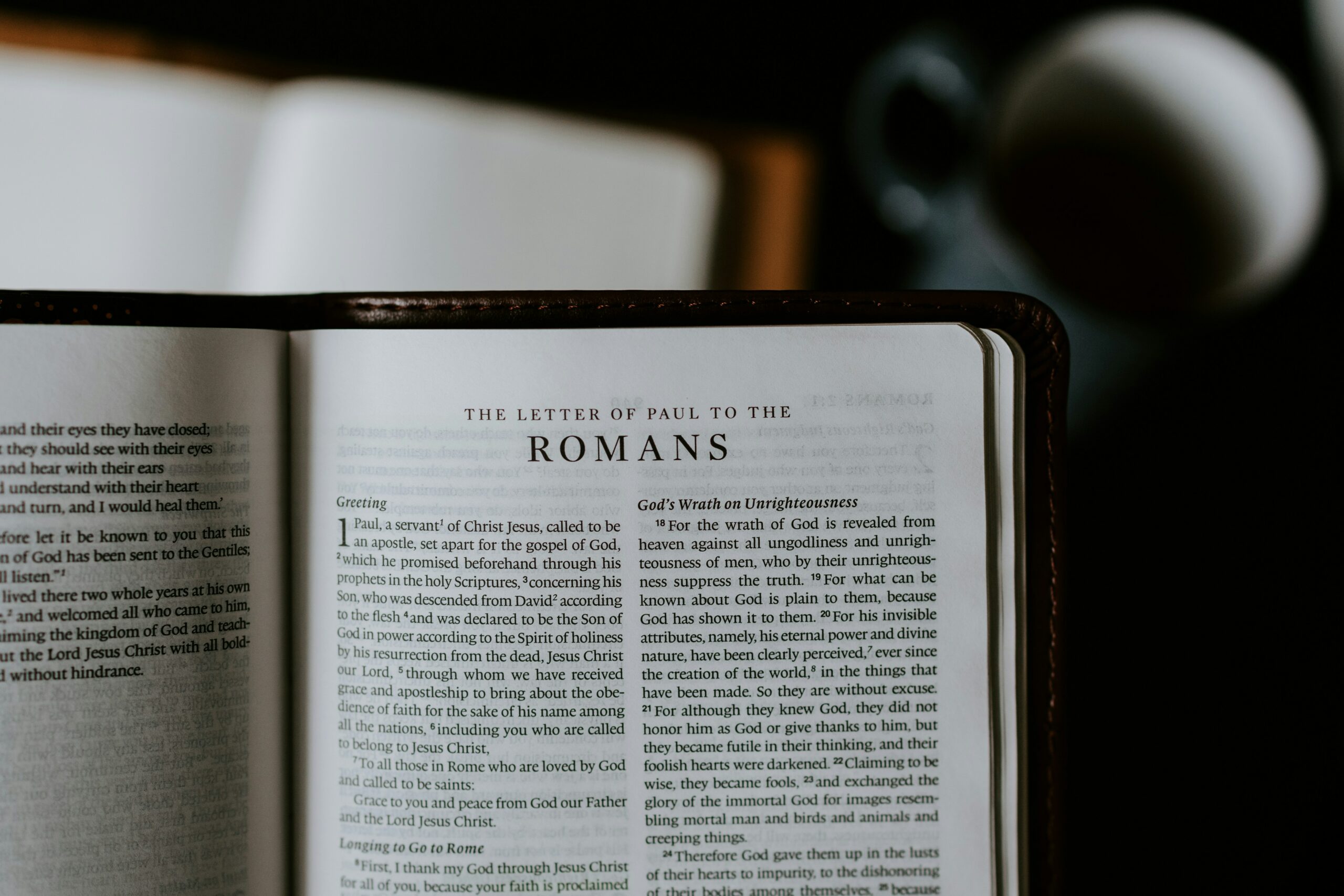
Romans chapter 13, and if you would, without any further ado, glance down at verses one through seven. Romans 13, one through seven. Let every person be in subjection to the governing authorities, for there is no authority except from God, and those which exist are established by God. Therefore, he who resists authority has opposed the ordinance of God. And they who have opposed will receive condemnation upon themselves. For rulers are not a cause of fear for good behavior, but for evil. Do you want to have no fear of authority? Do what is good and you will have praise from the same. For it is a minister of God to you for good. But if you do what is evil, be afraid, for it does not bear the sword for nothing, for it is a minister of God, an avenger who brings wrath upon the one who practices evil. Wherefore, it is necessary to be in subjection, not only because of wrath, but also for conscience sake. For because of this, you also pay taxes, for rulers are servants of God, devoting themselves to this very thing. Render to all what is due them, tax to whom taxes due, custom to whom custom, fear to whom fear, honor to whom honor.
We want to pick up right where we left off last week. We studied this passage and we arrived at four principles. Paul teaches, first of all, the principle of obedience, that we are to be in subjection to the governing authorities, verses one through three. He teaches the principle of decency, secondly, that we are to do what is good, verses three and four. The principle of conscience, to be in subjection for conscience sake. We know what’s right, and we are to do it. Verses five and six. And finally, the principle of propriety, that we are to render to all what is due them. Taxes, custom, fear, and honor.
We know what the passage teaches. All the principles that we gleaned are true. What we don’t know is how. How exactly are we to apply this passage? And many questions presented themselves and linger and bewilder us. What if the civil authority is abusive? What if we don’t particularly like them? What if they’re immoral, unjust, and tyrannical? What if they’re harsh and overbearing? What if the government is illegitimate? These are just a few of the questions that arise when we consider obedience to civil authority.
Paul here does not address all of the various forms of government. His treatment is very general. The basic nature of civil authority and our response to it. He isn’t saying that we owe every ruler in any system a blind and mechanical obedience. He knows that we will need to think and pray and reason and how we can apply these principles. We need to think deeply and carefully.
The summer of 2020 was a tumultuous time in our world. COVID and the great social political unrest that followed. The initial reports on COVID were that it was a very serious virus, a pandemic, they called it. No one really knew what that meant. The last pandemic was more than 100 years ago. What began, however, is a seemingly genuine effort to keep everyone safe soon expanded into what many now consider to be an overreach by our governing authorities. In July of that summer, a document was produced that addressed the excesses of civil authority. The original title of that document was Christ, not Caesar, is head of the church. I’ll have a copy for each of you at the end. Three years later, while Barbara and I were on a train from Scotland to London, I had the opportunity to converse with two of the men that helped produce that statement. When I asked what was behind it, how did it come to be, one of them said that it was Martin Lloyd-Jones’ commentary on Romans 13. I had that commentary, and I couldn’t wait to get back home to review it.
Martin Lloyd-Jones was a godly Presbyterian pastor and an outstanding preacher. He pastored in South Wales and then for the next 30 years at Westminster Chapel in London. I profited greatly from his commentary on Romans, nowhere more than in his discussion of chapter 13. His commentary on Romans is 14 volumes. And he devotes 11 chapters to 13, 1 through 7. His commentary on this passage is a very thorough treatment, not only on the minute details, but also a lengthy treatment of its application. And since we’re seeking to apply Romans 13, 1 through 7, the principles gleaned there, I draw heavily from Lloyd-Jones’s efforts.
I’m not setting out to do an exposition of one man’s treatment of Romans 13. I’m only informing you of this because his work is profoundly important. Some of you may want to go back and study those chapters yourself. And I discovered over the course of reviewing that these recordings are now online. So you can hear Lloyd-Jones deliver his own words.
My prayer in all of this is that even if your hearts are made uncomfortable in the midst of this overview, that your minds would be stirred to engage on the particulars and their implications. The church does not exist in a vacuum. It exists in the world. Civil authority is here too, and it has been this way ever since the inception of the church following Christ’s ascension into glory. There has been a constant interplay between civil government and the church for the past 2,000 years. Both institutions exist by God’s sovereign design.
Paul tells us that there is no authority except from God, that those which exist are established by God. Civil government is God-ordained. So is the church. Christ’s declaration to Peter and the gathered apostles was, I will build my church. The church was inaugurated, as I said a moment ago, as recorded in Acts chapter two. Both institutions are ordained by God. Christians have, at the same time, a great privilege and a solemn responsibility because they are members of both institutions. They’re born into this world and under the authority of civil government. And if you are a believer, if you’re a Christian, you are members of Christ Church. We are fully then a part of both institutions, which imparts a very unique responsibility. And because of that, we need to know how these two institutions function.
Historically, there have been two very different views of the relationship between civil authority, the state, and spiritual authority, the church. One view says that the church and state are one unified entity, as if they’re rolled up together into one lump, harmoniously fulfilling their respective responsibilities. That’s one view. that the church and state are one. The second view is that the state and the church are two separate entities. Let’s consider each of these perspectives.
The first perspective is that the two institutions, the state and the church, are combined into one entity. And the history of this idea goes all the way back to the fourth century, to the reign of Emperor Constantine. Constantine’s army had won a key battle, a victory in which Constantine was convinced God had helped. In gratitude, he not only stopped persecuting Christians, but he also made Christianity the state religion. That was the historical blending of the state and the church into one entity.
And there are two extremes in the way that this one entity idea functions. Sometimes the state is controlled by the church. And sometimes the church is controlled by the state. When Constantine blended the state in the church, he immediately made the church subservient to the state. The church was viewed as a branch of the state. And inevitably Constantine began to exercise his authority in the church as well. The emperors who succeeded him did likewise. And this arrangement has reemerged many times throughout the centuries. And when it does, the church really has no power. It has no authority. She cannot make laws or issue sanctions. The state dictates more or less how the church is to function.
The opposite view says that while they are one entity, the state is subservient to the church. You see, when the Roman Empire fell near the end of the fifth century, it created a huge authority void. The Roman Catholic Church, specifically the Pope, assumed the role that the Roman emperors had previously filled, exercising authority over both state and church. The Pope had control really over all human activity, secular and religious. This was the arrangement that would operate unchecked for at least the next 1,000 years until the upheaval of the Reformation.
Well, this idea that the church and the state are one entity, that’s just the first view. The second view is that the state and the church are different entities entirely. God ordained these two institutions at different times and by different means. From the beginning of history, God instituted human government. The Bible doesn’t tell us when and how civil authority was established. The state, the governing authorities just seem to have been in existence forever. Pharaohs. Pharaohs are mentioned as early as Genesis 12, Kings chapter 14, commanders chapter 21, and leaders the first time are mentioned in Exodus chapter 15. Paul doesn’t take the time here in Romans 13 to go back into human history and explain how all of this happened. He simply affirms that it is so. In Romans 13, there is no authority except from God, and those which exist are established by God. He just states it as a fact.
The church, on the other hand, came about independently of the state. It was begun, as I said, in the giving of the Holy Spirit in Acts 2, immediately following Christ’s ascension into heaven. But God not only ordained the institutions of the state and the church in different ways and at different times, he also had a different purpose for each of them. The state was ordained to maintain order in the nations of the world. The church, however, had a spiritual purpose. She is to preach the word, make disciples, carry forth Christ’s ordinances and cultivate fellowship.
The church and the state are also different in the measure of power and authority that God has given to them. The state has the sword, coercive power and the power to enforce capital punishment. Ultimately, the church doesn’t possess this. She does, however, have God’s word and the Holy Spirit. The influence is by means of persuasion, not force. The church and the state also have different officers to carry out their respective duties. The state has its magistrates and kings, queens, emperors, and that kind of thing. The church has only two offices, deacons and elders. And so it’s reasonable to conclude, pardon me, that the state and the church are different institutions. God has one design for the state and one for the church. Each institution has a God-ordained sphere of authority. And the Christian is a member of both institutions, as I said, and so we need to know how these two institutions function and how they relate to one another and how we are to relate to each.
we surely are not the first ones to wrestle with these questions. And it’s good to wonder, what about those who have gone before us? What position did they take on these questions? We can profit greatly by looking back to learn from our predecessors. We should consider their conclusions and practices
You see, once Constantine blended the state with the church, that arrangement endured for nearly a thousand years. The popes ran the church and the state until the time of the Reformation. The first one to really begin to wrestle with this question was Swiss reformer Ulrich Zwingli. Zwingli, however, started from the idea that the state and the church were a theocracy. And that upheld the view that the state and the church were one entity. Further, Zwingli believed that the Bible should influence the laws of the state. That’s pleasant when it does. But he also believed that the state should supervise the church. In other words, Zwingli envisioned some kind of utopia where the state and the church would function in peace and harmony with one another. Sounds great.
John Calvin was the next major reformer to take up the subject, and he too affirmed that the state and the church, or rather he affirmed that the state and the church are different entities, they’re both instituted by God, He believed that they had different spheres of authority, different responsibilities. But he idealized them into being one entity. They were to function together. Listen to this. In Calvin’s adopted city, Geneva, which was the base of his operation for the Reformation, In Geneva, if you wanted to be an official citizen of that city, you had to make a profession of faith in Christ. That may sound pleasant to our ears, but that makes Geneva a church. Times have changed, haven’t they? Now we have to send missionaries to Geneva to plant churches. The whole relationship with the state and the church was muddied at best. Calvin took Zwingli’s idea that the state was overseeing the church even further. He believed that the state should ensure that the church was teaching the right kind of things. That their worship was properly ordered. He insisted that the state enforce the obedience to the first four, the Ten Commandments, and he insisted that the laws of the state be aligned with God’s law. The two institutions were inextricably aligned. They were melded together to function as one.
Now, please hear me. I love and I am indebted to the work of the reformers, Zwingli, Calvin, and all the rest. But they are not perfect men, nor is every perspective that they advanced perfect in itself. And we cannot agree with them on this. The state and the church are separate and distinct entities. Unfortunately, the confessions that followed perpetuated the idea, the one entity, and the state overseeing the church. This is what the Dutch-Belgic Confession said of the state and the church. Our gracious God hath appointed kings, princes, and magistrates. Park there. That’s what he’s talking about. Secular civil authority. He has appointed kings, princes and magistrates that they protect this sacred ministry. Sounds good so far.
And thus remove and prevent all idolatry and false worship that the kingdom of Antichrist may thus be destroyed and the kingdom of Christ promoted. That’s astounding. Can we even imagine a more outlandish thing that the governor of the state or the mayor of the city should come bursting into our service, blow a whistle in order to protect the church by crying heresy?
Well, the Puritans in England standing on the shoulders of the reformers fared no better in this matter. They gathered themselves for the purpose of putting forth a statement that was commonly believed among them, an epic document called the Westminster Confession. Maybe you’ve heard of it. This is what they concluded regarding the relationship between the state and the church.
Westminster Confession, Article 23 of the Civil Magistrate, and I Go straight to paragraph 3. Listen to this. The civil magistrate may not assume to himself the administration of the word so they can’t preach. Or the power of the keys to the kingdom of heaven. Yet he that is the civil magistrate hath authority and it is his duty to take order. that unity and peace be preserved in the church, that the truth of God be kept pure and entire, that all blasphemies and heresies be suppressed, all corruptions and abuses of worship and discipline prevented or reformed, and all the ordinances of God duly settled, administered, and observed. The state is going to come ensure that.
Goes on to say, for the better affecting whereof, he has power to call synods, meetings, to be present at them and to provide that whatsoever is transacted in them be according to the mind of God. An unbelieving civil authority is supposed to tackle that little responsibility.
Well, One of the features of the Westminster Confession, or the confessions in general, is they footnote these thoughts. They support them with scripture references. And here, all but one of the scripture references is from the Old Testament. And the one New Testament citation is Matthew 2, 4 through 5. It’s a reference to Herod and the Magi. We just looked at that passage. That’s hardly a legitimate argument for the union of the state and the church.
These statements, the confessions, they are the distilled thoughts of godly men on an exhaustive list of subjects and points. And as such, confessions are tremendously profitable. I’m only intending to point out that these man-made documents are not perfect. Not then, not ever. These good and beneficial tools can never be placed on a par with scripture. And I would state unequivocally that both the reformers and the confessions are incorrect on this point.
Blending the state and the church into one entity and having the state oversee the church Blurring the lines of their respective authority It’s a predictive pattern Whenever this church tries to negotiate with the state on this question of authority they lose and They end up yielding the God-ordained authority over their sphere. Perhaps one of the saddest examples of this is the Anglican Church, the Church of England, which is essentially run by the state. They pick their bishops, they tell them what their prayer book is going to be, and let’s be Very humble here. We can’t be too critical of the reformers or their Puritans of England. Because when the pilgrims came to the new world, America, seeking religious freedom, ironically, they brought this same thinking with them. And these ideas still percolate down into the churches of our day.
How did this happen? Where did the reformers get this perspective of the relationship between the state and the church? Is the idea that they are one entity even biblical? Is the idea of the state dictating to the church or the church dictating to the state a principle derived from scripture? These are vitally important questions. And we have to wrestle with these things in order to properly apply them.
Unfortunately, the tendency is to just go with the flow, except what Constantine and the Catholic Church, even the reformers, practiced. Instead of pausing to ask, is it biblical? Too often our response is to stick our heads in the sand like so many ostriches, refusing to wrestle with these difficult questions. As a result, there’s no investigation, no prayer over the matter, no searching the word, no dialogue on the matter, no real thinking.
Lloyd-Jones very passionately addresses this. He says, we have not searched out the facts. We have ignored our own history. We are ready to sell so many of our liberties just because we are ignorant. We do not realize the price that has been paid for them by our forefathers, even the price of blood. If we neglect to examine everything carefully, we soon find ourselves in a spin cycle of thinking, doing only what is conventional, the standard, acceptable practice, not what we are convinced is biblical and right. Once we settle into such a position, we are in real danger.
The bottom line is that these ideas, that the state and the church are one entity, or that the state controls the church, or that the church controls the state, those ideas are not biblical. They’re not the teachings derived from the New Testament. Constantine, the Roman Catholic Church, the Reformers, and the Puritans, they did not get those ideas from the Bible. Paul never would have suggested that the ungodly emperors of Rome should oversee Christ’s church in anything. First century Rome was a putrid mix of pagan religions. One of the most despicable ideas was emperor worship. Paul would never have countenanced subjecting the church to such control. That lesson ought to have been learned in England as well. It was entirely inappropriate to involve the state in the church’s affairs.
So, what does the Bible say about these two institutions, the state and the church? And what is the relationship between them? To begin with, there is a constant consistent distinction maintained in the scriptures, both Old and New Testament. We cannot go back to the Old Testament and import the theocratic model and place it over the New Testament Church. There are two institutions, state and church, each maintaining different spheres of authority.
There’s also a distinction made in the language that Jesus uses to contrast earthly government and God’s. He maintained a difference between God’s kingdom and that of the world. Did you realize this? Nearly 75 times in Matthew’s gospel alone, Jesus refers to God as the kingdom of heaven. Never more clearly was this distinction made that when Jesus stood before Pilate and said, my kingdom is not of this world. Jesus made a distinction between earthly governing authorities and his father’s kingdom. And Paul makes the same distinction. In chapter two of his first letter to Timothy, he urges prayer for secular rulers, kings, and all who are in authority. And then in chapter three, he discusses the offices of the church, elders and deacons. If they were one entity, why not save some time and blend them all together? Pray for everyone. Apply the same rules to both entities.
Paul recognizes this distinction as well in first Corinthians, doesn’t he? In chapter six, Paul vehemently challenges the idea of taking a Christian brother to court, suing him before a secular judge. He refers to the state courts as unrighteous. Paul would never have allowed unbelievers to come in and judge the doctrine and practice of the church.
In Philippians 3.20, Paul declares that our citizenship is in heaven. And our time here is fleeting and temporary as Peter characterizes Christians as aliens and strangers, not our country. Church is separate and distinct from civil government. Both institutions have their respective place and spheres of authority.
The state is ordained by God to keep peace and maintain order, and it’s the church’s duty to be a light in the world, to preach the gospel, to teach the whole truth of God’s word, to fellowship, to serve Christ’s body. It’s not the state’s place to meddle in the church. to stipulate what she is to do or how she is to do it. It’s not the state’s place either to promote or hinder the church from being and doing what God has ordained them to do. That’s not their place. And when they do so, they’re out of line.
Nope. It’s the church’s place to preach the gospel. It is not the church’s place to dictate to the state how it is to be run. We can engage, we can vote, we can participate, we can even hold government office. The church may indeed be influenced pardon me, the church may indeed influence the state, but she cannot exercise authoritative control over civil government. As soon as this begins to happen, we’re right back in the dark ages of Catholicism.
The New Testament says nothing of a state church, or if you will, a church state. The church cannot be drawn into what is now referred to as Christian nationalism. Attempting to do so is the framework for what is known as theonomy or reconstructionism. The attempt to make our cities, nation and world Christian. People become Christians. The state cannot. The state is not destined to get better and better. Paul destroyed that notion when he said in 2 Timothy 3.13, evil men and imposters will proceed from bad to worse. It’s not going to get better here. All attempts to mold and shape the state into the church will ultimately end in futility.
We must always maintain a difference between the state and the church. The state is not called to preach the gospel or promote Christ or Christianity. The church will never fully engage the state to fulfill the church’s mandate of evangelizing the world. And the church cannot move from cooperating with civil authority to mingling with them in order to create a Christian state. Instead, the church should obey and cooperate with the civil authorities insofar as they are morally able. We can and we must try to influence our world.
So with all of that as my introduction, how do we apply the principles of Romans 13, 1 through 7? Here is the fundamental guideline. We must obey our civil authorities unless, unless they command what God forbids or forbid what God commands. You’ve probably heard that before. That’s the overarching principle. And there are two elements here.
First, the state may not command what God forbids. The state cannot compel Christians or the church to go against their conscience on a moral issue. If it does, we must respectfully disobey. Secondly, the state may not forbid what God commands. The state cannot step into the sphere of the church’s authority with any stipulations or prohibitions. And in either of those situations, if we are compelled to disregard the state, we must stand ready to joyfully accept the consequences.
This principle of conscientious objection is supported by biblical example. In the early church, Acts chapter four. Go ahead and turn there. Acts chapter 4. Peter and John are recorded as ministering and preaching, but they start to get so much attention that the Jewish authorities have them arrested. And they deliberate about what to do with them. Glancet verse 16. What should we do with these men for the fact that a noteworthy miracle has taken place through them is apparent to all who live in Jerusalem. We cannot deny it. They are in a predicament of their own making. But they formulate a plan in verse 17 so that it will not spread any further among the people. Let us warn them to speak no longer to any man in this name that is about Christ. And they communicate this command in verse 18 that commanded them not to speak or teach at all in the name of Jesus.
Peter and John were fully aware that they stood before religious authority, backed by Roman civil authority, which had only recently crucified their Lord. But their timeless reply is recorded in verses 19 and 20. But Peter and John answered and said to them, whether it is right in the sight of God to give heed to you rather than to God, you be the judge. For we cannot stop speaking about what we have seen and heard.” In their response, there was no hesitation. When commanded to stop preaching the gospel, which their Savior had commanded them to do, their answer was quick and clear. We cannot stop speaking about what we’ve seen and heard. If civil authority forbids something that God has commanded us to do, we must obey God.
Would you flip over to chapter 5? The religious leaders attempt the same basic thing again in chapter 5. This time all of the apostles were rounded up and arrested. But an angel of the Lord releases them and commands them anew. Would you look at verse 20? Go stand and speak to the people in the temple. The whole message of this life. Don’t leave anything out. And they did just that. And once again, the Jewish authorities seize them and bring them right back before them. These authorities challenged the disregard of their command. And Peter and the apostles provide the same reply in verse 29. We must obey God rather than men. And that remains the universal mandate for Christians. When the commands of civil authorities infringe on the church’s fear of authority, we cannot obey. Our conscience, informed by the teachings of scripture, will not allow us to obey.
Back, if you would, to Romans 13. so that you can keep glancing up and down at that passage. Well, regarding this whole principle, one godly shepherd balanced out our duty to governing authorities when he said this, the obedience which the Christian owes to the state is never absolute. But at the most partial and contingent. The Christian lives always in tension with two competing claims, that in certain circumstances, disobedience to the command of the state may not only be a right, but a duty. Did you hear that? Disobedience to the state could be your Christian duty.
Unfortunately, in recent years, we’ve seen our governing authorities transgress that very axiom of forbidding what God commands. Our experience during COVID provided us numerous examples. Let’s be objective and honest and fair. When the COVID pandemic broke out, no one knew exactly how serious that thing could be. Again, the last major pandemic was the Spanish flu in 1918. No one knew exactly how severe COVID was going to be. And let’s be honest, conservatives should humbly remember that at the outset of the COVID crisis, no other than Donald Trump was president. Civil authorities and everyone really were trying to do what they thought was necessary to keep everyone safe. Initially, the prudent course was caution. And we complied with the protocol, masks, distancing, hand sanitizer and all the rest for nearly six months. It was a very uncertain time.
I went back and I reviewed the city, county, state and federal documents on COVID. I’ve done it numerous times since 2020. And what only seemed like oversteps then are much more visible now. In time, the governing authorities improperly asserted their authority in the sphere of the church. In an effort to manage their own sphere of authority, they violated the churches. In the third week of March 2020, Colorado issued what they called a safer at home mandate. Our county officials took that more general order and made particular application of it. They addressed the seriousness of this virus and they closed bars, restaurants, health clubs, and such, the general order restricted the number of people allowed to gather together. Within weeks, the allowable limit went from 250 people to 50 and then 10.
Part of the function of civil authorities is to keep their people safe. We acknowledge that. And they began to determine what things were essential and what things were not essential. They also began to mandate safety protocols, masks and distancing. They did have the authority to do that in a store or on a plane. And they might have come and politely appealed to churches. or even strenuously urged them based on the severity of this circumstance with a view to everyone’s safety. But instead, they commanded. And in mandating their protocols inside the church building, that was an overstep. It was an intrusion into the church’s sphere of authority.
But that wasn’t their biggest excess. When they said that churches as non-essential should close entirely, that was a direct incursion into the church’s sphere of authority. The mask mandate was perhaps reasonable. Insisting on distancing was excessive but understandable. But demanding the closure of churches was a step too far.
But even that wasn’t their biggest mistake. We all graciously waded into what would become a lengthy and difficult ordeal. We knew that we were commanded to gather for worship. That’s what the church is, a gathering of believers. And so for a few weeks, we did three 10 person services. And for a number of weeks, we did 5 10 person services, but things didn’t get any better. And in early May, the governing authorities issued a firmer stay at home order two weeks to flatten the curve. Remember, churches were asked to videotape services only, and two weeks turned into four. In June, they finally relaxed the restrictions. But in order to meet, we still had to do masks and distancing. And we did so no longer out of strict obedience to civil authorities. Rather, it was out of caring concern for one another.
By midsummer, it was very clear that the civil authorities were overextending their authority. And so at the beginning of September, we went to two services, a masked service and a freedom of conscience service.
For months, authorities issued an almost weekly health order, and they eventually began to finally include guidelines for places of worship. One of the plentiful orders they made contained an alarming statement. It crossed the line. And it was the first time that I personally believed that the state had overreached.
This is what they wrote. Showing how we value the sanctity of life, and are acting to reduce the spread of this deadly virus by being innovative in safely meeting the pastoral and spiritual needs of Coloradans is the calling of this moment in time.
It’s a bad sentence anyway, but I disagree with it wholeheartedly. The statement was completely inappropriate on a number of levels. First, it was arrogant and inflammatory for the civil authorities to use that line, the sanctity of life. It was obnoxious. This government has promoted and overseen some 63 million abortions nationwide. For them to seize the words routinely used by pro-life groups was arrogant, harsh, and very telling. They don’t respect us.
There was another provocative element in that sentence. When they dared to tell church leaders what was their calling in this moment of time, they are wildly out of line. Churches themselves don’t even dictate to pastors what is or is not their calling. That is God’s prerogative alone. And it is the gospel, the preaching and teaching of God’s word, shepherding God’s people. That is the pastor’s calling, not checking to see whether somebody is six feet away from another. In this regard, the state was not only intruding into the church’s sphere of authority, even that of God himself.
Why am I saying all this? Why am I going back six years to COVID? Because that was just the latest governmental overreach. It won’t be the last. In fact, I see it as a dry run of sorts. I believe that much greater incursions into the church’s sphere of authority are coming. They’ve already suggested that some of our Biblical passages are hate speech.
There are two side-by-side spheres of authority, the state and the church. There’s always been interaction or relative measure of cooperation and varying tension between the two. And for nearly the past 1,500 years, the state and the church have flip-flopped back and forth, one entity controlling the other. Neither of those approaches are biblical. The church and the state each have their own sphere of authority. Neither institution can be allowed to intrude upon the others. Christians then should obey the orders of the state as far as possible. And each institution should attend to the exercise of their own sphere of authority. That’s a wise application of Romans 13, one through seven.
Would you humble yourself before our Lord?
Our gracious God, we do humble ourselves in your glorious presence. And Lord, we don’t want to be troublemakers. We don’t want to be rabble rousers. We want to honor you. We want to glorify you. We want to be good citizens. And we do want to obey and be seen as obedient in so far as we are able. Lord, we thank you for opening our eyes to these things. We thank you for the work that was done by others.
And Lord, we pray that you would grant us the grace to sift through, sort through, arrive at our own conclusion on how these things are to be applied in our own lives.
Father God, We realize that there may be some in the room that do not know the Lord Jesus Christ. May you guard their hearts from our very serious consideration of this passage. We don’t want to be seen by them as troublemakers, but perhaps even in seeing the liberty that Christ’s church has, the sphere of authority that is theirs for the kingdom of heaven.
Lord, we pray that you might open their eyes to the gospel that Jesus Christ has secured our place in heaven by his death on the cross and ours is to place our faith. Holy and humbly in him alone.
Lord, we thank you for your grace at work in our lives, and we do pray that you would grant us as believers wisdom, and humility in the application of these things. Be glorified, we pray. It’s in Jesus’ name that we ask.
Messages: 204