Practical Humility
This sermon examines Paul’s exhortation to believers who are strong in faith to exercise practical humility when interacting with those who are weak in faith. The central message emphasizes that Christian liberty must be tempered by love, urging the stronger brother to refrain from offensiveness, disgracefulness, destructiveness, and recklessness. Key theological themes include the distinction between moral neutrality and spiritual harm, the priority of righteousness, peace, and joy over matters of conscience, and the imperative to build up the body of Christ rather than tear it down. The tone is instructional and pastoral, calling for a deliberate sensitivity to the conscience of fellow believers and a commitment to unity. The discussion concludes with a reminder that actions not rooted in faith are sin, urging all Christians to maintain their convictions privately before God while seeking the edification of others.
Transcript
In Romans 14, as we’ve seen, Paul has entered into the most delicate of all relationships, the relationship between those who are weak in faith and those who are strong in faith. It’s the lengthiest of all of Paul’s relationship discussions, which began back in chapter 12 and continues all the way into chapter 15.
The Bible does not speak to every possible contingency or concern. And so it’s only natural that reasonable people are going to arrive at differing perspectives on important matters. As we immediately realized, the fragile relationship between the weak and the strong was not just a first century problem. Historically, it has been a recurring problem in the church in every period, in every corner of the Christian world. And as we can easily see examples of these troubles, even in our own day, all of us have almost certainly been on both sides of that issue. The weak and the strong at various points of our Christian walk.
Paul began, as we saw last Sunday, by addressing those who are strong in faith. And it’s not as if he doesn’t have anything to say to those who are weak in faith, to those who are scrupulous or even overly scrupulous. He speaks to them directly and indirectly throughout these first 12 verses.
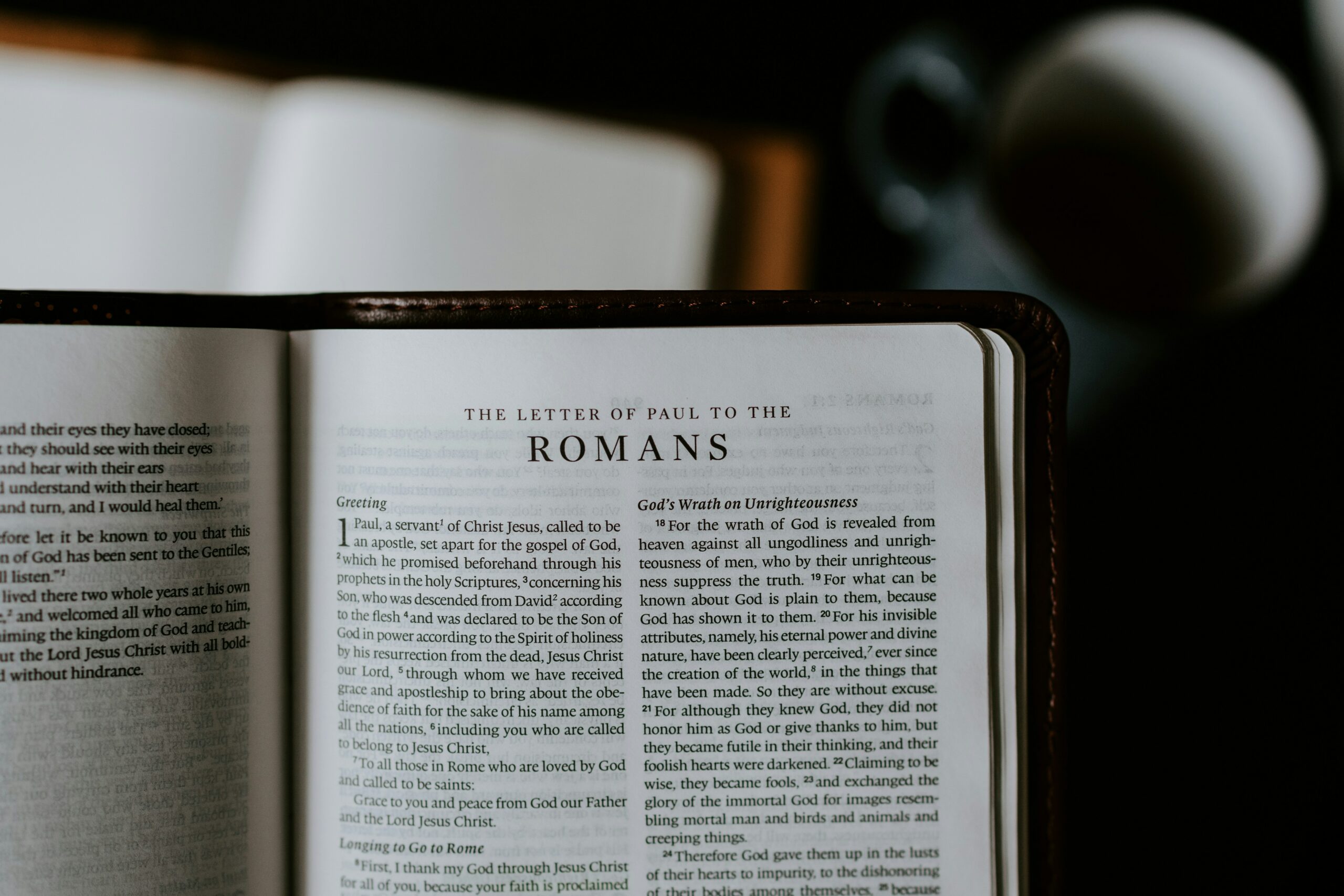
But primarily, the stronger brother is in view. More responsibility is placed upon him. Greater expectations are placed upon him. And as we will see, so it is in the second section, verses 13 through 23. Both kinds of people are addressed, but especially the strong Christian. If you would, let’s read this second section, verses 13 through 23 of chapter 14. Therefore, let us not judge one another anymore, but rather determine this, not to put an obstacle or a stumbling block in a brother’s way. I know and am convinced in the Lord Jesus that nothing is unclean in itself. But to him who thinks anything to be unclean, to him it is unclean.
For if because of food your brother is hurt, you are no longer walking according to love. Do not destroy with your food him for whom Christ died. Therefore, do not let what is for you a good thing be spoken of as evil. For the kingdom of God is not eating and drinking, but righteousness and peace and joy in the Holy Spirit. For he who in this way serves Christ is acceptable to God and approved by men. So then, Let us pursue the things which make for peace and the building up of one another. Do not tear down the work of God for the sake of food.
All things indeed are clean, but they are evil for the man who eats and gives offense. It is good not to eat meat or to drink wine or to do anything by which your brother stumbles. The faith which you have, have as your own conviction before God, happy is he who does not condemn himself in what he approves. But he who doubts is condemned if he eats, because his eating is not from faith, and whatever is not from faith is sin.
The subject and focus is still Christian liberty, But now this warning of judging one another, whether we’re weak or strong in faith, is concluded. Now Paul turns his attention to the strong Christian and his conduct. That he needs to be careful about how he exercises his so-called Christian liberty. In these verses, Paul is calling those who are strong in faith to a practical humility, not just an outward demeanor of humility, but that which actually puts others before himself. Just as Paul speaks of humility in Philippians 2 regarding Christ, that Jesus didn’t just exhibit a humble demeanor, His humility led him to take on human flesh. Likewise, the stronger brother, in his humility, it should be seen in the way that he lives.
Let me give you a forecast of this section. It breaks up into four nearly equal parts, and here Paul is in the midst of drawing a series of conclusions. That much is indicated three times in a row by the word therefore. Verse 13, verse 16, and verse 19. And then Paul closes out this section with a summary admonition in verses 20, pardon me, in verses 22 and 23.
All in all, Paul issues four things that the stronger brother ought to consider when dealing with those who are weaker. Four considerations for those who are strong in faith. We wanna look at practical humility considerations for those who are strong in faith, and for the first, if you would, track back to verse 13. The first consideration urged upon the stronger brother is that he refrain from offensiveness, that he refrain from offensiveness Look at verse 13 if you would.
Therefore, let us not judge one another anymore, a summary statement, but rather determine this not to put an obstacle or a stumbling block in a brother’s way. All transitions here quickly from a summary statement of the previous section to an application that introduces the theme of these 11 verses. His summary statement goes like this. Let us not judge one another anymore. Paul addressed judgmentalism on matters of conscience in the opening section, verses one through 12. He specifically refers to judging in verse one, verse three, verse four, verse 10. And so here in verse 13, he just summarizes that lesson and transitions right away to a new theme.
And that theme is that of offending someone in the exercise of some liberty. Paul says this, determine this, make a commitment to this, to not put an obstacle or a stumbling block in a brother’s way. And that new theme will carry us all the way to the end of this chapter. These two words, Obstacle and stumbling block are certainly related. The first term, obstacle, seems to speak of what the thing is. It’s a boulder or some impediment thrown into a pathway, nothing more. The second term, stumbling block, speaks of what it does. It causes the one who comes across it to stumble, to trip, and to fall. combined, these two words capture the thought of causing a brother to stumble.
That may not have been the intent of the stronger brother, but that is the result. The obstacles of which Paul speaks over which our brother may stumble, they refer to the example that is laid down by the stronger brother, the less inhibited brother, living his life freely and openly, not intending to cause his brother to stumble, but that becomes the effect. So that when the weaker brother observes his brother’s example and is led to follow his example, He sins. Dealing with the same exact subject in 1 Corinthians 8, Paul issues a very similar caution. Take care lest this liberty of yours somehow become a stumbling block to the weak. These stumbling blocks then are the things that disrupt another believer’s pursuit of Christ and sanctification. They tempt and even provoke a brother to sin. And so Paul passionately urges the stronger of these two brothers not to be insensitive to the potential for offense that his behavior has. He has merely rolled a boulder into the path of his brother. He may not have intended him to stumble, but again, that’s the effect. It is as if Paul can hear the catcalls of legalism. As if he suddenly has capitulated to the weak by agreeing with their over scrupulous position.
He hasn’t. He knows, he says, and is convinced that nothing is unclean in itself. He says this to emphasize that this is not a moral issue. It is an area of freedom. It is a matter of conscience. And so what Paul calls them to is not a rigid adherence to some rule or law, but he puts before them a matter of graciousness. He certainly isn’t saying that there’s no such thing as sin or that certain things are not inherently sinful.
Again, he’s speaking of these gray areas, matters of conscience, and of them he has no doubt that they are permissible. His point is that just because something is permissible doesn’t mean that there may not be occasions when a stronger brother should refrain from its use. Why? Glance down, if you would, at the statement of verse 14. The second statement, rather.
To him who thinks anything to be unclean, to him it is unclean. His conscience may be uninformed or ill-informed, but he believes that some practice, some behavior, some area of freedom for his stronger brother is sinful. And to him, it is sin. His mindset is such that some particular practice is morally wrong. There’s just no way around it. Barring God himself from reshaping the weaker brother’s conscience, he sees this practice, whatever it is, as sin. And so, for him to partake would indeed be sin. And in that sense, regardless of what our own conscience thinks about a particular thing or practice, we have to consider our brother’s conscience. And we have to respond accordingly.
In verse 15, Paul provides support for this entire line of thought. Verses 13 and 14, not putting a stumbling block in a brother’s path, even though the practice may not be unclean, that is, forbidden. Here in verse 15, Paul informs his readers that such careless behavior could do real harm.
How? By the stronger brother’s conduct, this weaker brother could be led to question or even to go against his own conscience and to engage in an activity that deep down he knows or believes is wrong. It’s always a dangerous practice to go against one’s conscience. And so what a terrible scenario. that one Christian’s carelessness could cause spiritual harm to another.
No wonder Paul challenges such behavior as not walking according to love. And he issues his strongest admonition yet at the end of verse 15. Do not destroy. with your food, him for whom Christ died.” The image that Paul presents here is that simply for the sake of enjoying some area of freedom, someone is willing to jeopardize his brother’s spiritual growth, a brother for whom Christ died. It’s an utterly shocking thought It not only suggests a disdain for the brother, but also for the sacrifice that Christ made on his behalf.
So it’s not enough that some practice may not be forbidden. In Scripture, we also have to take into consideration its effect on others. It’s actually a privilege for us to come into contact with a so-called weaker brother, a new believer in the faith, because it immediately reminds us of how far God has brought us. It reminds us too that God is at work in our brother’s life as well.
The last thing in the world that we would want to do is to cause this weaker, younger brother to sin by our example. We must refrain from offensiveness. And so regarding his weaker brother, the first thing Paul tells the seasoned Christian is refrain from offensiveness, but he issues another consideration in verses 16 through 18. Would you glance there?
Considerations for those who are strong in faith, not only refraining from offensiveness, but refraining from disgracefulness. Verse 16, therefore, do not let what is for you a good thing be spoken of as evil. For the kingdom of God is not eating and drinking, but righteousness and peace and joy in the Holy Spirit. For he who in this way serves Christ is acceptable to God and approved by men.
Paul here asks the strong brother to consider something else, to refrain from disgracefulness. And Paul says it this way, verse 16, do not let what is for you a good thing be spoken of as evil. He’s certainly not suggesting here that if somebody criticizes you eating steak, that you’ve got to go and defend steak eating. That’s not what he’s talking about. What Paul tells us here is that some people might agree with us regarding our personal conviction on this matter.
Others may see it as indifferent either way, neither good nor bad. But we do real damage to the matter of conscience itself if we abuse it. Our mistreatment of the area of freedom might stir others to negative thoughts about those who engage in such practice. And of this practice, that in our mind is a good thing, others are led to hate it and speak of it as something evil.
These matters of conscience, what Paul refers to here as eating and drinking, are not things that are important matters in God’s kingdom. These things will not commend us to eternity. Rather, Paul says in the second portion of verse 17, God’s kingdom is about righteousness, peace, and joy.
Those graces that are produced in the believer by the Holy Spirit. The amazing thing about each of these graces is that they’re all given to the believer by God. God imparts to us Christ’s righteousness. God enacts a peace treaty between himself, a holy God, and a sinner. God is the one who imparts to us joy that the world does not understand.
All of them are given to us by God, and all of them are expected to be exhibited by us. We are supposed to be righteous towards Others, we are supposed to be gracious and kind, securing and seeking peace with others. We are supposed to be joyful in our conduct of life.
So these things, righteousness, peace and joy, these are the things that ought to be in the believer’s focus, not food and drink. This is the Christian who lives mindful of all that God has done for his salvation. How unreasonable, then, to supplant these spiritual graces with earthly things? And just so, Paul concludes by saying that he who in this way serves Christ The one who lives for God and others instead of for himself and his own appetites.
He is acceptable to God and approved by men. Both God and men look at him and consider him respectable. God’s word is replete with commands and prohibitions. That shouldn’t surprise us, and even still, there are areas of uncertainty. Good and godly people will disagree about these at times. But if we’re not careful in the way that we exercise our freedoms, we bring disrepute not only on our practice, but on ourselves, on our church, and worst of all, on our Savior. We must refrain from disgracefulness.
Paul issues a third consideration for those who are strong with regard to his weaker brother. We find that in verses 19 through 21. Paul is issuing a call to practical humility, considerations to those who are strong in faith. that they are to refrain from offensiveness, disgracefulness, and thirdly, to refrain from destructiveness. You look at verse 19 once again.
So then, let us pursue the things which make for peace and the building up of one another. Do not tear down the work of God for the sake of food. All things are clean, but they are evil for the man who eats and gives offense. It is good not to eat meat or to drink wine or to do anything by which your brother stumbles. Not only must the stronger Christian refrain from offensiveness and disgracefulness, he also must avoid entirely destructiveness. Destructiveness is indeed a strong word for us to use here. It’s the intentional cause of irreparable harm. That’s exactly what’s in view in this paragraph.
Verse 17, Paul acknowledges that it’s the Holy Spirit that produces in the believer righteousness and peace and joy. But the Christian is also called to pursue those godly graces. Paul actually begins this point with a positive statement in verse 19. So then let us pursue the things which make for peace in the building up of one another. What a beautiful thought. He urges that as mature Christians, we ought to be committed to building up our fellow believers.
The Greek word here is often translated as edification. It’s a word that was used to refer to a construction project, a positive thing, building something. But edification as a metaphor became one of Paul’s favorite images. He uses it to refer to the positive influence and effect that we can have on one another, building them up. First Corinthians 14, 26, let all things be done for edification, Paul says.
Spiritual edification is the very reason that God gave gifts to Christ’s church, remember? Ephesians 4, to the building up of the body of Christ, he says. And remember those spiritual graces back in verse 17? Those are produced by the Holy Spirit, righteousness, peace, and joy. Those are the very graces that enable Christians to build up their fellow believers, doing the right thing, seeking peace with them, living out a joyful Christian life.
But having stated it positively, Pursue the building up of one another. Paul now says the same thing negatively and that very strongly. Do not tear down, he says. And as bad as this contrast is between building up and tearing down, we have to notice what is being destroyed. Paul simply refers to it as the work of God. It’s a poignant way of referring to the weaker brother. He too is God’s handiwork. And as he already mentioned back in verse 15, do not destroy the one for whom Christ died.
Paul sustains the overall theme of this section. He tells us exactly what the cause of this destruction is. Food. It’s our personal preference. It’s our freedom. It’s this area of conscience. Paul says the strong believer is tearing down his brother, the work of God, for the sake of food. What he points to here again is this ongoing skirmish over some gray area, some matter of conscience, an area over which the weaker brother is overly scrupulous. But instead of being sensitive to his weaker brother, being discreet in the use and the enjoyment of this personal conviction, This so-called strong believer flaunts his freedom and troubles, even destroys, this weaker brother.
There’s a sense of shock. There’s a sense of surprise in the apostle’s words. You’re going to engage in this destructive behavior just to enjoy some personal liberty? Paul severely cautions against such behavior. And here too, Paul must face the same potential charge of legalism about which he spoke in verse 14.
There, he acknowledged that nothing is unclean in itself. Here he declares the same principle directly. All things indeed are clean. There may be nothing inherently wrong with a particular practice, meet, feast day, or any other gray area. But there still is cause and room for the stronger brother to be cautious, to be circumspect in the use of this privilege, if at all. Why? Paul tells us at the end of verse 20, whatever this matter of conscience is, for the weaker brother, it’s evil.
That’s how he sees it. And for the stronger brother to flaunt his liberty in front of him, as Paul says simply here, he eats. That’s the crux of the problem. It gives offense. Did you hear that? He offends his brother by his eating. To flaunt one’s liberty, even if the matter is clean, even if it is not sinful in and of itself, to engage in that is to engage in destructive behavior toward one’s brother. You hear what Paul’s telling us here? Even if something is morally neutral, neither good nor bad, It becomes bad, it becomes evil, to use Paul’s word, if it is exercised flippantly, without care or concern for our brother. If the stronger brother knows that his brother could possibly be offended by this practice, then he renders that practice evil, morally bad.
Well, after this very direct discussion of the issue, in verse 21, Paul provides an overarching principle. Tuck this in your hat and use this often, Paul says. It is good not to eat meat or to drink wine or to do anything by which your brother stumbles. It’s a beneficial axiom that Paul provides here. It is good, he says.
It is safe and a favorable practice to refrain from anything that is potentially harmful to our brother in Christ. Even when that which we lay aside is not in itself sinful, it’s not forbidden by God, far better that we lay aside some area of freedom for our Christian brother’s sake, lest we cause him to stumble. We must always be and keep in the forefront of our mind that this is our Christian brother for whom Christ died, in whom God is actively at work. If we’re not building up this brother, actively building him up, there’s good cause to wonder if we are in the process of tearing him down. We must refrain, thirdly, from destructiveness.
And Paul issues a fourth consideration for the stronger brothers in verses 22 and 23. Would you glance at those? Practical humility considers For those who are strong in faith, not only refraining from offensiveness and disgracefulness and destructiveness, but fourthly, refraining from recklessness.
Verse 22, the faith which you have, have as your own conviction before God. Happy is he who does not condemn himself in what he approves. But he who doubts is condemned if he eats, because his eating is not from faith, and whatever is not from faith is sin.
Paul has made some conclusions, and he’s set forth some considerations that the stronger brother must practice for the sake of his weaker brother. And he rounds out this discussion with one final consideration, an admonition to refrain from what I call recklessness. When he uses the term faith there in verse 22, he’s using it in exactly the same way that he used it at the beginning of the discussion back in verse one. There he spoke of the one who is weak in faith. And he’s referring there to someone who is tentative, even doubtful about some certain practice.
Here in verse 22, Paul has the same thing in mind, but now it is the strong brother’s faith. It is the strong brother’s conviction that is in view. And regarding such faith, Paul says, maintain that as your own conviction before God. This admonition ultimately applies to both the weak and the strong.
The weaker brother, if he believes something truly to be sin, he just needs to quietly stand on his own conviction. The stronger brother as well, we know that this applies to him. He must exercise discretion in the exercise of such freedom. In other words, his conviction should not be flaunted especially before a weaker brother, he should not go about brandishing his freedom. His conviction certainly should not be encouraged or pushed upon others. He shouldn’t try to convince anyone of his particular position. And so both weak and strong should maintain their convictions privately between themselves and God. Paul says something in verse 22 that has to seize our attention. Happy is he who does not condemn himself in what he approves.
All over again, Paul urges caution in the freedoms that we embrace in matters of conscience. And part of this is brought about by the fact that this so-called stronger brother was reckless, potentially destructive toward his weaker brother. But likewise, the weaker brother who believes something to be wrong, unfortunately in time often softens, and in some case yields to participate in his stronger brother’s practice. And so Paul raises the question of whether or not this thing in which the stronger brother engaged is good at all. You better be sure, he says. It’s possible, Paul seems to wonder, whether this person is embracing something that is bringing about his own downfall, as he says, condemning him. He says, in essence, you better be very sure of your freedom that you possess in this matter. And in order to cap the discussion, Paul issues one final caution in verse 23.
He who doubts is condemned if he eats, because his eating is not from faith, and whatever is not from faith is sin. Each believer, weak or strong, had better be very sure of their conviction and their practice, what they believe God would have them to do, how they believe God would have them to live, because they effectively drag their conscience into such participation, and the conscience, once offended, condemns him. That doesn’t mean that the individual loses his or her salvation, but it does mean that their conscience will vehemently accuse them. You know that this was wrong. You know that this damaged your brother.
Paul says, as Paul said at the outset of this discussion, Each person must be fully convinced in his own mind. As Christians, weak or strong, we must refrain from living reckless lives, parading our own convictions and practices as if God has commanded us to do these things.
He hasn’t. Or being uncertain about the propriety of what it is we’re doing. We’re not sure, but we like it, so we’re going to do it. Or living in a manner that is unconcerned about our practice and its effect on others. We must refrain from recklessness. Would you humble yourself before our king?
Our gracious God, we thank you and there are times we wished, we’ve sought, we’ve tried to uncover, we’ve tried to answer the question of these gray areas. Try as we might, we’ve been unable and we’ve taken positions that we believe to be right. And Lord, sometimes we have engaged in things that only time shared with us the wisdom of what we were doing, that it was not the best course.
Father, we know that our weaker brothers need that time, they need that experience to walk in this world and to learn. about their habits and practices, about their convictions, about these so-called areas of freedom, matters of conscience. Lord God, we pray for your grace in this regard. We pray that we find ourselves in this passage, probably on both ends of this passage, We’ve all been and experienced these kinds of things in our Christian lives.
And so we plead with you, Lord, that you would make it clear to us about our so-called areas of freedom. We pray that you would open our eyes to things that we perhaps had not considered. We pray that you would grant us the grace to back away from anything by which our brother may stumble. to walk discreetly and circumspectly if we believe that we are allowed to participate in certain uncertain things.
Lord, we do pray for our weaker brothers. We pray, Lord, that you in your abundant goodness and grace would walk with them. and teach them and show them caring for their souls as we ought. Lord, we pray that you would lead them into an appropriate expression and conduct of these matters. Father, we do pray that you would protect the unity between the stronger and the weaker brother, the most delicate of all relationships. Lord, we pray that we would be made sensitive to our brother, that we would avoid offending him, that we would avoid disgracing ourselves and our Savior. That we would stop well short of ever causing destruction or harm to our brother. Lord, we plead with you for the grace to live noble and God honoring lives. not recklessly caring about as if our deeds and our lifestyle did not matter. Lord, grant us this grace, we pray. We pray all of these things in Jesus’ name, amen.
Messages: 204