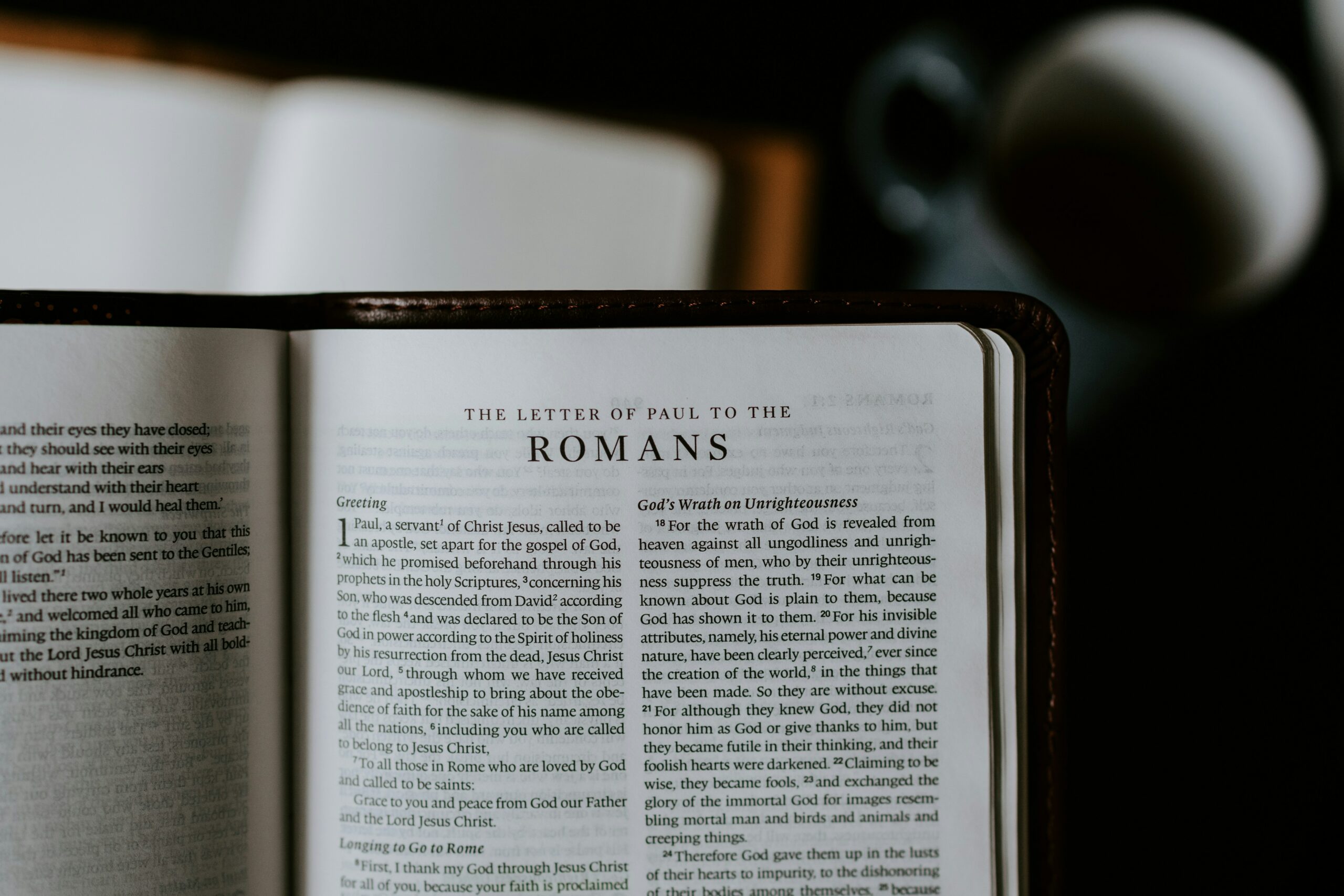
Established in Christ, Part 5
This sermon explores the dichotomy between living according to the flesh and walking according to the Spirit, emphasizing that salvation is entirely the work of God rather than human effort. The central message asserts that those who are in Christ are no longer under the condemnation of the law but are established in a new realm of life and peace through the indwelling of the Holy Spirit. The preacher highlights that the Spirit’s presence serves as the definitive evidence of regeneration, distinguishing believers from the natural man who remains hostile toward God. By examining the theological implications of the Spirit’s indwelling, the message offers profound assurance that the same power which raised Christ from the dead guarantees the future resurrection of believers’ mortal bodies. The tone is pastoral and encouraging, urging the audience to examine their lives for the fruit of the Spirit to confirm their standing in Christ.
Transcript
God has helped, greatly helped.
God has come to our aid where we were completely unable to
help ourselves. And as such, what Paul is seeking
to do here is to point out that every member of the Godhead has
rendered aid and that the assistance has been overwhelming. We’re
in the section that is focused in on what Christ has accomplished,
and the fact that we are established, first and foremost, in Christ.
We will move here shortly into that section, verses 12 through
27, that pertain to the Spirit’s effort on our behalf, and then
finally into that section in verses 28 through 30 that speak
of our lives as being ordained by the Heavenly Father, His efforts
on our behalf. And all of this rolls into one
great encouragement to the saints, and culminates in that section,
verses 31 through 39, with an assurance to the Christian that
his life, the person whose life is in Christ, the person who
has placed their faith in Christ by God’s great assistance, is
absolutely secure. Well, we began to look at this
verse, and we saw that there were three definitive statements.
In verses 1 through 4, there were three definitive statements
that really clarified, by Paul’s design, the mind of God regarding the
law. And that’s essentially the focus
in the backdrop of what we’ll talk about even again this morning.
Paul wants us to know that it’s not by the law that we were ever
established. It’s not by the law that we were
ever saved. We were established in Christ. If you would, I want to go all
the way back to verse 1, and we’ll read all the way through
verse 11. We’ll come back. We’ll park everything in the
context of what we’ve read. Then we’ll enter in the new material
this morning as we close out this study of verses 1 through 11. Verse 1. There is
therefore now no condemnation for those who are in Christ Jesus. For the law of the Spirit of
life in Christ has set you free from the law of sin and death.
For what the law could not do, weak as it was through the flesh,
God did, sending His own Son in the likeness of sinful flesh,
and as an offering for sin, He condemned sin in the flesh, in
order that the requirement of the law might be fulfilled in
us, who do not walk according to the flesh, but according to
the Spirit. For those who are according to
the flesh set their minds on the things of the flesh, but
those who are according to the Spirit, the things of the Spirit.
For the mind set on the flesh is death, but the mind set on
the Spirit is life and peace. Because the mind set on the flesh
is hostile toward God, for it does not subject itself to the
law of God, for it is not even able to do so. And those who
are in the flesh cannot please God. However, you are not in
the flesh, but in the Spirit, if indeed the Spirit of God dwells
in you. But if anyone does not have the
Spirit of Christ, he does not belong to Him. Christ is in you. Though the body is dead because
of sin, yet the Spirit is alive because of righteousness. But
if the Spirit of Him who raised Jesus from the dead dwells in
you, He who raised Christ Jesus from the dead will also give
life to your moral bodies through His Spirit who indwells in you. Now, as I said, Paul needed,
really, to give us God’s mind on the law and the life of the
Christians. And the first thing that we saw was the Law’s release,
that we are now released, as it were, from the Law. There
is no condemnation, that we no longer sit or stand under the
condemnation of the Law. Why? Because the Law of the Spirit
of Life, verse 2, has set us free from the Law of sin and
death. That operating principle of the Holy Spirit that is come
down and literally regenerated us, brought us to life, and lifted
us by the great work of justification, has lifted us out from underneath
that condemnation that is pronounced by the law. The second statement
that we saw in mitigating the law’s condemnation towards us,
not only the law’s release, but the law’s superior. How does
this happen? What happens to this law that
is able pronounce judgment on every person who’s ever born.
Who is above the law? God is. Look at verse 3 and 4. For what the law could not do,
the law could condemn us, but the law couldn’t save us. The
law could pronounce judgment, but the law could not render
us the aid that we needed. What the law could not do, weak
as it was through the flesh, our flesh, there was no problem
with the law, the problem was us. The law could not do, weak
as it was through the flesh, God did. He did it by condemning
sin in the flesh, not our flesh. Go back to the verse. God did
it by sending His own Son in the likeness of sinful flesh,
and in offering, as an offering for sin, He condemned sin in
the flesh. That’s how God wiped out the
condemnation that was due, because of the judgment of the Law upon
us. And finally we saw the Law’s fulfillment. We saw the Law’s
fulfillment, and that will open the door into where we’ll spend
our time this morning. In verse 4 it says, Bringing into the context of
verse 3, what the law could not do, God did. He condemned sin
in the flesh. Why? In order that the requirement
of the law might be fulfilled in us. That’s why Jesus Christ
went to the cross, is to fulfill the law. God couldn’t just willy-nilly
ignore the judgment pronounced by the law because it was His
law. That God could fulfill it, not for you and I. not through
ten million humans. If all of us had died at once,
as we said several weeks ago, we couldn’t have paid for the
sin of one individual. But Jesus Christ, that perfect,
sinless, unspotted lamb, came and with one sacrifice paid for
the sin of the world. In that sense, the requirement
of the law is fulfilled. But there’s a question that is
essentially posed here in verse 4. Who is us? To whom does us refer,
to use better English? And Paul tells us. It’s not those
who walk according to the flesh at the end of verse four, but
those who walk according to the Spirit. And we issued a distinct
caution last Thursday. We would literally have to throw
out the book of Romans if you take this verse incorrectly. If you say for a moment that
it so depends how you live and how you walk, that you, it’s
incumbent upon you to live impeccably so that you can fulfill the law? It’s absurd. It’s ludicrous. That’s not what it says, that’s
not what it means when it says that we walk according to the
Spirit. He’s merely identifying those who enjoy this blessing. Who are those that enjoy this
blessing? Those who are according to the
Spirit, who know how that they have rendered. It is merely God
who has moved and rendered their aid, even as we are in the midst
of discovery. It is God who has saved them.
It is God who has regenerated them. It is God who has brought
them to faith. It is God who has made them alive. It is God who has rendered them
according to the Spirit. And now they walk a completely
different way. It is God, not them. Paul is explaining, as we saw
last week, to whom this blessing falls. Who those are who enjoy
the blessing of the work of God in their lives. As we’ve already
seen, the law could not save them. They could not save themselves
according to the law. And so God did save them. God moved. And as such, they
We now walk according to the Spirit. As we said last week,
Paul isn’t setting up some kind of a test that says if you only
will walk good enough. That’s not at all what he’s saying. Paul is writing to Roman Christians
with a sole and specific purpose to encourage them in what God
had already done for them, in what God had done in establishing
them, not what they could do for themselves. God did it all
and because of that they now walk, they operate, they live
in a completely different realm. It’s the realm of the Holy Spirit
and no longer the realm of the flesh. We spent no little time
looking at one side of the picture. Last Lord’s Day we considered
that there were essentially, there are only two different
kinds of people imbued in this entire passage. You are either
in the flesh or you are in the Spirit. You are either fleshly,
you are either in your natural condition, not a believer in
the Lord Jesus Christ, or you are in the Spirit, having been
placed in Him by the Spirit, having been brought to Christ,
and having been engendered to faith in Christ, and having been
regenerated and brought to new life. It’s either God having
done that and you are in Christ or you are still in the flesh,
even in this room. There are only two. And so we
looked, beginning last Lord’s Day, at the identifying features
of those outside of and those in Christ. There are only two
groups. We began to consider those outside of Christ last
Lord’s Day. First of all, what did they do?
Look at verse 5. Those who are according to the flesh set their
minds on the things of the flesh. And this isn’t any more sinful
than you or I. This is just the natural way
that they live. Don’t set this up as being the
worst heathens that you could ever come across. This is just
the natural way. This is just how people live
who do not know Christ. This is just how they live. What
are the consequences? The consequences for any sinner.
Look at verse 6. The mind set on the flesh is
death. It’s not that if you live a fleshly
life for long enough, God’s going to issue you a death sentence.
God has already attached the death sentence to the natural
man. Just by being born into this
world, being born a sinner, born under the curse of Adam and Eve,
you already have a death sentence. And until you come to know the
Lord Jesus Christ, there is no hope. No hope. It’s not that you live badly
enough, fleshly enough, indulgent enough, so that God, one day,
wipes his hands clean and says, that’s enough. Kill him. That’s not it at all. God had told Adam, the day that
you eat of that tree, you shall surely die. We saw an interesting
thing about Adam and Eve is that they didn’t die. 930 years Adam
lived after being removed from the garden. What did God mean?
Was God bluffing? Not at all. Adam died spiritually
that day, but he also brought on him the curse of death. Remember? Physically dying. That’s what
Adam brought upon his whole race. And not only physically dying,
but spiritually dead. From that point forth, they were
spiritually dead. Every person ever born into the
world, born under that curse, was spiritually dead toward God.
Unless God removed that curse, they died. Physically. What did they do? They set their
minds on the things of the flesh. What are the consequences? Death. What is the reason? Why this
distinct and definitive judgment upon them? Because they took
up arms against God Himself. Look at verse 7 and 8. Because
the mind set on the flesh is hostile towards God. We spend
a little time on this, and I say it just by way of reminder. A
life outside of Christ is a life at war with God. A life outside
of faith in Christ, where we humbly come before him and repent
of our sins, and ask for God’s divine help in our lives, and
ask for forgiveness for our sins, and ask for the grace to live
and walk in newness of life. Anything outside of that is an
all-out battle against God. It’s enmity. The scripture says,
the mind set on the flesh is hostile towards God. for it does
not subject itself to the law of God, for it is not even able
to do so, and those who are in the flesh cannot please God.”
And if that’s all there were, what a dismal way to end the
Lord’s day. But it isn’t all there is. Paul’s only halfway
done. He’s only introduced us to the
first part of this grouping. There are those that are outside
of There are those, as we’ve seen, that are in the flesh,
but by God’s grace, that’s not the only group in focus. In fact,
the primary group in focus is not those that are in the flesh
at all, but those that are in the Spirit. Let’s consider those
for a moment. And there are a myriad of questions
that could be posed. of these, but I’ve narrowed down
a few. What does the thought, walking
according to the Spirit, what does that mean? In verse 5, what
are, by the way, the things of the Spirit? And in what way do
those that are in Christ set their minds on the things of
the Spirit? How do we go about that? Do you
wake up one day and just decide, I need to walk according to the
Spirit, I need to set my mind on the things of the Spirit?
And in so doing, do you secure your salvation? Look at verse
6. In what sense do those who are
in the Spirit enjoy life and peace? How? In what measure? Look at verse 9, where Paul takes
up the subject again. What is the established contrast
when he says, however, we’ll get to that. What is the meaning
of the phrase, in the spirit? We’ll touch on that. Why this distinction? Why this
interplay between the phrase, the spirit of God and the spirit
of Christ? Why does Paul use those terms
so loosely? Interchangeably, even. Verse 10, in what sense is our
body dead? And probably the most controversial
question of all in verse 10, what spirit is it in you? Is
it the human spirit or is it the Holy Spirit? In what sense
is that spirit alive? And in what sense will the spirit
in verse 11 give life? We’ll talk about some of those. I don’t know that we’ll answer
any of them with all definitiveness, but let’s begin. At the end of
verse 4, Paul, as we’ve already said, is merely pointing to those
who enjoy salvation, who enjoy the work of God, the work that
God did in verse 3 and 4. God condemned sin in the flesh
for who? For those who walk according
to the Spirit. What it points to is the true God-designed nature
of man, whose conduct now is guarded and regulated, not by
their human flesh, but by his own Holy Spirit. This is a description
of what God would have a man to be, what God would have a
person to be in Christ. At one point it said that he,
rather he said, it denotes the Holy Spirit, the regulator of
the will of the saints. Don’t you love that? So no longer
am I guarded or guided by what I want or what my flesh desires,
that now, by God’s grace, those that are in Christ are regulated by the Holy Spirit Himself. He
goes on to say, and is depicted here in such a sense, inhabiting
and informing the regenerate human spirit that he has regarded
as the dominant rule and influence. The regenerate are said to be
in the spirit because the divine spirit dwells in them. Those
are the ones that enjoy the work of God. That’s all that Paul
is doing. He’s not using this as a motivational
speech. He’s identifying who are those
who enjoy the work of God. Why, it’s those who now walk
by God’s grace according to the Spirit. Look at verse 5. Paul
begins to explain and support his idea of walking according
to the Spirit. Already having introduced the
subject in verse 4, he says in verse 5, For those who are according
to flesh set their minds on the things of the flesh, but those
who are according to the Spirit Those who have been placed in
Christ by the Holy Spirit, and you didn’t even supply, set their
minds on the things of the Spirit. That’s how they walk. This is
how they live now. What are the things of the Spirit?
Jonathan Edwards spoke to it, and he referred to it as holy
affection. As one describes, deep longings
after God and after sanctification. Those are the things of the Spirit.
It is holy things, good things, pure things. It is those things
that the Holy Spirit proposes and approves. It is all of those
things that the Spirit desires to work into us by God’s grace. As one said, they who act according
to the principles of the renewed spiritual nature employ their
thoughts and efforts about the things of God. You see, the natural
man doesn’t live like that. The natural man doesn’t think
about the things of God. That’s the last thing he wants
coursing through his mind. He would stop up his ears if
he could. He would never look upon God’s
law if he was able. And to those that are in Christ,
not only do they attend to these things, but they set their affections
on them. They love the things of God. In what way? In what way do they
set their minds on the things of the Spirit? They begin to
focus upon them in their daily lives. They begin to treat and
consider this new relationship as a love relationship, no longer
one of abject fear, as a slave before a master, but one who
is at peace with a beloved friend. Said one, they are ruled and
determined by His awakening, His regenerating, His illuminating
presence. characterized by the fact that
he dwells in a strictly supernatural state, the result of a divine
indwelling once unknown to the soul, but now real and living. We begin to live like we’ve never
lived before. Don’t you remember those moments
following your own repentance, your own coming to faith in Christ? Those exciting days when everything
was fresh and new? That’s what he says is living
according to the things of the Spirit, setting our minds on
the things of the Spirit, where you couldn’t get enough of the
Word, where you couldn’t get enough time on your knees, you
couldn’t get enough communion with God. It is those, as another
said, who allow the direction of their lives to be determined
not by the flesh, but by the Spirit, to allow the Spirit to
determine the direction of their lives, to take the Spirit’s side. To mind the things of the Spirit
is to have the things of the Holy Spirit as absorbing objects
of thought, interest, affection, and purpose. In our exercises
of reason, Feeling and will all are patterned and controlled
after the Holy Spirit. What a wonderful way to live.
And we’ve had good days. You’ve had moments at least.
Seasons where you know that you’re doing what God wants you to be.
You know that you’re loving God and He’s loving you. You know
that you’re walking in the Spirit. You know that you’re enjoying
His presence. You know it. What Paul is saying
here is, we don’t walk according to the
flesh anymore. We now walk a new way. And why
not enjoy it all the time? Why not walk that way? Why not live and walk according
to the Holy Spirit, who now indwells us? Why not? And as with the things of the
flesh, The consequences of the action
spoken of in verse 5 are expressed also in verse 6. It’s intended
here as an explanation of the opposition that is seen between
the spirit and the flesh. Look at verse 6. For the mindset
of the flesh is death. We already looked at death as
the consequence. It goes hand in hand that a life in the flesh
is death itself. It’s not just that it leads to
death. Likewise, with regards to the
life in the Spirit, the mind set on the Spirit is life and
peace. The mind that is guided by the
Holy Spirit enjoys life and peace. One pastor pointed to this section
when he said, means the knowledge and fellowship of God. That is
life itself. I’ll never forget when I was
a college student, baffled by what I saw on a billboard, presented
by one church that said, life is better with Christ. And I
had just become a Christian. And I thought, life is better
with Christ. That seems feeble. It was feeble. Life isn’t better with Christ.
Life is Christ. Life means the knowledge and
fellowship of God, the communion, which is the apex of true spirituality. Peace is the subjective effect
of peace with God, the sense of being one with God, the tranquility
of heart and mind, which the sense of reconciliation evokes.
Can you imagine? Go back to that moment of repentance. Not when you’re recounting all
of the grocery list of your sordid past. But when you realize, when
you first realize that you were forgiven, forgiven, that God
no longer was at war with you, that now you were at peace with
God. If you don’t know that, Senator,
come talk to us. Who knew? Because we would love
to lead you up to the Savior, to the very throne room of God,
and point you in His direction, and He’s eager, He’s eager to
forgive you. He paid for your sin with His
own life. Paul says here, he lays out essentially
what is, as one referred to it, an equation, not a concept. One
thing equals another. The mindset on the Spirit, that
is, on the things of God, equates life and peace. One goes with
the other. It’s not that if we live spiritually
enough, one day we’ll enjoy eternal life, one day we’ll achieve some
kind of peace. They go hand in hand. One comes
with the other. The mindset on the Spirit The
things of God equates life and peace, which equates being a
Christian. The mindset of the Spirit is
synonymous with Christian. It is also synonymous with spiritual
peace, peace with God. That’s what we enjoy, being those
in Christ, being those that the Spirit has moved upon. Through no desert of our own,
there was nothing in us that made God. move upon us, like
us, any better than the others? It’s not that we have to achieve
some plateau of living before we begin to enjoy life and peace. What does he mean by life? It
is, as we already said, communion with God. That is life itself. There’s nothing better. There’s
nothing higher that we could ever aspire to but communion,
oneness, relationship with God himself. The scriptures speak of it as
God’s love spread abroad in the heart, joy unspeakable and full
of glory. And all of this we enjoy forever.
Paul already spoke, even earlier in this chapter, of the Spirit
as being the law of the Spirit and life. It is the Holy Spirit
who delivers to us life itself. Not just better life, not just
better life here on earth. I’ll never forget sitting in
a Bible study. And we were talking about these very things. And
it all of a sudden dawned on my good brother. And he said,
you know what? All this and heaven too. Others
have said it more simply. Somebody said that for those
who do not know Christ, this is the closest that they’ll ever
get to heaven. This is the closest they’ll ever
get to heaven. In a sense, we can enjoy life better now. That’s not life in its fullness.
It is better to be a Christian. It is better to live like a Christian.
It is better to enjoy the grace of God in the here and now. But
that’s not even all. All this and heaven too. All
this having our sins forgiven. All this having God’s divine
assistance. All this knowing that every day
we walk in God’s sovereign plan for our lives. All this in heaven
too. Paul said, the law of the spirit
of life in Christ Jesus has set you free from the law of sin
and death. God’s concerned about life. God’s concerned about eternal
life. God’s concerned about peace.
He loves being at peace with us. I think God enjoys it more
than we do sometimes. Peace, one describes, is that
inner assurance that past sins are forgiven. And all we want
to do is keep dredging them up and keep mulling them over and
keep telling ourselves how bad we are and how undeserving we
are. God knows all that. It is the inner assurance that past
sins are forgiven, that past and present events, no matter
how painful, are being overruled for good, and that nothing might
occur in the future that will be able to separate Him from
the love of God in Christ. What a peaceful undertaking.
What a way to live. That there’s nothing that can
touch us. Romans 5.1, Paul already said
it. He established this. He planted this stake in the
ground when he said, therefore having been justified by faith,
we have peace with God through our ordination to Christ. It’s
not just one day we aspire to lay down the sword. And as Juan said, I love the
way that he said this, but it’s difficult to grasp all the things
he talked about. He said this, life and peace
in conjunction. And what he’s pointing to is
that we don’t normally equate life and peace in the same sentence. But what Paul’s saying is that
by God’s grace we can enjoy both at the same time, life and peace. He goes on, life and peace in
conjunction, not raging life, not stupid peace, but a placid,
peaceful life, a vital, vigorous peace and rest. It is not the
life of fury, nor the peace of a stone. It is a life that has
peace in it, and peace that has life in it. We now live boldly
We now live in the Spirit. We now live for God and for God
alone. Now glance down at the passage
again. Because following the somewhat
lengthy description of the hostile mind of the flesh, Paul returns
to those who are according to the Spirit. with one final grand
assurance to them, verses 9-11. When he begins he says, however
you are not in the flesh but in the spirit. Now granted he’s
writing the letter to the Romans, surely there were those in their
midst that maybe were in the process of coming to faith or
maybe had just come to faith But primarily he’s writing to
believers, probably believers that were just like you and I.
Somewhat even amazed at their faith. Amazed at the fact that
they now were in Christ. Amazed that now they were forgiven. And what is all this and how
does it work? And Paul wants to establish that.
Remember he’s building to a crescendo to offer the ultimate encouragement. That God has done it all. that
God has established you in Christ, that the Holy Spirit has sustained
you, and that God ordains your very life. Because of that, we
should have assurance. To those Roman Christians, He
said, however, you are not in the flesh. If you have placed
your faith in Christ, you are not in the flesh any longer.
You might have struggles with sin. We talked about that weeks
ago. But you’re no longer in the flesh. You no longer let
flesh dictate that you are in the Spirit. If, indeed, the Spirit
dwells in you. But if anyone does not have the
Spirit of Christ, he does not belong to Him. Let’s talk about
this. This contrast that Paul sets
up with this, however, basically just gives the opposite picture
of those that are unregenerate, those that are in the flesh.
He’s already painted a vivid picture of them, and now he looks
to the Roman Christian and says, look, that’s not you anymore. You’re no longer at war with
God. Look at this phrase, in the Spirit.
We’ve talked about it a little bit. What does it mean, in the
Spirit? It is almost as if Paul is talking about the atmosphere
that we now find ourselves, and yet it is the Holy Spirit that
is in view, so it goes far beyond that. We are under the inspiration,
we operate in the sphere of the Holy Spirit and under His guidance. It is to be in that condition
that ultimately is what prompts us to walk after the Spirit,
to walk correctly. This is how we’re brought under
conviction. If there wasn’t a Spirit, we’d never come under conviction.
When people come to me and they say, oh, I can’t believe what
I did. Thank God that you’re sorry for
it. Thank God that God brought it to your mind. Thank God that
at least the Holy Spirit is convicting you that what you did was sinful. Spirit, essentially, is the element,
the sphere in which we now live. But look at this. Not only are
we said to be in the Spirit, but the Spirit is in us. This
is a total immersion. This is totally being mixed in
with the Spirit. It’s said to dwell in us. And
that word just speaks of an intimacy, a permanence. It’s not like the
Holy Spirit can come and go anytime that you mess up. It is a permanence that maintains an influence in
the regenerate man. Jesus spoke of it. Jesus spoke
of it when he promised the Holy Spirit, when he said in John
14, 17, it is the spirit of truth whom the world cannot receive
because it does not see him or know him, but you know him because
he abides with you and in you.” And we forget that, don’t we?
We forget that when we engage in various things that we are
engaging also the Holy Spirit, who will convince. Ephesians
3.16, Paul spoke of it again. praying for the Ephesians, that
God would grant him, according to the riches of his glory, to
be strengthened with power through his Spirit, where? In the inner
man. The Holy Spirit dwells in us. And it is a, as we said, a settle. It’s a permanent thing. It’s
a permanent influence. We are possessed, essentially,
by a power that is far superior to our own. We’re possessed by
the power of God. We are indwelled by the power
of God in whose person the Holy Spirit is. Paul spoke of it in 1 Corinthians. 1 Corinthians 3.16. Do you not
know that you are a temple of God? And what it brings to mind
is that Shekinah, glory of God, dwelling in the tavern, dwelling
at times in the temple. where God was said to dwell,
and now that’s us. Now that’s us. Do you not know
that you are a temple of God, and that the Spirit of God dwells
in you? Was that just the Corinthians? No. It’s any Christian who has
ever placed their faith in the Lord Jesus Christ, the Holy Spirit
comes and takes up residence, and refers to it by a comfortable
abode. He comes and He makes Himself
home in the life of the Christian. Said one pastor, the Spirit of
God is everywhere. Yet He is said to dwell wherever
He specially and permanently manifests His presence. He was
said to dwell in heaven. He is said to dwell in the old
temple, and he now dwells in the church. But he also dwells
in each individual believer whose body is a temple of the Holy
Spirit. God makes himself at home in
our lives. We would take up one quick question
if you glanced down at the passage. However, you are not in the flesh,
but in the spirit, if. What is the sense of if, and
why, in the midst of a section where Paul was seeking to engender
assurance, confidence, why would he suddenly interject, if, now? Paul was looking to do. He doesn’t
know the entirety of who would read his writings. And it certainly
isn’t just because they read his writings that they now suddenly
find themselves to be indwelt by the Holy Spirit. He’s talking
about the entire process of becoming a Christian. He’s talking about
the work of God in their lives. And he wants people to examine
themselves. He wants people not to doubt, but to wonder. He wants
them to look for the fruit of the Spirit. And if it’s lacking,
to go searching anew for salvation. Not in a different place, but
to return again to repentance if necessary. One said, this is the only decisive
test. Every other bond of union with
Christ is of no avail without this. In other words, he says,
if you don’t have the Holy Spirit, go back to square one. Repent. Place your faith in the Lord
Jesus Christ. We may be members of His church.
We may be united to Him by being included in a number of His people. It doesn’t matter if you’re on
the roll. Unless we are partakers of that
vital union which arises from the indwelling of the Holy Spirit,
we are His only in name. That’s what Paul says, by Him.
You know what this reminds me of? It reminds
me of 2 Corinthians 13. Test yourselves to see if you
are in faith. Examine yourselves. Do you not
recognize this about yourselves that Jesus Christ is in you and
lets you indeed fail the test? In other words, Paul says, look,
those who place their faith in Christ will be guided by the
Holy Spirit. If that guidance is lacking or
absent, you have good reason to question your and your salvation. Moving on and deeper into that
passage, Paul says, if indeed the Spirit of God dwells in you,
and then in the same sentence, or the very next sentence, he
says, but if anyone does not have the Spirit of Christ, why
the difference? It’s a subtle one, it’s minor. The Holy Spirit
is as deeply connected with God as He is with Christ. Remember,
it is the Trinity that is in view. It is the three members
of the Godhead. They’re not divisible. For the sake of time, I move
on to one quote that said, He is the Spirit of Christ in the
same sense in which He is the Spirit of God. The Spirit stands
in the same relation to the Second that He does to the First Person
of the Trinity. In other words, whether you refer
to Him as the Spirit of God, or the Spirit of Holiness, or
the Holy Spirit, or the Spirit of Christ, They all refer to
the same, and that’s exactly by Paul’s design. Paul wanted
them to know that this is an effort of the Godhead on their
behalf. Christ is in you. Verse 10, though
the body is dead because of sin. He’s talking about our physical
bodies. He’s talking about the fact that one day this brain
will die. But even if the body is, in a
very real sense, already dead, yet the spirit is alive. There
were those that took this as being the human spirit. It’s
not the human spirit. It’s the Holy Spirit. It’s the
spirit of life. It’s the Holy Spirit that has
been in you this entire passage. It is the spirit that gives life.
It is the spirit that brings life. It’s not the spirit that
at one point died and came back to life. It is the spirit that
is alive in us because of righteousness, because we now are righteous
in Christ, because we have been forgiven, because we have placed
our faith and been justified by that faith. If the Spirit
is in you, if Christ is in you, though the bodies are dead because
of sin, yet the Spirit is alive because of righteousness. God’s Spirit is indwelling us. We will be growing more and more
in the grace of God, but we already enjoy our standing of righteousness
in Christ. This is a passage that talks
about sanctification, but ultimately it talks about that assurance
that we have in our standing in the Spirit, in our standing
having been placed into Christ. What is the ultimate blessing? That’s what Paul is doing, is
essentially enumerating these blessings. That if we have the
Holy Spirit, we have assurance, that we have forgiveness and
salvation. If we have the Holy Spirit, we
have Christ. If we have the Holy Spirit, we
know that we have righteousness, the righteousness of Christ.
If we have the Holy Spirit, We have the resurrection. Look at
verse 11. But if the Spirit of Him who
raised Jesus from the dead dwells in you, He who raised Christ
Jesus from the dead will also give life to your mortal bodies
through His Spirit who indwells you. One said, the life that we derive
from Christ will ultimately effect a complete triumph over death.
Essentially, now we’re already, in a sense, walking dead men,
but even if our lives, our bodies were struck down today, we know
that life would prevail. He goes on and says, it is true
that our present bodies must die, but they are not to continue
under the power of death. The same spirit which raised
Christ’s body from the grave shall also quicken our moral
body. So the simple question is this.
There’s two groups. There are those that are in the
flesh, that walk according to the flesh, that’s the only thing
they know. And there are those that are in the spirit, that
walk according to the spirit. It’s not done on their own power,
it’s God that plays them. It’s God’s Holy Spirit that took
them and regenerated them and saved them. It’s God’s own Holy
Spirit that walked them up as it were to the Savior and showed
them the provision that was made for all sinners. That Jesus had
paid the ultimate penalty, death, death on the cross for those
sins. That in placing our faith in
the Lord Jesus Christ is the only the only provision for those
of the flesh. Examine it in your own heart. Thank you, God.
Messages: 204