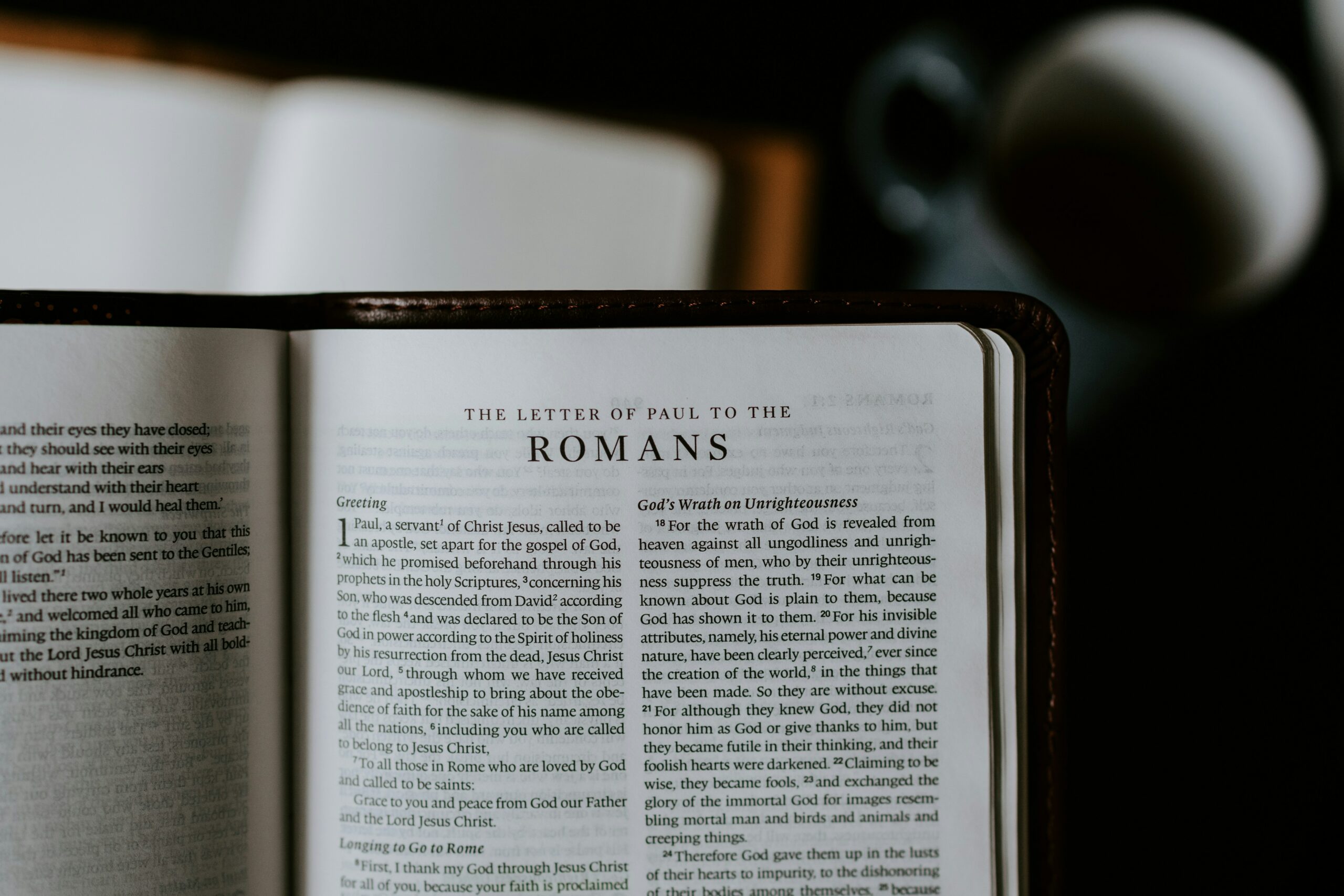
Principles of Civility Pt 2
This sermon explores the Christian duty to submit to civil government by examining the principles of civility found in Romans 13. It argues that all authority is established by God’s sovereignty, making resistance to legitimate government an opposition to God’s ordinance. The teaching distinguishes between blind obedience and the necessary limits of submission, citing John the Baptist and the apostles in Acts as examples of resisting state commands that contradict divine law. The central message is that while Christians are called to be peaceful and law-abiding citizens, they must ultimately obey God rather than men when earthly authorities demand actions that violate biblical truth.
Transcript
God’s people would take their
Bibles and turn back once again to that rich passage that we’ve
already begun. But even as so many comments
at the back door last week, we have a lot of ground yet to cover
a lot of questions to answer, a lot of thinking to do. God is up for the task in bringing
us into this deep passage I shared with you a quote last week that
one pastor said the 13th chapter of the epistle to the Romans
contains what are perhaps the most important words ever written. For the history of political
thought. And we began to enter into those and certainly I would
say that they are from the Bible standpoint absolutely clarifying
and. Thought provoking. And certainly
important, but not everybody shared that opinion. I was reading
again this past week and came across one obviously liberal
commentator who said these seven verses have caused more unhappiness
and misery in the Christian East and West than any other verses
in the New Testament. Well, that’s just a ridiculous
statement. and really comes from a heart
of ignorance that not only does not inherently honor God’s word
but doesn’t understand what is even being communicated here
in these seven verses. We’re beginning to consider the
Christians role with government and we’re not out of sync. Paul
hasn’t just thrown a monkey wrench in his plan, if you will. Paul has a purpose. He is addressing
life with others. He has been involved in doing
this since Chapter 12, verse nine, where he addressed life
with believers. And then he went on to talk about
those who are hateful, those who are downtrodden, those who
are contrary to who we are and to what we believe. And so it’s
only natural that Paul enters into a consideration of how Christians
are to interact with how are we to get along. How are we to
function with government unbelieving government is government evil
is it usurping God’s authority and therefore to be not only
disobeyed but even fought against by the Christian? Is it inherently
evil? Can a Christian, in good conscience,
can we cooperate with government? Can we function within a society
where government is exercising authority? Those are the questions
with which we’ve begun to wrestle. Those are the questions, some
of which, that Paul begins to address and interact with and
really, as I suggested last week, Paul isn’t looking here in Romans
13 to give us the final word. He’s not writing a tome, if you
will, on Christian and government, but he is giving us principles
of what we refer to as civility, principles of civility. How is
the Christian to function in the land? And I Noted last week
that I think that there are four distinct principles here we began
to take up the first. But in order to just kind of
set the ground again. I wanted to. To review this idea of the church
and the state and the relationship between them. What you have is
essentially two kingdoms and they’re not at odds with each
other necessarily. They are, in a sense, mutually
dependent. Each kingdom has authority. Each of those kingdoms has limitations. The church is, by God’s design,
to instruct and to hold morally accountable human government. Government is designed to establish
and uphold the law. And as we saw last week in our
consideration of Gregory the Great 590 to 604 as we considered
Gregory the Great the one who really thought there was a great
idea to blend human government with religion. Well the result
was disastrous. What we got out of that was the
Roman Catholic Church. Too much power in either one
of those entity’s hands tends to lead to corruption and that’s
what we saw growing out of. That regime. So the question
of our day and age is there to be a complete separation of church
and state and if there is to be a separation. How then is
a Christian to function. You just talk for a moment about
that whole idea of separation of church and state. Because
the current view is just plain wrong. This current view where
religion is never supposed to influence. We can’t have the
Ten Commandments in a public place. You can’t pray. You certainly can’t pray in Jesus
name in a public place. That religion is supposed to
be completely outside of and devoid of any influence in the
life of earthly government. Well, is that true? Tell you
about the idea of the separation of church and state. It’s it
really is a misunderstanding of the First Amendment. Settlers
came to America seeking religious freedom. They weren’t so much
concerned about Securing that liberty for others initially
although that has been largely the legacy of the United States
of America is throughout the world trying to set up democracies. But initially they were looking
to secure that freedom for themselves. As one said to establish a state
church that was more to their liking than that which they had
left in England that was the that was essentially the escapism
in which they were involved after the War of Independence. There
were 13 states and each one had their own religion or at least
a relative blend of religions. There were Anglicans there were
Puritans there were congregationalists there were Presbyterians there
were Quakers Baptists not to mention Roman Catholics. Well
the state didn’t want the federal government dictating to them
which denomination was correct and the result was the First
Amendment and the First Amendment said Congress shall make no law
respecting an establishment of religion or prohibiting the free
exercise thereof. So in other words The state was
to stay out of the business of religion and not religion out
of the state. Well what they were fearful of
is that the state would establish an official state religion that
all would be Baptists or what have you. What they sought to
do is that to essentially empower each state to be able to exercise
religion freely without any government control. So the interesting thing
in that whole equation is that separation and church and state
aren’t even mentioned in that amendment. Well. Really that whole thing. The whole episode as it unfolded
has really led to an ongoing wrestling match for the Christian
of how exactly to function within a godless largely godless government. How much influence are we to
attempt to have. How much influence are we to
allow government to have in our own lives. How are we to relate
one to another. As I said Paul doesn’t answer
every question. Paul doesn’t even seek to solve
every last contingency that could come up with regards to government
and Christianity. What he does is give us, in these
seven verses, four powerful principles that I have referred to as the
principles of civility. If you would, go back with me
in verse 1 of chapter 13 as we begin to consider these principles. Paul wrote let every person be
in subjection to the governing authorities for there is no authority
except from God and those which exist are established by God. Therefore he who resists authority
has opposed the ordinance of God and they who have opposed
will receive greater pardon me will receive condemnation upon
themselves. for rulers are not a cause of
fear for good behavior but for evil. Do you want to have no
fear of authority do what is good and you will have praise
from the same for it is a minister of God to you for good. But if
you do what is evil be afraid for it does not bear the sword
for nothing for it is a minister of God an avenger who brings
wrath upon the one who practices evil. Wherefore It is necessary
to be in subjection, not only because of wrath, but also for
conscience sake. For because of this, you also
pay taxes for rulers are servants of God, devoting themselves to
this very thing. Render to all what is due them. Tax to whom taxes do custom to
whom custom fear to whom fear honor to whom honor. In case
you’re forecasting, as I’ve said, I think there are four distinct
principles woven throughout this discussion. First of all, is
the principle of obedience there in the first. Two and a half
verses, I would go through three a. The principle of obedience,
that’s where we left off last week, we’re in the midst of that
consideration, the second principle beginning in the second part
of verse three and carrying all the way through verse four is
the principle of decency, decency. The third principle in verses
five and six is the principle of conscience, and Paul gives
us the fourth principle in verse seven, the principle of propriety.
Let’s pick back up with where we left off last Lord’s Day,
the principle of obedience. Paul needed to address this. The Christians in Rome were a
small fledgling church just seeking to get established right under
the nose of one of the most powerful most excellently formed governments
the world has ever known an intricate system of laws and courts and
lawyers and they ran a tight ship. And so for Paul to assume
that these young Christians were just going to naturally know
how to blend in and interact with a heathen government would
have been naive. And so Paul takes it upon himself.
To to write. To include in this list of life
with others. How a Christian was supposed
to function with civil government. The apostle basically calls them
to a life of obedience, and we began to take that up last Lord’s
Day. This whole idea, though, of a
discussion of church and state was a logical thing for Paul
to address in a in a letter written to the church living in the heart
of the Roman world. The Jews, you see, as we reviewed
last week, the Jews had been they were notoriously resistant
and with cause. To a degree, they were only trying
to obey scripture, Deuteronomy 17, which said you shall surely
set a king over you whom the Lord your God chooses. Well,
there was no Caesar, no Caesar, no heathen. ungodly Caesar in
their book that could even possibly begin to fit that bill. God had
not put him there. So they thought. You should surely
not set a king over you and the Lord your God. You should surely
set a king over you whom the Lord your God chooses one from
among your countrymen that you. So the Jews were only doing what
they thought was right. When they began to resist. And
so, this little sect, or so it was considered by the heathen
world, this sect of Christianity coming up from the roots of Judaism
certainly was going to be seen as being of that kind, hostile
to the existing government. And so, Paul naturally would
want to address that with them. As one said, Christians having
become the subjects of the kingdom, which is not of this world, might
be led to suppose that they were released from the ties of obedience
to human authorities. You see, they might even come
up with this idea themselves. They have seen the Jews fight
against the Romans and they might think we have a king in the Lord
Jesus Christ. He has a kingdom and we look
forward to that kingdom in heaven one day. That is essentially
parted parcel of the gospel. And they might come to the conclusion
that you know what no earthly king is worth obedience. No earthly
king needs my cooperation when I am a child of the King of Kings. And so the Gentiles didn’t even
need the Jews to lead them in that direction. They had fallen
into all kinds of different ideas, misinterpretations of those doctrines. That once you became a Christian,
somehow you could brush your hands and free yourselves of
any kind of obedience to an earthly government. Well, Paul says that’s
not the case. And Paul found it to be absolutely
crucial to write to the Roman Christians and to set the tone
for the sake of the gospel, so that the gospel would flourish,
so that unnecessary trouble would not come upon them. But as we
said, this is not the final word. Paul does not answer every question
that could ever be posed. I went through a litany of those
questions last Lord’s Day. Found new questions that were
unanswered even this past week. Question of duty to a corrupt
and unjust authority. That’s one that we all even in
our own day. Even in our own day, we find
it difficult to submit ourselves to unjust. Government. The question of conflict between
civil and spiritual authorities, what happens when we disagree? When is a government legitimate
and when is it when a coup takes place when some drastic measures
are taken which government is legitimate and to whom do I owe
my allegiance. Is it right. When is it right.
Is it ever right to rebel against tyranny. Is it permitted at all. Paul doesn’t address that Paul
doesn’t address Nor does he solve the problem of rebelling against
tyranny, and he doesn’t distinguish between what is legitimate and
usurped authority. There are a host of questions
that Paul never even takes up. What he does, though, is give
us the framework, and I would say the framework that exists.
As legitimate for all time. The framework of how a Christian
is to function within society. As we begin to look at the principle
of obedience, as we took up last Lord’s Day, Paul addresses everybody. He said, let every person literally,
he says, every soul, and we took that to mean that that is a powerful
statement on Paul’s part. He could have used every individual.
He could have blended that literally into the verb itself. Be in subjection. We would translate that with
three different words. Paul could have said it with
one Greek word implying that everyone was responsible. And
yet he adds this word soul. That it was the duty of every
person anywhere to be in subjection to civil authorities. And that’s a bitter pill to swallow,
isn’t it? Robert Haldane, one of my favorite commentators,
said it almost as strongly as you can say it. When he said,
everyone without exception. It is by the command of God to
be subject to the existing powers. Whatever were the means by which
they became possessed of the situation in which they stand,
If God has appointed every government that exists in the world, his
people are bound to submit to every government under which
their lot has been cast. So if you come into a society,
if you’re born into this situation, even communism, what have you? That’s the situation into which
God and His sovereignty has placed you. And Haldane goes on to point
out that you are absolutely called every soul. You were called to
be in subjection. Every Christian in any country,
in all kinds of situations and. Settings. Another said it this
way. That word, lest you think that,
well, maybe Paul means some kind of relative obedience. Some kind
of, okay, I’m an American. Yes, the president’s in power
is indeed my president, but what does this subjection look like
anyway? And we want to mute that idea
of subjection. Well, subjection. It’s pretty
graphic as well. Not only every soul, but the
word subjection. We saw this last week. It’s used
repeatedly. It’s used of leaders in the church. It’s used of our attitude towards
God. It’s used of Christians. It’s
used of wives and husbands. It’s used of slaves and masters. And the word that the apostle
uses here In its root, the root of this word is a military word. And it basically denotes soldiers
arranging themselves in order under a general, in other words,
get in line. They are in subjection, they
answer to their general. That’s the nature of this word.
And so instead of being rabble rousers and revolutionaries,
Christians really are called to be the very best citizens
that if anybody is a peaceable lot, it’s the Christians in our
midst. If anybody is is to support their government, it is to be
the Christians in any land. Those are hard things. Those
are hard things, no matter where you live. Because it’s an ungodly
government. Most times we don’t have a problem
with this idea of sovereignty and submitting to, you know,
the Ronald Reagans of the world who profess Christ. We don’t
have a problem with that. But when the tables are turned
and maybe the profession is not so clear, maybe The profession
is just downright contrary. It’s not. That’s the time when
we begin to wrestle and stammer and reshape our theology and
reshape our behavior. Peter said it very clearly when
he said submit yourselves for the Lord’s sake to every human
institution. Whether to a king is the one
in authority or to governors sent by him for the punishment
of evildoers and the praise of those who do right. God has a
point. God has a plan. God has a purpose. And when God calls us to submit
to earthly government, regardless of whether we agree with the
politicians positions, regardless of what we think about them personally. It’s absolutely clear. These
first few words, let every soul be in subjection to the governing
authorities. There’s no way out. Absolutely clear. Paul goes on to begin to give
the reasons. This is where we left off last
week. Paul begins to give the reasons why we’re supposed to
do this. Why? Why is this strident call for
subjection given here, even in a government that even in Paul’s
day was so on the face of it, unjust and harsh. Glance at the verse again, let
every person be in subjection. to the governing authorities,
for there is no authority except from God, and those which exist
are established by God. Pause again. We saw that Paul
here begins to give the reason for this obedience, for this
objection, and he states it two different ways. He states it
first positively and then negatively. But Paul points out that. This
authority, this established authority has God behind it. God is the
one that has done this. God is the one that has placed
these authorities where he has them. In fact, even the word
itself itself, excusia, it’s a delegated power. As one described
it, its power that is given to a person or group or persons
by another. God has given them this power. Paul uses it because he wants
to make explicit that the authority of the governing powers is from
God, they are responsible to God precisely because God has
given them that power. Now, that’s an absolutely crucial
fact to remember as we begin to function in this land and
begin to adopt and adapt to these principles that Paul is given.
God put them there. God has placed this authority. God has allowed this system of
government to develop in the land in which we live. And God
puts the specific players in their places. And he does so
for his own reasons. and reasons that are most times
are beyond our finding out. But I want you to note it’s not
just by divine permission that God allowed back in the 1700s
this form of government. You know these wise men came
along they wrote out these really neat separation of powers and
they came up with this system of how to elect presidents and
representative government and then God just stepped back and
watched it all unfold. That’s a lot of times how we
think God operates in the world. God, you know, set the globe
in motion and sent it hurtling through space and he lets everything
else figure itself out, including our weather. Well, that’s just
silly. Any idea of the sovereignty of
God and the depth and degree of God’s sovereignty, you know,
we love we have come to love the doctrine of God’s sovereignty
with regards to salvation, haven’t we? That God, for no other purposes
than His own, looked down upon you and I and by purely by His
mercy and out of His grace elected us and drew us out of this pile
of sin. We love that doctrine. But we
don’t much care for that doctrine when we see others who are just
plain ungodly by our own assessment when we see them placed in a
position of power, when we see weather. That is disagreeable
to us, we think that God must must have taken a break that
Tuesday. It’s not divine permission that’s
at work here, it’s divine sovereignty, it’s by God’s appointment, it’s
God at work. allowing and putting in place
the powers that be. It is the divine appointment,
said one, of the government that is over us that the ground on which the
duty of our submission rests. What a comfort that is. What
a comfort that is to God’s people. to know you know what I can submit
to you. I can obey you in so far as that
goes and we’ll talk about how far that goes in a moment. You are indeed my president. I will indeed pray for you. I
will work with you. I will cooperate with you in
so far as I am able because God put you there. But it also means
something else. It also means that that individual
whom God has placed in that particular position is answerable to God. We like to play God, don’t we?
We like to think that, boy, you’re going to get it. In fact, I’m
going to take the lead role here and I’m going to give it to you.
I’m going to tell you what you’re doing is wrong, who you are is
wrong, how you’re going about things is all wrong. And I’m
going to do everything on my power to drag my feet and to
stand in the way of your agenda. Well. The interesting thing is,
is that God put them there, they’re answerable to God, no power on
earth, no power that exists exists. on its own or by its own. God
appointed these powers. And they’re answerable to God. There is no authority except
from God and those which exist are established by God. Do you
know what God what Paul starts with here? He starts with the
doctrine of sovereignty. As he considers this principle
of obedience, he reminds us that God is absolutely sovereign. Nothing takes place where God
doesn’t see. Nothing is out of his control.
No law gets passed. No deed is done whereby God does
not see. James Boyce. Godly man that I
had the privilege to here a number of times in person, but James
Boyce, his commentary on Romans, he nailed it when he said this.
The starting point for Paul’s argument is the doctrine of the
sovereignty of God. In this case, in regard to human
rulers, God is sovereign. Therefore, those who exercise
authority do so because God has established them in their positions. It’s easy for us to accept God
as being sovereign when we are given Christian rulers or when
people of high moral character are elevated to positions of
responsibility. But what about evil rulers? Did
God somehow lose control? Has God somehow taken leave of
his exercise as king of the nations? I alluded to this just ever so
briefly last Lord’s Day, and I want you to enjoy God’s Word
as much as I do. Would you turn to Daniel, the
book of Daniel and chapter four? I want you to see that. God is
sovereign. God is absolutely sovereign and
God sets up kings and he pulls down another. And it’s God being
God. It’s God exercising His divine
sovereignty. Daniel chapter 4. Go all the
way back to the beginning. Verse 1. Where it’s recorded. Daniel chapter
4 beginning in verse 1. Nebuchadnezzar the king to all
the peoples, nations and men of every language that live in
the earth. May your peace abound. It seemed good to me to declare
the signs and wonders which the Most High has done for me. How
great are his signs and how mighty are his wonders. His kingdom
is an everlasting kingdom and his dominion is from generation
to generation. I, Nebuchadnezzar, was at ease
in my house and flourishing in my palace, and I saw a dream. Now he goes on to begin to tell
Daniel this dream. And the dream is an intricate
dream that ultimately begin in verses 10 through 17 and on. It tells of this just fantastic
dream. And Daniel comes in, whose name
is Belshazzar, verse 8 and begins to consider the interpretation
of this dream. Jump down to verse 17, where He basically begins to say this
sentence, this dream that you’ve had is a it’s a very intricate
dream and it has meaning, very significant meaning. Where your
kingship, your rulership is going to be taken from you. Verse 17
says the sentence is by the decree of the angelic watchers and the
decision is a command of the Holy Ones in order that the living
that is you. Nebuchadnezzar may know that
the Most High is ruler of the realm of mankind and he bestows
it on whomever he wishes. Well, Nebuchadnezzar recognizes
that he says the spirit of The holy gods is in you. Daniel begins
to unfold the meaning, the significance of this dream, verse 20, the
tree that you saw, Daniel or Nebuchadnezzar, the tree that
you saw, which became large and grew strong, whose height reached
to the sky, whose foliage was beautiful, fruit abundant and
whose was food for all. It’s you. Daniel points out to
Nebuchadnezzar. You dreamed of this dream, this
tree being chopped down. He’s talking, Nebuchadnezzar,
about you. That though you had grown great
and strong, dominion over all the earth. And then it gets worse. Daniel,
in giving this interpretation, look at verse 24. This is the
decree of the Most High. Verse 25, that you will be driven
away from mankind, your dwelling place, the beast of the field.
You’ll be given grass to eat like cattle and be drenched over
the dew of heaven and seven periods of time will pass over you until
you realize, recognize that the Most High is ruler over the realm
of mankind and he bestows it on whomever he wishes. Your kingdom,
he goes on to say, will be assured to you after you recognize. that it is heaven that rules.
Well, if you know the rest of the story, this is exactly what
took place. He went out. He began to eat
grass. He was walking around, you know, on the palace of his
roof. God found him to be proud. He
sent him. He went through this exact same
thing. And at the end of that period,
Nebuchadnezzar comes to his senses and he realizes that God is sovereign. God is the one that sets up kings.
God is the one that brings down kings. God is absolutely sovereign.
There is absolutely no authority except from God. And those that
exist are established by God. And that has an implication.
That has a significance. And for that significance, would
you turn back to Romans in chapter Paul has already called us to
be in subjection to the governing authorities. That is not a blind
subjection, as we’ll see in closing. Let every person, every soul
be in subjection to governing authorities. For there is no
authority. There is sovereignty woven into
this. There is no authority except
from God. No one takes that. It doesn’t
occur in a vacuum. No one seizes hold of authority
except by God’s permission. And those which exist are established
by God. And there’s an implication. There’s
an implication that is Absolutely relevant for us today as it was
for those young Christians in Rome. Verse two. Therefore, he who resists authority
has opposed the ordinance of God. And they who have opposed
will receive condemnation upon themselves. These are solemn
words. been much abuse and misuse over
this that we are to give either blind obedience or that these
words don’t apply to us as Christians. The word obey and uphold whatever
a government tells us to do or on the opposite end of the scale
that these words no longer. This was an errant verse that
made it into the Bible and we obviously don’t have to obey
it. The bottom line is what Paul
is saying here is that since civil authority is ordained by
God to refuse to recognize it and submit ourselves to it. Is
essentially to set ourselves up in rebellion against God himself. That’s what it says. When we
begin to oppose the government, the earthly government under
which we find ourselves, When we begin to bristle against that
and to set ourselves up against that, we pick a fight with God
Himself. John Brown, Puritan commentator,
said it this way, whoever then sets himself against this divinely
ordained government, not only commits a crime against society
in disturbing a useful human arrangement, But is guilty of
sin in opposing a divine arrangement, not only a crime. But a moral
delinquency. See, if God has set up. This
government. And if God has set up these governors,
those in positions of power. that this government has a divine
purpose. And even the person that God
has placed in that particular spot has a divine purpose. That for us to begin to resist,
to fight against them, to withhold our taxes, to refuse to serve,
to refuse to obey the laws, to resist That government is to
resist God. That’s not my quirky interpretation
of the passage. That’s Paul himself. He who resists authority has
opposed the ordinance of God. God is the one that put it there.
The one thing that we can look at here is what is exactly the
implication. Because it says, secondly, those
who resist authority have opposed the ordinance of God, and they
who have opposed will receive condemnation upon themselves.
Is this saying that, you know, if you begin to drag your feet,
fold your arms and pout because your guy didn’t get elected and
by golly, he’s not my president. I’m not going to serve him. I’m
not going to obey. I’m going to withhold my taxes.
I’m going to find every creative way I can to fight against this
government. Does that mean I’m going to hell? Whose condemnation is it anyway?
Is it God’s condemnation or is it the government’s condemnation?
That’s the question you have to come away with. It does say
that they will bring judgment upon themselves. Condemnation. The older translation, King James,
I believe even here has damnation. That word is obviously strengthened
over time. to where you read it and you’re
reading damnation, that’s pretty clear, isn’t it? Well, the word
is judgment or condemnation. You’re going to incur just punishment. And so if you refuse to pay your
taxes, there is going to be a price to pay if you refuse to obey
the laws of the land, there’s going to be a price to pay. I
don’t think he’s talking about eternal damnation here that if
you refuse to submit to the government placed over you that somehow
your soul hangs in the balance. That’s not what he’s saying.
Saying if you refuse to obey the laws of the land if you refuse
to submit to those who are in authority over you you’re going
to pay. You’re willing to pay. It’s a
lot of times what it comes down to with regards to civil disobedience. Those who refuse to go and serve
in the military. If your card comes up and you
are drafted. No, you don’t have to go. But
if you don’t go, you have to pay. You’re going to go to jail. You’re going to see prison time.
The law has its consequences and you’re going to face those
consequences. The punishment that the Roman
Government inflicted was no light punishment. And what Paul says
is you’re going to bring just punishment down upon yourselves,
they have the right to go into that in great detail in the verses
ahead. One pastor said it this way.
The reason for such individual and universal submission is found
in the fact that civil government has its source in God. That much
we’ve seen and therefore to resist the authorized officers of the
government is to resist God. But they are his rightful representatives
and such resistance will receive condemnation. By human authorities
and by divine sanction. Can I give you a great illustration
of exactly how far this goes? A biblical illustration. Who better but John the Baptist? John the Baptist. didn’t just
render blind obedience to every evil statute that was given.
John the Baptist didn’t withhold the gospel. John the Baptist
didn’t refuse to promote righteousness in the face even of an evil government. John the Baptist did what he
did willing to receive the unjust consequences if they came. Would
you turn in your Bibles to Mark chapter 6? And here we find John the Baptist
and Herod. And we find an excellent example
here of gracious resistance. John could no more endorse what
Herod was engaged in than to deny the faith that he had in
Jesus Christ. Look at verse 17 to begin with. What an account. How thankful we are the richness
of Scripture to record settings like these to put in context
our submission to earthly government. Herod himself, verse 17, had
sent and had John arrested and bound in prison on account of
Herodias, the wife of his brother Philip, because he had married
her. You know what’s going on here,
right? You can explain it to the kids in your own terms. But
basically, he has what is not rightfully his. For John had
been saying to Herod, it is not lawful for you to have your brother’s
wife. Now, there are people that would
take these words of Paul in Romans chapter 13, being subjection
to governing authority, for there is no authority except. You know
what? There are people that would say
John should have kept his mouth shut. This is his rightful authority. Ultimately, John has an authority
to answer to far greater than Herod. John said, you know what, what
you’re doing, what you’re doing is wrong before God. Herodias
had a grudge against him, verse 19, and wanted to put him to
death and could not do so, for Herod was afraid of John, knowing
that he was a righteous and holy man and he kept him safe. And
when he heard him, he was very perplexed, but he used to enjoy
listening to him. What a fascinating account. A
strategic day came when Herod on his birthday gave a banquet
for his lords and military commanders and the leading men of Galilee.
And when the daughter of Herodias herself came in and danced, she
pleased Herod and his dinner guests, and the king said to
the girl, ask for me whatever you want and I will give it to
you. for to her, whatever you ask of me, I will give it to
you up to half my kingdom. And she went out and said to
her mother, what shall I ask for? And she said, the head of
John the Baptist. Immediately, she came in hurry
to the king and asked, saying, I want you to give me at once
the head of John the Baptist on a platter. And although the
king was very sorry, yet because of his oaths, because of his
dinner guests, he was unwilling to refuse her. Immediately, the
king sent an executioner and commanded him to bring back his
head. And he went and had him beheaded in prison. You see. The state, the government can
command obedience only so far. It’s not like John the Baptist
was going to bite his tongue. and allow this illicit relationship
to go on unchecked. He was not going to give his
blessing to it, and ultimately it cost him. And that’s what
we have to be willing to do in this society in which we live.
We don’t have to sit back and put a rubber stamp on what’s
morally wrong. We don’t have to ignore it. We
don’t have to our submission to this earthly government doesn’t
mean that we render a blind obedience to it. It’s within the limits of what
has been divinely instituted. The states, the government. Not
only may be resisted, but must be resisted when it demands allegiance
or submission which belongs to God alone, we don’t bow down
and worship civil government. And if there is a conflict between
the command of an earthly ruler and a commandment of God, it’s
very clear what command we must obey. Turn, if you would, to
the book of Acts. The book of Acts chapter 4. Pick it up in verse 13. As they
observed the confidence of Peter and John, they understood that
they were uneducated and untrained men. They were amazed. They began
to recognize them as having been with Jesus and seeing the men
who had been healed standing with them. They have nothing
to say in reply, but when they had ordered them to leave the
council, they began to confer with one another, saying, What
should we do with these men for the fact that a noteworthy miracle
has taken place through them as a parent to all who live in
Jerusalem? We cannot deny it, but so that
it will not spread any further among the people, let us warn
them to speak no longer. to any man in this name. Don’t tell anybody about Jesus. No more evangelism. No more of this gospel talk. That’s what they came up with.
And when they had summoned them, verse 18, they commanded them
not to speak or teach at all in the name of Jesus. It’s over. Peter and John answered and said
to them, whether it is right in the sight of God to give heed
to you rather than to God, you be the judge. I love the way
they do this. They put it. Well, who would
you who should you who do you think we should obey? I love
the way they put this to them, the rulers. You know, we believe
in God, God does exist, we we all know that God exists. Who
do you think we should obey you? Whether it’s right in the sight
of God to give heed to you rather than to God, you be the judge.
We cannot stop speaking about what we that which we have seen
and heard. Turn over one chapter, if you
would, to Acts chapter five. Verse 27, When they had brought
them, they stood them before the council. The high priest
questioned them, saying, We gave you strict orders not to continue
teaching in this name, and yet you have filled Jerusalem with
your teaching and intend to bring this man’s blood upon us. Peter
and the apostles answered, We must obey God rather than men.
The God of our fathers raised up Jesus, whom you had put to
death by hanging him on a cross He is the one whom God exalted
to his right hand as a prince and savior to grant repentance
to Israel and forgiveness of sins. And we are witnesses of
these things. And so is the Holy Spirit whom
God has given to those who obey him. You know what? We have to
obey God. If it comes, if push comes to
shove and the government is either commanding us to do that which
God forbids or forbidding us to do that which God commands,
it’s simple. We don’t even have to think about
it. We have to obey God rather than man, and we’ll gladly pay
whatever penalty is required up to and including our death. One pastor said it this way,
the obedience which the Christian man owes the state is never absolute,
but at the most partial and contingent. In other words, he says, we’re
going to go this far, we’re absolutely in subjection, we’re going to
obey them, but it has its limits. It is partial and contingent.
It follows that the Christian lives always in tension between
two competing claims. That is certain. That is, in
certain circumstances, disobedient to the command of the state may
not only be right. But a duty. You know, there’s
times where you know what we stand up when we say no. No,
we will not obey because to obey you would be to disobey our God
and we can’t do that. So punish me if you will take
me to prison. Burn me at the stake if you will. We must obey God rather than
men. We’re not to look at civil government
in and of themselves. But we’re to realize that they
have limits. We’re to realize that what they
are and who they are has been given them by God. And the moment
they begin to rise above what has been given them by God, the
moment they begin to dishonor their power, we must disobey. Generally speaking, we’re to
honor them. We respect them above all else. We place ourselves submittedly
under them, we submit ourselves to them. But there are limitations. When they tell us that we can
no longer evangelize. As one said, we disobey government
whenever the state forbids the preaching of the gospel, as soon
as they tell us, you know what this gospel of yours. It’s intolerant. It’s intolerant and it offends
a large sector of our society, namely the homosexuals. Morality. When the government begins to
command Christians to perform immoral and unchristian acts,
that’s when we draw the line. What we refer to so often as
civil disobedience, when the state flagrantly disregards what
is right and wrong, we need to speak. We need to be the moral
voice. When civil government takes up and denies and disregards
and commands against that which God has commanded so clearly, Or when it forbids what God has
commanded, that’s when the Christians draw
the line to their obedience. That’s when the Christians yield
themselves up and say, like Martin Luther said, Here I stand. I can do no other. We will obey
God rather than them. Let’s humble ourselves before
that God. O merciful King, we live in a difficult day. And Lord, ever since Christ came
to this earth and called out Christians by faith, we have
been in a difficult day. We stand between two worlds.
We stand beneath earthly government and we stand in full view of
heaven itself, where the King of King resides, where God’s
law is perfect and holy and right. And Lord, in this world, we know
that we are called to conflict. We don’t seek it, but we know
that it’s inevitable. And Lord God, we pray that you
would grant us the grace to be gracious, humble, obedient and
submissive far as in our powers, whenever possible, that we would
be found to be the most peaceable, loving, gracious people. People that any king, any ruler
would be glad to have in his kingdom. But Lord, when those times come, where those kings or governors
or presidents step beyond the authority granted to them. When
they begin to dictate to us things that are offensive to you and
command us to do that which we cannot do without offending you,
grant us the grace, Lord, to stand up. To stand up and be
counted for what is right. To stand up and be willing to
pay any price, any cost. to be found standing with You, even if we stand against any
government. Grant us that grace, Father,
as we begin to ponder these principles. It’s in Jesus’ name that we pray.
Messages: 204