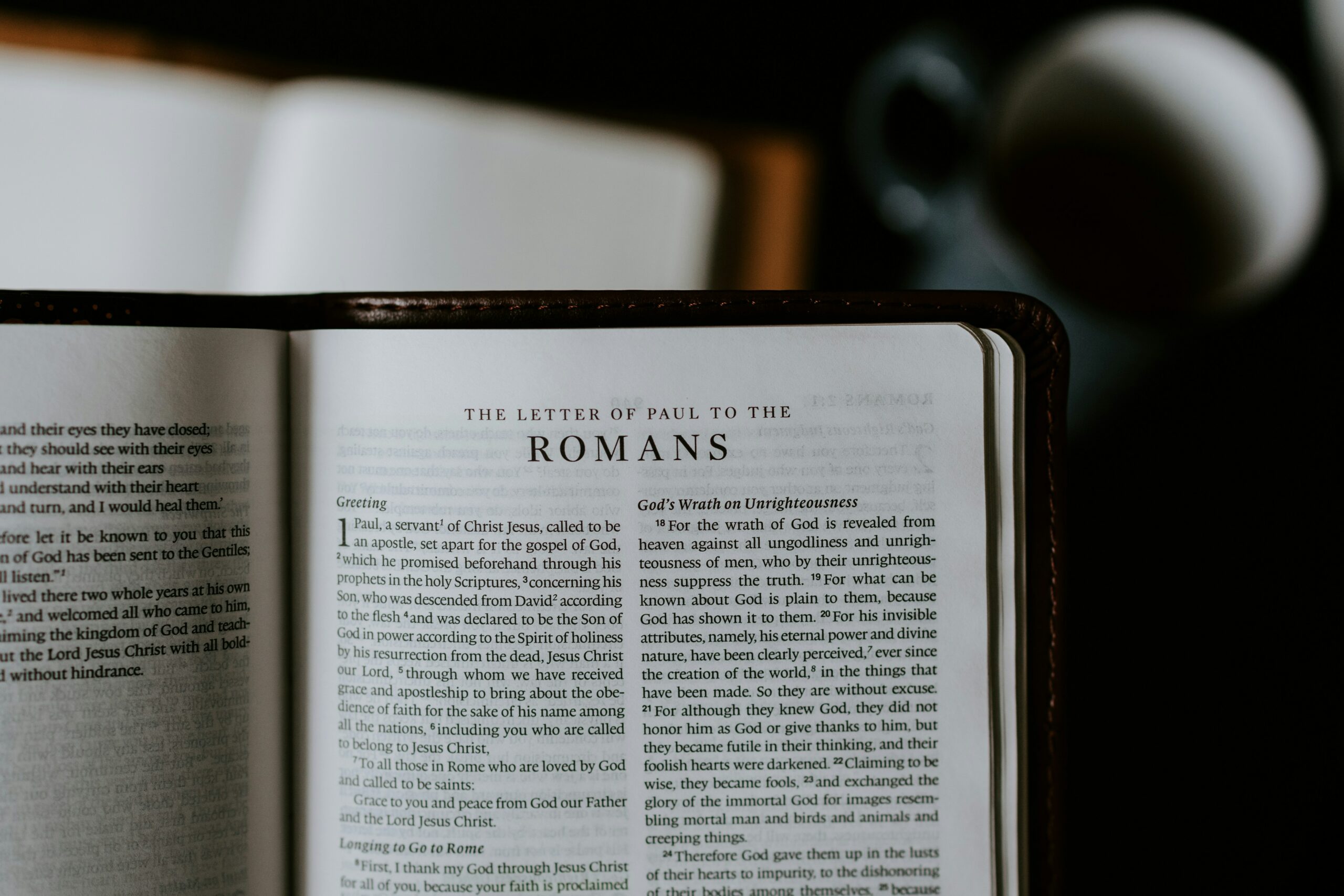
Life According to the Spirit, Part 1
This sermon explores the vital role of the Holy Spirit in the daily sanctification of believers, moving beyond the initial act of salvation to examine ongoing divine assistance. The central message emphasizes that Christians are under a solemn obligation to live according to the Spirit rather than the flesh, a feat impossible in human strength but enabled by God’s power. Key themes include the mortification of sin, where believers actively put to death sinful deeds through the Spirit’s empowerment, and the divine guidance that reveals believers as true sons of God. The preacher highlights that this guidance is not merely directional but involves a deep, controlling influence that leads believers into truth and righteousness. Ultimately, the sermon presents the Spirit’s work as the source of assurance, transforming fear into the affectionate confidence of adoption, where believers are recognized as full members of God’s family.
Transcript
the encouragement of God’s people that they may be confident and
beautiful in his kingdom. And in order to accomplish that,
what the Holy Spirit has Paul do is essentially outline all
the ways that the members of the Godhead have come to the
aid and really have rendered salvation and support to the
believer. We saw in the opening of the
chapter, verses 1-11, Christ’s contribution, if you will, to
this, in our establishment in Christ, in those verses 1-11. But here in verses 12-27, Paul
takes up the subject of the Holy Spirit. There’s so much context here
that in order to do it justice, we need to go all the way back
to verse 1, we’ll take it, and we’ll get a running start at
verses 12 and following. Romans chapter 8, beginning in
verse 1. There is, therefore, now no condemnation
for those who are in Christ Jesus. For the law of the Spirit of
life in Christ Jesus has set you free from the law of sin
and of death. And what the law could not do,
weak as it was through the flesh, God did, sending His own Son
in the likeness of sinful flesh, and as an offering for sin, condemned
sin in the flesh, in order that the requirement of the law might
be fulfilled in us, who do not walk according to the flesh,
but according to the Spirit. For those who are according to
the flesh set their minds on the things of the flesh, Those
who are according to the Spirit are things of the Spirit. For
the mind set on the flesh is death, but the mind set on the
Spirit is life and peace. Because the mind set on the flesh
is hostile toward God, for it does not subject itself to the
law of God, for it is not even able to do so. Those who are
in the flesh cannot please God. However, you are not in the flesh,
but in the Spirit. if indeed the Spirit of God dwells
in you. But if anyone does not have the
Spirit of Christ, he does not belong to Him. And if Christ
is in you, the body is dead because of sin, yet the Spirit is alive
because of righteousness. But if the Spirit of Him who
raised Jesus from the dead dwells in you, He who raised Christ
Jesus from the dead will also give life to your moral bodies
through His Spirit who indwells you. So then, brethren, we are
under obligation, not to the flesh, to live according to the
flesh. For if you are living according
to the flesh, you must die. But if by the Spirit you are
putting to death the deeds of the body, you will live. For
all who are being led by the Spirit of God, these are the
sons of God. For you have not received the
spirit of slavery leading you to fear again, but you have received
the spirit of adoption as sons by which we cry out, Abba, Father. The Spirit himself bears witness
with our spirit that we are children of God, and that children heirs
also, heirs of God and fellow heirs with Christ, if indeed
we suffer with him, in order that we may also be glorified
with him. For I consider that the sufferings
of this present time are not worthy to be compared to the
glory that is to be revealed to us. For the anxious longing
of the creation waits eagerly for the revealing of the sons
of God. For the creation was subjected to futility not of
its own will, but because of him who subjected it in hope
that the creation itself would be set free from its slavery
to corruption and into the freedom of the glory of the children
of God. For we know that the whole creation groans and suffers
the pains of childbirth together until now. And not only this,
but we ourselves, having the firstfruits of the Spirit, even
we ourselves groan within ourselves, waiting eagerly for our adoption
as sons, the redemption of our bodies. For in hope we have been
saved, but hope that is seen is not hope. For why did one
also hope for what he sees? But if we hope for what we do
not see with perseverance, we eagerly wait for it. Paul has laid out before us the benefits that we have being
in Christ, the fact that we are established in Christ. But his
purpose in, as we round the corner and turn into verse 12, of Chapter
8 is essentially to begin to diagram for us, to lay out before
us the work of the Holy Spirit in our lives, not just at the
moment of salvation, but throughout our lives. Last week, as we received
new members, one of the challenges that we issued was for the new
members to put their spiritual gifts to use in the local church
for the sake of God’s kingdom. It’s funny that many conservatives,
conservative Christians, begin to get nervous when you begin
to talk about the Holy Spirit, for fear that we might become
charismatic. Admittedly, there is much in the way of misinformation
and confusion about that subject Likewise, with regards to the
Holy Spirit Himself, and because of the questionable doctrine
to which some Christians and churches hold, the subject of
the Holy Spirit rattles a lot of people’s nerves. But we need
not shy away from the subject. the Holy Spirit, the third member
of the Trinity, has a vital and sacred role, not only in the
establishment of the individual as a believer in Christ through
regeneration, but also in the day-to-day, moment-by-moment
support of the Christian. Having completed, as we already
talked about, the opening section of Romans chapter 8, a section
that discusses our establishment in Christ, the divine assistance
rendered to us by Jesus Christ. Paul turns the corner, as I’ve
already said, to make an application, if you will, of much of what
has already been said. He wants to drive home the point. And in those first 11 verses,
Paul laid the groundwork. He established the fact that
we are established in Christ. but in doing so, in beginning
to make application, Paul zeroes in on the divine assistance that
is rendered by the Holy Spirit. If you would, go all the way
back to verse 12, as we begin to consider the Holy Spirit’s
assistance, and remember, even the use of this word, assistance,
is a weak, feeble word. When we talk about the fact that
We were spiritually dead. We were absolutely and utterly
in desperate straits. This assistance that is rendered
on our behalf is nonetheless God’s almighty power towards
us. It’s not just a little help along
the way. It’s God stepping in and doing
for us what we could not do for ourselves. We want to begin to
look at life. according to the Spirit. What
is life according to the Spirit? Essentially, it is a fulfillment
of our calling in Christ. It is the beginning of the Christian
walk. It is living according to the
Spirit and walking with Him. And in so doing, Paul will lay
out for us the divine assistance that the Spirit provides. Look
at verse 12, just to begin to consider these things. Verse
12 says, So then, brethren, we are under an obligation not to
the flesh to live according to the flesh. Now the implication
there is that there is a second part to that statement, right?
You can almost hear it. He tells us what we are not called
to do, which begs the question what we are called to do. Listen to it again. So then,
brethren, we are under obligation not to the flesh, to live according
to the flesh, and the implication is, but to the Spirit, to live
according to the Spirit. Those couple of words, so then,
one word in the Greek, in fact two words in the Greek, introduces
a new paragraph. that begins to step forward the
practical conclusion that Paul draws from verses 1 through 11. And it builds upon what he’s
already said. That’s why we pointed out those things. Paul’s looking
back over his shoulder and he’s remembering that as believers
we are no longer under any condemnation. That we have been set free, liberated
from the law of sin and death. No longer are we under sin’s
dominion. Now we walk. in the Spirit. Paul states the negative, but
it’s obviously that he has a positive statement in view, that we are
to live according to the Spirit. One characterizes it in these
terms, and I wouldn’t have been wanting to sit near him as he
made this statement, that what Paul said is less than what he
intended. I might say it this way. More is implied than what
was actually spoken. Paul didn’t shortchange us. The Holy Spirit didn’t leave
out an important part, but we can draw inferences and implications
from what Paul did say. That’s not wrong. More is implied
than what was actually spoken. And when Paul says we’re not
to live according to the flesh, he does mean that we are to live
according to the Spirit. And he says it in no uncertain
terms. We are under obligation. People, this is the language
of debtors. We are under debt. We are under
an absolute and solemn obligation. We’ve heard that we’ve been freed
from the law. We’ve heard that we’ve been freed from sin. And
you might think that now we’re finally free, free to do as we
please. But we’re not. We have a new
allegiance. We have a new master. We have
a new spirit by which we’re guided. He stands in an emphatic position
in the original, and it points to the fact that we are debtors
to the giver of the Spirit. We are debtors to God who gave
us that Spirit. To the flesh we don’t owe anything. The Spirit is quite another matter. One pastor characterized it,
opening words in this fashion, he said, the passage is an inference
from the exhibition of the nature and tendency of the flesh. That’s
what Paul has been drawing since midway through verses 1 through
11. He’s been pointing out the nature
of the flesh, that essentially it is death. To walk in the flesh
is death itself. It is hostile to God. It is destructive
to ourselves. As this is its nature, and believers
are no longer in the flesh but in the spirit, they are under
the strongest obligation not to live after the one, but after
the other. We can’t even conceive, having
been rescued out of that state, to return to that state, to return
to that kind of life. We can’t conceive of it. We’re under the strongest obligation.
We’re under obligation not to the flesh to live according to
the flesh. The flesh is, as one described,
in a complex sphere, if you will, of sinful desires and motives
and affections. And to live after the flesh is
to allow that to drive our life. Paul says, look, we’re not after
the flesh anymore, we’re not in the flesh anymore, we’ve been
rescued from that domain, and how utterly contradictory it
is for us who have been rescued out of that domain to return
and live in that condition. But the bottom line here, if
you look, remember this is a section on divinism. It’s a section reminding
us of the fact that God in His fullness, the Father, the Son,
and the Holy Spirit have all come to the sinner’s aid in salvation,
and they have all rendered assistance to us. And that should be a great
encouragement to us as believers, that we don’t stand alone, that
we don’t stand helpless or homeless. God has not left us alone, nor
did God merely give us, if you will, a jumpstart into the Christian
life and set us in motion and say, look, I saved you, now you
go live the best life that you can live. As if we were to be
carried along merely by inertia. Humanly speaking, I want to stay
on that verse 12 again. Humanly speaking, verse 12 commands
the impossible. That we are under obligation
not to the flesh to live according to the flesh, we are under obligation
to live according to the Spirit. But it’s obviously implied that
we are instead under obligation to the Spirit to live according
to the Spirit. It’s all perfectly reasonable and logical, but it’s
impossible. to any person in their own strength. And God knows that better than
us. And because of that, He has provided divine assistance. Because
of that, He has rendered divine enablement to us. And here, instead
of leading us to our personal energy to accomplish this incredible
spiritual feat, God opens the floodgates. And He equips us. just as Peter says elsewhere,
with everything pertaining to life and godliness. God opens
the floodgates and he pours it out on us through the Holy Spirit. How do we live the Christian
life? According to the Spirit. You say, well, I know that when
I was saved, the Holy Spirit had something to do with it.
He woke me up out of sin. He convicted me of sin. I’ve
read that. Where that was the Holy Spirit’s job. He convicted
me of sin. We talked about this last week.
He gave me gifts. I know that. And I know that
sometimes I get convicted of things, or maybe I get forewarned
of things. That’s the Spirit’s role, isn’t
it? Paul wants to tell us that the Holy Spirit’s role is much
more profound than that. The Holy Spirit didn’t just set
us in motion. The Holy Spirit didn’t just save
us, give us gifts for the service of the Church and God’s people.
The Holy Spirit is actively and powerfully at work in each one
of us, every moment of our Christian life. And Paul wants us to see
that. according to the Spirit. What
is the divine assistance that the Spirit provides? First of
all, mortification of sin that leads to life. Mortification
of sin that leads to life. It’s somewhat contradictory,
and so is the passage. Death, that in some way, produces
life. Thanksgiving, verses 12 and 13.
We are under obligation, not to the flesh, to live according
to the flesh. For if you are living according to the flesh,
you must die. This, by the Spirit according
to death, the deeds of the body, you will live. That little phrase
at the start of verse 13, if you are living according to the
flesh, you must die, essentially is a reiteration of the principle
that Paul had already introduced all the way back in verses 5
and 6. If you’re using your Bible, flip back to it and look. In
verse 5 it says, those according to the flesh set their minds
on the things of the flesh. That’s axiomatic. That’s how
they live because that’s the sphere in which they dwell. But
those according to spirit set their minds on the things of
the spirit. For the mind set on the flesh is death. It doesn’t bring about death.
It doesn’t draw down death. It doesn’t deserve death. It
doesn’t earn death. It is a life of death, if you
will. And I know that sounds contradictory,
but we are, as we said weeks ago, animated cadavers. We’re
walking around as dead men. Because it is an earthly life.
It is life in the flesh. It is life that is so utterly
displeasing to God that Paul goes on to say that it is born
out of hostility to God. Because we hate God, we walk
as dead men. If we don’t love Christ, We do
not subject ourselves to the law of God because we can’t even
begin to do so. And as such, we cannot and will
not nor will we ever please God. One pastor corrected, the apostle
is not warning genuine believers that they might lose their salvation
and be condemned to death if they ever fall back into some
of the ways of the flesh. There are some people that take
this that way, and it’s ludicrous if you look at the passage. He had already told us that in Christ
there is no condemnation. If you are a believer in the
Lord Jesus Christ, there is no condemnation. pointing to, rather, is a person
whose life is characterized by the things of the flesh and therefore
can’t possibly be a Christian. Rather, they are spiritually
dead. The phrase just indicates here for
us, it’s a promise, it’s a guaranteed effect from the cause. If you
are in the flesh, it is a life of death. This was born from the earliest
days that God gave the law. In Deuteronomy 30, 15, which
passage do I’ll turn to just briefly, I’ll quote just briefly. See I have set before you today
life, and prosperity, and death, and adversity. in that I command
to you today to love the Lord your God, to walk in His ways,
to keep His commandments, His statutes, His judgments, that
you may live and multiply, and that the Lord your God may bless
you in the land where you are entering to possess it. But if
your heart turns away and you will not to obey, that are drawn
away and worship other gods, I declare to you today that you
shall surely perish. It has always been life and death. And to walk according to the
flesh and live a godless life, to live a life that shuns any
idea of God and any legitimacy to His claim on our lives, is
a life of death. That’s not it. And what great words desire for
the children of God, by the way, Because there was a time where
all there was was this life of flesh. All there was was this
life of flesh, an effort to try to reach God by living according
to the law. And it was a life of death, that
there was no hope. We were without God and without
hope. But if by the Spirit you were
put into death, the deeds of the body you will live. Those are powerful words as well,
including death. The Puritans refer to it as mortification. Kind of a word that’s fallen
on my wayside. Mortification. The phrase essentially
means to consider as dead. To consider our former practices,
sinful habits, as dead with regards to ourselves. To consider them
dead. Peter said it this way, 1 Peter
2.11, Beloved, I urge you as aliens and strangers to abstain
from fleshly lust which weighs more against the soul. See, that’s
what most Christians forget about. They forget that it’s a war.
Not a skirmish. Not a struggle. That’s what we
like to refer to it. It’s a struggle. I’m struggling
with stones at every time. You’re in an absolute war. You’re in a death match. And
someone’s going to win. And someone’s going to lose. The mortified, said Vaughn, means
to quit the death. It’s an antithesis to the death
just mentioned as a result of sin. The verb in the present
tense indicates a continued process of resistance and self-denial. Peter said it in much more pointed
terms later on in that epistle when he said, therefore, since
Christ has suffered in the flesh, arm yourselves, get ready for
battle, take up arms against sin, is essentially what he says. Arm yourselves also for the same
purpose, because he who has suffered in the flesh has ceased from
sin, so as to live the rest of the time in the flesh no longer
for the lusts of men, but for the will of God. For the time
already passed is sufficient for you to have carried out the
desire of the Gentiles. You can’t live like them anymore,
because enough is enough. That’s what Peter says. The times
already past is sufficient. How did they live? How did Judah
used to live? Having pursued a course of sensuality,
lusts, drunkenness, carousals, drinking parties, abominable
idolatries, and what Peter urges us to do is mortify those sins,
put them to death. But they will take our life. The mortification had a two-fold
effect. Not only is God in the process
of mortifying, God is doing the work of putting to an end the
corruption in our lives. It is His chief desire for believers
to grow in grace, to grow and to become more and more like
Christ. But we have a hand in that as well. We’re supposed
to take an active role. We’ll talk about more in a moment
how to do that. John Calvin said it excellently
when he said, when the prophets recall man from evil, they demand
the destruction of the whole flesh, which is full of evil
and perversity. It is a very hard and difficult
thing to put off ourselves and to depart our inborn disposition. Do you hear what he says? It’s
a war. Don’t think that you’re going
to take this up casually and decide, oh, well, I’ll do away
with this piecemeal. Nor can we think that the flesh
is completely destroyed unless we have wiped out whatever we
have from ourselves. But since all emotions of the
flesh are hostility to God, the first step toward obeying God’s
law is to deny our nature. In other words, he says, there
are natural tendencies, propensities, our affections are all with their
back towards God. It is an all-powerful war to
mortify the flesh. No wonder Paul says in Galatians,
those who belong to Christ have crucified the flesh with its
passions and desires. Has that happened to you? Have
you looked at your own spiritual life, your own spiritual battle?
Have you crucified the flesh? pulse into the Colossians in
like manner. Therefore, consider the members
of your earthly body as dead to immorality. Don’t put your
hand to use for the evil deeds of the flesh. Don’t put your
mind, don’t use your eyes for those things anymore. Consider
the members of your earthly body as dead to immorality, impurity,
passion, evil desire, and greed, which amounts to idolatry. We
like to think that in our day and age, we’ve never seen an
idol, much less worshipped an idol. Yes, you have. The worst
idol in the world is yourself. How do we mortify the flesh?
We acknowledge sin. How do we mortify sin? How do
we put it to death? We acknowledge it before God,
we confess it, we cultivate the Christian graces, timing is word,
prayer, focus on God and heaven, focusing on those things that
are good, submission to Him, obedience to Him, and in the
process, that is the victory of battle. And battle after battle,
the war is won. Look at what he says that we’re
in the process of putting to death. The deeds of the body. Well, certainly some of these
could be good or at least neutral, right? But it’s not the deeds
that he’s talking about. He’s not talking about sleeping
and eating. He’s not talking about good deeds like multiple
times are mentioned in Paul’s epistle to Titus. What he’s talking
about, the word has an interesting background. It was used by one
historian to identify political intrigues and treacheries. It
has almost a devious nature to it, this word. Sinful deeds is
what he’s referring to. Doings, you might even say dealings. Sinful dealings. As one characteristic, he said,
the word body here is best understood, used in the sense of flesh. It is not the body’s activities,
sleeping and walking, which are intended, but the activities
of scheming of the sinful flesh, the human self-centeredness and
self-assertion. And he says, he’s God, to kill. But I want you to look down at
the passage. Because the passage gives us
the key. The passage gives us the divine assistance. It is
by the Spirit that we are immortalized in. Don’t try it by yourself. You’ve heard it said, don’t try
this at home? You absolutely, you will not want to try this
by yourself. Because in your own power you’re going to fail
and fail miserably. But by the power of the Holy
Spirit we are made strong. The Holy Spirit, and only the
Holy Spirit, can be the means of the destruction of these cynical
tendencies in our life. Any activity that is outside
of that, any activity where we’re trying to deal with these things
on our own, outside of divine assistance, is going to end in
shipwreck. We do this through developing
a principle life as we interact with Scripture. nourishing ourselves
in the Word. And we draw out of the Word these
biblical principles by which we live. And we pray. We pray ourselves strong. And
when conviction comes, when we sin, when we go astray and conviction
comes, those things are dealt with promptly, by confession
and application of a greater measure, a new and greater measure
of God’s grace. If we do that, we’ll live. What
a great promise. What a great promise this is.
And it isn’t just eternal life that he’s talking about. We will
live, really live like Christians are supposed to live. We will
thrive. I don’t want to just survive
in this life. I don’t want to just get by.
Do you? I want to thrive. I want to flourish. We want God
to use us as God desires to use us in a powerful and mighty way.
We want to live. We can only do it by the Spirit
as we put to death those sinful deeds of the flesh. But there’s
another profound way that the Holy Spirit helps us. The divine assistance that the
Spirit provides is not only mortification of sin that leads to life, life
itself, but it is a guidance that reveals us as sons. A guidance
that reveals us as sons. glance down, if you will, at
the passage again. Look at verse 14. For all who
are being led by the Spirit of God, these are the sons of God. It’s simple. Verse 14 essentially is buffeting
the argument given in verse 13. People that are being put to
death by those sinful deeds, We’ve already seen that they
are in death itself, walking in death, living in death. But
the people that are by God’s divine enablement, by the Holy
Spirit, able to put to death those disgraceful sins, are enabled
to do so because they are sons of God. That’s what Paul says
here. They are led by the Spirit of God, and they are led by the
Spirit of God because they are sons of God. What Paul points
to here is the divine guidance by means of the Holy Spirit.
He uses that simple word, led. He points back all the way to
verse 13, where Paul mentions the divine help, the divine helper
of Christian souls. And he points all the way down
to verse 27 with this line of reasoning chase. All the ways
that the Holy Spirit has worked is presented to us. See what
Paul is saying here in this sentence, verse 14. It’s a positive statement. The ones that are in focus are
actually the sons of God. We are the offspring, the children,
if you will, of God. There is no sex bias here. The daily, houring, putting to
death, the sinful schemes, all those ways that we offend God,
We do so by means of the Holy Spirit. All of that is a matter
of being led, guided, directed, if you will, controlled by the
Holy Spirit. As I said, the word led is a
simple word, but it implies that we are governed, if you will,
by the Holy Spirit. To be led by the Holy Spirit
means much more than merely to be guided by Him, as if we ask
direction on a particular point in our life and somehow, miraculously,
God provides that direction to us. It’s much more. It means
that the Holy Spirit becomes the controlling and guiding influence
in our lives, ultimately leading us to God’s glory. As one described it as by their
ruling principle, heart subjection to the pure rule of God’s will
is thought, word, and work, a subjection on the one hand perfectly voluntary
to man, in the other hand perfectly due to the divine agent and teacher. We are to walk in the Spirit.
We are to be guided, and led, and directed, and controlled
by the Holy Spirit. This is exactly what Jesus told His disciples would happen. In John 16-13, when He, the Spirit
of Truth, comes, He will guide you into all truth. For he will
not speak on his own initiative, but whatever he hears he will
speak, and he will disclose to you what is to come.” Paul said
it as well as the Galatians, that there is divine guidance
available to them, that they are to be guided and controlled
by God himself through the agency of the Holy Spirit. Paul said
there in Galatians 5.18, if you are led by the Spirit, you are
not under the law. We’re no longer seeking to adhere
ourselves strictly to some legal code. God’s order lies. It’s not the Ten Commandments
per se. It’s a walk in the Spirit that
nourishes us and guides us into doing what is rightly good and
proper. How do we gain this kind of guidance? We read His Word, just as we
just said. It is illumination. The Holy Spirit is the one that
illuminates God’s Word. That’s why whenever I teach Bible
study, I say, you know, the first thing you should do before you
even open your Bible is pray. Because if the Holy Spirit is
the great teacher, there are things that lie there on paper
that are obscure to us without His divine assistance. We should
pray. The Holy Spirit leads us by shining
God’s light. John Calvin called them the spectacles
of faith. You can’t read the Word without
that. The Holy Spirit leads us by warning us of temptation and
teaching us about our weakness. Have you had a prompting like
that? You don’t want to do that. Don’t you remember what happens
when you do that, when you go there? Don’t you remember what
happens when you speak with a hot spirit? The Holy Spirit leads us through
God’s Word and God’s ways. The Holy Spirit leads us by convicting
us about our sinful missteps. The Holy Spirit leads us, in
short, by the process of sanctification. And He doesn’t give up on us.
You’ll come to us ten times, a thousand times, if necessary,
over the same issue. Lead us. Whatever God wants. The Holy Spirit leads us by encouraging
us in righteousness. How do you felt the warm and
blessed smile of God when you knew who was right? It’s the
Holy Spirit leading you. revealing to you, ultimately,
the tendencies and the affections of a godless culture. The Holy
Spirit is leading you. Note this promise. It is guidance,
as I said, that has a promise. It’s guidance that reveals a
son. Essentially, this is proof of
the fact that you’re alive and a Christian. All who are being
led by the Spirit of God, these are the sons of God. And as I
said, there’s no sexism here. These are the children, these
are the very children of God, sons and daughters. Only those who are spiritual,
only those who are led by the Spirit, the Spirit of God, those
are the children of God. There’s an interesting phenomenon
in scripture. This term, son, or if you will,
child, expresses a number of different ideas. Let’s point
a list of a few. To be a son can refer to having
a similarity or disposition in character or nature. And so,
sometimes when you see somebody who has a temper, they’ll say,
he’s just like his dad, right? He is his father’s son. Don’t
look around. Matthew 5-9 says, Blessed are
the peacemakers for they shall be called sons of God. We’re
supposed to be like God. And so there’s that sense where
to be a son is to be of similar disposition. But there is also
another element of sonship. To be a son is to be a particular
object of affection. Romans 9.26 is used in this way. It shall be in that place where
it was said to them, you are not my people, there they shall
be called sons of the living God. There was a point in time
where they were not gods, yet they will enjoy that special
place. 2 Corinthians 6.18 says, I will
be a father to you, and you shall be sons and daughters to me,
spoken originally to God’s people, but now spoken to the church.
There’s a third way that it’s used to be a son. Not only to
exhibit some particular affection, not only to exhibit some particular
disposition that we display, but listen to this. It is those
who have a particular title, some kind of dignity or advantage. John 1.12 says it this way, as
many as received Him, to them He gave the right to become children
of God. What a special place of privilege.
You say, well, which way is He using it here? All of them? All of them? Those who are being
led by the Spirit of God, these are the sons of God. They look
like God. They act like God. They live
as God would have them to live. They are His special and peculiar
objects of affection. And they are those who have a
special place of dignity and honor in God’s kingdom. They
are saved peoples. There’s a third. Blessing and divine assistance
that the Holy Spirit renders. Not only does the Holy Spirit
grant us assistance in the mortification of sin that ultimately leads
to life, not only does the Holy Spirit grant us guidance that
ultimately reveals us as sons, but the Holy Spirit It communicates
to us an acceptance that engenders affection. I know that’s a mouthful. Bear with me. It’s an acceptance
that engenders affection. All I want to do this morning
is show you the passage. We’ll come back next Lord’s Day
and take it up. Look at verse 15. You have not
received the spirit of slavery leading to fear again, but you
have received the spirit of adoption as sons. There is such a great
sense of acceptance by God that we’re not as second-class citizens. I’ve talked to so many adopted
kids who feel like they’re second-class citizens in the home. That’s
not the case. It’s not the case in God’s economy. In the Old Testament, when you
were received into the home, you were received as a son and
treated as such. But by God, when we come into
God’s family, we’re not treated as second-class citizens. He
doesn’t bring our list of sins with us and say, well, you sit
down over there. When He says that we receive
the spirit of adoption as sons, we are placed in a primary spot. We’re given
a precious spot at the table. We’re given a spot of sun. And as I said, that engenders affection.
We’ll take it up next time, but it is the means by which we cry
out, Father. An affectionate response to God
as our Heavenly Father. We’ll take it up next time, because
the Holy Spirit is actively working. Not just at the moment of your
salvation, not just in giving you a gift package, but He is
active even now at this moment. Let’s yield ourselves to Him. Our merciful King, we humble
ourselves before you. We took such great goals at learning
and refreshing the fact that we were established in Christ.
That we stood on a firm foundation. That, Father, we thank you as
well that it goes even beyond that. That the Holy Spirit not
only was active in our salvation, but is is vitally active in our
day-to-day form of our sanctification, helping us to grow in godliness,
helping us to put to death certain tendencies, and granting us guidance
that all rolls together into proof that we are alive in Christ,
and that we are your special children. Father, we thank you
and praise you for that. Lord, we look to the next Lord’s
Day when we can again come and feast at this table and learn
about this assurance that you give to us that ultimately engenders
an affection for you. Lord, we thank you and we praise
you. In Jesus’ name, we ask.
Messages: 204