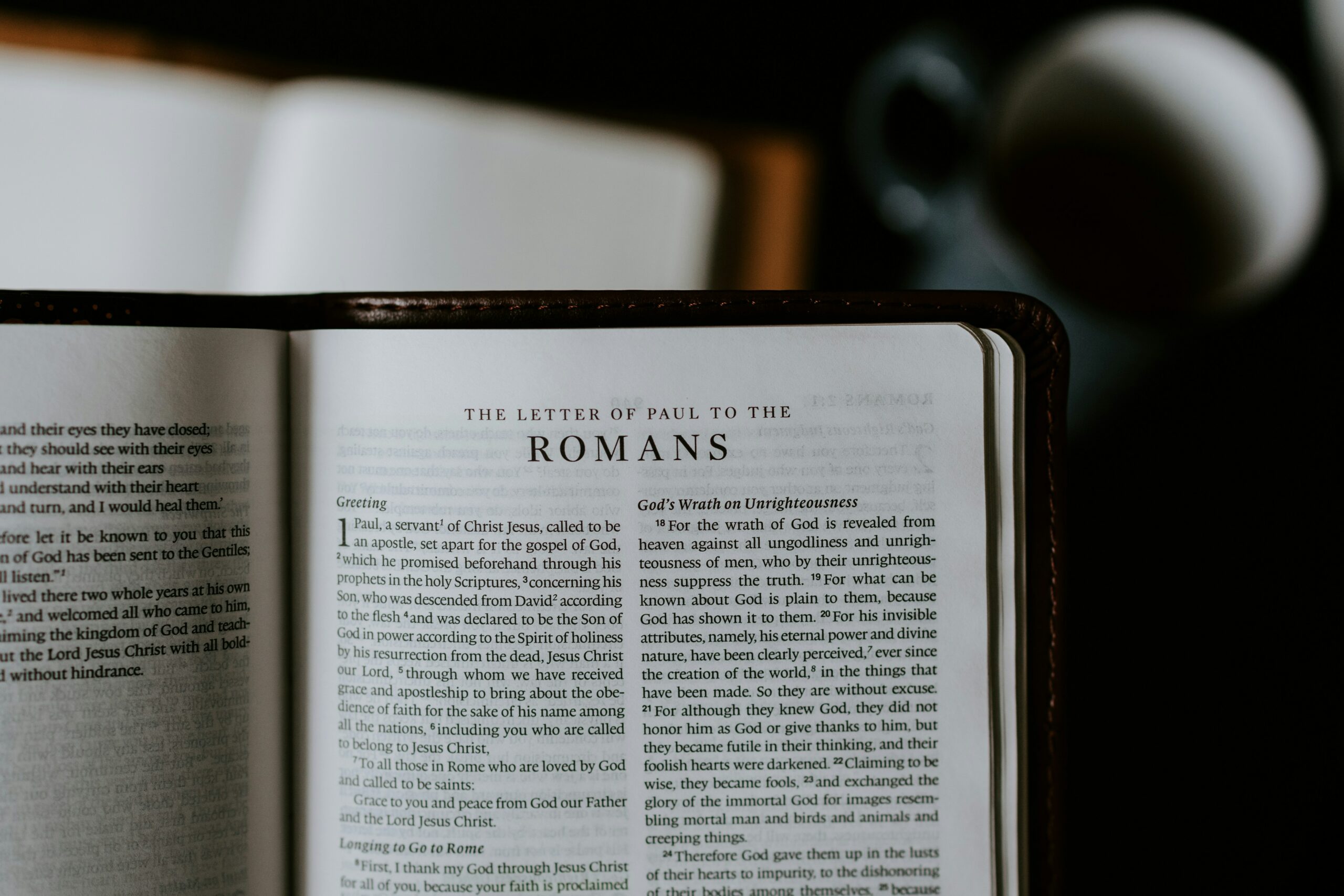
Principles of Civility
This sermon explores the biblical mandate for Christians to submit to governing authorities, framing it as a foundational principle of civility rather than a political treatise. The speaker argues that Paul’s instruction in Romans 13 addresses the universal obligation of every soul to obey civil power, regardless of the ruler’s character or the form of government. By emphasizing that all authority is established by God, the message counters both anarchy and the notion that believers are exempt from earthly laws due to their heavenly citizenship. The tone is instructional and pastoral, urging the congregation to view submission not as blind allegiance but as a recognition of God’s sovereignty over human institutions. The sermon concludes by calling for a posture of humility and prayer for leaders, distinguishing this duty from the pursuit of political power or the rejection of state authority.
Transcript
Romans, which book we have taken
a little bit of a break from in our. Consideration of Isaiah
53 and now, by God’s grace, we return. So this great book, Romans,
we find ourselves in Chapter 13. There has been a perpetual question
throughout history, the history of the world, as to what kind
of government is best. Some want no government at all,
anarchy, no rules, no laws. Others prefer a monarchy, an
endless succession of kings, all in one bloodline that provide
the oversight of a locality called the kingdom. Others prefer a
democratic process where the people choose their leader and
then either submit to them or begin the process of fighting
with them. The equation becomes much more
difficult for Christians. Because we have to wrestle with
all kinds of new questions. Is government inherently evil?
And if so, how can we possibly submit to it? Are the leaders
godly, and if not, how can we possibly cooperate with them? Is the church and state to be
completely separate? Is the church to have any influence
in the government? Is the state to have any influence
into the church? Those are questions that have
been wrangled and wrestled with for years and years and years. One pastor in looking at Romans
13 said that the 13th chapter of the epistle of Romans contains
what is perhaps the most important words ever written for the history
of political thought. I mean, that is a strong statement. Most important words ever written
and you think of all the treatises on forms of government and all
the treatments of the various approaches to enacting laws and
carrying out. What we know of as government
and all the. Discourse engaged in over the
issue of church and state and the relations between those two
kingdoms. To say that these are the most
important words ever uttered. But I would say, especially having
begun to consider these words, I would absolutely agree. This
isn’t the end, this isn’t the final word on government, this
isn’t the final word on church and state relations, but this
is absolutely the foundation. There are two different kingdoms,
They’re mutually dependent upon each other. They each have authority. They each have limitations. The church is absolutely to impact
and instruct and hold accountable, morally speaking, the government
in any land. The government is to establish
and uphold law and as We will see too much power in either
one of those tips the scales and things can quickly get out
of balance and tend to corruption. Well Paul knew this Paul very
familiar with the Roman government Paul very familiar with the issues
of his own day with regards to government knew that this was
crucial and in writing to the church in Rome, Paul knew that
in the course of detailing his outline of life with others,
Paul knew that he had to address the government. He had to address
how Christians are to function within the government. And what Paul does is give us
what I’ve referred to as principles of civility. We are called to
exercise and live according to and within these principles that
Paul lays down. What I’d like to do this morning
is read the passage in its entirety, and we’ll take just one this
morning. One principle. If you would, Romans chapter
13, beginning in verse one. Let every person be in subjection
to the governing authorities for there is no authority except
from God and those which exist are established by God. Therefore
he who resists authority has opposed the ordinance of God
and they who have opposed will receive condemnation upon themselves
for rulers are not a cause of fear for good behavior but for
evil. Do you want to have no fear of
authority? Do what is good and you will
have praise from the same. For it is a minister of God to
you for good. But if you do what is evil, be
afraid. For it does not bear the sword
for nothing. For it is a minister of God,
an avenger who brings wrath upon the one who practices evil. Wherefore,
It is necessary to be in subjection, not only because of wrath, but
for conscience sake. For because of this, you also
pay taxes for rulers are servants of God, devoting themselves to
this very thing. Render to all what is due them. Tax to whom taxes do custom to
whom custom fear to whom fear, honor, to whom honor. Perhaps
you have even an echo of sentiment in your own heart after reading
those words that these are indeed the most important words ever
written. With regards to political thought. What Paul does. In the course
of his very lengthy treatment to the Romans. is right to them
who are literally in the heart of Rome itself, of the Roman
Empire. And he writes to them on the
subject of government. But some would say, and it was
noteworthy that many found absolutely no connection of these words,
Romans 13, one through seven with anything that proceeded.
They almost take this to be out of place, untimely. Uncharacteristic
for Paul to suddenly take a jump like this and then return to
it in verse eight. But if you will consider back,
look back, if you would, to Romans chapter 12, verse nine. There
in Romans chapter 12 verse 9, we consider that Paul began to
deal with life with others. How are Christians to interact
with others? And the first group that he deals
with is Christians. How are we to deal with Christians? Well, Paul said it very clearly.
Let love be without hypocrisy. Don’t pretend. Don’t be hypocrites. Don’t say one thing and do another.
Whore what is evil, cling to what is good. Be devoted to one
another in brotherly love. Let every fiber of your being
be about the passion of loving, practically speaking, the brothers,
brothers and sisters in Christ. Give preference to one another
in honor. Don’t always demand your own
way, but be yielded towards one another. Peaceable. Well, Paul,
Obviously saw on the horizon that that isn’t the only group
with which Christians would interact. There would be those who are
antagonistic unloving harsh mean downright cruel towards Christians.
And Paul says you’re going to have to deal with them too. Here’s
how. Verse 14 bless those who persecute you bless and curse
not. Don’t get in to this mindset
of returning evil for evil don’t don’t return the kind of treatment
that we receive unjustly. To those who dole it out. The poll knew that not only would
there be Christians and we said that it would be easy if it were
just Christians that we had to interact with in this world but
even Christians are a challenge and that’s why Paul addresses
what he does. But it’s not just Christians, and it’s not just
those that are antagonistic, but they’re also going to be
those in our world that we referred to as downtrodden. They’re just
down. They’re down financially. They’re
down emotionally. They’re down morally, spiritually.
They’re just down. Paul says he gives us clear direction. We spent no little time considering
this. Rejoice with those who rejoice.
But the whole import of the entire section is weep with those who
weep. We need to get down with them,
not lower our own spiritual standing, but we need to understand them.
We need to empathize with them, be of the same mind, he says,
toward one another. But it wasn’t just Christians.
It’s not just those who were antagonistic. It’s not only those
that are downtrodden. The list isn’t complete. And
he says that not only are there going to be those that are antagonistic,
there are going to be those that are downright contrary to who
we are. Paul says you’re going to need
to have this in your arsenal if you’re going to deal with
the fullness of humanity. There are going to be those that
are absolutely against you just because of who you are, because
of who you are in Christ. They’re going to come at you.
And Paul says never pay back evil for evil to anyone. Respect
what is right in the sight of all men. We ought to be ambassadors
for Christ, living out a living testimony that proclaims to them
our love for God and love for humanity. If possible, so far
as it depends on you, be at peace with all men. We ought to seek
out those people that are at odds with us and do everything
in our power. Even if it takes 13 years. Or
longer. Never. Take your own revenge,
beloved, but leave room for the wrath of God. You know what Paul
is doing here? He is treating different groups
of people and he’s wanting to give a full report. Here’s how
a Christian can deal with anybody that comes across their path. Christians, those who are antagonistic,
the downtrodden. Those who are contrary and you
know what he says he backs up and he looks at the Saints there
in Rome and he says you know what you are going to need to
know exactly how we are called to interact with human government.
You’re going to need to know that. And that’s what Romans
13 1 through 7 begins to provide. It’s not the final word. It’s
not the last word on government and the use of government and
the proper role of government. But what Paul does is he gives
us the foundation, he gives us principles of civility. There is a connection. Of Romans
13 to the previous verses, this isn’t some kind of parenthesis,
this isn’t some kind of afterthought that Paul merely inserts here. Paul is treating a subject very
generally. But he has a point to this. And
the point is, how are Christians to interact with others, especially
government? What he calls us to here in this
section is civil obedience. Why did Paul feel the need to
address this? Christians in Rome, they were
probably not a large group of people. They were probably a
mixed group. made up of not only Jews as we’ve
seen in studies past but also Gentiles. It was a mixed group
of people. There were relatively few of
them given the large size of the city. Many of them Roman
citizens. They lived under that absolutely dreadful power of the Roman government
which was a monarchy itself. And the role of that government
was to conduct itself according to a rich and rigid and strict
set of laws. One referred to this civil and
criminal code of law which was admitted to be one of the best
the world has ever seen. They have laws and they had means
of upholding those laws. and prosecuting those who transgressed
those laws and they had an appeals process and they had they had
a system of punishment as well. Paul begins to talk to those
very people living in Rome and calling them essentially to civil
obedience and in the very opening words of his address to them
in the strongest terms possible he lays down the mandate that we are supposed to exercise
civility. No, there is no formula grammatically
that ties in Romans 13 to the previous verses, but it’s clear.
Paul is dealing with various people groups, and when he comes
to the subject of government, a group of people, he says, absolutely,
we need to deal with this. And there were many reasons why
Paul felt it necessary. No one reason I think was paramount
in his mind but Paul probably had good cause to be fearful
that the Christians living in Rome. Might just begin to cultivate
some of the Jewish attitudes towards Rome. And believe me
the Jewish attitudes towards Rome were despicable. The Jews took Deuteronomy 1715
very seriously. Deuteronomy 1715 said you shall
surely set a king over you whom the Lord your God chooses. That didn’t describe Caesar.
One from among your countrymen a Jew. You shall set a king over
yourselves. You may not put a foreigner over
yourselves who is not your country. And so many considered Caesar
to be illegitimate. He was not their king. They did
not have to obey him. They did not have to cater to
the Roman government. And it was a constant source
of irritation to them. Even in the pages of the gospel
it’s written where the Jews more than once approached Christ with
these kinds of questions. Is it lawful. Are you saying
that we should pay tax to Caesar? Are you saying that we should
obey his laws, Jesus? They wanted to trip him up. There’s another reason why Paul
felt the need to address the Roman Christians, because in
the minds of the heathen, in the minds of those who did not
know Christ, They associated directly Christianity with Judaism. Remember, it was nothing more
than a sect, a portion, an offshoot of Judaism. And so any ruler
would look at Christianity and a gathering of Christians as
being nothing but more trouble. There was a third reason why
Paul saw the need to write to the Roman Christians and instruct
them on what is right and what’s the right approach for government. And it came down to a misunderstanding
of what a kingdom is and what God’s kingdom is. And what Christ’s
kingship is. And as a result, there began
this very subtle upheaval What one referred to as perverted
notions of freedom. Where the Christians thought,
you know what? We have our own king. The Jews
don’t recognize the Messiah having come, but we do. We have a king
and it’s not Caesar. It’s not an earthly king anymore.
It is a heavenly king. He’s seated on his throne and
we will obey him and him only. Well. As one said, Gentile Christians
also felt that it would not be an unrighteous thing to resist
or even plot against such a wicked and idolatrous government. And
you have that, too. And so the persecution of Christians,
I’m not saying it was warranted, but I’m saying the heathen government,
as they saw the way that Christians responded to them and. Whether
the plots were legitimate or whether the plots were even capable
of being conducted, It didn’t matter. The heathen government
found out about it all too soon. And as a result, the persecutions
broke out like wildfire. It was evident, evidently necessary
that Paul would write to the Roman Christians and appeal to
them to not be misled either by the Jews or even by their
own thinking as to the nature of the kingdom of God. and how
they should respond to government. But you know what? Even as Paul
begins to do this, and I’ve already told you, Paul doesn’t issue
forth the final word on how Christians are to respond to government.
He gives us principles, four principles. But there are many
questions that he leaves completely unanswered. You know, Paul never
addresses the question of rivals appealing to the same throne.
Whether you have a coup attempt or whether you have a more peaceful
transfer of power like we have in our democratic societies. Paul doesn’t address that. Nor
does he address the question of whether it’s ever the duty
of a Christian. To. Go against an unjust authority. Nor does he address the question
of conflict between spiritual authorities and civil authorities.
He doesn’t address it. He gives us general principles
for dealing with government. He doesn’t issue forth the final
word. The passage, one said, does not
touch on the question of forms of government. We’d like to think
so, wouldn’t we? We’d find it much easier if he
said, you know, you want to create a republic, a democratic society,
you want to have You know the privilege of being represented
doesn’t say that. Paul doesn’t in these few verses
that he gives us he doesn’t give us a complete treatise on the
rights that believers have in a state. He doesn’t resolve the
problem of tyranny. He doesn’t distinguish between
legitimate government and a usurped authority. He doesn’t address
any of that. He doesn’t say what the Christians
should do when the state fails in the duties that they have
before God. As one said, Paul is writing
in general terms to meet the need of the Romans and not legislate
for every conceivable situation in which a Christian might find
himself. He is writing about the state’s essential nature. About what should be And in some
measure, at least, is. Rulers may misuse the authority
God has given them, but Paul’s point is that it does not alter
the fact that it was God who gave that power to them. That doesn’t mean that throughout
our lives we have to conduct ourselves in a completely uncritical,
blind obedience, as one said, to civil government. But it does
mean it does mean that Paul’s injunctions to us still are relevant
today. This wasn’t just for the Church
of Rome. This is for believers in society as long as society
exists on Earth. I told you there were four principles
of civility. I’ll give them to you now. We’re
only going to address one this morning. The four principles
that I see presented here before us is first and foremost, the
principle of obedience. The principle of obedience. Secondly,
Paul addresses beginning in verse three B. With a series of questions,
the principle of decency, what’s right? In verses five and six,
he addresses the principle of conscience. And he closes out
this consideration, this introduction of the principles of civility
in verse seven with the principle of propriety. We’ll get to those
others in days and weeks to come. For now, let’s consider the principle
of obedience. Glance, if you would, at verse
one. Where Paul says, let every person
be in subjection to governing authorities. And depending on
what translation, some translations pick this up. I was happy to
see let let every soul. And when Paul does that, it’s
it’s arresting, isn’t it? Every single soul needs to be
subject to the governing authorities. Paul, by using that special word,
he could have said everybody let all of us. Let every single
one of you wouldn’t have been as strong as when he says and
he reaches into his thesaurus and he says, let every single
soul among us. He brings out the idea of this
universal obligation. It doesn’t matter whether you’re
a Gentile or a Jew, it doesn’t matter if you’re a Roman citizen
or not. It doesn’t matter whether you’re
a slave owner or the slave himself. Whatever kind of character you
have, whatever position, whatever station, every single person
is called to be subject to the governing authorities. The rules apply to all. Paul says, first and foremost,
in our small little church in Rome, we are absolutely called
to uphold the principle of obedience. One pastor said the duty of submission
to civil authorities is thus without exception, no matter
how high or privileged one’s social position may be, no matter
what political theories one may hold, no matter what religious
views one may profess. Every soul. No Christian is to
imagine himself exempt from the obligation And he addresses every soul,
but then he he he uses that word. And I don’t care who you are.
I don’t know. I don’t care what your station is. I don’t care
what your role is as a worker is male, female. This word bugs
us. It does. Subjection. We have this idea that because
we’re Americans or because we’re men or because we’re this or
I’m a boss or whatever that I’m not in subjection to anyone.
I don’t take answers from anybody. I don’t have to listen to any
man’s orders to me. Well, that’s contrary to Scripture. Let me tell you how ubiquitous
this command is. The leaders of the church. The
leaders of the church were supposed to be in subjection to the leaders
of the church. First Corinthians 16. We’re supposed
to be in subjection as this passage and many other places points
were supposed to be in subjection to civil authorities. We’re supposed
to be under subjection. James 4 7 to God himself. We are supposed to be Subjected
us, we who are wives to our husbands. Ephesians 5.22, Colossians 3.8,
1 Peter 3. If we are a slave, we are supposed to be subject to our
masters. 1 Peter 2.18. If we are young men in the church,
we are called to be subjected to our elders. 1 Peter 5.5. If we are in the church, the
church collectively is to be subjected to Christ, Ephesians
chapter five. The word is throughout scripture,
but I want to take you to one happy little place. Ephesians
chapter five, if you would. I never miss an opportunity to
point out this one little fact. Oh, because men, we like it. We like it that it says wives
be subject to your husband. We and that one is just that’s
a verse. That’s the first verse we memorize,
right? And it does say that. Ephesians
522. Wives be subject to your own husbands,
but give pause. Because if your translation is
a fair one, it is put those words in italics because the words
aren’t there. The subject isn’t there. Now, don’t misunderstand
me. I’m not taking away God’s call
for the wife ultimately to be subject to her husband, but the
verb is not there in verse 22. The verb actually occurs in verse
21. Where Paul says be subject to
one another. In the fear of Christ, that there
is to be even in a marriage, a mutual subjection. And then
Paul says, wives to your husband, he doesn’t even reuse the verb.
Subjection is part of our. That’s part of life. And Paul
says that here we are absolutely every single soul, we are to
be in subjection to the governing authorities. That has practical
consequences. We’re not supposed to evaluate
them on merit. We’re not supposed to determine,
you know, what political party they’re in before we decide to
yield or are they married? Are they not married? Are they
happily married? Have they ever been divorced? We’re not supposed to evaluate
any of that. It doesn’t give us any opportunity to do that
at all. This word to be subject to be obedient. It means that
we’re supposed to be actively subjected to the government passively. We’re supposed to uphold what
they ask us to do. Submit to the laws of the land. Not be the troublemakers that
so many present themselves to be. And it says let every person
be in subjection to the governing authorities. There’s two different
words used there. Authorities, first of all. It’s really just
refers to anybody holding civil authority government officials
people that are invested with some kind of power. We could call them civil authorities.
That’s that’s probably the easiest in our own day and age to understand.
It’s those who have authority over us and it doesn’t matter
what their grade of office offices whether it’s the policeman or
the mayor or the governor or the president. or the senator.
It doesn’t matter what their character is. As one said from
the emperor down to the rulers of the lowest rank. If they are
over us we are to be subjected to them. The second word used
there coupled with that is governing. That’s how it’s translated and
it begs this question. These this governing super authority
It begs the question of whether he’s talking about or including
rather angels in this mix as if we’re supposed to be subject
to the angelic powers. Well there’s no argument that
lends itself to the consideration he’s talking about earthly rulers
governing authorities those that are higher up we might say. They
have a superiority of some degree and we would refer to them as
a plurality of authorities. Those who are in authority some
the older word is magistrates. As one said it seems to be used
as a description of all orders of government whether and consider
how Peter lays it out. Peter says submit yourselves
you see this as an echo. Whether Peter is echoing Paul
or vice versa. It’s a it’s a it’s a biblical
echo. This is the rule of faith. We
say can Paul possibly be saying that we’ve got to be in subjection
to governing authorities. Does he really mean the mayor
of this city. Well let’s consider what Peter
has to say. Peter and first Peter to says
submit yourself for the Lord’s sake. You know the Lord has a
stake in this. The Lord has a plan. The Lord’s
plan of redemption depends on it. The gospel going forth and
the peaceful exercise of the gospel absolutely depends on
it. Submit yourself for the Lord’s
sake to every human institution. Well, now, as we begin to get
creative, we go, well, I practice marriage. Paul goes far beyond
that, and so does Peter here. When Peter says, submit yourself
for the Lord’s sake to every human institution, whether to
a king as one in authority or to governors, those lower level
servants sent by him for the punishment of evildoers and the
praise of those who do right. I’ve used this illustration before,
you know, when you see the lights in your rearview mirror, they’re
probably not pulling you over to commend you on how good you’re
driving. Right. But that really is the
role of government there to uphold the good as we’ll see in a moment.
And they’re not only to uphold the good but they’re to punish
the evil. These governing authorities we might even refer to them in
our common vernacular as the powers that be. Those who rule
and it doesn’t matter what our political theory is it doesn’t
matter how they got there. If they are in authority we are
to be subjected to them. What Paul clearly points to here
in this particular section is applicable and it doesn’t matter
whether you’re living in a jungle or living in a barren wasteland
of a desert. If there is government in that
land we are as Christians called to be subjected to them. It doesn’t
matter whether it’s a monarch. It doesn’t matter whether it’s
an aristocracy. It doesn’t matter whether it’s
a democratic society or any modification or flavor It means that we’re supposed
to be subjected to the state. One said that it’s strange. That
the apostle seems to go almost out of his way to include even
usurped or tyrannical power. I mean, you think back through
the history of this land, there are some people, boy, it would
be one tough deal to be in that deal and to have to submit to
him. I mean pick your dictator and plug his name in here and try to reconcile that. Let
every person be in subjection to the governing authorities. MacArthur clarified it when he
said with no exception related to the rulers competence or incompetence. Now there’s one for today. Doesn’t
matter. Morality, immorality, cruelty,
kindness, even ungodliness. He says we are called to submit.
We’re called to be in subjection to those governing authorities.
One pastor said the church and state occupied different spheres,
yet both are divine institutions. All attempts to combine the functions
of the church and state. See, that’s what we’d like, isn’t
it? Wouldn’t we just like it if you know what we’ve decided
that you Christians you’re such wise and balanced people. You
always seem to pick the right candidates. You always do the
right thing. We’re going to let you run the
country whatever you want. But the problem is. Every time
that that has ever been attempted it ends up in disaster. Gregory
the Great, 590 to 604. You say, why do I say that? Well,
because when you’re studying church history, they dwell that
into your head so that any time you say Gregory the Great, out
comes 590 to 604. That’s when he ruled. See, his
efforts to adopt Christianity as the official state religion,
it does not have a nice ring to it. We’re going to make you
all Christians in America. Christian country, you know,
and so we’re going to adopt Christianity as the official state religion.
Well, you know what that became? It literally spawned what is
now known as the Roman Catholic Church, it was disastrous. The Jews. Constantly wrestled
with this question. They couldn’t quite reconcile
it, and they came to Christ. How do we reconcile? How do we
live? Is it right to pay tax to Caesar
or not? Not only is it right to pay tax
to Caesar, Jesus would go on to urge us that part of our calling
in this land is to pray for them. And that is a hard thing to do,
isn’t it, Saints? It’s a hard thing. But part of our submission
to them is a humble and heartfelt prayer on their behalf. We’re considering the principles
of civility, particularly this principle of obedience. And Paul
wants to give us the reasons why. Here’s why, he says. Why
you’re supposed to be subject to governing authorities, because
on the face of it, boy, this is a hard one. And, you know,
I’m not even sure, Pastor, if I if I can go there with you,
you know. Well, Paul says, let every person
be in subjection to the governing authorities, for there is no
authority. Except those from God and those
which exist are established by God. Now, that one will make
you wince. God put him there. God. put the government there. God
put the individuals there. God appoints rulers. He lifts
one up and he puts down another. God puts who he wants in office
for his own purposes. And we don’t always know what
those are. And so it’s OK to be befuddled and baffled and
even to a degree irritated at times. Paul says there is no authority
except from God. And he’s giving us as I remind
you the reasons for this obedience. Paul says look God is in absolute
control of this whole thing. God is sovereign. God is not
only sovereign in salvation. God is sovereign over the weather.
God is sovereign over the Governments and he’s sovereign over who takes
office. God is absolutely sovereign. Nobody gets into office, nobody
takes authority that God doesn’t allow. Doesn’t mean that God
likes them better, doesn’t mean that they personally are better. One said that ordered government
is not a human device, but it is of divine origin. The ruler
is God’s servant, and this gives the ruler a special dignity,
but at the same time stresses that his position is a subordinate
one. God put in there. He answers
to God. Paul issues forth this principle. That this authority having been
established points back, it points to God, it points to the fact
that God is in charge of it all. And sometimes those are great
reminders. That all authority is of God
and that because of that, nobody has any power over anybody unless
God has appointed him there, whether it’s parents, whether
it’s governing officials, whether it’s elders in the church, it
doesn’t matter. And he says it not only negatively,
but he says it positively. First, he says there is no authority
except from God. There’s anybody in any position
of power except that God put him there, and then he says it
positively. Those which exist are established by God. God put
him there. And it’s a general statement,
and it’s the positive half of the of the two statements. And this particular truth was
absolutely familiar to the Jews. The Jews knew this. They knew
it. Academically speaking, they didn’t
much take to submitting to foreign authority very well, but they
knew that God was the one that put authorities in their place. God is the one that sets up rulers.
God is the one that overthrows rulers. Nobody can exercise any
kind of authority unless God allows it. Let me give you just
a couple. Remember our friend Daniel. And
in the early chapters of Daniel, there’s a figure named Nebuchadnezzar
who has this really strange idea that suddenly he is what we would
call a self-made man. Look what I’ve done. Well, Daniel issues forth a reminder,
it is he that is God that changes the times and epochs. He removes
kings and he establishes kings. Now, that should be ample warning
for our friend Nebuchadnezzar. He gives wisdom to wise men and
knowledge to men of understanding. He didn’t heed the warning. Later on, Daniel repeats, You,
O King, are the King of kings, to whom God of heaven has given
the kingdom, the power and the strength and the glory. Later on, you know that God began
to humble Nebuchadnezzar. And he did it for one purpose.
And the purpose is repeated over and over again, almost like a
chorus in a song. That the Most High is ruler over
the realm of mankind And he bestows it on whom he wishes and sets
it over the lowliest of men. God is in charge. Nebuchadnezzar. And you know that Nebuchadnezzar
had to go out, eat grass for a lengthy season. His hair, his
fingernails grew. He lived like an animal until
God humbled him and he came to his senses, it says. Came to his senses and he said,
Certainly see now that God is the most high. God is the ruler
over the realm of mankind. God is the one that puts kings
in their offices. You see there is this mindset
and it doesn’t matter who’s in office. I’ve seen it. I’ve seen
the bumper sticker regardless of who’s in power. Right. Don’t
blame me. I voted for the other guy. or the one that’s popular now.
He’s not my president, underlined the word my. Yes, he is. Try telling this to the state
trooper. Next time you get pulled over, hopefully not soon. Try
telling this to the state trooper. When he gets there, roll down
your window slowly. Take your time. What if you have
to roll it down? Or push the button if you want. And when the window gets down,
say, You’re not the boss of me. Just drive off. See how that
goes for you. No, don’t try that. In the passage in front of us,
he’s telling us that one of the basic truths of human society
is that civil authority, these rulers, these leaders, it’s a
divine institution. God created it. God put them
there. Regardless of how it’s exercised
right or wrong. It is even at its very worst. It is better than complete anarchy.
Remember the nation in the time of the judges. What a what a
mess that deal was. When the recurring theme was
in those days there was no king in Israel. Every man did what
was right in his own eyes. And you know then the moral decline
begins. Right? Paul says anarchy, contrary
to whatever popular opinion, is not a good thing. Not a good
thing. Lawlessness is never a good thing.
It’s chaos and it’s death and it’s destruction. Paul has a number of other reasons. We didn’t even make it through
point one. So it’ll take us some time in
the next few weeks to make it through the additional three
points. But Paul has additional reasons
on why every soul is to be in subjection to the governing authorities. Not only because God is the one
that established that authority. We’ll take up the other reasons
next Lord’s Day. Do you humble yourself before
God? Our Almighty God. We bow before
you and thank you for this reminder, Lord, there is so much confusion
and so much. Indifference. And even frustration
in our hearts. Over ungodly government, we feel
much like Nebuchadnezzar and we should. That Lord, you have called us
very clearly here. There is no wiggle room. There’s
no exception. There’s no way around what Paul
says here that we are called to be in subjection to the governing
authorities. We’re not supposed to be those
who fight and create sedition. And create problems for the government.
We’re supposed to pray for them. We’re supposed to serve others.
We’re supposed to live peaceably, good, wholesome lives. Lives
that never call for just punishment. God grant us the grace to sort
through this as Paul has begun to introduce the reasons why.
May we examine our own conduct before civil government. And
may we keep in our mind this initial reason that Paul has
provided. That we are supposed to be in
subjection because it’s God who put them there. We pray for Your grace, as we
certainly need it. It’s in Jesus’ name that we ask.
Messages: 204