Walking In Newness of Life
This sermon explores the transition from doctrinal exposition to practical application in Paul’s letter to the Romans, focusing on the believer’s response to God’s mercy. The central message emphasizes that Christians are called to present their entire beings as living, holy, and acceptable sacrifices, motivated by gratitude rather than a desire to earn favor. The exposition distinguishes between passive conformity to the world’s values and active transformation through the renewing of the mind by the Holy Spirit. This spiritual renewal is described as an ongoing process that enables believers to discern and prove the will of God, which is characterized as good, acceptable, and perfect. The tone is instructional and pastoral, urging the audience to embrace a life of intentional devotion, resistance to evil influences, and continuous spiritual growth.
Transcript
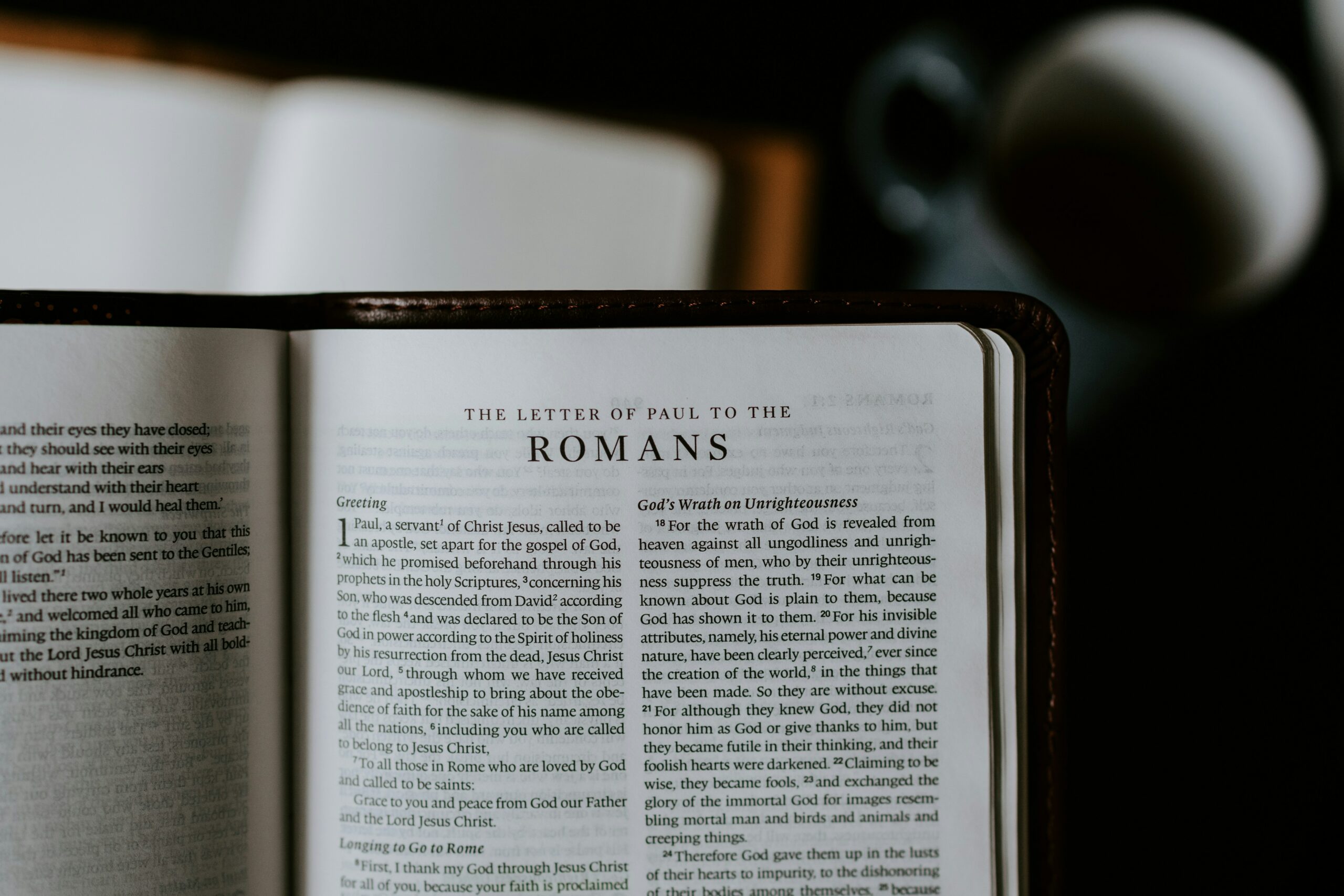
if God’s people would take their Bibles and turn to Romans, the epistle of Paul to the Romans, and this time to chapter 12. Chapter 12. We return again to this flyover that we’re doing of Paul’s letter to the Romans, but this time a transition again, but from Paul’s fourth section to the fifth section. The fourth section was all about sovereignty, and this section is what we might call service. Sin, salvation, sanctification, sovereignty, and service. And there I have done my annual use of alliteration for the year. I can move on from that.
In this transition from chapter 11 to chapter 12, we have really the clearest break among all the five sections. The grand doctrinal section, 11 chapters of really chewy doctrine is now ended. And now Paul moves to the practical application of those spiritual truths. And we immediately hear in the first two verses of chapter 12 the distinct change of theme from doctrinal to practical.
If you’re in Romans 12, if you would glance down, please, at the first two verses. I urge you, therefore, brethren, by the mercies of God, to present your bodies a living and holy sacrifice, acceptable to God, which is your spiritual service of worship. And do not be conformed to this world, but be transformed by the renewing of your mind that you may prove what the will of God is, that which is good and acceptable and perfect.
Now the first thing that Paul does in verse one with that word therefore is to tie us into the context of this opening sentence. I urge you therefore to present your bodies. This is a vitally important word, therefore, because by that one word, Paul links this final section, chapters 12 through 16, to everything that he has said thus far. This transition is very much like the one that we see in Ephesians 4.1. In that letter as well, Paul moves from substantial doctrinal portions to practical or applicational elements of his letter. And likewise here in Romans, after 11 chapters of solid doctrine, Paul now begins to apply these doctrines to day-to-day living in very important principles.
So this word, therefore, that we find in verse 1 of chapter 12 points us back to the verses and chapters preceding and to everything of all the profound, amazing truths that Paul has already articulated so far. sin, salvation, sanctification, sovereignty, from 1.1 of this book all the way through 11.36. It’s God’s plan of redemption. It’s the sinfulness of humanity and their need of a savior. It’s Christ’s atonement for sin. It’s justification by faith. It’s that great call to Christ-likeness in sanctification. What Paul looks to, even as he begins to speak here, is to the believer’s response to those truths.
All that God has accomplished for us by His Son, the Lord Jesus. What Paul does in these two verses is tell us that because of all that God has done, we as Christians ought to respond with an undying commitment to the Lord. Doctrine is not just for knowing. Doctrine is the groundwork for doing what we believe should impact how we live. based on everything that God has done for us, what should be our response as believers? How should we now live? And he calls us to respond to God’s work of redemption in us. We don’t just want to be good or to do good because of some self-nobility or to somehow try to reimburse God for all that he’s done. We respond out of gratitude for God’s accomplishments in and through Jesus Christ. Our response is only possible because of God’s work of salvation in us. We can understand Paul here in verses one and two as really providing for us the essential steps for the Christian called to walk in newness of life. All of us, if we have placed our faith in Christ, are called to a different kind of life, newness of life. And Paul presents three such features in these two verses. We’re called to walk in newness of life, and so what Paul lays before us are essential steps for the Christian.
And the first thing that he tells us is that a believer’s life is to be marked by a favored devotion to the Lord. A favored devotion to the Lord. Look at verse one. I urge you therefore, brethren, by the mercies of God, to present your bodies a living and holy sacrifice.
Simple sentence of verse one is there plainly before us. I urge you to present your bodies a sacrifice. That likely doesn’t have the same shocking effect on us as it would have had for those to whom Paul was writing in Rome. We have never witnessed an animal sacrifice. But that religious practice was prevalent in Paul’s day. The idea of sacrificing oneself would have been alarming to first century Christians.
But as we’ll see, Paul does not mean that we are to literally place ourselves upon an altar as an atoning victim. Let’s see what Paul does mean. Paul begins with a plea. I urge you. The word that Paul uses here, urge, is a rich and beautiful word. It’s the word parakaleo, to call alongside. And the noun form of this word, you may even be more familiar with, it’s parakletos. referring to the helper, that is, literally the called alongside one, the Holy Spirit whom Jesus promised in John 14. And so there is a delicateness to this word. And the verb is used in a number of different senses in the New Testament. It’s used, translated to entreat, to plead with someone, to exhort, or even to come alongside and to comfort someone.
Here, I would say that it’s that second sense that is most appropriate here in this passage to exhort. It has authority behind it. Even if the verb isn’t in the imperative, just as Paul calls them brethren, his exhortation comes off as a parental, a loving parent’s directive to a child. Loving and endearing. And Paul’s specific exhortation here is that we present our bodies as a sacrifice. And the word here to present just means to place or to present something in a prominent position like you would place a favored item on a mantle. But this word, we can easily picture the Old Testament act of bringing and presenting an offering to the altar. Paul says, present your bodies. Place yourselves before God as a sacrifice.
And when he says bodies here, he isn’t speaking necessarily of our physical bodies because he isn’t referring to an actual physical sacrifice. He has in mind here more than just the flesh and blood tents in which we currently reside. It is our whole selves that Paul has in view. When Paul exhorted the Corinthians to glorify God in your body, he didn’t say that they could think whatever they wanted or to watch or listen to whatever they wanted. And so here, Paul is referring to the totality of our human frame, our eyes, our mind, our hands, our feet, our heart, our soul, everything. He is urging us to present our entire personhood to God.
Paul’s thought is completed here by the word sacrifice. Present your bodies a sacrifice. Paul is certainly drawing upon Old Testament sacrificial images here, but he isn’t calling believers to literally offer their lives up in death for some atoning purpose. The New Testament writers frequently employed the language of the sacrificial system. Paul himself, writing to the Philippians, says that he is being poured out as a drink offering upon the sacrifice and service of your faith. Later on in that same epistle, Philippians 4.18, he refers to the Philippians’ monetary gift as a fragrant aroma. an acceptable sacrifice well-pleasing to God.
The writer of Hebrews also uses this imagery. He refers to the believers’ worship in Hebrews 13, 15. He says, let us continually offer up a sacrifice of praise to God. And Peter uses this imagery as well, 1 Peter 2, verse 5. even as Paul does here, he uses this to speak of the fruit of our entire lives. a holy priesthood offering up spiritual sacrifices acceptable to God through Jesus Christ.
And so, while the initial idea of sacrifice might have been shocking to those first century readers, the alarm quickly gives way to understanding. They know where Paul’s coming from. They know what he’s suggesting here. Jesus one atoning sacrifice ended the need for any additional sacrifices. We’re bought and paid for by the blood of Christ. We already belong to God because of that, but we are called, Paul urges, to consecrate ourselves to him daily.
This sacrifice speaks of a wholehearted devotion to the Lord. In our gratitude to God for redeeming us and saving us, we sacrifice our bodies by means of our devotion to him in service. The sacrifice of our bodies in this regard is not done in order to gain favor, but purely out of a grateful devotion for the favor that we already enjoy. We serve Christ and his church in gratitude for his work of grace in us.
When Paul adds, by the mercies of God, he tells us the motive for sacrificing our bodies. Paul refers to this as mercies, plural, because God’s mercies towards us are innumerable. The most practical tenderness, the most exhibited pity, encompasses God’s undeserved mercy toward us in sending us a savior who died in our place, rescuing us from sin, in calling us to a right and restored relationship with a holy God, in forgiving us, in saving us, in beginning the process of changing us All of it is an outworking of God’s mercy towards us.
And it is this mercy that prompts us to offer our whole selves as a sacrifice to God. Once we have a right view of the wretchedness of our condition and sin, we will begin to have an equally proper appreciation of God’s mercy. Because God’s practical mercy towards us, we are moved, we are prompted, we are motivated to sacrifice ourselves to him in service.
Paul moves to explain to his readers here the nature of this sacrifice that we bring, and he uses three descriptive terms to do so. Living, holy, and acceptable to God. Now the New American Standard here kind of obscures this order because it intersperses the word sacrifice between two of these descriptives. It calls us a holy sacrifice acceptable to God. But in the original, these three descriptions run one right after the other after the word sacrifice. They describe the sacrifice that we as believers are to render.
Let’s look at the three of them. The first term that Paul uses is living. Our sacrifice is to be a living sacrifice. And the sacrifices of the Old Testament, they had to be brought to the temple alive. But they were killed in order to be offered on the fiery altar. But the Christian is to offer himself or herself as a living sacrifice. It’s not a one-time, soon-consumed and disintegrated offering. It is not a dead, once-and-done sacrifice as the law demanded. Rather, it is a perpetual, ongoing, day-to-day, living sacrifice. The Christian sacrifice is as one who is alive from the dead. Theirs is new life in Christ. They walk in newness of life. And so this sacrifice is living.
Secondly, though, it is holy. It’s a holy sacrifice. Now, in its most basic sense, Holiness refers to being consecrated or set apart for a special purpose. The Christian has been consecrated to God by means of reconciliation to himself through what Jesus Christ accomplished. We are set apart for a holy use, that is true. But the word holy also has an ethical significance. The Lord has already declared us to be righteous, but the Holy Spirit in us begins the work of sanctification, making us practically righteous, little by little, more and more like Christ, or as Paul says it here, holy. The Christian is holy in both senses. We’re set apart, and we’re also already underway in conformity to Christ’s image.
There’s the third descriptive. The third descriptive of this sacrifice, not only living and holy, but it’s acceptable to God. He’s the highest of all judges. And just as those Old Testament sacrifices were, when they were properly offered, said to be pleasing to God, a sweet aroma to the Lord. When we present our bodies as living and holy sacrifices to God, God receives it. They are acceptable to him. And such sacrifice, Paul concludes, is a spiritual service of worship. When we’re saved, our most natural response as believers is worship. That’s what we do. It’s an expression of humble gratitude to God for all that he’s done. And a Christian’s sacrifice is an act of worship. The presentation of our bodies in this manner is an act of worship.
And this word spiritual is a fascinating one. In the Greek, the word is logikos. You probably heard it there. It’s the word from which we get our word logical. It refers to a person’s ability to reason, and it could justly be translated as rational or reasonable. The word has reference to the rational portion of man’s nature, that innate connection one has with God. It is our ability to reason and to exercise control over the desires of our lives. This is that quality that sets mankind over and above the animal world. It’s our rational capability. And what is more reasonable, what is more rational, what is the spiritual right thing to do in light of God’s mercy? It’s serving Him. And so, appropriately, The old J.B. Phillips translation has it as intelligent worship. That’s what we’re called to.
But look further because Paul calls the believer’s response service. The word for service that Paul uses here is very fascinating. The word service here is the word Latria. This one word translated here in our passage is translated with three English words, service of worship. And that’s because this particular word for service in this particular passage is the word for the work that a priest does in his official capacity. It’s acts of worship, especially in the course of offering a sacrifice. It’s always used in the context of a religious ritual. And so this is made possible only in Christ, this spiritual service of worship. And it consists, again, of the day-to-day offering up of oneself in service to Christ and his body. The service of worship is most reasonable, given the magnificent mercy that we’ve received. And so as Christians, we devote ourselves to the Lord when we pursue Christlikeness. We devote ourselves to the Lord when we forsake ungodliness. We devote ourselves to the Lord when we give our whole being to the Lord who saved us. We devote ourselves to the Lord when we cultivate hearts of worship, humble gratitude.
Well, as we transition into verse two, it’s not an entirely different thought that Paul has. Paul is still talking about the believer’s new walk in Christ, but he intensifies his exhortation with two commands. Two commands that clarify what sacrificial living should look like.
So a believer’s life is not only marked by favored devotion to the Lord, but secondly, it’s marked by an alerted resistance to evil influences. Look at verse two, if you would. Do not be conformed to this world, but be transformed by the renewing of your mind.
Paul elaborates on the statement that he makes in verse one. about presenting our bodies a living sacrifice. And here he strongly exhorts these believers with both a negative and a positive command. Do not do this, but instead do that. That’s essentially what he does. Do not be conformed, but be transformed.
And I have to tell you that this audible rhyme, conformed and transformed, It’s a functional choice of English words. It’s not a feature of the Greek text. But the catchy and memorable harmony that belongs to our English translations, and it’s captured by those two words, confirmation, and transformation. Almost all of our English translations use that. It’s a beautiful pairing of words, and it is accurate.
Only a few translations present confirmation using different terminology. The old ASV 1901 said, do not be fashioned according to this world. I like that. the new century version, I think in the mid-50s, do not be shaped by this world. I like that as well.
You see, confirmation involves taking on an outward appearance. And since the verb here is passive, it means that this image is something that we are allowing to be stamped upon us by the world. There’s an older translation of the Bible that captures this well. I think I already mentioned the J.B. Phillips translation. It translates this as, do not let the world around you squeeze you into its mold. That’s a beautiful translation.
It’s not an internal process that produces this outward image. It’s our outward appearance merely a temporary form a form that can be changed. Paul is speaking of those dreadful occasions when the child of God, instead of appearing as he or she ought, saved, regenerated, holy, instead they take on a temporary appearance of the world.
It’s hypocrisy. It’s the worst kind of facade. It’s an image that is not reflective of what’s going on inside of us. It’s a temporary veneer. It is like putting on a costume mask. Put on now for a moment and then take it off at will. And so Paul insists that we stop adapting and conforming our ways to the outward forms that do not match the inward reality.
The very specific influence against which Paul cautions is the influence of the world. Do not be conformed to this world, Paul says. By world, he just refers to the current passing age in which we live. Paul’s concern is not just that the passing world is fleeting, Why dress up like them if it’s just going away, like a fashion statement? It’s not Paul’s concern that it’s merely temporary, but it is a morally corrupt age. It is the ungodly world all around us. And our current age is replete with sinful thoughts and practices and habits. There’s a steady stream of the world’s values and standards constantly blowing past us. The people of this world do not believe in God. They do not honor his standards. And therefore, God is not honored by the world. And when we dabble in it, we allow ourselves to be stamped, imprinted with the image of the world all over again.
To the Ephesian believers, Paul said it similarly. He cautioned, have nothing to do with the fruitless deeds of darkness. The world’s affections, its motives, its worldview, its mindset, its speech, they’re all different than God’s. The world’s values are inconsistent with a life touched by the grace of God.
The Christian must not be conformed to this world. We are not to circle back to who we once were. We’re not to be pretenders acting any longer like something that we’re not. We’re not to put on the makeup or the mask of the world like an actor on a stage. We are called to be and to live as children of God that we are. That is who we are.
And so we keep ourselves from conformity to the world when we live according to God’s principles, not the world’s. We keep ourselves from conformity to the world when we develop an affection for the things that God loves. not what the world loves. We keep ourselves from conformity to the world when we align with God’s priorities, not the world’s. We keep ourselves from conformity to the world when we follow God’s guidance, not the world’s.
Paul offers another direct admonition, this one positive in verse two. Would you glance there again? Do not be conformed to this world, but be transformed by the renewing of your mind. And so if we’re walking in newness of life, the third essential step of the Christian, not only are we marked by a favored devotion to the Lord, an alerted resistance to evil influences, but thirdly, an intentioned pursuit of spiritual change. We want to change. We want to be Christ-like. We want to become sanctified.
Would you look at verse two once again? Do not be conformed to this world, but be transformed by the renewing of your mind. And so the believer is not to be conformed but transformed, and that particular word Paul employs, listen to this. It’s the Greek word metamorpho. You may have heard it there. We get our word metamorphosis from this word. It describes the change of an outward form, like a caterpillar into a butterfly or a tadpole into a frog. It’s the same word that was used of our Lord Jesus in his transfiguration on the mountain. Jesus was transfigured before them, as Matthew records. It was a supernatural change in Christ’s visible appearance, which left his disciples in awe.
And so the transformation about which Paul speaks here is real and substantial change in the believer, not just a mask, not merely external. The transformation begins in the mind and the heart of the Christian and results in a genuine reflection of that change outwardly. And this verb too is passive. which means that Paul is informing us that this is not something that we do to ourselves. We don’t sanctify ourselves. We don’t change ourselves. Rather, it is something that is done to us and that by the Holy Spirit. Quite literally, Paul says, allow yourselves to be transformed. He’s pointing here to the ongoing progressive work of sanctification, which is begun in the moment of our conversion, but is not completed until the believer dies and enjoys glorification. It is the Holy Spirit’s work in the believer’s life. But we have a responsibility as believers to cooperate. We have a responsibility to welcome this change and seek and desire this change and to encourage this process of transformation, to embrace change. This verb is also in the present tense, which informs us that this transformation is an ongoing process. It’s a steady transformation of our nature.
Sanctification is neither instantaneous nor is it an immediate event. It begins at our conversion to faith in Christ, but that’s only the beginning. It’s an ongoing, continuous process, a lifelong development.
Paul continues by telling them the means of this transformation, how does this happen? They are to be transformed by the renewing of their mind. The mind is the instrument that God uses for this spiritual transformation. And so when Paul speaks of our mind here, he’s referring to our human intellect, the faculty of understanding the truth of God’s word, applying it to our lives in principle,
This transformation means real, substantial change, change that begins in the mind and the heart and inevitably moves to the surface of our lives. This renewing of the mind is the great means of our transformation. Renewing just refers to the process of refurbishing or making something new again, like sometimes churches do to their buildings. It’s a mind as it was designed to function prior to the fall.
A renewed mind has a spiritual perceptiveness to it, a moral sensitivity, an ethical reasonableness. By renewing the mind, the life and conduct of a believer is more and more conformed to Christ and to his image.
Remember, as we were reminded from Paul’s transition to verse 1, doctrine is not just for knowing. Doctrine lays the groundwork for doing. What we believe affects how we live.
Because of Adam and Eve’s fall into sin, mankind’s thinking, his practical reasoning, his thought life was completely corrupted. His moral conscience became inoperable. The problem is not so much our physical brain, but our spiritual mind is atrophied and ultimately leads only to sin.
In chapter one of this letter, Paul spoke of it as a depraved mind. Paul tells Titus of the unbelieving mind is defiled. To the Colossians, Paul characterized the mental faculties of the unsaved as fleshly, a fleshly mind. The state of our minds then at salvation is depraved, fleshly, and futile. And because of this, our minds need renewal. They need to be renewed by God’s spirit and his word.
You see, behavior can be altered. Behavior can be altered through pain, through threats, but such behavior modification leads only to temporary change. The only way to affect real change in the life of a Christian is to first change or renew our thinking. And God accomplishes this by the incredible process of instruction and leading by the Holy Spirit.
Even in our fallen condition, we still have a conscience. The conscience is a great and God-given mechanism, but it has to be informed by God’s word. The conscience still must be retaught re-informed by God’s Word, our minds cannot be renewed apart from the Spirit’s application of biblical truth to our hearts and lives.
This is not a process in which we are passive. When Paul says, be transformed by the renewing of your mind, he’s issuing us a command. The believer in Christ is very much responsible for this development of yielding himself or herself to God’s Word and to the Spirit’s actions.
Since the verb here is in the present tense, it means that this, too, this renewal is an ongoing process. What the believer desperately needs is renewal of the mind, and this is precisely the role of the Holy Spirit. Renewal of the mind is only accomplished by the Holy Spirit using Holy Scripture, and the renewal is a lifelong process. Paul tells us what we are to do, and he tells us how we are to do it, and he closes with an explanation of why we are to embrace this transformation. He tells us of the divine purpose for this change.
Would you look at the end of verse two? Paul says that you may prove what the will of God is, that which is good and acceptable and perfect. Paul says that the whole process, pardon me, the whole purpose of renewing our minds for the blessing of transformation is done for a purpose that we may prove what the will of God is.
What does it mean to prove the will of God? The Greek word behind it has a solid biblical use. It refers to testing something for the purpose of proving it either right or wrong, true or false. Proving something is done by experimentation in the scientific world, and so this word can be used to speak of the process of testing, proving something, but it can also be used to refer to the result. the proven, the approved, the tested and found to be true things of God.
Listen to just a few scriptural examples of the use of this fascinating word. It’s used of the process of testing, 1 Corinthians 13, speaking of God’s assessment of every person’s ministry effort. The fire itself will test the quality of each man’s work. 2 Corinthians 13.5, Paul uses the word again of the Corinthians for a personal examination of their standing in Christ. Test yourselves, he tells them. Test yourselves to see if you are in the faith. Examine yourselves. That’s something that we all need to do.
But as I said, the word is also used of the result, the end result of a test. the proof, if you will, that which has been tested and found to be true. And so here when Paul says, be transformed by the renewing of your mind that you may prove what the will of God is, he isn’t just suggesting that now we have the ability to test God’s will, but that given the capacity, we will test and we will prove God’s will to be true. We will live out what is true and right by God’s grace.
And when we read and learn about God from his word, when we accept and follow his principles in obedience, we are proving or approving God’s will. We declare it to be true. It is that which is then implemented. It’s practiced in our daily lives. When we derive principles from God’s word and we obey them by God’s enabling grace, we are proving the will of God.
People stub their toes a lot of times on that phrase, the will of God. We believers sometimes have a rather mystical view of the will of God, as if it’s this ethereal, elusive guidance system. God’s will has already been fully revealed. It’s revealed in full in His Word. That doesn’t eliminate the occasional supernatural intervention and guidance by the Holy Spirit. God can still do that, but that’s not the norm. The grand majority of God’s will is spelled out explicitly in the pages of Scripture.
And simply put, The will of God is that which God demands of us. It’s articulated clearly in the commandments, the lessons, the examples, the principles contained in scripture. If we observe those, we are doing God’s will. The discovery of the will of God is realized by renewing our minds and the rich treasure of God’s word. And it’s here and hear only that the Christian discovers God’s revealed will, what he forbids, what he commands. Paul describes God’s will as that which is good and acceptable and perfect. It’s good, it’s inherently good, it’s intrinsically good and beneficial for the believer, for God’s children. It makes us pleasing to God and leads to our happiness.
It’s acceptable. thinking and conduct before God. Paul exhorted the Ephesian believers to learn what is pleasing to the Lord. And the will of God is perfect. It’s perfect in the sense that this is the way that we are designed to live. These are the principle that we were designed to obey by God’s grace.
And this comes from renewing our minds in God’s Word in order to be transformed into the image of Christ. The more Christ-like we become, the greater our transformation, the more clearly we can examine everything in light of God’s revealed will. It becomes the practical outworking of Christ’s greatest commandment, that you shall love the Lord your God with all your heart, with all your soul, and with all your mind.
And so we embrace God’s transforming grace when we seek to renew our minds by immersing them in scripture, by yielding ourselves to the Spirit’s correction in our lives, and by knowing and seeking God’s revealed will.
Would you humble yourself before him? Our merciful God, we thank you for your work already begun in our lives. And Lord, we are at once humbled and hopeful that this work that we acknowledge has begun will not be completed in this life. It will be completed only in glory when our souls are resurrected to join our bodies and when our bodies are resurrected to join our souls, and when we, Lord, find ourselves in eternal glory, we will then be perfected in holiness.
Lord, we thank you for this promise. We thank you for this hope. We thank you for this practical application that Paul makes of these great truths of your word. Lord, we pray that you would do your work in each one of us. that you would lead us to devote our lives wholeheartedly to a God who has already done the great work of salvation in us.
Lord, make us to be watchful of evil in this world and to shun from it. And Lord, grant us the grace to change. Grant us the grace to yield to the Spirit’s work in our lives. Lord, we must acknowledge that if there are any among us who do not know the Lord Jesus Christ, no amount of inclination, no amount of devotion, no amount of resistance will ever save anyone. This is all a response to what you’ve done in a sinner’s life, and Lord God, we thank you We thank you that you have already saved so many among us.
Lord God, we plead with you that you would do your work of salvation in those who do not know the Lord Jesus, that they too would come to walk in newness of life. We pray these things in Jesus’ name, amen.
Messages: 204