Embracing Change
This sermon explores the practical outworking of sacrificial living by examining the distinction between being conformed to the world and being transformed by God. It defines conformity as adopting the temporary, outward appearance of a corrupt age, whereas transformation is a substantial, internal change initiated by the Holy Spirit. The message identifies the renewing of the mind through the Word of God as the essential means for this ongoing process of sanctification. Ultimately, the purpose of this transformation is to enable believers to discern and prove the will of God, which is described as good, acceptable, and perfect.
Transcript
Well, we began last week with
a consideration of Romans chapter 12. So if God’s people would
again turn there in your Bibles, Romans 12. And we learned or
really we were reminded that Paul is turning to practical
matters here in chapter 12 of this letter. He has dealt with
some deep and grand truths, theological themes in the first 11 chapters. And then here in chapter 12,
he begins to lay out the reasonable response to what God has done,
his work of salvation in his children. And so we’ve labeled
this section as service. because it is the believer’s
response to what God in his wonderful salvation has done. We left off last week having considered
verse one under the title, Sacrificial Living. And really that title
could have stood for the entire series in chapter 12, because
it basically, the chapter basically goes on to apply the truth throughout
the rest of the chapter, what sacrificial living looks like. But as you can see by my title
this morning, I opted instead for a message by message title. There in verse 1, after 11 chapters
of doctrine, Paul drew back a spiritual arrow, as it were, and shot straight
into the heart of his readers. He called them to present their
bodies a sacrifice, to practically speaking lay our whole selves,
our entire personhood before God out of gratitude for his
work in our lives. It’s God’s mercy, as we learned,
that is our great motivation for sacrificial living. And this,
as we saw, is not an atoning sacrifice. Jesus Christ has already
paid that ultimate sacrifice. Instead, this is a living and
holy, acceptable to God sacrifice, which we offer up to God as an
act of worship. So, When we glide into verse
two, it is not an entirely different thought. Even though Paul seems
to intensify his exhortations to the Roman church, verse two
builds off of verse one. We might even think of the content
of verse two as an elucidation or an explanation of verse one. What does sacrificial living
look like? Verse two, do not be conformed
to this world, but be transformed. And with that, let’s consider
this passage in its entirety, and for our purpose this morning,
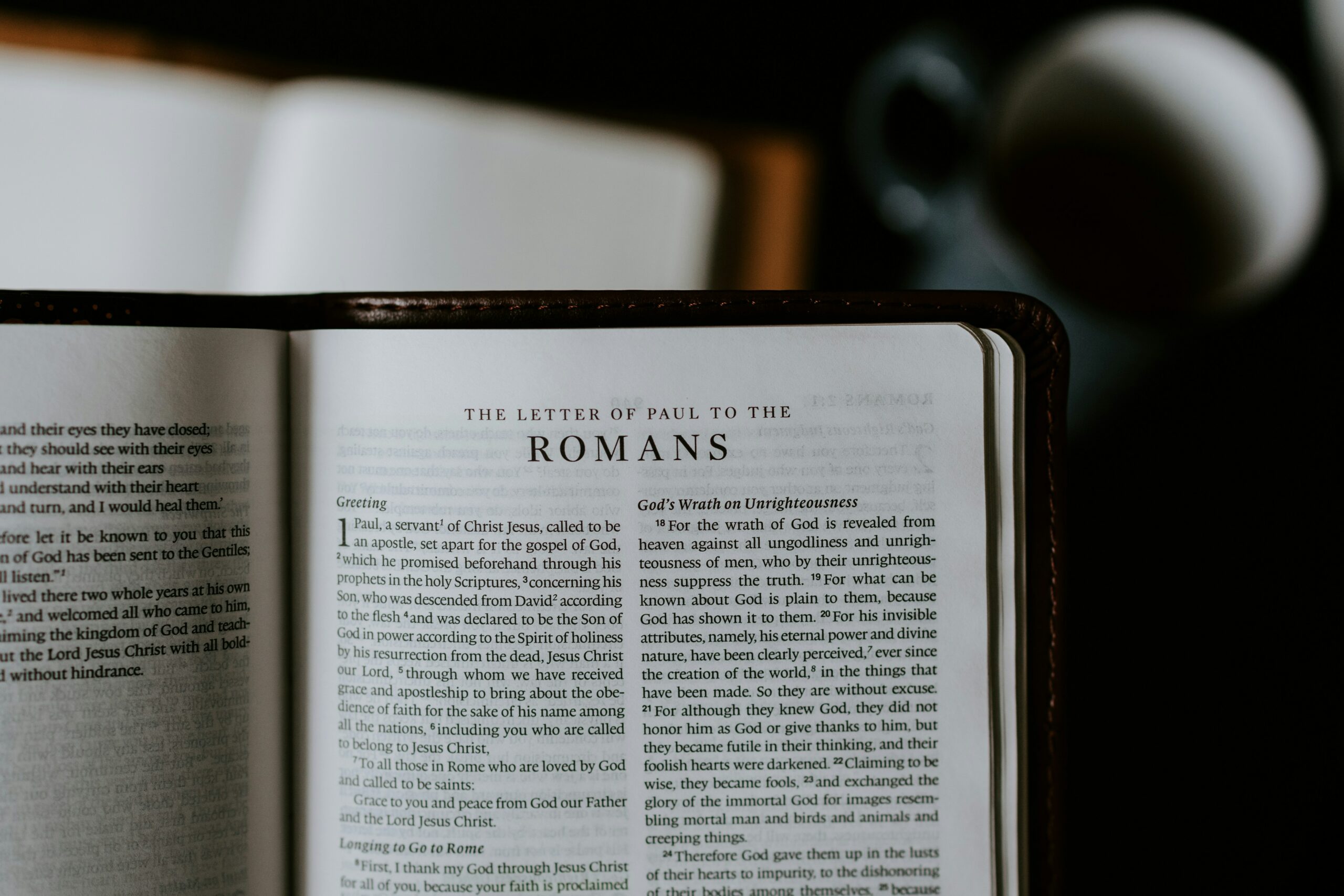
from verse one to verse eight. Romans 12 verse 1, where he writes,
I urge you therefore, brethren, by the mercies of God, to present
your bodies a living and holy sacrifice acceptable to God,
which is your spiritual service of worship. And do not be conformed
to this world, but be transformed by the renewing of your mind
that you may prove what the will of God is, that which is good
and acceptable and perfect. For through the grace given to
me, I say to every man among you not to think more highly
of himself than he ought to think, but to think so as to have sound
judgment, as God has allotted to each a measure of faith. For just as we have many members
in one body and all the members do not have the same function,
so we who are many are one body in Christ and individually members
of one another. And since we have gifts that
differ according to the grace given to us, let each exercise
them accordingly, if prophecy according to the proportion of
his faith, if service in his serving, or he who teaches in
his teaching, or he who exhorts in his exhortation, he who gives
with liberality, he who leads with diligence, he who shows
mercy with cheerfulness. Back, if you would, to verse
two. So as I said, Paul appends this
sentence, verse two, to what he’s already said. He elaborates
on the statement that he makes in verse one about presenting
our bodies as a living sacrifice. He explains that here in verse
two, and he connects these two sentences by that little word,
and. This represents an additional
thought to that which Paul has already said. There in verse
one, the simple sentence, as we pointed out last week, I urge
you to present your bodies a sacrifice. And so, here by this little word
and, Paul is really just expanding and developing that thought of
self-sacrifice. It’s an additional exhortation
to his opening plea. Present your bodies as sacrifice
was Paul’s plea, his brotherly request, but here in verse two,
you have to note that Paul ramps up his exhortation. He strongly
exhorts these believers now with both a negative and a positive
command. He commands them, do not do this,
but instead do that. That’s essentially the form.
Do not be conformed, but be transformed. Let’s consider that opening statement
of verse two, do not be conformed to this world, and essentially
what I’ve entitled the passage is embracing change, that we
are to welcome, we are to lean in, we are to welcome God’s work
in our lives that ultimately changes us. Change is a good
thing, as we’ll see in a moment. And Paul presents to us three
necessary considerations for growing in grace. We are to embrace
change, but if we’re going to do that, we’ve got to consider
several things. First of all, from verse two,
it’s a consideration of the direction that we’re heading. A consideration
of the direction that we are spiritually inclined to take.
Look at verse two, it’s so simple. Do not be conformed to this world,
but be transformed. The first thing that I would
point out here is that this audible rhyme that we have in English,
conformed and transformed, is really a function of the choice
of English words. It’s not a feature of the Greek
text. The Greek word translated as conformed, you’ll want to
write this down, is sooskematidzo. And the Greek word for transformed
is metamorpho. So the harmony belongs to our
English translators, and this translation is catchy and somewhat
memorable. don’t be conformed but be transformed. Who wouldn’t remember that? Not
surprisingly, almost all of our English translations utilize
those two words to translate these two Greek words. King James,
New King James, conformed and transformed. NIV, conformed and
transformed. ESV, conformed and transformed.
NAS, conformed and transformed. But there are a few that go the
extra mile to milk out a little more of a personalized explanation
of these words. The ASV 1901 translation, kind
of the first to break with the King James tradition and really
laid the groundwork for all of our modern English translations. The ASV says, do not be fashioned
according to the world. I like that. the new century
version, do not be shaped by this world. That captures that
image. This confirmation involves the
process of taking on an outward expression. In other words, this
is not an internal process that issues forth in an outward presentation. It’s our outer appearance only.
We’ll explain that more as we go. A moment ago, I mentioned
this Greek word, sus schema tidzo. It’s a compound word of three
smaller words. And this verb is built around
the noun schema. We get several of our English
words, scheme, which means a figure or a form, schematic. This is
the very word that is used by Paul in Philippians 2.7 to speak
of Christ taking the form, that’s our word, the form of a bondservant
made in the likeness of men. It refers to a temporary form,
a form that can be changed. But that form did not reflect
the fullness of Christ’s nature. He didn’t give up his deity to
take on human flesh. Christ’s outward appearance was
changed, and perhaps not surprisingly, the only other time that this
word schema is used is in 1 Corinthians 7 31. Just listen. When Paul
says there that the form of this world is passing away, the outward
appearance as we see it is about to change. Paul cautions there. So here, When Paul employs this
verb, sus schematizo, he’s speaking of those dreadful occasions when
the child of God, instead of appearing as he or she ought
to appear, saved, regenerated, holy, temporarily takes on the
appearance of the world. That’s the worst kind of facade.
This is an image that is not necessarily reflective of what’s
going on inside. It’s a veneer and it’s temporary. And this conformity can be adopted
capriciously at will. In that sense, it’s almost like
a costume mask. dawned here for a moment and
pulled away according to whim. Children often play dress-up,
right? Whether it’s a cape or a wig. And they play dress-up to take
on this persona and that, sometimes a doctor, a veterinarian, an
athlete. It’s not who they really are. But with a costume and a little
bit of an imagination, for a short while, they become those imagined
characters. And the important thing to note,
that tomorrow, just by the change of a costume and another dose
of imagination, you can become something completely different.
It’s not real. Your outward persona can be altered
according to your desire. Such a person in the adult world,
a professing believer who alters their persona to fit in with
the world, at least for a time, to masquerade, as it were, as
a person of the world, that is a sad, sad condition. There is that fascinating creature.
in God’s kingdom, the chameleon. As part of God’s amazing creation,
they have the ability to change their color from bright green
to yellow to tan, brown, even red. That’s a wonderful feature
given them for self-protection. But God did not design believers in the Lord Jesus Christ
to function as spiritual chameleons. to hear blend in with the world,
only to revert back to their true selves on Sunday morning. We don’t alter our outward appearance
to fit the mood of the moment. We don’t get a lot of outside
help here on this particular word, understanding exactly what
it means. The only other time that it’s
used in the New Testament is by Peter, but what he gives us
there is tremendously helpful. 1 Peter 1.14, do not be conformed
to the former lusts, which were yours in ignorance. Not just
talking about physical desires, but he’s talking about any inordinate
desire for a sinful thing. Peter basically says here, that’s
not who you are anymore. Why would you want to pretend
to be like that? Stop adapting and conforming
your ways to outward forms that do not match an inward reality. The very specific influence against
which Paul cautions here is the influence of the world. Do not be conformed to this world. That’s the temptation. And what
Paul brings into view here is a contrast. It’s a contrast between
this age, the age in which we live, and the one to come. Heavenly
glory. The current passing age in which
we live is the world. And it’s not just that this world
is passing, it’s temporary only, but that it is a morally corrupt
age in which we live. It’s the ungodly world all around
us, in contrast with the coming kingdom of God that Paul presents. Our current age is replete with
sinful ideas, evil practices. When Paul speaks of the world
here, he’s referring to the ungodly realm that is all around us.
It’s a world that which unbelievers believe is devoid of God, and
therefore God is not honored or even considered. Paul always
speaks with disdain about the ungodly world around us. Listen
to this in his epistle to the Ephesians. He’s especially blunt. In Ephesians 2.1, you were dead
in your trespasses and sins in which you formerly walked. According
to the course of this world, you live just like them. According
to the prince of the power of the air, the devil himself, of
the spirit that is now working in the sons of disobedience.
That’s who you were. No wonder you lived like them. The world is the devil’s domain.
And if possible, Paul’s commentary on the world in Ephesians 6 gets
even darker. Our struggle, he says, is not
against flesh and blood, but against the rulers, against the
powers, against the world forces of this darkness, against the
spiritual forces of wickedness in the heavenly places. It’s
the devil’s domain. Why would we want to look like
that? John Bunyan. John Bunyan painted, one of my
heroes of the faith, the writer of Pilgrim’s Progress, At one
point, you’ll recall if you’ve read the book, Pilgrim comes
to a town, remember, called Vanity, which happens to be hosting a
carnival called Vanity Fair. And Bunyan uses this image to
describe the ungodliness of the world and its activities, the
emptiness, the futileness of these things. Here are his words. In the town of Vanity, they contrive
to set up a fair, a fair wherein should be sold all sorts of vanity,
emptiness, and that it should last all year long. And this
fair are sold all such merchandise as houses, lands, trades, places,
honors, preferments, titles, countries, kingdoms, lusts, pleasures,
and delights of all sorts. Moreover, at this fair, there
is at all times to be seen jugglers, cheats, games, plays, fools,
mimics, knaves, and rogues of every kind. What a graphic image
of the world in which we live. Everybody’s in it for themselves.
One faithful pastor described the world in graphic terms as
that floating mass of thoughts, opinions, maxims, speculations,
hopes, impulses, aims, aspirations, at any time current in the world.
And these things come, they come at us from all angles, don’t
they? These influences, We see it in the conduct of the people
of the world. We see it in their mindsets.
We see it in their values. We see it on TV. We hear it in
music. We see it in their fashion. We
see it in the standards, language, all of it. And it’s coming at
us all the time. We’re literally steeped in it. The pressure to yield comes not
only from without, but it also comes within. There’s a certain
allure that the world has, and worldliness with it, and believers
can be seriously tempted by it. And when we dabble in it, we
essentially allow ourselves to be stamped and imprinted with
the imprint and image of the world all over again. We may
have escaped by God’s grace, but we yield ourselves to be
impacted all over again. How absurd, how unchristian is
it then to succumb to worldly mindsets? The Ephesian believers,
Paul was writing, he similarly cautioned here, have nothing
to do with the fruitless deeds of darkness. The Christian is
in certain danger the moment that they begin to consider the
world as a playground instead of a battleground. Paul refers
to the world in Galatians 1.4 as this present evil age. The world’s affections are different
than ours. The world’s motives are different
than ours. Their worldview is different
than ours. Their mindset and speech, all
of it, is different from that which the Christian intrinsically
values. This world is a selfish, self-centered,
self-indulgent world. Such a life is inconsistent with
a life touched by the grace of God, and so our affections, our
desires, our goals, our demeanor, our attitudes cannot be that
of the world. If they are, then we are already
in process of being conformed To be conformed to this world
means living like the unredeemed, the unbelieving people of this
age. It means that we’ve been conformed,
that we’ve taken on the appearance and the character of the world
that we’re called instead to influence. It’s a sad thing. The verb here, translated conformed,
is passive. And that means that this image
is something that we are allowing to be stamped onto us. There’s an older translation
in the Bible that captures this image excellently. The classic
J.B. Phillips translation captures
Paul’s words as this, don’t let the world around you squeeze
you into its mold. Isn’t that an incredible image? Don’t let the world press you
into its mold. Would that more Christians could
understand that simple admonition. So before Paul even utters a
word of positive command here, he issues a caution. What they
must not do, do not be conformed to the world. We’re not to circle
back to who we once were. We’re not to be pretenders, acting
any longer like something that we are not. We don’t put on makeup
and mask of the world like an actor on a stage. We’re called
to be and to live as the children of God, redeemed and saved. That and not the other is who
we are. Paul issues another very direct
admonition here, which you just glance again at verse two, do
not be conformed to this world, but be transformed. So the believer
is not to be conformed, he’s to be transformed. The word that
Paul employs here, as I said a moment ago, is metamorpho,
that’s the verb, and you may have heard it there. We get our
word metamorphosis from this word. That word metamorphosis
describes the change of an outward form. It’s like a caterpillar
into a butterfly or a tadpole into a frog. It’s the same word
that was used of our Lord’s transfiguration on the mountain. Matthew records
that he was transfigured before them. His face shone like the
sun. His garments became white as
light. but he was still the Lord Jesus Christ. It was a supernatural,
substantial change in Christ’s visible appearance, it left his
disciples in awe. He was dramatically and supernaturally
changed. And so the transformation about
which Paul speaks here for us is a real and substantial change. It’s not just a mask. It’s not
merely external. And in contrast to confirmation,
a topical change, not derived from within, transformation begins
in the heart and mind of the Christian and results in a genuine
reflection of that change. He or she is different. They
look different. They talk different. They act
different. They have different affections than they used to
have. There are a few important things
I can tell you about the form of this verb. First of all, it’s
passive, just like the previous, which means that this change
is not something we do to ourselves. We don’t change ourselves. We
don’t reform ourselves or our behavior. Rather, it’s something
that is done to us. In this case, by the Holy Spirit. Quite literally, Paul says, allow
yourselves to be transformed. He’s pointing here to the ongoing
progressive work of sanctification, which is begun at the moment
of conversion. But it’s not complete until the
believer dies and enjoys glorification. Paul mentions this same thing
in 2 Corinthians 3.8, just listen. where Paul says we all with an
unveiled face are beholding as in a mirror the glory of the
Lord are being transformed into the same image from glory to
glory. Day by day, little by little,
you and I, if you have placed your faith in Christ, are being
transformed more and more into the image of Christ. That’s as
it should be. It’s the Holy Spirit’s work in
the believer’s life, but we have a responsibility to cooperate,
to welcome, to encourage this process of transformation to,
as I entitled the message, to embrace change. We are to welcome
sanctification. We are to cooperate sanctification. When the spirit convicts us of
sin, we are to confess it as sin and plead for the grace to
change. The second thing that I would
tell you about the form of this verb is that it’s present tense.
In other words, this is an ongoing process. It’s a constant need. It’s a steady transformation
of our nature that will not be completed until we die. Sanctification
is not an instantaneous, immediate event. Sanctification is an ongoing,
continuous process done by the Spirit of God. It begins at our
conversion, our faith in Christ, but that’s only the beginning.
It’s a lifelong development. And so this exhortation, be transformed,
is one that we could daily recite to ourselves and to encourage
of our brothers. Be transformed. So Paul says
that the first necessary condition for growing in grace is a consideration
of your life’s direction. Are you being conformed, pressed
in by the world’s mold, or are you being transformed, yielded
to the Spirit of God to change you into the image of Christ?
There’s a second consideration. Not only should we consider the
direction of our lives, spiritually speaking, we should consider
the means of this transformation. If we’re going to grow in grace,
we need to know how, don’t we? It’s exactly what Paul addresses
there in the middle of verse two. Would you glance at the
verse? Do not be conformed to this world, but be transformed,
how? By the renewing of your mind. So after telling these believers
to consider and adjust their spiritual course as needed, he
tells them how. They are to be transformed by
the renewing of their mind. And this mind, Paul says, is
the instrument that Paul uses for this transformation. When
Paul speaks of our mind here, he’s referring to our human intellect,
the faculty of the ability really to understand the truth of God’s
word and apply it to our lives. As we noted above, transformation
means real substantial change, a change that begins in the mind
and the heart and inevitably moves to the surface of our lives.
I can’t do that anymore. I can’t live that way anymore
because my mind has been changed and my life is now transformed. This renewing of the mind is
the great means of transformation. Let’s look at this word renewing.
This refers to the process of almost a refurbishing, making
something like new again, a mind as it was designed to function
prior to the fall. A renewed mind has a spiritual
perceptiveness to it, a moral sensitivity. an ethical reasonableness. It’s a mind that is restored
to function as God designed it to function. It’s God-centered. It’s Christ-centered. By renewing
the mind, the life and the conduct of a believer is more and more
conformed to Christ as well. Remember, as we were reminded
last week, doctrine, what we put in here, is not just for
knowing. It serves a purpose. Doctrine
lays the groundwork for doing, remember? What we believe affects
how we live. You see, the problem is, again,
that because of the fall, the fall of Adam and Eve, mankind’s
thinking, his practical reasoning, his thought life has been corrupted. His moral conscience is now effectively
inoperative. It can’t be trusted. The problem
is not so much with man’s physical brain, but with his spiritual
mind is atrophied. And ultimately, it leads us only
to sin. Listen to this. Following mankind’s
fall into sin, This was the overarching testimony of humanity from God’s
perspective, Genesis 6, 5. Then the Lord saw that the wickedness
of man was great on the earth and that every thought of his
heart was only evil continually. I mean, you run out of superlatives
for that sentence. Every intent of the thoughts
of his heart was only evil continually. That’s a brutal reality. In chapter
one of this letter, Romans 1, Paul speaks of it as a depraved
mind. He speaks similarly to the Ephesians
about their former life, that they no longer walk in the futility
of their mind. Life for the world is futile. Paul tells Titus that the unbelieving
mind is defiled. Writing to Timothy, he speaks
of it as the depraved mind. To the Colossians, Paul characterizes
the mental faculties of the world as fleshly, a fleshly mind. The state of our minds then at
salvation, if you think of it, the state of our mind is depraved
and fleshly and futile. It doesn’t get any worse than
that. Because of that, our minds need
the renewal of God’s spirit and his word. Even in our fallen
condition, we still have a conscience, right? Most people, when they,
you watch the average criminal who’s arrested, he comes walking
out in the perp walk, right, with his head covered. He’s ashamed,
he knows what he did was wrong. Even in our fallen condition,
we have a conscience, but the conscience, which is a great
and God-given mechanism, an early warning system for sin, but that
conscience still needs to be reshaped and constantly informed
by God’s Word. The conscience has to be retaught,
re-informed. Indeed, our minds cannot be renewed
apart from the Spirit’s application of biblical truth to our minds.
And it’s not a process in which we are passive. We can’t just
sit back and let the Spirit do His thing. We have to get into
God’s Word. And so I would just admonish
you, plead with you, to have a regular Bible reading program. You don’t read in order to be
convicted. But if you read, you’re going
to be convicted. It’s a matter of time. In fact, when you’re
in sin, the last thing you want to do is read God’s Word, right?
So you’ve got to have a regular feast, a feeding on God’s Word,
in order to have your mind informed, to give the Spirit something
to apply to your heart and mind. When Paul says here, be transformed
by the renewing of your mind, he’s issuing a command. The believer in Christ is very
much responsible for this development by yielding his or herself to
the Spirit’s actions. We respond to what the Spirit
does. And when we’re convicted, we respond in confession. This is not a one and done proposition,
is it? The verb here is in the present
tense, which means that this renewal is an ongoing process. What the believer desperately
needs is a renewal of his mind. And this is precisely the role
of the Holy Spirit. As Christ himself declared of
him in the Gospel of John, the Helper, the Holy Spirit, will
teach you all things. James says all you’ve got to
do is ask. Renewal of the mind is only accomplished by the Holy
Spirit utilizing the Word of God. You see, we can alter behavior. Prisons can alter behavior. Concentration camps are pretty
good at altering behavior. They can alter behavior through
pain, through threats, and et cetera. But such behavior modification
leads to only temporary change. The only way to affect real change
in the life of a Christian is to change to renew his or her
thinking. And God accomplishes that incredible
process by the gentle instruction and leading of the Holy Spirit.
Isn’t that beautiful? We know that the Holy Spirit
is the divine agent in regeneration. He’s the one that brings dead
sinners back to life again. and to faith in Christ, but the
Spirit’s work doesn’t stop there. I say it this way all the time,
the same God that saves us, sanctifies us. And here the process mentioned
above, transformation is conducted by the Holy Spirit. The Holy
Spirit uses the truth of God’s word to renew our minds as Christians,
This is just exactly what Paul communicated to Titus. Listen
to this. In Titus chapter 3, he tells
Titus that whereas we were, past tense, foolish ourselves, disobedient,
deceived, enslaved to various lusts and pleasures, spending
our life in malice and envy, hateful, hating one another, I mean, you don’t have to be
ashamed if those hit you between the eyes. They hit us all. That
was us outside of Christ. Paul goes on and says, but God
in his mercy saved us. And Paul says, by the washing
of regeneration and renewing by the Holy Spirit. And that
statement captures both of the primary actions of the Holy Spirit. It captures the saving work of
regeneration and the sanctifying work of renewal. And again, sanctification
is a lifelong process. The Spirit’s renewal of our minds
is spoken of in the same terms in 2 Corinthians 4.16. Paul declares there that though
our outer man is decaying, Yet our inner man is being renewed
day by day. It’s a constant renewal. To the
Colossians, Paul said, the new self is being renewed to a true
knowledge according to the image of the one who created him. We’re being made more and more
daily like Christ. But the fullest parallel would
have to be Ephesians 4. Would you just turn there for
a moment? Ephesians 4. Keep your finger in Romans 12. Where do you see this? I mean,
this is Paul’s mindset on our transformation by the renewing
of our mind. Ephesians 4, let’s see where I want to start here.
Just scroll down to verse 22. In reference to your former manner
of life, you lay aside the old self, which is being corrupted
in accordance with the lust of deceit, and that you be renewed
in the spirit of your mind and put on the new self, which in
the likeness of God has been created in righteousness and
holiness and truth. So renewal, sanctification are
part of a lifelong process for the Christian. Back, if you would,
to Romans 12. If we are to embrace spiritual
change, we have to consider the direction of our lives. We must
recognize the means, how to go about it. And thirdly, we have
to understand the divine purpose in it. Why? We see that at the
end of verse two. Would you look at the verse again?
Do not be conformed to this world, but be transformed by the renewing
of your mind. Why? that you may prove what
the will of God is, that which is good and acceptable and perfect. Paul has thus far given us the
direction for our lives. It’s not the world, but it’s
growth and transformation. He’s given us the means, renewal
of our minds. And at the end of verse two,
he presents to us the reason, the great purpose in all of this.
The whole purpose of the pursuit of godliness comes down to proving
God’s will. Now, the language, this idea
of proving God’s will is somewhat obscure to our ears. When we
first hear this, we may not be exactly certain what Paul is
saying. Let’s consider the easier portion
of this clause first, the will of God. piece of cake. We believers sometimes have a
mystical view of the will of God as if it’s this ethereal,
elusive guidance system. Think of it as spiritual GPS. And because the will of God is
so delicate and undefined, we sometimes find ourselves longing
for something much more tangible Say, a pillar of fire, that would
do it. Some miraculous sign or an audible
voice from above. The fact is, God’s will has already
been revealed. And it’s revealed in full in
His Word. This is God’s will. That doesn’t eliminate completely
the occasional supernatural intervention and guidance by the Holy Spirit. God can still do that, but that’s
not the norm. And if you sit around waiting
for a pillar of fire, you’re going to be disappointed. The grand majority of God’s will
is spelled out explicitly in the pages of Scripture. And simply
put, the will of God is that which God commands and desires
of us. It’s articulated clearly in the
lessons and examples, the commandments, principles that we see in scripture. Simply put, observe those and
you are doing God’s will. So that the discovery of the
will of God is realized by the renewing of our minds in the
rich treasure of God’s word. And it’s here and here only that
the Christian discovers God’s revealed will, what he forbids,
what he commands. Paul says that the whole purpose
of renewing our minds for the blessing of transformation is
done for a purpose, that we may prove what the will of God is.
This is how God wants us to live. This word prove is the sticky
one in this verse. We’re not exactly sure what to
do with it sometimes. We’re not exactly sure what it
means. What does it mean to prove the will of God? The Greek word
behind it has a solid biblical use. It can either refer to testing
something for the purpose of proving it right or wrong, true
or false, Proving something is done by experimentation, and
so this word can be used to speak of the process of proving something,
or it can be used to speak of the result, a proven, unapproved,
or tested and found to be true feature. Listen to a few scriptural
examples of the use of this fascinating word. It’s used of the process
of testing, 1 Corinthians 3.13, speaking of God’s assessment
of every person’s ministry effort. Fire itself will test the quality
of each man’s work. Speaks of a testing process.
2 Corinthians 13.5, he’s urging the Corinthians there to a personal
examination of their standing in Christ. Each one of us. Test yourselves to see if you
are in the faith. Examine yourselves. Paul uses the word the same way
to the Ephesians. Walk as children of light, trying
to learn by testing, by living it out, trying to learn what
is pleasing to the Lord. But as I said, this word can
also be used of the result, the end product, the proof. that
which has been tested and found to be true. And he uses it this
way. Philippians 1, this I pray that
your love may abound still more and more in real knowledge and
discernment so that you may approve the things that are excellent
in order to be sincere and blameless in the day of Christ. And so
here when Paul says, be transformed by the renewing of your mind
so that you may prove what the will of God is, He isn’t just
suggesting that now we have the ability to put God to the test,
to test His will, but that given the capacity, the Christian will
test and prove it will bear out in his life, this is how we were
called to live, this is what it means to be righteous, this
is what it means to be humble, This is what it means to have
a God-honoring marriage. This is what it means to parent.
We will live out what is true and right. When we read and hear from God’s
Word, when we accept it and follow it in obedience, we are proving
or approving God’s will. We are declaring it to be true.
When we derive our principles from God’s Word and obey them,
by God’s enabling grace, always we are proving the will of God.
So that this proving or approving is not just rubber stamping of
God’s ways, but it is that which is implemented and practiced
in our lives. It’s no wonder then, that Paul
describes God’s will as that which is good and acceptable
and perfect. Look at the verse there, that
you may prove what the will of God is, that which is good and
acceptable and perfect. What is good and acceptable and
perfect is God’s will. It is inherently, intrinsically
good and beneficial For us as God’s children and to God’s glory,
it makes us pleasing to God and leads to our happiness. You’re
going to be much better off if you live according to God’s will.
It’s acceptable. It’s acceptable in thinking and
conduct before God. It’s not only behavior that is
acceptable to God, These are expectations that are acceptable
to believers because they come from a loving Heavenly Father.
Paul exhorted the Ephesian believers to learn what is pleasing to
the Lord. What the will of the Lord is
in 517 and the will of God is perfect. It’s perfect in the
sense that this is the way we were designed to live. God maps
it out for us in his word. These are the principles that
we were designed to obey and that we’ve been equipped. This
is why we’re careful not to take away or to add to Scripture. God’s Word is perfect. His will
is perfect. All of this comes from renewing
our mind in God’s Word. In our course of being transformed
into the image of Christ and the more like Christ we become,
the greater our transformation. The more clearly we can examine
everything in the light of God’s revealed will. And so this then
becomes really the practical outworking of what Christ declared
as the greatest commandment. You shall love the Lord your
God. With all your heart. With all your soul. With all
your mind. Would you humble yourself before
him?
Messages: 204