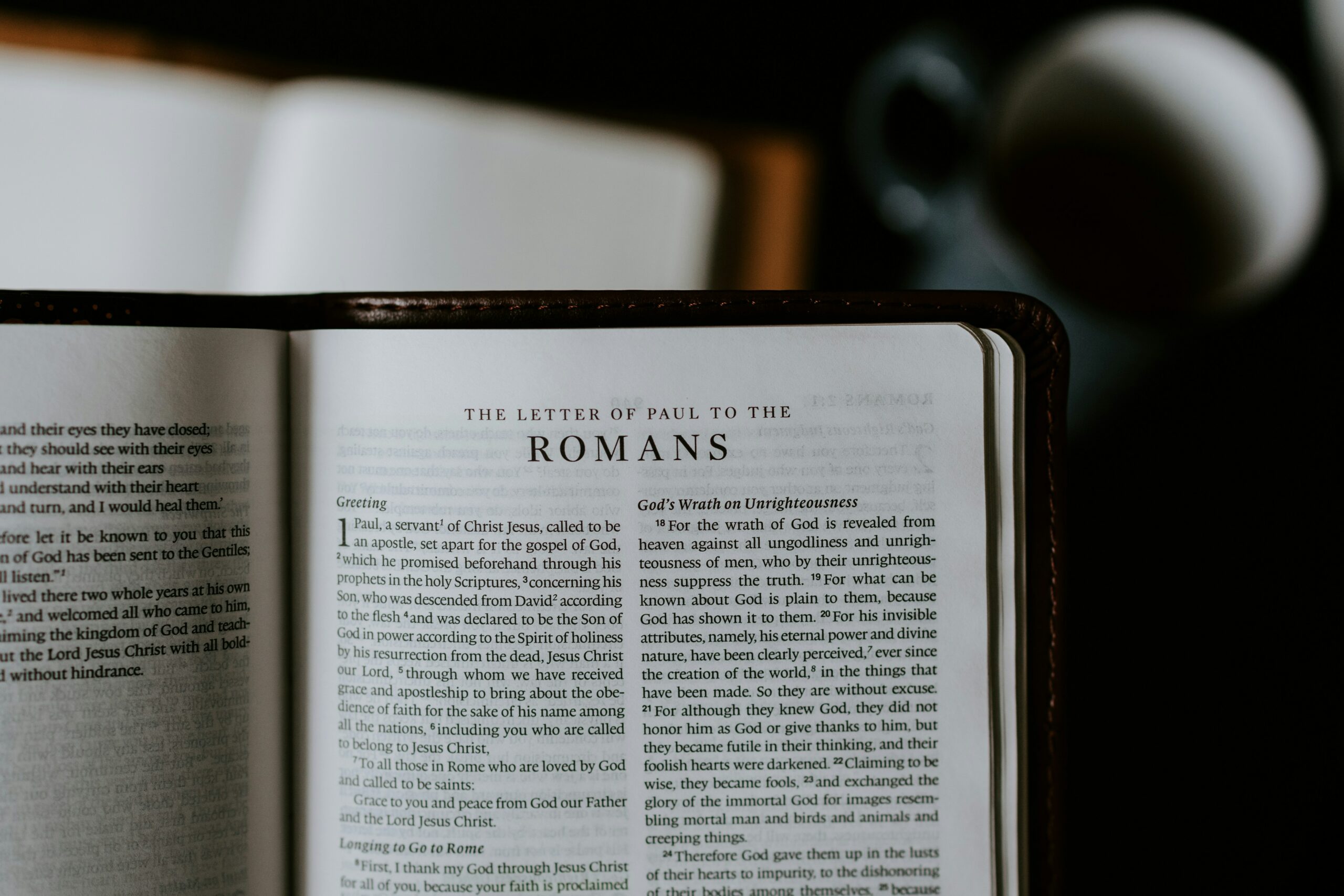
Life According to the Spirit, Part 2
This sermon explores the divine assistance provided by the Holy Spirit to believers, focusing on the transition from living according to the flesh to living according to the Spirit. It outlines three key aspects of this aid: the mortification of sin, the guidance that reveals believers as sons of God, and the acceptance that engenders affection. The central theme is the Spirit of Adoption, which liberates Christians from the fear of slavery and enables them to approach God with intimate confidence. By examining the historical and biblical context of adoption, including the story of Mephibosheth and Jesus’ prayer in Gethsemane, the message emphasizes that the cry of “Abba, Father” is a direct result of the Spirit’s work in the heart. The tone is pastoral and instructional, encouraging believers to recognize their secure status as heirs and to respond with love and boldness in prayer.
Transcript
If you would take your Bible
and please turn once again to the Book of Romans. I don’t have a handout today
because the handout we gave you last week is something we’ll
operate off of for weeks to come. If you need a copy of that, I
will provide one perhaps next Lord’s Day. We’ll put them in
there every couple of weeks. Essentially, We have completed
that first opening section of Romans chapter 8 verses 1 through
11 which discussed that our life the life of a Christian is established
in Christ Jesus. As we’ve talked about all the
members of the Godhead are present here in Romans chapter 8 all
spoken of as rendering divine assistance literally divine enablement
to the Christian. All of them participating to
give the Christian the help that he so desperately needs because
he is utterly enabled on his own. Having completed that opening
section of Romans chapter eight. The divine assistance rendered
by Jesus Christ Paul turns the corner to make application of
that and by Making application of what he has said in the first
11 verses, he zeroes in on the divine assistance rendered by
the Holy Spirit. And so what a what a perfectly
appropriate hymn to sing in preparation for this. With even the themes that were
present in that last hymn. If you would go to Romans chapter
eight, once again, we’ll pick up in verse 12 and for this on
this morning’s purpose. We’ll read only to verse 17.
Where Paul summarizes, so then brethren,
we are under obligation. Not to the flesh to live according
to the flesh. For if you are living according
to the flesh, you must die. But if, by the Spirit, you are
putting to death the deeds of the body, you will live. For
all who are being led by the Spirit of God, these are the
sons of God. For you have not received the
spirit of slavery, leading to fear again, but you have received
the spirit of adoption as sons by which we cry out, Abba, Father. Spirit himself bears witness
with our spirit that we are children of God and if children heirs
also heirs of God and fellow heirs with Christ. If indeed
we suffer with him in order that we may also be glorified with
him. We began this section last Lord’s
Day and when I pointed it out there is there is more to the
passage than is actually there. Now, one said it this way. He
said that less is said than is intended, which seems to indicate
that both Paul and the Holy Spirit made a mistake in their presentation
of these thoughts. What Paul does is he makes a
statement and necessarily implies another. When in verse 12, just
glance down briefly when he says, so then, brethren, we are under
obligation not to the flesh to live according to the flesh.
What he implies there clearly is that we are under obligation
to live to the spirit, to live according to the spirit. And so, as we said last Lord’s
Day, It isn’t so much that less is said than is intended. It’s that more is implied than
was actually spoken. We are under obligation, he says.
We have a new allegiance. Believers are no longer living
according to the flesh, we’re no longer in the flesh, we’re
in the spirit. And because of that, Paul issues
the strongest admonition here that we are under obligation,
not to the old way. But to the new. We are under
obligation to live according to the spirit, and we said that
in and of itself. That’s almost an unfair statement. Because in our own power, we
don’t have the means to fulfill it, we don’t have the means to
not live according to the flesh, we don’t have the means to live
according to the spirit. on our own in our natural condition,
which is precisely the purpose of the passage. That God has
rendered divine assistance. God has not left us alone. God
has not left us to our own resources. God has rendered aid to us. He has given us everything, as
Peter says, according to life and salvation. Everything that
we need to succeed. We have the Holy Spirit resident
within us. We have God’s word. We have God’s people. We have
the example of the saints of old. God has rendered to us everything. Pertaining to life and salvation. God has given us divine assistance.
Not only as we saw in establishing us in Christ. But he has given
us divine assistance by way of the Holy Spirit. We began last
Lord’s Day to look at what are these ways? What are these things
that the Holy Spirit has given? How has the Holy Spirit rendered
aid? How has this Holy Spirit divinely
enabled us? The first thing we saw was that
the Holy Spirit provides a mortification of sin that leads to life. The
Holy Spirit enables us to kill off sin. Look at verse 13. Taking it in running start from
verse 12, so then, brethren, we are under obligation not to
the flesh to live according to the flesh, for if you are living
according to the flesh, you must die. But if by the spirit you
are putting to death the deeds of the body, you will live. We
looked at it last Lord’s Day, and this was that concept that
the Puritans referred to as mortification. It’s a killing, it’s a putting
to death, it’s graphic language. It is to consider something as
to yourself dead. And specifically, Paul says,
if by the spirit you are putting to death the deeds of the body. And we talked about this. It
wasn’t the innocuous deeds of the body, eating and sleeping
and drinking and all of those necessary functions. But rather,
and the word hints at it, the word deeds hints at what Paul’s
getting at. It’s dealings, it’s the manipulative
treacheries of the body that Paul is pointing to. It’s the
sinful tendencies that Paul is alluding to here. And he says
that if by the Spirit, you can’t do it your own. You can’t do
it by yourself, you can’t do it in your own power, you can’t
put to death the deeds of the flesh by yourself. But if the
Holy Spirit renders your aid, if the Holy Spirit is put to
the employment of mortifying the flesh, you will live. Beautiful thought. You say, how
do you do it? Well, by developing a principled
life. By looking to the scriptures
and determining what are the standards of God and how do we
arrive at those? By nourishing ourselves in the
word and by prayer, by conviction when we stray from sin, by confession
like we just participated. When those things are dealt with
in confession and a greater application of God’s grace, That is the process
of the mortification of the deeds of the body. There was a second
way that the Holy Spirit has rendered His aid, as we saw last
week. Not only the mortification of sin that leads to life, but
guidance that reveals us as sons. A guidance that reveals us as
sons. Look at verse 14. For all who
are being led by the Spirit of God, these are the sons of God. I was talking to one of the candidates
for baptism this week. And I suggested that if Little
Sis was following along in your path, what might the neighbors
conclude? Is she just a past? No, she’s
part of your family. She’s following you. The world will know that we are
Christians by who we follow, by what deeds we employ. All
who are being led by the Spirit of God, all who are following
hard after Christ, these are the sons of God. This leading becomes essentially
a lifestyle, a daily moment by moment, hour by hour, putting
to death of those schemings, putting to mortification the
sinful flesh as we’re being led by the Spirit, as we’re being
convicted by the Spirit, as we’re being led to a greater degree
of commitment to Christ. The little word led just points
to the concept of being not just occasional direction from the
Holy Spirit, but a life that is governed by Him. A life that
is under the controlling influence of the Holy Spirit. You say,
well, how do I know if I have that? As you begin to look to
the Scriptures, one of the clear ways is 1 Corinthians 2. You
know it well. Natural man doesn’t look at the
Scriptures and decipher things for himself. We cannot read the
Scriptures and make any sense of them spiritually speaking
without the Holy Spirit of God. And so, the Christian, the more
he looks into God’s Word, the more he drinks in God’s Word
and it is attended by the Holy Spirit, he is taught by God. As God’s Word warns us of temptation,
warns us about our own natural weaknesses, God’s Word, God’s
ways ultimately come to convict us of our sinful missteps. And
in short, that is the process of sanctification. Remember,
that is the main focus of this entire chapter. That the Holy Spirit is encouraging
us in the way of righteousness. And we talked about this. You
know it. You know it when you’ve had a good day or should we be
more accurate and say we’ve had a good moment in the Lord. The
Holy Spirit directed us. We were obedient. And you enjoy
that the Christian is supposed to. But we also know when we
blow it, don’t we? We know. We know when we’ve said
something we hadn’t ought. We know that we’ve when we’ve
done something or gone somewhere or. Even thought something. That we entertained a little
too long. We know. We know because the Holy Spirit
is there. Granting us divine assistance. That ultimately, as Paul says,
reveals us as sons, what he’s saying there is that. The world,
those who don’t know Christ, don’t have this privilege. They
don’t have this guidance, they don’t have that kind of leadership,
they’re not following hard after Christ, they’re not revealed
as sons of God. They reveal this. For what they are. They’re setting
their own agenda. They’re living their own life.
Not that which God directs. There’s a third means of divine
assistance and all we did last Lord’s Day was introduce it.
The divine assistance that the spirit provides is not only mortification
of sin that leads to life guidance that reveals us as sons but acceptance
that engenders affection. Those are big words. Let’s pause.
Acceptance that engenders, it just means to foster within us
affection. Affection for who? Affection
for God. Remember, 1 John says it as plainly as can be, we love
him because he first loved us. Glanced down at the passage again,
if you would pick it up in verse 14, for all who are being led
by the Spirit of God, these are the sons of God, for you have
not received the spirit of slavery. leading to fear again, but you
have received the spirit of adoption as sons by which we cry out,
Abba, Father. Now, if you will, verses 15 or
16 are somewhat of a parenthesis, and they’re there to enforce
the description of Christians as sons, but it absolutely adds
to the work of the spirit. It absolutely reveals to us more
of the way that the spirit is at work in our life. Not only
is he there to aid us as we mortify sin, not only is he there to
render us guidance, but he is there to give us assurance that
we are accepted in Christ. That we are drawn to Christ. It is a confirmation of what
he said, but it goes far beyond. Look at verse 15, you have not
received the spirit of slavery. Now, you might just say, well,
you know, I remember this because back in Chapter six, we were
released from slavery to slavery to sin. Of course, we haven’t
received the spirit of slavery. Listen to the verses. Having
been freed from sin, you became slaves of righteousness, you
say, well, now we have a contradiction. We were freed from slavery and
now you’re saying we’re in slaves again. Paul here in chapter eight is
saying we haven’t received the spirit of slavery. Let’s be let’s
be reasonable. Paul goes on to speak there in
Romans, chapter six, I’m speaking in human terms because of your
weakness, according to your flesh, he uses the image of slavery.
He says, look, you have been bought by another. But this slavery
is not like the slavery of old. This is not the hard and harsh
taskmaster sin. This is a loving God who bought
us with the blood of Christ and loses to himself and seeks nothing
but our good. Nothing but our good. That’s what he says in verse
22 of that same chapter that now, having been freed from sin
and enslaved to God, we can’t take offense at that. Having
been free from sin and enslaved to God, you derive your benefit
resulting in sanctification and the outcome eternal life. That’s
a slavery I’ll sign up for. Isn’t it for you? What does he
mean by this phrase, though, the spirit of slavery? There
were those that believed. And just as we’ve seen several
times throughout this chapter that the S here must be a small
less it’s referring to a disposition or a frame of mind, you haven’t
received that kind of a spirit. You’re not under the cloud of
slavery. No. That’s a possibility. But I think what Paul is pointing
to is what he’s been pointing to all along, it’s the Holy Spirit.
You haven’t come under the Holy Spirit of God as under a cloud
or if you will, an aura of slavery. The Holy Spirit that you have
received is not a spirit of bondage, not like what you were in before.
It’s a spirit of liberty. It’s a spirit of life. It’s a
spirit of eternal life. It’s a spirit of blessing. He
calls it he goes on to call it the spirit of adoption in a moment.
It is the spirit whom they have received. That doesn’t lead us
back into some kind of course bondage. Which ultimately leads,
as he points out here, to some kind of cowering fear. As one said, it is the Holy Spirit
which you have received who does not reproduce a slavish and anxious
state of mind, such as those experienced who are under law
But it produces those filial feelings of affection, reverence,
confidence, and enables us out of the fullness of our hearts
to call God Father. We’ll come back to that thought.
The spirit which you’ve received is not a spirit of slavery. A little phrase there leading to
fear again. That’s the fear that we were
under when we were under the law. That’s the fear that we
have when we’re outside of Christ. We don’t know what the world
holds. We don’t know the Savior. We don’t know hope. We don’t
know forgiveness. We remember it, but that’s not
where we are now. We no longer are under the fear
of a guilty slave that stands before a hard and cruel taskmaster. Sin that offers absolutely no
respite, no life, no encouragement. We’re not under that kind of
fear. That’s exactly what Paul’s referring
to in Second Timothy one when he says, God has not given us
a spirit of timidity, but of power and love and discipline. We’re not those who tower in
fear from anyone. We reverently fear God. But we
are bold in Christ. We are bold in Christ. One pastor
spoke of it when he said, no matter how cleverly they may
manage to mask or deny the reality of it, sinful men are continually
subject to fear because they continually live in sin and therefore
they are continually under God’s judgment. That is a fearful condition. Paul says, look, we haven’t been
led back there again. That’s where we used to be. That’s
who we used to be. That’s how we used to live. That’s
how we used to feel. Paul says, look, you have a completely
different spirit now, not under a spirit of slavery. You’ve received
a spirit of adoption as sons. What he points to here is that
you’re under a completely different status before God. Spirit of
adoption, that’s interesting language. And we all know, we
all know those people who’ve been adopted. And I know some
who really feel like, you know, I’ve been adopted, but I don’t
feel a part of this family. And most families who adopt,
they work very hard. They have to work very hard to
bring in this child and to make them feel a part of this family,
to ensure and assure that they are very much sons in a real
sense. There are times, if you think
of the totality of Scripture, where our relationship with our
heavenly father is viewed as generational, as if we have been
born into the family. And Scripture has plenty of those
examples. When he changes our will, he
talks about regeneration, it’s a new life, it’s like being born
into the family of God. But there are times, and this
is one of them, where that whole transaction is viewed as an adoption
that God reaches down as it were. Into the home and he adopts out
of the orphanage one for himself. It’s an amazing image. And he uses the spirit of adoption
to do it. It is the Holy Spirit that brings
about this adoption, just like it’s the Holy Spirit that is
seen reviving us from dead from from the dead rather. It is the
Holy Spirit that adopts us. No wonder he’s called the spirit
of adoption. As one said, the spirit of adoption
is the Holy Spirit because it is he who creates in the children
of God the familial love and confidence by which they are
able to cry out to God. by the Holy Spirit that we are
brought into the family. Whether you want to look at it
as being born into the family for the very first time or whether
you want to look at it as God came and knocked on the door
of the orphanage and picked you out and drew you to himself. That’s a powerful image. Turn if you would to Galatians
for a parallel passage and I Say that with caution, because a
lot of times we think of parallel passages that aren’t quite so
parallel once you begin to study them. Remember, a seminary professor
said studying the scriptures ruins more sermons. What he meant
by that is a lot of times we want to go to a passage that
really has no relevance to the passage we’re in. This one does.
This one does. Galatians chapter four. This is an incredible image Now I say as long as the air
is a child and I believe by that he means a little one Not just
I mean, I’m still my mother’s child even at 50 plus I’ll let
you figure it out another day. I’m still my mother’s child,
but I’m no longer a child and the word that he has here. I
believe he’s indicating here a little one. I say as long as
the heir is a child, he doesn’t differ at all from a slave, although
he is the owner of everything. He says, you know what? If you
look at the ranch and the rancher, the one that owns it all has
little kids. It doesn’t matter who he is. He essentially has the same rights
as a slave. He’s really no more Even though
he owns it all, ultimately, he doesn’t function any differently.
He’s a child. And what Paul likens this childhood
to is our life outside of Christ. It’s a fascinating image. There’s
a fascinating use of these words. But he is under guardians and
managers until the date. In other words, he’s got babysitters,
people watching over him. Some of the slaves take care
of him. Some of the slaves boss him around.
How is it that he’s the owner of the entire place? Watch this. So also, while we were children
outside of Christ, I take that to mean we were held in bondage
under the elemental things of the world. But when the fullness
of time came, we love this passage. It’s a Christmas passage, right?
That’s how we’ve used it. But when the fullness of time
came, God sent forth his son born of a woman born under the
law so that he might redeem those who were under the law that we
might receive the adoption as sons. In other words, he says
Christ came for the very purpose of adopting us out of this fallen
world and adopting us out of the sinful condition we were
in and to bring us in as sons. Sons who are heirs. Adoption. It’s interesting. I did a lot of reading over the
last couple of weeks. Adoption was a very common practice
among Greeks and Romans. But it’s hardly spoken of at
all in official terms among the Jews. The Greeks and the Romans
had very detailed legal proceedings that governed adoptions. The
Jews even though the subject isn’t explicitly addressed in
their legal proceedings there are dozens of such transactions
in the Old Testament. Numerous examples of the treatment
of orphans. Remember that was the one great
overarching sin of God’s people Israel that the minor prophets
all spoke to almost to a prophet. They spoke to this issue. that
they had mistreated, they had not done justice by not caring
for widows and orphans. So even though there is no legal
proceeding in the Old Testament regarding adoption, watch this.
Try on Moses. There’s an adoption. There’s
a child who was purposefully abandoned, taken in by another
and raised not as an adopted kid who was in second class status,
but who was raised as a son. That’s what adoption is. What
about Esther? Taken in as one of his own. What about David? David. Uses the passage there in Second
Samuel 14. God uses that of David to suggest
that he is being literally adopted into God’s own family, cited
again in second Corinthians of Christians adopted in. But I want to take you to a cool
passage that I promised my Sunday school class I would share. It’s
one of the coolest stories that we’ve overlooked in all of Scripture. If you would, I want to take
you to second Samuel, chapter nine, verse one. Saul is dead. Jonathan is dead. David is now God’s man. And in verse 1, David does something
that is utterly astounding. He conducts an adoption. Watch
this. Then David said, Is there yet
anyone left in the house of Saul that I may show him kindness
for Jonathan’s sake? He so loved Jonathan. He so missed
his friendship with Jonathan that what he wanted to do is
expand his horizons. Is there anyone that was related
to Jonathan? Any one of Saul’s relatives to
whom I can show kindness? Now, there was a servant of the
house of Saul, whose name was Ziba, and they called him to
David and the king said to him, Are you Ziba? And he said, I
am your servant. The king said, Is there not yet
anyone in the house of Saul to whom I may show kindness, the
kindness of God? And Ziba said to the king, There
is a son of Jonathan who is crippled in both feet. And the obvious
insinuation there was no, not him. That’s what the world would
say. So the king said to him, where is
he? And Ziba said to the king, behold, he is in the house of
Makir, the son of Amiel in Lodabar. Then the king, then King David
sent and brought him from the house of Makir, the son of Amiel
from Lodabar, Mephibosheth. We had a difficult time saying
that one. Mephibosheth, the son of Jonathan, the son of Saul,
came to David and fell on his face, prostrated himself. And
David said, Mephibosheth. And he said, Here is your servant.
David said to him, Do not fear, for I will surely show kindness
to you for the sake of your father, Jonathan. Mephibosheth had good
reason to fear. Saul had hunted Jonathan mercilessly. In all likelihood, David is calling
him to put him to death as far as Mephibosheth is concerned. David said to him, do not fear,
I will surely show you kindness. I will restore to you all the
land of your grandfather Saul and you shall eat at my table
regularly. In other words, he says to him,
I’m not just going to do you a kindness. I’m not just going
to show you some favor. I’m not just going to give you
the land. I’m bringing you back into my household as a son. Again, he prostrated himself
and said, what is your servant that you should regard a dead
dog like me? Then the king called Saul’s servant
Zeba and said to him, all that belong to Saul and all his house
I have given to your master’s grandson, you and your sons and
your servants shall cultivate the land for him and you shall
bring in the produce so that your master’s grandson shall
have food. Nevertheless, Mephibosheth your
master’s grandson shall eat at my table regularly. He brings
him in. He fully restores this young
man who now has no father, has no grandfather, has no land,
has no resources, has not the means to even earn it. He brings
him in. And that’s exactly what God does
with you and I. You’re not a second class citizen
in God’s status. Look at verse 15 again. Bear with me back in Romans 8,
verse 15. Paul reminds you have not received
the spirit of slavery leading to fear again, but you have received
the spirit of adoption as sons by which we cry out of a father. In so doing. Paul points out. That the Holy Spirit is the great
means of reminding us, pointing out to us, assuring us, just
like David did to Mephibosheth. As we tower in fear on our faces
before God, God says, get up. Get up. You’re a son. That I’ve
adopted you in as a son. And He gives us the Holy Spirit
for this very purpose. It is acceptance that engenders
affection. What else could Mephibosheth
do? but to rise in love of the One who had not only spared his
life, but restored his life beyond what it ever was. As one said, that little phrase,
by which, means that we are literally animated by His influence. I
love that. We are brought to life. We are
enlivened. Can you imagine Mephibosheth
walking out of that meeting? Even with this crippled step,
there was a spring in it. There was new life. He was encouraged. What does the spirit do in us
by which we cry out the fascinating word? Whether it’s in crying
out in supplication to God or crying out in praise. It’s pointed to here as a gift
of the spirit, we the privilege that we have to call up to God,
whatever you call up to God in prayer, that’s because you’ve
been accepted in the beloved. You’ve been accepted in Christ
and you’re so accepted that it can’t but well up in you. It’s
love for God. This entire thing was described
in so many various terms, I share a few with you. This crying out
is uttered by Christians under obvious spiritual stress. Well,
that’s true. We call we do cry out under stress,
but we also cry out when we call out to God in prayer. When we
pray aloud or when we pray in secret, we call out, we cry out
to God. And when we do, we cry out to
our father. We cry out to him as father,
even as we sang about earlier this morning. But there’s two
words here. The first word is a Chaldean
or Aramaic word that had become common among the Jews. They liked
the word. They liked what it meant. It was an easy word to
say, Abba. And it became a familiar word
that a child would call their father, much like our papa or
daddy or dad. And as such, the word was originally
used by only the smallest children. But later on, as the word became
more popular, more widespread, the word became used as an affectionate
tenderness for one’s father. And it’s used in three different
times in the scriptures. In the New Testament it occurs
three different times Paul Paul’s use of the word is on two different
occasions Romans 8 15 where we are in Galatians 4 6 where we’ll
be in a moment. There’s another occasion though
that it’s used in scripture that is very germane for us to consider
this morning we’ll get there in a second. The interesting
thing is here that Paul includes both words. Why did he do that.
Why would he say Abba and then father was he merely explaining
it? I don’t think so. It isn’t just for the fact that
he had to explain this word, which was a common word in the
day. What he’s doing is he’s emphasizing who he is. It’s our
daddy father. It’s our beloved, affectionate
father. It’s the it’s the God, our heavenly
father that we love. because of all that he’s done
for us. And you can’t say it without the power of the Holy
Spirit. That’s his whole point. As one said, the repetition indicates
the warmth as well as the confidence with which the Holy Spirit emboldens
the people of God to draw near as children to a father ready
and able to help them. You know what he says? You can’t
call up to Almighty God, Daddy, Father, Unless it’s by the power of the
Holy Spirit. Unless the Holy Spirit is so worked in you and
comforted you and assured you that you are in Christ, that
you look up to him as your beloved heavenly father. You can’t wait
to call out to him because he’s the only one who can help. It isn’t a mere explanation. One of the stranger ideas was
that he used both words to indicate that now both Jews and Gentiles
are all one. That’s just silly. When he blends
it together here, Abba Father. It was because ultimately that
became. Well, it became an early formula
in the church. That’s not why Paul’s using it,
but because he uses it, the church early on adopted this. as a sign
of intimacy with God and dependence upon him and affectionate trust
in him. I want to take you, though, to
the other two occurrences where this phrase is used. First turn, if you would, to
Mark 14, 36. In Mark 14, 36, I’ll give you
the context, Jesus is preparing to go to the cross. He’s preparing
to go to the cross and he stops in a little place called Gethsemane
to pray. And his disciples paused, and
it says in verse 35, he went a little beyond them. One of
the older translations says a stone’s throw. He went a little beyond
them and he fell to the ground and began to pray that if it
were possible, the hour might pass by him. And he was saying,
Abba, Father. This isn’t something that Paul
invented. This isn’t something that the
early church invented as a means of ritualistic approach to God. This is something that Jesus
Christ himself uttered. That his affection for God was
so deep, that he called out to him, not just as father, but
as most beloved father, daddy. Peter probably even heard those
words being nearby. The interesting thing is, in
that day, it never would have been used as an address to God,
not on your life, as a a spiritual Jew as a religious Jew, you never
would have called God Abba. Something that you used in your
family, perhaps to affectionately refer to grandfather or your
own father, but not to God. So when Jesus uses it here of
his own heavenly father, he opens the door to us to what affection
really looks like. For God, turn if you went to
Galatians chapter four. We’ve been there. We saw just
a moment ago, but we didn’t see it all. Galatians chapter four. And verse six. But take it in context by picking
it up in verse one. Now, I say, as long as the heir
is a child, he does not differ at all from the slave, although
he is the owner of everything. But he’s under guardians and
managers until the date set by the father. So also we, while
we were children, we were held in bondage under the elemental
things of the world. But when the fullness of time
came, God sent forth his son, born of a woman, born under the
law so that he might redeem those who were under the law, that
we might receive the adoption as sons. Because you are sons. God has sent forth His Spirit,
the Spirit of His Son, into our hearts crying, Abba, Father. The Holy Spirit comes in and
liberates us as Christians, as children of God. And He says,
call out to Him as your Father. But He is not only your Father.
He is your beloved Father. He is your affectionate Father. Daddy, Father, Abba. Father. And what he points to. Is this passionate cry that is
placed in our hearts by the Holy Spirit himself? The Holy Spirit does the crying
out the Holy Spirit together with us and in us. Cries out
to God and teaches us, encourages us. Are we in a moment of difficulty? Cry out, the Spirit says. Are
we in a moment of joy? Cry out, the Spirit says. As one pastor said, the proof
that we are sons comes from the instinctive cry of the heart. In man’s deepest need, he looks
up and cries, Abba, Father. Abba, Father must often have
been on Jesus’ lips. And the sound of it was so sacred
that men kept it in the original tongue. This instinctive cry
of the heart. Paul believes that to be the
work of the Spirit. And our hearts so cry. So that we know we are sons.
When you cry out to God, it is living proof But the spirit is
at work in your hearts. The spirit is rendering you aid.
He is fostering that affection with God. Take it up there next
Lord’s Day. Let’s go before him and pray. Abba, Father, we come to you
as our loving God, And we don’t seek to take away anything from
you as our almighty creator, our holy God. But we come before you as one
who has loved us first and has so loved us that you’ve given
us everything that we need. And father, as we bow before
you in humble prayer or we shouted from the mountaintop. Whenever
we cry out Your name, whenever it wells up within us to call
out to You, we show ourselves as sons of
God. Sons and daughters of God who love You. Father, we thank
You for this work. We thank You for this help that
we receive from the Holy Spirit. We ask Your blessing on our week.
May You be glorified in it. It’s in Jesus’ name that we pray.
Messages: 204