Death to Sin, Part 6
The sermon explores the theological foundation of sanctification in Romans 6, emphasizing that believers are called to a present, resurrected life rather than deferring holiness to the future. It argues that Paul’s exhortation to consider oneself dead to sin is grounded in the objective facts of Christ’s permanent, decisive, and complete victory over death. By highlighting that Christ never dies again and that His sacrifice was once for all, the message provides assurance that the believer’s union with Christ guarantees a current participation in His life. The tone is instructional and encouraging, urging the audience to embrace this identity with settled confidence and to live out the newness of life in their daily walk.
Transcript
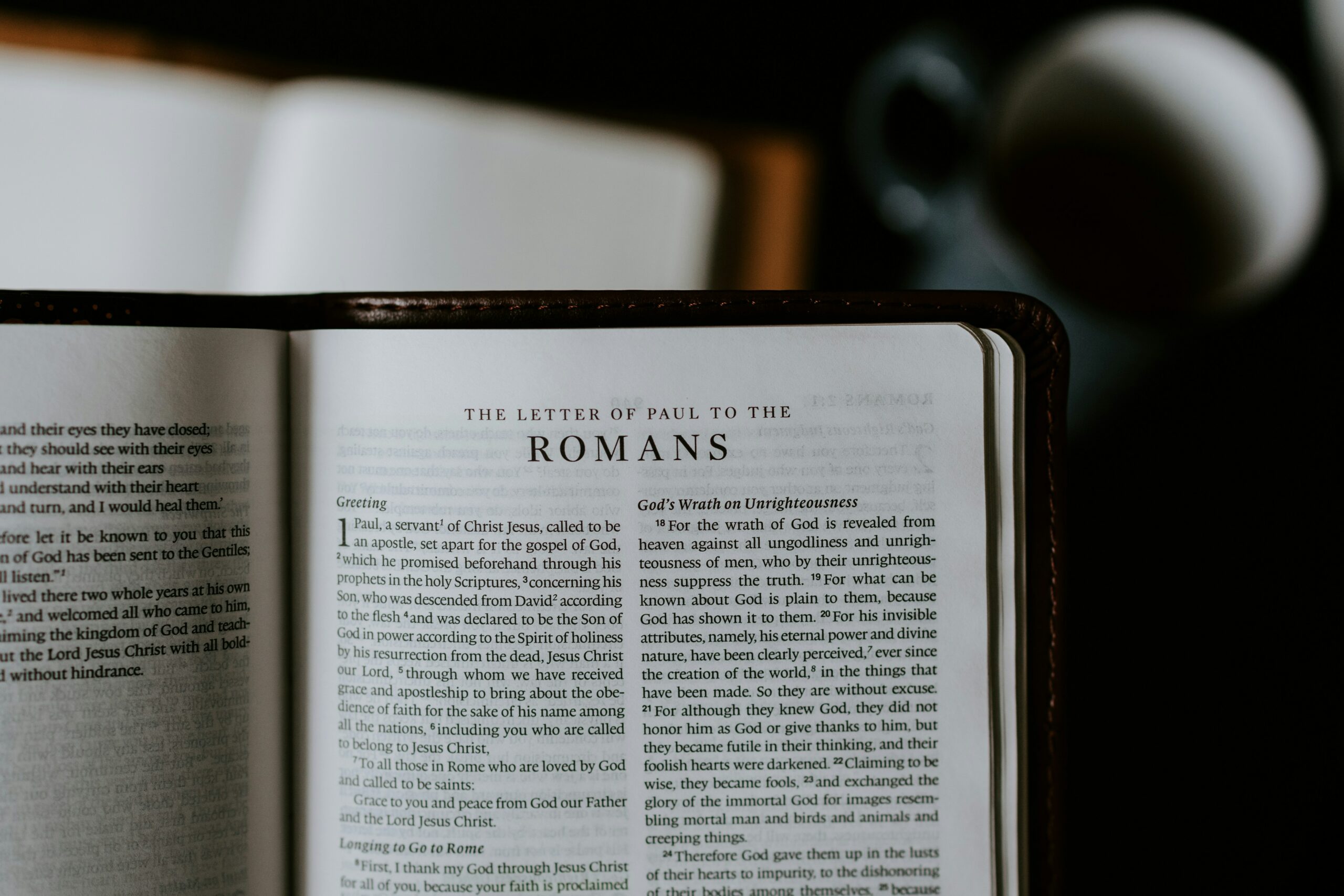
I was in turn back to the book
of Romans to Romans chapter six. I love the I love that him, but
I love the line in it particularly that looks forward to that time
when we will be what we should be. And I had the privilege to
pick that him just as kind of an echo of what the passage lays
out before us. Very quickly, let me give you
just a, I guess, a parking spot, some context for the passage
at hand. We have taken up the study of
Romans chapter six, lying upon the foundation already of what
Paul has said and. Chapters one through three, that
sin had tainted the entire world, the entire world lies under sin. Paul has introduced the hope
of salvation beginning in chapter three, twenty one, all the way
down through chapter five. He has introduced salvation.
And yet Paul is not willing to just let it lie there, Paul is
not willing to just Let the saints believe that having been introduced
to salvation, they could relax. In fact, Paul is battling against
perhaps a mistreatment of his own words. Words that he uttered
in chapter five, verse 20, the law came in so that transgression
would increase, but where sin increased, grace abounded all
the more and The simple tendency might be to reason that let’s
send it up so that God might grace it up. Now, Paul tackles
that as he begins to introduce this third major section in the
book of Romans, a section that is appropriately labeled the
sanctification by God, sanctification by God, which carries all the
way down from chapter six, verse one through chapter eight, verse
thirty nine. There’s a lengthy section and
it’s we’re just now really cracking the surface. Here’s the flow, if you would. Paul, playing off those verses,
chapter five, verse 20 and 21, asks a logical question. It’s
illogical in his evaluation, but someone might reason in this
way. What shall we say then? Chapter
six, verse one, are we to continue in sin that grace might increase?
Well, Paul can hardly get the words out, and he provides the
answer there beginning in verse two, and it is a reminder of
our death in Christ. He says, may it never be, how
shall we who died to sin still live in it? It’s almost unthinkable. But Paul does provide not only
that initial answer, but he provides a more detailed answer in verse
three. Or do you not know that all of
us who have been baptized, that is immersed into Christ Jesus,
have been baptized or plunged into his death? Don’t you realize
that when you place your faith in Christ, you die? You died
to yourself. You died to your sinful ways.
You died to your agenda. You died, that’s the answer.
It is a reminder of our death in Christ. But Paul, Paul wants
to drive the point home, and he does so by reminding the saints
once again of the purpose for which we die. It isn’t death
itself, that’s not the end. It is only the means to an end. And the reminder of the purpose
for which we die is resurrection, we die to be raised. Look at
verse four. Therefore, we have been buried
with him through baptism into death in order that as Christ
was raised from the dead through the glory of the father, so we
too might walk in newness of life. And there we have the first
hint of resurrection, a resurrected life, that Christ was raised
from the dead. Now, Paul doesn’t explicitly
put this upon us, but he first, in a sense, calls us, he bids
us, if you will, to come and die. He calls us to embrace death. So that we might truly experience
life. Now. I tried to think of a worthy
illustration of what the following verses do. The best thing I could
come up with is bungee cord jumping. Now, stay with me. Here’s how
I reason. Paul essentially is calling us
to come and to die. You can understand then why I
said bungee cord jumping. Now before I would get on one
end of the bungee cord, I would want some assurances. I would
want to know that this thing, this rubber cord, was made of
the finest materials available. that it was made in the best
factory under the best conditions known to man. I would want to
know that the most skilled technicians, under the most scrutiny available,
were at work on that bungee cord. I would want to know that this
thing had been tested. Nine ways from Tuesday. I would
want to know that this was the best, and then I want to know,
I want to see the knot at the other end. I want to know everything
there is about this bungee cord. I want statistics. Obviously,
I’ve never done it, right? I’ve never done bungee cord jumping
because I haven’t had these proofs. I would want to know everything
there is to know about that bungee cord before I tie part of it
to my back and jump off some unknown bridge. I want to know. That’s an illustration of what
Paul’s doing here. Paul is asking us. He’s reminding
us to come and to die. OK, Paul, but we need some proof. We need some assurance. We need
some encouragement here. We need some facts. We need some
data. And that’s exactly what he’s
doing. That’s exactly what we began to look at last week. You
want to have your hope of resurrection encouraged. How about if we remind
ourselves of our union? In Christ’s crucifixion, that’s
what he reminds us of. He calls us to come and die because
he reminds us, look, you were on the cross with him in a very
real sense. Look at verse five. For we have
become, if we have become united with him in the likeness of his
death, certainly we shall also be in the likeness of his resurrection.
He gives us the hope. He’s giving us the proof, knowing
this. that our old self was crucified
with him. I forgot that. I had forgotten
that I had forgotten that I was bidden to come and to take up
my cross. I had forgotten that I was asked
to die daily. I had forgotten that I was asked
to die to self. I had forgotten that it is I
who was crucified with Christ. And that I no longer live, but
Christ in me, I’ve forgotten. Paul says that we know this,
that our old self was crucified with him, that our body of sin
might be done away with, that we should no longer be slaves
to sin. For he who has died is freed
from sin, and you say that is a great answer. And yet, if you
go back to the bungee cord illustration, many of us are not ready to clip
on just yet. And so Paul says, let me give
you let me give you the proof. Let me give you the final encouragement. Let me give you all the facts
you need as to why we should come and to die. If you would look at verse eight.
Where Paul buffets his encouragement already provided
in verses five through seven with this one in eight through
11. The hope of resurrection based on the knowledge that Christ
has conquered death. That’s a good assurance, isn’t
it? Look at verse eight. Now, if we have died with Christ,
we believe that we shall also live with him, knowing that Christ,
having been raised from the dead, is never to die again. Death
is no longer master over him for the death that he died. He
died to sin once for all, but the life that he lives, he lives
to God. Even so, consider yourselves
to be dead to sin, but alive to God in Christ Jesus. We’re looking at the great subject
of sanctification in chapter six, and Paul is reminding us
that we have already died, that we are called to resurrected
living or called to a different kind of life. But he said, In
our previous verse, newness of life, we’re called to live a
new and completely different way. Called the resurrected living,
it’s the very purpose for which we die, and he proved that by
reminding us of our union with Christ in his crucifixion. But
he wants to augment that argument by giving us additional argument
here, additional proof. in reminding us of the nature
of Christ’s victory when Christ conquered death. What did that
mean when Christ died on the cross? What did that mean to
us? What Paul wants to give us is
a confidence of the resurrection that is bolstered by the knowledge
of the nature of Christ’s victory. And we’ll do that this morning.
Look, first of all, though, in verse back in verse eight. Consider
verse eight for a moment. Where Paul says, now, if we have
died with Christ, then he isn’t doubting that some Christians
to whom he could be speaking had not already done that. You
can almost supplant since here in place of if. Since we have
died with Christ, he’s not saying that it’s optional. He’s not
suggesting that there might be a sector of the church that has
not yet died with Christ. But still could, if only Paul
could persuade them. He’s saying that if you had placed
your faith in the Lord Jesus Christ, you have died. And since
you have died with Christ, we believe. That we shall also live
with him. What Paul is doing here in verse
eight is essentially echoing what he’s already told us in
verses three and five. Look at verse three. Where Paul
said that we are baptized into his death. Oh, that was that
was a big surprise, right? That was a reminder. I had forgotten
that. I had forgotten that that I was
baptized, placed into Christ and placed into his death. Good
reminder, Paul, thank you. Verse five. Verse five, I had
forgotten that we were united with him in the likeness of his
death. We didn’t die physically on the
cross with him that day, but we were there spiritually speaking,
dying in a very real way to our own sin. The main thought of
this entire passage is that we as Christians, believers in the
Lord Jesus Christ, died to sin. Second Corinthians 514 echoes
this very thing, the love of Christ controls us, having concluded
this, that one died for all, therefore all died. It shouldn’t
come as a surprise to the same. We know that when we came to
Christ, we died, we died to ourselves, we died to sin, we died to the
sinful lifestyle, we died to an ungodly standard, we died. As one said, we know that such
living with him is possible because he, having died, was raised from
the dead never again to die. Death could not hold him for
it no longer exercises lordship over him. Christ died to sin
and we died with him. And look again at the passage
where it says in the second part of verse eight, we believe That
is a settled confidence. We have faith and it is a faith
that is exercised. We take it by God’s own word
that Jesus Christ was raised, that he died and we died with
him and that he will be raised. We take it in faith. Paul essentially here is issuing
a summons to faith. He is asking for a personal inward
commitment that if you believe that the Lord Jesus Christ died
and you believe that God raised him from the dead, why would
he not do the same thing for you? We believe. Second Timothy 2.11, Paul echoes
the same thought. It is a trustworthy statement.
It is a trustworthy, worthy of being believed and acted upon. For if we died with him, we will
also live with him. That’s what Paul’s saying. That
if you place your faith in the Lord Jesus Christ and you die,
it is absolutely certain, as we’ll see in a moment, that you
will be raised. It isn’t just an exhortation,
as if Paul was saying, boy, we sure ought to live, we sure ought
to live differently. It isn’t merely a prediction
by saying, we shall. But it’s a matter of personal
experience. We know, we know the resurrected
life. We’ve sensed it. God has opened
our eyes to it. We know what it was like to die
to Christ. We know what happened theologically
speaking. And we know what happens practically
speaking. We have begun to live it. We
believe it. When Paul says, we shall, he’s
not. One of the biggest errors uncovered
this week in reading is so many commentators looked at this as
being nearly future that because we died with Christ, one day
we’ll be resurrected and go to heaven with Christ. The entire
tone of this entire chapter is towards what happens right here,
right now. It’s resurrected living that
he’s talking about, not some future event. So when he says
we shall, It’s not pointing to something necessarily only in
the future. It’s talking about something
that is certain. If this happened, then this absolutely
will follow. As one said, the future tense
does not necessitate a reference to the future life. It is rather
a logical future making the new life as a fulfilling promise,
a natural consequence. In other words, it points to
an absolute certainty of the participation of the believer
with the resurrected life of Christ. As Christ was raised
from the dead, so were you. If you placed your faith in him,
you are alive in Christ, you are already living the resurrected
life of Christ. Here, Second Corinthians, thirteen,
four. For indeed, he was crucified
because of weakness, yet he lives because of the power of God.
For we are also weak in him, yet we will live with him because
of the power of God directed toward you. Paul’s echoing the
same thought that we are called to live a resurrected life. And
just as sure as Christ burst forth from that tomb, we are
alive with him now. Not just looking forward to some
future event. This future tense, as used here,
indicates an absolute certainty for the saints of God. What does
it promise? Look again at the passage. If
we have died with Christ, since we have died with Christ, we
believe that we shall live with him. We also shall live with him,
just as certainly as our faith in Christ meant death in Christ,
just as certainly his resurrection is our resurrection. And it points
absolutely to the present life. It’s clear from the whole structure
of this section. Verse 11, which we’ll get to
by the end of the morning, even so, consider yourselves to be
dead to sin, but alive. to God, who would think of deferring
living until the resurrection? We have an entire life to live
here and now. The Christian’s present life
is to be a life with Christ. We’re not to defer living for
Christ or living a Christian life until we are resurrected
and taken to heaven. That kind of idea would be utterly
ludicrous. We are resurrected to live and
walk in newness of life. That’s what Paul has already
articulated. As one pastor said, the assurance
obviously applies to the believers ultimate and eternal presence
with Christ in heaven. I don’t doubt that. I don’t doubt
that. Ultimately speaking, the fact
that Jesus Christ was raised means that one day we will be
raised, whether we’re dead or alive and taken to heaven in
glory for eternity. What a great thought. That’s
ultimately what’s there. But the context, he says, the
context which focuses on holy living strongly suggests that
Paul here is speaking primarily about our living with him in
righteousness in the present life. Remember, the whole context
here is sanctification. That’s what Paul’s calling us
to. He’s calling us to a resurrected life in the here and now. The bottom line here, people,
is that we absolutely believe we absolutely believe that we
are called and we will participate in Christ’s life, which is in
a very real way deathless. No wonder God’s saints throughout
the centuries were totally unafraid of physical death, because they
knew that that was the final death. And that from then on,
it is life and life eternal to the full. It is a participation
in Christ’s heavenly glory. As lived out here. On Earth. Now, I suggested to you. That
Paul here is giving us confidence, he’s trying to build up our confidence,
right? He’s trying to give us the facts, the data, He’s trying
to give us the proof behind his statements already. That we’ve
been buried with him, that he’s calling us to come and to die,
because dying means the sooner that we look at life, life in
Christ as a death to self, the sooner we begin to live. And
he wants to bolster that here by a knowledge of the nature
of Christ’s victory. What was it? What was it like?
First of all, it is a victory that was permanent. It is a victory
that is permanent. Look at verse eight. Once again,
we believe now if we have died with Christ, we believe that
we shall live with him, knowing that Christ, having been raised
from the dead, is never to die again. Paul goes back to this idea that
he has been using this device he’s been using throughout this
entire section, knowing he wants to bring the child of God to
the fact book. He wants to bring us to an understanding
of the way things really are. Let’s look at the facts, people. Go back to chapter six, verse
one, just. If you don’t have the text in your bulletin, just
look, look in your Bible briefly at verse one. What should we
say then? Are we? He calls them to consider
the facts. Are we to continue in sin? The grace might increase. Look
at verse two. How shall we? He calls them to
reason. He calls them to consider the
facts. How shall we who died to sin
still live in it? Look at verse three. Do you not
know? Consider the facts, Saints, consider
the facts. Do you not know he does it again
in verse six? If we become united with him
in the likeness of his death, certainly also in the likeness
of his resurrection, knowing this, consider the facts. And
he does it again here. We believe that we shall also
live with Christ, knowing that Christ is never to die again. It’s in a field to basic Christian
belief. He says that we will be partakers
because we know in our hearts, we know the facts of salvation
that as Christ was raised, we too will be raised. What this
verse does is give us the proof, if you will, the grounds of this
assurance that we have. It is a victory that is permanent.
Look at verse nine. What do we know? We know that
Christ, having been raised from the dead, is never to die again.
You know, what’s interesting here is Paul doesn’t even argue
the fact about Christ being raised. The resurrection is one of the
greatest events in history, and we’ve spent plenty of time on
it, and I’m going to follow Paul’s pattern here. I’m not going to
belabor the point, but it’s an interesting thing to observe.
that Paul here mentions the resurrection and then doesn’t even articulate
anything about it. He doesn’t talk about after three
days, he doesn’t talk about the miraculous events that surrounded
us, that surrounded it. He doesn’t talk about all the
eyewitnesses to it. He doesn’t talk about any of
it. He just really lays it out there as a fact. That it was
well received, there was a truth that was absolutely an axiom
among the body of Christ. The Christ was raised from the
dead, we all know that. That’s essentially what Paul’s
saying. That Christ, having been raised
from the dead. Is never to die again. It is a victory that is permanent.
Christ will never be taken to task again. He will never be
crucified again. He will never be harassed again. He will never be persecuted again. He will never feel the world
scorn again. His victory over sin is permanent. It is absolutely permanent and
his victory over death. Permanent. Think of Lazarus. Some of the
most amazing miracles in Scripture, right? Lazarus is one of them.
Raised from the dead. To continue on his earthly life
for who knows how many more years. To die. All over again. And there was no second resurrection
for Lazarus, there was no second miracle. Lazarus was raised only
to die again. But not Christ. When Christ was
raised, Christ conquered death and he conquered it permanently.
Jesus Christ died. Not so that he could remain dead
and in the tomb and like likewise us when we die with Christ, we
don’t lie there in the tomb for eternity with Christ. Jesus Christ died to conquer
death, and when he rose, he rose for eternity. Likewise, the Christian,
that’s the call here, that’s the clarion call. We are called
to die with Christ and not just to stay dead with Christ, but
to rise with Christ in a permanent victory with Christ. Now, we
physically will die, but we know that physically when we die in
this world, we know that there is eternity to embrace. We know
that we will begin to enjoy the permanent victory that Christ
has already secured. Are we already enjoying it? There’s a second confidence that
Paul gives to us, a second piece of knowledge that bolsters our
confidence in the resurrection, that gives us confidence to approach
a dying with Christ. It gives us confidence to take
that up anew. This victory that Christ accomplished
is not only permanent, it is decisive. It is decisive, there’s
no question who won. Look at verse nine again, knowing
that Christ, having been raised from the dead, is never to die
again. Death is no longer master over
him. Now, the trouble is, at least
the trouble for me, I had to really think and work through
this. The trouble is that in one sense, death was at one time
master over Christ. That’s an ugly thought. Death wasn’t master over him
in the sense that the death controlled him and made him to sin. And that he died just like all of
us will die because of sin. If you remember, second Corinthians
521, he took on our sin. That relationship to sin was
vicarious, he didn’t sin in and of himself, he took on our sin
and because he was identified with sin and the wages of sin,
ultimately, which is death. That resurrection from the dead.
meant that he had absolutely overcome the power of sin and
the power of death, and that victory over death is absolutely
irrevocable. Death would never again come
and wag its finger at the Lord’s face. Death would never again
crack its whip in the direction of the Lord Jesus. Death would
never again try to come calling on him because he had absolutely
conquered death. As one said, his resurrection
was a triumph over the sovereignty of death and has changed the
meaning of death. Now, it’s one thing to change
the meaning of death for the Lord Jesus, but what did he mean
by that? What did the author mean by that statement? What
he means is that the Christian now doesn’t have to look at death
the way the world looks at death and the way the world has to
look at death. Death has come upon all because
all sin. And yet for the Christian, the
meaning of death has been totally changed and transformed because
Christ conquered it. We no longer have to look at
it with a permanence. We no longer have to look at
it as a sentence. It’s a release. It’s a release
is what it is for the Christian. It’s a release from this world
to glory above. What kind of victory did Christ
accomplish on the cross? He accomplished victory, a decisive
victory over sin and death. Paul said it at the end of his
lengthy epistle to the Corinthians. Thanks be to God who gives us
victory through our Lord Jesus Christ. There is absolute victory
in Christ. It’s not something that still
needs to be waged in years to come. It’s already accomplished.
John 10, 17, for this reason, the father loves me because I
lay down my life so that I may take it again. No one has taken
it from me. This was a victory that Jesus
Christ won, not that someone stole from him. I lay it down
again on my own initiative, I have authority to lay it down, I have
authority to take it up again. Matthew 26, 3 or 26, 53. Do you not think that I can appeal
to my father and he will at once put at my disposal more than
12,000 legions of angels? Jesus Christ relished this opportunity. Jesus Christ relished to face
this opponent and Jesus Christ conquered this opponent absolutely
decisively. Acts 2.24. God raised him up again, putting
an end to the agony of death. There would be no rematch. There
will be no playoff. There would be no future. It’s
always amusing in my home. My wife puts everything in context.
Why did they call them world champions if they only play the
game in the United States? And if it’s such a big deal,
why do they have to keep playing a Super Bowl year after year
after year? It’s a good point. Well, likewise,
with Christ, there is no rematch. There is no revisiting the issue. There is no protest of the outcome
of the game. It’s absolutely decisive. Putting an end to the agony of
death, since it was impossible for him to be held by its power,
the power of death. Death has no more dominion over
our Lord Jesus Christ. He died to sin by that one sacrifice
of himself, and in doing so, he freed himself absolutely from
the burden of sin that he had voluntarily taken on himself. Paul wants to drive this point
home. In one of the most powerful statements
that I know of in scripture. Occurs in verse 10. Which says
for the death that he died, he died to sin once for all. That’s pretty decisive, isn’t
it? For the death that he died, he
died to sin. Death wasn’t just limited to
the death, his death on the cross, because the entire life of the
Lord Jesus Christ was a death to sin. He never sinned. He was,
as it were, dead to sin from the very start. But it culminated
in that final act of death on the cross. How did Christ die to sin? One pastor took up this question
very capably when he said, in what sense did Christ die to
sin? The phrase points back to verse seven, he who has died
is freed from sin. Jesus Christ looked at it as
a freedom. A liberating event. He continues
to say sin cease to have any claim on the sinless one for
our sake, he was treated as if he were sinful, the sin which
hung about him and wreaked its effects upon him was not his
but ours. It was his death that this pressure
of human sin culminated, but it was also in his death that
it came to an end decisively and forever. Christ died to sin. And he totally affected, affected
the nature of sin in that dying. The sinless one who had taken
on our sin and bore the penalty of the sin, condemned sin in
the flesh. The sin even lost its power,
as we’ll see in the chapters to come. Paul said that we are justified,
remember? Justified as a gift by His grace through the redemption
which is in Christ Jesus, whom God displayed publicly as a propitiation
in His blood through faith. This was to demonstrate his righteousness,
because in the forbearance of God, he passed over the sins
previously committed. For the demonstration, I say,
of his righteousness in the present time, that he would be the just,
both just and the justifier of the one who has faith in Jesus.
Jesus Christ changed the face of sin and death. First Corinthians fifteen three,
I delivered to you as a first importance, but also I received
that Christ died for our sins, according to the Scriptures.
These were our sins that he took on. And having led a perfectly sinless
life. As one said, Christ never had
the same relationship to sin that every other human being
has. He not only was never mastered by sin, but never committed a
sin of the least sort. He died to the penalty of sin
by taking upon himself the sins of the whole world. He died to
the power of sin, forever breaking its power over those who belong
to God through their faith in his son. Jesus Christ broke the
bond of sin. We don’t have to sin anymore. That his resurrection from death
was a liberating event for all mankind. Look at one last phrase there
in verse 10. In this regard. For the death
that he died, he died to sin once for all. And we’ve already
dealt with this question. It was not once for all people
that were ever born. It’s once for all time. It was
a one time event that never needed to be repeated. A death once
and for all for sin. As one said, the decisiveness
of the death of Christ was particularly insisted upon in the epistle
to the Hebrews, as you know. It is the great point of contrast
with the Levitical sacrifices that while they needed continual
repetition, Christ’s sacrifice did not. When we looked at. In the Gospel of Luke, some of
the sacrifices that were being offered, it was estimated that
millions of creatures were slaughtered. In order to appease the Passover
celebration, as many as 250,000 sheep would be sacrificed just
at the annual Passover. And yet Jesus Christ died once. As he indicated, the book of
Hebrews marks a number of these. Hebrews 727 does not need daily
like those high priests to offer up sacrifices for his own sins
and then for the sins of the people, because he did this once
for all. When he offered up himself, Hebrews
912, Hebrews 926, 928, Hebrews 1010. By this, we will have been
sanctified through the offering of the body of Jesus Christ once
for all. First, Peter 318, Peter echoed
the same sentiment when he said Christ also died for sins once
for all the just for the unjust, so that he might bring us to
God, having been put to death in the flesh, but made alive
in the spirit. Jesus Christ will never be brought
down again, and that’s what makes the mass the Roman Catholic mass
so heinous. Because it is literally as they
suppose the body and blood of the Lord Jesus Christ to be present
in the bread and the wine. They suppose that to be true. It is a re-crucifixion of Christ. It is absolutely blasphemous. What Paul does here is drive
home the point of the finality of the sacrifice of Jesus Christ.
It never needs to be repeated. Not even symbolically. In Jesus Christ’s death, he dealt
once and for all effectively and absolutely conclusively with
sin. There’s a third encouragement
that Paul gives as we close. Paul is giving us encouragement
over a resurrected life, he’s calling us to come and to die.
Knowing that when we come and die, we will be resurrected. This victory that Christ accomplished,
we’ve seen it is permanent. Jesus never needs to die again,
it is decisive, death is no longer master over him, and it is complete,
is complete. The life that Jesus Christ lives,
he now lives to God. Jesus Christ died with regards
to sin, but from this point forward, from that point forward, rather,
he lives to God. Now, the question becomes, didn’t
Jesus always do this? He absolutely did. But he had
a mission to undergo, and part of that mission was to take on
our sin. Jesus Christ’s entire life had
been devoted to the glory of God, the glory of his heavenly
father. But now that that task, the task of our redemption was
accomplished, Jesus Christ could live unencumbered, unhampered
by our sin. Unburdened by all of that, without
having to carry the burden of our sin any longer. These verses, verses nine and
10, They don’t just give us the reason for our belief, our faith
that we’re supposed to live with Christ. What they do is they
shine a floodlight. On what? Life is already supposed
to be ours if we are in Christ, since we have died with Christ. And it’s only appropriate that
Paul, having argued so strenuously throughout this section, Having
called us to a knowledge of what is just reasonable. Having reminded
us of the basic facts of the gospel and the basic facts of
our salvation. It’s only reasonable that Paul
would wind up with an exhortation. And that’s what he does in verse
11. When we when he accounts and recounts Christ’s death,
he says, even so. When he recounts Christ’s resurrected
life, he says, even so. When he looks at Jesus as having
put to death. Death and sin forever, he says,
even so, consider yourselves. It’s not just a mental activity,
but it’s an activity that begins in the mind and flushes itself
out in our lives. Consider yourselves to be dead
to sin. But alive to God in Christ Jesus. The idea here is plain. The new
life that we are called to live in Christ, the resurrected, ascended
Lord Jesus Christ is the agent, he is the giver of life to those
who believe in him. What Paul is establishing here
is that Christians are already in principle dead to sin and
alive to Christ, but it must become the abiding, the strenuous
conviction of our lives. That we have died to that, how
on earth shall we still live in it? And having died to it,
we are called to live and walk in newness of life, we already
are supposed to be enjoying and living the resurrection. This
was not a passing thought for Paul. Paul echoed it everywhere,
and I closed with his words to the to the Colossians. Epistles of the Colossians, chapter
three, verses one and four, one through four, Paul said, therefore,
if or since you have been raised up with Christ. Keep seeking
the things above where Christ is seated at the right hand of
God. Set your minds on the things
above, not on the things that are on the earth. For you have
died and your life is hidden with Christ in God. When Christ,
who is our life, is revealed, then you also will be revealed
with him in glory. Let’s pray. Merciful King, we thank
you For this strong reminder that we already as believers
in Christ are embarked upon a resurrected life, we are to live differently. We are to live. Resurrected lives,
new lives, lives that seek to glorify you and all that we do.
Having died to sin and to death. Grant us Your grace, Father,
to please You in that regard. And we thank You for Your Son,
who always goes before us. It’s in Jesus’ name that we pray,
Amen.
Messages: 204