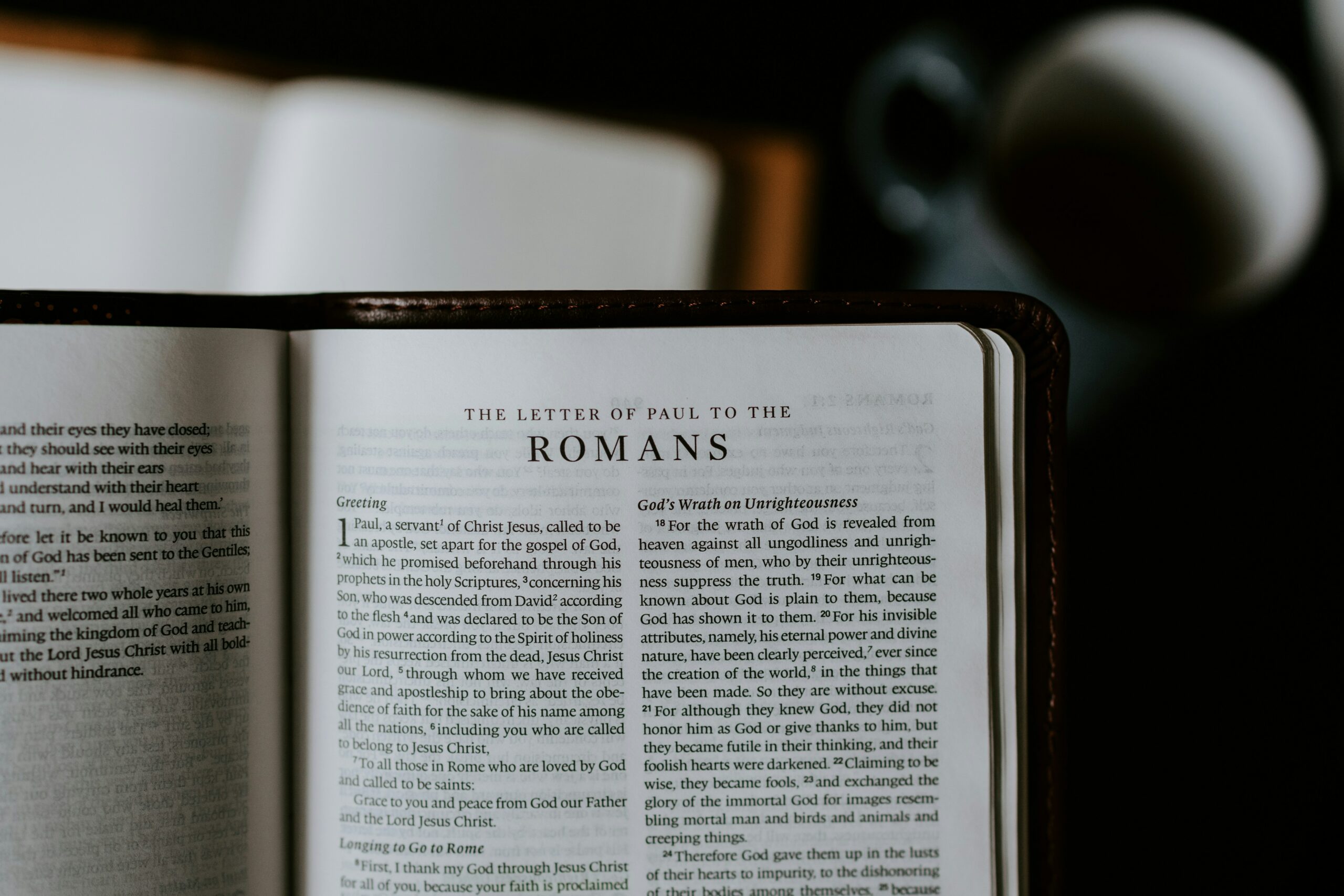
The Weak and the Strong
This sermon explores the Pauline instruction in Romans 14 and 15 regarding the relationship between believers with strong and weak consciences. It addresses the tendency of the church to impose uniformity on matters where Scripture is silent, such as dietary restrictions, sacred days, and personal habits, which often leads to division and legalism. The central message emphasizes that while moral absolutes must be upheld, Christians must exercise patience and acceptance toward those who are still growing in their understanding of Christian liberty. The preacher urges the congregation to avoid judging one another on non-essential issues, instead focusing on edification, unity, and the glory of God. By recognizing that each believer answers directly to God, the church is called to cultivate a spirit of grace that welcomes all members without demanding conformity to personal preferences or unwritten traditions.
Transcript
Great section which rounds out
the section that we’ve generally labeled sanctification. Chapter 14 which is actually
the beginning of this very lengthy section. In preparation for this. in which I’ve literally been
meditating and studying this section for several weeks. I
was kind of caught off guard yesterday. I had planted some
flower bulbs and when they came up, the color
wasn’t white to my wife’s pleasing. And it it it reminded me of a. Essentially, a regular feature
of the church. that really we have a tendency
to want to make everybody homogenous. We want them to be just like
we are. We want them to think and act and behave. And in so
doing, we lose one of the unique features of what God has given. God has made each of us differently. He’s brought us up through different
means. He’s cultivated different graces
among us, given us different life experiences, given us different
struggles, different hair color, different attitudes, different
levels of patience. And the tendency almost immediately
is that we begin to try to cultivate similarities. We try to make
clones of ourselves. We lose the weakness. And I don’t
want you to misunderstand me really throughout this section
and I’ll probably say this dozens of times. There are things in
scripture that are absolutely morally wrong. And where scripture
is clear we ought to not only adhere to those things ourselves
and obey God in what God has prescribed. But we should also
try to cultivate the same in our brothers, and in that sense,
we should be like minded. We should. Be the same. There are also things in scripture
that aren’t so clear, there’s a lot of diversity. A lot of
variety that is going to be cultivated, and we’re not going to end up
looking like every other believer in the church, and in that sense,
There should be freedom and there should be joy in the development
of each individual believer because that development really is in
God’s hands not ours. Paul in this section has been
in the midst of really condemning what he would point to as an
excessive use of indulgence excessive indulgences in really things
that are can be good. But here he wants to go to the
opposite extreme and deal with an overzealousness to avoid those
particular things. If you’re familiar with the greater
umbrella over this section Paul’s dealing with that section that
we’ve called life with others. And we’ve seen that he has dealt
with believers. How we are to deal with believers.
Those who are hateful towards us. Those who are downtrodden.
Those who are contrary. Those who are definitely against
us. He also took us to a section in Romans 13 with civil government. How is the Christian to deal
with civil government. And then in a very general fashion
with everyone. there at the end of Romans 13.
But here he enters into and just the sheer amount of time that
he spends on this subject elevates its importance even in Paul’s
great list. It’s the weak and the strong.
How are they to relate? And before we even try to put
ourselves in a category, we have to really step back. Am I weak?
Am I strong? And which category am I in? And
who has to tolerate whom? Paul deals with this last very
lengthy section beginning in chapter 14 verse 1 and coursing
all the way down through chapter 15 verse 12. What he deals with
here is a case of Christian conduct towards what can only be I think
what is best explained under a word that really has fallen
off of our radar. scrupulousness. We don’t use
that word anymore. Scruples defines just point to
a feeling of doubt or hesitation with regard to the morality or
propriety of a course of action. And you can have a variety in
Scripture where though you cannot find chapter and verse on a particular
issue. You do have people that end up
feeling conscripted in that particular
area where they don’t have the freedom in their hearts. They don’t feel like it would
be morally right for them to participate in a thing even though
they can’t find chapter and verse scrupulousness. And even to a
degree over scrupulousness because some of those things are not
even built on biblical themes. They just they just don’t believe
that they’re right even though they can’t even find a hint a
whiff of a biblical prohibition. Well Paul begins to deal and
give directions and counsel and instruction to the Christian
fellowship and how the fellowship is to function. And the way that
Christians are supposed to deal with one another when they’re
not completely of one mind. Especially when it comes to. Minor points of the Christian
faith, minor points of practice and habit, how should we treat
each other in those cases? As I said, scruples are those
feelings of doubt, we can’t put our finger on it. We certainly
don’t have chapter and verse, but we just don’t feel right.
About a particular. Exercise of freedom. One pastor
summarized it in these terms when he said some things are
unquestionably right, and you and I would all agree with that.
There are some things we can read in Scripture thou shalt
not lie. Well some things are very clear. And others he goes on to say
are unquestionably wrong. But there are still others as
to which the constant consciences rather of men differ. These questions
of conscience arise among Christians and become the sources of serious
trouble. Christians who are over scrupulous
are apt to condemn others as lax or inconsistent while those
who feel no scruples are tempted to despise their fellow Christians
as bigoted or fanatical or narrow or we would say in our day and
age legalistic. Now you have he says you have
to do two different groups of people and The truth is you’re
in those groups but you can be in various camps on various issues. You might have you might have
a biblical position on one particular area but you might have these
feelings of scrupulousness in others where even though you
don’t find a verse you still don’t feel that it’s right. You
may not preach to others you may not give admonition to others
that such and such is wrong. But you certainly look down your
nose at those who participate in such thing. There were these parties these
rivalries really in the Church of Rome. We don’t know to what
degree they were at each other. We don’t know to what degree
Paul is writing. Had this thing erupted? Was there
the potential of a split, a schism? We know there were these different
groups, some who had adopted one set of practices and another
group that had adopted quite another. One of the common explanations
for this particular situation was a A practice called asceticism. Asceticism wanted to celebrate
and honor a strict simple way of living that avoided any physical
pleasure. Well that particular brand of
self-denial would really continue throughout the history of the
church. And from time to time, it still bubbles up. And in some
churches, it’s part and parcel of what they believe in some
denominations. But Paul’s ultimate point in
the midst of this very lengthy section is that scruples, what
you feel is right or wrong, can’t be allowed to divide the Christian
brothers. We have to find What God says
is right and what God says is wrong. And live in accordance
with those values and not impose our own values on others. What were the issues? Well, Paul
would go on in Romans 14 and 15 to mention two specific areas, but really, I
think what Paul lays down here is a set of principles, exhortations
really, that he wants to be timeless. He wants these things, these
principles to be measured and considered throughout the ages,
whether the issue of food or whether the issue of feast days
remain issues or not. Paul mentions these two in this
particular context that I would strongly believe that he doesn’t
limit it to this particular issue. I’ll touch on those in a moment. Here’s how one pastor described
the scene. Many Jews had come to faith in
Christ could not bring themselves to discard the ceremonial laws
and practices in which they had been steeped. And so you had
these Jews that wanted to import the baggage of their Judaism
into their newfound Christianity. But you might even begin to say
there are the weak brother brothers. But you also had Gentiles who
had been just as strongly steeped in pagan rituals and customs
from false gods and they felt repulsed by anything remotely
connected with such evils. And so one might be led to say
the Jews then are the stronger brothers and the Gentiles are
weak. Well they were both weak in some
regard and they were both strong in some regard and that will
come out as Paul unfolds his argument. Paul had dealt with
a similar issue in the epistle to the Corinthians meet offered
to idols. We’ve never studied that as a
church that link the epistle but certainly you’ve read it.
1 Corinthians 8 1 Corinthians 10. And the issue was this that
in the heathen practice of worship they would offer up a bull or
some kind of animal they would burn it as a sacrifice and then
they would take and butcher the animal and take the meat to the
marketplace and sell it. Well the issue for the Corinthians
was we don’t want to eat meat sacrifice to idols and Paul goes
into a lengthy discussion particularly in chapter eight to deal with
that issue. Some were led to even a cultivate
what we would call a vegetarian diet. The original vegans. Others abstained from wine for
the same purpose because some of that wine was poured out as
a libation and offering to the so-called gods. And so Jewish
Christians had developed these scruples these feelings There
was no written prohibition, but they had developed these feelings
that eating this meat or drinking this wine at all would be forbidden. And so they began to build this
case and build this argument. Well. We don’t even know exactly. what
the issue is. We know what the issue was for
the Corinthians but Paul is very vague here as we begin to get
into Romans 14 and 15. And because of that I wanted
to just share with you one particular commentator’s list of concerns
with regards to the possibilities that Paul is even addressing
here. What was the nature of the problem? Cranfield suggested
at least six possibilities and I’m just going to go through
these very quickly because even he and I would call him a master
exegete of the scriptures. Even he said that it’s extremely
difficult to decide with certainty exactly what the problem was.
And that’s what leads me to say that what Paul is laying out
here is not a how to deal with a specific issue. what he’s giving
us his principles for dealing with any issue that could potentially
divide. First of all he says. The first
suggestion at the nature of the problem was that there were legalists
there in the midst of the Roman church that really thought that
they could attain a kind of righteousness merely by living according to
a set of standards codes laws. In other words they had almost
imported the idea from Judaism that if they only lived well
enough they could achieve righteousness. And honestly if you think about
it many sincere believers still do this. One of the first questions
that I ask when I interview somebody for baptism somebody who is aspiring
to be baptized and baptism I absolutely think is a good and wholesome
thing the first act of obedience to Christ. But I’ll ask them. Does baptism make you more safe? You see, that’s almost how this
group of legalists, they believe that they had placed their faith
in Christ, they believed that their sins were forgiven, but
they wanted to be more safe. And the only way to be more safe
was to follow this set of codes. Granfield suggested a second.
possibility as to the nature of this problem. Well, he points
specifically to the same issue that was plaguing the Corinthian
church, the things sacrificed to idols, perhaps that was the
problem that was plaguing the Roman church, and that’s a legitimate
possibility. But it’s only one of many particular
concerns that Paul has with the Roman church. The third possibility,
he suggests, is that this abstention from meat and wine was a fast
of sorrow for the continued unbelief of the great majority of the
Jews. In other words, this was a practical way of mourning and
appealing to God for their brothers and sisters, their Jewish brothers,
to come to faith in Christ. Well, we know that that’s a distinct
possibility, The Roman Catholic Church would eventually develop
an entire system called indulgences, where you would practice some
ascetic belief. You would have masses and say
prayers and offer up great, great sums of money in order to save
your relatives, even after death. Certainly a possibility. He suggested
a fourth possibility. as to what was really going on
in Rome. He says, perhaps it was a fasting
from things regarded as in themselves good and desirable aimed at disciplining
the body and bringing it under control. So, in other words,
let’s just use peaches. Peaches are good. They smell
good. Not everybody likes them, but Peaches are inherently good
they’re tasty and when they’re right there is to me nothing
better. But they saw these peaches as
one of God’s good gifts and in order to worship God more perfectly
they sacrifice the privilege of eating the peaches. Well we
know that this practice would eventually gain traction through
the Roman Catholic practice of Lent. Where, you know, those
that are truly religious not only give up cigarettes and alcohol
and various vices, but they give up good things, wholesome things. A pursuit of righteousness, the
asceticism that we spoke of a moment ago. The fifth suggestion that
he says was a possibility of what was going on in the Church
of Rome, where these holdover practices Without necessarily
an attempt at seeking justification, they just did it because it’s
what they’d always done. And if you think about it, there
are a lot of us that do this. A lot of us do this on a lot
of different things. I remember I’ve shared with a
number of people a couple of times during a meeting where
I was just trying to not in this church, not with these elders.
I was in a meeting trying to point out the fact that What
we were holding to was not a biblical practice. You couldn’t go to
chapter and verse and derive the principle that we had in
our Constitution. You could not derive that from
Scripture. And finally, after about 30 minutes of dialogue,
the elder leaned forward on his elbows and said, well, Pastor,
you keep calling what we do here a tradition, but that’s just
the way we’ve always done things. And that’s precisely the point.
You have a position you refuse to let it go even though you
can’t find chapter and verse on why you do what you do. We
all have those. The sixth and final suggestion
that he suggested could be part of the problem in the Roman church
was this continuing concern with a literal observance of the ceremonial
part of the Old Testament law. And I think there’s a lot to
this one. See, the weak here, even though
they didn’t think that they were putting God in debt, they weren’t
trying to accrue righteousness with God by following these things,
still couldn’t lay them aside. They felt that as far as they
themselves were concerned, they couldn’t with a clear conscience
participate in such things, and you have I have. very sincere
brothers in Christ who cannot listen to anything with what’s
called a backbeat. In music. Anything that sounds
like the rock and roll beat they cannot in conscience participate. They can’t give you chapter and
verse. There is no such thing. They can’t give you a chapter
and verse but they were so steeped in rock and roll in their pre-Christian
days that they can’t extract themselves from an association
of this kind of music with their pre-Christian days. And there
are many, many such issues that come into play. Well, the other
thing, in addition to food that Paul mentioned, and we’re not
going to go into all the possibilities there, but sacred days is another
thing that Paul mentions. One man regards one day over
another. Another day regards every day
alike. What he’s pointing to here is
not just feast days and holy days but there were those even
the recurring Sabbath. There were those days that some
held to be very special extra special. We just came through
to write some of my Roman Catholic friends
particularly in the baseball world. I can’t tell me how many
people came up to me. Oh you know Friday’s a holy day. Oh. God bless your holy day this
Sunday this Easter. Well for the Christian. And there
are some that regard those days as extra extra special even though
every day is supposed to be holy unto the Lord. Well there are
those extra special days. I get that. I understand that
and for those of us me included. And that’s why I’ve always gotten
tended to get in trouble on those special days when I just plow
through whatever passage we’ve been studying. That’s the next
passage and I don’t intend to dishonor Christmas morning but
this is the passage that was on the plate and that’s what
I preach. Well I’ve learned a little bit. Sometimes one of the issues
that divides us is not food or sacred days but Sometimes it’s
just the way that we handle adversity. You know, we don’t keep a stiff
upper lip like others, or perhaps we’re too stoic and other people
look down on us as being too stoic in the way that we handle
difficulties. The way that we associate with
other Christians. Maybe we’re too free in our association
with Christians that if they name the name of Christ and we
receive them as such, People want to look down on us. Why
are you why are you cultivating a friendship with them? Oh, here’s a good one. Your quiet
time. Now, if you haven’t been criticized
for the way that you do your quiet time or the time in which
you do your quiet time or the duration of your quiet time,
it probably means that you’ve been the one doing the criticizing.
That’s one that is rife. and ripe for criticism, there
are those that want to stipulate that quiet times are supposed
to be done in the morning. Hello, there are those that say
that you must do this first and then that and then you read and
then you pray and then you study. And what about the duration? You mean you didn’t spend an
hour and 45 minutes today in quiet time? Not to mention, one of the other
things that becomes a spiritual issue that is not even mentioned
in Scripture is just the personality differences that we have. Some
are just downright gregarious, outgoing people by nature. They
were before they’re saved. They’re still that way now, and
they want to look down their noses on anybody who’s shy and
reserved. And the Cheyenne Reserves looks
across the guy that talks to people in the elevator. That’s
the guy that always makes you nervous, right? Talks to the guys. The
elevator door closes and he thinks he’s got an exclusive audience
and he starts talking him up. And so the Cheyenne Reserve looked
down their nose at such a person and say, you know, he’s off his
rocker. There’s all kinds of these issues.
How about this one, card playing? Now, where’s your chapter and
verse on that one? Dancing, hair length, skirt length,
dress length, music, TV. Do you use TV? Do you not use
TV? Do you go to movies? Do you do
sports? Do you watch sports? Do you honor the Sabbath? Do
you go on vacation? You know, there are some people
that feel that that’s morally wrong, that your vacation should
be spent in the service of the church and only the. Bible translations,
when was the last time you had, you know, somebody looked at
what do you what are you using that for? Well. Even the outworking of
God’s sovereignty and salvation, we want to tend to You know,
if we don’t have all the dots connected, we want to look down
our nose at somebody. And so. Now, only now can you
begin to answer the question, who who are the weak and who
are the strong? See, the weak. We’re not just
the Jewish converts, there really isn’t anything in the text that
points exclusively to that. It was probably a recent a relatively
recent convert to the faith and the Christian had placed his
faith in Christ. He wasn’t he wasn’t unsaved. But because of all these ideas
that had not worked themselves out he’s still was holding to
things with the rigidity that made those around him with more
freedom feel uncomfortable uncomfortable. And so he was afraid of stepping
misstepping and doing something wrong that would dishonor the
Lord. That’s not a bad thing. It just means that he’s relatively
untaught and he he is yet to experience the fullness of God’s
freedom. As one. put it, the weak felt
strongly that a continuing concern with the literal obedience of
the ceremonial law was an integral element of their response to
faith in Christ. They just believed that this
was part of it. Who were the strong? The strong were those
that had really grasped righteousness by faith. That all we have to
do to be saved is to place our faith in the Lord Jesus Christ
and we are forgiven. There is no There is no mopping
up afterwards. There is no adding to the righteousness
that God has bestowed upon us. There is no paying back. There
is no installment plan. We took God at his word. He said
faith alone in Christ alone and you have salvation and we took
it. So the strong realize that. That we don’t have to earn our
way or pay our way back in any way, shape or form. There isn’t
any unwritten law that we have to adhere to in order to lay
hold of our salvation. So the problem really is simple. As one said, those who are strong
often feel faced with the temptation to push their freedom of Christ
to the limits. That’s the problem, isn’t it?
We want to flaunt our freedoms. We want everybody to honor our
freedoms. We want our freedoms to be honored. They’re often faced with the
temptation to push their freedom in Christ to the limits, to live
on the outer edge of moral propriety, to see how far they can go without
actually committing a sin. Wow, that hits home, doesn’t
it? Those who are weak are tempted in the opposite way. They are
so afraid of committing some religious offense that they surround
themselves with self-imposed restrictions. The liberated believer,
the strong, is tempted to look upon his legalistic brother as
being too rigid. The legalist, on the other hand,
is tempted to think of the liberated brother as being too undisciplined
to serve Christ effectively. And herein lies the problem.
Paul says you have a recipe for disaster unless we get this.
Fixed. And so what he does is give us
a series of exhortations. In Romans 14 and 15. The first
exhortation was regarding the differences that we have. Paul
doesn’t mince words. He says there are going to be
differences. Prepare yourself. There are going
to be variances in the way that we conduct ourselves as Christians
that potentially make others uncomfortable. There is an exhortation,
he goes on, regarding offenses that we don’t want to give offense
in anything. There is an exhortation to edification, an exhortation
to unity, an exhortation to acceptance. Paul says all of these are crucial. If we’re going to deal with one
another fairly and effectively. See the subjects. What we argue
about, what we discuss, what makes others uncomfortable will
vary through the centuries, but the principles are here. And
Paul wants to deal with the principles, not any specifics. He doesn’t
want you to get out your measuring tape and say that, you know,
the men’s hair length should be thus far and no longer. See
the particular, even these controversies, we bring them up now, food, So, you know, special days observance
with those aren’t even real issues for us, not much. The poll isn’t
thinking of any one particular area, what he’s doing is pointing
out these. Principles. As one pastor said,
as to the use of Christian liberty, the apostle teaches that it is
not to be given up or denied if you have one of these areas
of freedom where you believe God has liberated you and you
feel that you’re free to partake or participate. We are not to
make things simple, which in themselves are indifferent. But
it does not follow that because the thing is not wrong in itself,
it is right for us to indulge in it. In other words, he’s going
to work his way through this and say that even though something
may not be forbidden. You may not be able to find chapter
and verse, but for the sake of your brother in Christ, To participate
in it or to flaunt it is wrong. We take you through these exhortations
just very briefly, and I’m going to set a record here because
I’m going to preach a chapter and a half of scripture in the
next 10 minutes. The first exhortation is the
exhortation regarding differences. Pick it up, if you would, in
verse one of chapter 14. Now except the one who is weak
in faith but not for the purpose of passing judgment on his opinions. One man has faith that he may
may eat all things but he who is weak eats vegetables only. Let not him who eats regard with
contempt he who does not eat and let not him who does not
eat judge him who eats for God has accepted him. Who are you
to judge the servant of another? To his own master he stands or
falls, and stand he will, for the Lord is able to make him
stand. One man regards one day above
another. Another day regards every day
alike. Let each man be fully convinced
in his own mind. He who observes the day observes
it for the Lord, and he who eats does so for the Lord. For he
gives thanks to God. And he who eats not, for the
Lord he does not eat, and gives thanks to God. For not one of
us lives for himself, and not one of us dies for himself. For
if we live, we live for the Lord. Or if we die, we die for the
Lord. Therefore, whether we live or die, we are the Lord’s. For
to this end Christ died and lived again, that he might be both
Lord might be both Lord of the dead and of the living. But you,
why do you judge your brother? Or you again, why do you regard
your brother with contempt? We shall all stand before the
judgment seat of God, for it is written, as I live, says the
Lord, every knee shall bow to me and every tongue shall give
praise to God. So then each one of us shall
give account of himself to God. The exhortation is clear and
simple here, and I’ll come back to it in a moment. We are to
accept the one who is weak. We’re to bring him in, we’re
to fellowship with him in Christ, and we are not to look down her
nose, we’re not to browbeat, we’re not to, well, come back
to all of it. He’s part of us. We bring him in and we bring
him in fully. We don’t bring him in and hang
a scarlet letter around him or make him a half citizen. We bring
him in. There’s a second exhortation,
not only this idea of variety or differences, but look at verse
13. It’s an exhortation regarding
offenses that we’re not supposed to press or pry our particular
positions to the point where we begin to offend others. Look
at verse 13. Therefore, let us not judge one
another anymore. but rather determine this, not
to put an obstacle or stumbling block in a brother’s way. That
would be our chief and overarching approach to dealing with others.
I don’t ever want to cause a brother in Christ to stumble, to fall
back into sin. He’s going to drive this point
home. Watch this. I know, verse 14, and I’m convinced
in the Lord, in the Lord Jesus, that nothing is unclean in itself,
but To him who thinks anything to be unclean to him, it is unclean. For if because of food your brother
is hurt, you are no longer walking according to love. Do not destroy
with your food him for who whom Christ died. You can’t take that
attitude. You can’t take that approach
that your liberty is more important or your Scruples are more important
than the brother for whom Christ died. And it goes both ways. Look at verse 16. Therefore,
do not let what is for you a good thing be spoken of as evil. And
that’s exactly what will happen if you press and pry, if you
force your liberty or if you force your scruples upon your
brother in Christ. That good thing just became an
evil. For the kingdom of God is not
eating and drinking, but righteousness and peace and joy in the Holy
Spirit. For he who is in this way serves
Christ is acceptable to God and approved by men. And he draws
the conclusion, so then let us pursue the things which make
for peace and the building up of one another. Do not tear down
the work of God for the sake of food. All things indeed are
clean, but they are evil for the man who eats and gives offense.
It is good to not eat meat or to drink wine or to do anything
by which your brother stumbles. We’ll spend some time on that
one. And then he issues this over, well, this is probably
one of my key verses in all of Scripture. The faith which you
have, verse 22, have is your own conviction before God. Don’t
go about trying to gain converts to your particular thing. You
know you need a two hour quiet time. Are you in the two hour
quiet time club. Do you use the NIV. You should. There are all kinds of those
issues and we do it very subtly. Do we kind of hold people at
arm’s length until they comply and then they’re in. faith, which
you have have is your own conviction before God. Happy is he who does
not condemn himself in what he approves. You better be very
careful in what you pick and select and identify as areas
of freedom. But he who doubts is condemned
if he eats because he is eating not from faith and whatever is
not from faith is sin. There’s a third exhortation that
takes place beginning in verse or Chapter 15. Here, Paul deals
not only with An exhortation of variety and offenses, but
an exhortation to edification. Verse one, now we who are strong
ought to bear the weaknesses of those without strength and
not just please ourselves. Get what he says. He doesn’t
say that pleasing ourselves is wrong. It’s just that we can’t
be just about that. We have to eat, we have to take
care of the body’s needs and pleasure is not forbidden in
Scripture. But we’re not just about ourselves,
we’re not just about pleasing ourselves. Look at verse two,
let each of us please his neighbor for his good to his edification. If we took on that mindset, imagine
the transformation that would take place in this city. Or even
Christ did not please himself, but as it is written, the reproaches
of those who reproach the fell upon me for whatever was written
in earlier times was written for our instruction that through
perseverance and the encouragement of the scriptures, we might have
hope. There’s a fourth exhortation.
Exhortation on variety, exhortation on offenses, exhortation to edification
and exhortation to unity. There’s a unique concept. Good,
verse five of chapter 15, now it’s almost a prayer that he
prays now made the God who gives perseverance and encouragement
grant you to be of the same mind with one another, according to
Christ Jesus, that with one accord you may with one voice glorify
the God and Father of our Lord Jesus Christ. Isn’t that the
purpose of the church to begin with? It should be. And yet with all this bickering
and clamoring and and you don’t like my position and I don’t
like yours and why are you doing this? It becomes almost impossible.
To glorify God with oneness. There’s a final exhortation that
takes place beginning in verse seven. Not only variety, offenses,
edification and unity, but acceptance and exhortation to acceptance,
except one another in practical terms. Look at verse seven. Wherefore,
except one another, just as Christ also accepted us to the glory
of God. Do you get what he says? Look,
God already accepted your brother. Why are you holding him at arm’s
length? God already accepted your brother. Why are you putting
additional standards upon him? For I say that Christ, verse
8, has become a servant to the circumcision on behalf of the
truth of God to confirm the promises given by the fathers and for
the Gentiles to glorify God for his mercy. There was this tension
between Jews and Gentiles in the church. We don’t know exactly
what it was and how it played out, but what Paul affirms here
Is that God’s purpose is now complete that the Gentiles have
been brought in? The last thing that we should
be doing is fighting and squabbling and quibbling over things that
aren’t biblical prohibitions. Go back, if you would, to verse
one. Back to verse one of chapter 14. I just want to finish with this.
Essentially, this is a one big introduction this morning into
this section in which we’ll spend a number of weeks. But if you
go back to verse one, it’s essentially the umbrella verse of the whole
section. Now, except the one who is weak in faith, but not
for the purpose of passing judgment on his opinions. Now, before
you can even think about what it means to accept, you have
to think about the one who is weak in faith. Who is that? What
does it mean? You almost. You almost could change this
word because he’s not talking about someone who perhaps only
believes in Jesus a little bit or kind of who understands who
Jesus is, but hasn’t really, truly places. That’s not what
he’s talking about at all. It’s basically talking about
the way that we live, and in that sense, you could almost
plug in a different word here, assurance or confidence or conviction. Because if you look I know I
took you back to verse one. Look down at verse 22, even if
you have to change the page. Verse 22, the faith which you
have, have is your own conviction before God. Now, there aren’t
72 different faiths. There’s one faith, there’s faith
in the Lord Jesus Christ, but there’s a lot of different ideas
about how that plays out, almost as unique as the believer himself. Paul doesn’t mean here in this
passage that we’re supposed to keep our faith secret, don’t
tell anybody, but God alone. He says, look, when it comes
to these matters of conscience. Do you believe you have a position?
Live it out before God to God’s glory. The weakness, the weakness of
this faith points to the fact that his faith. In God, through
Christ, It leaves him short in how to actually flesh that out
in the world on a day to day basis. All those particular conclusions
about what’s good and what’s not good. He’s not there yet. He’s growing in grace. His faith
isn’t wrong. It’s not misplaced. It’s just
weak. As one described it, he has an
inadequate grasp of the great principle of salvation by faith
in Christ, the consequence of which will be an anxious desire
to make his salvation more certain by the scrupulous fulfillment
of formal rules. How common is that, right? How
common is that? I know that I’m safe, but I want
to be more safe. So I’m going to get in the two
hour quiet time club. He’s grasped salvation. He’s
laid hold of Christ. He just doesn’t have the fullness
of Christ in view. And he thinks that by keeping
these religious rules and rights, it’s going to make him more acceptable
to God. So what is it for us if you find
yourself to be one that is strong, what does it mean to accept the
one who is weak? Well, first of all, I think that
what Paul is the Paul is talking to the church. He’s not talking
just to the pastors of the churches. He’s not talking just to some
discipler or elder. He’s talking to the church. And he’s saying that you as a
church can’t look down your nose, you can’t practice this habit
of scrutinizing people as they walk in the door and accepting
them only if they measure up to your particular standards.
If they name the name of Christ, if they’ve come into your midst,
You’re to accept them into the fellowship as brothers in Christ,
even if they are incomplete. As you are. This idea goes beyond
just the idea of welcome, you know, we all were eager. This
is a great church for being welcomed in. Thank you for coming. But
it goes beyond that. We can’t make them feel like
they’re second class citizens. We can’t make them feel, oh,
you’re one of those, you know. Have pity on them. We can’t discriminate
against them or hold them at arm’s length until they comply
with our way of thinking. As one said, the Christians faith
may in many respects be weak, immature and uninstructed. But
he is to be welcomed warmly as a Christian and not challenged
to a debate about those areas of life in which he is still
bound. I would say that almost every
one of us has those things where people could look down their
nose at us as being incomplete or untaught. And that’s exactly
what Paul deals with at the end. Except those who are weak in
the faith, but not for the purpose of passing judgment on his opinions.
This is the idea is this that we welcome them in. OK, now that
you’re here, let’s have a sit down and let’s get down to business
and fixing you. Let’s get down to business and
setting you straight on some of these things that you believe.
We’re not supposed to tear into somebody. On these. Less than primary issues. To
pull them into a discussion only to begin to try to work on their
opinions. So that they can somehow be coerced
into abandoning their particular opinions. Paul says, look. You’re not supposed to be cool
towards these people, you’re supposed to accept them and welcome
them in. To cultivate true Christian fellowship
with them. One pastor summarized that the
strong man’s faith in Christ was never to be harsh, was to
be shown first and foremost by patience. It was to take the
form of the calm, strong readiness to understand another’s point
of view, reverence for another’s conscience, even when the conscience
went astray for the lack of better life. Don’t you know those people
in your life that dealt that way with you? They were so patient
with you. So gracious and you continue
to spout this opinion or practice that this particular particular
area of religious practice, you continue to do these things or
think these things or believe these things. And they were so
patient with you, they loved you so much through it all. So
the scriptures tell us we’re supposed to do reprove, rebuke,
exhort with great patience and instruction. We don’t sit down
and browbeat people. Sixteen years ago when we planted
this church, I knew that legalism and I knew this whole issue was
a real possibility. And so in our distinctives, we
seized hold of that little statement attributed to Calvin, though
I’ve never personally found it, where the Bible speaks, we speak. You know, when the Bible is very
clear and if we just spent time right there, it’s enough. Where the Bible speaks, we speak.
The problem is where the Bible speaks, a lot of times we hold
back, we zip it, we keep our mouth closed in the areas where
God has told us to speak. We equivocate, we get all wobbly
kneed on areas that are abundantly clear. Where the Bible speaks,
we speak or we are supposed to speak. But the second part of
that statement is simple as well, where the Bible is silent, We,
too, are silent. The faith that you have is your
own conviction before God. There are a lot of areas in Scripture
that are very clear, and there’s a lot of white space in Scripture
where we want to draw in and draw out principles that aren’t
there. Where the Bible is silent, we,
too, are silent, or should be. Let’s go before the throne of
grace. Our merciful God. Perhaps we’ve even wondered why
these chapters, these verses are in your word. But we’ve begun
to see how prevalent this idea is. Of criticizing others, of
looking down our noses at others, whether they are those who are
practicing some thing that we think is improper, even though
we can’t find it in Scripture. Or looking down at others who
are maintaining some practice, even though Your Word does not
forbid it. Lord, we pray that You would give us grace with
each other. We pray that You would show us what are those
really key issues. Faith in Christ. telling others
about Him.
Messages: 204