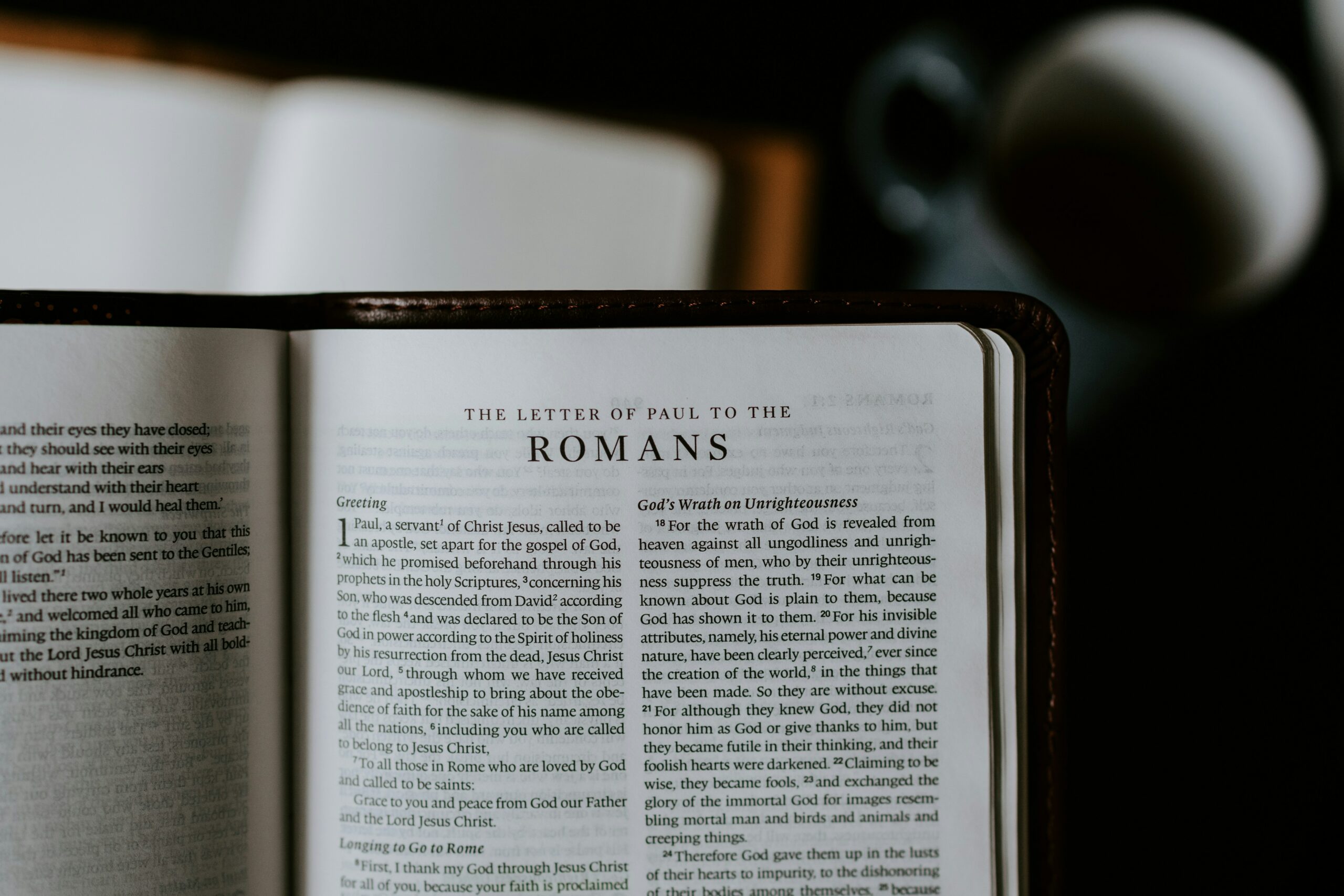
Whom Shall I fear? -Part 2
This sermon examines the concluding section of Romans 8, focusing on the unbreakable bond between God and His believers. The central message is that no external circumstance, spiritual power, or temporal force can separate Christians from the love of Christ. By analyzing Paul’s rhetorical questions and exhaustive lists of potential threats, the text emphasizes that believers are not merely protected but are ‘super-conquerors’ through Him who loved them. The tone is one of profound assurance and confidence, highlighting the cooperative work of the Trinity in securing the believer’s eternal standing. Ultimately, the sermon affirms that God’s love is absolute and impervious to any created thing, offering ultimate peace and victory to the faithful.
Transcript
Well, we arrived this morning at the end of this wonderful, instructive, and encouraging chapter of Scripture. Again, Romans chapter 8, if you would begin turning there, Romans chapter 8. And as we were reminded last Lord’s Day, Paul is setting forth to his readers the help that God has provided for his believing children, divine assistance, as I’ve called it, and this help from God is given in the pursuit of our aiding in our sanctification.
We are only saved because of God’s grace and In his effort to enable our growth in sanctification, God provides what we need most, and that is God’s help. God’s word tells us what to do. Others may model how it’s done, but God himself provides the spiritual energy to grow in Christlikeness. God gives the believer, as we saw, everything that he or she needs in order to live a growing and fruitful life as a Christian. And as we have reviewed again and again, all three members of the Trinity join together each providing a measure of support for the believer.
In verses 1 through 11, as we’ve seen, Paul explains that believers are established in their Savior, Jesus Christ. In Christ Jesus, we have been set free from the bondage to sin and death. But as Christ came and took on flesh, he was ultimately able to condemn sin by his atoning death. The believer is established in Christ, but their spiritual life is sustained by the Holy Spirit. Verses 12 through 27, the Holy Spirit renders divine assistance to the believers as well in helping us put sin to death. in a promised inheritance, and in going before the Heavenly Father in prayer on our behalf.
Just an amazing thought. Well, that leads naturally to the divine assistance provided by God the Father, and God the Father has ordained it all. Everything that comes to pass, He causes all things to work together for good for His beloved children. And so Father, Son, and Holy Spirit, all three are cooperating, if you will, to aid the Christian in the pursuit of Christlikeness. And as we began to consider last Sunday, Paul moves to explain why it is that he has told us all of these things.
The various members of the Trinity, what they’ve done for us. And in doing so, he communicates to the believer What is the appropriate response to divine assistance? We began our study of this closing section last Lord’s Day, but let’s take it again in full. Romans chapter eight, verses 31 through 39. What then shall we say to these things?
If God is for us, who is against us? He who did not spare his own son, but delivered him up for us all, how will he not also with him freely give us all things? Who will bring a charge against God’s elect? God is the one who justifies, who is the one who condemns? Christ Jesus is he who died, yes, rather, who was raised, who is at the right hand of God, who also intercedes for us. Who shall separate us from the love of Christ?
Shall tribulation, or distress, or persecution, or famine, or nakedness, or peril, or sword? Just as it is written, for thy sake we are being put to death all day long. We were considered as sheep to be slaughtered. But in all these things we overwhelmingly conquer through him who loved us. For I am convinced that neither death, nor life, nor angels, nor principalities, nor things present, nor things to come, nor powers, nor height, nor depth, nor any other created thing shall be able to separate us from the love of God, which is in Christ Jesus our Lord.”
This is a striking paragraph, as we observed last week. Almost every word of it. And I likened it to a bright and glistening snow cap on the grandest mountain. This paragraph serves to appropriately close this chapter. But it’s not only beautiful to behold, it’s deeply instructive and tremendously encouraging.
That is Paul’s intended aim, to breathe confidence into every Christian. us included. It is the apostle’s chief desire that we, as believers, would find invigorating assurance in these words. His review of God’s ways and efforts toward his children. God is for us. That’s Paul’s point. This is the overarching message that God would have us to grasp in these verses. There can be no downside.
As we noted last week, as we began to consider these verses, we observed that Paul issues a series of rhetorical questions. They’re designed to help the Christian apply this understanding of divine assistance. Instead of just giving his readers the appropriate conclusion, he wants his readers to consider these things. He wants them to think. He wants them to think and wrestle with the possible application of these things in order to arrive at their own unassailable conclusion. Paul issues six rhetorical questions. We looked at the first five last week. What should we say to these things?
What is our response as believers to divine assistance? And Paul doesn’t answer the question. The second question, if God is for us, who is against us? Is anyone in the entire universe more powerful than God? The third question, Beginning in verse 32, he who did not spare his own son but delivered him up for us all, how will he not also freely give us all things? And it’s an argument from the greater to the lesser. God has already given us the greatest, his own son. Will he not take care of the lesser things of our life?
The fourth question we looked at, who will bring a charge against God’s elect? God set his love on us from eternity past. Can anyone indict us before such a God? Can anyone bring anything to mind that God doesn’t already know? The final question that we looked at last week, can anyone override God’s judgment?
At the end of verse 33, coursing into verse 34, God is the one who justifies, who is the one who condemns? Christ Jesus is he who died, yes, rather, who was raised, who is at the right hand of God, who also intercedes for us. In other words, nobody, nobody can override God’s judgment. Nobody can file an appeal. Nobody can file a motion before the court that has God rethinking his decision.
Well, as we noticed last week, there is a sixth and final probing question in verse 35. And it serves as kind of a capstone to the previous five questions. And the answer that Paul provides to this question encompasses all six of the questions. For Paul’s final question, if you would, glance down at verse 35.
Who shall separate us from the love of Christ? The first thing we have to do is deal with a very unnecessary translational controversy. Most translations pose the question here with the personal pronoun who. Who shall separate us? The word is what is called an interrogative and it’s used to initiate questions. And so it’s used and translated in a variety of ways in the New Testament. Why? What? Which? Who? So technically translating it as who here is not incorrect. The problem is that Paul’s list in verse 35 doesn’t match. Paul’s list in verse 35 is a list of things, not people. Listen to this, tribulation, distress, persecution, famine, and so on.
When we ask the question, who, typically we’re looking for some personality seeking to come between us and our Lord. So it could be that Paul is personalizing all of these troubling features. Paul is discussing all of the things that can potentially interrupt or even thwart the believer’s relationship with Christ. All of the things listed, not people, are those trials, circumstances, events, and seasons which could present roadblocks in the Christian thoroughfare. And so we can think of it as what, not who.
Paul’s desire, indeed God’s great desire, is that nothing would come between us, that is, separate us, the believer, from his or her Savior. The word that Paul uses here, translated as separate, is a word that is only used about a dozen times in the whole of the New Testament.
Notably, in the Gospels, it is the word that’s recurringly used with regard to marriage. Speaking of divorce, Mark 10, 9, what therefore God has joined together, let no man separate. God hates divorce. And so this separation of which Paul speaks is a traumatic, impactful rift, not just a temporary or a light breach of the relationship. Paul uses the same word repeatedly in his discussion of marriage, 1 Corinthians 7, referring to one’s spouse or another leaving, separating in that sense. Luke uses the word several times in the book of Acts to chronicle the departure of some person or a group from a city to another city or region.
And so what Paul is talking about here in Romans 8 is not a casual parting, but a cavernous fracture that comes between a Christian and his or her savior. in the completion of the question that Paul asks here, who or what shall separate us from the love of Christ?
The question pertains to Christ’s love for us, not the other way around. Paul isn’t talking about that which is hypothetically possible. What is there that could possibly keep you from falling short of your love for Christ? What could ever come between you? That would present us as posturing ourselves like Peter did. I will never fall away. I will not deny you. There would be no encouragement here in this verse to suggest that we could maintain a love for our Savior. We know how feeble that promise is, don’t we? And so, Our love for God would be no encouragement to us.
This is the love of Christ. This is Christ’s love for us. Paul is talking about that which is truly impossible. Not that which is hypothetical. That Christ would ever let anything come between his love for us. That gives us the utmost assurance, doesn’t it?
There is an echo of Paul’s own argument here in his prayer for the Ephesian church. In Ephesians chapter three, there among other things for which he prays, he prays that those Christians would know the love of Christ which surpasses all knowledge. Paul desires that his churches know without any doubt that Jesus Christ has set his love upon his children. and it cannot be lifted or abated. Paul wants our understanding of Christ’s love and his people to be fully understood, and so he presents a series of these potential sources of division and fracture, seven in all. Paul had faced every one of these exacting experiences, and yet unquestionably he knew of the love of the Savior. These seven elements are surely intended to be considered, as Paul delivers them, rapid fire, one right after the other. Not a detailed exposition of each element. And so my comments on the elements will be brief, I hope.
He asks to begin with, shall tribulation separate us from Christ’s love? The word is used to refer to all kinds of severe trouble, and it’s variously translated in scripture, pressing, pressure, oppression, affliction, tribulation. It’s trouble that involves direct and severe suffering. These are the external difficulties of life, and we all have them.
The tribulation, Paul asserts, cannot stand between Christ and the believer. It won’t. Related to that is the little word distress. This word is used only four times in the whole New Testament, all of them by Paul. And typically, Paul presents distress as the result of tribulation. Distress speaks of extreme pressure, like that produced by a torturous device. We say it often, between a rock and a hard place. That’s distress. So tribulation is the outward difficulty that produces the inward feeling of distress. Such distress. will not come between Christ and us, as the old hymn goes.
The soul that is leaned on Jesus for repose, I will not, I will not desert to his foes. That soul, though all hell should endeavor to shake, I’ll never, no never, no never forsake. Paul goes on in his list, neither shall persecution or famine or nakedness uproot Christ’s love for his saints, all of which Paul experienced plentifully in the course of his ministry.
Persecution is the hatred for Christ that Christians occasionally experience in this world. It’s hatred for Christ, not you. You just happen to be in the way. But Paul’s testimony was persecuted but not forsaken. He knew that Christ had not turned his back on him, even though the world stood vehemently against him. Persecuted but not forsaken, afflictions born for the sake and the name of Christ were actually an indication of God’s favor, Paul concludes. And that extreme poverty that leaves a person without food and clothing, famine and nakedness, Paul knew those as well. And neither do these present a cause for Jesus to abandon his people. It’s a sign of his love for us to allow us to go through those things.
Peril is another feature in this list. Peril is not that which is produced through some extreme sport, popular as those are. Rather, it refers to those dangers that are brought about in the course of serving Christ. This is that same word that is reproduced over and over again eight times in all in 2 Corinthians 11, translated there as dangers. It’s used to highlight the fact that Paul knew all kinds of perils. Danger from rivers, robbers, countrymen, Gentiles, in the city, in the wilderness, on the sea, among false brethren. Paul knew and could speak well of the idea that peril itself does not sever the connection between God and his children.
The final element there in that list The seventh one, the sword. That serves as a euphemism for capital punishment, execution. Paul uses the word in that very same way in Romans chapter 13. He says that civil government does not bear the sword for nothing. There’s a reason for capital punishment.
But here it’s not just sentence, but martyrdom that Paul has in mind. the ultimate expression of persecution. And Paul’s point is that even death itself by hostile forces does not stand in the way of Christ’s love for us. Instead, it avails it. Such saints that suffer martyrdom go immediately into glory, as we all do at death. Paul caps these elements with a quote. Psalm 14, 22, for thy sake we are being put to death all day long as sheep to be slaughtered. It was in the Lord’s name that is for his sake that we are persecuted.
Paul’s point is that these difficulties and challenges that come as we experience them as Christians, They’re no different than what the people of God have always faced in this world. The bottom line is that none of these things, tribulation, distress, persecution, famine, nakedness, peril, sword, none of them can come between us and the Lord Jesus.
Christ’s arms are thrown around every believer, never to be pulled away. No weakness, no gloom, no fears, no doubts, nothing can mute or nullify Christ’s love for his children. This question then, as with the previous five, is rhetorical. The answer is assumed. No, nothing, no person, no thing can possibly come between the love that the Lord has for his people. But not only can we not be separated from the magnanimous and saving affection of our Savior, more than even that, Paul says that in these things we are victorious. We are conquerors.
And in the final verses of this incredible chapter, Paul gives the unequivocal answer not only to question number six, but the answer that quiets all six of those questions. We find it beginning in verse 37. Not only this sixth and probing question, in verses 35 and 36, but the resounding answer to all of the questions in verse 37 and following.
Paul says, but in all things we overwhelmingly conquer through him who loved us. When Paul opens here with these things, in all these things, he points back to the list of elements that we just considered. We will not be sectioned off from Christ’s love because of those things. But not only are we not separated or forsaken by Christ through the hardships and trials of life, instead, we are victorious in them. That’s Paul’s point here. Paul here is so stirred by his own confidence in the surety of our Savior’s love that it may well be that he invents a word here. It’s only used here in all of scripture.
It’s a compound word, a verb blended with the word huper, a pronoun. Pardon me. Well, you know what it is. A preposition. It’s a verb blended with the preposition hupere, which we might translate as super. We’re super conquerors. Young people these days, millennials or gens, whatever they are, Gen Z, they use this literary device a lot. Everything is super. Super cool, super tired, super hungry. Super overusing of certain words or phrases. Everything is super.
Well, Paul was the first to actually exercise this super craze. And he uses it at least 15 times, these super words. Superirao, exalting, super lifted. He uses that two times. Huperano, far above or super above. Huperoxano, greatly or super enlarged. Huperectano, overextending or super stretching. Abounding or super overflowing. More than abundant, super abundant.
1 Timothy 1.14. Huperoxao, highly or super exalted.
And more than a dozen of these super words are only used by Paul himself. And he uses 10 of these words only one time. And that leads some scholars to conclude that Paul may very well have invented some of these words on the spot, much like our millennial Gen X young people friends.
What Paul says here, through Christ who loved us, we are super victorious. We overwhelmingly conquer. It’s the strongest way that Paul can say it. He’s stressing not just victory, but victory in the greatest degree. We not only win, but it’s a decisive win. And yet, even in our convincing victory, it’s not by our own strength or means. We overwhelmingly conquer through him that is Christ who loved us. This is not the apostle’s conjecture or wish.
It’s his settled confidence. I am convinced, he says, verse 38. In so many words, Paul tells us that he has considered the facts of the matter. Having examined God’s word and engaged in much prayer, he expresses a strong and settled conviction. I am convinced, no doubt in my mind. And he launches into another list of items encompassed in this belief.
Four of these items, you can glance down at them, they can easily be combined into offsetting pairs. Death and life, angels and principalities, present and future, height and depth. Two of the terms seem to stand alone, powers and created things. All of them are hostile to God and his redeemed. And Paul’s purpose, it seems here, in the entire course of his inventory, is to expand to the utmost the scope of his conclusion. A reiteration of the impossibility of being cut off from God’s love. When Paul begins here with neither death nor life, he captures the entire realm of human existence. What else is there? For us, it’s either one or the other. There is no in-between. It begins with the greatest enemy of all, death.
Not only does death not sever the believer’s union with God, it actually ushers the believer into the presence of God. So death is no barrier to God’s love, since to live is Christ and to die is gain. Coupled with that word death, the opposite is the word life. with all its toils and trials and distractions and allures and seductions? Godly Apostle John spoke of this life in simple terms in 1 John 2, 16. All that is in the world, the lust of the flesh, the lust of the eyes, the boastful pride of life. Paul has this in mind as he references this term life.
But if the Christian cannot be taken off course by death, then life itself cannot hinder our standing with Christ. Paul refers to a second grouping, angels and principalities. And here, Paul guides us into the spiritual realm, speaking of the several orders of spiritual beings. By angels, he has to, he must necessarily be referring to evil angels, fallen angels, demons, who would like nothing more than to destroy the bond between Christ and his children. No holy angel would do that. Satan’s henchmen, however, and the demons, they are often referred to as his angels, Matthew 25, the devil and his angels.
Second Peter 2.4, God did not spare angels when they sinned, but cast them into hell, committed them to pits of darkness reserved for judgment. Those are demons. These angels do not possess the power or the authority to cancel God’s plans and purposes for his children.
As for the paired element of principality, Paul speaks here of that evil spiritual realm, the evil forces of this universe, where all the ideas that vex our culture and our world, the devil and his demons, in league against Christ and his church to destroy—to steal, kill, and destroy. Together, these angels and principalities function to scheme and carry out Satan’s evil agenda in an attempt to produce chaos and strife, bringing God’s plans to ruin our struggle. as Paul explained to the Ephesian church, is not against flesh and blood, but against the rulers, the powers, the world forces of this darkness, the spiritual forces of wickedness in the heavenly places. There is a realm that we cannot see that is so powerful and so dead set about destroying the family and the individuals and the relationship between people and their God. Well, to angels and principalities, we could easily add that isolated element, powers, as Paul speaks of it here.
That refers to those hostile forces that are much more vaguely just another way of identifying the forces of evil arrayed against the believer. It’s a supernatural battle. But not even this great and powerful spiritual army of evil beings can overcome Almighty God in the preservation of his people.
There’s a third grouping. Things present and things to come. In other words, these two words capture the entire range of time as it pertains to mankind. In the present, there are all manner of difficulties and heartaches. But in the future, at times, it seems to be worse because it’s unknown. Pondering things to come brings with it greater uncertainties and fears.
Nothing in the vast dimension of time will disrupt or remove Christ’s love for the saints. The final grouping. We find in verse 39, height and depth, these terms tell of the immensity of space, from the highest of highs to the lowest of lows, as high as the heavens are above the earth, Psalm 103. So great is his loving kindness toward those who fear him. In no corner of every square inch of God’s created universe is there a smudge of decay of God’s love for us.
Paul expends every last measure to communicate this point. He says, nor any other created thing. Think whatever you will. Conceive of whatever being or power there is. This final phrase ensures completeness to Paul’s thought that nothing, absolutely nothing, can come between God and his people.
There’s not a creature, not a galaxy, not a microbe or a strike force that can turn God’s love away from those who are in Christ. Nothing in all this exhaustive list and beyond, if we could even think of something that could drive a wedge between God and the Christian.
And so, the end of this chapter concludes in the same way it began. You remember the beginning, it all started with there is therefore now no condemnation for those who are in Christ Jesus. And it ends here with nothing shall be able to separate us from the love of God, which is in Christ Jesus, our Lord.
The love that we receive and experience is not only the love of a Savior who died on our behalf, As Paul referred to in verse 35, here that love is magnified. It’s exploded to include the eternal love of the Heavenly Father, the love of God. As Paul outlined in this chapter, all three members of the Trinity have come to the believer’s aid to render divine assistance. It’s an exposition of the very point that Paul made back in chapter five. Chapter five, he said that the love of God has been poured out within our hearts through the Holy Spirit given to us because Christ died for us, even while we were yet sinners. If God himself placed his love upon us in eternity past, if Christ’s love for us drove him to the cross on our behalf, If the Spirit actuated that love in real time by bringing us to repentance and faith, then there’s nothing, there’s nothing that will make God’s love for us to fade.
Jesus himself declared this wonderful truth in John 10, 27 through 29, my sheep, Hear my voice. I know them and they follow me. I give eternal life to them and they will never perish. And no one will snatch them out of my hand. My Father who has given them to me is greater than all. And no one is able to snatch them out of the Father’s hand. What a Savior we have. What a God we serve.
Would you humble yourself before Him? Our gracious God, we bow before you in humble gratitude for what you have done in our lives. None of us deserved it. You had mercy on us. And because of that great mercy, you moved. You awakened us from the sleep of death. You showed to us our sin, and we hated it.
We realized for the first time what a dreadful condition we were in. We realized immediately that we needed help. We needed a Savior. And as we pondered, as we looked up, we saw our Savior for who He is. We saw the Lord Jesus Christ that had already paid for our sin. We knew. We knew that our sin was encompassed in that which sent Jesus to the cross. And we were broken all over again for it.
But Lord, you had mercy to us and drew us to yourself because of the price that Jesus had paid and the redemption that he had accomplished by that death. Father, we thank you for the salvation that we’ve come to know. We thank you that these questions are largely answered in our mind as believers. We know that nothing can ever come between your love for us. We know that you are eager to give us all things and to preserve us and to care for us.
Lord God, if there are any in this room who do not know the Lord Jesus and know of these precious promises, that if you are for us, nobody can be against us. Nobody can bring a charge against us. Even as our wonderful chapter started, there is therefore now no condemnation for those who are in Christ Jesus. What a wonderful statement that is, the best in all of scripture.
Father, we humble ourselves before you and pray that if there are any who do not know the forgiveness that Jesus secured by dying on the cross, we pray that you would so move in their hearts that they can no longer say no. They can no longer stay unmoved. They can no longer be ambivalent. They have to turn to Christ and embrace the love he has for them. Father, we thank you and we praise you. We pray all of these things in Jesus’ name, amen.
Messages: 204