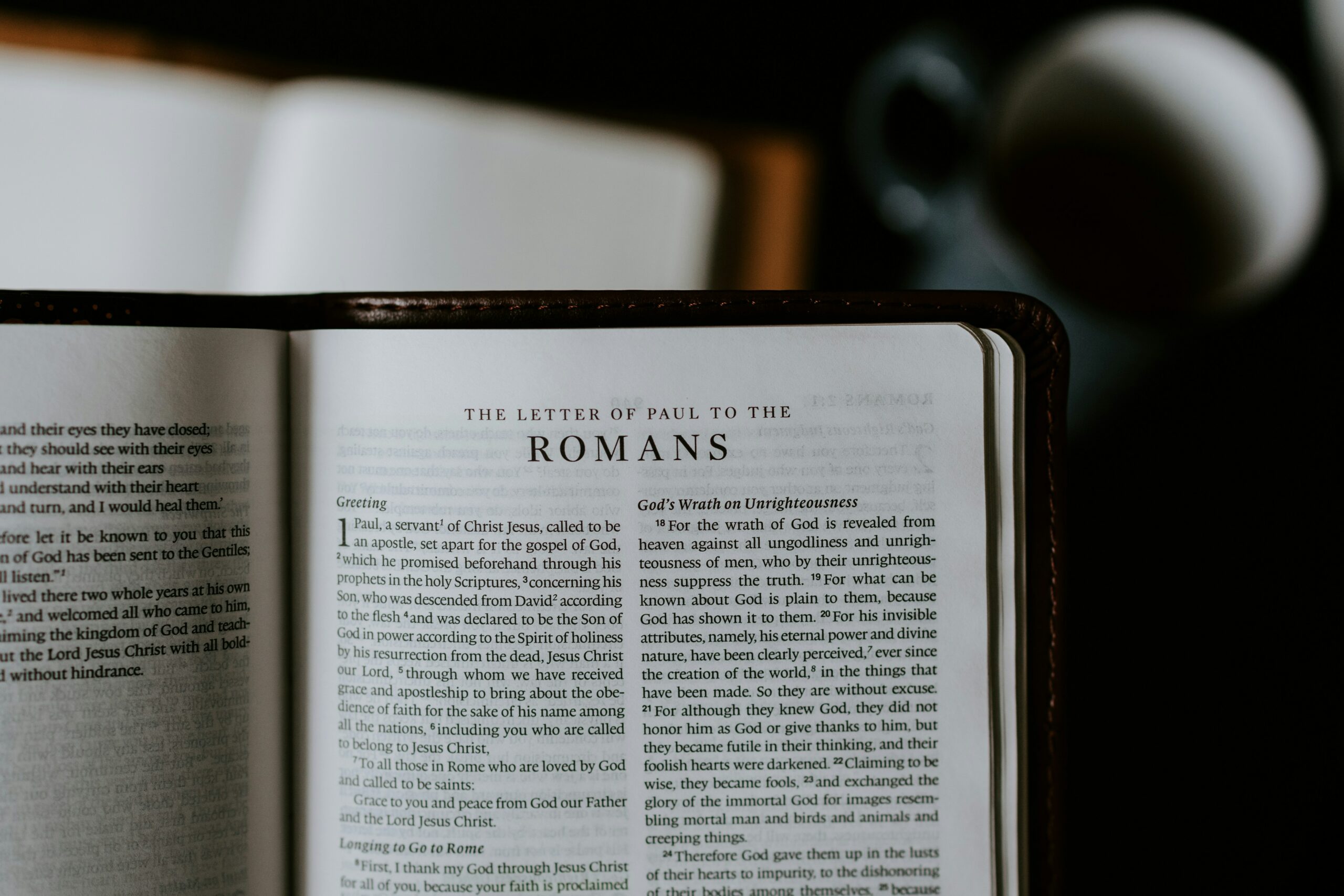
Established in Christ, Part 3
This sermon examines Romans 8:1-4 to establish that the Christian life is secure because the Holy Spirit has released believers from the condemnation of the law. The teaching clarifies that while the Mosaic Law exposed sin and brought death, it was powerless to produce holiness due to human depravity. God accomplished what the law could not by sending His Son in the likeness of sinful flesh as a propitiatory offering, thereby judging sin decisively in Christ. This act demonstrates that the Law serves under God’s ultimate authority, and its requirements are fulfilled not by human effort but by the indwelling Spirit who enables believers to walk in life and peace. The message emphasizes that salvation is entirely God’s work, removing all grounds for condemnation for those who are in Christ Jesus.
Transcript
Aimed by the Holy Spirit and
having your life ordained by God, the father himself. The
following is just such an incredible conclusion versus thirty one
to thirty nine, the Christian life is absolutely secure. The Christian is absolutely secure
because of the divine work that is taking place within him. It’s
a profound passage, a profound chapter, and We hope to begin
to scratch the surface in our study. Well as I suggested two
weeks ago. Paul mentions again the law as
he has done so many times and you would think that Paul is
about to enter into another lengthy diatribe on the law and he’s
not or perhaps Paul is preparing to address the law once more
of many more times to come in the book of Romans and he’s not.
Paul has addressed the law and spoken about the law and characterized
the law and outlined and instructed regarding the law in great detail
throughout the book of Romans. As I pointed out two weeks ago,
22 times in Romans chapter 2, there laying the groundwork that
all of us had sinned against the law in the way that we carry
ourselves and the way that we live our lives. We had transgressed
the law. Eleven times in Chapter three,
the law is mentioned five times in Chapter four, three, three
more times in Chapter five, in Chapter six mentioned only twice. And you would think that Paul
is putting the law aside, but then he enters into Romans Chapter
seven and twenty three times he speaks of the law. Here in
Romans chapter eight, as we come into it, we think here comes
just more of the same. But Paul is about to put a capstone,
as it were, on his discussion, his consideration of the law.
Five times in the short first few verses, chapter eight, verse
two through seven, five times in those verses, the law is mentioned
and then it quickly dissipates in Paul’s treatment of Romans.
Twice only in the ninth chapter, twice only in the tenth. twice
only in the 13th and those really just by passing comment. Paul
is dealing fully and finally with the law and Paul makes here
in these first four verses three definitive statements that provide
us with God’s mind on the place of the law in the life of the
Christian. There’s a lot of debate that goes on about the law. About
how do we relate to the law and are we under the law and in what
sense do we honor the law and what sense do we live according
to the law? Paul wants to give us God’s mind.
Let’s let God weigh in on what the role of the law is in the
life of the Christian. And as I said, he makes three
definitive statements. When God makes a statement, it
is definitive, isn’t it? Shouldn’t it be? He makes three
definitive statements. And I’ve labeled or titled this
section Mitigating the Law’s Condemnation. Paul has already
told us that we are no longer under condemnation. That is great
news. The best news. We are no longer under condemnation.
But how did that happen? How on earth did that happen
when Paul had laid the groundwork according to the law that we
had all transgressed it? Hopelessly so. We have transgressed
the law and brought upon ourselves the condemnation of God. And
there was no escape, not humanly speaking. We couldn’t do enough.
We couldn’t live according to the law. We couldn’t save ourselves
by living according to the law’s standards. We could not do it.
How on earth, then, do we find ourselves in this position? As we’ve already pointed out,
Romans 8-1 is a summary statement of everything that has transpired
up to Romans chapter 7 in the very end. Paul laid the groundwork
that we are all under sin, but he gave us the good news, the
hope of justification by faith in chapters 3 through 6. And
then in chapter 6, as chapter 6 opens, it begins to talk about
The life of sanctification, the life that God continues to produce
in the Christian. It is a life of Christ, it is
a life that is moved and motivated by the spirit. It is the life
of ever growing in God’s precious grace. What happened to the law? What
happened to the standard of the law? We saw last week as we began
to take up this question. This mitigation of the law’s
condemnation, what happened to the condemnation produced by
the law? First of all, we saw the law’s release, we are released.
We are released from the effects of the law. There is therefore
now no condemnation for those who are in Christ Jesus. Now,
as we get into verse two, we saw that verse two is essentially
an explanation of that. It is explaining for us why the
Christian is no longer under condemnation. And that’s the
function of verse two, but we had no idea, at least upon a
first or initial reading, what verse two means. What does verse
two mean if we know what its function is? We found that it
was quite difficult to find out what exactly that explanation
means. Go with me once more. Romans
8 1 will read through verse 11. Where Paul wrote there is therefore
now no condemnation for those who are in Christ Jesus for the
law of the spirit of life in Christ Jesus has set you free
from the law of sin and death. For what the law could not do
weak as it was through the flesh God did. Sending his own son
in the likeness of sinful flesh and as an offering for sin he
condemned sin in the flesh in order that the requirement of
the law might be fulfilled in us who do not walk according
to the flesh but according to the spirit. For those who are
according to the flesh set their minds on the things of the flesh
but those who are according to the spirit the things of the
spirit. For the mind set on the flesh is death, but the mind
set on the spirit is life and peace. Because the mind set on
the flesh is hostile toward God, for it does not subject itself
to the law of God, for it is not even able to do so. And those
who are in the flesh cannot please God. However, you are not in
the flesh, but in the spirit. If indeed the spirit of God dwells
in you, But if anyone does not have the spirit of Christ, he
does not belong to him. And if Christ is in you, though
the body is dead because of sin, yet the spirit is alive because
of righteousness. But if the spirit of him who
raised Jesus from the dead dwells in you, he who raised Christ
Jesus from the dead will also give life to your mortal bodies
through his spirit who indwells you. We began to look at chapter
eight, verse two and following the support really for the statement
given in verse one. And as I told you, everything
from verse two through eleven, everything supports verse one.
Verse one is the main statement. There is therefore now no condemnation
for those who are in Christ Jesus, and Paul begins to move to explain
that. Look at the word for in verse
two, that’s the function of that verse. is to support verse one. But we realize that verse one,
verse two, rather, is a difficult verse to understand. The law
of the spirit. That’s a strange phrase, the
law of the spirit of life. What does it mean, the law of
the spirit of life in Christ Jesus, and what does it mean
that it’s all set us free? How? We begin to ask and we begin
to realize that we need to take it apart and take it incrementally.
To what does Paul refer to when he mentions the law? What does
he mean the law of the spirit? Speaking of spirit, what spirit
is he talking about? The human spirit, the Holy Spirit,
some general attitude. This idea of the spirit of life,
to what does that refer? To what does the phrase in Christ
Jesus attach itself? And what is this law of sin and
death anyway? Well, I’m not going to go back
through. If you want to know the deeper answers to some of
those questions, you’re going to have to dig back in. Today,
all I’m going to do is introduce the question, provide you the
answer by way of review so that we can get further into this
passage. To what law is Paul referring
when he speaks of the law of the spirit? There is an antithesis
here. There is a tension, if you will.
There’s clearly a contrast that is set up in the midst of these
three verses, verses two through four, there is the law of the
spirit on the one hand and there is the law of sin on the other.
The most effective way, as we saw, is to go and find out what
one means and then work accordingly. And so we looked at the law of
sin and death that much. It was relatively easy to discover
what that meant. Wasn’t it. Romans 1 18 talked
about it. Romans 3 24 15 7 13. We looked
at them all and essentially what was being referred to there is
the divine law the law of God. One said it this way because
of man’s fallen condition the law of God inevitably produces
two main results. We saw that in the course of
Paul’s description of the law, his exposition of the law, his
detailed discussion of the law throughout the book of Romans
2 through 7, chapters 2 through 7. We saw that it was quite explicit
that the law did two things. The first, it exposes and enhances
sin in our life. And then the second thing is
it brings about death. The law of God, as one said,
leads to sin, aggravates sin, inflames sin. And the second
result is that it always produces death. Well, having that in bold
relief, the law of God, what then is the law? That has set
us free. What is the law that Paul is
referring to when he speaks of the law of the spirit? And in
all of the detailed discussion that we looked at, we saw that
it was essentially the authority that is exercised by the Holy
Spirit. And that forecasts for you what
direction we’re going to go with regards to the question about
the spirit. What spirit is it? It’s the Holy
Spirit. And the law of the spirit is
the effective influence of the spirit in the life of the new
believer. It is the Holy Spirit that is
in Focus here. As one said, the law of the spirit
of life should be understood as the regulating and actuating
power of the Holy Spirit. As the spirit of life, it is
the Holy Spirit moving in the life of an individual that literally
brings them to life. Remember the concept of regeneration? It is a bringing to life. Of
that dead man. It is a bringing to spiritual
life itself of one who is very dead, completely dead. The power that the Holy Spirit
exercised in an individual’s life is unto life. It brings them to life as opposed
to what the law did. The power of sin and death brings
the individual to death itself. It kills them. and their love
of sin. So the law of sin and death very
clearly pointed to the moral law of God and the law of the
spirit of life pointed to that actuating, empowering energy
of the Holy Spirit in the life of any individual that ever comes
to know Christ. No individual would ever come
to know Christ and come to salvation If it weren’t for the active
working of the Holy Spirit in his life. So what is the spirit? We’ve already identified it.
It’s the Holy Spirit. No questions asked. What does
it mean by the spirit of life? It is the fact, as we just pointed
out, that is the Holy Spirit that brings the dead man to life.
It is the spirit of life because he is the one, he is the agent,
he is the effective cause of bringing a sinner a deadened
sinner to life. Remember, some of you, as we
closed out the book of 7, thought I was overplaying my hand there
when I suggested to you that Romans 7, 14 through 25 was most
appropriately spoken of at the moment of regeneration. Those
words are best uttered by someone who is standing, in a sense,
in between two worlds. He knows he’s a sinner. He knows
he’s offended God. He knows that he is of sin. And yet, there’s a light. It’s a pinprick in a dark night
sky. But that light is going to grow
ever greater, ever greater, ever greater. He knows that he has
just been brought to life itself. It is regeneration that’s in
view in this passage as well. It’s the work of the Spirit.
It’s the work of the Spirit establishing us in the Lord Jesus Christ,
as we’ll see. And we come across it almost
immediately, even in this passage. Look down again at the passage,
to what does the phrase in Christ Jesus connect? It was simple. This one was simple. There were
a number of different options, but none of them fit. Should
it be connected with life, life in Christ Jesus? Not simply.
Should it be connected with set you free that he has set you
free in Christ Jesus? That’s true, but it doesn’t say
that here. Not well, not effectively, should
it be connected with the law? No. The law in Christ Jesus. It’s simple. It should be connected
with the spirit of life, the spirit of life in Christ Jesus,
nothing happens outside of Christ. Life is Christ. It’s not better
with Christ. It’s not just that life is better
with Jesus. It’s that life is with Jesus
Christ. The whole process said one of
the life of the spirit giving life is in Christ Jesus, who
is the meritorious cause of justification. Remember some months ago when
I produced those little booklets, when we looked at everything,
every phrase that is used in him, in Christ, in Christ Jesus,
in Jesus, In the Lord, everything that we have, every spiritual
blessing that we own or possess is because we reside in the sphere
of our Lord Jesus Christ. We are literally placed into
him, baptized into him, immersed into the Lord Jesus Christ himself. And we enjoy that. So, as one said, the whole process
of the Spirit giving life is in Christ Jesus, who is the meritorious
cause of justification. The deliverance from doom is
by faith in the justifying merit of Jesus Christ, which faith
is attended as well as produced by the influences of the Holy
Spirit, given through and by Christ. Do you hear what he’s
saying? He’s saying that the same God that initiates and accomplishes
that that salvation in an individual’s life is the same God that by
the power of the Holy Spirit in the agency of Christ is the
one that begins the process of sanctification. It’s not just
that you have to work better, it’s that God is working in you
to accomplish your salvation by means of this sanctifying
grace, the salvation you already possess. But the practical righteousness,
the holiness we lack. God is at work. And it’s an astounding
thing that whereas we were completely under condemnation, we deserved
hell. That’s frankly what it means.
We deserved the judgment of God because of the fact that we were
under the law. And yet now all of a sudden we
find ourselves freed, completely freed. from the authority and
control of sin and from the sinful effects that it brought. That brings us to point two.
I said that there were three definitive statements about the
law, God’s mind on the law, God’s mind on the law and its role
in the life of a Christian. And we see, first of all, that
we are released from the law. We see the sins that the laws
release rather, first of all, but secondly, we need to learn
about the laws superior. Who is it that’s over the law?
I shared with one friend a couple of weeks ago, there was probably
in my undergraduate studies, there was one class that stands
out above others as the most useful moving forward throughout
my adult life or somewhat adult life. And that was the class
that I took on business communication. Who talks to who with what authority? To whom does the law answer? Is the law just set up as the
final word or does the law have to answer to someone? Does the
law serve someone? Is the law underneath someone’s
authority? And it absolutely is. Paul had issued a rather harsh
epithet about the law, hadn’t he? He called it the law of sin
and death. Well, that’s kind of a harsh
thing to say about the law of God, the holy law of God that
God had given for our sakes with the goal of us knowing God’s
mind and knowing what God expected of us. That all of a sudden for
Paul to say that this is the law of sin and death, that’s
a rather harsh thing to say, or is it? We have already seen
that God’s law is holy and perfect. That’s what Paul calls it. The problem was it was powerless
to help when we most desperately needed it. It was powerless. It stood there. It stood there
condemning us, but it could not render aid. Look at verse three. Where Paul says, for what the
law could not do. The law was a powerful tool of
God, the law was an incredible tool in God, in God’s hand to
render us judged, condemned, powerful, Reaching down to the
very soul of each and every individual, calling them to judgment. The
problem is it couldn’t help. The word translated weak here
just speaks of powerlessness, utter incapacity, ineffectiveness,
having a complete lack of power. The law was powerless, it was
weak. When it came to producing holiness
in the soul of mankind, it couldn’t do it. It could show us what
the standard was. It could produce judgment in
our lives. It could bring us right underneath the condemnation. It couldn’t help. As one said,
the law could not procure the fulfillment of its own legal
claim. It could not make its subjects
live according to the spirit. It was beyond its power. It had
to prescribe duty but it could not provide motive. The law essentially condemned
sin. But it couldn’t set us free.
It couldn’t sanctify us. It couldn’t justify us. It was
in a very large degree powerless. And it wasn’t the law’s fault.
The fault was due to the sinful flesh, the material with which
it had to work. You’ve heard me say before that,
number one, if you’re going to have a garden, buy quality seed,
buy the good stuff. But it’s pointless to plant quality
seed, the best you can buy in worthless soil. That’s what happened with the
law. It was good seed, the perfect, it was God’s law. The problem
was it came into the human heart. Weak as it was through the flesh,
that’s what Paul is referring to. As one said, the insufficiency
of the law is not due to any imperfection of the law itself.
It is holy and just and good. It requires nothing more than
what is right. If men could but comply with
its righteous demands, the law would pronounce them just. But it is our being depraved
that renders the law weak and powerless to save. It wasn’t
the law’s fault. It was because of our flesh.
The flesh was the instrument that made the law so powerless.
The fault wasn’t in the law and not in the product of God, but
in men’s fallen human state. But quite literally, thanks be
to God, the story didn’t end with what the law was or was
not able to accomplish. I mean, literally, thank God. Thank God that it didn’t just
end there with us condemned by the standard of God’s law, weak
and powerless to help us beyond utter condemnation. What the
law couldn’t do, God did. When the law found itself powerless
to help us, unable to save us, In a sense, that was only the
beginning. God wanted us to come to that point. God had to have
us come to that point. I’ll never forget one contemporary
pastor said that a lot of times we see people as being saved
before they even know they need a savior. God wanted us to know
how desperate our condition was. God wanted us to know how deeply
we needed a savior. God wanted us to know that we
were under condemnation. And then at that moment, he had
us right where he wanted us. What the law could not do, God
did. And it had to be. It had to be God in the final
analysis, because otherwise we could stand up and take a bow
and take credit for our own salvation. If we could have lived according
to the law, we would be as so many Gideons with countless soldiers
in our wake. That’s not the case. God told
Gideon, send them home. I want the glory and God God
tells us. You’re under condemnation. And
you’re hopeless and powerless. Except by God. So how did God accomplish this
task this incredible incredible impossible feat of saving souls
of doing what the law could not. Look at the simple sentence.
What the law could not do, God did. He condemned sin in the
flesh. He condemned sin in the flesh.
He pronounced a verdict and carried out the sentence. As one pointed out, the verb
here denotes something far beyond the mere pronouncing of the sentence
of condemnation. It’s not just a sentencing. God
not only sentenced, but he judged. He carried out the judgment. It is a combination of sentence
and execution as constitutes a final and altogether decisive
dealing with its object. God’s effective breaking of the
power of sin. God took control. God judged
sin. God judged it fully and finally. And it was Christ’s death that
was this great event which the full weight, as one said, of
God’s wrath against sin was in the very flesh of Christ, so
effectively brought to bear upon the sin of all mankind.” Look
at the passage. The law, what it was weak, God
did by condemning sin in the flesh. In whose flesh? In what
flesh? In us? He could have put us all to death
in the flesh and we wouldn’t have paid for a single sinner.
Do you realize that? Because of the nature of our
flesh, sinful as it was, even if God put us all to death, the
most innocent child could not have been saved by the sacrifice
of the entire humanity. It was the flesh of Christ. It
was Christ in the flesh, Christ in human nature, that the sentence
was passed That the sentence was executed upon the Lord Jesus
Christ as the perfect sacrifice. It was in Christ’s flesh, not
ours, that God condemned and punished sins. This is exactly
what the scriptures speak of. Isaiah chapter 53, listen. Surely
our griefs, he himself bore our sorrows, he carried, yet we ourselves
esteemed him stricken, smitten of God and afflicted. He was
pierced through for our transgressions. He was crushed for our iniquities. The chastening for our well-being
fell upon him. And by his scourging, we are
healed. All of us, like sheep, have gone
astray. Each of us has turned to his own way. But the Lord
has caused the iniquity of us all to fall on him. The Son of Man, Matthew 28, did
not come to be served, but to serve and to give his life as
a ransom for many. It was that perfect flesh of
the Lord Jesus Christ. No wonder John, when he first
saw him, said, Behold, the Lamb of God takes away the sin of
the world. Words in the flesh here point
to the very focus point on where God’s condemnation zeroed in. It took place in the flesh, Christ’s
flesh, Christ’s human nature. We saw a parallel of this in
earlier in the book of Romans in Romans 6, 1 through 10, we
won’t turn there for the sake of time, but there Christ incarnate
was revealed as The victorious power over sin. Which ultimately
culminated in the death and the resurrection of Christ, the acceptance
of Christ’s sacrifice. It was a verdict against sin’s
claim on our nature and God rendered it judged over once and for all. Whereas sin, one pastor said,
once condemned the believer, now Christ, his Savior, condemns
sin, delivering the believer from sin’s power and penalty. The law condemns sin in the sense
of exposing it for what it really is and in the sense of declaring
its penalty, death. God puts sin to death. God put his power over us to
death. God judged it. How? He said. By what means did God
condemn sin in the flesh? Look back at verse three, because
it’s the it’s the parenthetical comment there that gives life
and vibrance to this statement. You can look at the simple sentence
all you all you want, but you’re not going to come away with exactly
the how. What the law could not do, God
did. He condemned sin in the flesh.
How? The details there. Sending his
own son in the likeness of sinful flesh as an as an offering for
sin. It says that he said that I mean
that is one of the most. Recorded and attested facts of
scripture that Jesus was sent by the father. This wasn’t just
a project that went awry somewhere along the way. They arrested
Christ, put him to death. The resurrection was kind of
a plan B. This was this was all according
to God’s predetermined plan and the foreknowledge of God. He
sent Christ and Christ went willingly, sent him and he sent his own
son. And in that you get the preciousness
of this relationship that God pulled out all the stops that
he sent. Not just an emissary, he sent
his own son. Colossians, Paul recorded some
of the same thoughts. In Colossians one, he says that
he rescued us from the domain of darkness and transferred us
to the kingdom of his beloved son, in whom we have in whom
we have redemption, the forgiveness of sins. He is the image of the
invisible God, the firstborn of all creation, for by him all
things were created, both in heaven and on earth, visible
and invisible, whether thrones or dominions, rulers or authorities.
All things have been created through him and for him. He is
before all things and in him all things hold together. He is the head of the body, the
church, and he is the beginning, the firstborn from the dead,
so that he himself will come to have first place in everything. Get this. For it was the father’s
good pleasure for all the fullness to dwell in him and through him
to reconcile all things to himself. Having made peace through the
blood of his cross. Through him, I say, whether things
on earth or things in heaven, God sent his own son because
no one else, no one else was available. No one else would
have worked. No one else could have accomplished
what the son of God did. What did he do? God did sending
his own son in the likeness of sinful flesh, and there were
a lot of different reasons why Paul would insert this word likeness.
Why didn’t he just say he sent him in the flesh? Because some
could misconstrue that and say, well, flesh is sinful. Well, why did he say sinful flesh? Because flesh by nature or flesh
by nature is sinful, but in Christ’s case, it wasn’t. He took on a
body, but it wasn’t sinful. Christ didn’t become a sinner,
he became a man. He took on human flesh, but he
didn’t take on the sin of humanity. As one said, the flesh, which
she assumed, never admitted the tyranny of sin, though it included
the capacity, the temptation of sin. Still, another said, these words
are carefully chosen. In the likeness of flesh could
easily be misconstrued, the son of God came in flesh and not
merely in the likeness of flesh. There were many that tried to
say that he merely came in some form of humanity. Paul may have
simply said in flesh, but he wished to emphasize that human
flesh was the realm in which sin gained a foothold and dominated
until the grace of God drew near. But Paul says sinful flesh, but
to say that God came in sinful flesh would imply that there
was sin in him. And so he is described as being sent In the
likeness of sinful flesh. Philippians 2 7 echoes the same
truth. He emptied himself, taking the
form of a bondservant and being made in the likeness of men. Still another. Said that the son of God was
not in being sent by his father, changed into a man, but rather
assumed human nature while remaining himself. He was fully God and
fully man, but he was absolutely sinless in that. So what was the purpose? What
was the purpose of Jesus putting on human flesh being sent by
God down to Earth? How did God use that to condemn
sin? Says it right there. What the law could not do, God
did. He condemned sin in the flesh, sending his own son in
the likeness of sinful flesh and as an offering for sin. Jesus
Christ was the Lamb of God. Jesus Christ was the provision,
the sacrifice, the atonement for sin. He was the propitiation,
the offering that stood there and took the wrath of God. so that we might be forgiven. Leviticus 14.31 speaks of such
an offering. He shall offer, shall the sinner,
shall offer what he can afford. The one for a sin offering and
the other for a burnt offering, together with a grain offering.
Isaiah 53.10 speaks of the same thing. The same kind of propitiatory
language. The Lord was pleased to crush
him, putting him to grief, If he would render himself as a
guilt offering, that’s what God did. And that’s how he did it. How did he condemn sin in the
flesh by sending his own son in the likeness of sinful flesh
as an offering for sin? What a profound truth. What a
profound truth that we enjoy as Christians. We’ll come back for the third
statement next Lord’s Day. But the third one is profound
as well. It refers to the law’s fulfillment. How on earth was
the law this exacting, impossible standard? How was it fulfilled? We’ll come back to that next
Lord’s Day. But for today, it’s enough to
know that the law had a superior. The law’s superior was God himself. And that the law didn’t run its
own course. The law didn’t have its own agenda.
It was a servant of God. And when God said that the law’s
purpose was fulfilled. God had the last word. God’s
authority was effective. And in doing so. That’s how he
removed the condemnation from everyone who places their faith
in the Lord Jesus Christ. That’s our only hope. There is
no other way. There is no other way out from
underneath the condemnation that is brought about to every individual
because of the law. We’re all sinners. We’re all
sinners, and the only way that condemnation is removed, it’s
by God himself. And it’s only through faith in
the Lord Jesus Christ. Let’s rejoice before him. O merciful
King, we humble ourselves before you. And Lord, many of us know
and remember so well and so vividly. That season in our life where
we knew we were condemned, we were dead men before you. We
were hopeless. We couldn’t figure out a way
we couldn’t find our way out of how from underneath this judgment. And you brought us to knees of
repentance. You brought us to life ourself itself, and you
showed to us our Savior. Our Lord Jesus Christ. Father
God, we thank you and praise you and we rejoice in you because
you showed to us our Savior. And there is therefore now no
condemnation. It’s in Jesus name that we pray.
Amen.
Messages: 204