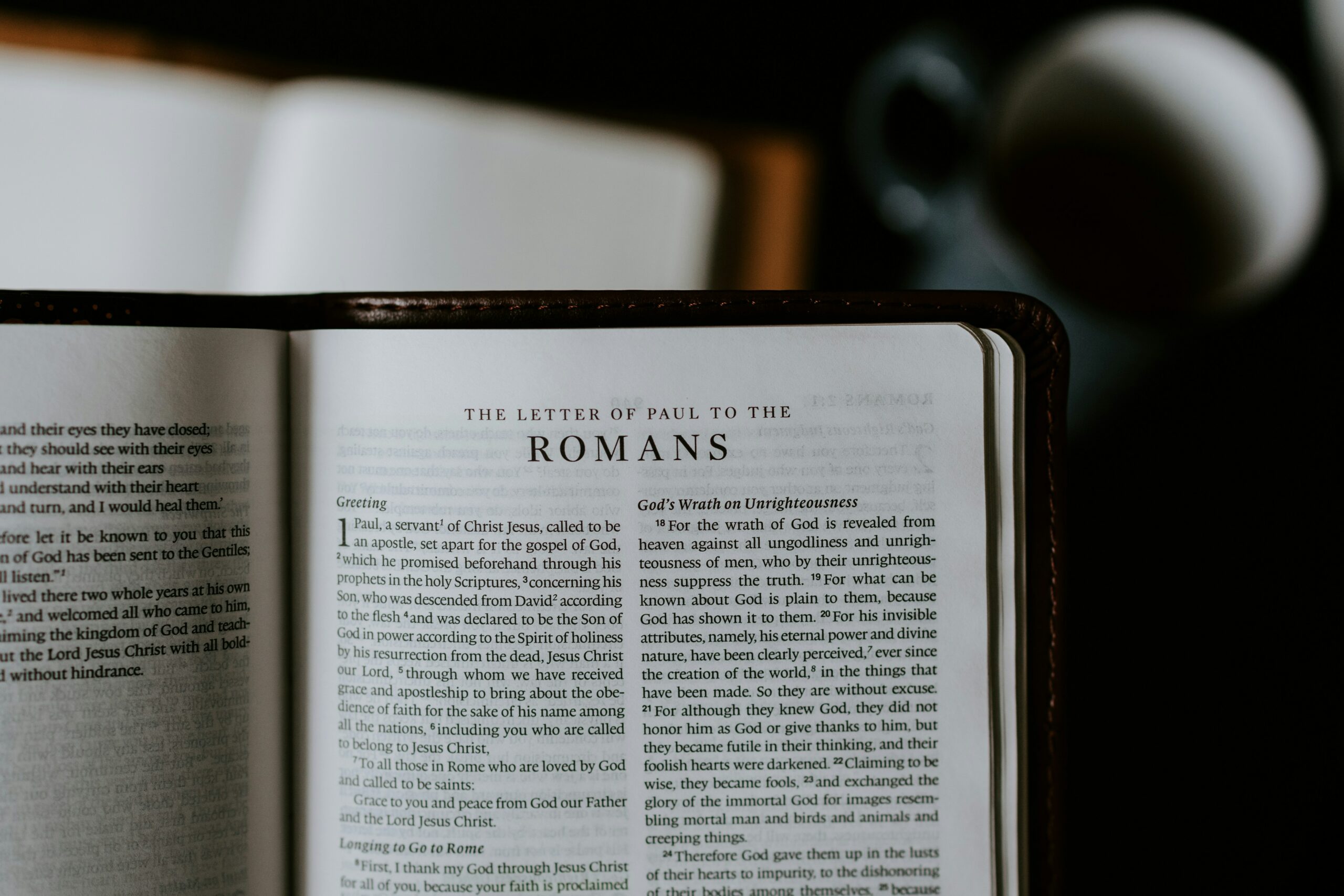
Principles of Civility Pt 5
This sermon explores the Christian duty to submit to civil government by examining four principles of civility found in Romans 13: obedience, decency, conscience, and propriety. The central argument is that believers are called to respect and obey governing authorities not merely out of fear of punishment, but because such submission is an act of worship and a reflection of God’s sovereign order. The text highlights the role of conscience as the internal guide that prompts believers to do what is right, distinguishing Christian motivation from that of those who obey only to avoid legal consequences. Through examples like Daniel and the historical context of Roman emperors, the message emphasizes that while Christians must participate in society and pay taxes, their ultimate hope rests not in political reform but in the transformative power of the gospel. The tone is instructional and pastoral, urging believers to maintain a posture of respectful engagement with the state while recognizing that only Christ can truly change the human heart.
Transcript
In Illinois, we used to sing
that song almost every Sunday night. I detected it might have
been unfamiliar to a few of you. We’ll have to practice that one.
If you would, take your Bibles and turn to Romans chapter 13. Once again, Romans chapter 13.
In Romans chapter 13, we have been in that Very crucial passage. Tough to
swallow at times, grisly even. Tough to put into context, especially
in our day, but this is what one articulated some of the most
important words ever spoken with regards to human government.
Paul, what we have been working through, Paul is providing Essentially,
his instruction for dealing with civil government in the context
of that greater section of life with others. Paul had dealt with
a number of other groups before believers, those who are unkind
to us, the downtrodden, those who are absolutely against us,
and there are other groups ahead. Verses 8 through 14 could really
be directed at almost anyone and everyone and then in verses
one of chapter 14 and following Paul takes up the issue of weaker
brothers which will be a rich study as well. But in this particular
setting Paul has been giving us principles principles of civility. I’ve referred to them and there
are four as they have unfolded. We find them in verses one through
seven and if you would let us let’s read those verses now. Where Paul wrote let every person
be in subjection to the governing authorities but there is no authority
except from God and those which exist are established by God.
Therefore he who resists authority has opposed the ordinance of
God and they who have opposed will receive condemnation upon
themselves. where rulers are not a cause
of fear for good behavior but for evil. Do you want to have
no fear of authority do what is good and you will have praise
from the same or it is a minister of God to you for good. But if
you do what is evil be afraid for it does not bear the sword
for nothing for it is a minister of God an avenger who brings
wrath upon the one who practices evil. Wherefore it is necessary
to be in subjection not only because of wrath but also for
conscience sake or because of this you pay taxes for rulers
are servants of God devoting themselves to this very thing.
Render to all what is due them tax to whom taxes do custom to
whom custom fear to whom fear honor to whom honor. Well Paul
had opened with One essentially overarching principle that we
are called to obedience that is the principle of obedience
stated there in the first verse. Let every person literally every
soul be in subjection to the governing authorities and that
is because it is a divine institution. God ordained it. God put them
in office. God has placed them there for
his own purposes and we don’t always know what those are. One
of the purposes. flows into the second principle
of civility it is the principle of decency one of the purposes
of government by God’s design is that they would be about doing
good promoting good behavior doing good passing good laws
upholding good laws doing good for its citizenry and no wonder
Paul says do you want to have no fear of authority do what
is good participate in those good things the government does.
Well. I purpose. I purpose to finish
the last two principles today. The third principle that Paul
provides to us is found in verse five. It is the principle of
conscience. Paul says it this way. Wherefore,
it is necessary to be in subjection, not only because of wrath, but
also for conscience sake. That little word that stands
at the front, wherefore, in our some of our modern more modern
translations. Therefore it basically serves
the function of pointing us to the fact that Paul is drawing
a conclusion here. Paul had already said that we
are to be in subjection. Paul has given us the reasons.
It’s God’s institution and they are about the goal of doing what
is good generally speaking. And so if we are obeying God
given government and doing what is good. We are participating
in a divine institution and Paul draws that simple conclusion.
Wherefore it is necessary not only because of wrath. He had
just pointed to the sword. He had just pointed to the fact
that government does bear a divine element of punishment whether
it’s fines or whether it’s some other form of punishment ultimately
the sword death execution. God has given that to them and
that is perhaps one of the most difficult pills to swallow. Well
Paul says it’s necessary to be in subjection not just because
of wrath. The Christian doesn’t need wrath
in order to find order in what God has provided. And so he calls
us to obedience not just out of the fear of what government
could do to us, but because it’s right. It’s right. It’s the right thing to do. That
word conscience is used only 25 times in the New Testament
and 20 of them are by Paul. Paul had a special concern for
the conscience. basically treats it as the early
warning system. This is where the interface is
with the Holy Spirit. And the Holy Spirit impresses
upon the conscience and brings thoughts and facts to the mind
of the believer. And in a sense, guides the believer,
brings even the believer to repentance for things. Well, conscience
is more than just a sense or a perception of what is right
and wrong. It is the inclination to do what
is right. The conscience prompts us and
promotes us to do the right thing. That’s what Paul is pointing
to here. One Puritan writer in treating
this section said that men in general obey laws from fear of
punishment or transgression of punishment of transgression.
And if there was no punishment they would transgress every law
which thwarted their inclinations. In other words you take the stop
signs that octagon red colored octagon off the edge of all of
those poles and you would have bedlam by the afternoon. You
begin to pull back the laws of the land you begin to let everybody
do what everybody wants to do and you would have chaos and
disorder and immediate decline. But he goes on and he says that
this must not be the case with Christians. They must respect
the laws in the countries in which they live not merely from
dread of punishment or trends of transgression but also from
a higher motive for conscience sake. Because it’s right. One faithful pastor. In a single
line, summed it up when he said, as God’s own children who are
indwelt by the Holy Spirit, we should realize with special instinctiveness. That disobedience of and disrespect
for government is wrong and that obedience and respect for it
are right. Well. See the Christian, the
Christian has every motive The Christian has every motive for
obeying human government because he knows that it’s God given
he knows that generally speaking they are about the duty of promoting
what is good and punishing what is evil. It’s not to say that
government doesn’t ever jump the track and and overrun its
banks. It does. But Paul says generally
speaking the Christian has a double motivation not just fear. Everybody
should fear the government but the Christian and only the Christian
can go beyond that because only the Christian can see that God
and his sovereignty stands behind human government. God designed
it. God put it in place. God has
a purpose for it. God has ordered it that way according
to his choice. One summarized it simply when
he said the pagan fulfills his obligation to the state. If he
does at all. For fear of punishment. But the
Christian has a further and all important reason for fulfilling
his obligation to it is knowledge. It is his knowledge of the secret
of the relation which government stands to God and to Christ. We know. We can smile even if
we see government begin to act in a way which God would not
ordain. We know we know to whom that
government will answer. We know to whom that government
will have to give an account and be judged. We also know that
just as like rivers of water God can steer that King wherever
he wishes. So Paul basically points to the
fact that this is not just not just something we do out of fear.
Well we better obey the government or we’ll get a fine in the mail.
It’s part of our obedience to God. It’s an act of worship.
See we we tend to dichotomize worship into Sunday morning.
That’s kind of what we do on Sunday morning and the rest of
our life. We break things up into the sacred and the secular.
Not God. God says everything that we do
can be an act of worship. We do it with the right motives. So he. Tells us that if if there
were. Even a direction where the society
begins to drift towards anarchy and lawlessness. It would lead
ultimately to our loss. James Boyce said it this way
if you take obedience to the laws of the country lightly.
If you say it’s not my law I didn’t vote for it. If you do that he
says then you are contributing to a spirit of lawlessness that
will ultimately issue in anarchy and eventually lead to the loss
of civil liberties and to a dictatorial government. And some people might
even say well we’re you know I see that coming. And as I shared
several weeks ago, that window of gospel opportunity is always
closing. It almost never opens wider,
almost never does the human government say, oh, please come and bring
the gospel with all of your restrictions and all of your prohibitions
on my lifestyle. Almost never. It’s always closing. And what we yearn for is that
window of gospel opportunity would stay open just as long
as humanly possible. that we might proclaim Christ. So we don’t disobey. We don’t
disobey our conscience. We don’t do what government tells
us to do when we know that God says that it’s wrong. We don’t
go against what God tells us is the right and proper thing
to do. We don’t obey government when
it tells us to do what is wrong or forbids us to do what is right. An example here. I love the Sunday
school song Dare to be a Daniel. Well, let’s take him as an example. If you would turn to Daniel,
Chapter six. You know the story, I know you
know the story, but let’s meditate on it together, shall we? Daniel,
Chapter six. Daniel, Chapter six. Some characters
get together and they concoct a plan to catch and trap Daniel
and perhaps his friends. They tried once already. And
so it says in verse seven all the commissioners of the kingdom
the prefects and the sat traps or the set traps if you prefer.
The high officials, the governors had consulted together that the
king should establish a statute and enforce it. And with an injunction
that anyone who makes petition to any God or man besides you,
O King, for 30 days, that’s all they needed. They knew. Should
be cast into the lion’s den. Well, Darius, you know, he doesn’t
really see the trap being set. And and so he ponders this and
ultimately, in effect, adopts it. Verse 10. Now, when Daniel
knew that the document was signed. And as I’ve shared with those
in the Bible study material. Those those little words are
so key, those time connectives when Daniel knew that document
was signed. It was almost like Daniel knew
it was coming and no sooner did that. Trap get placed. Daniel took action. He took action
by continuing to do what he had always done. Watch this. Now,
when Daniel knew that document was signed, he entered the house
now in his roof chamber. He had windows open toward Jerusalem.
And in this particular case, he did what he always did. He
just didn’t close the curtains. Everybody could see in as they
always had, they knew that they could trap Daniel. And he continued
kneeling on his knees three times a day, praying and giving thanks
before his God. And as he had been doing previously,
this wasn’t anything new. Then these men came by agreement
and found Daniel making petition and supplication before his God,
and as predicted, they go running off as so many tattletales before
the king, King Darius. Well, then, as soon as the king
heard this statement about Daniel, he was deeply grieved. Look at
verse 14. He was deeply distressed and
set his mind on delivering Daniel. He knew it was an unjust law.
He knew it was. He didn’t see it coming, but
it trapped somebody that he cared very much for, Daniel. And even
until sunset, he kept exerting himself, trying to rescue him.
He tried every device that a king could, but they said, look, a
king’s edict must be followed. And so the king followed through
with it and he gave orders. Verse 16, the king gave orders.
Daniel was brought in, cast into the lion’s den. The king spoke
and said to Daniel, your God, whom you constantly serve, will
himself deliver you. King Darius was no prophet. He’s
not listed as such. But King Darius does what so
many people don’t. And that is to trust and to place
their lives and their livelihood in the hands of a sovereign God. They threw him in. And the next
morning, the king couldn’t wait to get there and to find out
how Daniel had fared. He called out to him and in verse
20 Daniel answers 21 rather than Daniel spoke to the king O king
live forever. My God sent his angel and shut
the lion’s mouth and they have not harmed me in as much as I
have found been found innocent before him and also toward you
O king I have committed no crime. It was an unjust law and the
king knew it. And so as you know the story just to thwart those
liberals who would say well the lions you know they weren’t hungry.
Well So the king takes all of those characters that concocted
this plan to begin with and throws them and their entire family
in. And it says before they even hit the ground. The lions had
a feast. We need to trust God. We need
to entrust ourselves to a sovereign creator who will oversee and
do what’s right and protect us even with miraculous means at
times. And if it costs us our life.
To stand up for what’s right, it costs us our life. Now, Paul
uses a curious little thing here. Let’s stand at verse 6. He has
just called them, reminded them of subjection, told them that
it’s obviously warranted, not only because of wrath, even your
own conscience tells you that it’s right. For because of this,
you pay taxes. Now, some people took this as
an imperative. Because of this, pay taxes. But I think that it
could be either way. It could be either an imperative
a command if you will or it could be just an observation. I think
it’s an observation. I think what Paul does here is
say look you’re already proving my point by filling out that
form on April 15th and sending in a check. You pay taxes right.
You’re already in the process of acknowledging that government
is good and legitimate and tends to do what is good and right.
And you’re doing that by paying your taxes. It’s not a command,
it’s an observation. He basically points to the fact
that when they do that, they are recognizing God given government,
they are recognizing the fact that the state, when we pay those
taxes, is there for the purpose of doing good and putting things
in order. And our conscience points to
the fact that they are there for that reason, and it’s easy
to submit to our conscience knowing that. So the same government, the same
government that is put in place to punish and restrain evil,
also has the function of doing what is good and providing necessary
services without which individuals couldn’t survive. As one said, the Christians in
Rome do, as a matter of fact, pay taxes. And the real ground
of their doing so is their knowledge of the place of civil authority
in the order of divine purpose. God put it there and he put it
there for a reason. And just the fact that we pay
taxes, the fact that this continues to this day, it wasn’t just that
Rome had created this incredible system and that all governments
following forth have followed suit. It’s our justification. It’s an encouragement. We’re
doing what is right. We’re acknowledging human government
every time that we write that check. And then he pulls out all the
stops and this one’s going to smart. I know it is. It was tough
to swallow. It is necessary to be in subjection,
verse five, not only because of wrath, but for conscience
sake. For rulers are but pardon me for because of this you also
pay taxes for rulers are servants of God. All right. Already we’ve
heard it. Paul has said it a number of times already. Rulers are
servants. They’re servants of God. God
put them there. They’re God’s servants. We know that except
that in this particular occasion he uses a completely different
word. It’s no longer the word that we use for deacon. They’re
no longer those kinds of servants. This word is a much more noble
word. It goes even beyond the hard
working efforts of the local church servant. This word had
religious connotations. The word is later goss. And you
probably even hear it. It’s the word from where we get
our word literature or pardon me, liturgy or order of service. The order of our religious service
is our liturgy. Now, this little word. Later,
Goss was used of angels, it’s the service that angels render,
it was used. Get this of Paul himself, Paul
referred to his own labors as a kind of spiritual service. And it’s used even of Christ.
The Christ came and rendered. Spiritual service. And so to
tie in to human government here, Paul Paul didn’t make a mistake
here. Paul didn’t do this by accident. The word isn’t used exclusively
in the New Testament of religious service, priestly service. But it’s almost always used of
the service of God. And what it points to is service
of a serious and noble nature. What Paul points to here in the
use of this word is the fact that even in the use of this
word, God put them there. They are civil servants. They
serve not only society, not only nations, but ultimately they
are In service to God himself, they are his emissaries. He has
placed them there. And Paul does that with one little
word. And it gets almost more difficult
to swallow. Wherefore, it is necessary to
be in subjection, not only because of wrath, but also for conscience
sake, for because of this, you also pay taxes for rulers are
servants of God. Devoting themselves to this very
thing. Now. One unpack that little term
devoting themselves, they described it in these terms, he said they
are persevering faithfully in their office. Now you and I could
look and it wouldn’t take us five minutes to give a lengthy
list of people who have not lived that way. This is what they’re
called to. Not what every person in their office has done with
excellence and perfection. That’s what they’re called to.
They’re called to devote themselves to this very thing, they’re called
to persevere faithfully in their God given office. Now, the question
is, to what does this very little thing refer? What is Paul pointing
to when he says they’ve devoted themselves to this very thing?
Now, some people said it’s to the receiving of taxes and you
might say, well, that’s true. They spend all year long looking
forward to April 15th. Well it’s certainly a possibility
that God’s servants certainly the IRS they’re commissioned
for a set specific purpose to collect taxes. But I think given
the noble nature of this passage and the noble nature in which
Paul is directing us I think it has a more significant reference
point even than the taxes. It’s the purposes it’s the good
that the taxes allow the good the government to perform. It’s the good things that the
government is allowed to do social order caring for those that are
truly poor providing for protection for its citizenry whether it’s
local or national. The thing that The government
constantly attends to the thing that it devotes itself to. The
thing that it perseveres faithfully in is not just the collection
of the taxes, but it’s the ministry, the service, as it were, to God
himself in the things of the government. And so I just want
you to pause. And hear the words of one Puritan
that said so far, then. From being a doctrine that fills
the mind with discomfort, it is the only view that gives peace. They have peace, whatever party
gets into power, the Christian can look up and know that God
is sovereign and have peace, knowing that God is in control.
They have peace, whatever party gets into power, because they
know that in everything God fulfills his purposes by them. God rules
on Earth, even in the counsels of his enemies as completely.
As he rules in heaven. And so the Christian takes heart. And the principle of conscience. Has its effect. that we know
that it’s right. We know that God ordained it.
We know that God has called us to submit and to yield and to
be peaceable productive citizens. Principle number four. In the consideration of the principles
of civility of which I’ve told you there were four not only
the principle of obedience and the principle of decency the
principle of conscience but finally and forth The principle of propriety. Where Paul just closes with this
very simple, very straightforward verse, render to all what is
due them tax to whom taxes do custom to whom custom fear to
whom fear honor to whom honor. And let’s pause. What is this? Deal. Render. One translated it as pay your
due pay fully your due. Hold nothing back. There is absolutely
in this word the idea of obligation. As one said a tax is a debt in
the true sense of the word. We owe it. In a sense it is the
government’s money. It is the property that belongs
to them, and if you don’t like Paul’s word and you don’t like
mine, how about the Lord himself? Turn, if you would, to Luke,
Chapter 20, just briefly. Luke, Chapter 20, Jesus affirms
what Paul is saying here, in fact, Paul essentially is affirming
what Jesus had said. When the Pharisees and Herodians
set up a trick. They came to Christ and they
set up this utterly hypocritical trick because the Pharisees and
the Herodians didn’t didn’t work together on anything. But on
this particular occasion, they thought, oh, this would be great.
We’ll catch Jesus in a trick and we’ll get him in trouble
with the Roman government and then we’ll see. And so they set
up this trick and in verse 22, is it lawful to pay taxes to
Caesar or not? If Jesus says no, the Herodians
arrest him immediately and he’s tried. But he detected their
trickery, Matthew’s gospel calls it malice, he knew their hateful
hearts, he knew what they were trying to do, he knew it. The
gospel of Mark calls it he calls it hypocrisy, he’s he saw immediately
through their utter hypocrisy here and he said to them, show
me at the nearest give me a coin. And it was probably even considered
uncouth to even touch one of these coins for a Jew. Show me
a denarius. Whose likeness and inscription
does it have? They said, Caesar’s. And Jesus
himself said, then render to Caesar the things that are Caesar’s
and to God the things that are God’s. In other words, bring
forth repentance. But while you’re here, pay your
taxes. Do what’s right. Do what you’re
supposed to do. And the first thing that Paul,
back now in Romans 13, Romans 13, the first thing that Paul
points to is taxes. Render to all what is due them,
tax to whom taxes due. You knew I was going to get to
here eventually and nobody wanted me to. Here I am. Pay your taxes. And there’s no way around it.
I looked, you know, tried to maybe think that it might be
a different word. That’s exactly what it’s talking about. Taxes
on your personhood, taxes on your land, taxes on your house.
That’s what this word points to. The duty of Christians, said
one in reference to these taxes, was that they should not refuse
to pay them, that they should not seek to evade them or to
escape underpayment. Now when was the last time that
you personally and I’m not asking for a show of hands. When was
the last time you personally said have I paid all that I could. Isn’t there something that I’ve
forgotten that that I should pay my fair share of tax upon. James Boyce again said when we
pay our federal taxes. We should be thankful for the
armed forces those taxes support. And for the peace and national
security we enjoy because of them. Taxes support the courts,
numerous federal agencies from which we benefit, national parks,
federal drug enforcement agency, food inspectors, the CDC, the
FBI, air traffic control, and other indispensable services.
He goes on to point out that state taxes, highways, firefighters,
police, We complain about taxes, but without them, government
could not function. Civilization would be impossible
and our lives and property would be in jeopardy every moment of
every day. Pay your taxes, he says. Custom
to whom custom. This is just no way around it,
this is another way of taxing. You might even say this is on
local taxes, goods and services. This is on trade. These are the
revenues that the government collects based on what we exchange,
what we sell, what we buy. Paul says pay your taxes, pay
your custom. But there’s a third thing that
he says that we owe other people. Fear. Fear. Because earlier he had
said Do you want to have no fear? Well, he’s using it in a completely
different sense. Now, we owe, in a sense, we owe
everybody some degree of this kind of fear. It’s respect. It’s
just respect. It’s respect for one in office
is what he’s ultimately pointing to, and he moves immediately
away from the money. The money is a very small part
of it, but we owe them our respect. Try walking. No, don’t do this.
Try walking into a court sometime. And when the judge bangs down
his gavel and calls out your name, say, what’s up, dude? No,
don’t try that. We owe them our respect. And this particular setting,
it points to a very high degree of respect. It’s because, as one pointed
out, civil civil authority is a sacred thing, it’s a God given
thing. Reverence it wherever you meet it and let your reverence
correspond to the degree in which it is possessed by the object
of your respect. In other words, if you find a
very respectful governing official, you should give him the utmost
respect. But you respect him whether he
deserves it or not. We’re not supposed to stand up
and stick our noses out and dare the government to take its best
shot. We’re supposed to be respectful.
Then he closes with these words honor to whom honor. What’s the
difference between respect and honor. Respect is is almost abject
reverence. It’s almost worship. Honor is
just a dignified treatment of somebody who deserves it. It’s
honor paid to a ruler. And in a sense, every man created
in the eyes of God is due honor just by virtue of the fact that
they are created by God. But the governing officials,
the authorities. Those in service of God in that
capacity, they’re entitled by God’s design to be honored for
their office, and that’s exactly what Paul says. We should use
their titles of honor, we should We should dress appropriately
when we come into their company. We should do what is right because
it’s right. Well, if you think this is only
Paul and Paul’s just having a particularly, you know, diluted afternoon writing
these things. This echoes almost precisely
what Peter said in a completely different context. You see, Paul
is writing in a in a time of relative peace. I’ll put that
in context here in a moment. Peter was writing in the midst
of the fires of persecution. Turn, if you would, to first
Peter. Chapter two, and we’re drawing to a close. Peter is writing in the midst
of the fires of persecution, and he says in verse 13 of chapter
two, submit yourselves for the Lord’s sake to every human institution,
whether to a king is one an authority or governors as sent by him for
the punishment of evil doers and the praise of those who do
right. An echo of what Paul said, for such is the will of God that
by doing right, you may silence the ignorance of foolish men.
Act as free men and do not use your covering freedom rather
as a covering for evil, but use it as bond slaves of God. Honor
all men. Love the brotherhood. Fear God. Honor the king. A direct echo of what Paul says,
though the circumstances were dramatically different. It’s an interesting little proverb.
Proverbs 24, jot it down. Proverbs 24, 21 and 22. 24, 21 and 22. Where the proverb writer
says, my son, fear the Lord and the king. Do not associate with
those who are given to change, don’t go running around with
those who are constantly critical and unsubmissive to government,
for their calamity will rise suddenly and who knows what ruin
will come from both of them. That is that is essentially the
thought, the idea behind what both Paul and Peter have written. Fear God and the king. Charles Bridges. In beginning
to unpack this, he said, it’s one of our tendencies in human
nature to to fight against the sovereignty of somebody else
in our life. He goes on to point out that wives do it at home.
Employee unions do it at work. Populist movements do it in culture. Congregationally minded people
do it in the church. Such people love change for the
sake of change. They want to fight authority
at every turn. But then he goes on to say this.
Our Lord and his apostles have thus linked together the throne
of his supremacy in heaven and the throne of his majesty on
earth. The one principle is the spring
of the other disloyalty has often been a libel upon godliness.
Did you hear what he said? If we go around disobeying and
thumbing our nose at human government, it is disruptive to our gospel
testimony. But the Christian is loyal. The
Christian is loyal because he is godly subjection to the powers
that be is repeated and inculcated and a revolt is visited with
the most heavy condemnation. God is to be served in the first
place and our obedience is to be given to not only to the king
in subordination to God and not only in those things which are
contrary to the will of God. In other words, we can’t obey
where the king. Transgresses God’s law. Well. You would think. You would think
that Paul. Not only was he having a bad
day, he just he has overstated his case, and yet when you take
it in light of what Peter says and first Peter two and you take
it in light of what the proverb writer says in Proverbs 24, you
begin to see that you know what Romans 13 is that chapter that
we thought it was. It does contain some of the most
important words ever written with regards to human government
and political thought. We don’t have to check out. We
don’t have to bow out. We don’t have to back away from
our involvement, our support, our participation, signs in the
yard, voting, participating, running for office, any of that. We’re not forbidden. But we don’t
just check out. We don’t just take up the role
of subversives. One Puritan said it this way.
This passage teaches clearly. That Christians in all countries
and ages should respect and obey the civil government under which
they live. That a Christian who follows a course that leads to
anarchy acts a wicked as well as an inconsistent and foolish
part. that no Christian is warranted
to disturb a settled civil government because it is not in its form
and its administration so good as he should desire it. And that
all Christians placed in the same circumstances in reference
to the civil government under which they live as the primitive
Christians were to the Roman government. Are bound to act
not only in the same general principle but precisely the same
way. Let me let me share what he basically
just said. He said, put yourself in the
shoes of the Roman Christians to whom Paul wrote in that context. And you say, OK. What exactly
is that context? Well, you see. There had been
this emperor named Tiberius. He reigned for 22 years. He was
one of one of his claims to fame is that he reigned during the
ministry of our Lord’s public ministry. He was in office during
his death and resurrection. He probably was still alive when
Paul was converted and began to preach the gospel. Probably
long gone, though, by the time. Paul appealed. I’ll get to that
in a moment. Tremendously unpopular. He was
guilty of the wildest excesses, it was recorded. He degenerated
even further as he got older. He was called a tyrant and because
he was a tyrant, they refused to deify him. Did you understand
that? They basically refused to rubber
stamp him as a god. Which was typical in the treatment
of their emperors. Pliny, one of the early church
fathers, records him as the gloomiest of men. Well, but it’s a good
thing that he was long gone by the time Paul writes his words. Likewise, Caligula, who followed
him. It’s a good thing that Paul wasn’t telling us that we should
be in subjection to governing authorities, because Caligula
was among the most wicked men the world has ever known. Cruel,
heartless, greedy, sensual to just gross, I can’t even read
his biography, so much so that people judged him over the course
of history as an insane tyrant. Well, Caligula lasted only three
years. basically became the first Roman
emperor to be executed. And in comes a man named Claudius. Perhaps things are looking up.
Well, Claudius didn’t want to wait until he was actually dead
in order to reap the benefits of being a deity. So he declared
himself to be a real and corporeal God, God in the flesh. And demanded
worship because of that. He ordered a statue of himself
to be placed in the Temple of Jerusalem. He appointed such
noteworthy men as Herod to rule over the Jews. And so it’s a
good thing. It’s a good thing that Claudius
wasn’t in office when Paul wrote these words because they would
be really tough to swallow. Tiberius Caligula Claudius. So who exactly was in office
when Paul wrote these words. One of the most notorious leaders
the world has ever known an individual named Nero. Nero it said it is said had the
most vicious character. On the birth of the child his
own father declared amidst the congratulations of his friends
that any offspring of himself and Agrippina, who was by the
way an adulterous liaison, could only prove abominable and disastrous
for the public. He had no idea how true his words
would become. Agrippina, his wife, immediately
set about to secure the kingdom for her son. Ultimately, he returned
that favor by initially depriving her of guards driving her from
the palace and ultimately had her killed. In comes his wife
now another adulterous popina popia rather and it said that
she was granted every gift of nature except an honorable mind. An unvirtuous woman and that
led him further and further in device and immorality and crime. He repaid that liaison with a
sharp and cruel kick to the stomach that caused her to miscarry and
ultimately die. Nero by his sensual extravagance
exhausted the massive amounts of money that Claudius had accumulated
and ultimately he was driven to fill those banks, those storehouses
with wealth from stealing from the rich. One of the worst episodes of
Nero’s life was, of course, the fires that you’re all familiar
with. The fire was set. It burned for days. It burned
more than half the city. It is said that Nero stood on
top of a hill watching it burn with delight because he hated
the city. He hated the way it looked and
had longed for years to overdo it, to redo it, rather. Ultimately, as you know, Nero
blamed the Christians and out came the great outbreak of persecution
that the world. Would soon see. Well. The same Nero. Same Nero that so Christians
into animal skins and then let them be torn apart by dogs the
same Nero that were crucified some upside down the same Nero
that were burned as torches called Roman candles. Paul says. We are to submit to him. And
I suppose as I backed away this week and I looked at all that
we’ve considered and all that we’ve. Learned from this passage. Paul
doesn’t answer a whole lot. He doesn’t tell us what happens
when there are two rivals for the same throne. He doesn’t tell
us about Things like coups and takeovers. He doesn’t even tell us which
form of government is the best or right. He doesn’t give us
a complete treatise on what our rights are within the government. He doesn’t give us commentary
on every possible situation in which the Christian may live.
What he gives us is these four simple principles. Principles
of civility. principle of obedience, the principle
of decency, the principle of conscience, and the principle
of propriety. You see, Paul knew that just
like wagging a dog’s tail doesn’t change the dog’s countenance,
it doesn’t make the dog a happy dog. Paul knew the only hope,
the only hope is not a reform of government. The only hope
is not getting our guy In the right office, the only hope is
not enacting new laws. The only hope. Is the gospel. It’s the only hope. It’s the
only thing that changes a person’s heart, regardless of what laws
they have complied themselves to, what government they have
aligned themselves with. It’s the only hope that fits
them for heaven and secures them that place. I’m not saying we shouldn’t put
a sign in our yard. Perhaps our yards should be full
with them. I’m not saying that we shouldn’t
vote. We absolutely should vote. I’m not saying that we don’t
participate in human government. We absolutely participate. We
want that gospel window open as long as we can. But if we
do that. And we don’t share the gospel.
The world has no hope. Our merciful King, we humble ourselves before you,
troubled people in a troubled land. And we plead with you for
this closing window of the gospel to be extended while we’re here. While we have opportunity to
proclaim your name and share you with neighbors and friends.
Lord, these rites that we cling to, as if divine, they’ve been
taken away before. And Lord, we plead with You to allow
us those days. Allow us those days to be faithful
in proclaiming Christ, the only hope for a dying world. It’s in Jesus’ name that we pray.
Amen.
Messages: 204