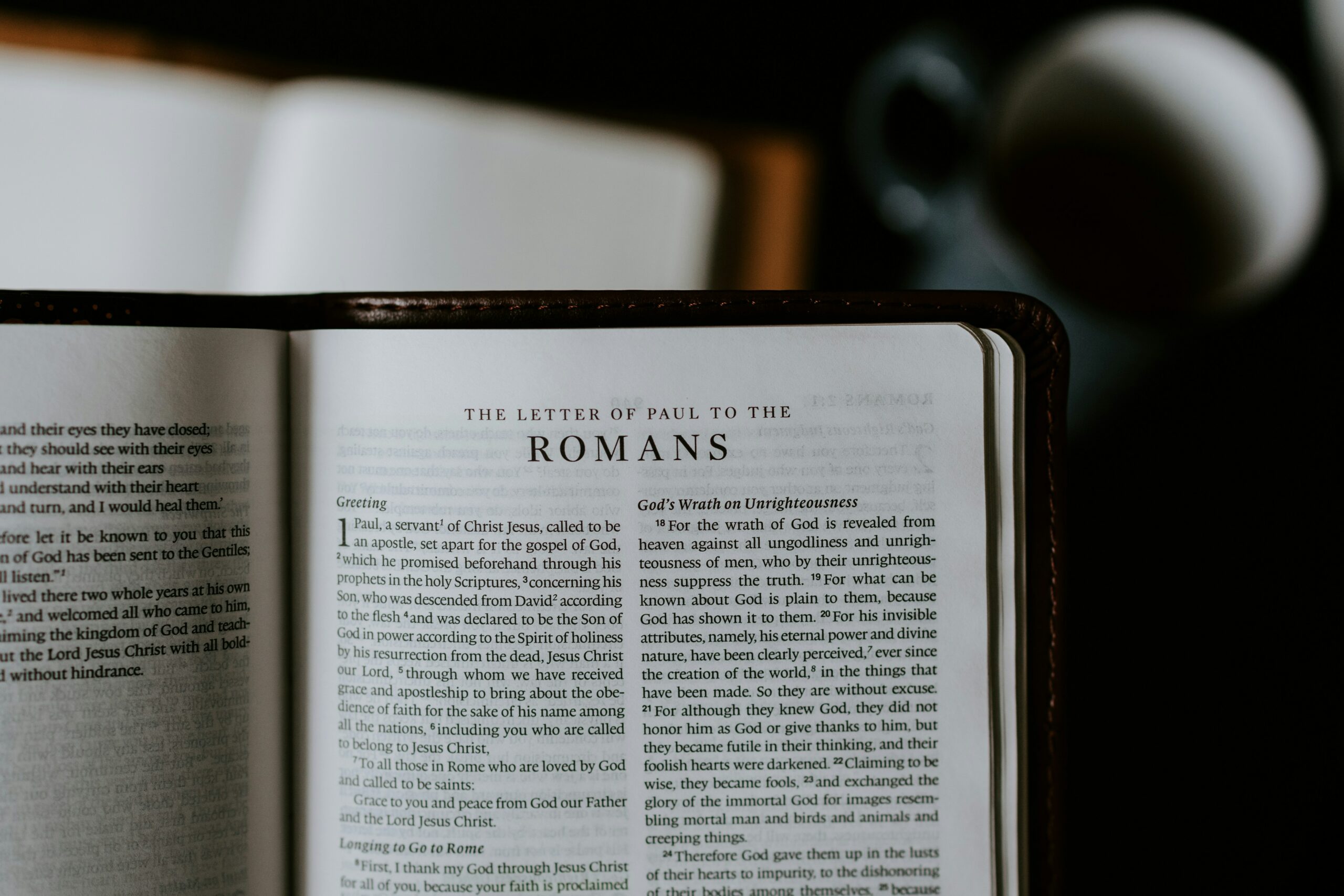
The Weak and the Strong Pt 3
This sermon examines Paul’s exhortation in Romans 14 regarding the relationship between believers with differing convictions on non-essential matters. The central message urges Christians to practice gracious and mutual acceptance, recognizing that God has already accepted each individual through Christ. The teaching emphasizes that judging a brother or sister for their scruples is an act of arrogance that usurps God’s prerogative, as believers are to be fully convinced in their own minds while maintaining a clear conscience. The discussion highlights the theological reality that all believers, whether strong or weak in faith, stand before the judgment seat of God to give an account of their own lives. Consequently, the preacher calls for a shift in focus from criticizing others’ practices to preparing for one’s own divine reckoning, fostering a community defined by peace and shared worship rather than division and contempt.
Transcript
If God’s people would take their
Bibles once again and turn to Romans Chapter 14. We are in a lengthy section which
began all the way back in Chapter 12. We’re not going to go all
the way back there today. We have found a new group of
people that Paul is dealing with. He’s dealing with life with others
not just with those who are difficult to deal with and even civil government. But here, he wants to deal with
the relationship between the weak and the strong, and both
are in view. Both are considered. Both are exhorted. And Paul has
begun to give us a series of exhortations. There are five,
as I have suggested. The first one occurs in the first
12 verses of chapter 14. The second one opens in verse
13, an exhortation on offenses. The third one begins in chapter
15, an exhortation towards edification, that that should be the goal
of everything that we do. There is an exhortation to unity,
which is perfectly logical there in chapter 15, verse five and
six. And then Paul wraps up this discussion
and the section. In chapter 15, verse 12, when
he begins it in verse seven with an exhortation again, to acceptance. Acceptance is no small portion
of this study. Paul has urged it from the very
beginning. He urged it in verse one, and
in fact, even in verse one through twelve, that really is a key
focus. We’ve looked at the potential
issues, and as I’ve suggested in the past few weeks, Paul isn’t
wanting to zero in on any one specific issue because the issues
will morph and change over time there will be different issues
100 years from now. And there are certainly different
issues in play than when Paul first wrote these when Paul first
wrote food feast days. Those were some of the issues
that were in focus. But in our day and age there
are different things different things that we as Christians
have different opinions about, and sometimes that really is
all we have. As I’ve suggested over the last
couple of weeks, what Paul is dealing with is the positions
that we arrive at in the white spaces. Other issues that we
can’t find chapter and verse for, and yet we feel compelled
in a certain or particular area. And I’ve given you a number of
different potential examples in Weeks past, but I want to
go back to the passage. We’ll take a running start with
a quick review and then we will wrap up this first exhortation
this morning. Look at Chapter 14 if you would.
Verse one. Where Paul writes now except
the one who is weak in faith, but not for the purpose of passing
judgment on his opinions. One man has faith that he may
eat all things. But he who is weak eats vegetables
only. Let not him who eats regard with
contempt. He him who does not eat and let
not him who does not eat judge him who eats for God has accepted
him. Who are you to judge the servant
of another to his own master. He stands or falls and stand
he will for the Lord is able to make him stand. One man regards
one day above another. Another regards every day alike.
Let each man be fully convinced in his own mind. He who observes
the day observes it for the Lord and he who eats does so for the
Lord, for he gives thanks to God and he who eats not for the
Lord, he does not eat and gives thanks to God for not one of
us lives for himself. And not one of us dies for himself,
or if we live, we live for the Lord, or if we die, we die for
the Lord. Therefore, whether we live or
die, we are the Lord’s. For to this end, Christ died
and lived again that he might be Lord, both of the dead and
of the living. But you, why do you judge your
brother or again, why do you regard your brother with contempt? We shall all stand before the
judgment seat of God for it is written as I live says the Lord
every knee shall bow to me and every tongue shall give praise
to God. So then each one of us shall
give account of himself to God. Now, whether it was meat offered
to idols or just meat in general, whether there were those ascetics
in their myths that insisted that we shouldn’t be partaking
of meat or shouldn’t be partaking of drink, particular kinds that
we should be honoring certain days, we don’t know what all
of the issues were. Paul really just hints at what
a couple of the potential issues were. In our own day and age,
we certainly would have issues or an understanding that some
might have a concern about television or dancing or hair length. Some
of those things that we’ve talked about in the past. Again these
are the the elements. These are the concerns where
people are going to come to us and they’ll say I can’t give
you chapter and verse but. This is my position and I feel
like I’m honoring the Lord to abstain from certain and particular
things. That’s the that’s the individual
with what we refer to as scruples. They have scruples on a particular
area. They can’t provide you chapter
and verse. And yet they have this position
airtight. So they feel that they need to
do a certain thing or not do a certain thing. Whereas the
stronger brother has full freedom. He’s perfectly content. to live
before the Lord as he does. He doesn’t feel constrained in
a particular area and he is free. He is totally free to live as
he believes God has called him to live. Well that’s all fine
and good. But the thing is that we live
together and this section called life together has brought people
into tension. It brought those before us that
live in that kind of attention not only with civil government
and not only those who are hateful towards us but how does a strong
Christian treat a weak brother and how does a weak brother respond
to a strong Christian. That’s what Paul’s addressing
and we’ve begun to look at it and really the overarching command
of this entire section all the way down through 15 is that we
are to accept one another. We’re to walk with one another
in Christ, just as we’ve been called to walk and not accepting
is is very. It’s a very intimate term. We
are to embrace them and walk with them as a brother. We’re
not to hold them in arm’s length. We’re not to consider them as
second class citizens. We’re not to bring them in only
for the purpose of nitpicking and scrutinizing everything that
they hold to everything that they believe. Paul brought up
in verse two, the idea of vegetables and of abstaining from meat. And again, I tell you, he’s not
doing that to build an airtight case like he did a much more
thorough job in his epistle to the Corinthians. Paul isn’t doing
that here. Paul doesn’t chase this idea
down with the same thoroughness. Paul doesn’t even spend much
time on it at all. He just says, here’s an example
of where a stronger brother might come into conflict with a weaker
brother. But we left off in verse three that throughout this exhortation
and the overarching exhortation here is that we are to accept
one another. And Paul is providing these principles for dealing
with one another. First, we looked at that it is
to be a gracious acceptance. It’s not to be. It’s not to be
deceitful, we’re not supposed to smile on the outside, oh,
come into the fellowship, you know, We welcome you wholeheartedly
only for the purpose of really cutting him to pieces and scrutinizing
him and criticizing him and making fun of his position. That’s not
the way we’re supposed to conduct ourselves. We’re supposed to
be gracious. The second point that we looked at there in verse
two is that he identifies the weak faith. He identifies those
who are weak in faith, but we don’t want to just fixate there
on those who abstain from meat. Paul’s delivering principles
here in the third principle they don’t delivers is found in verse
three and four and it is a mutual acceptance. We saw that last
Lord’s Day. Let not him who eats regard with contempt he who does
not eat. And that’s so often how it goes. Somebody comes in
and they have scruples, they found something in the white
space that really makes them feel or believe that they should
be doing or not doing something. And so they do it in their weak
faith and they come into a fellowship and somebody immediately begins
to criticize them and they look down on them. They hold them
in contempt. Oh, you fool. Oh, you poor individual. But it goes both ways. Let not
him, verse three, who does not eat judge him who eats. You’re
a sinner for having a hamburger. That’s kind of the I mean, that’s
an embellished. It’s not even in the Greek. It
is an embellished application of the issue. What Paul is saying
here is that, look, this should be a mutual acceptance. You should
walk together as brothers and sisters in Christ. regardless
of what your scrupulous or overly scrupulous positions are. Let
not him who eats regard with contempt him who does not eat
and let not him who does not eat judge him who eats. And he gives a simple reason
here. I mean, it’s exceedingly simple, isn’t it? For God has
accepted him. You don’t have chapter and verse.
You both know that because if you had it, you would provide
it and there would potentially be a sin issue if you had that
verse to bring. And that’s why we ought to be
exceedingly careful about pinning sin upon someone or approaching
someone about a sin issue. We better have chapter and verse. We can’t judge their motives.
We can judge their behavior when it runs counter to a biblical
principle. These are not those. These are
those cases that we built really in our mind from the white spaces
and what Paul says is we can’t judge, we can’t condemn if God
has accepted him. If God didn’t put this stipulation
upon him, if God didn’t put these feast days as part of honoring
the Lord, if God didn’t put these dietary restrictions, then who
are we? See, the weak had this tendency,
they still have that tendency to judge and to do so quite improperly,
to judge the strong who seem to have freedom that God hasn’t
provided. And so they begin to to criticize
them and look down on them and We’ve already noted that the
strong do the same to the weak. That word contempt. We haven’t
really looked at that much yet, but the word contempt, one pointed
out, is a very, very strong word. Listen to this. It’s a term that
carries the idea of looking on someone as totally worthless. Nothing. worth nothing or less
than nothing it isn’t even what we would refer to as dislike. It’s not even that they dislike
a certain person because of their practice but it goes to utter
disdain and even abhorrence. Now in our day and age they have
twisted and dulled down this word to where even the most minimal
criticism You know, they fight it off by saying, oh, he’s just
a hater, right? That’s the pop culture version
of that. Well, this this goes well beyond
just minor criticism. This is a disdain in the heart.
This is a hatred in the heart for someone. Whom God has accepted. God has accepted them based on
the standards of the gospel, and yet we want to stand in judgment
of them for something that they’re doing or not doing. And we are
literally haters in that regard. But Paul, throughout this section. I would remind you, he isn’t
even dealing with an issue that he’s going to land on a particular
side or another, what he’s dealing with is principles in how we
relate to one another in our attitudes, in the way that we
speak to and about one another. God has received us. And that
reception is based on the payment, the full payment that the Lord
Jesus Christ made on our behalf, and we are now bestowed the righteousness
of God, and those are the standards of acceptance with God, not whether
we honored Some feast day, not whether we abstain from some.
Dietary restriction, and if God hasn’t made the issue with those
particular things, who are we? Who are we to look down on our
brothers? One pastor said it this way. The Christian is accepted
because of Christ’s death. And the gift of righteousness
to such a one. You have to accept a person as
a believer with whom you must fellowship because God has accepted
him. If you find a sin issue and you
approach the brother with chapter and verse and you appeal to him
in prayer, that’s that’s biblical confrontation. And pray for the
grace that God turns his heart because it’s always God who does
it. But if we don’t have chapter
and verse. If we don’t have a biblical case for confronting a brother. Then we accept him. We accept
him and we walk with him in peace because God has accepted him. Look at verse four. Where Paul
takes this argument to its logical conclusion. And he says that
we’re to accept them. And then in verse four, he says,
who are you to judge the servant of another? How is it that you
stand in judgment of your brother? Now, we looked at this and this
is where we left off last Lord’s Day. It is the height of arrogance
to look upon our brother and to begin to judge him for something
he does or something he doesn’t do. Because ultimately, God says,
that’s my job, it is God’s job, it’s God’s prerogative to judge,
and God is perfectly capable of correcting each one of us
if we’re strong or we think that we’re strong. and we’re partaking
of something that we think that we can handle we think that we
have the freedom to do and then upon further study upon further
examination we do see a biblical case for a prohibition of those
things then we grow. God is able to correct us in
that. Perhaps we’re weak. Perhaps we
see that you know what I don’t find chapter and verse here but
this is my position and this is Where I stand for right now. God is able isn’t he. God is
able to correct this and God is able to say you know what
these feast days and honoring these as if you could lose your
salvation if you don’t light a candle on this particular day.
You know what God is able to correct us. Look at the end of verse four
to his own master he stands or falls. God is able to make him
stand. God is able to give him the grace.
God is able to equip him for ministry. God is able to correct
him. God is able to bring him to that
day. There’s a fourth principle. That is granted to us in the
midst of this exhortation, not only an urge to a gracious acceptance,
not only uncovering the weak faith and identifying that not
only a mutual acceptance, But the fourth thing that he tells
us here is that there is individual responsibility. Now, that’s hinted
at in verse four, isn’t it? That God is going to scrutinize,
God is going to judge. Who are you to judge the servant
of another? There’s a hint there that we
are going to be judged and he’s going to make it abundantly clear. But he calls us here, he identifies
that we stand before God as individuals, not as a group. Look at verse
five one man regards one day above another another regards
every day alike. Some people hold to this holy
day idea where particular days Christmas Easter Good Friday.
Those are holy days. There are others that believe
and even beyond that that you know every day is to be honored
every day is holy unto the Lord. And so this veneration of particular
days or prescribed observances of certain feasts there. That’s one side of the church
and then the other one says no every day should be regarded
alike. Paul’s prescription here is let
each man be fully convinced in his own mind. Don’t go around
proselytizing those who aren’t honoring the day as you believe
they should. Don’t go around trying to get
others on your team who are honoring the day to dishonor the day.
Let each man be fully convinced in his own mind. And here in
this second example that he’s given, he’s given us the example
of food. Now he gives us this example of the observance of
days. And Paul said that this is one of the many things that
can divide believers. He says, The solution here is
to settle in your mind, your own position, study it through,
examine everything carefully, hold fast to that which is good
using your reasoning powers in the study of the scriptures.
It doesn’t mean that you can’t interact and go to your brother
in a gracious tone and say, brother, why do you not honor this day?
What is your reasoning here? Teach me. Doesn’t mean that you can’t do
that. In fact, I think we should do
more of that. It isn’t Paul isn’t saying that
we should cultivate a closed mind here that once we make up
our mind on anything, we don’t ever hear another person’s viewpoint. But it is an exhortation here. against going and trying to wheedle
people into our particular viewpoint, pressure them into our particular
viewpoint, even insisting that they go against their own conscience.
We’ll come back to that in a moment. We shouldn’t go we shouldn’t
press people to go against their God given conscience. If this
is where they stand, God can change their mind in time. As
one said, to go along with what others do simply because they
do it and without having been convinced for oneself can be
a dangerous practice. The weak brother can hurt his
conscience by following the strong brother’s practice without holding
to his convictions. Don’t do those things. If you’re
not convinced in your mind of the propriety of a particular
practice, don’t do it. If you feel in your mind that
following a certain course of action is what God would have
you to do, stand before God with a clear conscience and do it.
That’s what he’s saying. Paul doesn’t condemn anybody
on either side of the fence here. He just says, let’s look at the
principles that come into play when two people deal with each
other at polar ends of the issue. The strong believer here is urged
not to assert his position not to try to coerce a weaker brother
to join in. We’re to be fully confident completely
confident in our position and I would tell you there are a
lot of people that do a lot of things in the name of Christianity
that they’re not completely convinced about are they. They think that
they have a conviction about a particular practice or habit
or thing. Yet they’re not. They’re merely
going through the motions, thinking that they’re honoring God, and
that can be a dangerous habit to fall into. That’s what leads
to either legalism or license. Look at verse six. And watch
how beautiful this is, what Paul does. He who observes the day,
observes it for the Lord. And he who eats does so for the
Lord, where he gives thanks to God and he who eats not for the
Lord, he does not eat and gives thanks to God. Here’s the scene.
Maybe it’s a church potluck, right? I mean, let’s just go
there. It’s a church potluck and one guy brings a particular
kind of food and another guy does not bring that particular
kind of food. That’s his scruple. That’s where
he feels. You know what? I don’t feel in my spirit that
I can partake of this particular food and they both sit down together
and they say let’s pray and they begin to bless the Lord and thank
the Lord for the food that he has provided. That’s what Paul
says we ought to do with some of these gray areas. We ought
to gather together and pray and bless the Lord and let the Lord
change hearts and mind let the Lord guide our practice. Because
what he says here is both of these events. Whether one brought
fish sticks or a hamburger or whether another brought carrot
sticks and tofu. We stand before the Lord and
we do so as an act of worship. That’s what he’s talking about
here. The people here believe that what they’re doing is an
act of worship. They bow before God and they
eat as unto the Lord. So, the reason here that Paul
gives that we should leave one another alone in this matter
is we are all standing before God. We’re doing, presumably,
what we do for the glory of God. We do so as an act of worship
in everything that we do for the glory of God. We should think
the best of our brothers in that. The brother comes to us and asks,
why don’t you eat hamburgers? Doesn’t say that we can’t share
our perspective on the matter, but it does say. That were to
accept him and walk with him in peace. To try and impose our
convictions on others simply to get them to acquiesce is wrong. Look at verse 7. For not one
of us lives for himself and not one of us dies for himself when
we live and walk with Christ. We live unto him right. We live unto Christ and we should
think the best of our brother that you know what he has professed
faith in Christ. I believe that he’s doing the
same thing when we die. That’s the ultimate examination
isn’t it. When we die and we go before
the Lord there is going to be a divine reckoning isn’t there.
Paul says not one of us live in these isolated, solitary lives. We live before God in everything
that we do. God looks. God watches. As one said, it supposes that
we are entirely resigned to his disposal. When it says that not
one of us lives for himself and not one of us dies for himself,
or if we live, we live for the Lord. If we die, we die for the
Lord. Therefore, whether we live or we die, we are the Lord’s.
We are completely dependent upon him. We are before his ever watchful
and scrutinizing eye. God sees what we hold to. God sees what we don’t. He goes
on to say, we are entirely resigned to his disposal, blessing him,
whether in adversity or prosperity, that we are to submit to his
dispensations in what he gives or takes away. And finally, that
we are to live to serve him and show forth his praise, whatever
befall. You say we are safe in his hands.
We stand before the Lord, if we live, we live for the Lord.
If we die, we die for the Lord. Remember, Habakkuk wrapped up
his great, I mean, incredible prophecy. When he first started
that prophecy with a complaint that God was perhaps asleep at
the wheel, letting things go on in the world that ought not
be. God instructs the prophet and brings him to repentance,
and at the end of that Habakkuk says essentially the same thing
that Paul said here. Whether we live or we die, we
are the Lord’s. And we are completely yielded
and submitted to him. Back at 317, though the fig tree
should not blossom and there be no fruit on the vines, though
the yield of the olives should fail and the fields produce no
food, though the flock should be cut off from the fold and
there be no cattle in the stalls, yet will I exult in the Lord.
I will rejoice in the God of my salvation. Not one of us lives.
for himself. Not one of us dies for himself.
We live, we live for the Lord. If we die, we die for the Lord.
We are the Lord’s. Paul said it very simply in Philippians,
didn’t he? To live is Christ. And to die
is gain. And we ought to think the best
of our brother. You know what? When he abstains from certain
practices, he’s doing so for the Lord Jesus Christ. He knows
that he stands before Almighty God. He has placed his faith
in Christ and in him alone for salvation. Yes, he has this scrupulous
position, and to me it seems strange. But he’s Christ. He’s honoring
the Lord Jesus Christ, and that’s never a bad thing, is it? No one ever lives to himself.
We live unto Christ and to him only. Paul wraps up this exhortation
to individual responsibility in verse nine, look at it. For
to this end, Christ died and lived again, that he might be
both Lord of the dead and of the living. In other words, everything
that we do. Everything that we do is a practical
way of honoring the lordship of Christ. If we bow before our
food and thank God for it, regardless of whether it’s red meat or veggie
burger, I don’t you know, I don’t know what’s in it. But if that’s
what you if that’s what you want to eat and you bow before the
Lord, you are honoring the Lord and his sovereignty. You are
honoring the Lord who died for that very purpose. Look at the
passage. To this end, You might even say
for this very purpose, the Lord not only died on the cross, but
was raised again for what purpose that he might be both the Lord
of both the dead and the living. We’ll come back to that thought
in just a moment. But the whole purpose here, what Paul says
of Christ’s death and resurrection was really the establishment
of that relationship of him as being Lord over all creation,
that his death and resurrection essentially established that
lordship over all things dead and living. That when we die,
we it’s not like we escape his service or his lordship, do we? We remain under his lordship.
Not just in this life, but even after we die, correct? Finally,
Paul comes In this exhortation regarding differences and how
do we deal with one another. How do we receive the weak and
accept the strong. We do show. So through first
the gracious acceptance as we understand who are the weak. What are the principles that
identify the weak. We do so mutually. We mutually
accept one another. Fourthly we. We maintain an individual
responsibility before the Lord. And Paul drives this point home
with absolute clarity in verses 10 and 11. It’s a reminder of
judgment. It’s a reminder of judgment.
Look at verse 10. But you, why do you judge your
brother? And that really should make every
one of us squirm, and I’ll tell you why in a moment. Were you
again? Why do you regard your brother
with contempt? For we shall all stand before
the judgment seat of God. As it is written, as I live,
says the Lord, every knee shall bow to me and every tongue shall
give praise to God. So then each one of us shall
give account of himself. To God. Paul goes back. to the main subject that he really
introduced back in verse three, he gave us those two great reasons
why we shouldn’t judge or despise. Our brothers. Not only because
he’s our brother, not only because God will judge him and God is
perfectly capable of bringing him to repentance, God is perfectly
capable of changing his position. But there’s a third reason that
God says we shouldn’t be judging or holding in contempt people
that practice a little bit differently. Not only will God judge him,
God will judge both of us. Ultimately, we all stand. There’s
no place to hide. We all stand as being utterly
responsible to the Lord Jesus Christ. And it says that we should
we shall one day stand before him. And that makes some kind
of critical spirit in this life absolutely unacceptable. Why do you judge your brother,
verse 10 says, and so to be so presumptuous as to stand in judgment
of our brother for a particular practice that we can’t. ferret out from Scripture, we
can’t build a biblical case against it. And yet we stand in judgment
of our brother because of it. And he holds in contempt. Those
who do practice and it goes both ways, but the sin in each case. Basically points to a prerogative
that belongs only to Jesus Christ himself. Only the Lord is the
judge. Who are we to step into that
role? So, to judge one another is to
invade, really, the responsibility of the Lord Jesus Christ. As
one pastor said, it is a terrible thing for men to play God. The work of Christians is to
serve the Lord and not to usurp His Lordship by self-righteously
judging fellow believers. Our concern, rather, should be
for being judged ourselves by the Lord. See, this is where
we left off several weeks ago, we were to examine ourselves,
we worried more about ourselves, we have far less criticisms of
our brothers and sisters in Christ. As one said, there is no sin
to which Christians are more prone than that of criticizing
others, you realize that I think that’s true. We think of the
great totality of sins As a Christian that we can slip into. That of
criticizing others that really does rise to the top, doesn’t
it? When we passed swift, uninformed, unloving, ungenerous judgments,
surely we have forgotten that if we speak evil of them at the
same time we speak evil of the Lord whose name they bear. Wow. Paul says that is not It’s not
our job. Not our job to sit in judgment
of our brother. That’s the Lord’s job. It’s not
our job to hold in contempt our brother in some practice. That’s
the Lord’s job to correct him. Paul makes it absolutely clear
what direction he’s pointing to here when he says, for we
shall all stand before the judgment seat of God. Now, I know what
you’re thinking. I know what you’re thinking because
I thought the same thing. Now, wait a second. This is double
jeopardy. You know, double jeopardy in
our legal system is, you know, somebody goes through trial and
he’s judged and he’s basically exonerated of the crime. He’s
judged to be not guilty in some particular case. And then somebody
else decides, well, we should try it again. And they bring
up new witnesses and new evidence and And they do the whole thing
all over again. We refer to it in our justice
system as double jeopardy and it can’t happen. Not supposed
to happen. Well. Paul says there is no double
jeopardy here. Our sins have already been judged
and if you are in Christ they’ve already been paid for. This judgment
is not. For sin per se. One pointed out that there are
at least seven different judgments mentioned in Scripture. This
last judgment here that Paul speaks of the judgment at the
Bema seat was referred to as the Bema seat. The judgment of
believers, and it’s not so much for sin as it is for. Our behavior,
our attitudes, and it doesn’t involve spiritual death or suffering
or punishment in that regard. This refers to a not so much
a court of law, but it was a it was the high place where an athlete
would come. And the athlete would approach
this beam of this bench. And he would bow his head and
he would have bestowed upon him a certain laurel or crown. It’s that kind of a judgment
that he’s talking about, God’s going to judge our deeds. Paul
refers to this very common image a number of times in his writings.
Just listen. First Corinthians 9. First Corinthians 9 25 Paul
points to it when he says everyone who competes in the games exercises
self-control in all things. They do it to receive a perishable
wreath but we an imperishable in which we would approach the
bench and bow our head and receive the reef. Philippians, Paul mentions
it again. In Philippians chapter 3, Paul
said, I press on toward the goal for the prize of the upward call
of God in Christ Jesus. Paul mentions it again in 2 Timothy. I fought the good fight. I finished
the course. I’ve kept the faith. In the future
there is laid up for me the crown of righteousness. See, We all
will stand before the judgment seat of God not to decide whether
we’re. Saved or not, if you placed your
faith in Christ, that question is settled forever. But we will
have our deeds examined, we will be scrutinized and God and God
alone has the prerogative to examine our life and to say,
now, why did you do this and such? One commentator said there is
one situation in which a man or a woman is isolated. And that is when he stands before
the judgment judgment seat of God. On that day, there will
be no pleading someone else’s responsibility for what we have
done, blaming the other person for our faults or taking another’s
credit for our own. If nothing else is able to get
us thinking about our conduct rather than someone else’s, it
should be this extremely serious, awesome and inescapable moment
of personal accountability. We shall all stand before the
judgment seat of God, and when we go there, God doesn’t call
us to the throne and say, what’s with what’s his name? Right,
he says, what have you done? What did you do? Why this? Why
that? Did you realize that we’re going
to give an account for every word that we spoke? For the way
that we used our gifts and our talents, scripture says. One
of the great lists that I found in the commentators listed a
great many things which we will one day give an account. What
about our money? Are we really storing up treasure
in heaven? What about the use of our time?
See, now when you start to put those things into perspective
and realize that one day we will stand before God and we will
give an account. It makes our brother and his
little practice much less important, doesn’t it? When we realize that
we shall stand before the judgment seat of God. Paul writes this. As I live. Quoting from Isaiah. As I live,
says the Lord, every knee shall bow to me and every tongue should
give praise to God. You know, there’s two places
where Paul quoted that. The other place is Philippians
chapter two. Philippians chapter two, he’s urging us to humility
and he points to us the example beyond all examples, the example
of the Lord Jesus Christ. Who humbled himself By becoming
obedient. Taking the form of a bond servant
and being made in the likeness of men. And because of that,
because Christ did that took on human flesh and yielded himself
ultimately to the cross, it says that God highly exalted him.
God placed him God placed him in a position of Lordship overall.
And it says so that at the name of. Jesus, every knee will bow
of those who are in heaven on earth and under the earth, and
that every tongue will confess that Jesus Christ is Lord to
the glory of God, the father. What an appropriate way for Paul
to wrap up this opening exhortation, he started by just really urging
us to a gracious acceptance of one another. But he ends in verse
12. Very pointedly. By reminding
us, so then each one of us, every believer who’s ever named
the name of Christ shall give an account of himself to God. No one else will give that report
for you. No one else can report in on another believer. We need to spend our time Preparing
for the accounting report that one day we will present before
the Lord will open up the books of our life before the Lord Jesus
Christ and not that of our fellow believers. Do you know what he
did? As one pastor said, it is to
God each one will render an account, not to men. It is concerning
himself that he will give an account not on behalf of another.
We are to judge ourselves. rather than sitting in judgment
of others. Go before the throne of grace.
The Lord God. These are hard and mysterious
and yet abundantly clear words. Lord, so often we have spent
our times scrutinizing the behavior, the habits, the practices of
others, criticizing them, belittling them, for their scrupulousness. Lord, so many times we also have
been on the other side of that fence. We’re not always deemed
to be the strong. Sometimes we’ve had our own weakness,
our own scrupulous areas of observation, and we built these cases and
these practices and these habits from the white spaces. And we
look down on those that don’t honor the things that we honor
with mere hatred. Lord, we come before you and
we ask forgiveness for that. We ask you to help us to examine
our hearts and to show us where we have judged others and where
we have belittled others in their weakness. Father God, grant us
the grace to transition from those who judge others. To those
who are preparing. To be judged. God, grant us that grace, we
pray. It’s in Jesus’ name that we ask.
Messages: 204