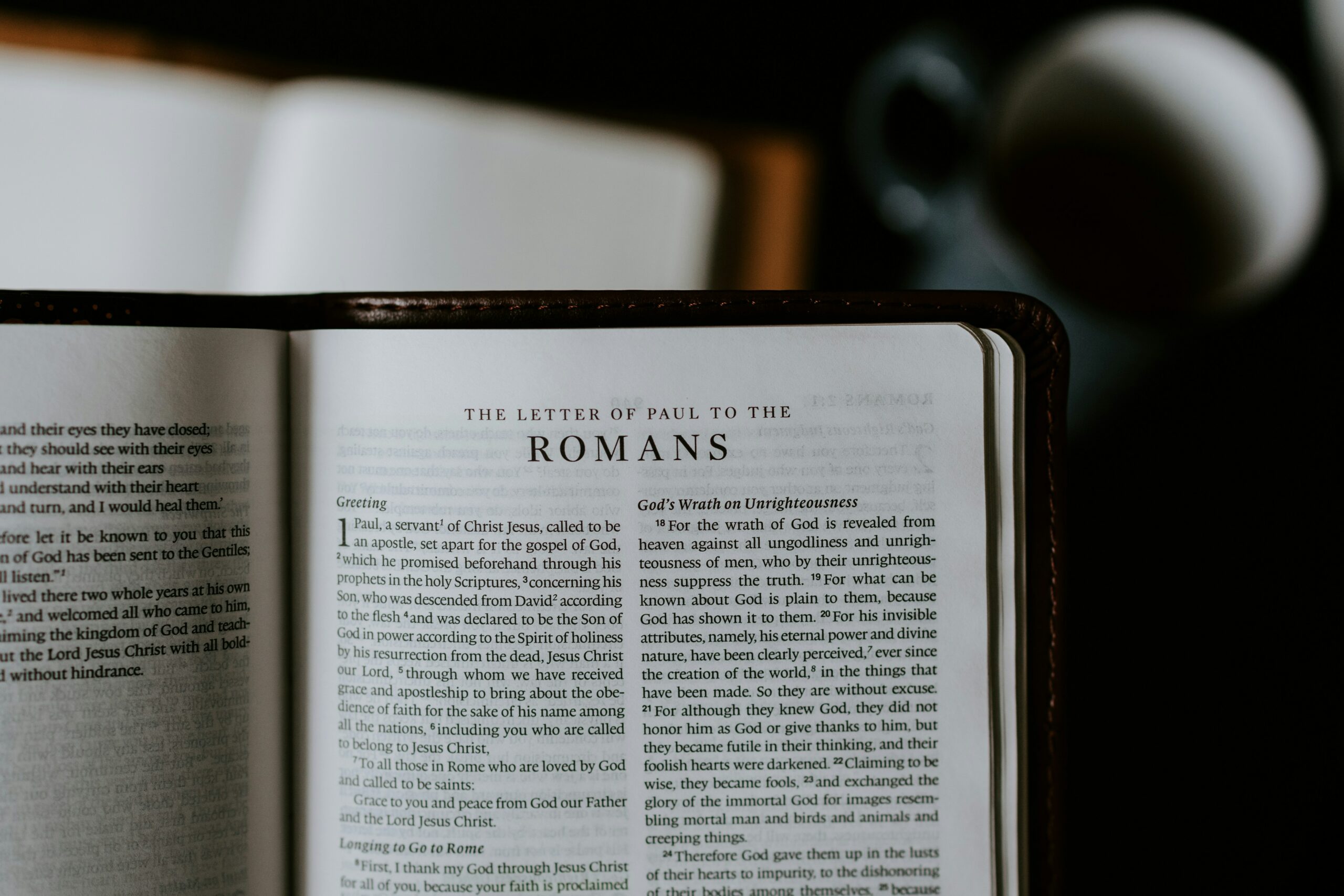
The Weak and Strong The Strong Pt 5
This sermon explores the principles of Christian liberty and conscience as presented in Romans 14, emphasizing that freedom in Christ must be exercised with responsible consideration for fellow believers. The central message urges believers to avoid causing stumbling blocks to those with weaker faith, prioritizing love and edification over personal rights in indifferent matters. Key theological themes include the distinction between what is inherently unclean and what is unclean to a specific conscience, the imperative to build up the body of Christ rather than tear it down, and the pursuit of righteousness, peace, and joy in the Holy Spirit. The tone is instructional and pastoral, challenging the audience to examine their motives and ensure their actions reflect a deep esteem for others and a commitment to the collective growth of the church. Ultimately, the sermon calls for a wisdom that balances personal conviction with communal harmony, recognizing that the kingdom of God is defined by spiritual fruit rather than dietary or cultural practices.
Transcript
Romans Romans chat up in a lengthy
passage of Scripture. Where Paul is in the midst of
even greater passage of Scripture that began back in Chapter 12.
We titled the series life with others and Paul dealt with how
Christians are supposed to relate to various groups. Everybody
from believers to those that are hostile to even civil government
and here in this section which began in Chapter 14. He’s dealing
with not just one people group but two he’s dealing with the
weak and the strong those who are weak of faith and those who
have very strong faith of freedom in their heart to do various
things and and a belief that those things neither will condemn
nor save. They believe that they place
their faith in the Lord Jesus Christ and they are at liberty
to live their life before God himself. Well that’s one group
and then the other group the week they have placed their faith
in Christ. They they would say that they
are believers and yet they still are compelled. They’re under
compunction and various things whether these days or honoring
particular days. or restricting themselves to
certain dietary laws. They just have what we have been
reminded of are scruples about various things. They just they
can’t find chapter and verse for these practices but they
just don’t feel right about them. And I’ve suggested a few things.
TV in our day and age is one of those things where some people
feel like it’s absolutely sinful. They can’t find chapter and verse,
but TV is, you know, to them, it’s a grand waste of time, and
that it is, but sports, various things, card playing, dancing,
some of those things we can’t find chapter and verse for, but
Grandma used to say, and so for us, it’s been passed down and
imbibed, and in a sense, we hold to those things, even though
we can’t provide. Here’s how some of those things
play out. So, you know, you go to the store in October and you
pick up candy corn. Everybody loves candy corn. Well,
you’re not supposed to, but it’s one of those secret deals, right? And someone comes into your house.
Candy corn. Halloween. Devil. Witches. Thou shalt not eat candy
corn. That’s how those things go. Or,
you know, a few months later. Right? Somebody walks into your
house and beholds the Christmas tree. Christmas tree. Druids,
right? Heaven forbid, you know, that
we have Christmas trees in our home. And that’s the way these
things play out. And whether it’s hair length
or skirt length or piercings. Somebody told me two weeks ago,
don’t mention piercings again. Tattoos. Those are all things
that in our day and age are one of those things that we just
don’t talk about. We develop convictions about them. We get
frustrated about them. We look at others. We want to
scrutinize what it is they’re doing. And Paul wants to talk
about all this, but he doesn’t talk about tattoos. In fact,
he mentions, but he doesn’t really talk about meat. He mentions,
but he doesn’t really go into great discussion about wine or
the use of alcohol, he doesn’t talk about those things. What
he’s talking about are principles. And what we need are timeless
principles, and that’s precisely what Paul gives us here. He does
so, as I’ve suggested, through a course of five exhortations. The first exhortation we’ve considered
in verses 1 through 12, Paul gave an exhortation regarding
differences, and he basically says what I just did. You are
going to have differences. You are going to have people
that think that candy corn is wrong. You are going to have
differences in viewpoints as to how we’re to live our Christian
life. They’re just going to be there. Paul moves from there to an exhortation
regarding offenses. Because truth be told, not only
are we going to have differences, we are going to have offenses.
Some people are going to be bent out of shape because of the way
you live your life or because of the way you don’t live your
life. Some people are going to be offended just at the mere
presence of a weak brother who doesn’t feel the freedom to participate
in whatever it is you’re doing. And so because they don’t feel
the freedom, they have this compunction, they have this frustration with
you. They think that you’re sinning.
And it’s very well possible. We’ll come back to that in a
moment. Paul moves from there to verse one of chapter 15 to
an exhortation on edification that everything that we are supposed
to do is supposed to be building up our brothers and sisters in
Christ, not tearing them down. He moves quite logically to an
exhortation to unity in verses five through six and then he
closes out this section to an exhortation on acceptance that
we are to accept one another. And it’s not like the bumper
sticker that is so common in our day and age where we’re supposed
to tolerate one another, roll our eyes, put up with. That’s
not at all what he’s saying. This acceptance is an intimate
drawing in. It is deep. Fellowship, it is
loving association with our brothers and sisters in Christ, not for
the purpose of judgment. We’ve looked at the first 12
verses, I want to return to the verse 13, we’re in the midst
of this consideration of offenses. We don’t want to offend. The
likelihood is great. There are differences in viewpoints
out there, but as far as possible, we want to minimize that. We
want to minimize our offense of others and minimize taking
offense at others. Return, if you would, to verse
13. Where Paul says, therefore, let us not judge one another
anymore. But rather determine this not
to put an obstacle or a stumbling block in a brother’s way. I know
and I’m convinced in the Lord Jesus that nothing is unclean
in itself, but To him who thinks anything to be unclean to him
it is unclean. For if because of food your brother
is hurt you are no longer walking according to love. Do not destroy
with your food him for whom Christ died. Therefore do not let what
is for you a good thing be spoken of as evil. For the kingdom of
God is not eating and drinking but righteousness and peace and
joy in the Holy Spirit. For he who in this way serves
Christ is acceptable to God and approved by men. So then let
us pursue the things which make for peace and the building up
of one another. Do not tear down the work of
God for the sake of food. All things are clean. But they
are evil for the man who eats and gives offense. It is good
not to eat meat or to drink wine or to do anything by which your
brother stumbles. The faith which you have, have
as your own conviction before God. Happy is he who does not
condemn himself in what he approves. But he who doubts is condemned
if he eats. Because he is eating not from
faith. And whatever is not of faith is sin. Well, Paul has
already dealt with the question of. The fact that there’s going
to be variety in the Christian community, there’s going to be
a variety of different opinions, a variety of different convictions
here, he begins to dwell on the issue of offenses that there’s
going to be variety. How do we keep from offending
our brothers in Christ? We. began to look at this, and
there’s a series of principles in the midst of this great exhortation
that Paul gives. Last week, we looked at a few
of them. First of all, the principle of not causing a brother to stumble.
Now, to some, to watch somebody slip on the ice or slip on a
banana peel, that’s great humor. Sick people. But the idea here
really is disturbing. This is an intentional placement
of an object of some kind that causes somebody to trip. And
remember, this isn’t this isn’t something that the Lord is indifferent
to. This is something that grieves
the Lord. Matthew 18 says, woe to the world
because of its stumbling blocks. And he says it a little bit differently
in the Gospel of Luke. It’s recorded there that he says,
It’s inevitable that stumbling blocks are going to come. We’re
going to come across things that we see or that we come across
that trip us up, spiritually speaking. Jesus himself said
it’s inevitable. But he goes on to say, woe, woe
to him who causes another one to stumble. It is inevitable
that stumbling blocks will come, but woe to that man through whom
the stumbling block comes. We don’t want to be that guy.
We don’t want to be the guy that puts a stumbling block that trips
up our brother, spiritually speaking. We do not want to be that guy. It’s bad for him and it’s worse
for us. When Jesus says woe, he means
it. We don’t want to be that guy. We don’t the word here, I reminded
the Saints last week, the word is scandal. We don’t want to
be scandalous. We don’t want to create scandal
to our brothers. And you’ll see this play out
that the stronger brother wants to live out his Christian life
with all liberty. Meanwhile, it’s not just that
he’s living out his Christian life before God. He’s living
it out before his brothers and sisters in Christ who are watching
him. And they see him engaged in some practice that they hold
to be wrong. And it’s scandalous, it becomes
a stumbling block to them, they can’t get over it, it is we’ll
soon see it’s grievous to them. So the rule that Paul lays down
here for the Christian, that if we’re going to live as Christ
would have us to live and not put stumbling blocks before our
brothers and sisters feet, The rule of the Christian is to love
and to love in such a way as to live considerate lives that
think not just of ourselves and of our liberties but thinks of
our brothers and sisters in Christ and of their potential for harm. We look not only at the principle
of not causing a brother to stumble we looked at the principle of
esteem for others. You know that little word, esteem,
what it really means in the Greek is to estimate, create an estimate
of an estimate of something and then to respond accordingly.
That’s what we do in worship. That’s why it’s so crucial that
when we come into worship, we’re not thinking about the past week
as I prayed. We’re thinking about God. We
want to set in our mind an estimate of God. We want to esteem him
for who he is and then respond accordingly. But Paul says here
we’re supposed to do the same exact thing regarding our brothers
and sisters in Christ. We’re to set an estimate of them
and believe me God has already told us what their value is.
We’re to set an estimate for them and respond behave accordingly. Look at verse 14. I know and
I’m convinced in the Lord that nothing is unclean in itself
but to him who thinks it is unclean It is unclean, but if because
of food your brother is hurt, you are no longer walking according
to love. Do not destroy with your food
him for whom Christ died. Is your hamburger really more
valuable than the brother in Christ? For whom Christ paid. Paid for his sin on the cross.
That’s the equation that you’ve got to work through. When you
hold to your liberty when you have a friend over that perhaps
you know we just heard a friend has a friend who’s a Messianic
Jew. That’s fine. He comes into your
home comes over for lunch and he’s holding to these Old Testament
standards and he believes that he is not to eat pork. Unfortunately
you made BLTs for lunch. And he comes into your midst.
It is. It’s almost funny if it weren’t so serious. He comes
into your midst and he believes in his heart and he lets you
know, you know, for me, the eating of bacon, I can’t do it. Put
the bacon back in the refrigerator. How simple is it? Are you really
going to esteem your Christian liberty higher than this brother
for whom Christ died? See, what Paul wants us to do
is evaluate and he wants us to dwell on the motive that really
should influence our decision making, the respect that we have,
the consideration that we have for a fellow brother’s feelings.
And there are many things that are indifferent. There are many
things about which God is silent. And as we said from the outset,
where the Bible is silent, we too are silent. Where the Bible
speaks, we speak. But If our brother thinks that
it’s wrong, to him it’s wrong. And to coax him, or to coerce
him, or to have a tat party, right? Maybe he is absolutely
against tattoos. And so we organize a tat party.
That’s a pretty common thing with the young people now. We’re
going to have a tat party. And even though this brother
has scruples, he can’t find chapter and verse, but to him getting
a tattoo, morally reprehensible. And so you’re going to cause
him to stumble. You’re going to put this before him. You’re going
to pressure him to comply with your whims, or a wine tasting,
or candy corn. Paul says, look, for my life
and walking with Christ, it’s wrong. As I assess the situation,
if it’s wrong for a brother, it’s wrong for me to try to coerce
him out of his conviction. That’s the Lord’s job to fix
him. That’s the Lord’s job to instruct
him. That’s the Lord’s job to lead
him along. See, he begins to get into the
scriptures and the scriptures, Jesus, his own words, Matthew
715. There is nothing outside of the
man. Which can defile him if it goes
into him. eating candy corn, eating bacon,
eating a hamburger. There’s nothing outside of the
man that can defile him simply by coming in. First, Timothy three says everything
created by God is good and nothing is to be rejected if it is received
with gratitude and to the strong brother, those things. That’s
our that’s our verse, isn’t it? To those of us who are strong, But if someone thinks that it’s
unclean. You can’t find chapter and verse. He just believes in
his heart that it’s wrong and for us to coerce him. For us
to go above his own conscience. For us to step into that role
where really the Holy Spirit is supposed to have exclusive
access is wrong. Verse 15, if because of food
your brother is hurt. Let me tell you about that word
that word just talks about pain. It’s grief. It’s not just that
he’s offended. You know, we want to belittle
people when they act like that, right? They get their nose bent
out of shape. There are other euphemisms that
are used. But if a man said one. believes
that a breach of ceremonial law is wrong and is compelled by
public opinion or the custom of the church to do violence
to his belief, he is led to commit sin. He has just gone against
his conscience, which in and of itself is sin. See, the conscience
is like the early warning system. It begins to buzz and ring and
go off the nearer we get to sin. Well, his heart is conditioned
that in this particular area of practice that it’s wrong. And now he has just been told,
suggested, coerced, pressured by you that, oh, it’s not that
big a deal. The Bible doesn’t say that. Look,
come on. If our brother’s conscience is
injured and wounded. If he consciously and willfully
goes against his conscience. He’s led into sin. This word grieved, it is not
a light word, it is a very heavy word. This is the same word that
was used to describe Peter. Remember, Peter, after the Lord
was arrested and crucified and the whole Peter said, you know
what? I’m going fishing. Jesus came back and he began
to quiz him, remember? And it really bothered Peter.
Peter, do you love me? Peter, do you love me? And it
says that at the end of that little quiz, Peter was grieved. He was made heavy of heart. He
was in absolute distress. What do you mean, do I love you?
Of course I love you, Lord. It also says in Scripture that
we have the capacity in our sin to grieve. Same word the Holy
Spirit. Do not grieve by the Holy Spirit. Him whom you were sealed for
the day of redemption. We have the capacity to grieve
the Holy Spirit to make him just distressed at our behavior. As one pastor said, it’s lamentable
when Christians are harmed by unbelievers, and that’s that’s
kind of a lot in life, right? We go about and they’re going
to be people that offend. They they hear that we are concerned
about some particular behavior and they play it up. They cuss
in front of us. They flaunt their sin in front
of us. It’s grievous. Remember a lot. righteous soul
was tormented. That’s us. The pastor says, you
know what, it’s lamentable when Christians are harmed by unbelievers.
It is part of the hard part of life that we go through, but
it is tragic when Christians hurt a brother Christian. Particularly
over matters that are not inherently wrong. A weak Christian can be
hurt or distressed from watching another Christian say or do something
he considers to be sinful. The hurt is deeper if the offending
believer is admired and respected by the weaker brother. Do you
hear what he says? Here comes this weaker brother
into your midst and he’s come for some time and he’s He’s liking
the people around him. In fact, there are some that
he just greatly admires. You just happen to be one of
them. And he loves you and he admires you and he looks up to
you. And then one day you flaunt. Callously, carelessly your liberty. You don’t care what he thinks
he needs, frankly, he needs to grow up a little bit. That’s
what you think, and you flaunt your liberty. And you cause great
harm and distress to him. Paul says, do not destroy with
your food him for whom Christ died, don’t tear him down. He’s
not going to be ruined in the sense of damnation. He’s not
going to be ruined. He’s not going to lose his salvation
over the fact that he’s troubled now with your practice. Even
if he was led into that practice and damaged his conscience, he’s
not going to lose his salvation. That’s not what it’s saying. But he is going to be sidelined.
He’s going to be damaged. He might even lose some spiritual
effectiveness. Maybe he was a great witness
for the Lord. Maybe he was out there just encouraging
others. And now for a time, he’s got
to he’s got to go on the sideline. He’s got to he’s got to circle
back with the Lord and be built back up. See, the weak brothers grieved.
He’s distressed. He’s hurt. And he’s hurt by something
that we did. Can’t be, Paul says. Can’t be. Not only the principle of causing
a brother to stumble, the principle of esteeming others as God does,
but the principle of responsible freedom. And that’s where it
leads. We do have freedom in Christ. We can’t find chapter
and verse for everything. There is a great deal of freedom
in the white spaces of Scripture. There is plenty that Scripture
forbids. There is plenty that Scripture
commands, but there is also plenty of white space. There is freedom,
but it is always to be a responsible freedom. Look at verse 16. Therefore,
do not let what is for you a good thing, a freedom, an area of
freedom, a liberty, Do not let what is for you a good thing
be spoken of as evil. For the kingdom of God is not
eating and drinking, but righteousness and peace and joy in the Holy
Spirit. See, a liberty is a good thing. It is before that you stand before
the Lord, you know that your sins are forgiven by Christ’s
righteousness. We have freedom. I love the way
one brother said it, although we are permitted To enjoy that
freedom, we are not commanded to do so. You know, that’s how
some people hold their Christian liberty. Well, I’m going to do
this. God said I can, and it’s almost
as if God mandated that they engage in such and such practice.
It’s not mandated. We are not obligated to exercise
every freedom we have in Christ. The greater our love and spiritual
maturity, the less important those freedoms will be to us.
and the more willing we will be to relinquish them for the
sake of best serving the Lord and others. See, what do we want? That’s what Paul is saying here.
It’s not about drinking and eating. That’s not about the kingdom. The kingdom is about righteousness
and peace and joy in the Holy Spirit. When we turn things around,
we flip it upside down sometimes. We think that all of life is
just about me and about us and about, you know, I’ve got to
carry out this command to live my Christian freedom. Not the
case. It’s about righteousness and
that righteousness is not only the imputed righteousness that
we’ve had, but it’s a pursuit of righteousness. It’s growing
in what is right before others. It is a seeking to do what is
good and right. And it’s peace. Just that peaceable
interaction with fellow believers where we’re ultimately we’re
really more interested in them than even ourselves. It’s peaceableness. And joy. What Christian doesn’t
know joy and to have that robbed, to have that set aside. That
joy that is The world can’t figure it out. They look at us and they
see, you know, they see maybe we’re poor, maybe we’re you know,
we’re going through some trial and yet we’re going through it
with joy. With the joy of the Lord. We know that every little
difficulty has been sifted through his loving and sovereign fingers.
And yet. The world looks at us and they
think that we’re nuts, right? They can’t figure us out. We’re
laughing and smiling and singing hymns and fellowshipping with
our brothers and sisters in Christ. I love the way one said it. A Christian
rejoices even in the midst of trouble and is often most happy
when the world thinks him most miserable. They look at us and
they go, huh? What? How is that even possible? Paul says, look, if you’re serving
Christ that way. If you’re worried about righteousness,
if you’re worried about peace, if you’re worried about maintaining
joy. Anybody who serves that way is not only accepted by God,
but he is approved by men. The world is going to look at
you and go, now, I don’t like Christianity. I definitely don’t
like church. I like all that denominational
stuff. There’s too much division, too many hypocrites. You know,
that’s what they always tell you, right? But you know what,
there’s something about that guy. There’s something about
that guy, because he’s willing to forego something that he believes
is permissible for the sake of his fellow Christian. It resonates, it resonates with
them. There’s a fourth principle, and
here’s where we pick up from last Lord’s Day. Just a little
bit of a review. Not only the principle of not
causing a brother to stumble, principle of esteeming others
as God does a principle of responsible freedom for a principle of edification. Now, he’s going to spend more
time on this. There’s an exhortation devoted just to this point, but
he does make the point here. And let’s consider it. Look at
verse 19. So then let us pursue the things
which make for peace and the building up of one another. Do
not tear down the work of God for the sake of food. All things
are clean, but they are evil for the man who eats and gives
offense. It is good not to eat meat or
to drink wine or to do anything by which your brother stumbles.
Now, we have seen in our day. In our lifetime, incredible destruction. Destruction of the Twin Towers,
even in our own town, we saw destruction of a building that
was almost complete. And when you see the construction
phase and you realize how detailed it is and and how much time and
how much work goes into the construction of a building to have somebody
come in, that’s the image that a building that is under construction
is suddenly burned to the ground. It’s a horrible image. And he says, let’s pursue the
things which make for peace and the building up, let’s participate
in the building project. Let’s not tear it down. Let’s
not torch the place, let’s not burn it to the ground. And he
basically brings forth implications from the preceding verses that
he’s already talked about. We’re not only to live peacefully
with one another, we’re to actively be about building them up. Does
our liberty build them up? No. then set it aside or at least
hold it with discretion so as not to tear them down. This word edification, it’s a
cool word. It’s a construction word. It
basically points to the construction of a… there were words that
could have been used for a small structure. This is a big program.
This is a big project. It is the building of Not just
individuals, it’s the building of the church. Fifteen of the
18 times that it’s used in the New Testament are used by Paul.
You see, Paul saw the building up of Christians as the means
of building up the church, building up God’s kingdom. And when you
tear down one little part, you’re not just tearing that part down,
you’re tearing down the very work of God himself. This word edify is literally
to build up both the Christian and the church. This was Paul’s
pattern of life. This is all that Paul was about.
Second Corinthians 1219, everything is for your up building, my beloved. That was his that was his motto
that could have been said of everything that Paul did was
all about building up others, not just local churches, not
just people, but the very Church of God. Second Corinthians 13
10. In accordance with the authority
with which the Lord gave me why for the building up and not tearing
down this whole calling was about building. But I want you to see
something. I want you to see that it wasn’t
just for Paul. It’s for you and me. Turn if you would to Ephesians
chapter four. Most of you know, just as I say
that exactly where I’m going, Ephesians chapter four, beginning
in verse seven. And I wanted to show you that
you’re called. To this building project, you’re
already on site. In a sense, you should have one
of those helmets on. You’re here and you’re not just
a lackey, you’re not just pushing a broom. You’re not just there
for cleanup purposes, you have a job to do. You’re supposed
to be about the Lord’s work in this project. Look at verse seven,
to each one of us, grace was given according to the measure
of Christ’s gift. We’ve looked at this before. We’re all given
as we place our faith in Christ, as we become Christians, we are
all given a gift package. Some are given many gifts. Some
are given one big gift. Others are given several small
gifts. We’re all given gifts. And it
was God that determined who and how and what to each one of us. Grace, it was undeserved. Grace
was given according to the measure of Christ’s gift. Therefore,
it says when he ascended on high, he led captive a host of captives
and he gave gifts to men. He’s explaining the Old Testament
scriptures. Now, this expression, he ascended,
what does it mean that he descended into the lower parts of the earth?
He who descended is him who him also he who ascended far above
the heavens so that he might fill all things. That’s that’s
Paul’s theme in Ephesians, right? The exalted Christ sitting on
his throne. Above all rule and authority,
that’s the one who decided who got what gifts. But they all
got him. Watch this. He gave some as apostles,
some as prophets, some as evangelists, some as pastors and teachers.
Why? Why do we need these guys? For the equipping of the saints. For the work of service. You
have a job to do. Your whole function in this earthly
life is to be about This job that you’ve been given, you’ve
been given various servants in the Christian community, apostles
who laid the foundation, prophets who came along. Some as evangelists
who brought the gospel to us, some as pastors and teachers
who show us the way, but it’s for our equipping. It’s for our
equipping for the work of service. We have a job to do. What is
the job? Look at the verse. For the equipping
of the saints for the work of service to the building up of
the body of Christ, it’s as much your job. In fact, in a very
real sense, it’s more your job to build up this church than
it is even mine. Mine is the equipping role. Now,
granted, Pastors, elders are in there as well. We are also
likewise gifted. We have to be about it as well.
But is it every bit your job as well? As a result, look at verse 14,
we are no longer to be children tossed here and there by waves
carried about by every wind of doctrine, by the trickery of
men, by craftiness and deceitful scheming. But speaking the truth
and love, we are to grow up in all aspects into him who is the
head, even Christ. from whom the whole body being
fitted and held together by what every joint supplies. You get the image there? He uses
now the image of the body. It’s no longer the building.
He’ll come back to that. It’s no longer the building,
but he says every single joint is to be participating in this
project. You have one sitting on the side.
You have one believer not doing what they’re called and gifted
to do. You have a dysfunctional body. According to the proper working
of each individual part causes the growth of the body for the
building up of itself in love, and he returns to that image. We need to promote. The building
of the body, we need to build into believers in Christ, not
tear them down, and that’s where Paul goes. Do not tear down the
work of God for the sake of food. It’s absurd. It’s absurd when
you think about it, because it’s not even our job site. In a sense,
we’re swinging the hammers, but emblazoned on the side of the
trailer, right, is the construction company’s name, not yours. And
the construction company’s name on this project is God Almighty. Look at the verse. Do not tear
down the work of God for the sake of food. See, Paul is pointing out that
it’s God that’s working on that weak brother, just as it’s the
same God Almighty who’s at work and that strong brother, namely
you. He’s begun to do a work in them,
he will complete that work. Listen in your mind’s eye. You
know the verse well. Philippians 12. So then, my brethren,
just as you’ve always obeyed, not as in my presence only, but
now much more in my absence, work out your salvation with
fear and trembling. And you say, see, it’s me. I’ve
got to be more perseverant than this. I’ve got to get up earlier
tomorrow and do my quiet time. In a sense, you do. Work out your salvation with
fear and trembling. Why? For it is God who is at work
in you, both to will and to work for his good pleasure. It’s both.
But God is God’s project. God is the superintendent on
this deal. You see, the spiritual development
of each believer is God’s own work. We’re supposed to be about
cooperating with God and helping him build individuals in their
spiritual walk, not tearing them down. In fact, it’s absolutely
un conceivable. That another Christian is going
to be found on the job site after dark, dismantling what God is
doing. To Paul, that was absolutely
unthinkable, a fellow believer should never destroy Never destroy
anything, much less a fellow believer for whom Christ died
with food. That’s why Paul says all things
are indeed clean. We’ve already verified and established
that point made in the book of Acts and elsewhere, all things
are clean, but they are evil to the man who eats and gives
offense. And that’s why Paul draws this
conclusion in verse 21. It is good. Back in Romans, Romans
14, 21, it is good not to eat meat or to drink wine or to do
anything by which your brother stumbles. If you’re doing it. If if you’re causing a brother
to stumble, stop, that’s essentially the nature of the verb. Stop
doing this. Even if it’s indifferent, even
if you can’t find chapter and verse, if he’s grieved by that,
if he’s caused if he’s led into sin. But I want you to note something. Paul does not say it is good
not to eat meat. He’s not a vegetarian. He’s not
advocating that at all. But he says it’s good not to
eat meat. There’s nothing wrong with the eating and drinking
as such. There are there are to be avoided things when they
cause offense, but not necessarily at other times. In other words,
He allows for discretion here. He allows you to continue to
exercise your Christian freedom. You just can’t flaunt it. You
can’t tear down the work of God with your freedom. As one said
it. That this is a most important
principle. To decide as to the right or
wrong of things, possibly different or innocent. So far as ourselves
are concerned, we may safely and rightly indulge in certain
practices. We’ll come to that in a moment,
how you how you make that determination. We may safely and rightly indulge
in certain practices, but when we know or suspect that such
indulgence is hurtful in its influence on others, then it
becomes a sin against God and man. There’s a fifth principle
that I would close with this morning. And you might even say
that this is the overarching principle of all these principles
in the exhortation regarding offenses. Not only the principle
of not causing a brother to stumble and the principle of esteeming
others as Christ would esteem them and the principle of bearing
responsible freedom and the principle of building up and not tearing
down edification. But the principle of wisdom. Look at verse 22. The faith which
you have have as your own conviction before God. You know what he
basically says there, don’t become an ambassador for tattoos, don’t
become the ambassador for candy corn, don’t become the ambassador
for BLTs. If you have a brother who has
scruples on a particular area, leave him alone. If God has freed
you up in these particular areas and there are so many more, if
you think it’s OK for a man to have a ponytail, fine. Don’t go on a crusade to promote
ponytails among men. When he talks about faith, the
faith here, he’s not talking about saving faith, he’s assuming
that. That’s already a for sure, if you will. Instead, what he’s
talking about is this faith, this ability, if you will, spiritual
ability that enables somebody to partake or to to exercise
some certain practice, some course of action. He’s got faith. He’s
got faith that he can do thus and such. Christmas trees to
him are OK. He’s got faith to put up the
tree year in and year out. But when he comes across the
weaker brother. He begins to promote it, he begins
to not just promote it, but advance it, he begins to wheedle his
brother, he begins to pressure him. What Paul says is leave
it between you and God. Live out your Christian freedom.
And I love the way he says it, the faith which you have. Have
as your own conviction. Don’t try to promote it. Don’t
try to create a new church built around this practice that you
have. Have as your own conviction before God. But I love the way
he says this. Happy. Oh, that word. Blessed. You know,
when you read it in the Psalms, you could almost say every time
you translate, oh, how very happy, because that’s what it is. Happy
is he who does not condemn himself and what he approves. You better
be very careful. You better examine the scriptures
very carefully before you go imbibing. Before you go practicing
certain things, you better examine them very carefully. Maybe you
ought to listen to. The argument of the one with
scruples, just hear him out, maybe you’ve done chapter and
verse, maybe you’ve looked all through the verses pertaining
to the various So-called prohibitions. But you certainly don’t want
to condemn yourself. You certainly don’t want to trip your own self
up in what you. Find the freedom to do. But then
he turns one more time. To the weaker brother. And he says quite explicitly
that he who doubts is condemned if he eats. If you do not have
the freedom, if you don’t sense the freedom, if you don’t believe
that it’s in the white spaces and therefore a liberty to you,
you’re condemned if you eat. Doesn’t mean you’re going to
lose your salvation. I’ve already addressed that. What God condemns
here is the act, the doubt, He’s condemned if he eats because
his eating is not from faith and whatever his faith and not
from faith is sin. Jonathan Edwards, some of you
are familiar with it, he wrote a very lengthy and he added to
it periodically. He wrote a series of these resolutions
and he would observe from scripture something and it would see in
his life some deficit. And so he would write out these
incredible statements. that were just very clear, they
were derived from scripture, but they were applied first and
foremost to his own life. He really never sought initially
to publish this thing for other people’s use. These were his
resolutions where he stood before God, having read the word. And
he said, God, I resolve by your grace to do thus and such. Here’s
what Edward said about liberty. Resolved never to do any action. About the lawfulness of which
I am so doubtful at the time that I resolved to inquire afterward. Unless I am equally doubtful
whether it is lawful to admit it omitted. In other words, Edwards
said, you know what, if I don’t know absolutely positively. That it’s permitted by God. I’m going to abstain. The faith which you have, have
as your own conviction before God, happy is he who does not
condemn himself in what he approves. Would you examine your heart
before the Lord? A merciful king, we humble ourselves
before you. We thank you so much for this
passage. We have feasted and longed to be in this passage. For so many seasons. Lord, we
see in our day and age so many different challenges, so many
new things that come onto the horizon. And Lord, we don’t want
to sin against you. We don’t want to sin against
our brother. We don’t want to tear down the work of God. Lord, we also We also want to
live freely in Christ. We want to enjoy the freedom
that we have in Christ, but only as you would have us to. Grant
us the grace, Father, to apply these principles to our own life,
to examine our heart in light of your word. God, grant us the grace. And
Father, if there are any. who do not know the Lord Jesus
Christ, who do not know that freedom from sin. How can we? How can we even begin to enjoy
liberty unless we know that we are liberated from our sin? That’s
why Jesus died. Father, reveal that to them even
today. It’s in Jesus name that we pray.
Amen. As we close
Messages: 204